



Uneven Room Heater Performance: Causes and Ways to Improve Heat Distribution

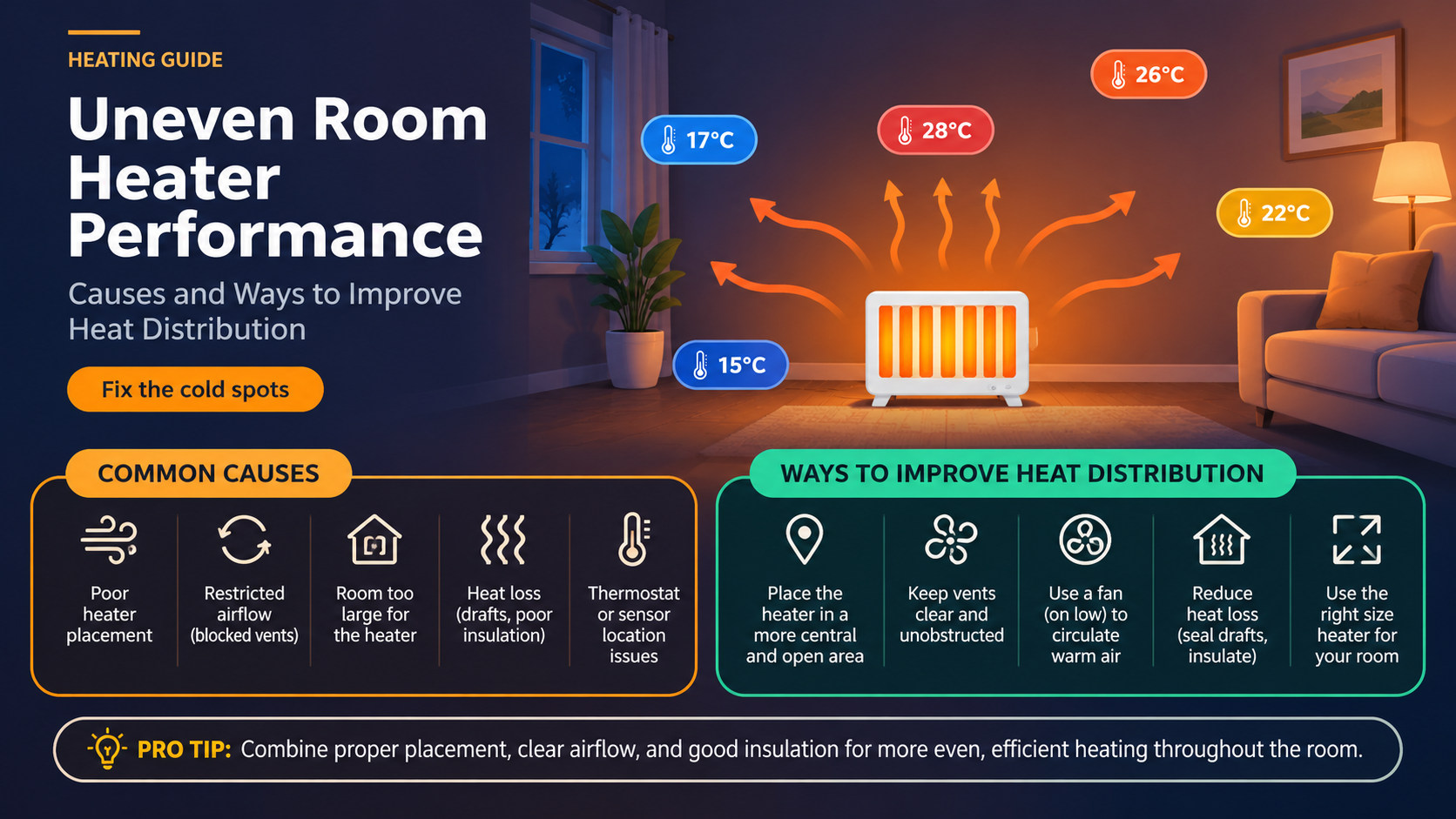
You switch the heater on, wait twenty minutes, and the spot next to it feels almost too warm. Walk to the far corner of the same room and it still feels cold. The sofa is chilly, your feet are freezing, and the bedroom door seems to be leaking winter. If this sounds familiar, you are dealing with uneven room heater performance, one of the most common complaints in winter.
The good news is that an uneven room is rarely a sign of a broken heater. In most homes the cause is a mix of physics, room layout, drafts and heater choice. Once you understand why heat behaves the way it does, you can fix most cold spots with small, inexpensive changes. This guide explains the real causes of uneven heating and gives you practical ways to spread warmth more evenly, plus what to look for if you decide to buy a new heater.
Quick answer
Uneven heating usually comes from five things: warm air rising to the ceiling, poor heater placement, blocked airflow, drafts and heat loss through windows and doors, and a heater that is too small or the wrong type for the room. Fix placement and airflow first, seal the drafts second, and only then consider upgrading the heater.
How a Room Heater Actually Moves Heat
To fix uneven heat, it helps to know the three ways heat travels through a room. Every heater uses one or more of them, and that is the main reason different heater types feel so different.
- Convection: Air touches the hot surface, warms up, becomes lighter and rises. Cooler air moves in to replace it, creating a slow loop. Most oil-filled radiators, panel heaters and fan heaters rely heavily on this.
- Radiation: The heater sends out infrared energy that warms people and objects directly, without heating the air first. Infrared and quartz heaters work this way. You feel warm in front of them, but the effect drops quickly as you step to the side or move away.
- Conduction: Heat passes through direct contact, such as warm air touching a cold wall. This is also how your room loses heat through windows, doors and uninsulated walls.
None of these methods spreads heat perfectly on its own. That is why even a good heater can leave parts of a room cooler than others.
Why Warm Air Rises and Cold Air Pools Near the Floor
Warm air is less dense than cool air, so it floats upward. In a typical room this creates layers, called thermal stratification. The ceiling area ends up noticeably warmer, while the floor, where you actually sit and walk, stays the coldest. In rooms with high ceilings the difference can be several degrees.

Cold surfaces make this worse. When warm air reaches a single-pane window or an outside wall, it loses heat, becomes heavy again and sinks. This cold air then slides across the floor toward the heater, which is why people often feel a chilly draft around their ankles even when no window is open.
Main Causes of Uneven Room Heater Performance
1. Poor heater placement
A heater pushed into a corner, hidden behind a sofa or placed on the warm side of the room heats a small pocket very well and does little for everything else. Heaters work best where the cold air enters the room, such as under or near a window, or along an outside wall.
2. Blocked airflow
Furniture, long curtains, rugs, laundry and even boxes can block the path of warm air or radiant heat. A heater that is surrounded by objects cannot circulate air properly, and blocked heat can also create a safety risk.
3. Drafts and air leaks
Gaps under doors, around window frames, through old letterboxes and along chimneys let cold air flow in constantly. The heater then spends its energy fighting a stream of cold air, and you end up with cold stripes in the room, especially near the floor.
4. Heat loss through windows and walls
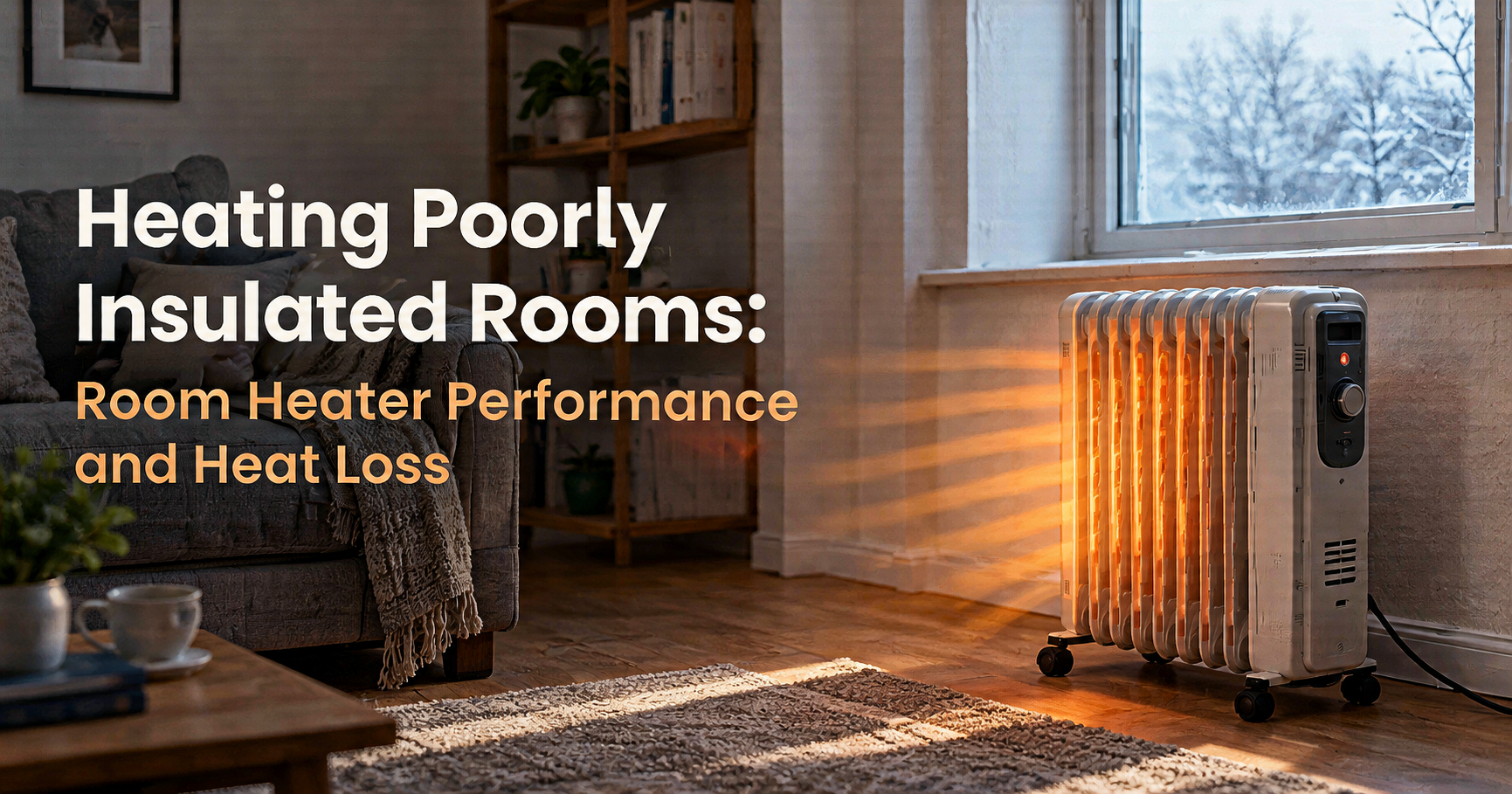
Single-glazed windows, thin walls and uninsulated ceilings are the biggest sources of heat loss. A cold window acts like a cold radiator in reverse, pulling heat out of the room and making nearby areas feel colder, even if the thermostat shows a comfortable temperature.
5. A heater that is too small for the room
As a rough starting point, many heating guides suggest around 10 watts per square foot (about 100 watts per square metre) for an average, reasonably insulated room. A 1,500 W heater, for example, suits a room of roughly 150 square feet. Rooms with high ceilings, large windows or poor insulation need more. An undersized heater never reaches the far side of the room, no matter how long it runs.
6. The wrong heater type for the space
A small radiant heater is excellent for warming one person at a desk but a poor choice for heating a whole living room. A fan heater warms the air quickly but cools down fast when switched off. Matching the heater to the job matters as much as its wattage.
7. Poor air circulation
Without any air movement, heat stays near the heater and the ceiling. In closed rooms with no fan, the temperature gap between corners can be large. Gentle circulation is often the cheapest and most effective fix.
8. Thermostat and sensor problems
A heater thermostat reads the temperature right where the heater sits. If the heater is near a window draft, or in a warm pocket, it may switch off before the rest of the room has warmed up. Dust on vents and filters can also reduce heat output over time.
9. Room layout and open doors
Open-plan spaces, doors left ajar and connected hallways let warm air escape into unheated areas. The heater then has to warm a much larger volume than you intended.

How to Improve Heat Distribution in a Room
You do not need to replace your heater to get a warmer, more even room. Start with the changes below, which are listed roughly in order of cost and effort.
Place the heater in the right spot
Position convection and oil-filled heaters near the coldest wall or under a window, where cold air enters. This warms the incoming air immediately and helps stop the cold air from sliding across the floor. Keep the heater on a flat, stable surface with clear space around it. For radiant heaters, aim them at the area where people actually sit.

Keep a clear zone around the heater
Leave at least 3 feet (about 1 metre) of open space in front of and beside the heater, or follow the distance given in the manual. Move sofas, beds, curtains and clothes out of this zone. Clear airflow improves heat distribution and reduces fire risk.
Use a fan to mix the air
A ceiling fan set to low speed in the winter direction (usually clockwise when viewed from below) pushes warm air gently down the walls without creating a strong breeze. If you have no ceiling fan, a small pedestal or desk fan on low, pointed toward the ceiling or along the floor, can help mix the layers. Many fan heaters and some oil-filled models with a built-in fan do this job automatically.
Seal drafts around doors and windows
Weatherstripping tape, door draft stoppers and window sealing strips are cheap and easy to install. Even sealing the bottom of the door with a rolled towel gives a noticeable difference on a very cold night. Pay special attention to the floor-level gaps, because that is where cold air collects.
Insulate windows and use thick curtains
Thermal curtains, window insulation film and heavy blinds slow down heat loss through glass. Close them at dusk to keep the heat in. Keep curtains from hanging directly in front of the heater, and make sure they do not touch it.
Close the doors and shrink the heated space
Keep the doors of the room you are heating closed so warm air stays where you need it. Heating one room properly is almost always more comfortable than half-heating several.
Use rugs and floor coverings
Bare tile and hardwood floors feel colder underfoot and radiate cold upward. A thick rug in the seating area makes the space feel warmer even if the air temperature stays the same.
Add a second heater for large rooms
If one heater cannot reach the whole room, two smaller heaters placed at opposite ends often work better than one large heater. Make sure the circuit can safely handle the total load, and plug each heater directly into a wall socket.
Keep the heater clean and maintained
Dust and pet hair on vents, grilles and fans reduce airflow and can cause unpleasant smells. Unplug the heater and let it cool, then clean it gently with a soft brush or dry cloth, following the manufacturer instructions.
Safety first
Always plug a heater directly into a wall socket, not an extension cord or a power strip. Keep flammable items well away, never cover a heater to dry clothes, and choose a model with tip-over protection and overheat protection. Never leave a heater running in an empty room or while you sleep unless it is designed and approved for that use.
Which Heater Types Heat More Evenly?
No single heater is perfect for every room. The table below compares the main types so you can see where each one is strong and where it tends to leave cold spots.
| Heater type | Strengths | Weak points | Best for |
|---|---|---|---|
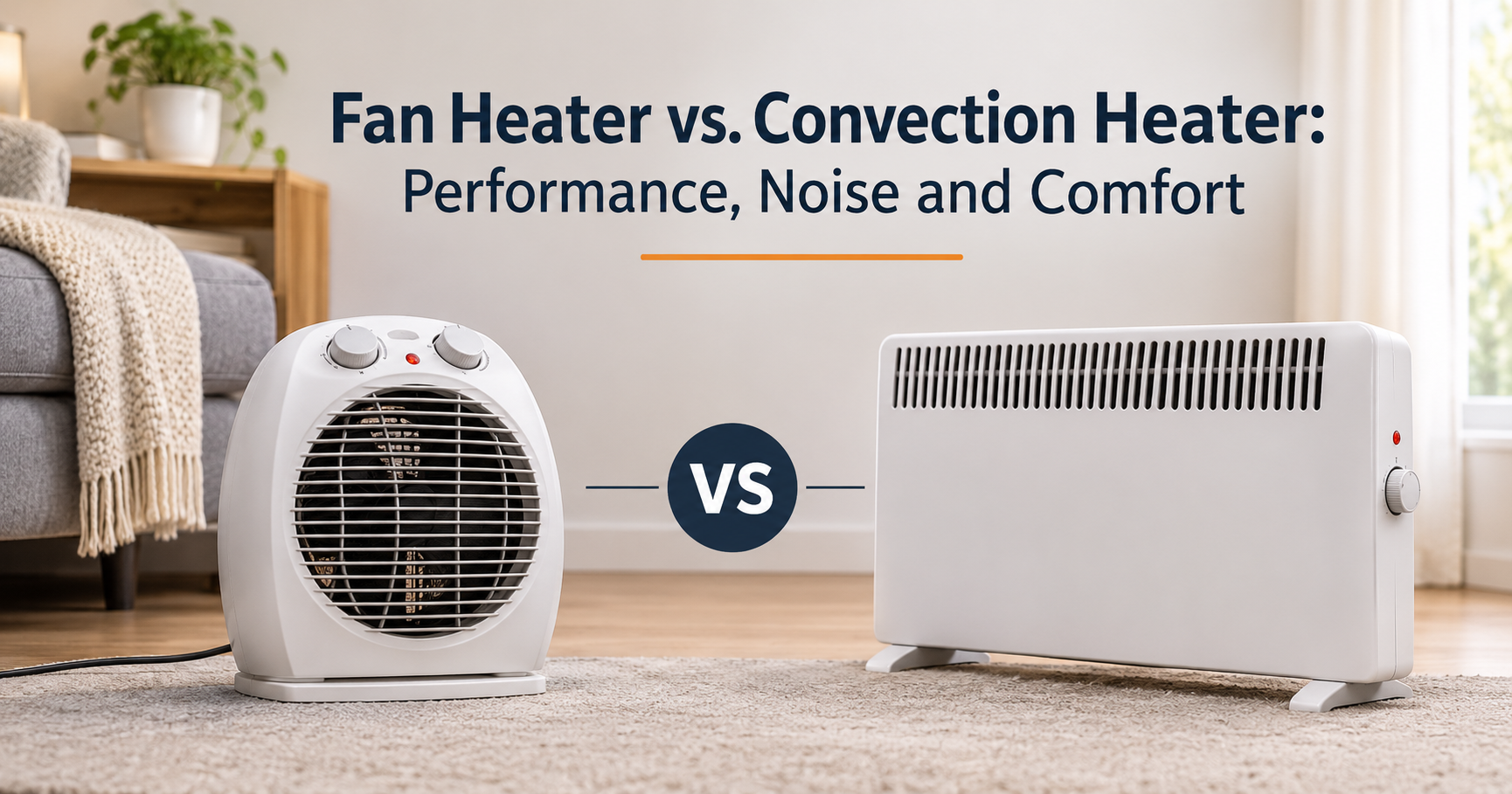
| Fan heater | Fast warm-up, good air mixing | Cools quickly when off, can be noisy | Small rooms, quick heat |
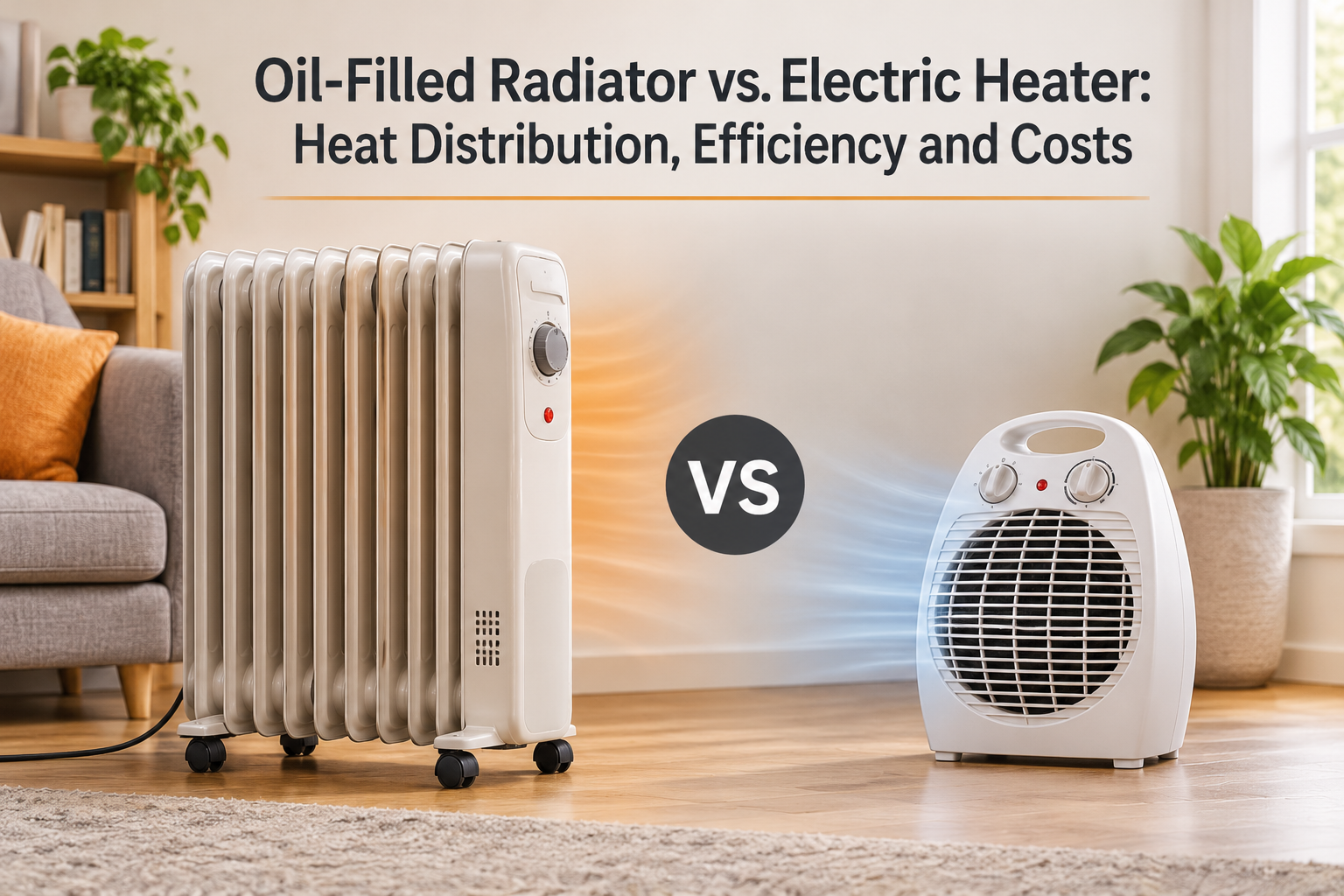
| Oil-filled radiator | Steady, quiet heat that lasts | Slow to warm up, heavy | Bedrooms, medium rooms |
| Ceramic heater | Quick heat, compact, often has oscillation | Limited reach in large rooms | Small to medium rooms |
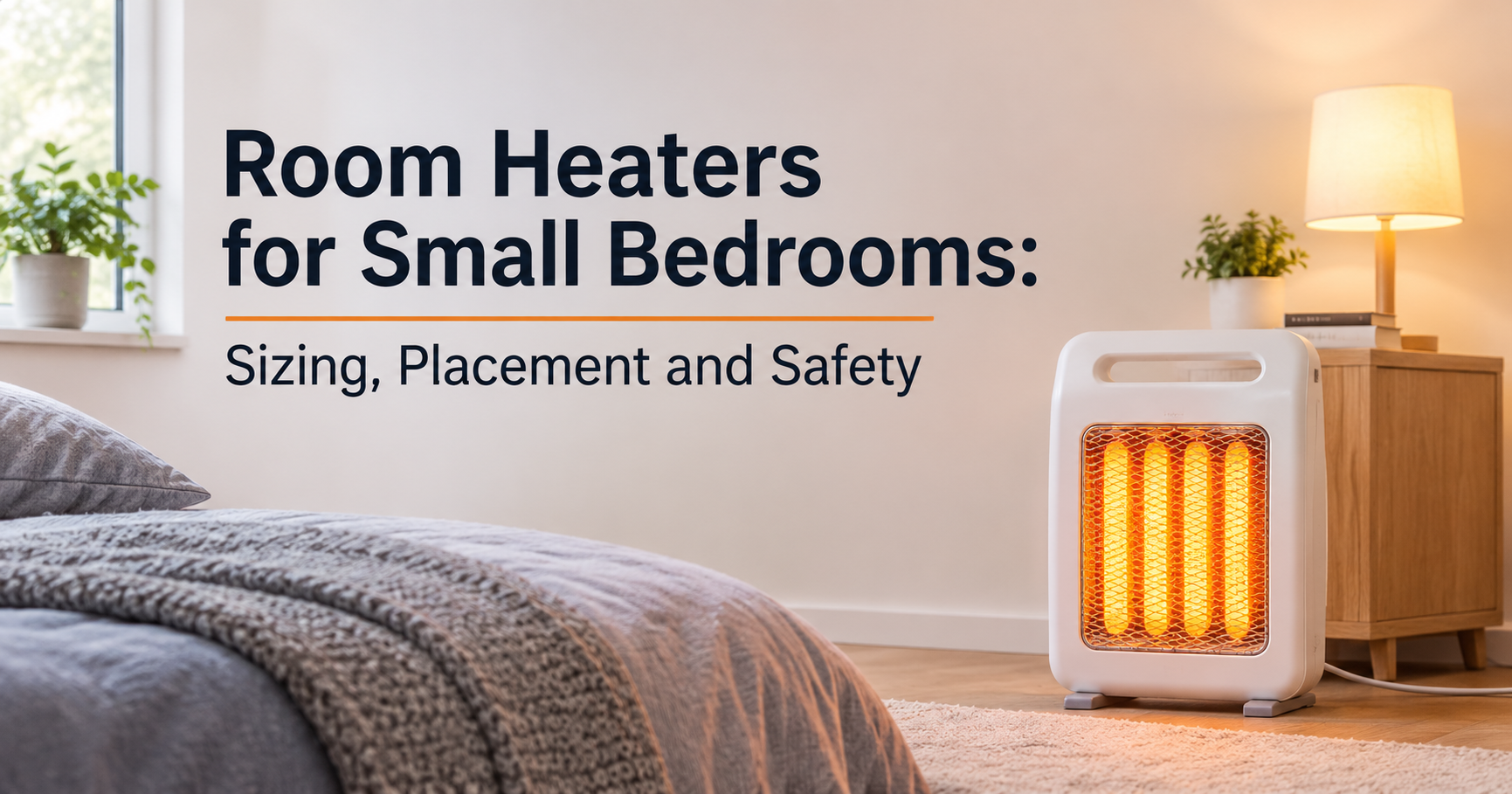
| Infrared / radiant heater | Warms people directly and instantly | Heat is directional, uneven off to the sides | Spot heating, desks |
| Panel / convector heater | Silent, even background warmth | Slower response, needs time | Living rooms, offices |
| Heat pump or split unit | Efficient and good distribution | Higher upfront cost, needs installation | Whole rooms, long-term use |
If your main complaint is cold spots, an oscillating ceramic or fan heater, an oil-filled radiator paired with a small fan, or a heater with a wide-angle convector design will usually serve you better than a narrow radiant unit.
What to Look for When Buying a Heater for Better Heat Distribution
If you decide it is time to upgrade, these features make a real difference in how evenly a heater warms a room.
- Correct wattage for the room size: Match the output to your floor area and add a margin for high ceilings or poor insulation.
- Oscillation or a wide-angle fan: This spreads warm air across a larger part of the room instead of one fixed direction.
- Adjustable thermostat: A reliable thermostat keeps the temperature steady and avoids repeated hot and cold swings.
- Multiple heat settings: Low, medium and high settings let you run the heater longer on gentle heat, which usually gives more even results.
- Timer and programmable controls: These warm the room before you need it, so the walls and furniture heat up too, not just the air.
- Tip-over and overheat protection: These are essential safety features for any portable heater.
- Remote control or smart features: Useful for adjusting settings from across the room and for scheduling.
- Low noise level: Especially important for bedrooms and home offices.
A Simple Step-by-Step Plan to Fix Cold Spots
- Walk around the room and note where it feels coldest. Check for drafts with the back of your hand or a lit incense stick held safely near gaps.
- Clear everything from around the heater and move it toward the cold wall or window.
- Seal door and window gaps and close the curtains at night.
- Add gentle air circulation with a ceiling fan on low or a small fan.
- Keep the door closed and give the room 30 to 60 minutes to settle.
- If the room is still uneven, check whether the heater is too small, or add a second heater at the opposite end.
Frequently Asked Questions
Why is my room heater only warming one side of the room?
This usually happens because of poor placement, blocked airflow or a heater that is too weak for the room. Moving the heater to the coldest wall, clearing the space around it and adding gentle air circulation fixes most one-sided heating problems.
Why are my feet cold even though the room feels warm?
Warm air rises, so the air near the floor is cooler than the air near your head. Drafts under doors make it worse. Sealing gaps, using a rug and mixing the air with a fan help warm the floor level.
Does a fan really help a room heater work better?
Yes. A fan on low speed breaks up the layers of hot and cold air and carries warmth into the corners. It does not create heat, but it makes the heat you already have far more comfortable.
Is it better to run a heater on low for longer or on high for a short time?
In most cases a steady, moderate setting gives more even heat than short bursts on high. It also avoids large temperature swings and helps the walls and furniture warm up too.
Should I place the heater near the window?
For convection-style heaters, yes. A spot under or near a window helps neutralise the cold air that falls from the glass. Keep curtains clear of the heater, and always follow the manual.
How do I know if my heater is too small for the room?
If the heater runs constantly, never reaches the set temperature and the far side of the room stays cold, it is probably undersized, or the room is losing too much heat. Check the wattage against the room size and think about better insulation or a second heater.
Final Thoughts
Uneven room heater performance is frustrating, but it is almost always solvable. Warm air naturally rises, cold air naturally pools near the floor, and every window, door gap and piece of furniture changes how heat travels. By placing your heater in the right spot, clearing the airflow, sealing drafts, mixing the air and choosing a heater that suits the size and shape of your room, you can turn a patchy, chilly space into a comfortable one.
Start with the free and low-cost fixes first, then consider a better-suited heater if the cold spots remain. A little attention to placement and airflow often does more than simply turning up the power, and it saves energy too.