



A bedroom heater can turn a freezing room into a comfortable retreat in minutes, but only if it is placed correctly. The same heater that keeps you cozy can waste electricity, heat the room unevenly, or even become a fire hazard when it sits too close to a bed, curtains, or a pile of clothes. Where you put the heater matters just as much as which heater you buy.
This complete guide explains the best room heater placement in a bedroom, the safe distances to keep, how different heater types behave, and the most common mistakes to avoid. Whether you have a small guest room, a large master bedroom, or a child’s room, you will find practical advice you can apply tonight.
Quick answer
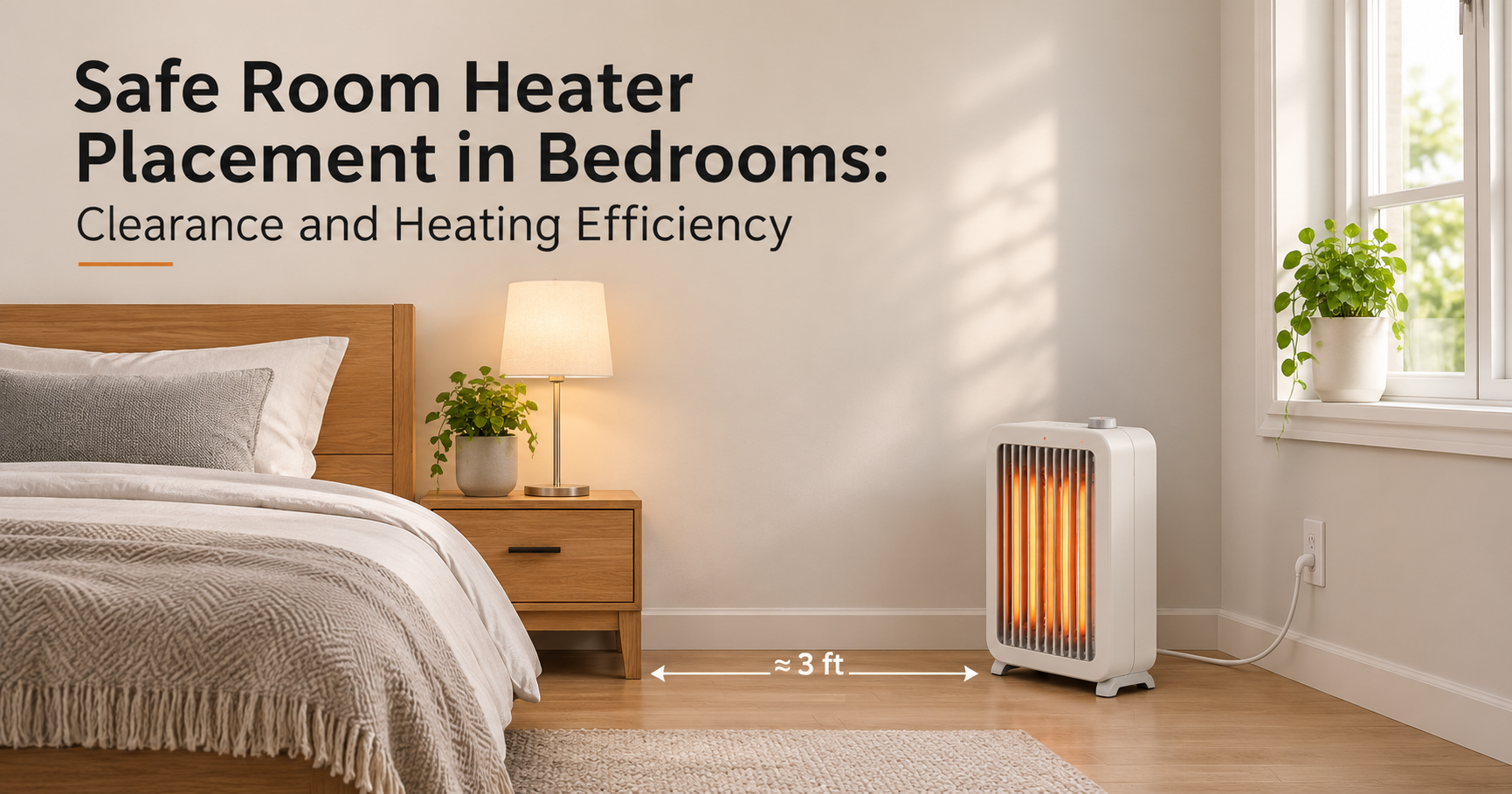
- Keep the heater at least 3 feet (about 90 cm) away from the bed, curtains, bedding, furniture, and clothes.
- Place it on a flat, hard, stable floor surface, never on the bed or on soft rugs that can block vents.
- Put it near the coldest part of the room, such as under or beside a window or along an exterior wall.
- Plug it directly into a wall outlet, not into an extension cord or a power strip.
- Keep the walkway to the door clear so nobody trips over the heater or its cable.
Why Heater Placement in a Bedroom Matters
Bedrooms are different from living rooms. You spend hours there with your eyes closed, surrounded by flammable items such as mattresses, blankets, pillows, curtains, and clothes. That makes placement a safety decision first and a comfort decision second. Good placement gives you three important benefits:
- Safety: Most heater-related fires start when a heater is too close to something that burns. Correct spacing greatly reduces that risk.
- Even warmth: A heater in the right spot helps warm air spread through the whole room instead of creating one hot zone and several cold corners.
- Lower energy use: When the heater is not blocked by furniture or fighting a cold draft, it reaches the target temperature faster and cycles off sooner, which can reduce your electricity usage.
The Golden Rules of Bedroom Heater Placement
1. Follow the 3-Foot (90 cm) Rule
Fire safety organizations commonly recommend keeping a space heater at least three feet away from anything that can burn. In a bedroom that means the bed, blankets, curtains, bedside tables with paper or fabric items, laundry baskets, and clothes drying racks. Think of the heater as having an invisible safety bubble around it. Nothing should enter that bubble while the heater is on.

2. Place the Heater Near the Coldest Area
Windows and exterior walls are the coldest surfaces in a bedroom. Cold air near them sinks and flows across the floor, which is why your feet often feel chilly even when the room seems warm. Placing the heater on the same side of the room, at a safe distance from curtains, warms that cold air as it falls and helps balance the temperature across the room. If the window has long curtains, tie them back or choose a spot where they cannot sway into the heater.
3. Use a Flat, Hard, Stable Surface
Always place a portable heater on the floor or another level, stable, non-flammable surface. Avoid soft rugs, carpets with thick pile, and any uneven surface because they make tipping more likely and can block air intake vents. Never put a heater on a bed, a sofa, or a shelf. If your room has thick carpet, a heat-resistant mat or a small tile placed under the heater can add a layer of safety, as long as the heater still sits perfectly level.
4. Plug Directly Into a Wall Outlet
Heaters draw a lot of power. Extension cords and power strips can overheat under that load, especially thin or older ones. Use a wall outlet whenever possible and make sure the cord is not pinched under furniture, bent sharply, or stretched across a walkway. Choose a spot that is already close to an outlet so the cord can run in a short, straight line.
5. Keep Airflow Open
Heaters need room to breathe in and push warm air out. Leave several inches of space between the back of the heater and the wall, or follow the distance given in the manual. Do not push a heater into a tight corner or into the gap between a wardrobe and a bed. Blocked airflow makes the heater work harder and can trigger the overheat protection.
6. Keep Walkways and Doors Clear
Many bedroom accidents happen at night when someone gets up in the dark. Position the heater away from the path between the bed and the door, and away from the bathroom route. A heater near the foot of the bed is a trip and tip hazard even when it is technically a few feet away.

How Heat Moves in a Bedroom
Understanding airflow makes placement easier. Warm air is lighter than cool air, so it rises toward the ceiling, travels across the room, cools down, and sinks back to the floor near the colder walls. This slow loop is called natural convection. A heater positioned low on the floor near the cold side of the room starts this loop efficiently: it warms the air at the bottom, sends it upward, and lets the cooler air be drawn back toward the heater to be warmed again.

If you block this loop with a large piece of furniture in front of the heater, the warm air stays trapped in one area and the rest of the room stays cold. That is why an open path in front of and above the heater is so important.
Best Placement by Heater Type
Different heaters deliver heat in different ways, so the ideal position changes slightly depending on the type you own or plan to buy.
| Heater Type | How It Heats | Best Bedroom Placement |
|---|---|---|
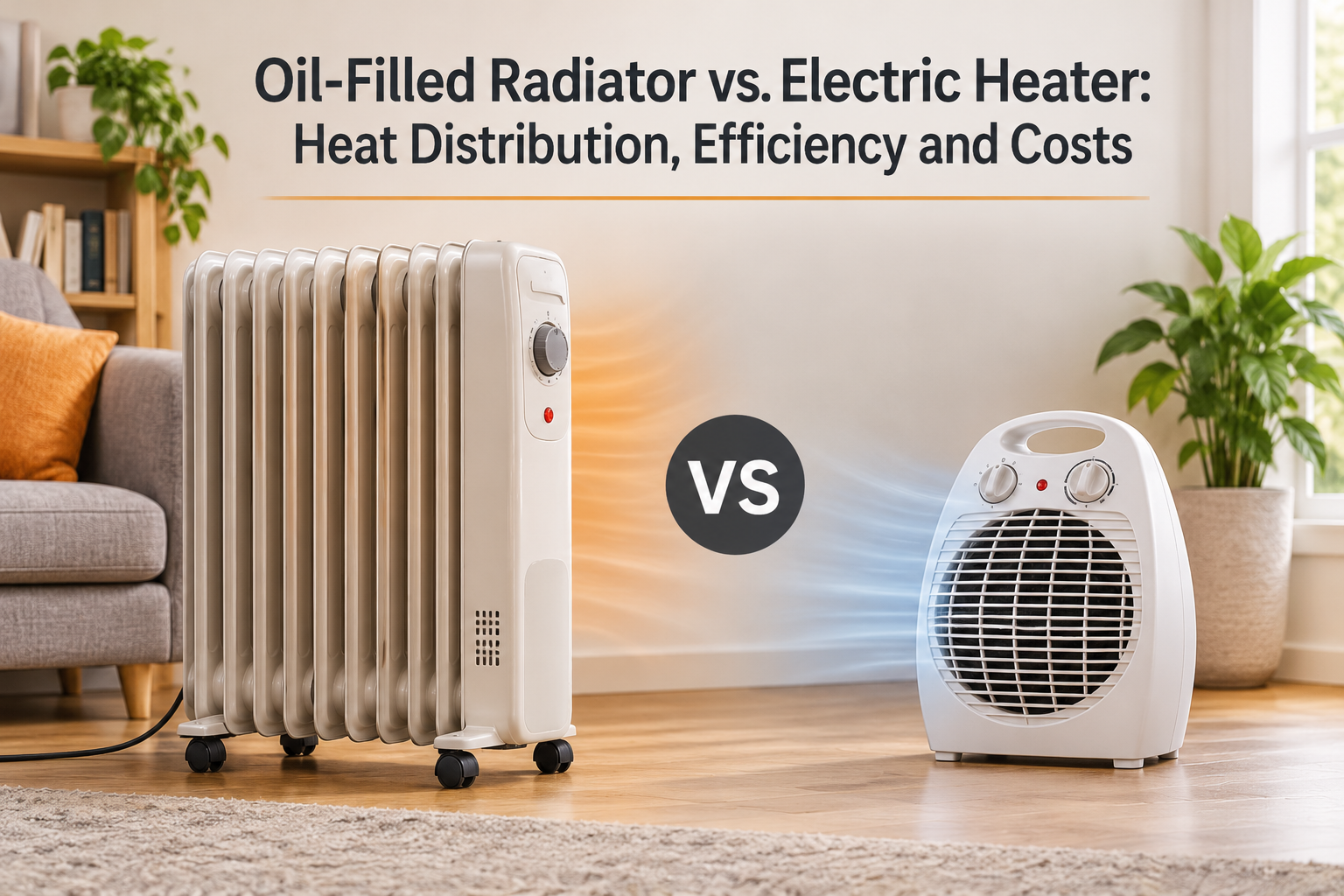
| Oil-filled radiator | Slow, steady, gentle heat that lasts after switching off | Along an exterior wall or near the window, a few inches from the wall, with clear space on all sides |
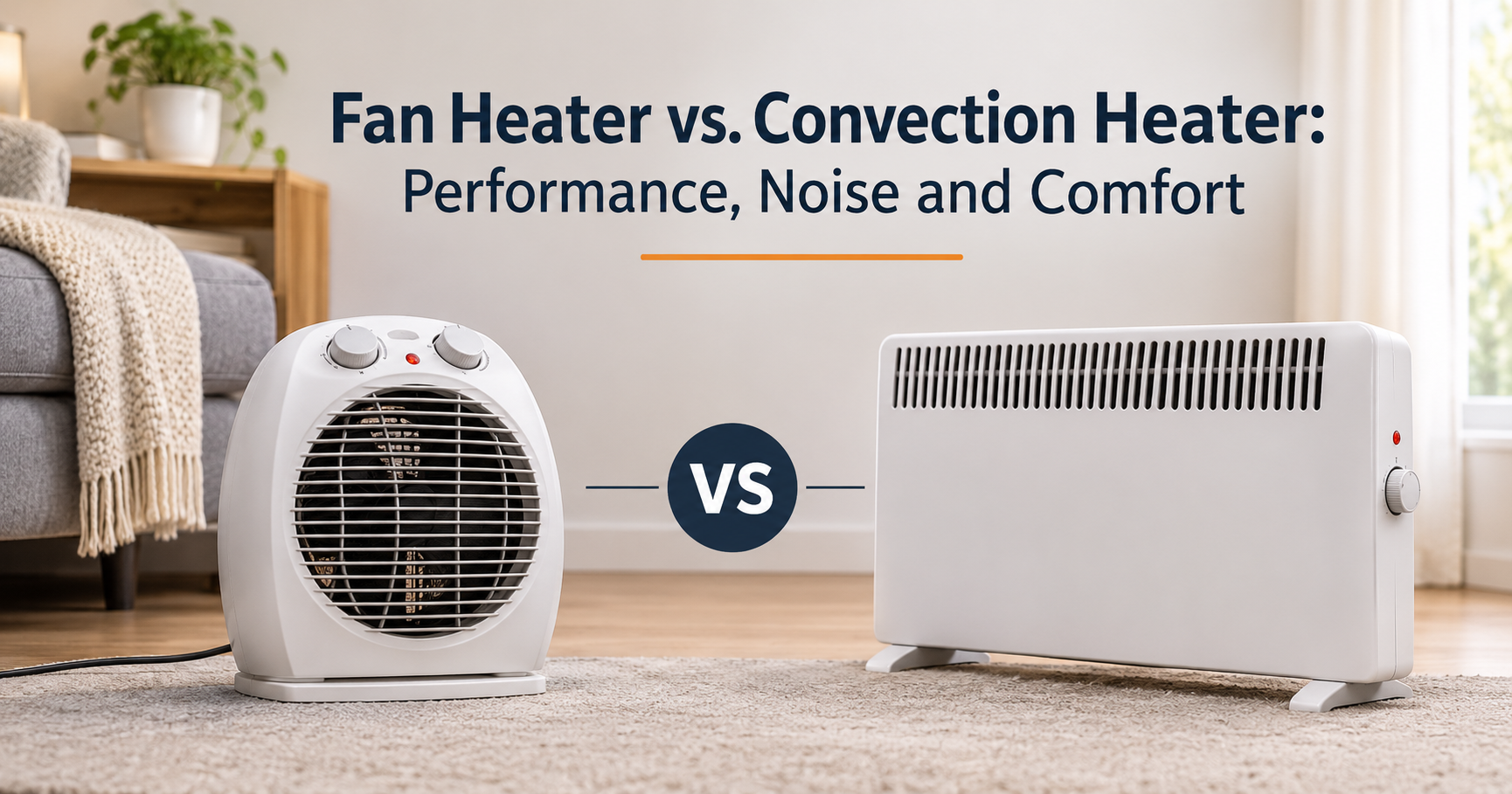
| Ceramic fan heater | Fast warm air pushed by a fan | On the floor, aimed toward the middle of the room and never directly at the bed or bedding |
| Convection panel heater | Silent warm air that rises and circulates | Low on a wall or on its stand under a window, following the manufacturer’s clearance |
| Infrared or radiant heater | Warms people and objects directly | Facing the seating or dressing area at a safe distance, not toward the bed or curtains |
Whichever type you choose, read the instruction manual. The manufacturer’s clearance distances can be larger than the general three-foot rule, and the manual always takes priority.
Placement Ideas for Different Bedroom Situations
Small Bedroom
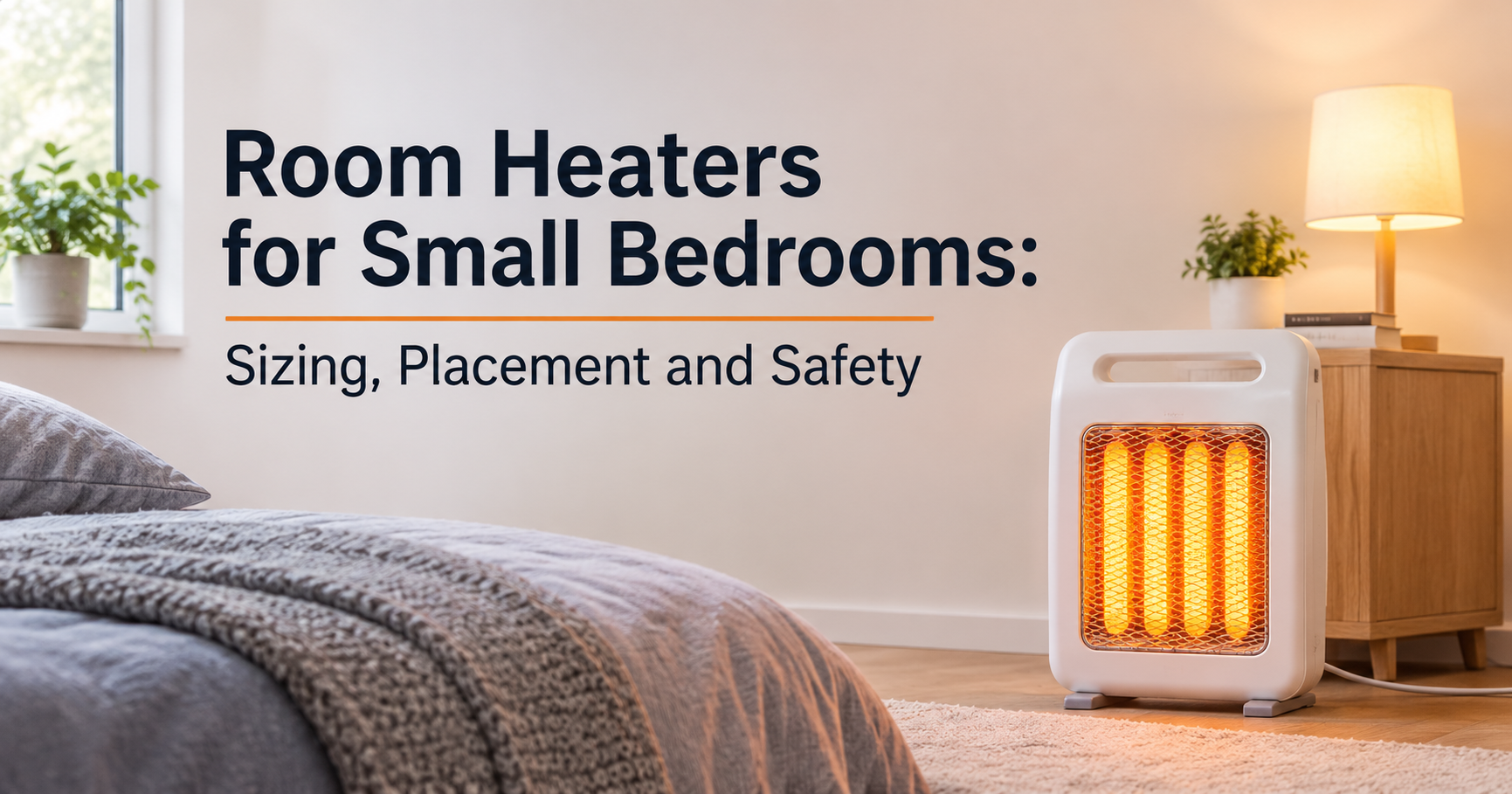
In a small room it is tempting to place the heater beside the bed because there is nowhere else to put it. Resist that. Choose a low-wattage heater with a thermostat and place it in the corner of the room that is farthest from the bed while still leaving open space around it. Consider rearranging the furniture slightly so the three-foot zone stays free. A smaller heater also overheats a small room less quickly.
Large Master Bedroom
Big rooms often have cold spots. Place the main heater near the window or exterior wall, and use a second heater or a different heating source only if needed. Avoid pushing one powerful heater to its limit. A heater with a fan can help move warm air through a bigger space, as long as it points across the room rather than at your bed.
Kids’ Room and Nursery
Children and pets can touch or knock over a heater in seconds. Place the heater well out of reach, behind a sturdy guard or in a corner of the room that is not used for play, and choose a model with a cool-touch housing, tip-over protection, and a tamper-resistant control panel. Never dry clothes or blankets near the heater, and keep cords out of reach.
Bedroom With a Large Window
A large window is the main source of cold air. Place the heater to one side of the window rather than directly beneath long curtains. If the heater must sit under the window, make sure curtains are short or fixed so they cannot touch it. Closing curtains at night helps keep heat in, but they must never rest against the heater.
Rented Room or Apartment
If you cannot move big furniture, use a heater with a compact footprint, such as a slim panel heater or a small oil-filled model. Choose the most open wall, keep the cord short, and check that the outlet is not overloaded by other devices.
Where You Should Never Place a Bedroom Heater
- On the bed or any soft furniture: This blocks ventilation and creates a serious fire risk.
- Next to curtains, bedding, or clothes: Fabric can ignite when it touches or sits too close to a hot surface.
- Under a shelf, desk, or table: Heat gets trapped and can damage the furniture or the heater.
- In a closet or tight corner: There is not enough airflow for safe operation.
- Near water or in a bathroom attached to the bedroom: Standard bedroom heaters are not designed for wet areas.
- In a doorway or walking path: People can trip, and the heater can be knocked over.
- Under a clothes-drying rack: Wet laundry near a heater creates both a fire hazard and an electrical hazard.
Choosing the Right Heater Size for Your Bedroom
Placement works best when the heater power matches the room size. A common rule of thumb is about 10 watts of heating power for every square foot of floor area (roughly 100 watts per square metre) in a room with average insulation. Poorly insulated rooms, high ceilings, and very cold climates need more power, while well-insulated rooms need less.
| Bedroom Size | Approximate Area | Suggested Heater Power |
|---|---|---|
| Small | 100 sq ft (9 m²) | About 1,000 W |
| Medium | 150 sq ft (14 m²) | About 1,500 W |
| Large | 200 sq ft (18.5 m²) | About 2,000 W |
| Extra large | 300 sq ft (28 m²) | About 3,000 W, or two heaters in different areas |
These figures are only a guide. Many portable heaters are limited to around 1,500 watts, so in larger rooms it is often safer to use two properly placed heaters on separate outlets than to push one heater or one outlet beyond its limit.
Safety Features to Look For
Even with perfect placement, the heater itself should have modern safety protection. Before you buy, check for these features:
- Tip-over protection: The heater switches off automatically if it falls or tilts.
- Overheat protection: The heater shuts off if internal temperatures become too high.
- Adjustable thermostat: The heater maintains a set temperature instead of running at full power all night.
- Timer or auto shut-off: This helps prevent the heater from running when you no longer need it.
- Cool-touch housing: Useful in homes with children or pets.
- Recognized safety certification: Look for the safety mark that applies in your country.
Should You Leave a Heater On While Sleeping?
Many safety organizations advise turning portable heaters off when you leave a room or go to sleep. The safest approach is to warm the bedroom before bedtime, then switch the heater off or use a model with a thermostat, timer, tip-over switch, and overheat protection if you decide to use it overnight. Make sure the heater is placed according to the rules above, and never use a fuel-burning heater (gas, kerosene, or similar) in a closed bedroom, because these can release dangerous carbon monoxide. Installing working smoke alarms in the home, and a carbon monoxide alarm if you use any fuel-burning appliance, adds another layer of protection.
Simple Ways to Make Your Bedroom Heater More Efficient
- Seal drafts: Use weather stripping around windows and doors so warm air does not escape.
- Close the door: Heat only the room you are using.
- Use thick curtains at night: Keep them clear of the heater, but draw them to reduce heat loss through the glass.
- Use the thermostat: A comfortable sleeping temperature is often cooler than a daytime living temperature, and your blankets do part of the work.
- Add a rug and warm bedding: They make the room feel warmer without needing more power.
- Clean the heater regularly: Dust on vents and grilles reduces performance and can create a burning smell. Always unplug and let the heater cool before cleaning.
- Consider humidity: Heating can dry the air. A small humidifier placed safely away from the heater can improve comfort, especially for dry skin and throats.
Common Bedroom Heater Mistakes to Avoid
- Placing the heater beside the bed because it feels convenient.
- Using an extension cord or a multi-plug adapter for a high-power heater.
- Covering the heater to dry clothes or warm towels.
- Ignoring the manufacturer’s manual.
- Leaving the heater running in an empty room.
- Buying a heater that is far too powerful or far too weak for the room.
- Ignoring a damaged cord, a loose plug, or a burning smell. Stop using the heater immediately and have it checked or replaced.
Frequently Asked Questions
What is the best place to put a heater in a bedroom?
The best spot is on a flat floor near the coldest part of the room, such as beside the window or along an exterior wall, at least three feet away from the bed, curtains, and other flammable items, and close to a wall outlet.
How far should a heater be from the bed?
Keep it at least 3 feet (about 90 cm) away, and more if the manual recommends a larger distance. Heaters should never touch bedding or be positioned where blankets can fall onto them.
Is it safe to put a heater under a window?
Yes, it is usually a good location because it counters cold air coming off the glass. Just make sure the curtains are short, tied back, or otherwise unable to touch or hang over the heater.
Can I place a heater on a carpet?
Most portable heaters can be used on a carpeted floor if they are stable and level, but thick or loose rugs can make them tip and block air intake. Check the manual, and use a flat, firm surface when in doubt.
Where should I place a heater in a small bedroom?
Use the corner or wall farthest from the bed that still allows airflow and has an outlet nearby. Choose a lower-wattage heater with a thermostat so the small space does not overheat.
Is an oil-filled heater or a fan heater better for a bedroom?
Oil-filled radiators provide quiet, steady warmth that suits sleeping areas, while fan heaters warm a room faster but can be noisier. The best choice depends on your room size, noise tolerance, and how quickly you want heat. Either type needs the same safe placement.
Should the heater face the bed?
No. Direct the heat across the room rather than at the bed, and keep the bed outside the safety distance. Let the circulating warm air heat the bed area gently instead.
Final Thoughts
The perfect bedroom heater setup is simple: a safe distance from anything flammable, a stable floor position near the coldest side of the room, a direct connection to a wall outlet, and enough open space for warm air to move freely. Follow these guidelines and your bedroom will warm up faster, stay more comfortable, and use energy more efficiently, while keeping your family safe on the coldest nights.
Take a few minutes today to walk around your bedroom and check the heater’s position against the rules in this guide. A small adjustment in placement can make a big difference in both comfort and safety.