






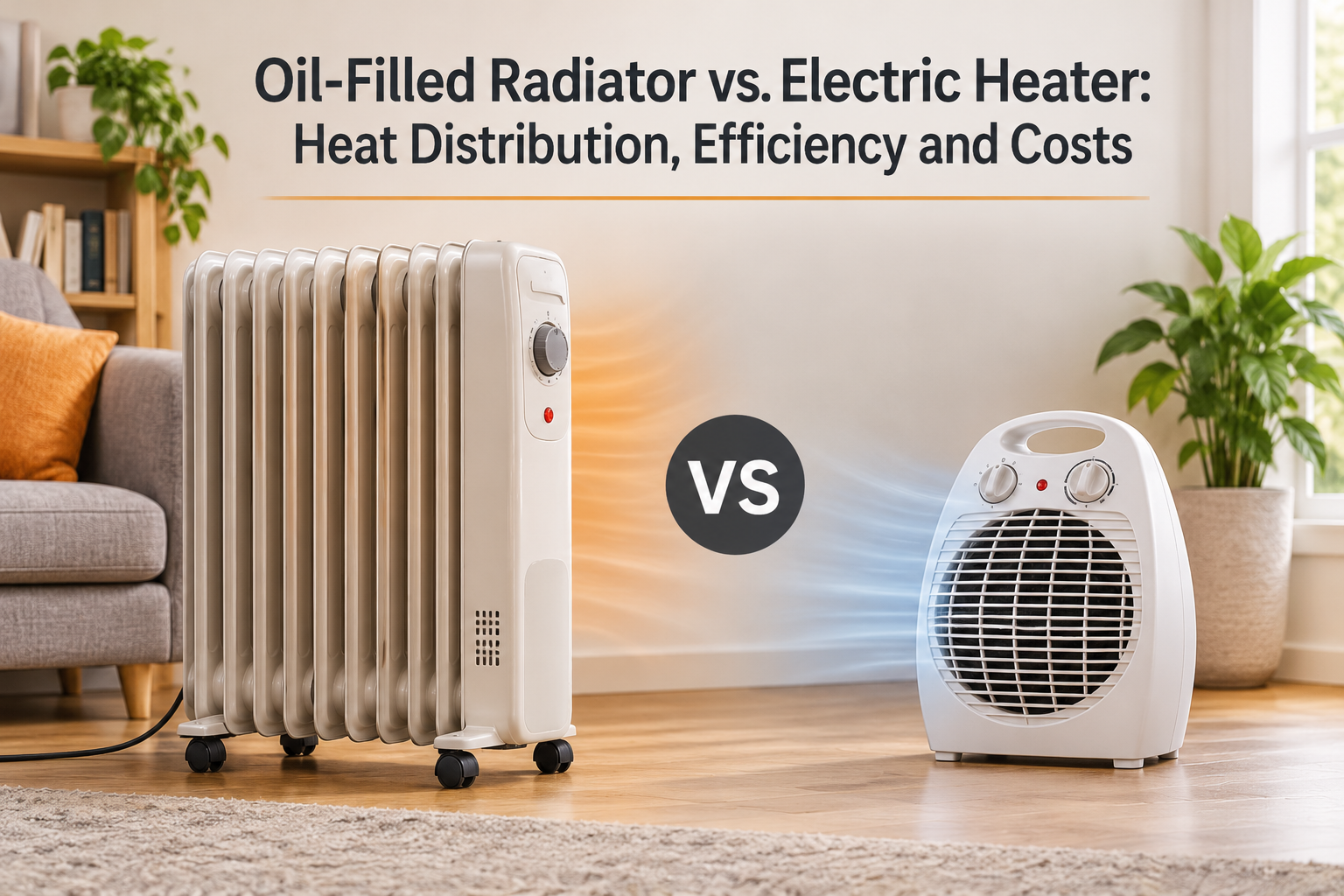
When the temperature drops, the first big decision is which heater to buy. Two choices dominate the market: the oil filled radiator and the classic electric heater, which includes fan heaters, ceramic heaters, convection heaters and infrared panels. They look different, feel different and behave very differently over a full evening. This guide compares them honestly so you can pick the right one for your room, budget and routine.
What Is an Oil Filled Radiator?
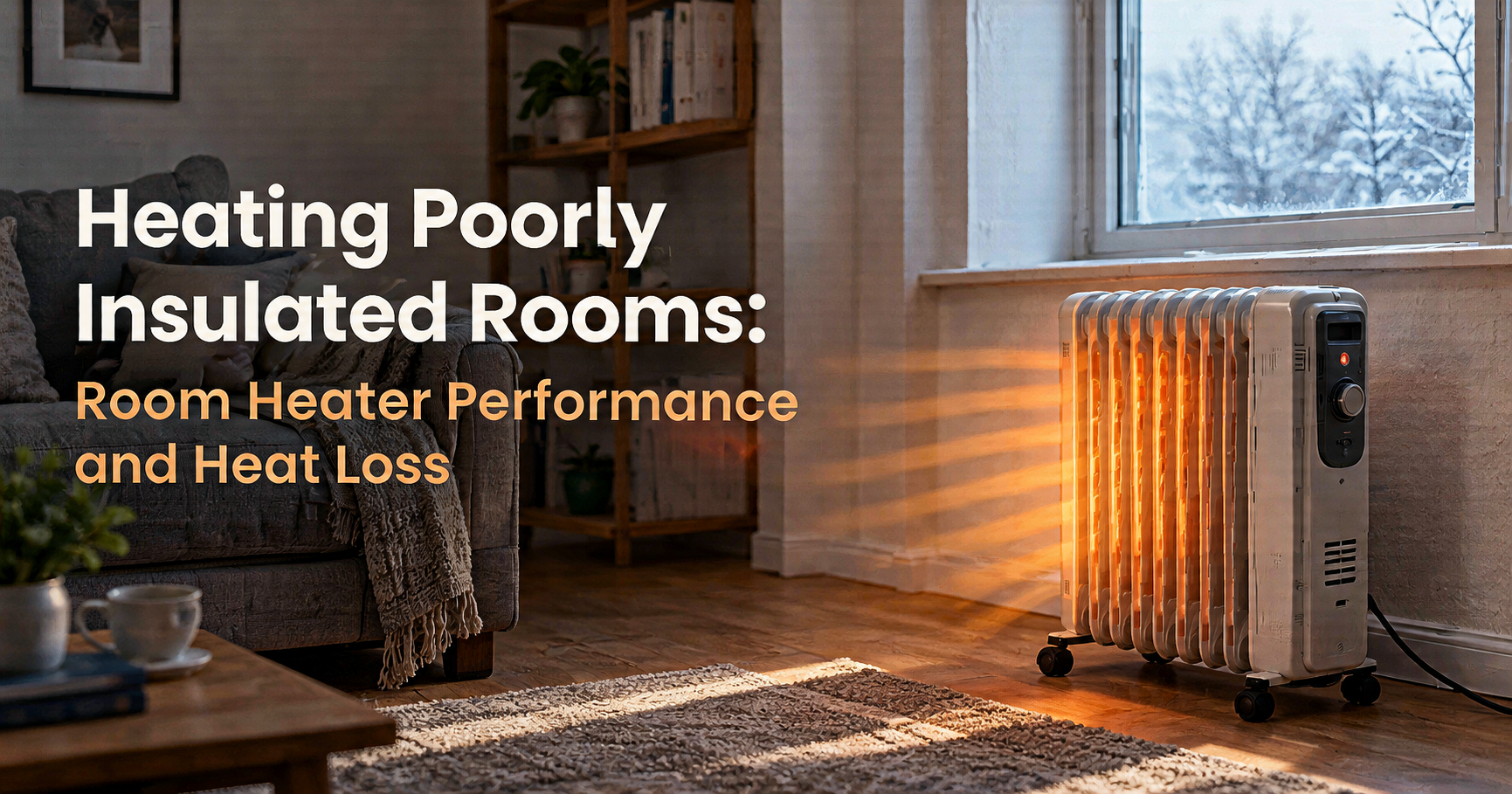
An oil filled radiator is a sealed metal unit with fins, filled with thermal oil. An electric element inside heats the oil, the hot oil warms the metal, and the metal releases heat into the room through radiation and gentle natural convection. The oil never needs refilling or changing because it is permanently sealed and does not burn off.
Because oil holds heat well, the radiator keeps giving off warmth even after the element switches off. Most models have a thermostat, several power settings (often 800W, 1200W and 2000W or similar), wheels and a built-in cable store.
What Is an Electric Heater?
“Electric heater” is a broad term. The common types are:
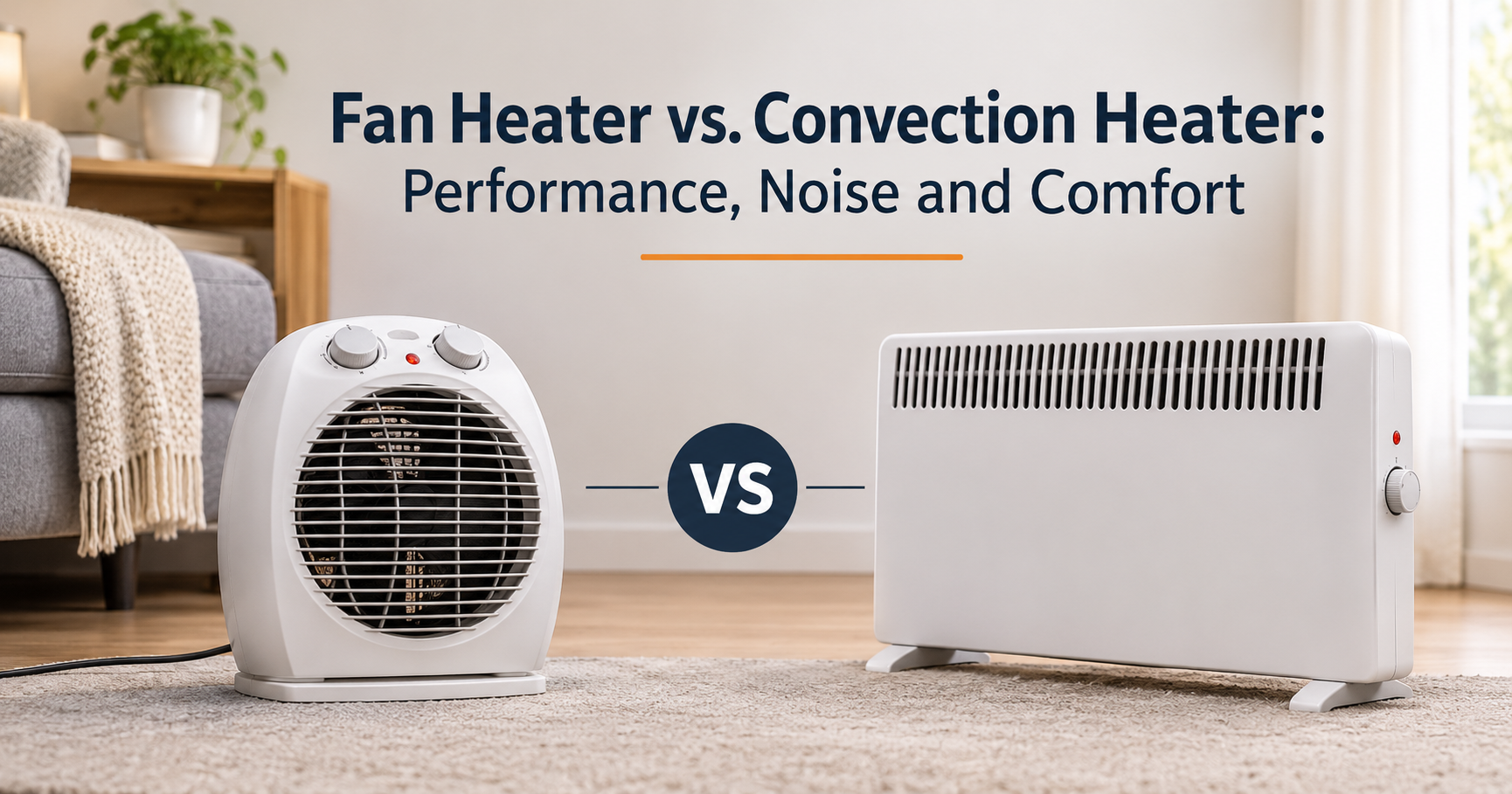
- Fan heaters: a fan blows air across a hot element. Very fast, but noisy and the warmth disappears soon after switching off.
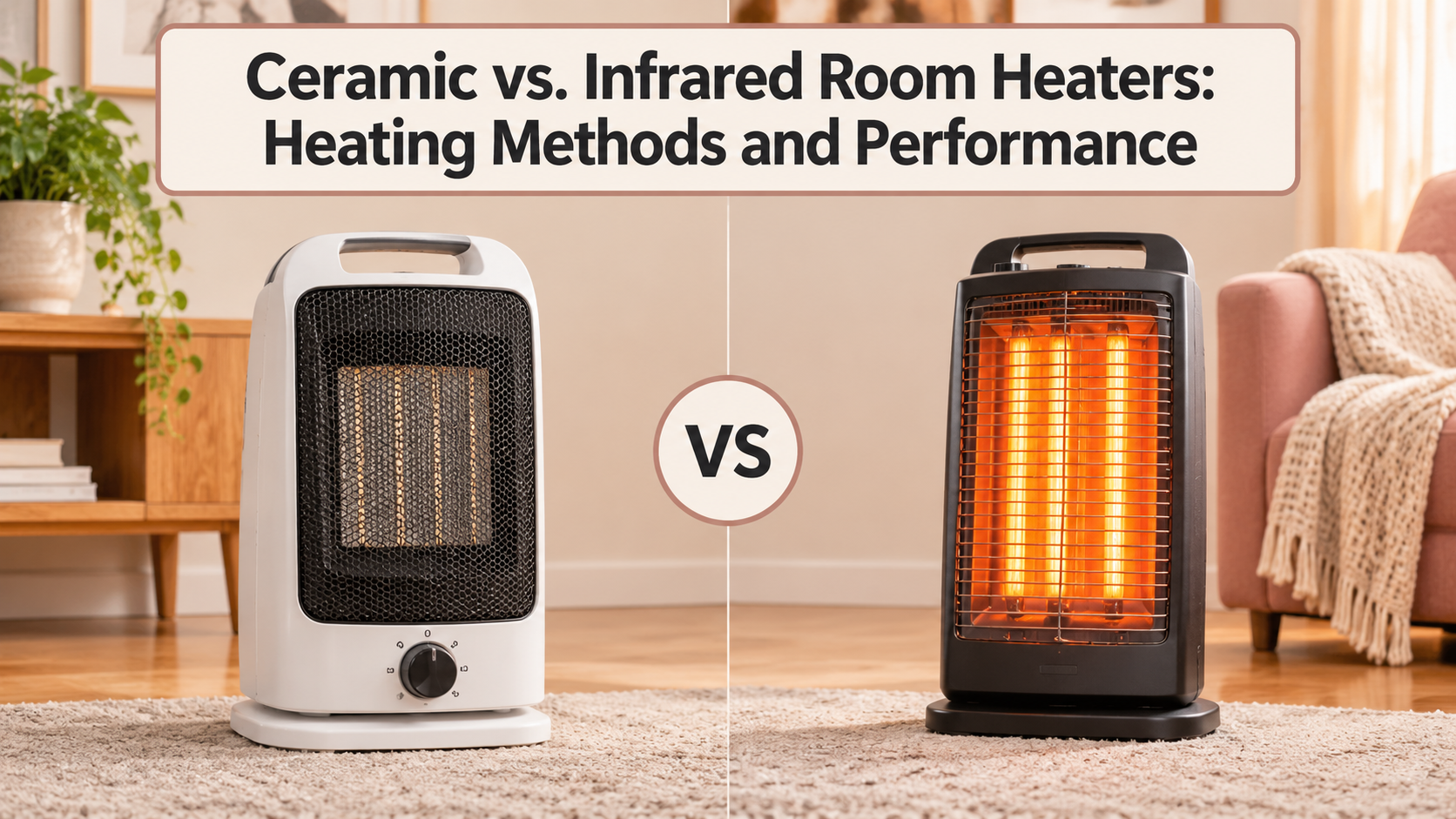
- Ceramic heaters: a fan heater using ceramic plates. They warm up quickly and are usually compact and safe to touch on the outside.
- Convection heaters: warm air rises naturally without a fan. Quieter, but slower to heat a room.
- Infrared or radiant heaters: heat objects and people directly, like sunlight. Good for spot heating.
How Each Heater Produces Heat
Both types turn almost all the electricity they use into heat, so neither is dramatically more “efficient” at the plug. The real difference is how that heat is delivered and how long it lasts.
Oil Filled Radiator vs Electric Heater: Side-by-Side Comparison
| Feature | Oil Filled Radiator | Electric Heater (Fan/Ceramic) |
|---|---|---|
| Heating speed | Slow: 15 to 30 minutes to feel the difference | Fast: warm air within seconds |
| Heat after switching off | Keeps radiating for a while | Stops almost immediately |
| Noise | Nearly silent (occasional tick as it heats) | Fan noise, quiet on some models |
| Best room size | Small to medium rooms, used for hours | Small rooms and short bursts |
| Air quality | Does not blow dust around | Fan can circulate dust |
| Surface temperature | Warm to hot, but without exposed glowing parts | Grille can get hot; ceramic models vary |
| Portability | Heavier, on wheels | Light and easy to carry |
| Upfront price | Usually higher | Usually lower |
| Lifespan | Often long, few moving parts | Fan motor can wear out sooner |
These ratings are a general guide. A premium ceramic heater can be quieter than shown, and a cheap oil radiator can be less even than shown. Always check the specifications of the exact model.
Heating Speed and Comfort
If you walk into a cold room and want warmth right now, a fan or ceramic heater wins. Warm air reaches you in seconds. The downside is that once the fan heater is off, the room cools quickly because most of the warmth is in the air, not in a heat-holding material.
An oil filled radiator takes longer to warm up but gives smoother, more even comfort. Surfaces and furniture also absorb some of its radiant heat, so the room feels warm rather than just the air. This is why many people prefer it for sleeping areas and home offices.
Running Cost: Which One Is Cheaper?
Heater running cost follows a simple formula:
Cost = Power (kW) × Hours used × Electricity price per kWh
Example: a 1500W (1.5 kW) heater running for 4 hours uses 6 kWh. Multiply by your local tariff to get the cost. A 2000W oil radiator and a 2000W fan heater draw the same power when the element is on.
The difference comes from behavior. An oil filled radiator with a good thermostat reaches the target temperature, then cycles on and off while the hot oil keeps releasing heat, so it often draws less over a long session. A fan heater is cheaper to run when you only need a short burst of heat, because you can switch it off as soon as you are comfortable.
Safety Comparison
Both types are safe when used properly, but they have different risk points:
- Tip-over switch: shuts the heater off if it falls. Essential for both types.
- Overheat protection: cuts power if internal temperature gets too high.
- Surface heat: oil radiators can get hot to touch, so keep children and pets away. Fan heater grilles also get hot.
- Clearance: never cover either heater or dry clothes on it, and keep curtains and bedding at a safe distance.
- Power supply: plug directly into a wall socket instead of an extension board whenever possible, since heaters draw high current.
Noise, Air Quality and Health
Oil filled radiators are almost silent, which makes them ideal for bedrooms and study rooms. Fan heaters add motor and airflow noise. Because fan heaters push air around, they can stir up dust, which some people with allergies may notice. Any electric heater can make a room feel drier, so ventilate regularly and consider a bowl of water or a humidifier if the air feels uncomfortable.
Which Heater Should You Choose?
| Situation | Better Choice | Why |
|---|---|---|
| Bedroom at night | Oil filled radiator | Silent, steady, no blowing air |
| Home office all day | Oil filled radiator | Even warmth with a thermostat |
| Bathroom or quick warm-up | Electric fan/ceramic heater | Instant heat for short use (use only bathroom-rated models) |
| Under a desk | Small infrared or ceramic heater | Direct, compact spot heat |
| Rental or frequent moving | Electric heater | Lightweight and easy to carry |
| Nursery or elderly person’s room | Oil filled radiator | Quiet and no glowing element |
Buying Guide: What to Check Before You Buy
- Wattage for your room: a common rule of thumb is about 10 watts per square foot (around 100 watts per square metre) for an averagely insulated room. Rooms with poor insulation need more.
- Adjustable thermostat: keeps temperature steady and saves power.
- Safety features: tip-over and overheat protection are non-negotiable.
- Timer: useful for pre-warming a room before you wake or return home.
- Number of fins (radiators): more fins give more surface area for better heat output.
- Wheels and cable storage: make a heavier radiator easier to move and store.
- Noise rating (fan heaters): check user feedback on fan sound.
- Warranty and brand support: heaters are used for years, so reliable after-sales service matters.
Pros and Cons Summary
Oil Filled Radiator
- Pros: silent, even warmth, keeps radiating after switch-off, no dust blowing, long lifespan.
- Cons: slow start, heavier, higher upfront price.
Electric Heater (Fan/Ceramic)
- Pros: instant heat, lightweight, affordable, compact.
- Cons: noisy, heat fades fast, can circulate dust, motor may wear.
Common Mistakes to Avoid
- Buying a heater with too low wattage for the room and then running it nonstop.
- Leaving the door and windows open while heating.
- Using a normal heater in a wet bathroom that is not rated for it.
- Drying clothes on top of the heater.
- Using a damaged cable or a weak extension cord.
Final Verdict
There is no single winner, only the right tool for the job. If you spend long hours in a room, want quiet comfort and can wait a little for warmth, an oil filled radiator is the better choice. If you want fast heat, a lower price and a portable unit for short use, a fan or ceramic electric heater makes more sense. Many households keep one of each: a radiator for the bedroom and a small fan heater for quick warm-ups.
Frequently Asked Questions
Is an oil filled radiator cheaper to run than an electric heater?
At the same wattage, both use the same power while the element is on. Over several hours, a radiator with a thermostat often uses less because it cycles off while the oil keeps radiating. For short use, a fan heater is usually cheaper.
Can I leave an oil filled radiator on all night?
Many models are designed for it, with thermostat, tip-over and overheat protection. Still, follow the manufacturer’s instructions, keep it clear of bedding and curtains, and plug it straight into the wall.
Do oil filled radiators dry out the air?
They do not blow air and are generally gentler than fan heaters, but any electric heater can lower indoor humidity slightly. Ventilate the room and use a humidifier if needed.
How long does an oil filled radiator take to heat a room?
Usually 15 to 30 minutes to feel clearly warmer, depending on room size, insulation and wattage.
Which heater is better for a small room?
A small ceramic heater works well for quick heating. For a small bedroom used overnight, a lower-wattage oil filled radiator is more comfortable.
What wattage do I need?
As a rough guide, 10 watts per square foot of floor area. A 120 sq ft room would suit roughly a 1200W heater, more if the room is cold or poorly insulated.
Disclosure: this article may contain affiliate content. Specifications and prices vary by model, so always check the manufacturer’s details before buying.