

When the temperature drops, a room heater is the quickest way to make a bedroom, study or home office comfortable. The problem is the electricity bill that arrives later. Many people buy a heater without knowing how much power it draws, how many units it burns in an hour, or what it adds to the monthly bill. This guide explains room heater electricity consumption in plain language, with formulas, tables, worked examples and practical ways to cut the cost.
How Much Electricity Does a Room Heater Use?
The power a heater consumes is printed on its rating label as watts (W). Most portable room heaters sit between 500 W and 2000 W, and a few oil-filled models go higher. A bigger wattage means more heat per hour, but also more electricity used for every hour the element is on.
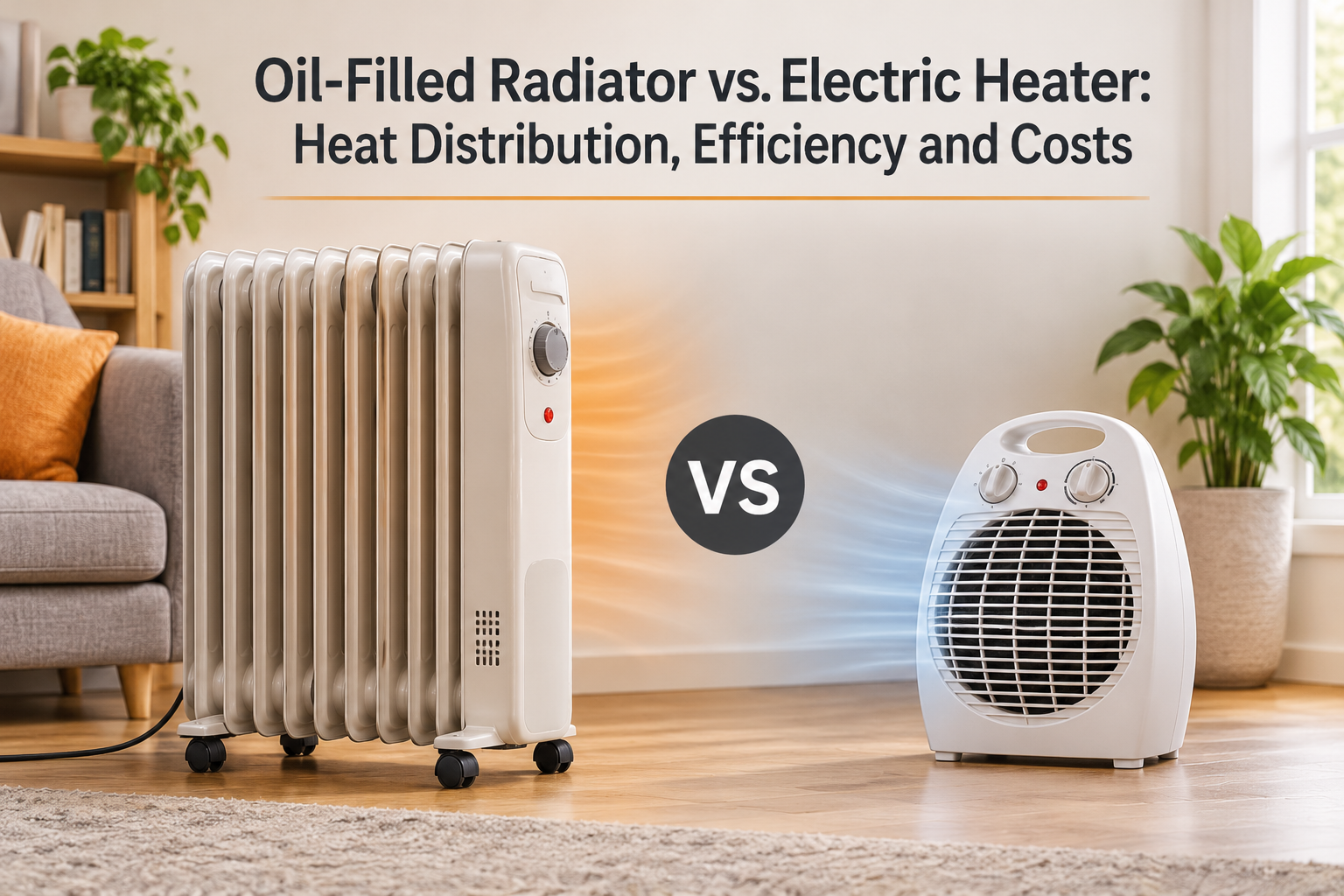
The important point is that almost every electric resistance heater turns nearly all of the electricity it consumes into heat. A 1500 W fan heater and a 1500 W oil-filled radiator both consume the same 1.5 units per hour at full power. The real difference between them is how quickly they warm the room, how evenly the heat spreads and how long it lingers after the heater switches off.
Watts, Kilowatts and Units (kWh) Explained
Your electricity bill is based on units, and one unit equals one kilowatt-hour (kWh). That is the energy used by a 1000 W appliance running for one hour. To work out your heater's consumption you only need three numbers: its wattage, the hours you use it and your electricity rate per unit.
- Energy (kWh) = Watts × Hours ÷ 1000
- Cost = kWh × Rate per unit
- Current (Amps) = Watts ÷ Voltage
For example, a 2000 W heater running for 3 hours uses 2000 × 3 ÷ 1000 = 6 kWh. If your tariff is 0.15 per unit, that session costs 0.90.
Power Consumption by Type of Room Heater
There are several kinds of portable heater, and their wattage ranges overlap. The chart shows the typical range you will find on the market.
| Heater type | Typical wattage | How it heats | Best suited for |
|---|---|---|---|
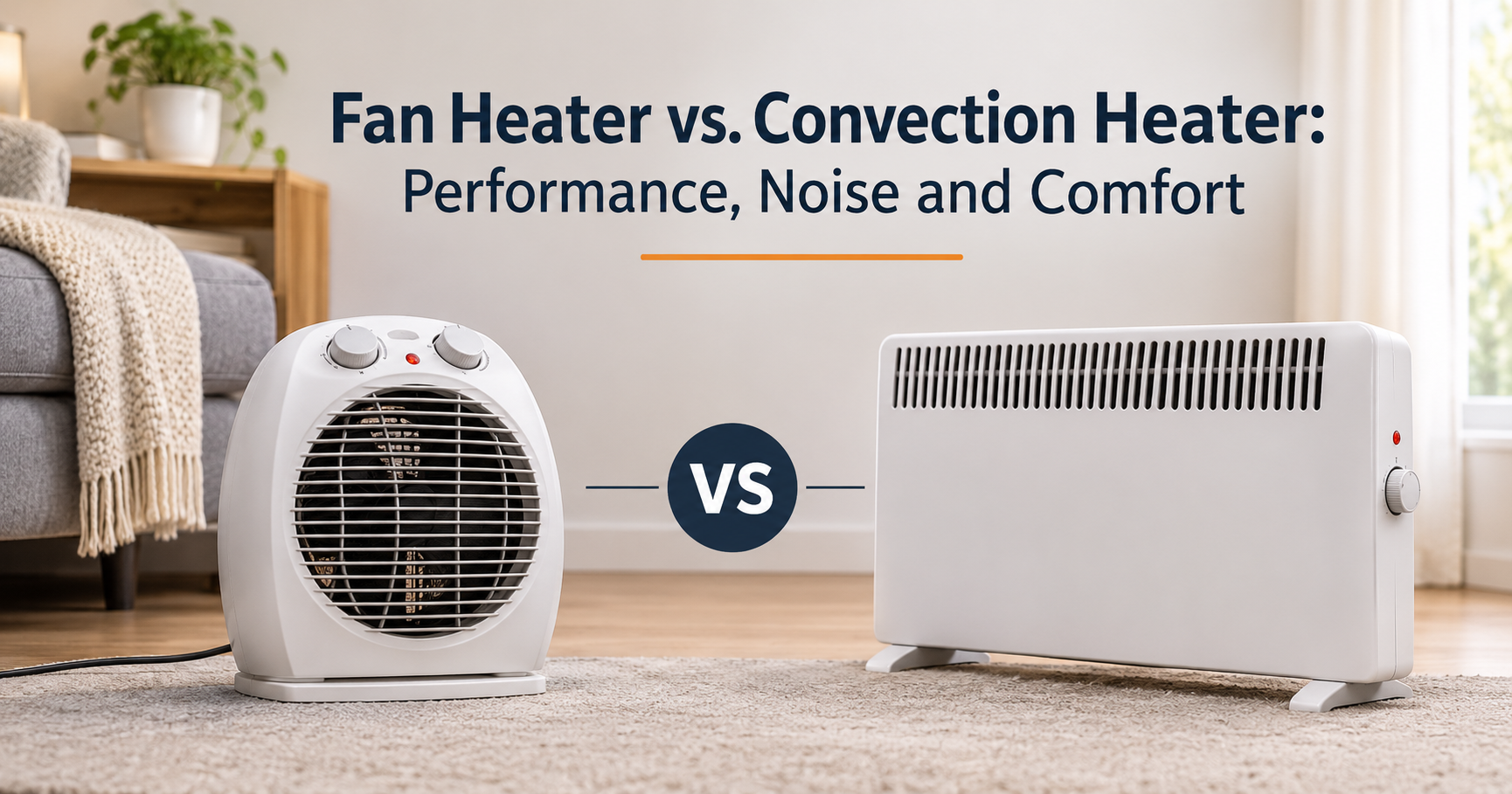
| Fan heater | 1000 – 2000 W | Blows air over a hot element | Quick warm-up of small rooms |
| Convection heater | 1000 – 2000 W | Warm air rises and circulates | Steady heating of medium rooms |
| Oil-filled radiator | 800 – 2500 W | Heats oil that releases heat slowly | Bedrooms and long, quiet heating |
| Ceramic heater | 750 – 1500 W | Ceramic plates warm air quickly | Offices and small living spaces |
| Infrared / quartz heater | 400 – 1500 W | Radiates heat directly to people | Spot heating near a desk or seat |
| Halogen heater | 400 – 1200 W | Radiant heat from halogen tubes | Short, targeted heating |
| Panel heater | 400 – 1500 W | Low-temperature convection and radiation | Wall-mounted or quiet use |
Monthly Electricity Consumption of a Room Heater
The table below shows the maximum monthly units for different heater sizes, assuming the heater runs at full power for a 30-day month. It is the upper limit, and your real figure will usually be lower.
| Heater power | 2 hours/day | 4 hours/day | 6 hours/day | 8 hours/day |
|---|---|---|---|---|
| 500 W | 30 kWh | 60 kWh | 90 kWh | 120 kWh |
| 1000 W | 60 kWh | 120 kWh | 180 kWh | 240 kWh |
| 1500 W | 90 kWh | 180 kWh | 270 kWh | 360 kWh |
| 2000 W | 120 kWh | 240 kWh | 360 kWh | 480 kWh |
What Will It Cost Per Month?
Electricity rates differ from country to country and even between billing slabs, so the next table uses three sample rates per unit. Replace them with the rate on your own bill. The figures assume 4 hours of full-power use per day for 30 days.
| Heater power | Monthly units | Rate 0.10 / unit | Rate 0.15 / unit | Rate 0.25 / unit |
|---|---|---|---|---|
| 500 W | 60 kWh | 6.00 | 9.00 | 15.00 |
| 1000 W | 120 kWh | 12.00 | 18.00 | 30.00 |
| 1500 W | 180 kWh | 18.00 | 27.00 | 45.00 |
| 2000 W | 240 kWh | 24.00 | 36.00 | 60.00 |
Rated Power vs Real Consumption: The Thermostat Effect
A heater draws its full rated power only while the heating element is switched on. Once the room reaches the temperature you set, the thermostat cuts the power and switches it back on when the room cools. In a well-insulated room the element may be on for only half the time or even less. In a cold, draughty room it will run for much longer.
This is why the same heater can produce very different bills in two different homes. Insulation, room size, outside temperature and the thermostat setting all change how long the element stays on.
Worked Examples
Example 1: Bedroom with a 1000 W oil-filled radiator
The heater runs 6 hours at night and the thermostat keeps the element on about 50% of the time. Daily use is 1 kW × 6 h × 0.5 = 3 kWh. Over 30 days that is 90 kWh, which costs about 13.50 at a rate of 0.15 per unit.
Example 2: Living room with a 2000 W fan heater
The heater runs 4 hours a day at about 70% duty. Daily use is 2 kW × 4 h × 0.7 = 5.6 kWh. Over 30 days that is 168 kWh, which costs about 25.20 at 0.15 per unit.
Example 3: Home office with an 800 W ceramic heater
The heater runs 8 hours a day at about 60% duty. Daily use is 0.8 kW × 8 h × 0.6 = 3.84 kWh. Over 30 days that is 115.2 kWh, which costs about 17.28 at 0.15 per unit.
Room Heater vs Heat Pump or Inverter AC
A resistance room heater converts 1 unit of electricity into roughly 1 unit of heat. A heat pump or an inverter air conditioner with a heating mode moves heat instead of creating it, so it can deliver around 2.5 to 4 units of heat for every unit of electricity in mild winter conditions. Its efficiency falls as outdoor temperatures drop very low.
To produce 6 kWh of heat, a room heater needs 6 kWh of electricity, while a heat pump with an efficiency ratio of 3 needs only about 2 kWh. If you heat a room for many hours every day, an efficient heat pump or inverter AC can save a lot of money over a season. For occasional or short-term heating, a portable room heater is usually the cheaper purchase.
How to Choose the Right Heater Size
A common rule of thumb is about 10 watts of heating power for every square foot of floor area, assuming a standard ceiling height and reasonable insulation. A heater that is too small runs constantly without ever reaching the target temperature, and one that is far too large wastes money and cycles on and off aggressively.
| Room area | Suggested heater power | Example room |
|---|---|---|
| Up to 100 sq ft | Around 1000 W | Small study or box room |
| 100 – 150 sq ft | Around 1500 W | Average bedroom |
| 150 – 200 sq ft | Around 2000 W | Large bedroom or small living room |
| Over 200 sq ft | More than one heater or a larger system | Big living room or open space |
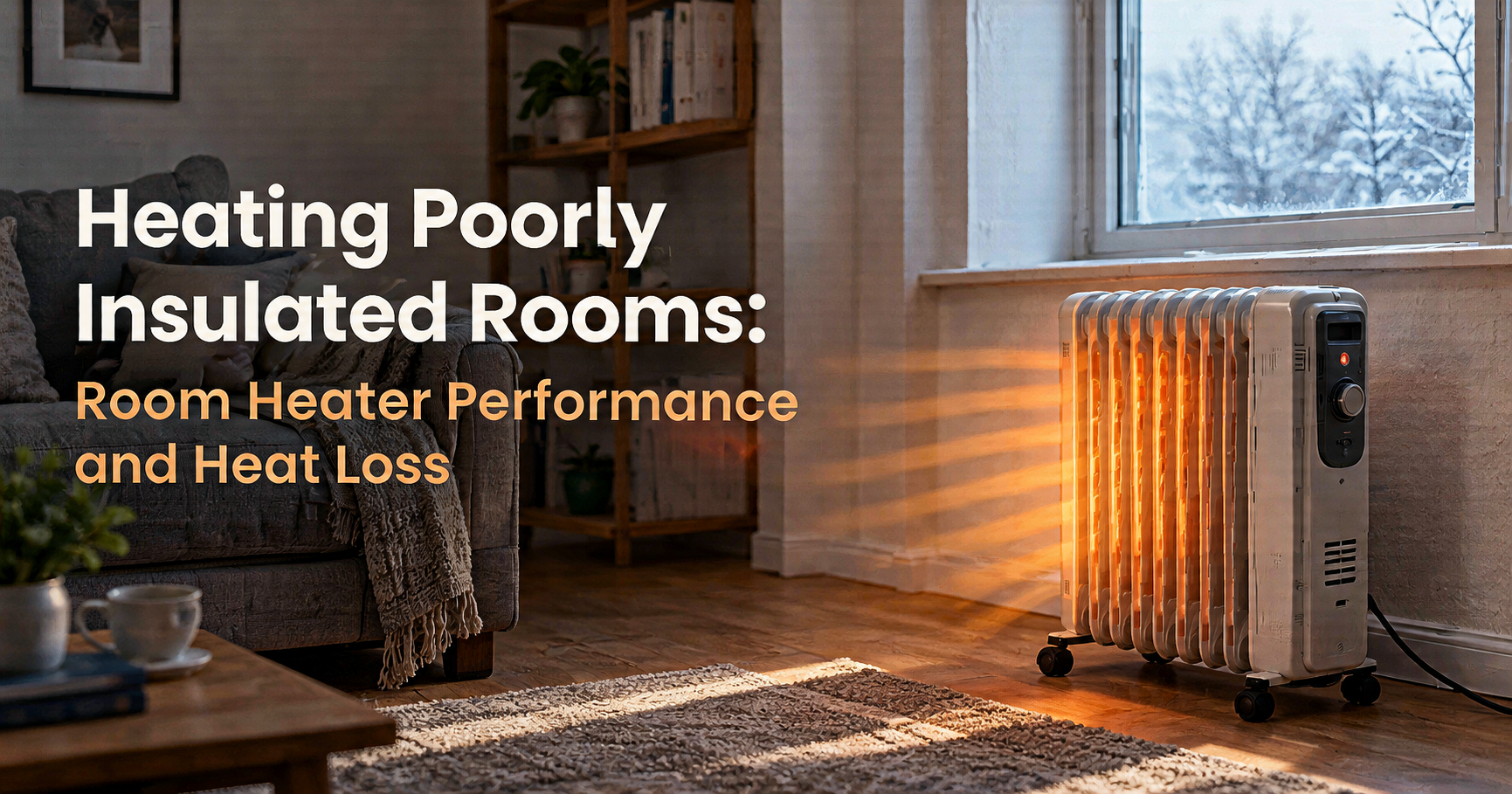
Rooms with high ceilings, large windows, bare floors or poor insulation need more heating power than the rule suggests.
15 Practical Ways to Reduce Heater Electricity Consumption
- Use the thermostat. Set a comfortable temperature instead of running the heater continuously.
- Pick the right size. Match the wattage to the room area using the table above.
- Seal draughts. Close gaps around doors and windows with weather strips or draught excluders.
- Use thick curtains. Close them at night to keep heat from escaping through glass.
- Keep doors closed. Heat only the room you are using.
- Use a timer. Pre-heat the room before you need it and switch off before you leave.
- Add rugs and carpets. They reduce heat loss through the floor.
- Place the heater wisely. Keep it away from furniture, curtains and cold walls where heat is wasted, and make sure air can circulate freely.
- Heat the person, not the room. An infrared or radiant heater near your desk can be more efficient than warming the entire room.
- Choose oil-filled models for long use. They keep radiating heat after the element switches off.
- Dress warmly. A sweater and warm socks let you lower the thermostat setting.
- Use the lower power setting. Once the room is warm, switch from the highest setting to a lower one.
- Insulate the room. Roof, wall and window insulation reduces how often the heater needs to run.
- Clean the heater. Dust on the grille and fan reduces airflow and performance.
- Track your usage. A plug-in energy meter shows the true consumption of your heater.
How to Measure Your Heater's Real Consumption
Check the rating label on the back or base of the heater for its wattage. For an accurate reading of real use, plug it into a plug-in energy meter, run it for a typical day and note the kWh shown. Multiply that figure by the number of days and your rate per unit to estimate the monthly cost.
Electrical Load and Safety
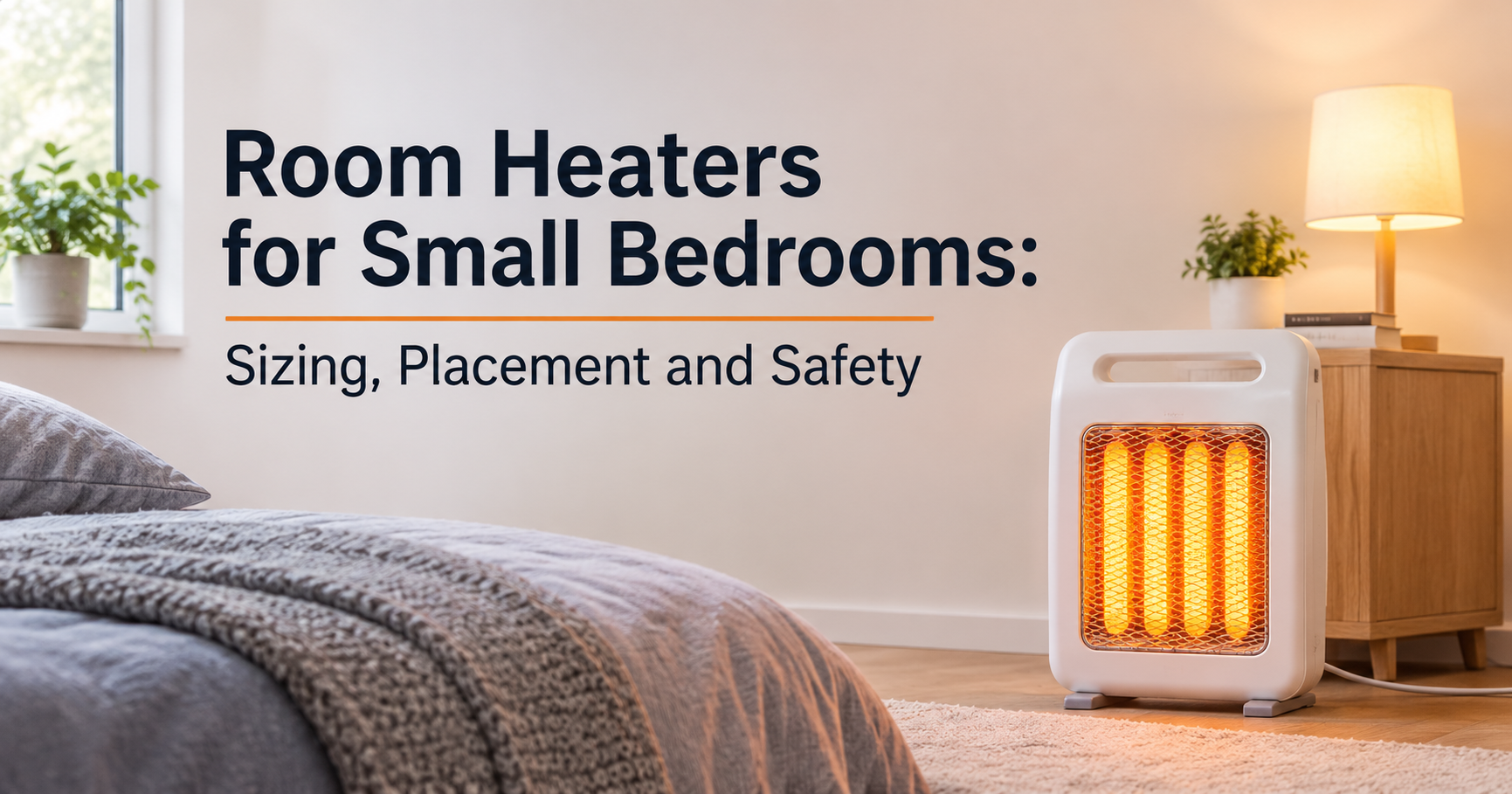
Heaters are high-power appliances, so safety deserves attention. A 1500 W heater draws about 12.5 amps on a 120 V supply and about 6.5 amps on a 230 V supply. Always follow these precautions:
- Plug the heater directly into a wall socket that is in good condition. Avoid extension cords and multi-plug adapters.
- Do not run several high-power appliances on the same circuit at the same time.
- Keep curtains, bedding, clothes and furniture at a safe distance from the heater.
- Choose a model with tip-over protection and overheat protection.
- Never cover the heater or use it to dry clothes.
- Switch it off when you leave the room or go to sleep, unless the heater has proper automatic safety features and you are comfortable with its use.
What to Look for When Buying an Energy-Efficient Room Heater
- Adjustable thermostat: keeps the temperature steady and avoids needless running.
- Multiple power settings: lets you use 500 W to 1000 W once the room is warm.
- Timer and programmable controls: reduce the hours of use automatically.
- Safety features: tip-over switch, overheat cut-off and a cool-touch body.
- Right type for your use: oil-filled for long hours, ceramic or fan for quick warm-up, infrared for spot heating.
- Quiet operation: important for bedrooms and study rooms.
- Portability and size: handles, wheels and a compact body make it easier to use in different rooms.
Frequently Asked Questions
How many units does a 1500 W room heater use per hour?
At full power it uses 1.5 units (1.5 kWh) per hour. With the thermostat cycling, the average is often lower.
Is it expensive to run a room heater all night?
It depends on wattage, room insulation and your electricity rate. A 1500 W heater running 8 hours at about 50% duty uses around 6 kWh, which costs roughly 0.90 at 0.15 per unit.
Which room heater is the cheapest to run?
All resistance heaters convert almost all electricity into heat, so the heater itself matters less than how you use it. The cheapest option is the right size for the room, with a good thermostat, used in a well-insulated space. For long hours, oil-filled models are comfortable and efficient in practice, and for spot heating an infrared heater can use less energy.
Does a higher wattage heater always cost more?
It uses more electricity per hour, but it also warms the room faster and may switch off sooner. The total energy needed to reach a temperature is similar, so choosing the correct size matters more than choosing the lowest wattage.
Is a room heater or an air conditioner cheaper for heating?
An inverter AC with a heating function or a heat pump is usually cheaper to run for long periods because it delivers more heat per unit of electricity. A portable heater is better for short, occasional use.
Does the low setting save electricity?
Yes, the low setting draws less power, but the heater has to run longer to warm the room. It is best for maintaining temperature once the room is already warm.
Can I use a 2000 W heater on a normal wall socket?
Most household sockets and circuits can handle it if they are in good condition and rated for the load, but you should confirm the rating of the socket and wiring. Avoid extension cords and share the circuit with as few other appliances as possible.
Conclusion
Room heater electricity consumption comes down to a simple calculation: watts × hours ÷ 1000 gives units, and units × your rate gives the cost. A 1500 W heater uses up to 1.5 units per hour, but a good thermostat, a correctly sized heater and a well-insulated room can cut real consumption sharply. Use the tables above to estimate your own bill, follow the saving tips and choose a heater with the controls and safety features you need. With the right habits you can stay warm all winter without an unpleasant surprise on your electricity bill.