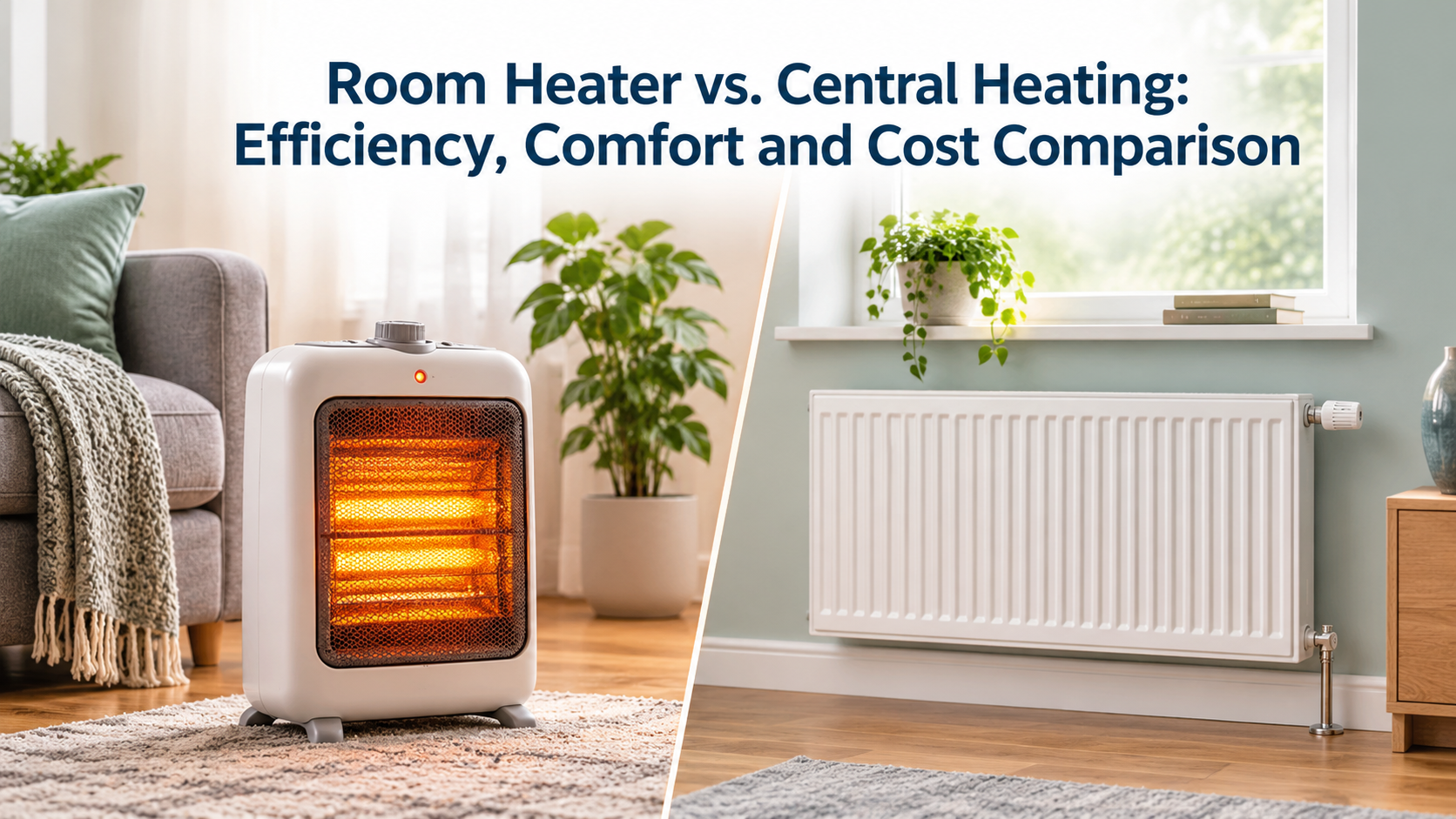
When the temperature drops, one question comes up in almost every home: should you rely on a portable room heater, or invest in a central heating system? Both can keep you warm, but they work very differently, cost very differently, and suit very different homes. This guide compares them in detail so you can choose with confidence.
Quick Answer
If you only need to warm one or two rooms for a few hours a day, a room heater is usually cheaper to buy and easier to use. If you want steady, even warmth across the whole home for many hours, central heating is more comfortable and often more efficient in the long run, but it costs far more upfront.
Room Heater vs Central Heating at a Glance
| Feature | Room Heater | Central Heating |
|---|---|---|
| Upfront cost | Low | High |
| Installation | None, plug and use | Professional installation |
| Coverage | One room | Whole home |
| Heat evenness | Uneven, hot near the unit | Even and steady |
| Running cost for a full home | High if many are used | Lower per room |
| Portability | Move anywhere | Fixed |
| Safety risk | Higher if misused | Lower when serviced |
What Is a Room Heater?
A room heater is a standalone, usually portable appliance that warms the space around it. The most common types are:
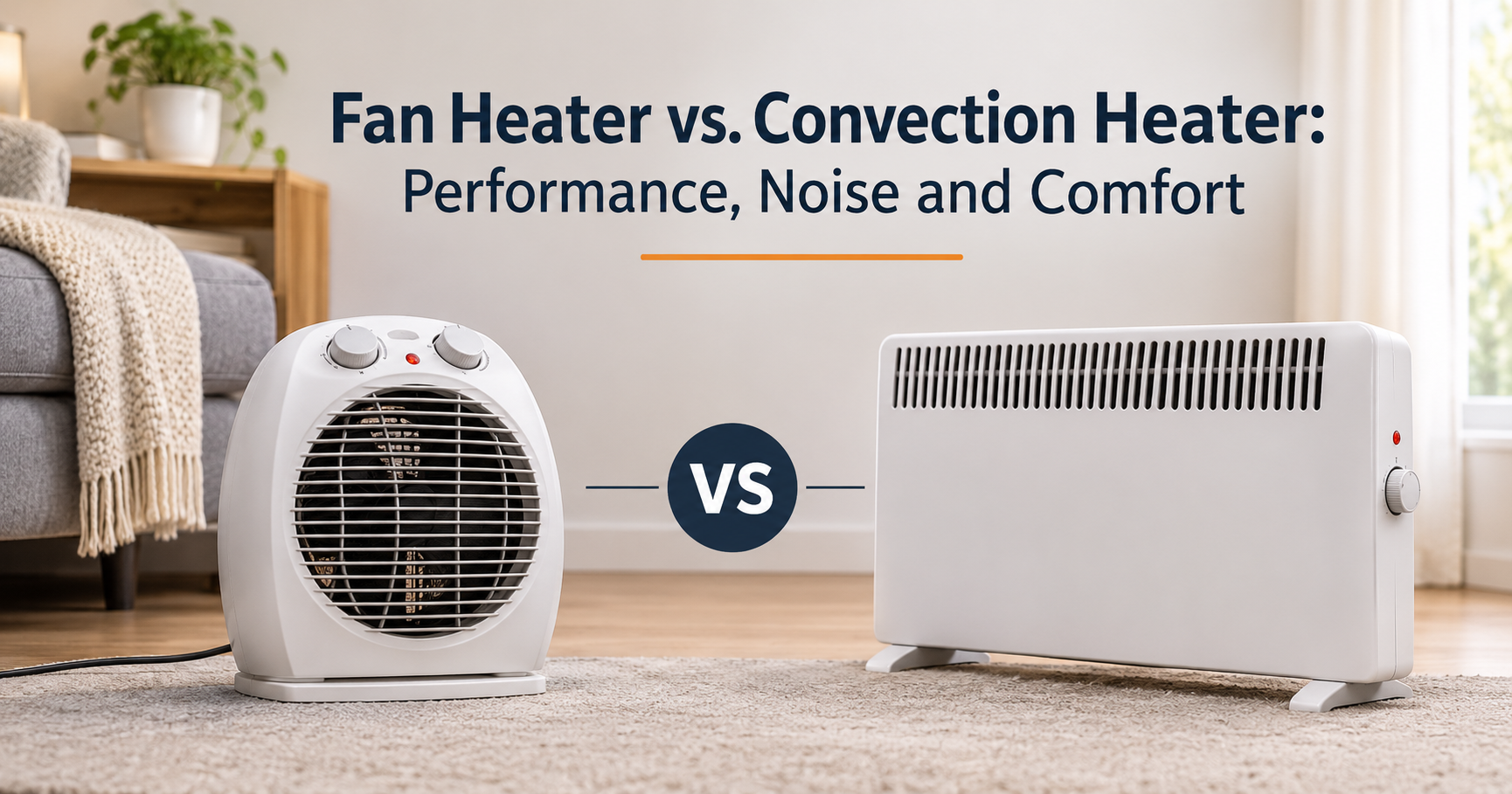
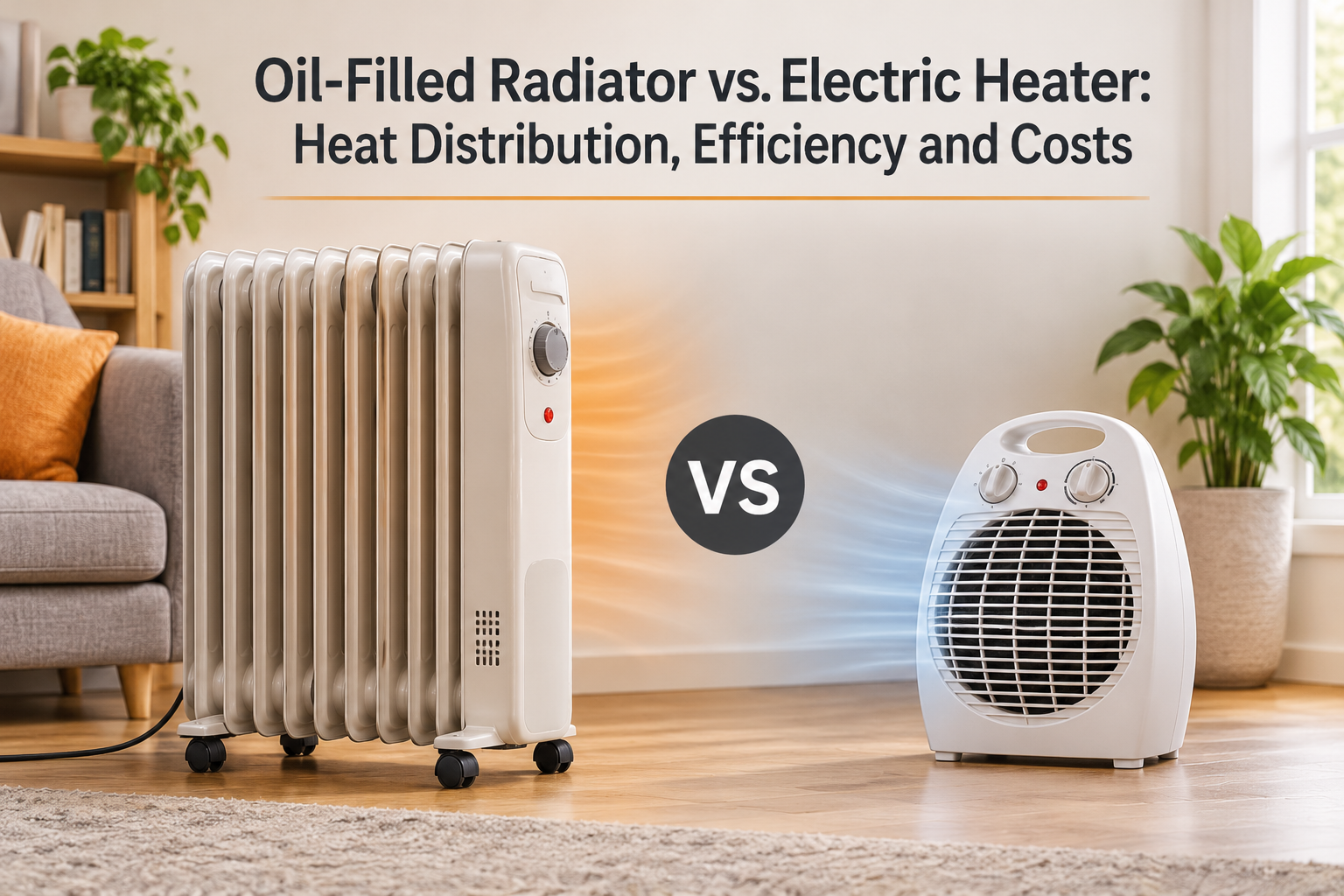
- Fan heaters: blow air over a hot element for fast warmth.
- Oil-filled radiators: heat slowly and keep radiating warmth after switching off.
- Convector heaters: warm air that circulates around the room.
- Infrared or radiant heaters: warm people and objects directly.
- Halogen and quartz heaters: compact, instant, but narrow in reach.
Nearly all electric room heaters convert close to 100 percent of the electricity into heat. That does not make them cheap to run, because electricity is usually the most expensive way to produce heat.
What Is Central Heating?
Central heating produces heat in one place, such as a boiler, furnace or heat pump, and distributes it through the building. Distribution happens through radiators and hot water pipes, underfloor heating, or ducted warm air. Common energy sources include natural gas, electricity, oil, LPG and, increasingly, air-source heat pumps. Most systems are controlled by a thermostat and timer, so rooms reach and hold a chosen temperature without constant attention.
Cost Comparison
Upfront Cost
A room heater can cost a small fraction of a central system. Central heating requires equipment, pipework or ducts, labour, and sometimes wall or floor work. Depending on your region and home size, installation can run into thousands of dollars.
Running Cost
This is where the answer gets interesting. A single room heater used for a few hours is inexpensive. But heating several rooms with several electric heaters can cost more than one efficient central system, especially one that burns gas or uses a heat pump. The illustration below shows the general pattern. Figures are relative and illustrative; your real costs depend on local energy prices, insulation and usage.
Heating Performance and Comfort
Room heaters give you fast, local warmth. Walk away from the unit and the temperature falls quickly, creating hot and cold zones. Central heating spreads heat across rooms, hallways and bathrooms, so the whole home feels consistent. Radiant and underfloor systems feel especially pleasant because they warm surfaces rather than only moving air.
Speed is the one area where room heaters can win. A fan heater warms a small room in minutes, while a boiler-based system may need longer to bring a cold house up to temperature.
Energy Efficiency
Efficiency depends on what you measure. A plug-in electric heater is almost fully efficient at turning electricity into heat, yet electricity itself is costly per unit of heat. A modern condensing gas boiler is roughly 90 percent efficient on cheaper fuel. A heat pump can deliver two to four units of heat for every unit of electricity, making it the most efficient mainstream option where it suits the climate and home.
Whichever you choose, good insulation, draught-proofing and sensible thermostat settings matter as much as the heater itself.
Safety Considerations
- Fire risk: room heaters placed near curtains, bedding or furniture are a common cause of home fires. Keep at least one metre of clear space.
- Overloaded sockets: never run a high-wattage heater through a weak extension lead.
- Tip-over and overheat protection: choose heaters with both features.
- Carbon monoxide: gas, oil or wood-burning appliances and boilers need regular servicing and a working CO alarm.
- Unattended use: do not leave a portable heater on while sleeping or out of the house.
Air Quality and Health
Some room heaters, particularly fan and halogen types, can dry the air and feel stuffy, which may irritate the throat, skin and eyes. Unvented fuel-burning heaters can release moisture and fumes, so they are not recommended for closed rooms. Central heating with proper ventilation and clean filters generally keeps air more stable, though ducted systems need regular filter changes to avoid circulating dust.
Installation and Maintenance
Room heaters need no installation and almost no upkeep beyond cleaning dust from the grille and checking the cable. Central heating needs professional installation, an annual service for boilers and furnaces, occasional radiator bleeding and periodic filter or pipework checks. The maintenance effort is real, but so is the long system lifespan, often 15 years or more.
Environmental Impact
The footprint of either option depends mostly on the energy source. Electric heaters powered by renewable electricity are low carbon, but on a fossil-heavy grid they can emit a lot. Gas boilers burn fossil fuel directly. Heat pumps usually have the lowest emissions per unit of heat. Using less energy through insulation and zoning is the most reliable way to cut both bills and emissions.
Which One Should You Choose?
Choose a room heater if:
- You rent or cannot modify the property.
- You use only one or two rooms for a few hours a day.
- Winters are short or mild where you live.
- You need a budget solution or a backup heat source.
Choose central heating if:
- You own your home and plan to stay for years.
- Winters are long and cold.
- You want whole-home comfort with automatic temperature control.
- You have children, elderly family members or health conditions that need steady warmth.
- You want to add value to your property.
Smart Tips to Save on Heating
- Close doors to rooms you are not heating.
- Use a timer or smart thermostat so heat runs only when needed.
- Seal gaps around windows and doors.
- Choose a heater with an adjustable thermostat and a safety cut-off.
- Combine both: use central heating at a lower base temperature and a room heater for a boost in the room you occupy.
Frequently Asked Questions
Is a room heater cheaper than central heating?
For one small room used briefly, yes. For multiple rooms or long hours, central heating is usually cheaper per room.
Which is safer?
A serviced central system is generally safer. Room heaters are safe when used correctly, but misuse is a leading cause of heater-related fires.
Can I use both together?
Yes. Many households run central heating at a modest setting and add a room heater only where extra warmth is needed.
Which heats a room faster?
Fan heaters and radiant heaters warm a small space faster than most central systems.
How long does central heating last?
Boilers and furnaces commonly last 15 years or more with regular servicing, and radiators or pipework can last longer.
Final Verdict
There is no single winner. Room heaters offer flexibility, low upfront cost and quick local warmth, making them ideal for small spaces, rentals and mild climates. Central heating delivers even comfort, better value across a whole home and greater convenience, which makes it the stronger long-term choice for cold regions and larger households. Match the system to your climate, budget, home size and how you actually live, and you will stay warm without overpaying.