

When the temperature drops, most of us reach for an electric heater. But the moment you start shopping, one question appears again and again: fan heater vs convection heater, which one is actually better? Both plug into a normal socket, both turn electricity into warmth, and both come in dozens of shapes and sizes. Yet they behave very differently in a real room.
In this guide you will learn how each type works, how they compare on speed, running cost, noise, safety and comfort, and which one suits your bedroom, home office, living room or workshop. By the end, you will know exactly what to buy.
What Is a Fan Heater?
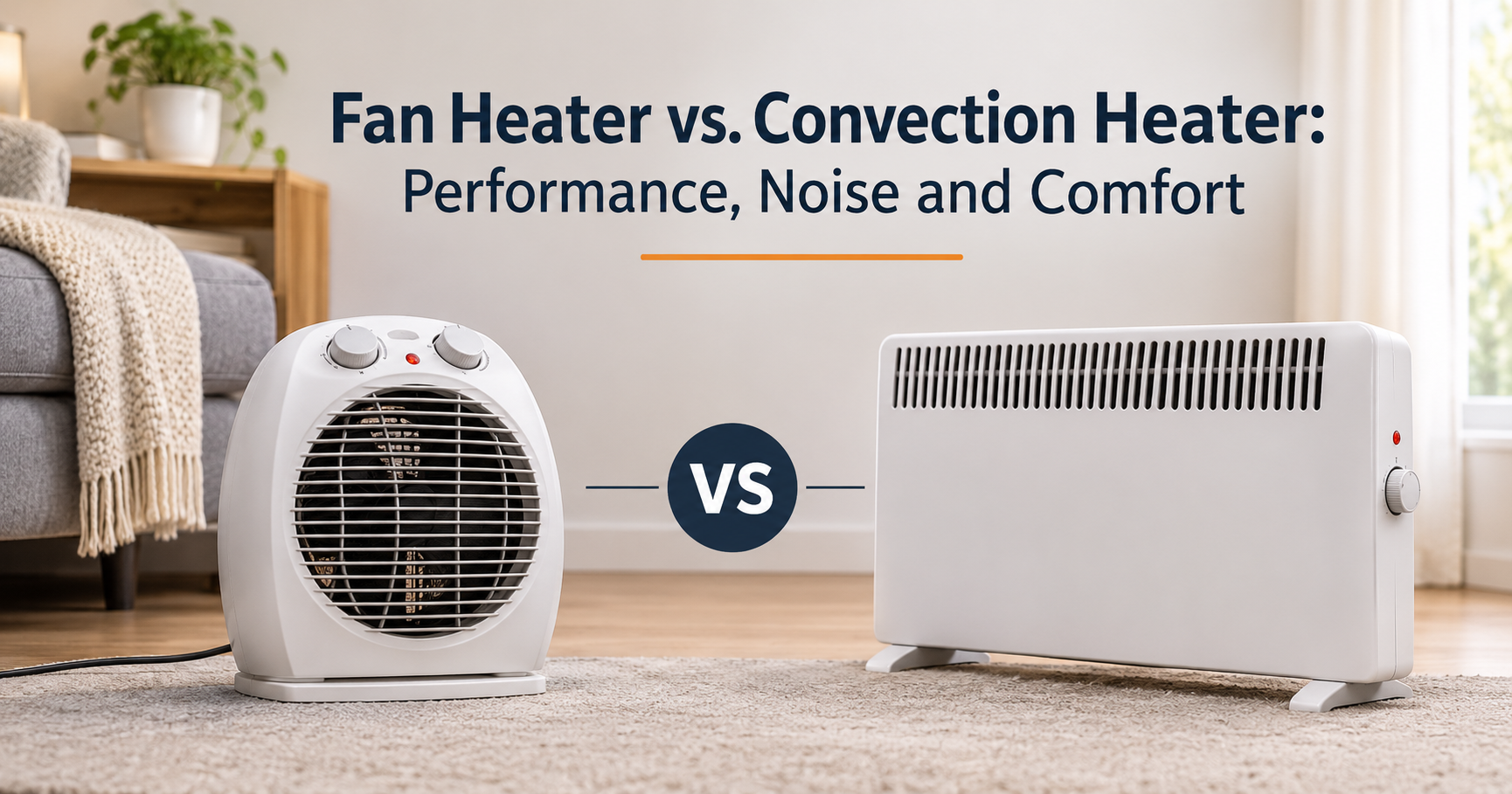
A fan heater is a compact electric heater that uses a heating element, usually a coil or a ceramic plate, together with a built-in fan. The fan pulls cool air across the hot element and pushes the warmed air straight into the room. Because the air is forced out, you feel warmth almost immediately.
Most fan heaters are light, easy to carry and affordable. Many have two or three heat settings, a thermostat and a cool-blow mode for summer. The trade-off is that the fan makes noise, and the heat tends to feel strongest only when you sit in the airflow.
What Is a Convection Heater?
A convection heater has no fan. Cool air enters near the bottom of the unit, passes over heated metal fins or panels, becomes lighter and rises out of the top. Cooler air then flows in to replace it, and this natural circulation slowly warms the whole room. This process is called convection.
Convection heaters are often wall-mounted or free-standing panels, and many have wheels or feet for moving around. They take longer to make a room feel warm, but they are quiet and produce a gentler, more even heat. Oil-filled radiators and panel heaters work on a similar principle.
Fan Heater vs Convection Heater at a Glance
The graphic below sums up the main differences. We explain each point in detail in the sections that follow.
Detailed Comparison
1. Heating Speed
Fan heaters win here. Since the fan pushes hot air directly at you, you can feel warmth within seconds. A convection heater needs more time, sometimes 20 to 40 minutes, to lift the temperature of an entire room, because it relies on air slowly circulating.
2. Running Cost
This is where many buyers get confused. Almost all the electricity an electric heater uses ends up as heat, so a 2 kW fan heater and a 2 kW convection heater use the same amount of energy every hour they run at full power. The real difference comes from how you use them.
- A fan heater warms you quickly, so it can be cheaper if you only need a few minutes of heat.
- A convection heater with a good thermostat switches itself on and off to hold a steady temperature, which suits long periods of use.
- Heating a large room with a small fan heater for hours usually wastes energy, because it keeps running without ever warming the space properly.
3. Noise Level
Convection heaters are almost silent, apart from an occasional soft click from the thermostat. Fan heaters produce a constant hum or whoosh from the fan motor. If you work, study or sleep in the room, that noise can become tiring. For bedrooms, a convection heater is usually the better choice.
4. Room Size and Coverage
Fan heaters are best for small rooms, desks and personal spaces. Convection heaters spread warmth through the whole room, so they work well in medium spaces. As a rough guide, plan for around 100 watts per square metre (about 10 watts per square foot) in a reasonably insulated room. Poor insulation, high ceilings or large windows mean you will need more power.
5. Comfort and Air Quality
Because fan heaters move air quickly, they can stir up dust and make the air feel dry. Convection heaters move air more gently, and the warmth feels softer and more consistent. People with allergies or dry skin often prefer them. Neither type removes moisture from the air in the way a gas flame or a dehumidifier does, but a strong airflow can make a room feel drier.
6. Safety
Both types are safe when used properly, and modern models include protection features. Look for tip-over switches, overheat cut-outs and a stable base. Fan heaters have a hot element and moving parts, so keep the grille clear and away from curtains. Convection heaters usually have cooler outer surfaces, but panels can still get hot, so they need free space around them too.
7. Portability and Design
Fan heaters are small, light and easy to move from room to room. Convection heaters are larger, but many come with wheels, slim profiles or wall brackets that keep floor space free and look tidier.
8. Lifespan and Maintenance
A fan heater has a motor that can wear out over time, and dust can build up inside. Cleaning the grille and vents every month helps. Convection heaters have no moving parts, so they usually last longer and need little more than a wipe-down.
Pros and Cons
Fan Heater
| Pros | Cons |
|---|---|
| Heats up within seconds Compact and lightweight Usually lower purchase price Often has a cool-blow summer mode |
Audible fan noise Stirs up dust Heat fades quickly after switching off Not ideal for large rooms |
Convection Heater
| Pros | Cons |
|---|---|
| Almost silent Even, steady warmth Good thermostat control Few moving parts, long lifespan |
Slower to warm a room Bulkier than a fan heater Usually costs more to buy Less effective for instant spot heating |
Which Heater Is Best for Each Room?
| Room | Best Choice | Why |
|---|---|---|
| Bedroom | Convection | Quiet running and steady warmth for sleep |
| Home office | Convection | No fan noise during calls and focus work |
| Living room | Convection | Spreads heat across a larger space |
| Bathroom | Fan (bathroom-rated only) | Fast warmth for short use; always check the safety rating |
| Garage or workshop | Fan | Quick heat where you work for short sessions |
| Under a desk | Fan | Compact and directs warmth to your feet |
Buying Guide: What to Look For
- Adjustable thermostat: holds the room at your chosen temperature and saves energy.
- Multiple power settings: lets you switch between low and high output as needed.
- Timer: turns the heater off automatically, which is useful in bedrooms.
- Tip-over and overheat protection: essential safety features on any heater.
- Correct wattage: match the power to your room size, not just the price.
- Low noise rating: important for bedrooms and offices, especially with fan models.
- Safety rating for wet areas: only use a heater in a bathroom if it is specifically made for it.
- Remote control or smart features: handy extras if you want easy scheduling.
Heater Safety Tips
- Place the heater on a flat, stable surface, away from curtains, bedding and furniture.
- Plug it directly into a wall socket, and avoid extension leads where possible.
- Never cover a heater or use it to dry clothes.
- Do not leave it running while you are asleep or away unless it is designed for that and has proper safety features.
- Keep children and pets away from the heater.
- Check the cable and plug regularly for damage and stop using the heater if you notice any.
Frequently Asked Questions
Is a fan heater or a convection heater cheaper to run?
Per hour at the same wattage, they cost the same. A fan heater can be cheaper for quick top-ups, while a convection heater with a thermostat is better for long periods because it holds a steady temperature.
Which heater is better for a bedroom?
A convection heater is usually the better choice because it is quiet and gives gentle, even warmth. Choose a model with a thermostat and timer.
Do convection heaters dry out the air?
Not significantly. They heat the air gently and do not blow it around, so the air tends to feel more comfortable than with a strong fan heater.
Can a fan heater heat a whole room?
It can warm a small room, but in a larger room it will mostly heat the area in front of it. A convection heater with enough wattage suits bigger spaces better.
Are ceramic fan heaters better than standard fan heaters?
Ceramic fan heaters warm up quickly and often have good built-in safety features, which makes them a popular choice. The core behaviour, fast heat with fan noise, remains the same.
How long does a convection heater take to warm a room?
Usually between 20 and 40 minutes, depending on room size, insulation and heater power.
Final Verdict: Fan Heater vs Convection Heater
There is no single winner, because each heater is built for a different job. A fan heater is the right tool when you want fast, direct heat in a small area for a short time. A convection heater is the smarter choice when you want quiet, even and comfortable warmth for hours in a bedroom, office or living room.
Think about the room size, how long you will use the heater and how much noise you can tolerate. Match those three things to the right type, add a good thermostat and the safety features above, and you will stay warm without wasting energy.