

Before you plug in a space heater, the first question is usually simple: how much will it cost to run? A portable electric heater feels cheap to buy, but the electricity bill is where the real cost hides. This guide gives you the exact portable electric heater cost per hour, the formula to calculate it for your own home, and practical ways to cut the bill without freezing.
Quick Answer: How Much Does a Portable Electric Heater Cost Per Hour?
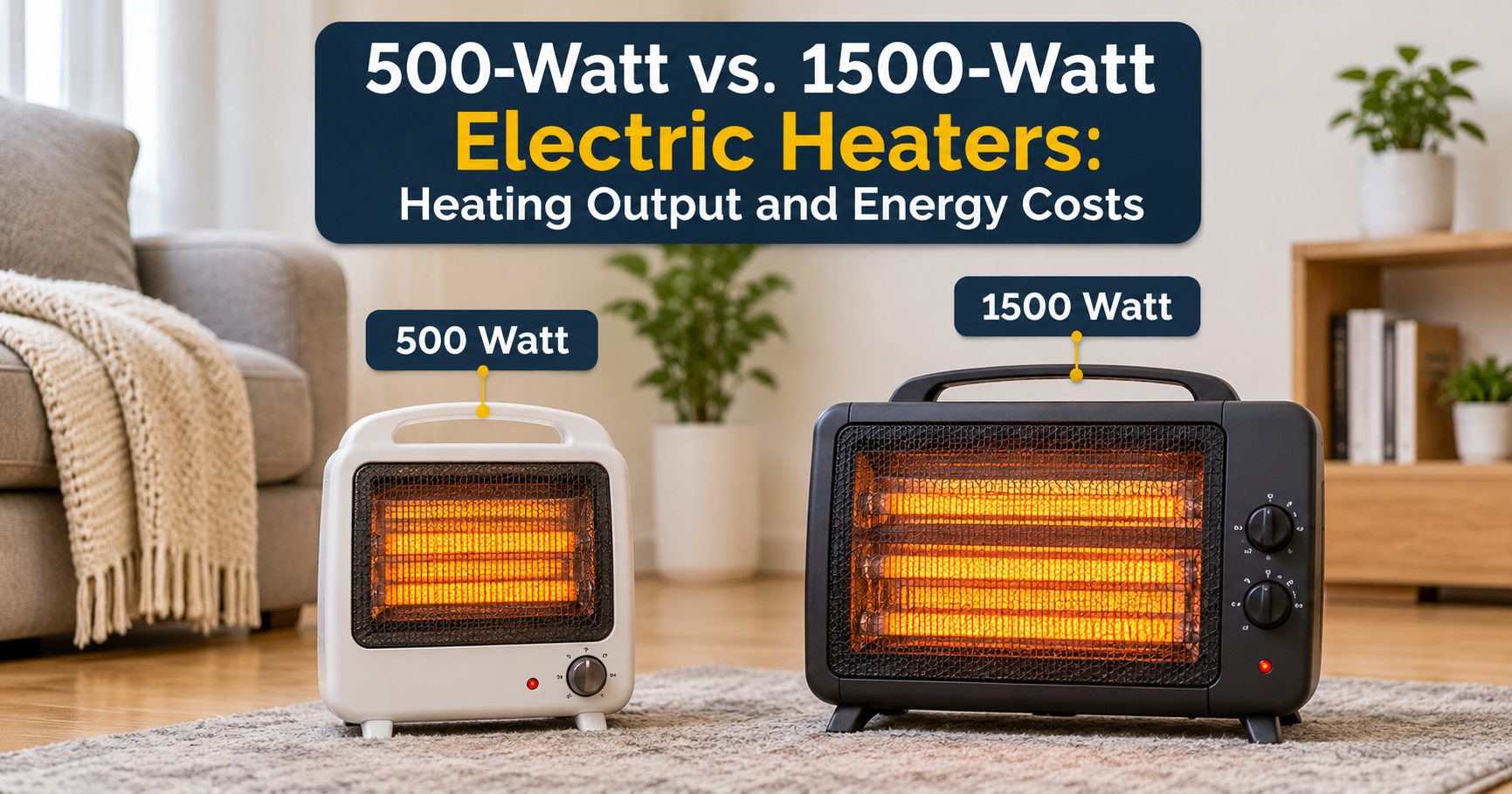
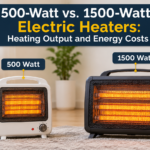
A standard 1500-watt portable heater costs roughly $0.18 to $0.53 per hour, depending on your local electricity price. At the US average of about 17 cents per kWh, that works out to around $0.26 per hour when the heater runs at full power. Smaller 500W to 1000W models cost between about $0.09 and $0.17 per hour at the same rate.
The Formula to Calculate Heater Running Cost
Every electric heater follows the same math. Find the wattage on the label, convert it to kilowatts, then multiply by your electricity rate. Your rate is printed on your electricity bill, listed in cents or dollars per kilowatt-hour (kWh).
Most residential plug-in heaters top out at 1500 watts because that is the safe limit for a standard household outlet circuit. That is why so many models, whatever the brand or style, show nearly identical hourly costs.
Cost Per Hour Chart by Wattage and Electricity Rate
Electricity prices vary widely by region, so use this table to find your own number. Find your heater wattage in the left column, then read across to the rate closest to yours.
| Heater power | $0.12/kWh | $0.17/kWh | $0.25/kWh | $0.35/kWh |
|---|---|---|---|---|
| 500W | $0.06 | $0.09 | $0.12 | $0.17 |
| 750W | $0.09 | $0.13 | $0.19 | $0.26 |
| 1000W | $0.12 | $0.17 | $0.25 | $0.35 |
| 1500W | $0.18 | $0.26 | $0.38 | $0.53 |
Figures are rounded and assume the heater draws full power for the entire hour.
Daily, Monthly and Seasonal Costs
Hourly numbers are useful, but the monthly bill is what surprises people. Here is a 1500W heater at $0.17 per kWh running at full power:
- 4 hours a day: about $1.02 per day, or roughly $30 per month
- 8 hours a day: about $2.04 per day, or roughly $61 per month
- 24 hours a day: about $6.12 per day, or roughly $184 per month
In practice your real cost is often lower. A thermostat-controlled heater switches off once the room reaches the target temperature, so it may only draw power for around half of the time in a well-insulated room.
Are Electric Heaters Expensive to Run?
Electric resistance heaters convert almost 100% of the electricity they consume into heat. That sounds perfect, but electricity is usually a pricier energy source per unit of heat than natural gas. So a portable heater is expensive if it replaces gas central heating for the whole house, yet very economical when it heats one small room you are actually using while you turn the central thermostat down.
Many households save money with this approach, called zone heating. Lowering the central thermostat by a few degrees and warming only your home office or bedroom with a small heater can reduce total heating spend.
Does the Type of Heater Change the Cost?
Not much. A 1500W ceramic heater and a 1500W oil-filled radiator use identical electricity at full power. The real difference is how each type delivers and holds heat, which affects how long it needs to run.
- Ceramic fan heaters warm a small room quickly and are lightweight and affordable.
- Oil-filled radiators take longer to warm up but keep radiating after the thermostat cuts power, which suits bedrooms and overnight use.
- Infrared heaters warm people and objects directly, so they work well for spot heating at a desk or in a workshop.
- Convection heaters heat the air gradually and suit larger rooms with steady use.
What Size Heater Do You Need?
A common rule of thumb is 10 watts per square foot of floor area. A 150 sq ft room needs about 1500W, while a 100 sq ft room is comfortable with around 1000W. Buying an oversized heater wastes money, and an undersized one runs nonstop without ever reaching your target temperature. High ceilings, poor insulation and big windows increase the heat you need.
10 Ways to Lower Your Portable Heater Cost
- Use a built-in thermostat so the heater cycles instead of running continuously.
- Close the door and heat only the room you are using.
- Seal drafts around doors and windows with weatherstripping or draft stoppers.
- Use a timer to warm the room before you arrive and stop heating when you leave.
- Choose low or eco mode when you only need to maintain temperature.
- Close curtains at night to hold heat in, and open them on sunny days for free warmth.
- Add rugs on cold floors to reduce heat loss.
- Match heater size to the room using the 10 watts per square foot rule.
- Lower your central thermostat while using zone heating.
- Check off-peak tariffs if your provider offers cheaper night rates.
Safety Tips Before You Plug In
- Plug the heater directly into a wall outlet, never an extension cord or power strip.
- Keep it at least 3 feet away from curtains, bedding, furniture and clothing.
- Choose a model with tip-over protection and overheat shut-off.
- Never leave a heater running in an unattended room or while sleeping unless the model is designed for it.
- Place it on a flat, hard surface.
What to Look For When Buying
When comparing models, check these features: an adjustable thermostat, multiple power settings, a programmable timer, tip-over and overheating protection, a certified safety mark such as UL or ETL, and a noise level suited to where you will use it. Since most models draw the same power, features and safety matter more than wattage when choosing between similar heaters.
Frequently Asked Questions
How much does it cost to run a 1500W heater for 24 hours?
At 17 cents per kWh and full power, it costs about $6.12 for 24 hours. With thermostat cycling, the real cost is often lower.
Is it cheaper to run a space heater or central heating?
It depends on your fuel. If you heat one room and lower the central thermostat, a space heater can save money. For heating several rooms, central heating is usually cheaper, especially with natural gas.
Does a low setting use less electricity?
Yes. A 750W low setting draws half the power of a 1500W high setting, though the room warms more slowly.
How do I find my electricity rate?
Look at your latest electricity bill for the price per kWh, or divide your total bill by the kWh used for an average rate.
Can I leave a portable heater on all night?
Only if the heater has safety features like tip-over and overheat protection, and you follow the manufacturer’s instructions. Oil-filled models are a popular choice for bedrooms.
Final Thoughts
A portable electric heater typically costs between 6 cents and 53 cents per hour, and about 26 cents for a 1500W model at average US rates. Use the formula, check your own electricity rate, size the heater to the room and use the thermostat. Do that, and you can stay warm while keeping your electricity bill under control.