


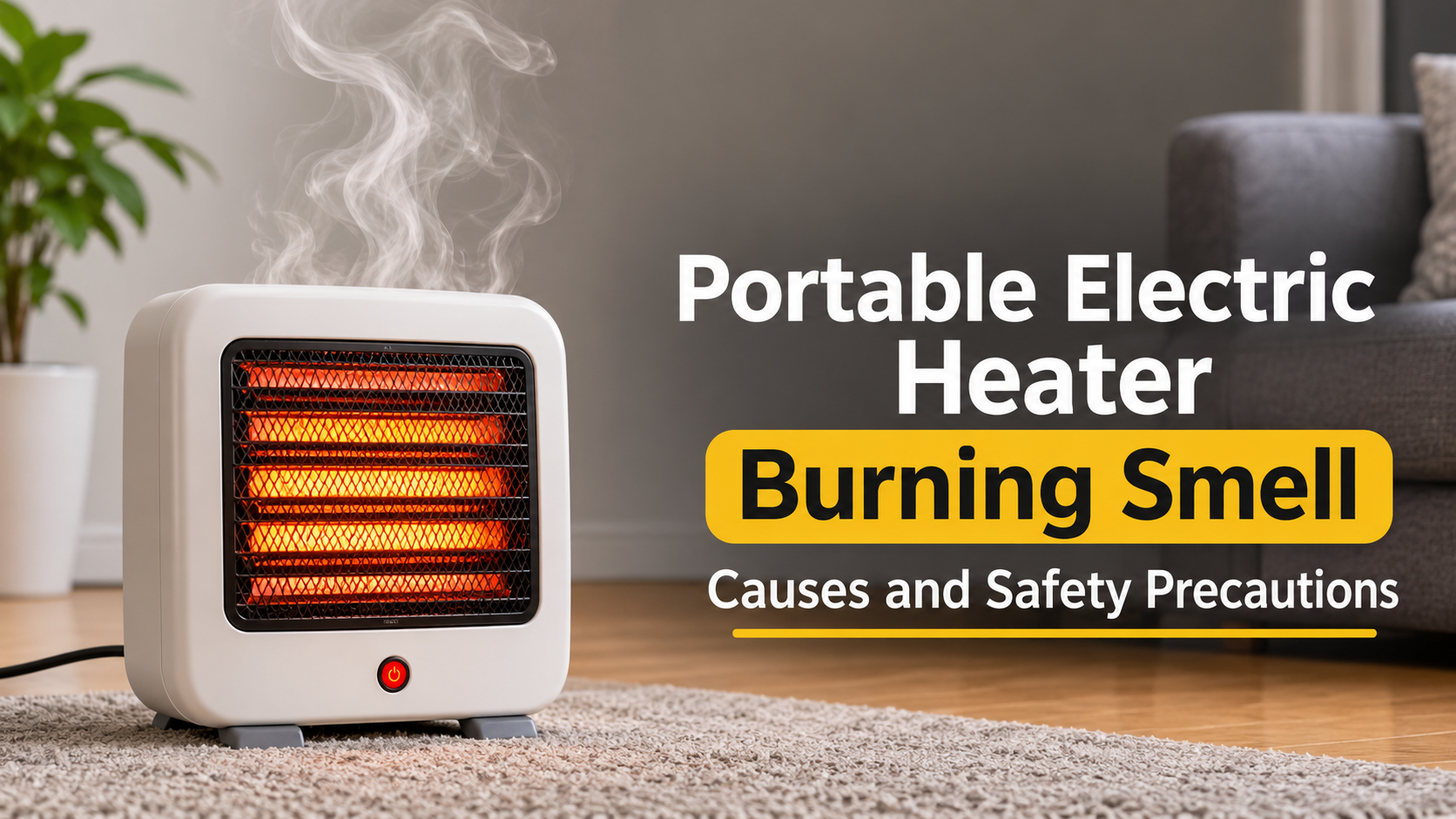

You switch on your portable electric heater on a cold evening, and a few minutes later a strange burning smell fills the room. It is a worrying moment, and many people do not know whether to keep using the heater or switch it off right away.
The good news is that a portable electric heater burning smell is often harmless, especially in the first few uses or after months in storage. The bad news is that, in some cases, it is an early warning of overheating or an electrical fault. This guide explains every common cause, helps you identify the type of smell, and shows exactly what to do next.
Is a Burning Smell From a Portable Heater Normal?
Sometimes, yes. A faint, dusty, “warm” smell that appears when you first turn the heater on and fades within 15 to 30 minutes is usually normal. It happens because dust or factory residue is being burned off the heating element.
However, a strong, sharp, chemical, or plastic-like odor is not normal. Smells that continue, get stronger, or appear with smoke, sparks, or tripping breakers should always be treated as a safety risk.

7 Common Causes of a Burning Smell in Electric Heaters

1. Dust and Dirt on the Heating Element
This is the number one cause. When a heater sits unused for months, dust, pet hair, and lint settle on the element, fan, and grille. When the heater turns on, this debris heats up and burns, creating a smell similar to burning toast or scorched hair. It is usually short-lived.
2. Factory Oils and Protective Coatings on a New Heater
Manufacturers often apply light oils or protective films to metal parts during production. The first time the element gets hot, these coatings burn off and produce a mild chemical or metallic smell. Running a new heater for 30 to 60 minutes in a well-ventilated room usually clears it.
3. Blocked Air Vents or Poor Airflow
Fan heaters and ceramic heaters need free airflow to release heat. If the vents are blocked by dust, fabric, or furniture, internal temperatures climb quickly. Overheated plastic housings and wiring insulation can then give off a harsh burning odor.
4. Overheating Because of Placement
Placing a heater too close to curtains, bedding, sofas, or walls traps heat and can scorch nearby materials. Sometimes the smell is not from the heater itself but from an object that is getting too warm beside it.
5. Melting or Damaged Plastic Parts
A failing fan motor, damaged internal plastic, or a warped housing can create a distinct hot-plastic smell. This indicates that components are exceeding their safe temperature, and the heater should not be used again until it is inspected or replaced.
6. Faulty Wiring, Loose Plug, or Damaged Cord
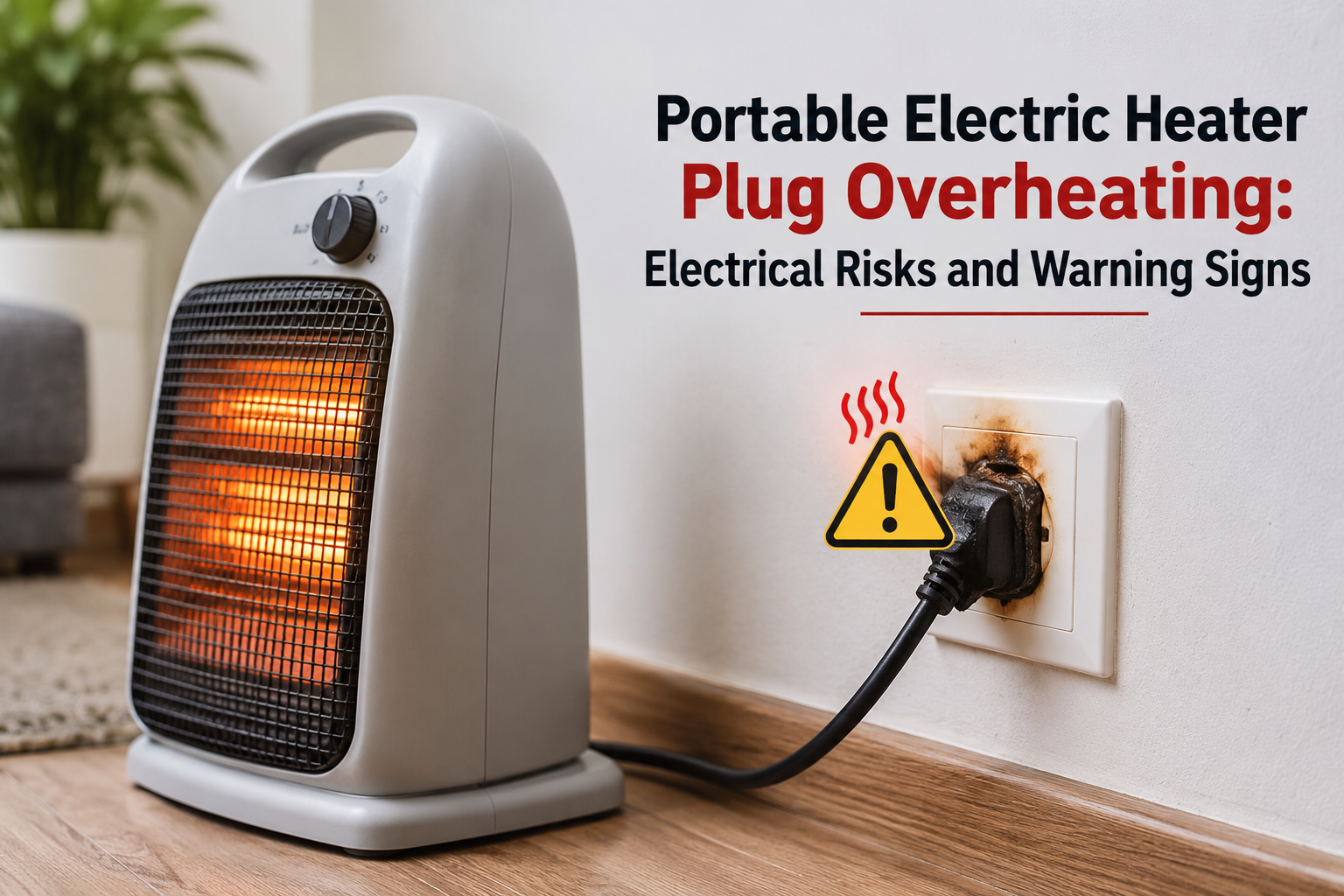
A loose connection creates resistance, and resistance creates heat. If the plug feels hot, looks discolored, or the cord is frayed, you may notice a fishy, ozone-like, or rubbery smell. This is the most dangerous cause because it can lead to electrical fires.
7. Spilled Liquids, Insects, or Foreign Objects
Spilled drinks, cleaning sprays, insects, or small objects that enter the grille can burn on the element. This produces odd smells that do not fade until the object is removed.
What Does Each Type of Burning Smell Mean?
| Smell | Likely Cause | Risk Level |
|---|---|---|
| Dusty, like toast | Dust burning off the element | Low |
| Light chemical or metallic | New heater coating | Low |
| Burnt hair | Pet hair or lint in the fan or grille | Low to Medium |
| Hot plastic | Overheating housing or internal parts | High |
| Fishy or ozone | Electrical arcing or failing components | Very High |
| Burning rubber | Damaged cord or insulation | Very High |
What To Do Immediately If You Smell Burning

- Turn the heater off using the power button or switch.
- Unplug it by gripping the plug itself, not the cord. If the plug looks melted or is too hot, switch off the power at the breaker first.
- Ventilate the room by opening windows and doors, and let the heater cool completely.
- Inspect the heater for dust, discoloration, melted plastic, a damaged cord, or foreign objects.
If you see smoke or flames, leave the area immediately and contact emergency services. Never pour water on an electrical fire.
How To Fix a Burning Smell Safely
Clean the Heater
With the heater unplugged and fully cool, use a soft brush, microfiber cloth, or the brush attachment of a vacuum cleaner to remove dust from the grille, vents, and fan. Never use water or liquid cleaners inside the unit.
Run a Burn-Off Test
After cleaning, place the heater on a flat, hard surface in a ventilated area and run it on medium for 20 to 30 minutes while you stay nearby. If the smell fades quickly, the problem was most likely dust or coating.
Check the Plug, Socket, and Cord
Look for discoloration, bent pins, or soft spots. Avoid extension cords and power strips, because high-wattage heaters can overload them. Plug directly into a wall socket that is in good condition.
Reposition the Heater
Keep at least three feet (about one meter) of clear space around the heater. Keep it away from curtains, beds, paper, and other flammable materials.
When You Should Stop Using the Heater for Good
- The smell is strong, chemical, fishy, or like melting plastic.
- The burning smell returns after cleaning and testing.
- You notice smoke, sparks, flickering, or crackling sounds.
- The plug, cord, or housing is discolored, warped, or very hot.
- The heater trips your circuit breaker repeatedly.
- The unit is old, damaged, or has been dropped.
In these cases, repair is rarely worth the risk. Replacing the heater with a safer, certified model is the smarter choice.
How To Prevent Burning Smells in the Future
- Clean your heater at the start of every heating season and monthly during heavy use.
- Store it in a dry, covered place during summer.
- Always run a new heater for a short burn-off session in a ventilated room.
- Never cover the heater or use it to dry clothes.
- Do not leave it running unattended or while you sleep, unless it has reliable safety features.
- Plug it directly into the wall and avoid extension cords.
Features To Look For in a Safer Portable Electric Heater
If you are shopping for a replacement, safety features matter more than power alone. Look for these essentials:
- Tip-over protection: shuts the heater off automatically if it falls.
- Overheat protection: cuts power if internal temperature gets too high.
- Safety certification: marks such as UL, ETL, CE, or equivalent local approvals.
- Cool-touch housing: reduces burn risk, especially around children and pets.
- Adjustable thermostat and timer: prevents constant overheating.
- Removable or washable filter: makes cleaning easier and reduces dust burning.
Which Heater Type Produces Less Smell?
| Heater Type | Smell Tendency | Best For |
|---|---|---|
| Ceramic fan heater | Medium (dust on fan and element) | Fast heating in small rooms |
| Oil-filled radiator | Low (no exposed element) | Steady, quiet heat for bedrooms |
| Infrared / quartz heater | Medium (exposed element) | Spot heating |
| Convection panel heater | Low to Medium | Even heating, low noise |
Disclosure: This website may earn a small commission from qualifying purchases at no extra cost to you. Our safety advice stays independent.
Frequently Asked Questions
How long does the new heater smell last?
Usually between 15 minutes and a few hours of total use. If it lasts beyond a few sessions, stop using the heater.
Is it safe to sleep with a heater that smells like burning?
No. Never run a heater that is giving off a burning odor while you sleep. Find the cause first.
Why does my heater smell like burning plastic?
Typically overheating housing, blocked vents, a failing fan, or damaged internal parts. Turn it off and have it checked or replace it.
Why does my heater smell fishy?
A fishy or ozone-like smell often points to electrical arcing or overheating insulation. Unplug the heater and stop using it.
Can a burning smell make me sick?
Burning dust or plastic can irritate the eyes, nose, and throat, especially for children, pets, and people with asthma. Ventilate the room well.
Can dust alone cause a strong burning smell?
Yes, especially after long storage. But if the smell is strong or does not fade after cleaning, look for another cause.
Final Thoughts
A portable electric heater burning smell can be as simple as dust on the element or as serious as a wiring fault. The key is to identify the type of smell, act quickly, clean the unit, and never ignore warning signs like smoke, sparks, or a hot plug. When in doubt, switch it off, unplug it, and replace it with a certified heater that has modern safety features. A few minutes of caution can protect your home and your family.