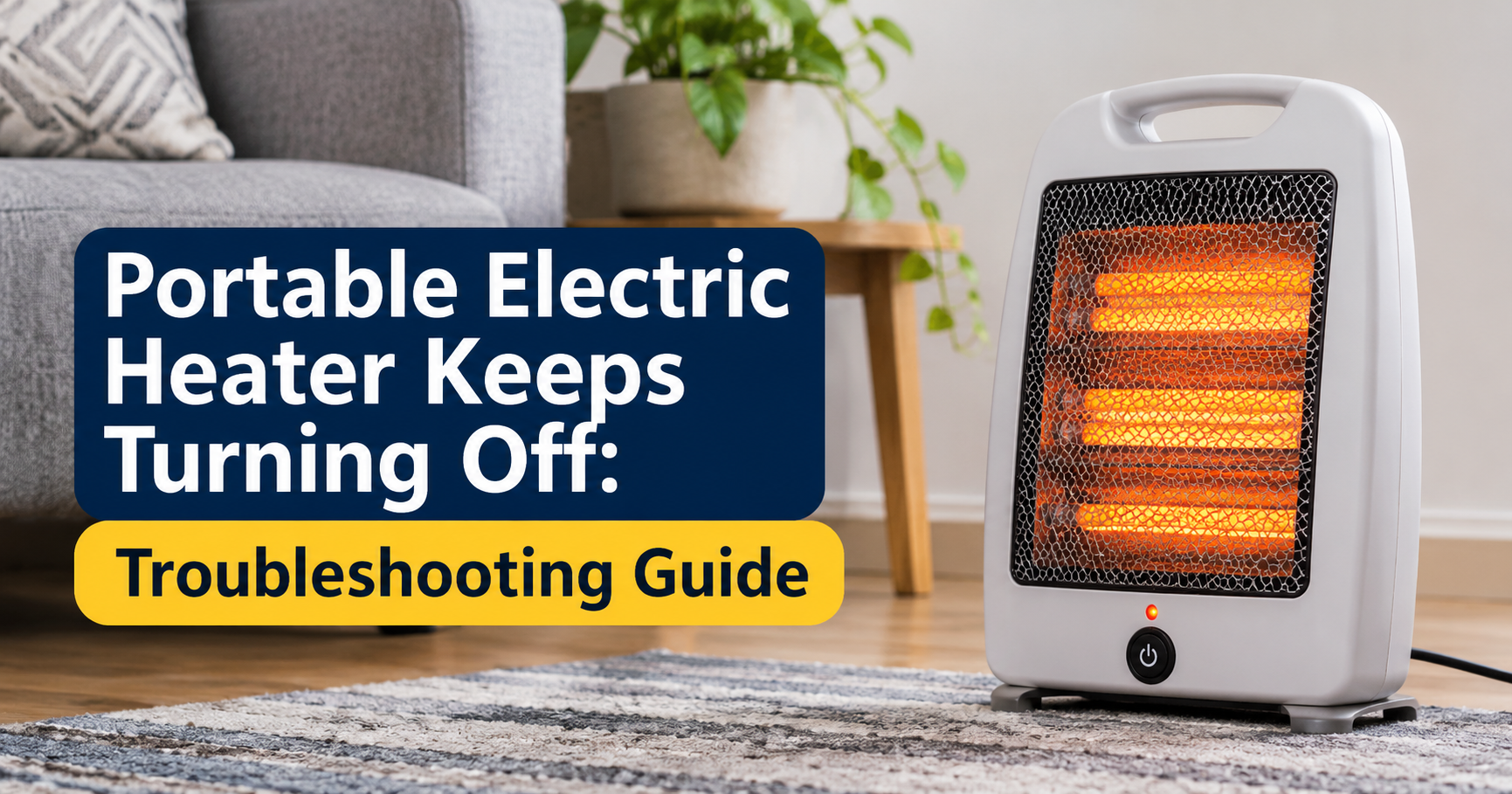

You switch on your portable electric heater, the room starts to warm up, and then it clicks off. A few minutes later it does the same thing again. It is annoying, especially on a cold evening, and it can also feel a little worrying. The good news is that a heater that keeps turning off is usually doing exactly what it was built to do: protecting you and your home. In most cases the cause is simple and you can fix it yourself in a few minutes.
This guide explains why a portable electric heater keeps shutting off, how to find the real cause, which fixes are safe to try at home, and when it is time to replace the unit.
Quick Answer: Why Does a Portable Heater Keep Turning Off?
The most common reasons are:
- Overheat protection is triggered by blocked vents, dust, or poor airflow.
- The tip-over switch senses a tilt or an uneven surface.
- An overloaded circuit trips the breaker or cuts power.
- An extension cord or power strip cannot handle the heater’s power draw.
- The thermostat reaches its set temperature and cycles the heater off.
- A timer or eco mode is switched on and shuts the unit down.
- A faulty part, such as a worn thermostat, loose wiring, or a damaged plug.
How a Portable Heater Decides to Shut Off
Modern portable heaters are packed with safety features. Heat is only produced when every safety check says it is safe. If any single check fails, the heater stops. That is why the symptom looks the same (the heater turns off) even though the causes are very different.

Understanding this chain makes troubleshooting much easier. Instead of guessing, you can test each link one at a time, starting with the easiest.
7 Common Causes and How to Fix Each One
1. Overheat Protection Is Being Triggered
Almost every portable heater has an overheat cutoff. It is a small safety device inside the unit that senses high internal temperature and cuts the power. This is the number one reason heaters shut off on their own.
Why it happens:
- Dust and pet hair are blocking the air intake or the front grille.
- The heater is too close to a wall, curtain, bed, or sofa.
- Something is covering part of the heater.
- The internal fan is slow or weak, so heat builds up inside.
How to fix it: Unplug the heater and let it cool completely. Vacuum the vents with a soft brush attachment. Then move the heater so there are at least three feet (about one meter) of open space on every side. Many heaters will restart normally after cooling down and cleaning. If it still shuts off after the vents are clear, the cutoff or fan may be failing.
2. The Tip-Over Switch Is Activated
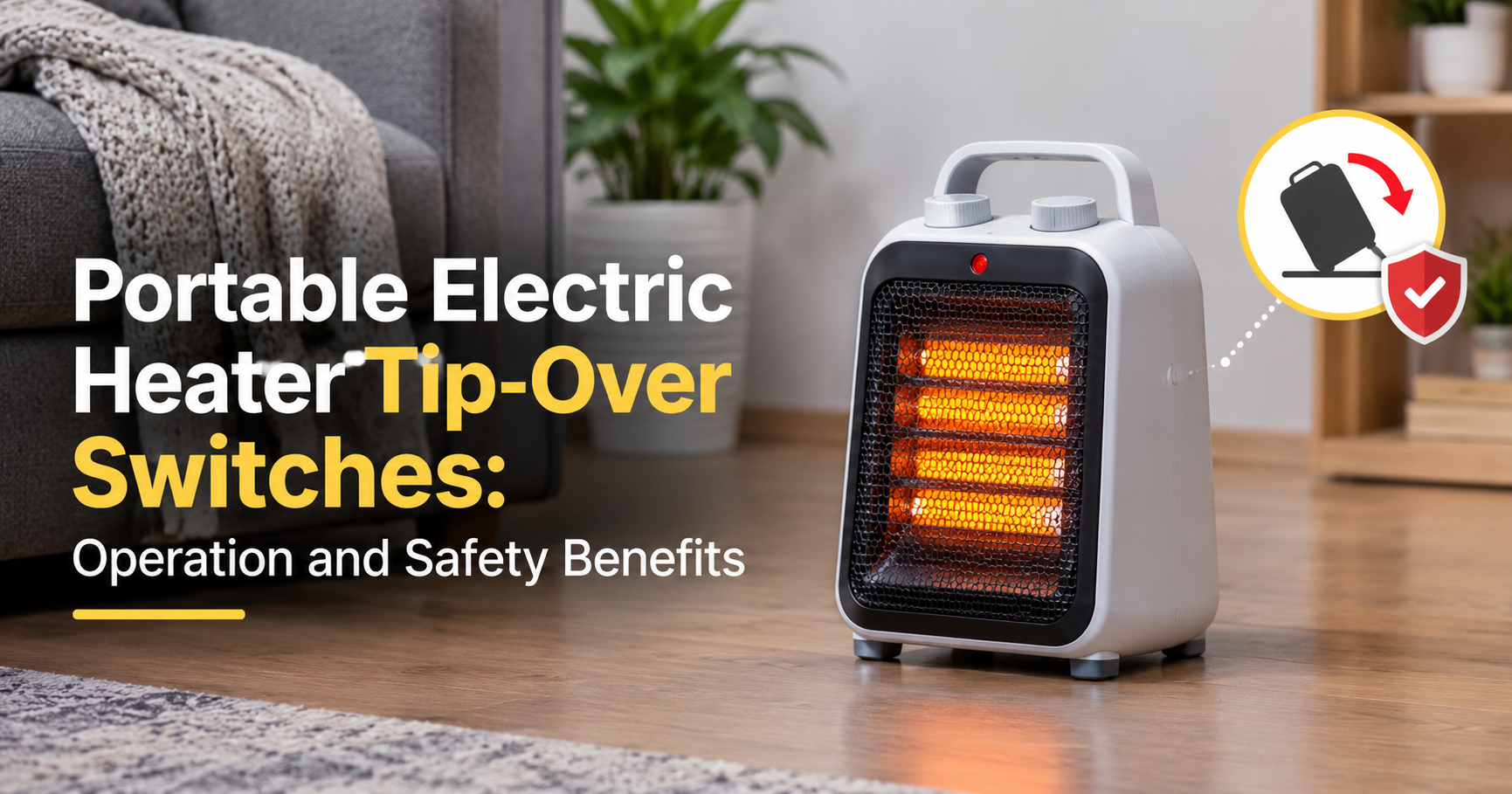
A tip-over switch turns the heater off if it is knocked over or tilted. It is a vital safety feature, but it can be oversensitive in some situations.
Common triggers:
- The heater is on thick carpet, a rug, or a soft surface that lets it lean slightly.
- The floor is uneven.
- The base feet are cracked, loose, or missing.
- Dust or debris is stuck in the switch mechanism.
How to fix it: Place the heater on a hard, flat, level surface. Check that the base is firmly attached and that all feet are in place. If the heater turns off when you walk past or when the floor vibrates, the switch itself may be worn out.
3. Overloaded Circuit or Tripped Breaker
Portable heaters use a lot of electricity. A typical 1500 watt model draws about 12.5 amps on a 120 volt supply. A standard household circuit is often rated for 15 amps, and the safe continuous limit is about 12 amps. That means a heater alone can sit right at the edge of what the circuit can handle.

If anything else on the same circuit is running, such as a TV, a vacuum, a hairdryer, or a kettle, the breaker may trip. A breaker may also trip when the load is just below its limit but has been sustained for a long time.
How to fix it:
- Check your breaker panel for a tripped switch and reset it if needed.
- Turn off other high-power items on the same circuit.
- Try plugging the heater into an outlet on a different circuit.
- Use a lower power setting, such as 750 watts, to see whether the shutdowns stop.
If the breaker trips again and again even when the heater is the only device on it, stop using the heater and have an electrician check the outlet and wiring.
4. Extension Cords and Power Strips
This is one of the most overlooked causes. Most heater manufacturers clearly say the unit should be plugged directly into a wall outlet. Extension cords and power strips are usually not designed for the constant high current that a heater draws. A thin or long cord can overheat, lose voltage, or trip its own built-in protection.
How to fix it: Remove the extension cord or power strip and plug the heater straight into a wall outlet. If your outlet is too far away, move the heater instead of adding a cord. If you absolutely must use an extension cord, it needs to be a heavy-duty cord rated higher than the heater’s wattage, as short as possible, and checked often. Even then, a direct connection is always safer.
Warning signs: A plug or cord that feels hot, smells like burning plastic, or shows discoloration means you should stop using it immediately.
5. The Thermostat Is Doing Its Job
Sometimes the heater is not actually broken. If it has a thermostat, it will turn the heating element off when the room reaches the set temperature, then turn it back on when the room cools. In a small or well-sealed room, this can happen quickly and feel like the heater is shutting off for no reason.
How to tell the difference: If the fan keeps running or the indicator light stays on while the heat stops, the thermostat is probably cycling normally. If the whole unit goes completely dead, the cause is likely something else on this list.
How to fix it: Raise the temperature setting, or switch to a constant heat mode if your model has one. Also keep the heater away from drafts, windows, and doors, because cold air near the thermostat sensor can confuse it. Placing the heater near a heat source such as a sunny window can also cause it to shut off early.
6. Timer, Eco Mode, or Auto Shut-Off Settings
Many newer heaters include timers, energy saving modes, and automatic shut-off features. If one of these is turned on without you realising, the heater will shut off on schedule. Some models turn off after a set number of hours to save energy and reduce risk.
How to fix it: Check the control panel and the remote control for timer icons or eco indicators. Turn them off and test the heater again. If you have lost the manual, a quick reset of the settings often solves the problem. Unplug the heater for a few minutes, plug it back in, and set it up again from scratch.
7. A Faulty Component
If you have tried everything above and the heater still keeps turning off, a part may be worn out. This is more likely in older heaters or ones that have been used heavily.
Possible faulty parts:
- Thermostat: reads the wrong temperature and shuts off too early.
- Overheat cutoff: becomes oversensitive and trips at normal temperatures.
- Fan motor: slows down, so heat builds up inside.
- Wiring or connections: a loose connection causes the power to drop in and out.
- Power cord or plug: internal wire damage causes intermittent power loss.
What to do: Do not open the heater and do not try to bypass a safety device. These parts protect against fire. If the heater is still under warranty, contact the manufacturer or retailer. If it is old, replacing it is usually the safer and more cost-effective choice.
Step-by-Step Troubleshooting Checklist
Use this simple order to find the cause quickly. It starts with the easiest and most common fixes.

- Unplug and let it cool. Wait about 30 minutes so the overheat protection can reset.
- Plug directly into a wall outlet. Remove any extension cord or power strip.
- Check the breaker. Make sure nothing else heavy is running on the same circuit.
- Clear the space. Keep at least three feet of open space around the heater.
- Clean the vents. Vacuum dust from the grille and intake while the heater is unplugged.
- Test on a flat floor. Use a hard, level surface so the tip-over switch stays closed.
After each step, turn the heater on and run it for 15 to 20 minutes. If it stays on, you have found the cause. If it still shuts off after all six steps, move on to the faulty component section or consider replacing the unit.
Quick Diagnosis Table
| What You Notice | Likely Cause | First Fix to Try |
|---|---|---|
| Turns off after 5 to 15 minutes, body feels very hot | Overheat protection | Clean vents and add clearance |
| Turns off when bumped or on carpet | Tip-over switch | Move to a hard, level floor |
| Whole room loses power | Tripped breaker | Reduce load or change outlet |
| Plug or cord feels hot | Extension cord or bad plug | Stop use and plug directly into the wall |
| Fan runs, heat stops and starts | Thermostat cycling | Raise the temperature setting |
| Shuts off at the same time every day | Timer or eco mode | Turn off the timer |
| Random shutoffs even after all fixes | Faulty part | Contact the maker or replace |
Safety Tips You Should Never Skip
- Never bypass a safety feature. Tip-over switches and overheat cutoffs exist to prevent fires.
- Never leave a heater running unattended while you sleep or when you leave the house, unless the manufacturer says it is designed for it.
- Keep flammable items away. Curtains, bedding, paper, and clothing should stay well clear.
- Never cover the heater. Do not dry clothes on it.
- Stop using it right away if you notice a burning smell, sparks, smoke, melted plastic, or a very hot plug.
- Check smoke alarms. Make sure they work, especially in rooms where heaters are used.
- Keep children and pets away. Use a model with a cool-touch exterior if you have little ones.
When to Repair and When to Replace
Portable heaters are fairly inexpensive and are not designed to be repaired by users. As a rule of thumb, consider replacing your heater if:
- It keeps turning off after cleaning and testing it correctly.
- It is more than five to seven years old and used often.
- The cord, plug, or housing is damaged, melted, or discolored.
- You smell burning even after cleaning.
- The tip-over or thermostat feels unreliable.
Repairing a heater yourself is risky, because the parts involved handle high current and heat. Replacing it with a new, safety-certified model is usually the smarter choice.
What to Look for in a Replacement Heater
If you need a new heater, a few features will help you avoid the same problem again:
- Safety certification: Look for a recognised safety mark from an independent testing lab.
- Tip-over and overheat protection: These should be built in as standard.
- Adjustable thermostat: This keeps the room comfortable and prevents constant cycling.
- Multiple power settings: Low and high modes help avoid overloading a circuit.
- Right size for your room: A heater that is too small runs flat out all the time and wears out faster. A rough guide is about 10 watts per square foot of floor area.
- Cool-touch housing: This is helpful for homes with children and pets.
- Easy-to-clean filter or grille: Dust is a major cause of overheating, so easy cleaning matters.
- Heater type: Ceramic fan heaters warm up fast. Oil-filled radiators give steady, quiet heat. Infrared models warm people and objects directly.
How to Prevent Your Heater From Turning Off in the Future
- Clean the vents and grille every few weeks during the heating season.
- Store the heater in a dry place with a cover over it when not in use.
- Always plug it directly into a wall outlet.
- Keep it on a hard, flat surface.
- Do not run it alongside other high-power appliances on the same circuit.
- Inspect the cord and plug regularly for signs of wear.
- Read the manual to learn what each mode and indicator light means.
Frequently Asked Questions
Why does my portable heater turn off after a few minutes?
The most likely reasons are overheat protection due to blocked vents or poor airflow, a tip-over switch triggered by an uneven surface, or an overloaded circuit. Start by cleaning the vents, moving the heater to a flat floor, and plugging it into a wall outlet by itself.
Is it dangerous if my heater keeps shutting off?
Usually the shutoff is the safety system working correctly, so it is a sign to find the cause rather than a danger by itself. It becomes a concern if you notice a burning smell, a hot plug, sparks, or melted parts. In those cases, unplug the heater and stop using it.
Can I use an extension cord with my portable heater?
It is best not to. Most manufacturers recommend plugging directly into a wall outlet because heaters draw a lot of power. Standard extension cords and power strips can overheat.
How long should I wait before turning my heater back on after it shuts off?
Wait at least 15 to 30 minutes so the heater and its safety devices can cool and reset. Use that time to clean the vents and check the surroundings.
Why does my heater turn off when I put it on the highest setting?
The highest setting draws the most power and produces the most heat. That makes it more likely to trip a breaker or overheat protection. Try the medium or low setting, and make sure nothing else is running on the same circuit.
My heater turns off by itself even after cleaning it. What now?
If cleaning, a flat surface, a direct wall outlet, and a free circuit have not fixed the problem, a component such as the thermostat or the overheat cutoff may be faulty. Contact the manufacturer if the heater is under warranty, or replace it with a safety-certified model.
Do oil-filled heaters turn off less often than fan heaters?
Oil-filled radiators heat more slowly and cycle on and off with the thermostat, but they are less affected by dust since they do not use an open fan intake. Any heater can still shut off for the reasons listed above if it is overloaded or blocked.
Final Thoughts
A portable electric heater that keeps turning off is almost always telling you something. It might be overheating because of blocked vents, tilting on a soft floor, sharing a circuit with other appliances, or simply reaching the temperature you set. In most cases, a few minutes of cleaning, repositioning, and plugging into the right outlet will fix the problem.
If the shutoffs continue, do not try to defeat the safety systems. Having the heater checked or replacing it with a quality, certified model is the safest way to stay warm this winter.