

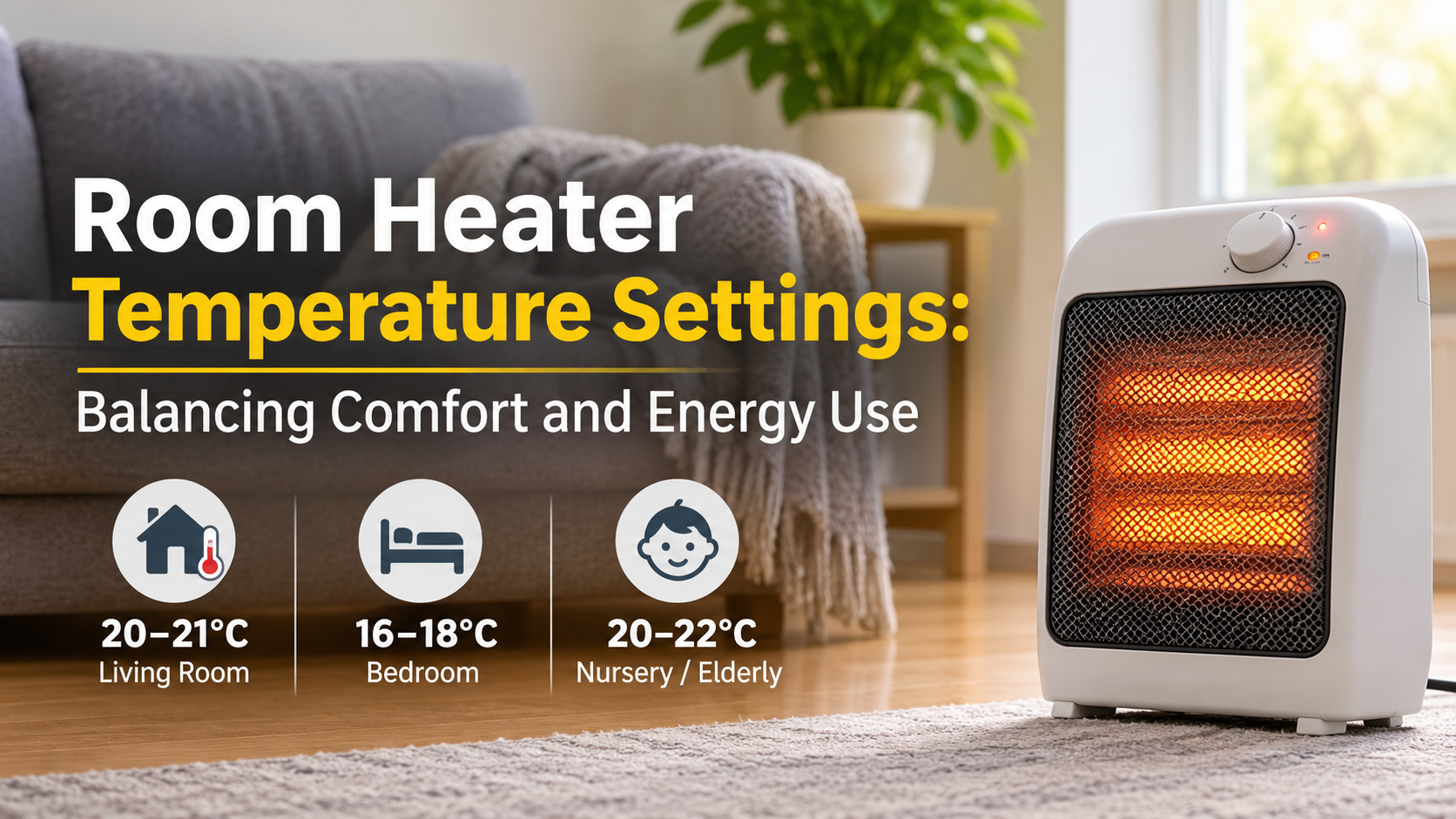

Every winter the same question comes up: what is the best room heater temperature setting? Set it too low and you shiver through the evening. Set it too high and you pay for heat you do not need, dry out the air and wake up with a sore throat. The good news is that a handful of simple numbers, plus a few smart habits, can keep you comfortable, protect your health and trim your energy bill.
This guide explains the ideal temperature for each room, how to read the dial on your heater, what to do for babies and older adults, how to save energy, and the safety rules that matter most.
Quick Answer
- Living areas: 20–21°C (68–70°F) while you are awake and at home.
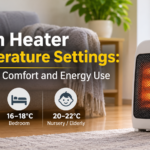
- Bedrooms: 16–18°C (61–64°F) for comfortable sleep.
- Babies and nurseries: 16–20°C (61–68°F), checked with a room thermometer.
- Older adults or anyone unwell: 20–22°C (68–72°F).
- Never go below: about 18°C (64°F) in rooms where healthy adults spend a lot of time, as a general health minimum.
Why Your Heater Temperature Setting Matters
Choosing the right temperature is not only about feeling cozy. Indoor temperature affects your sleep, your breathing, your energy costs and even how safely your heater runs.
- Health: Health organisations suggest keeping the main living spaces of a home at around 18°C (64°F) or warmer. Colder rooms can strain the heart and make breathing problems worse, especially for older adults and young children.
- Comfort and sleep: Your body needs to cool slightly to fall asleep. A bedroom that is too hot often leads to restless nights.
- Cost: Heating is one of the biggest winter electricity expenses. Lowering the setting by just 1°C is often cited as saving up to around 10% on heating use.
- Safety: A heater running flat out for hours generates more stress on its parts, cords and plug than one that cycles on and off at a sensible setting.
Best Temperature Setting for Each Room
Different rooms serve different purposes, so one number does not fit the whole home. Use the chart below as a starting point and adjust by a degree or two to match your own comfort.

Living Room and Home Office: 20–21°C (68–70°F)
When you are sitting still, reading, working or watching TV, your body produces less heat, so a slightly warmer room feels better. Most people find 20–21°C the sweet spot. If you wear a sweater or sit under a blanket, you can often drop to 19°C without noticing.
Bedroom: 16–18°C (61–64°F)
Sleep experts generally recommend a cool bedroom, roughly 16–19°C. If you want to warm the room before bed, heat it for 30–60 minutes, then lower the setting or switch the heater off before you sleep. Use warm bedding rather than a hot room to stay comfortable overnight.
Baby’s Room or Nursery: 16–20°C (61–68°F)
Babies cannot regulate their body temperature as well as adults, and overheating is a known concern during sleep. Aim for the middle of this range and place a simple room thermometer near the cot, away from the heater. Dress the baby in light layers instead of raising the heat. Always follow your paediatrician’s advice for your child.
Elderly or Unwell Person’s Room: 20–22°C (68–72°F)
Older adults and people recovering from illness often feel cold more easily and are more affected by chilly rooms. A slightly warmer range, with the room kept steady rather than swinging up and down, is usually best. Check on the temperature regularly, as some people do not notice when a room has become too cold or too hot.
Bathroom: 22–24°C (72–75°F), Short Use Only
A warmer bathroom feels pleasant after a shower. Only use a heater that is specifically rated for bathroom use, and keep it well away from water. Many standard portable heaters are not suitable for damp areas.
Hallways and Rooms You Rarely Use: 15–16°C (59–61°F)
You do not need to fully heat spaces nobody is using. A mild background temperature prevents damp and condensation without wasting energy.
Quick Reference Table
| Room / Situation | Celsius | Fahrenheit |
|---|---|---|
| Living room / home office | 20–21°C | 68–70°F |
| Bedroom (sleeping) | 16–18°C | 61–64°F |
| Nursery / baby’s room | 16–20°C | 61–68°F |
| Elderly or unwell person | 20–22°C | 68–72°F |
| Bathroom (short use) | 22–24°C | 72–75°F |
| Hallway / unused room | 15–16°C | 59–61°F |
| Away from home / asleep (energy saving) | Lower by 1–2°C | Lower by 2–4°F |
How to Read and Set Your Heater’s Thermostat
Many room heaters do not show degrees at all. Instead, they have a dial marked 1 to 5, a snowflake-to-sun symbol, or a simple low/medium/high switch. Here is how to get an accurate result anyway.
Step 1: Use a Separate Room Thermometer
The most reliable way to hit the right temperature is to place an inexpensive digital thermometer at seated height, about 1.5 metres from the heater. Heater dials are rarely calibrated, and the number on the knob does not equal degrees.
Step 2: Start High, Then Turn Down
Set the heater to its highest thermostat position until the room reaches your target temperature. Then slowly turn the dial down until you hear the heater click off. That point is your personal setting for that room. From then on, the thermostat will cycle the heater on and off to hold the temperature steady.
Step 3: Use the Right Mode
- Eco or auto mode: Keeps the room near your target with the least electricity.
- High or boost mode: Useful for fast warm-up only. Do not leave it on all the time.
- Low or half-power mode: Good for small rooms or maintaining heat once the room is warm.
Step 4: Use a Timer
If your heater has a timer, set it to warm the room shortly before you wake up or come home, and to switch off when you leave or go to bed. This one habit can noticeably reduce your running costs.
Best Setting by Heater Type
Different heater designs behave differently, so the best setting depends on what you own.
- Oil-filled radiator heaters: These heat up slowly but stay warm after switching off. Run on high until the room is warm, then use medium or the thermostat to maintain it. They suit bedrooms and long periods of use.
- Fan heaters: These warm a room quickly but cool fast too. Use the high setting for a quick boost, then reduce to low and rely on the thermostat. They are best for short use in small spaces.
- Ceramic heaters: These heat up fast and are efficient for small to medium rooms. Use the thermostat setting rather than leaving them on constant high.
- Infrared or radiant heaters: These warm people and objects directly rather than the air. Because you feel warmth quickly, you can often set them lower or use them in short bursts, but keep a safe distance.
- Convection panel heaters: These provide steady, gentle heat. They work well on a thermostat with a timer for steady all-day comfort.
Match the Heater Power to the Room Size
Even the perfect temperature setting will not help if the heater is too weak or far too powerful for the room. A common rule of thumb is about 10 watts of heating power per square foot of floor area (roughly 100 watts per square metre) for an average insulated room.
- 100 sq ft (about 9 m²): around 1,000 watts
- 150 sq ft (about 14 m²): around 1,500 watts
- Poorly insulated rooms, high ceilings or large windows: allow extra capacity
An undersized heater will run constantly and never reach the target. An oversized one can heat the room too fast and cycle on and off often. Choosing a model with an adjustable thermostat and multiple power levels gives you the most flexibility.
Tips to Stay Warm Without Raising the Temperature
- Close doors and windows: Heat only the room you are using and keep warm air from escaping.
- Seal draughts: Gaps around doors and windows can waste a large share of your heating.
- Use thick curtains: Close them at dusk to keep heat in, but keep them well away from the heater.
- Add layers: A sweater, warm socks and a blanket let you comfortably lower the setting by a degree or two.
- Add a rug: Hard floors feel cold. A rug makes the room feel warmer at the same temperature.
- Place the heater wisely: Position it where air can circulate freely, ideally away from walls and furniture.
Keep Humidity in Balance
Heaters can dry out indoor air, which may irritate your throat, skin and eyes. Aim for indoor humidity between about 30% and 50%. A small humidity meter helps you track this. If the air feels very dry, a humidifier or a bowl of water placed safely away from the heater can help. If you see condensation on the windows, the room may be too humid, so ventilate briefly.
Safety Rules for Any Temperature Setting
A correct temperature setting also makes a heater safer, but it does not replace basic safety. Follow these rules every time you use a room heater.

- Keep a clear zone: Maintain at least 1 metre (3 feet) between the heater and curtains, bedding, clothes, paper and furniture.
- Plug directly into the wall: Avoid extension cords and multi-plug adapters, which can overheat with high-wattage appliances.
- Place it on a flat, hard surface: Never put a heater on a bed, sofa or carpet pile that could tip it or block the vents.
- Never cover it: Do not dry clothes or towels on a heater.
- Do not leave it unattended: Switch it off when you leave the room or go to sleep, unless the manufacturer states it is designed for continuous use.
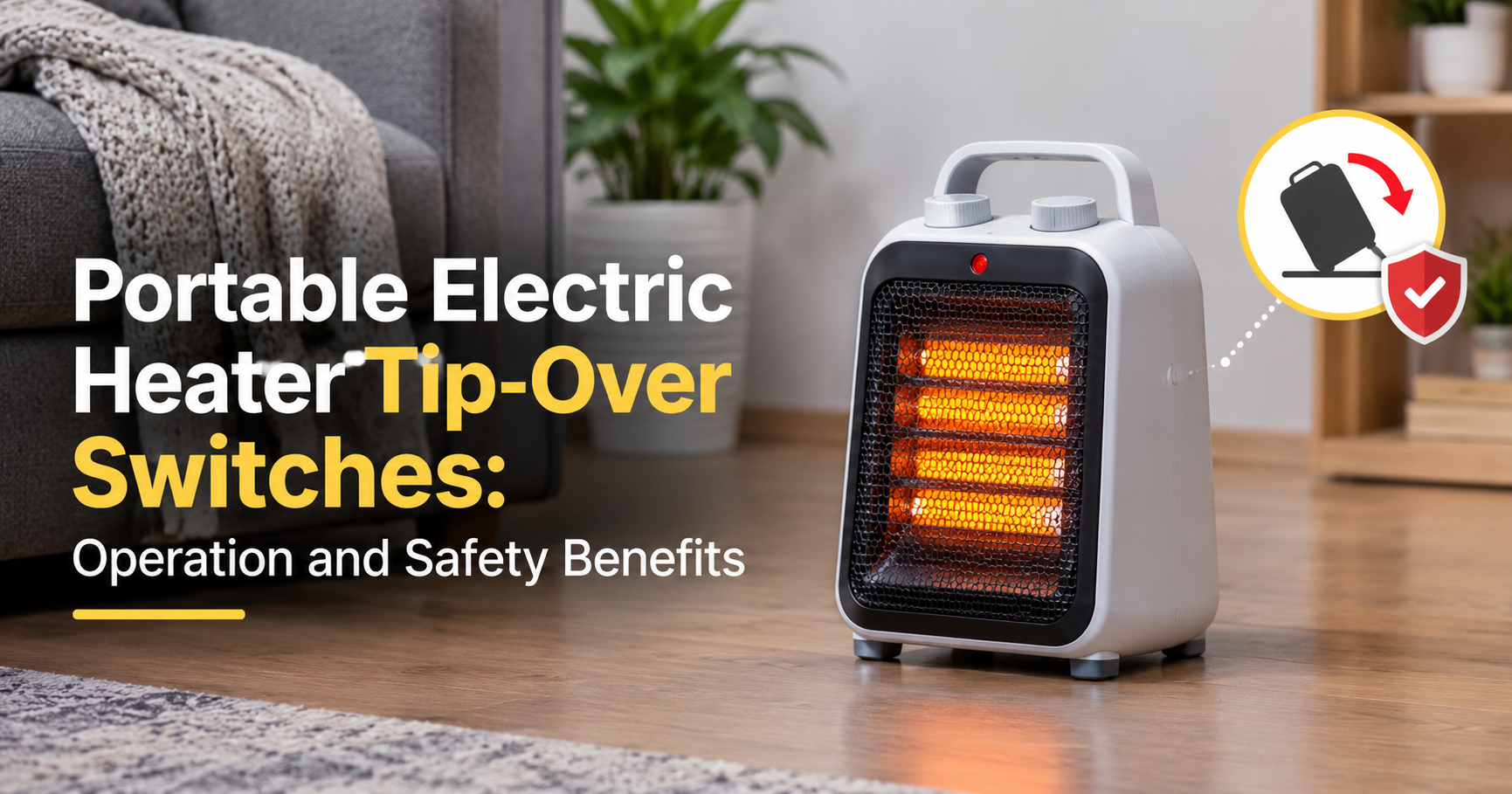
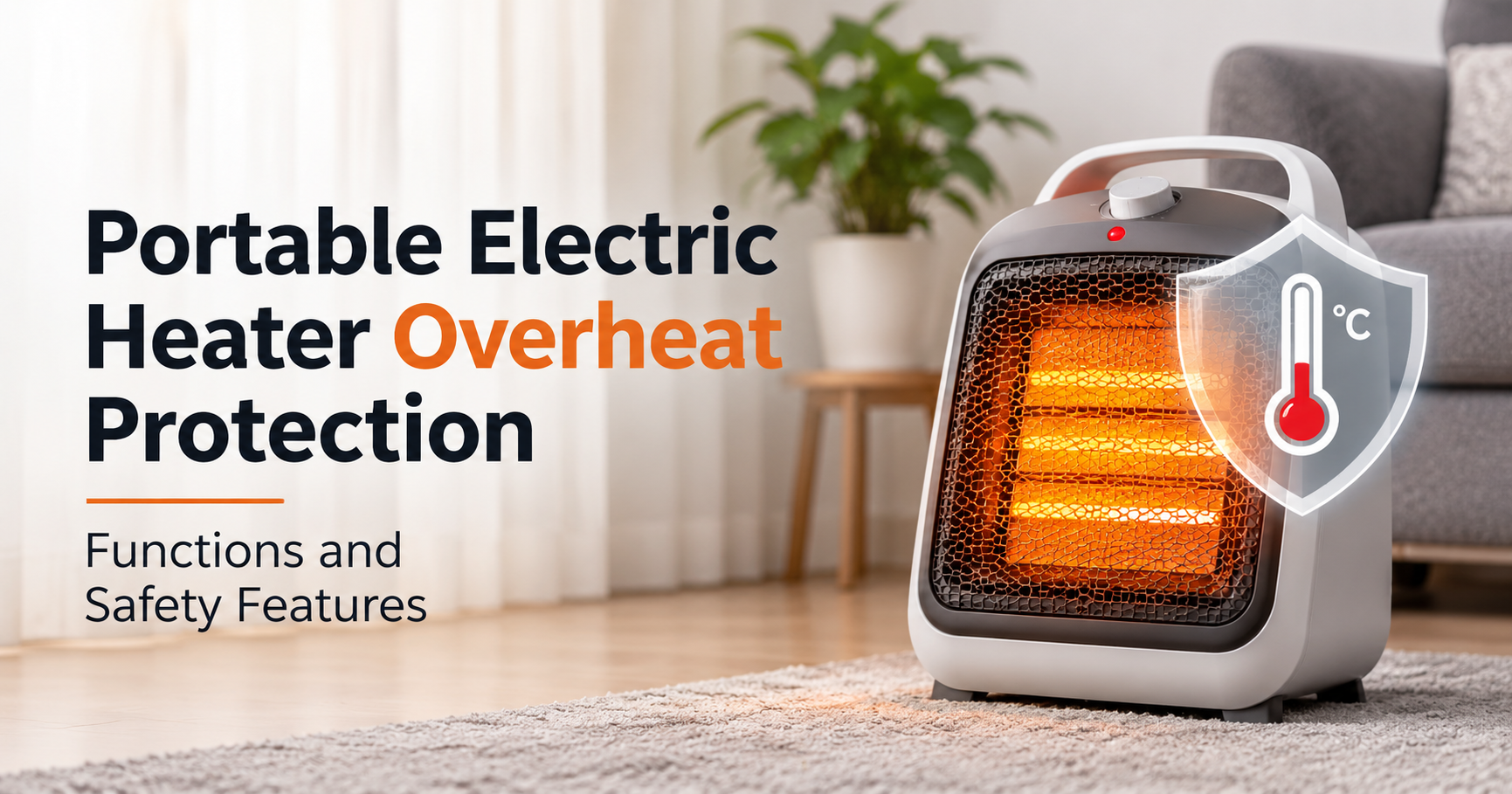
- Check for key safety features: Look for tip-over protection and overheat protection (automatic shut-off).
- Inspect the plug and cord: If the plug feels hot or the cord is frayed, stop using the heater.
- Install working smoke alarms: If you use any fuel-burning heater, also install a carbon monoxide alarm and ventilate the room.
- Keep children and pets away: Use a guard or place the heater out of reach.
Common Mistakes to Avoid
- Setting the heater to maximum all day: It wastes electricity and strains the unit.
- Treating the dial number as degrees: A “3” on the knob is not 30°C. Use a thermometer.
- Heating the whole house for one person: Heat the room you are in and close the door.
- Turning the heater fully off and on repeatedly: A steady, moderate setting on a thermostat is usually more efficient than constant stop-start use.
- Ignoring humidity: A warm but very dry room can feel uncomfortable and irritate the airways.
- Placing the thermometer right next to the heater: You will get a falsely high reading and under-heat the rest of the room.
Features to Look for in a Heater That Holds a Temperature Well
If you are thinking of replacing your heater, a few features make it far easier to keep the right temperature and stay safe.
- Adjustable thermostat: Ideally with a digital display so you can set an exact temperature.
- Multiple heat levels: Low, medium and high options give you control over power use.
- Timer and eco mode: These automate your heating and save energy.
- Tip-over and overheat protection: Essential safety features for any portable heater.
- Quiet operation: Especially important for bedrooms and nurseries.
- Right size and wattage: Matched to the room where you will use it.
Frequently Asked Questions
What is the best temperature to set a room heater at night?
For most adults, 16–18°C (61–64°F) is comfortable for sleeping when paired with warm bedding. Babies and older adults may need a slightly warmer range, so check with a thermometer and follow medical advice.
Is 25°C too hot for a room heater setting?
For most living spaces, yes. 25°C (77°F) is warmer than most people need, increases energy use and can make the air feel dry. Keep it for special situations only, such as a short bathroom warm-up.
Is it cheaper to leave the heater on low all day or turn it on when needed?
For electric room heaters, which turn nearly all their electricity into heat, it is generally cheaper to heat only when and where you need it. Use a timer or thermostat to warm the room shortly before you use it instead of running it continuously in an empty room.
What does the number on my heater dial mean?
On most models it is simply a relative scale from low to high, not a temperature. Use a room thermometer to find which dial position holds the temperature you want.
Can I leave my room heater on while I sleep?
It is safest to switch off portable heaters before you sleep unless the manufacturer states the model is designed for it. If you do use one, choose a thermostat-controlled model with tip-over and overheat protection and keep the clear zone around it.
Why does my room still feel cold even at the right temperature?
Draughts, cold walls and floors, and low humidity can make a room feel colder than the thermometer shows. Seal gaps, use a rug and thick curtains, and wear warmer clothing before turning the heater up.
How many degrees can I lower the heater to save money?
Dropping the setting by 1–2°C can lower your heating use noticeably. Combine this with a timer and closed doors to maximise savings without feeling the difference.
Final Thoughts
The best room heater temperature setting is the one that balances comfort, health, cost and safety. For most homes, that means about 20–21°C in living areas, a cooler 16–18°C in bedrooms, and a steady 20–22°C for older adults or anyone who feels the cold. Use a room thermometer, let the thermostat do the work, pick a heater that suits your room size, and follow the safety rules every time.
A few small adjustments, such as turning the setting down by a degree, adding a timer and sealing draughts, can keep your home warm, your family safe and your winter bills under control.
Key Takeaways
- Living rooms: 20–21°C (68–70°F); bedrooms: 16–18°C (61–64°F).
- Babies: 16–20°C; older adults or unwell: 20–22°C.
- Dial numbers are not degrees, so use a separate thermometer.
- Lowering the setting by 1°C can reduce heating use by up to around 10%.
- Keep 1 metre clear around the heater and never use extension cords.
- Switch off before sleeping unless the heater is made for overnight use.
Disclaimer: This article is for general information only. Temperature needs vary with age, health and home conditions. For babies, elderly family members or anyone with a medical condition, follow the advice of a qualified healthcare professional and the heater manufacturer’s instructions.