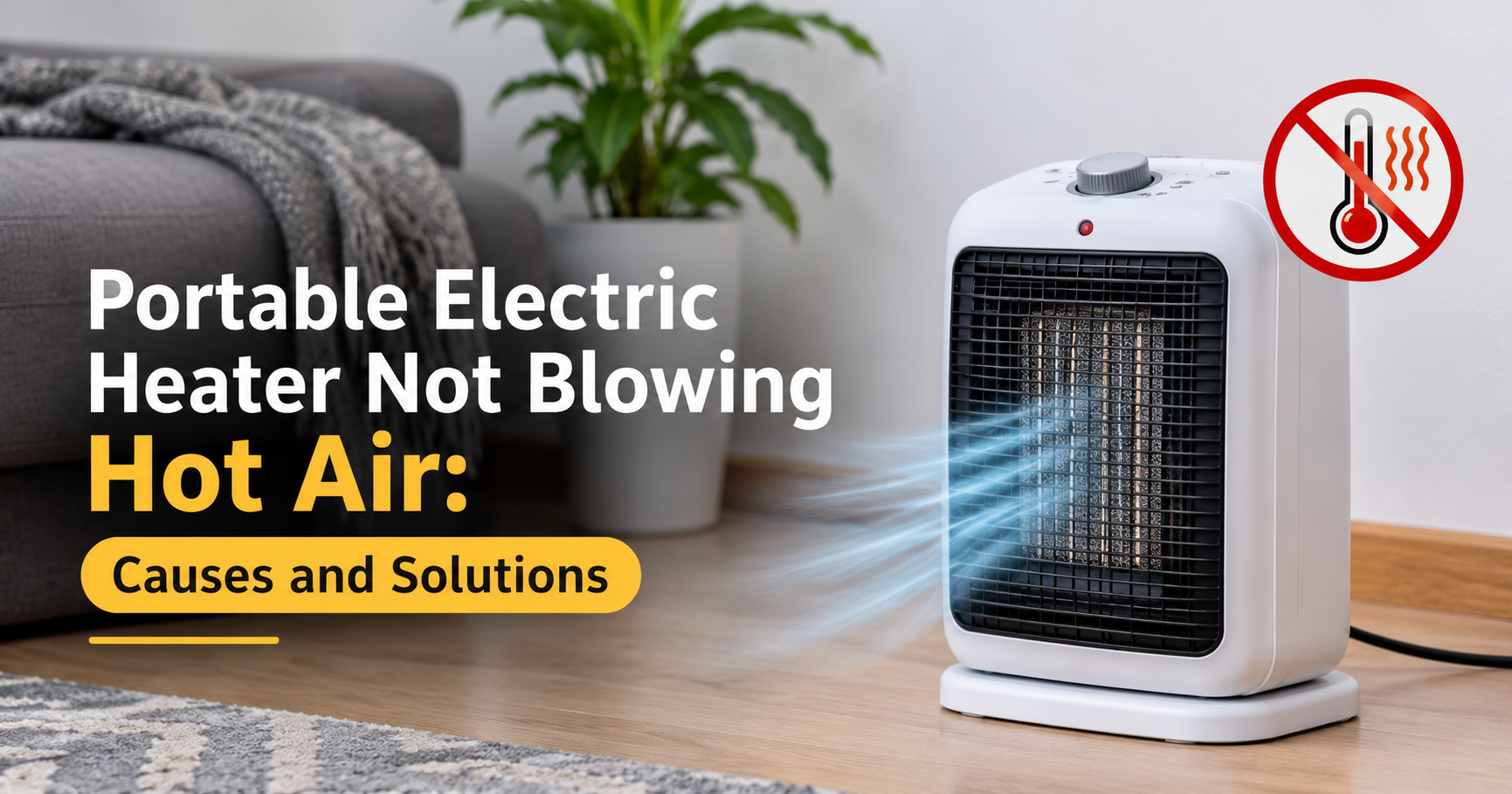

You switch on your portable electric heater, the fan hums, air moves, but the air feels cool or barely warm. It is frustrating, especially on a cold evening when you were counting on instant warmth. The good news is that a portable electric heater that is not blowing hot air is often caused by something simple: a wrong setting, a dirty vent, a tripped safety switch or a poor power connection. Only a smaller share of cases come down to a failed internal part.
This guide explains how portable heaters actually make heat, the most common reasons they stop blowing warm air, a clear step-by-step troubleshooting routine, safety rules you should never skip, and how to decide between repairing and replacing the unit.
Quick answer
Check four things first: (1) the heater is on a heat mode, not fan-only, (2) the thermostat is set higher than the room temperature, (3) the heater is plugged directly into a wall outlet, and (4) the air vents are free of dust. If the air is still cool after that, an internal part such as the heating element, thermostat sensor or thermal fuse has probably failed.
In this article
- How a portable electric heater produces hot air
- Is it normal for a heater to blow cool air?
- 9 common reasons your heater is not blowing hot air
- Symptom and cause comparison table
- Step-by-step troubleshooting guide
- When to stop using the heater immediately
- Cleaning and maintenance routine
- Repair or replace: how to decide
- How to choose a replacement heater
- Frequently asked questions
How a Portable Electric Heater Produces Hot Air
Understanding the parts makes troubleshooting much easier. Most fan-forced portable heaters, including ceramic and coil-style models, work in the same basic way. Electricity flows through a heating element, which becomes hot. A fan then pushes room air across that hot element and out through the front grille as warm air. A thermostat monitors the temperature and switches the element on and off to keep the room near the setting you chose.

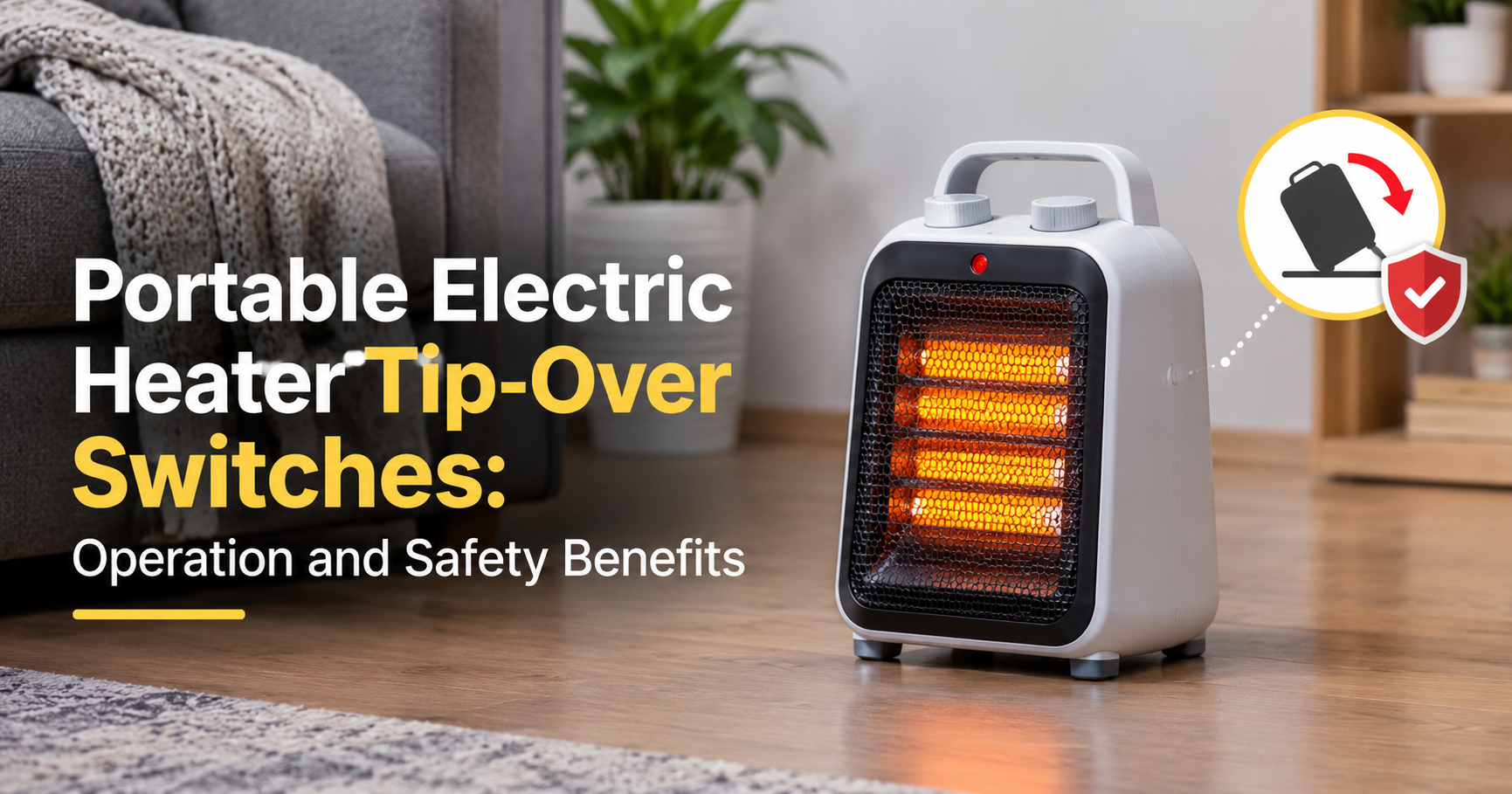
Every heater also has safety devices. A tip-over switch cuts power if the unit falls or sits at a steep angle. Overheat protection, such as a thermal cutout or a thermal fuse, shuts the heating element down if internal temperatures rise too high. These protections are essential, and they are also among the most common reasons a heater suddenly runs the fan without producing heat.
Common heating element types
- Ceramic PTC elements: ceramic plates that heat quickly and limit their own temperature. Popular in compact fan heaters.
- Metal coil (nichrome) elements: a wire coil that glows or gets very hot. Found in many budget and older fan heaters.
- Quartz or infrared elements: radiant heaters that warm objects and people in front of them rather than blowing hot air.
- Oil-filled and convection models: these warm the room gradually and rely on natural air movement, not a strong fan.
Is It Normal for a Heater to Blow Cool Air?
Sometimes yes. Before you assume something is broken, consider these normal situations:
- Warm-up period: some heaters take 10 to 60 seconds before the air feels warm, and a few run the fan first and heat later.
- Thermostat satisfied: once the room reaches your set temperature, the element switches off while the fan may keep running, so the air feels cool.
- Low or eco setting: a low-wattage or eco mode produces only gently warm air that can feel cool in a big, cold room.
- Radiant or oil-filled design: these heaters are not meant to blow hot air. You feel the warmth when you are near or in front of them.
If none of these apply and the air stays cool even after several minutes on the highest heat setting, continue to the causes below.
9 Common Reasons Your Heater Is Not Blowing Hot Air
1. The heater is on fan-only or the wrong mode
Many portable heaters have a fan-only or cool-air setting alongside low and high heat. A bumped switch or a remote-control press can change the mode without you noticing. Confirm that the heat setting is selected and that the display or indicator light shows heating is active.
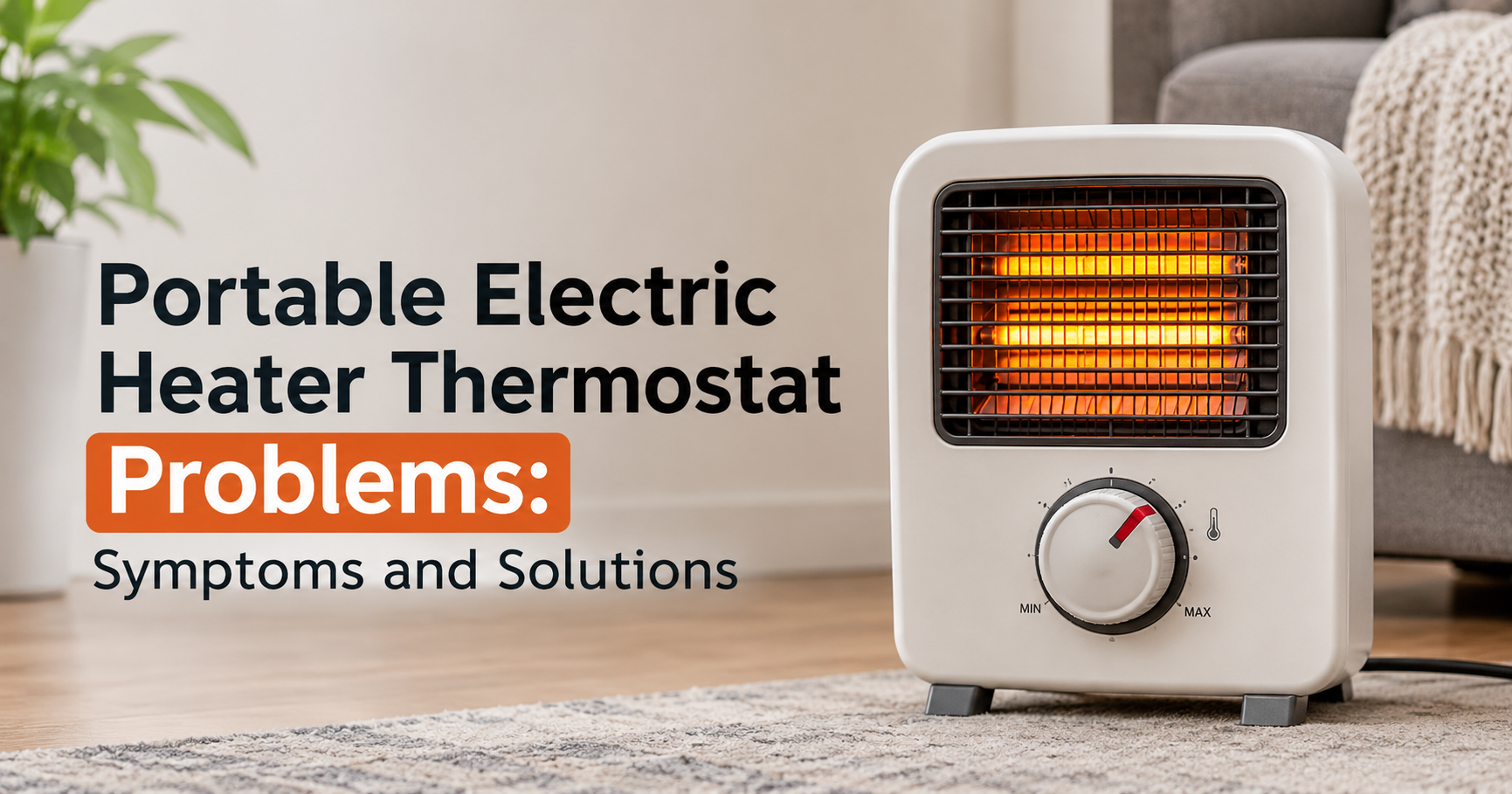
2. The thermostat is set too low
If the thermostat is set at or below the current room temperature, the heater will not heat. Turn the dial to its highest setting for a test. If heat appears, the thermostat was simply doing its job. Also check that digital models are not set to a Celsius value when you meant Fahrenheit, which is a surprisingly common mix-up.
3. Eco mode, timer or low-power setting is active
Eco modes reduce power or cycle the element on and off to save energy. Timers can also switch the heating element off while leaving the display on. Turn eco mode off, cancel any timer and test again on full power.
4. Power supply problems
Heaters draw a lot of electricity. A model rated at 1,500 watts on a 120 V supply draws roughly 12.5 amps, which is close to the limit of a typical household circuit. Common power-related causes include:
- Using an extension cord or power strip that cannot handle the load, which can cause voltage drop, overheating of the cord and reduced heater output.
- A tripped circuit breaker or GFCI outlet shared with other high-power appliances.
- A loose outlet or worn plug that does not make solid contact.
- A blown fuse inside the plug, in regions where plugs contain fuses.
- Unstable or low mains voltage in the building.
Always plug a heater directly into a wall outlet, ideally one that is not sharing its circuit with other heavy appliances.
5. Dust and blocked air vents
Dust, pet hair and lint collect on the intake grille, fan blades and element over time. This restricts airflow, so the element overheats, the safety device trips and the heater stops producing heat or cycles off after a few minutes. Weak airflow is a strong clue that dust is the problem.
6. Overheat protection has tripped
If the heater has overheated, its thermal cutout may have switched the heating element off. Some models reset automatically after cooling, while others have a small reset button. Unplug the heater, let it cool for at least 30 minutes, clean the vents and try again. If the overheat protection trips repeatedly, there is an underlying fault and the heater should not be used.
7. The tip-over switch is not closing
The tip-over switch can interrupt heating if the heater sits on carpet, on an uneven surface or at a slight tilt. Dust or a sticky mechanism can also keep the switch from closing. Place the heater on a hard, flat surface and test it again. Never tape, wedge or bypass this switch.
8. Failed heating element or ceramic plate
Elements wear out. A coil can burn through and ceramic plates can crack. The typical sign is a fan that runs normally while the air never warms up, even on the highest setting, often with no warm smell from the grille. A failed element is not a do-it-yourself repair for most people.
9. Faulty thermostat, sensor, thermal fuse or control board
Internal electronic parts can also fail. A defective temperature sensor may tell the controller the room is already warm. A blown thermal fuse is a one-time safety part that permanently cuts the element’s power after a serious overheating event. A damaged control board or relay can leave the fan running without sending power to the element. A qualified technician can test these parts, but on low-cost heaters, replacement usually makes more sense.
Symptom and Cause Comparison Table
Use this table to match what you see with the most likely cause and whether you can fix it yourself.
| What you notice | Most likely cause | DIY fix? |
|---|---|---|
| Fan runs, no warmth, indicator on | Fan-only mode, thermostat too low or eco mode | Yes, adjust settings |
| Warm for a short time, then cool or shuts off | Overheat protection from dust or blocked vents | Yes, clean and reset |
| Only lukewarm air | Low voltage, extension cord, low-power setting or undersized heater | Often yes |
| No fan and no heat | Tripped breaker, GFCI, plug fuse, damaged cord or tip-over switch | Sometimes |
| Fan runs but air never warms, even on high | Failed element, sensor or thermal fuse | No, repair or replace |
| Weak airflow | Dusty fan or filter, or a worn fan motor | Clean first |
| Burning plastic smell, sparks or melted plug | Serious electrical fault | No, stop using it |
Step-by-Step Troubleshooting Guide
Work through these steps in order. Each step is quick, safe and free.

- Confirm the settings. Select a heat mode, set the thermostat to maximum, switch off eco mode and cancel any timer. If your heater has a remote, replace its batteries.
- Check the power connection. Unplug any extension cord or power strip and plug directly into a wall outlet. Try a second outlet on a different circuit. Look at your breaker panel and press the GFCI reset button if the outlet has one.
- Inspect the cord and plug. With the heater unplugged, look for kinks, cracks, discoloration or a plug that feels loose. Any burn marks mean you should stop using the heater.
- Let it cool, then clean it. Unplug the heater, wait 30 minutes and vacuum the front grille, rear intake and any removable filter with a soft brush attachment.
- Check the placement. Move the heater to a hard, flat surface away from rugs, curtains and furniture. Leave at least 3 feet (about 1 meter) of clear space around it.
- Run a five-minute test. Plug it in and run it on the highest heat setting. Hold your hand a few inches from the grille, not touching it, to feel for warmth.
- Decide the next step. If the heater is still cold, an internal part has likely failed. Check your warranty and contact the manufacturer or seller. Do not open the casing, since that can void the warranty and expose you to live electrical parts.
Safety first
Never open a plugged-in heater and never bypass a safety switch or thermal fuse. These parts exist to prevent fires. If you are not trained in electrical repair, leave internal work to a qualified technician.
When to Stop Using the Heater Immediately
Some symptoms mean the heater is unsafe. Unplug it right away and do not use it again until it is inspected or replaced if you notice any of the following:
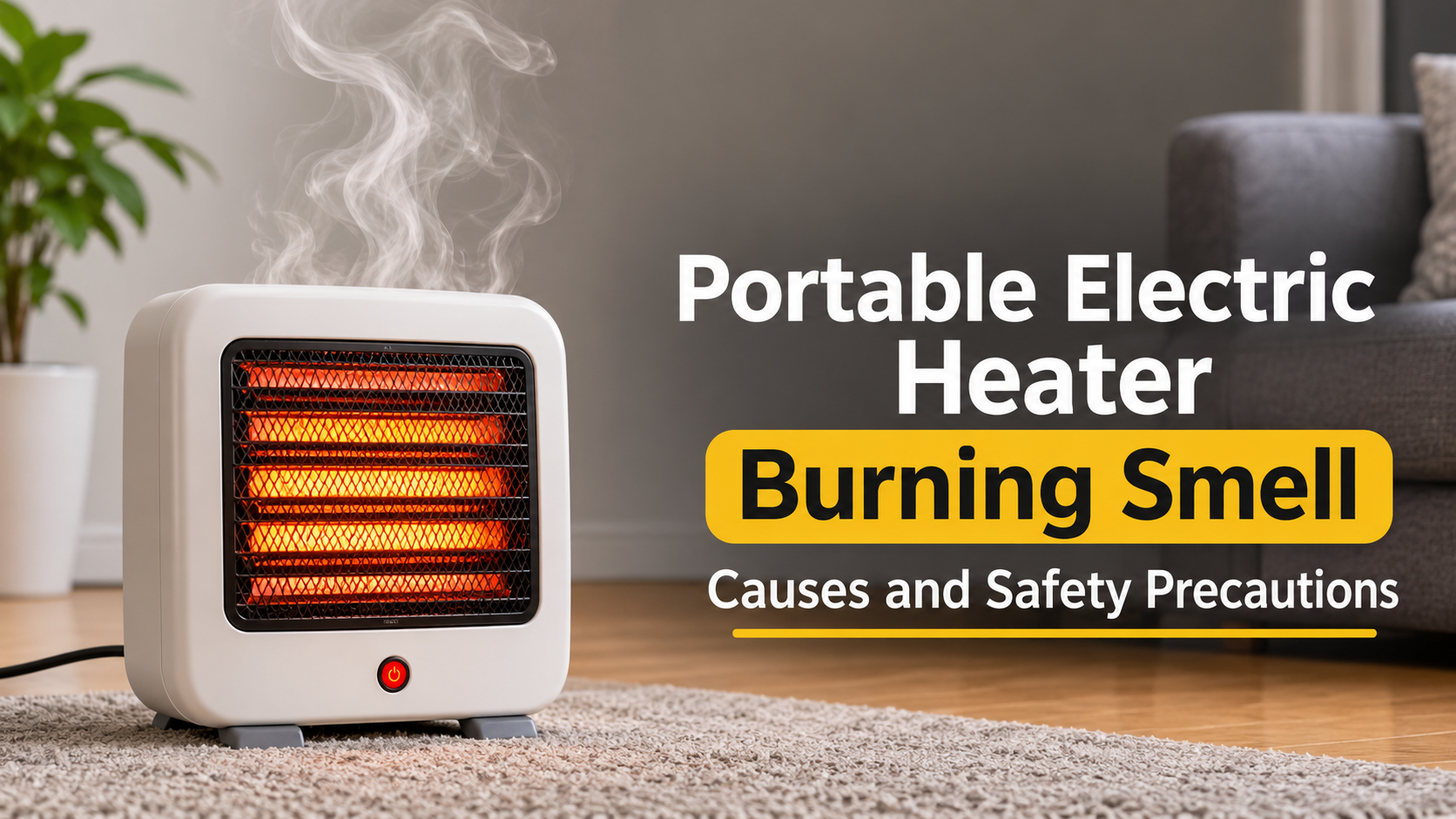
- A strong or lingering burning smell, especially of melting plastic or burning wire (a light dusty smell for a few minutes on the first use of the season is normal).
- Sparks, crackling sounds or visible smoke.
- A plug, cord or outlet that is hot to the touch, discolored or melted.
- Overheat protection that trips again and again.
- A cracked housing, exposed wiring or a damaged grille.
- Repeated breaker trips whenever the heater is switched on.
Even if the problem looks like “only” cool air, a hot plug or burning smell can signal a dangerous electrical issue.
Cleaning and Maintenance Routine
Regular cleaning prevents the most common cause of lost heat: dust. A few minutes each month during the heating season can extend the life of your heater and keep it working safely.

- Always unplug the heater and let it cool completely before cleaning.
- Use a vacuum with a soft brush attachment on the intake and outlet grilles.
- Wipe the outside with a dry or slightly damp cloth. Never spray water or cleaning liquids into the grille.
- Make sure every part is completely dry before plugging it back in.
- Clean or replace any removable air filter as directed in the manual.
- At the end of the season, store the heater in a dry place, ideally in its original box or a cover, standing upright.
Repair or Replace: How to Decide
If your simple checks did not bring the heat back, the question becomes whether a repair is worth it. Consider these factors:
- Price of the heater: most portable heaters are inexpensive. A common rule of thumb is to replace the unit if a repair costs about half of a new one or more.
- Age: an older heater with a worn element and aged wiring is a weaker candidate for repair.
- Warranty: if the heater is still covered, contact the manufacturer before doing anything else.
- Safety history: if the heater has overheated, tripped breakers or shown a burning smell, replacement is the safer choice.
- Part availability: many budget models use sealed assemblies, which makes repair impractical.
How to Choose a Replacement Heater
If you do need a new heater, a few features can help you avoid the same problem again.
Match the wattage to the room
As a general rule, you need about 10 watts per square foot to heat a room with standard insulation. Most portable heaters top out at 1,500 watts on a 120 V circuit, which suits a room of around 150 square feet. For larger or poorly insulated spaces, one portable heater may only act as supplemental heat.

Look for these features
- Tip-over and overheat protection: both should be built in.
- Recognized safety certification: look for marks from a recognized testing laboratory, such as UL, ETL or CE, depending on your region.
- Adjustable thermostat: keeps temperatures steady and saves energy.
- Multiple heat settings: lets you choose between low and high output.
- Removable or easy-to-clean intake: makes maintenance quick.
- Cool-touch housing and a sturdy base: particularly important with children or pets around.
- Timer and auto shut-off: useful for safer overnight and short-session use.
- Reasonable noise level: check the decibel rating if you plan to use it in a bedroom or office.
Portable Heater Safety Tips
- Plug the heater directly into a wall outlet and avoid extension cords and power strips.
- Keep it at least 3 feet (about 1 meter) from curtains, bedding, furniture and paper.
- Never cover the heater or use it to dry clothes.
- Do not leave a heater running unattended or while you sleep unless the manufacturer explicitly allows it and it has the proper safety features.
- Place it on a flat, hard, stable surface, never on a table, bed or sofa.
- Keep it away from water, and use only models rated for bathrooms or damp places in those areas.
- Test your smoke alarms and, if you use other fuel-burning appliances, your carbon monoxide detectors.
- Keep children and pets from touching the heater.
Frequently Asked Questions
Why is my portable heater blowing cold air even though it is on?
The most common causes are fan-only mode, a thermostat set below the room temperature, eco mode, dust-blocked vents that trigger overheat protection, or a failed heating element. Check the settings and clean the vents first.
Why does my heater blow warm air and then turn cold?
This usually means the overheat protection is tripping. Blocked vents, dust on the element or an unstable power supply can all cause it. Clean the unit and plug it directly into a wall outlet. If it keeps happening, stop using it.
Can a tripped breaker make a heater blow cold air?
A fully tripped breaker normally cuts all power, so the fan stops as well. However, a weak connection or low voltage can reduce heater output while the fan still runs, so it is worth checking the circuit and outlet.
Is it safe to keep using a heater that only blows lukewarm air?
If the cause is a low setting, a thermostat that has been satisfied or a room that is too large for the heater, it is safe. If the lukewarm air comes with a burning smell, hot plug, sparks or repeated shut-offs, unplug it immediately.
How long does a portable electric heater last?
Lifespan depends on build quality, how many hours you run it and how well you clean it. Many heaters last several seasons, and well-maintained models can last longer. Dust, constant use and rough handling shorten their life.
Can I fix the heating element myself?
It is not recommended. Replacing an element or testing electrical parts involves live wiring and can void your warranty. For most portable heaters, replacing the entire unit is the safer and more practical option.
Final Thoughts
A portable electric heater that is not blowing hot air is rarely a mystery. Start with the basics: the heat mode, the thermostat, the power connection and clean vents. Those checks fix a large share of problems in minutes. If the air is still cool, the heating element, thermostat sensor or thermal fuse has probably failed, and replacing the heater is usually the sensible choice. Above all, never ignore warning signs such as burning smells, hot plugs or repeated shut-offs, because heater safety always matters more than a few degrees of warmth.