
There are few things more frustrating than reaching for your portable electric heater on a freezing morning and finding that it will not turn on, or it runs but blows out nothing but cold air. The good news is that a portable electric heater that is not working is often caused by a simple, fixable problem such as a dead outlet, a tripped safety switch, or a layer of dust. The bad news is that electric heaters draw a lot of power, so a few faults are genuinely dangerous and should never be ignored.
This complete guide walks you through every common reason a portable electric heater stops working, how to test each one safely, which repairs you can handle yourself, and when it is smarter to replace the unit. By the end, you will know exactly what to check first, what to leave to a professional, and how to prevent the problem from coming back.
Key Takeaways
- Always unplug the heater and let it cool completely before inspecting it.
- Start with the simplest causes: the outlet, the plug, the power cord, and the tip-over switch.
- Heaters that shut off after a few minutes usually have an overheating problem caused by dust or blocked airflow.
- A heater with a power light but no heat often has a failed heating element, thermostat, or thermal fuse.
- Never bypass a safety device, never use an extension cord, and replace any heater with a damaged cord or burn marks.
How a Portable Electric Heater Works (and Why It Matters for Troubleshooting)
Understanding the basics makes diagnosing a fault much easier. Every portable electric heater follows the same simple chain of events. Electricity enters through the plug and power cord, passes through the on/off switch and the thermostat, and then flows into the heating element, which converts electrical energy into heat. In fan heaters and ceramic heaters, a small motor and fan push that warmth into the room. Along the way, one or more safety devices watch for danger.
Those safety devices are the reason many heaters appear to be broken when they are actually protecting you. The most common are:
- Tip-over switch: cuts power instantly if the heater is knocked over or tilted.
- Overheat protection (thermal cutoff): shuts the heater down when internal temperatures climb too high.
- Thermal fuse: a one-time safety fuse that permanently breaks the circuit if the heater overheats badly.
- Plug-mounted safety device: some heaters have a plug with a test and reset button that trips when it detects a fault in the cord.
When any link in this chain fails, the heater stops working. That is why a methodical, step-by-step approach is the fastest route to the answer.
Safety first: Before touching or inspecting your heater, switch it off, unplug it from the wall, and wait at least 30 minutes for the heating element and housing to cool. Never open the casing while the unit is plugged in, and never work on it with wet hands or on a damp floor.
The Most Common Reasons a Portable Electric Heater Stops Working
Before diving into each fix, the cheat sheet below shows how the symptoms you can observe usually point toward a specific cause. Use it as a quick reference, then read the detailed sections that follow.

1. The Wall Outlet Has No Power
It sounds obvious, but a dead outlet is one of the most frequent reasons a heater will not turn on. Outlets can lose power when a circuit breaker trips, when a ground fault protection outlet trips, or when a wire connection loosens inside the wall.
How to check: Plug a lamp or phone charger into the same outlet. If it does not work, the outlet is the problem rather than the heater. Check your breaker panel for a tripped breaker and look for a reset button on the outlet itself, especially in bathrooms, kitchens, and garages. Then try the heater in a different outlet on a different circuit.
The fix: Reset the breaker once. If it trips again immediately, do not keep resetting it. That points to an overloaded circuit or a short circuit, and an electrician should inspect it.
2. A Tripped Circuit Breaker From an Overloaded Circuit
Portable electric heaters are among the most power-hungry appliances in a home. Many models are rated at around 1,500 watts, which uses most of the capacity of a standard household circuit by itself. If a vacuum cleaner, microwave, hair dryer, or second heater shares that circuit, the breaker will trip and the heater will appear dead.
The fix: Plug the heater into a circuit that is not shared with other high-power devices, and run it alone. Check the wattage printed on the heater’s label so you know how much load you are adding.
3. A Damaged Power Cord or Plug
The cord and plug take a beating from being coiled, bent, stepped on, and pulled. Over time the internal wires can break, even when the outside of the cord looks fine, and the plug pins can loosen or corrode.
How to check: With the heater unplugged, inspect the full length of the cord for cuts, kinks, flattened areas, or melted insulation. Look closely at the plug for discoloration, scorch marks, bent pins, or a loose fit in the outlet. Also feel the plug after the heater has been running. A plug that is too hot to hold is a serious warning sign.
Do not repair a damaged heater cord with tape. A heater draws a heavy current, and a taped splice can overheat and start a fire. If the cord or plug is damaged, stop using the heater and replace the unit or have a qualified technician fit a proper replacement cord.
4. Extension Cords and Power Strips
Plugging a portable heater into an extension cord or power strip is one of the most common mistakes, and it can both cause the heater to underperform and create a fire hazard. Most extension cords and power strips are not designed to carry the continuous heavy load of a heating appliance. The cord heats up, the voltage drops, and the heater may shut off, run weakly, or damage the cord and plug.
The fix: Plug the heater directly into a wall outlet every time. If the outlet is too far away, move the heater rather than extending the cord.
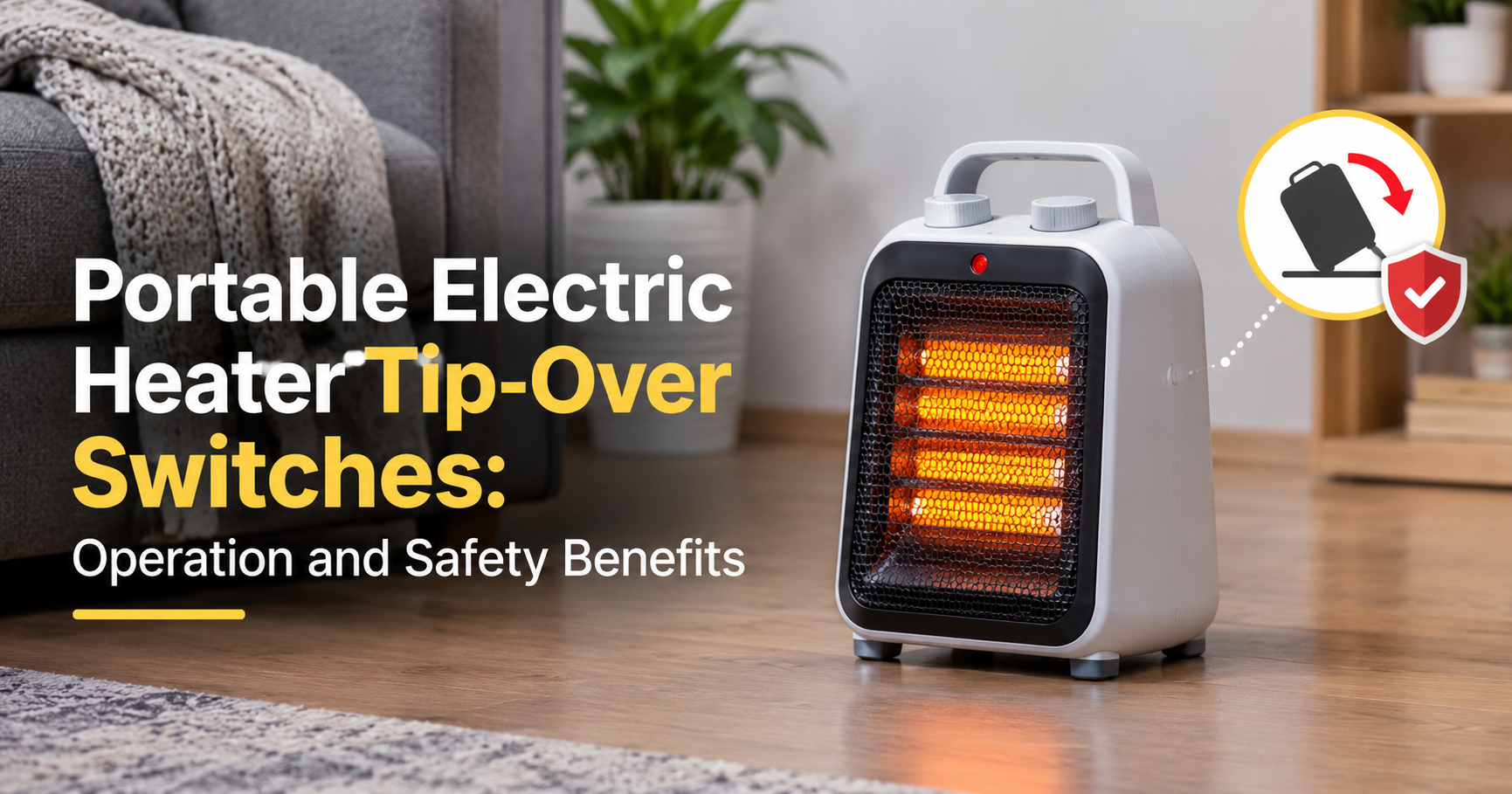
5. The Tip-Over Switch Is Stuck or Has Been Triggered
If your heater has power lights but does not heat, or it will not start at all after being moved, the tip-over switch may be the cause. The switch is usually a small weighted mechanism or button on the underside of the heater. If the heater sits on carpet, an uneven floor, or a slightly tilted surface, the sensor can think the unit has fallen and cut power. Dust and debris can also jam the switch so it never closes.
How to check:
- Unplug the heater and turn it over carefully.
- Look for a small button, plunger, or pendulum switch on the base.
- Press it a few times to make sure it moves freely, and clear away any dust or fluff.
- Set the heater upright on a flat, hard, level surface and test again.
If the switch feels stuck, broken, or does not click, it needs to be replaced. That is a job for a technician, as the heater will not operate safely without a working tip-over switch.
6. Overheat Protection Is Tripping Because of Dust and Blocked Airflow
If your heater runs for a few minutes and then shuts off, overheating protection is almost always the reason. Dust builds up on the intake grille, the filter (where fitted), the fan blades, and the heating element. This blocks airflow, traps heat inside the housing, and causes the thermal cutoff to trip.
How to fix it:
- Unplug the heater and let it cool fully.
- Vacuum the front and rear grilles with a soft brush attachment.
- Clean or replace the air filter if your model has one, following the manual.
- Use a can of compressed air or a soft brush to remove dust from the vents.
- Make sure there is at least three feet (about one meter) of clear space around the heater, away from curtains, furniture, and bedding.
- Do not place the heater against a wall or inside a cabinet where air cannot circulate.
Cleaning solves a large share of heaters that keep shutting off. If the problem returns even after a thorough cleaning, the thermostat or overheat sensor may be faulty.
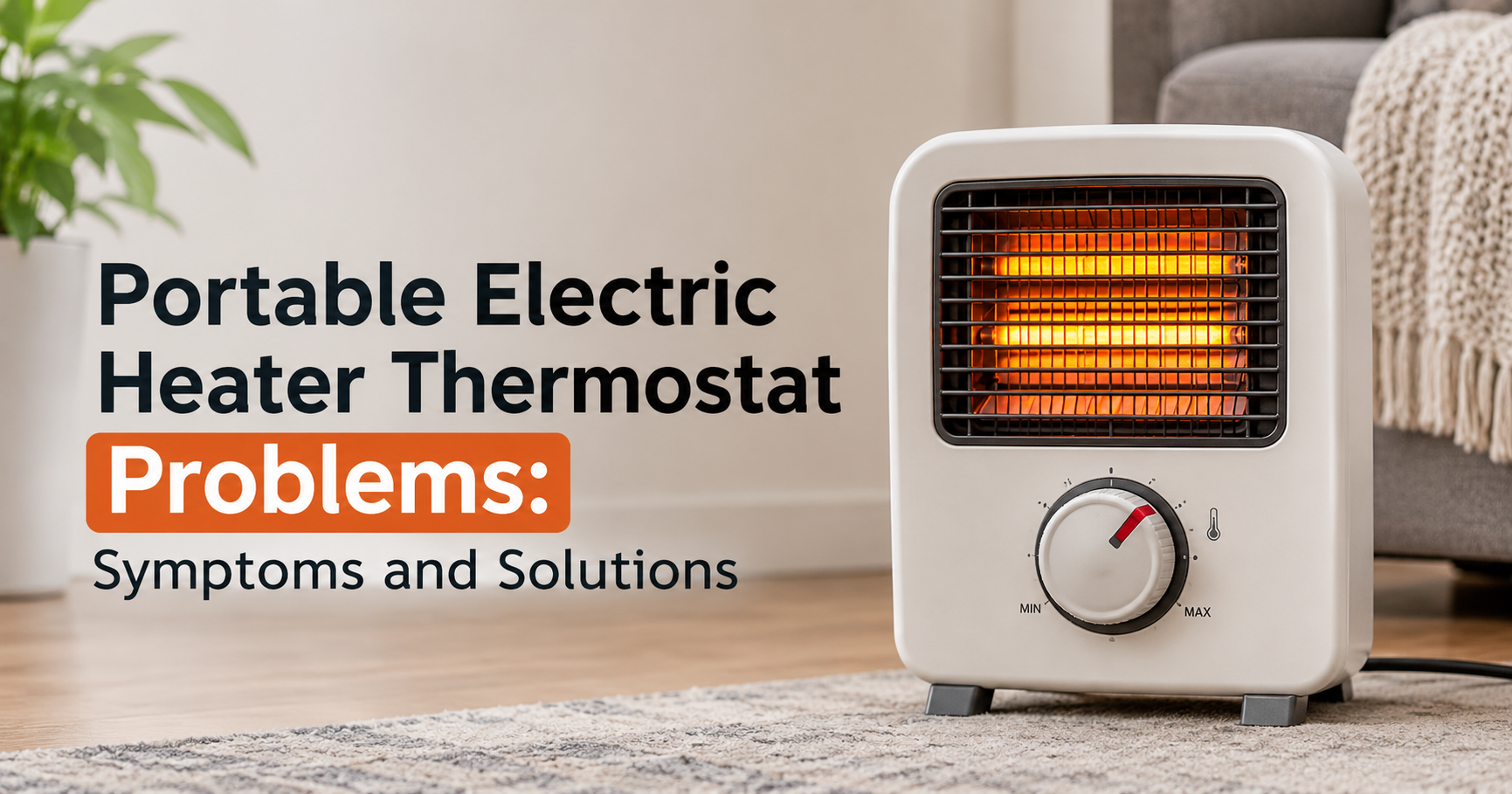
7. The Thermostat Is Set Too Low or Has Failed
A heater that powers on, runs the fan, and blows cold air may simply have its thermostat set below the current room temperature. The heating element will not switch on if the room already seems warm enough to the thermostat.
How to check: Turn the thermostat dial to its maximum setting and select the highest heat mode. If the element still does not warm up within a minute or two, the thermostat may have failed, or the sensor that reads room temperature may be damaged. A faulty thermostat can also cause the heater to cycle on and off too frequently or to overheat, so it is not a part to ignore.
8. A Failed Heating Element
The heating element is the part that actually makes heat, and like a toaster element, it can burn out over time. The symptoms are classic: the heater turns on, the power light is lit, the fan may run, but there is no heat or only a weak amount of warmth.
Element failure is more common in older heaters and in heaters used heavily for many hours a day. It is also more likely when dust has been repeatedly cooking onto the element. In most portable heaters, the element is not designed to be replaced by the user, and the repair rarely makes financial sense compared with buying a new heater.
9. A Blown Thermal Fuse
A thermal fuse is a one-time safety device that permanently opens the circuit if the heater reaches a dangerous temperature. If the heater is completely dead, with no lights or fan and the outlet and cord both test fine, a blown thermal fuse is a strong suspect. It usually means the heater overheated badly at some point, often because of blocked vents or a failing thermostat.
Never bypass or jump a thermal fuse. It exists specifically to prevent fires. If it has blown, something caused the heater to overheat, and simply replacing or bypassing the fuse without finding the cause can lead to a repeat failure. In most cases, replacing the heater is the safest option.
10. A Faulty Internal Switch, Control Board, or Wiring
Digital and remote-controlled heaters rely on a small control board. Power surges, moisture, and age can damage these boards, which leads to buttons that do not respond, a display that stays blank, or a heater that behaves erratically. Mechanical dials can fail as well when internal contacts wear or burn.
If you have ruled out the outlet, cord, tip-over switch, thermostat setting, and dust, an internal electrical fault is the likely cause. Opening the heater to test it is risky and best left to a qualified technician.
Step-by-Step: How to Troubleshoot a Portable Electric Heater Safely
If you are not sure where to begin, follow this order. It moves from the easiest and most likely causes to the most complex ones, so you can stop as soon as the heater works.

- Unplug and cool down. Disconnect the heater and wait for it to cool.
- Test the outlet. Use a lamp or charger, check the breaker, and try another outlet. Remove any extension cord.
- Inspect the cord and plug. Look for damage, discoloration, or heat marks. Press the reset button on the plug if your heater has one.
- Check the placement. Place the heater on a flat, hard, level surface so the tip-over switch can close.
- Clean the vents and filter. Remove dust and make sure air can flow freely.
- Test the controls. Set the thermostat to maximum and try each heat setting and fan speed.
- Let it run for 10 to 15 minutes. Stay nearby and watch for odd smells, noises, or shutdowns.
- Decide whether to repair or replace. If it still fails, the issue is internal and needs a professional or a replacement.
Common Problems by Heater Type
Different designs tend to fail in different ways. Knowing your heater type helps you narrow down the cause faster.
| Heater Type | Most Common Problems | Best First Check |
|---|---|---|
| Ceramic fan heater | Overheat shutdowns, failed fan, dusty vents | Clean the intake and exhaust grilles |
| Oil-filled radiator | Tip-over switch trips, thermostat faults, slow warm-up | Check level placement and thermostat setting |
| Infrared or quartz heater | Burnt-out tube, loose connections, blown fuse | Look for a dark or broken heating tube |
| Convection panel heater | Thermostat failure, faulty switch, blocked airflow | Make sure vents are clear and thermostat is high |
| Mini or personal heater | Weak cord, failed element, overheating from dust | Inspect the cord, plug, and grille |
Repair or Replace? How to Decide
Many portable electric heaters are inexpensive, sealed units that are not designed to be repaired. Before you spend time or money on a fix, weigh these factors.
- Warranty: If the heater is still covered, contact the manufacturer or seller before opening it. Opening the casing may void the warranty.
- Age: Many portable heaters last somewhere between three and ten years, depending on quality and how heavily they are used. An older heater with repeated faults is rarely worth repairing.
- Cost of repair: If a technician’s quote approaches half the price of a new heater, replacement usually makes more sense.
- Type of fault: Cord damage, melted plastic, a burnt smell, and blown thermal fuses all point toward replacement rather than repair.
- Safety features: Newer heaters often include improved tip-over protection, overheat shutoff, and cool-touch housings that older models lack.

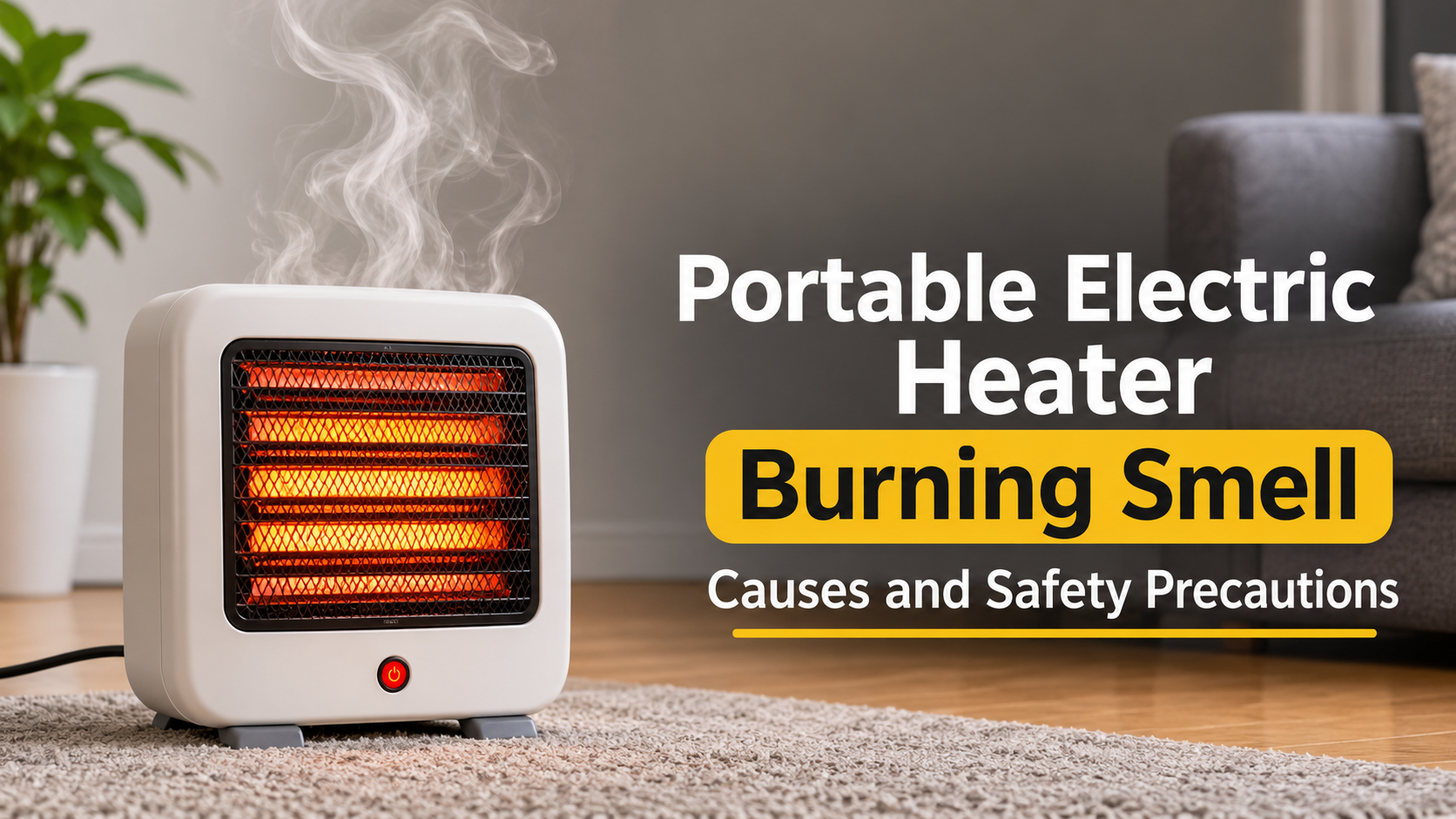
When to stop immediately: If you notice a burning smell, smoke, sparks, melted plastic, a plug that is too hot to touch, or a breaker that keeps tripping, unplug the heater (if it is safe to do so) and stop using it. Do not try to repair these faults yourself.
What to Look For in a Replacement Portable Electric Heater
If your heater is beyond saving, a little research before buying can save you from repeating the same problem. Look for these features when choosing a new unit.
- Tip-over and overheat protection: These two safety features should be standard on any heater you bring into your home.
- Adjustable thermostat: This lets the heater maintain a steady temperature rather than running flat out, which reduces wear and energy use.
- Correct size for the room: A heater that is too small runs constantly and wears out faster. As a general guide, plan for roughly 10 watts of heating per square foot of floor area, and check the manufacturer’s coverage recommendation.
- Safety certification: Choose a heater that carries a recognized safety certification mark for your region.
- Cool-touch housing and a sturdy base: These reduce the risk of burns and accidental tipping, which is especially valuable around children and pets.
- A removable, washable filter or easy-to-clean grilles: Dust is the leading enemy of any heater, so simple cleaning access extends its life.
- Timer and auto shut-off: These help prevent overheating from long, unattended operation.
- A solid warranty: A longer warranty is often a sign of better build quality.
How to Prevent Your Portable Electric Heater From Breaking Down
A little routine care goes a long way. These habits keep your heater working through the coldest months.
- Clean it regularly. Vacuum the grilles and vents every few weeks during heavy use, and give it a deep clean before and after the season.
- Always plug directly into the wall. Avoid extension cords and power strips.
- Give it space. Keep at least three feet of clearance from anything flammable.
- Place it on a flat, hard surface. Avoid thick carpet, beds, and sofas.
- Handle the cord gently. Never yank the plug by the cord, and avoid sharp bends, tight coiling, or running it under rugs.
- Do not leave it running unattended. Turn it off when you leave the room or go to sleep unless the manual specifically allows continuous use.
- Store it properly. At the end of the season, clean it, wrap the cord loosely, and store it in a dry place, ideally in its original box.
- Follow the manual. Every model has its own limits and recommendations.
Pro tip: Test your heater at the start of the cold season, before you really need it. This gives you time to troubleshoot, order a replacement, or use your warranty without sitting in a cold room.
Frequently Asked Questions
Why is my portable electric heater not turning on at all?
The most likely causes are a dead outlet, a tripped breaker, a damaged cord or plug, a tripped plug reset button, a stuck tip-over switch, or a blown thermal fuse. Start by testing the outlet with another device, then inspect the cord and place the heater on a level surface.
Why does my heater turn on but not produce heat?
If the lights or fan work but the air is cold, the thermostat may be set too low, or the heating element, thermostat, or thermal fuse may have failed. Raise the thermostat to its highest setting first. If there is still no heat, the problem is internal and replacement is usually the practical option.
Why does my portable heater shut off after a few minutes?
This is typically the overheat protection activating. Dust on the grille, filter, or fan, blocked airflow, or placing the heater too close to a wall or furniture are the usual causes. Unplug it, clean the vents thoroughly, and give it plenty of clearance.
Why does my heater keep tripping the breaker?
Heaters draw a high current, so sharing a circuit with other appliances can overload it. A short circuit inside the heater or a damaged cord can also trip the breaker. If the breaker trips again after you move the heater to a dedicated circuit, stop using the heater and have it checked or replaced.
Can I fix a portable electric heater myself?
You can safely handle the simple tasks: testing the outlet, checking the placement, cleaning the vents, and adjusting the thermostat. Anything involving the heating element, thermal fuse, internal wiring, or the control board should be left to a qualified technician, because these parts carry high current and are tied to the heater’s safety systems.
How long should a portable electric heater last?
Lifespan varies with build quality, usage, and maintenance. Many heaters last several years with regular cleaning and careful use. Heaters used for long hours every day, or run in dusty environments, tend to wear out sooner.
Is it safe to leave a portable electric heater on overnight?
Most manufacturers and fire safety experts recommend against leaving a portable heater running while you sleep or when nobody is in the room. If you must use one, choose a model with tip-over protection, overheat shutoff, and a timer, and follow the instructions in its manual.
Final Thoughts
A portable electric heater that is not working is rarely a mystery once you take it one step at a time. Begin with the outlet, the cord, and the placement. Clean the vents, check the thermostat, and watch how the heater behaves. In many cases, the fix takes only a few minutes and costs nothing. When the cause turns out to be a failed element, a blown thermal fuse, or damaged wiring, you will know it is time to retire the heater and choose a safer, better-built replacement.
Above all, let safety guide every decision. If a heater smells of burning, has a hot plug, shows scorch marks, or keeps tripping the breaker, do not take chances. Unplug it, stop using it, and replace it. Staying warm should never come at the cost of your safety.
Disclaimer: This article is for general informational purposes only. Always follow the manufacturer’s instructions for your specific heater, and consult a qualified electrician or technician for any electrical repair.