
Portable electric heaters are a quick and cheap way to warm up a cold bedroom, home office or garage. They are also one of the appliances that need the most care, because they produce a lot of heat in a small, movable box. One of the most important safety parts inside any modern heater is something many people never think about until it stops working: the tip-over switch.
This guide explains what a portable electric heater tip-over switch is, how it works, why it matters, how to check that it is working, what to do when it causes problems, and which features to look for if you are shopping for a new heater.
In this article
- What is a tip-over switch?
- How a tip-over switch works
- Why it matters
- Types of tip-over protection
- How to check your heater’s switch
- Common tip-over switch problems
- Safe placement and use
- What to look for when buying
- Frequently asked questions
What Is a Tip-Over Switch?
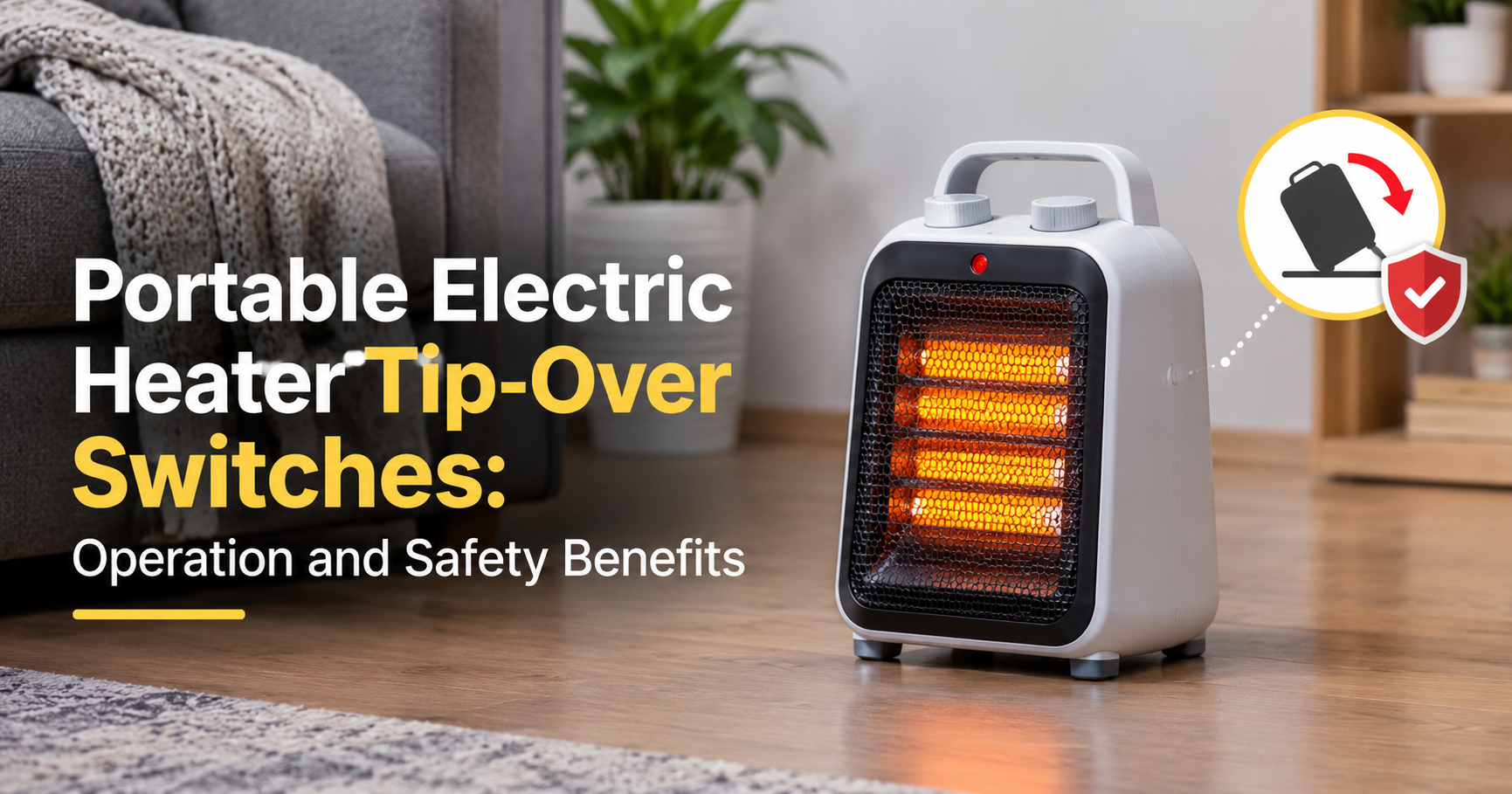
A tip-over switch, also called a tilt switch, anti-tip switch or fall-over protection, is a safety device that turns off the heating element when a heater is knocked over, lifted or leaning at a dangerous angle. Once the heater is back upright on a suitable surface, the switch lets power flow again.
The idea is simple. A hot heating element lying against carpet, bedding, curtains or a wooden floor can start a fire within minutes. By cutting power the moment the heater tips, the switch removes the heat source before it can ignite anything nearby.
How a Tip-Over Switch Works
Whatever the design, every tip-over switch does the same job: it acts as a gate in the heater’s electrical circuit. When the heater stands upright, the gate is closed and electricity reaches the heating element. When the heater tilts beyond a set angle, the gate opens and the circuit is broken.
On a typical plunger-style heater, the weight of the unit pushes a small spring-loaded button on the base inwards. As long as that button stays pressed, the heater can run. If the heater falls or is lifted, the spring pushes the button back out and the heater shuts off. Other designs use a small weight or an electronic sensor instead of a button, but the end result is the same.
The exact tilt angle that triggers shut-off differs between models, so you should not rely on a specific number. If you want to know how your own heater behaves, the user manual is the best place to look.
Why a Tip-Over Switch Matters
Heating equipment is a well-known cause of home fires, and portable heaters in particular are often involved when they are placed too close to flammable items or left running unattended. A heater that falls over is especially dangerous because the hot element can end up pressed against something that burns easily.
- Pets and children: A curious pet or a running child can easily knock a heater over.
- Busy rooms: Bedrooms, hallways and offices have cords, furniture and foot traffic that can catch a heater.
- Uneven surfaces: Heaters on rugs, carpets or sloped floors are more likely to shift or tilt.
- Accidental bumps: A vacuum cleaner, a chair or a swinging door can be enough to topple a lightweight unit.
Safety note
Heaters sold by reputable brands are normally tested to recognised safety standards that cover tip-over protection. Choose a heater that carries the safety marks used in your country, and avoid unbranded units with no clear certification.
Types of Tip-Over Protection
Manufacturers use a few different ways of detecting a fall. You may not be able to tell which one your heater has just by looking, but knowing the options helps you understand what is happening inside the unit.
| Type | How it detects a fall | Strengths | Watch out for |
|---|---|---|---|
| Mechanical plunger | Floor pushes a spring button in; it pops out when lifted or tipped | Simple, low cost, easy to understand | Can jam with dust or fail on soft surfaces like thick carpet |
| Ball or pendulum | A small weight moves off its resting position when tilted | Works without touching the floor | Can be affected by dirt or damage if the heater is dropped |
| Electronic tilt sensor | A sensor reads the angle and signals the control board | Precise and often combined with other safety features | Usually found on higher-priced or newer models |
How to Check Your Heater’s Tip-Over Switch
A heater that has been stored for months, moved around, or dropped should be checked before it is used. Always start with the instructions in the user manual, because testing methods and tilt angles differ between models. These general checks are a sensible starting point.
Step 1: Unplug the heater and let it cool
Never inspect a heater that is plugged in or still hot. Disconnect it from the wall socket and wait until it is completely cool.
Step 2: Inspect the base
Turn the heater over carefully and look for dust, lint, pet hair or debris around the switch area. Wipe the base gently with a dry cloth. Do not use water or sprays near the switch or any electrical opening.
Step 3: Press the switch by hand
If your heater has a visible plunger or button, press it with your finger. It should move smoothly and return on its own. A button that feels stuck, loose, gritty or slow to return is a warning sign.
Step 4: Do a supervised function check
Many manufacturers recommend a quick function test on a hard, flat, non-flammable surface with nothing around the heater. Run it briefly on a low setting, then follow the manual’s guidance for testing the shut-off. Stay beside the heater, keep the plug within easy reach, and stop immediately if anything seems wrong.
Important
If your manual does not describe a safe test method, do not improvise by shaking, throwing or forcefully tipping a live heater. Contact the manufacturer or replace the heater if you doubt the switch is working.
Common Tip-Over Switch Problems
The heater will not turn on
This is the most common complaint. The switch believes the heater is tilted and keeps the circuit open. Usual causes are a soft or uneven surface, debris under the base, or a plunger that is not being pressed down fully.
The heater shuts off by itself
If the heater switches off when the floor vibrates or when someone walks past, the switch may be too sensitive, dirty or worn. A heater sitting on carpet that compresses and shifts can also trigger it.
The heater keeps running when tilted
This is a safety failure and should be taken seriously. A switch that no longer reacts to a tilt will not protect you if the heater falls. Stop using the heater and replace it or have it assessed by the manufacturer.
Never do this
- Tape, glue or wedge the switch so it stays pressed.
- Place a weight or object on the heater to keep it active.
- Open the casing and bridge or remove the switch wiring.
- Keep using a heater whose switch is visibly broken or missing.
Safe Placement and Use
A tip-over switch is only one layer of protection. The safest heater is one that is placed well, so it is unlikely to fall in the first place.
- Keep a clear space of about three feet (one metre) around the heater in every direction.
- Use it on a hard, flat, level surface, not on a bed, sofa, cushion or thick rug.
- Plug it straight into a wall socket where possible, and avoid extension cords unless the manufacturer allows them.
- Route the cord where nobody will trip over it or pull the heater by accident.
- Turn it off and unplug it when you leave the room or go to sleep.
- Do not dry clothes or towels on or near it.
- Keep children and pets away, and consider a heater with a cool-touch exterior if they are around.
What to Look for When Buying a Portable Electric Heater
If you are choosing a new heater, tip-over protection should be at the top of your checklist, but it should not be the only thing you check. These are the features worth comparing.
- Tip-over protection: This should be clearly listed in the product description and the manual.
- Overheat protection: A separate sensor that cuts power if internal temperatures get too high.
- Safety certification: Look for recognised safety marks for your region on the product or packaging.
- Adjustable thermostat: Keeps the temperature steady and prevents the heater from running at full power all the time.
- Timer or auto shut-off: Useful for stopping the heater if you forget to switch it off.
- Cool-touch housing: Reduces burn risk, especially in homes with children or pets.
- Wide, stable base: A heater that is harder to knock over is the best first line of defence.
- Appropriate power for the room: A heater that is too weak for the room will run constantly and may tempt you to move it closer to you.
- Good build quality and a clear manual: Instructions should explain placement, cleaning and testing.
It is also worth reading customer reviews for comments such as the heater tipping easily, the switch sticking or the unit shutting off at random. Patterns in those complaints tell you a lot about long-term reliability.
Maintenance Tips to Keep the Switch Working
- Unplug and wipe down the heater, especially the base, before storing it for the season.
- Store it upright in a dry place, away from dust and moisture.
- Check the switch at the start of each heating season.
- Handle the heater gently when moving it, because drops can damage internal parts.
- Replace the heater if it has been dropped hard, shows cracks, or has a damaged cord or plug.
Frequently Asked Questions
Where is the tip-over switch on a portable electric heater?
On most models it sits on the underside of the heater, close to the base. Many plunger-type switches show up as a small spring-loaded button or pin. Ball and electronic sensors are usually hidden inside the housing, so you may not see them at all.
Why won’t my heater turn on even though it is plugged in?
A very common reason is that the safety switch thinks the heater is tilted. Carpet, an uneven floor, a rug edge or a build-up of dust under the base can stop the switch from being pressed fully. Move the heater to a hard, level surface and clean the base before assuming the unit is faulty.
Can I turn the tip-over protection off?
No. It is a built-in safety feature and it should never be disabled, taped down, weighted or bypassed. Doing so removes the protection that is meant to cut power if the heater falls, and it is a serious fire risk.
How often should I test the tip-over switch?
Many manufacturers suggest a quick check at the start of every heating season, and again if the heater has been dropped or moved a lot. Always follow the instructions in your own user manual for the correct method.
Is a tip-over switch the same as overheat protection?
No. They are two different safety systems. The tip-over switch reacts to position or tilt, while overheat protection reacts to temperature. A good heater should have both.
Does a tip-over switch make a heater completely safe?
It lowers risk, but it is not a guarantee. Heaters still need clear space around them, a proper power connection, and regular attention. Treat the switch as a backup, not a reason to relax.
Final Thoughts
The portable electric heater tip-over switch is a small part that does a very big job. It quietly watches the position of your heater and cuts the power if the heater falls, giving you precious protection against fire and burns. Understanding how it works helps you spot problems early, avoid risky shortcuts and choose a safer heater.
Keep the base clean, place the heater on a hard and level surface, give it plenty of room and never tamper with its safety features. If the switch jams, fails or seems unreliable, replace the heater rather than take a chance. A warm room is only worth it when it is also a safe one.
Disclaimer: This article is for general information only. Always follow the instructions and warnings in your own heater’s user manual, and contact the manufacturer or a qualified technician if you are unsure about your heater’s safety.