



A small bedroom should feel like a cozy retreat, not a cold box you rush out of every winter morning. The good news is that you do not need a big, expensive system to fix it. The right room heater for a small bedroom can warm the space in minutes, run quietly while you sleep, and keep your electricity bill under control.
The tricky part is choosing well. Too much power wastes energy and dries out the air. Too little leaves you shivering. The wrong type can be noisy, unsafe near a bed, or slow to warm up. This guide explains everything step by step so you can pick with confidence.
Table of Contents
- Why small bedrooms need a different kind of heater
- Types of room heaters compared
- How many watts do you really need?
- Key features to look for
- Safety rules for bedroom heaters
- Where to place your heater
- How much does it cost to run?
- Tips to keep the room warm for less
- Common mistakes to avoid
- Frequently asked questions
- Final verdict
1. Why Small Bedrooms Need a Different Kind of Heater
Small rooms heat up quickly, but they also have less margin for error. A heater that is oversized will overshoot the temperature, turn on and off constantly, and create hot and cold zones. A heater that is too weak will run non-stop and still struggle against cold walls and windows.
A bedroom is also where you spend six to eight hours asleep. That means noise, light, air quality and fire safety matter far more than they do in a living room. The best choice is a heater that is compact, quiet, thermostat controlled and equipped with proper safety cut-offs.
2. Types of Room Heaters Compared

Each heater type works differently. Understanding the differences makes it much easier to match a heater to your habits.
Ceramic Fan Heaters
Ceramic heaters use a heated ceramic element and a built-in fan to push warm air into the room. They are the fastest option, often making a noticeable difference within a couple of minutes. They are light, portable and usually affordable, which makes them popular for small spaces.
The downside is fan noise and the fact that heat stops almost as soon as you switch off. They are ideal for warming the room before bedtime or while getting dressed in the morning.
Oil-Filled Radiators
An oil-filled heater warms sealed oil inside metal fins, which then radiates steady heat. It takes longer to start, but it keeps releasing warmth even after the element cycles off. There is no fan, so it is almost silent, and it does not dry the air as aggressively.
For a bedroom that must stay comfortable all night, this is one of the most reliable choices. Look for a compact model with wheels and a thermostat.
Infrared (Radiant) Heaters
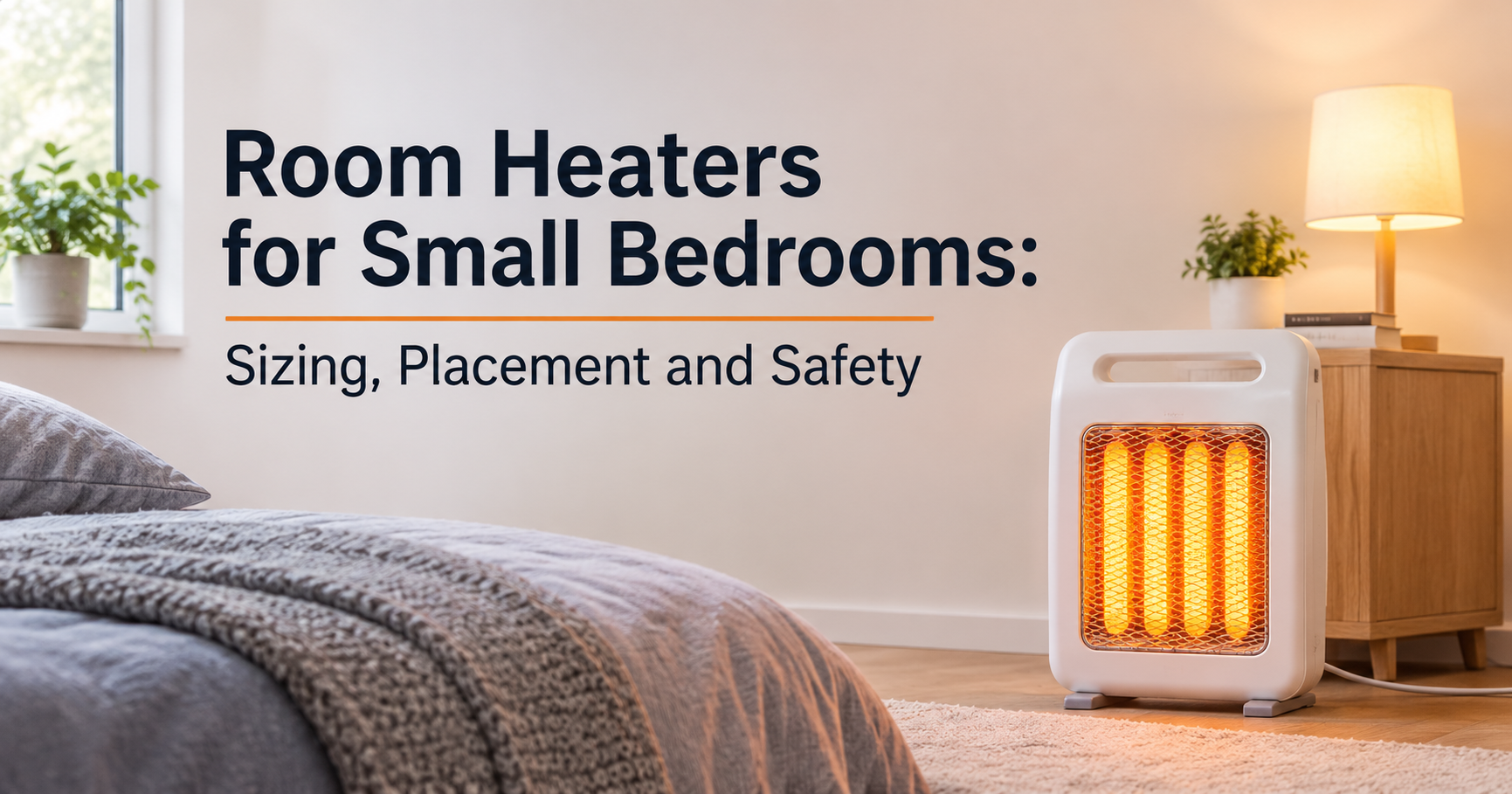
Infrared heaters warm objects and people directly rather than heating all the air. You feel the warmth almost instantly if you sit or stand in front of it. They are efficient for spot heating, such as a reading corner or desk, but they are less suited to warming the whole room evenly while you sleep.
Panel and Convector Heaters
Slim panel heaters warm the air by natural convection and are often wall-mountable or freestanding with a very small footprint. They are quiet, evenly warming and great for tight bedrooms where floor space is limited. Many include timers and digital thermostats.
| Type | Heat-up speed | Noise | Best for | Overnight use |
|---|---|---|---|---|
| Ceramic fan | Very fast | Low to medium | Quick warm-up | Fair |
| Oil-filled | Slow, steady | Silent | All-night comfort | Excellent |
| Infrared | Instant (spot) | Silent | Desk or bedside corner | Limited |
| Panel / convector | Moderate | Silent to very low | Space-saving rooms | Very good |
3. How Many Watts Do You Really Need?

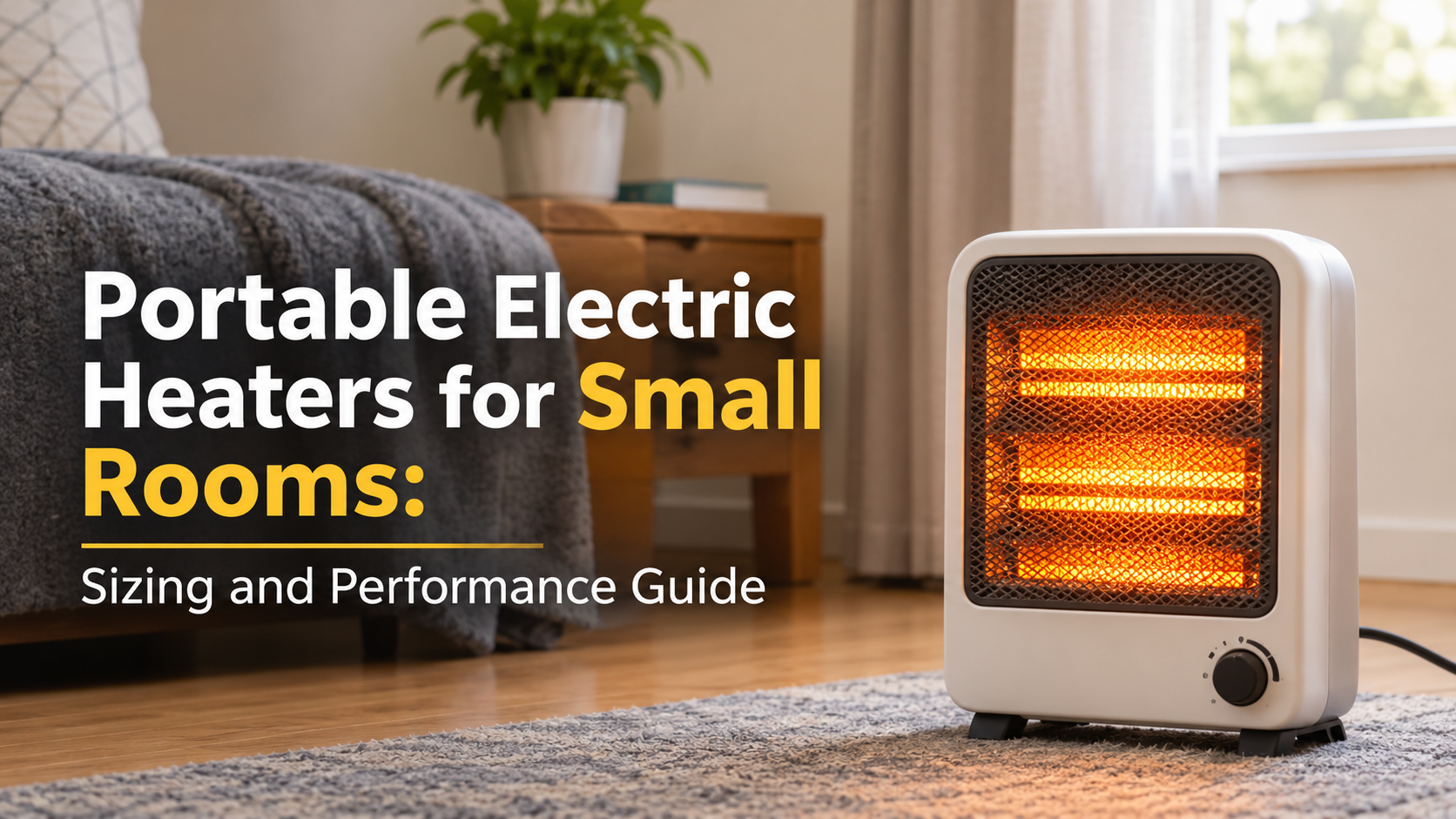
Wattage decides how quickly a heater warms your room. A common guideline is about 10 watts for every square foot of floor area, assuming standard ceiling height and average insulation. Most small bedrooms measure between 80 and 150 square feet, so a 1000 to 1500 watt heater is usually the right range.
To calculate your room size, multiply length by width. For example, a room that is 10 feet by 12 feet is 120 square feet, so you would need roughly 1200 watts. If the room has big windows, an exterior wall or poor insulation, move up one step.
4. Key Features to Look For
- Adjustable thermostat: keeps the temperature steady and saves electricity by cycling the heater on and off.
- Timer function: lets you switch the heater off automatically after you fall asleep.
- Multiple heat settings: gives you control over speed and running cost.
- Low noise rating: essential for light sleepers; oil-filled and panel models are best.
- Compact size and carry handle: small bedrooms have little floor space, and you may want to move it between rooms.
- Remote control: adjusting the heater from bed is a small luxury you will use every day.
- Easy-to-clean filter or surface: dust buildup affects performance and can cause odors.
- Energy-saving or eco mode: reduces waste by regulating power automatically.
5. Safety Rules for Bedroom Heaters

Heaters are safe when chosen and used correctly, but they can become a fire hazard if ignored. Because you will be asleep, safety features should be your top priority, not an afterthought.
- Tip-over switch: shuts the heater off automatically if it is knocked over by a pet, child or accidental kick.
- Overheat protection: cuts the power if internal temperature climbs too high or airflow is blocked.
- Cool-touch housing: reduces burn risk, especially in homes with children.
- Quality power cord and plug: a thick, properly rated cord prevents overheating. Avoid thin extension cords.
- Recognized safety certification: choose models tested to your country’s electrical safety standards.
Plug the heater directly into a wall socket whenever possible. Heaters draw high current, and multi-plug adapters or low-quality extension leads can overheat. Never cover the heater, never dry clothes on it, and unplug it when you leave the room for long periods.
6. Where to Place Your Heater

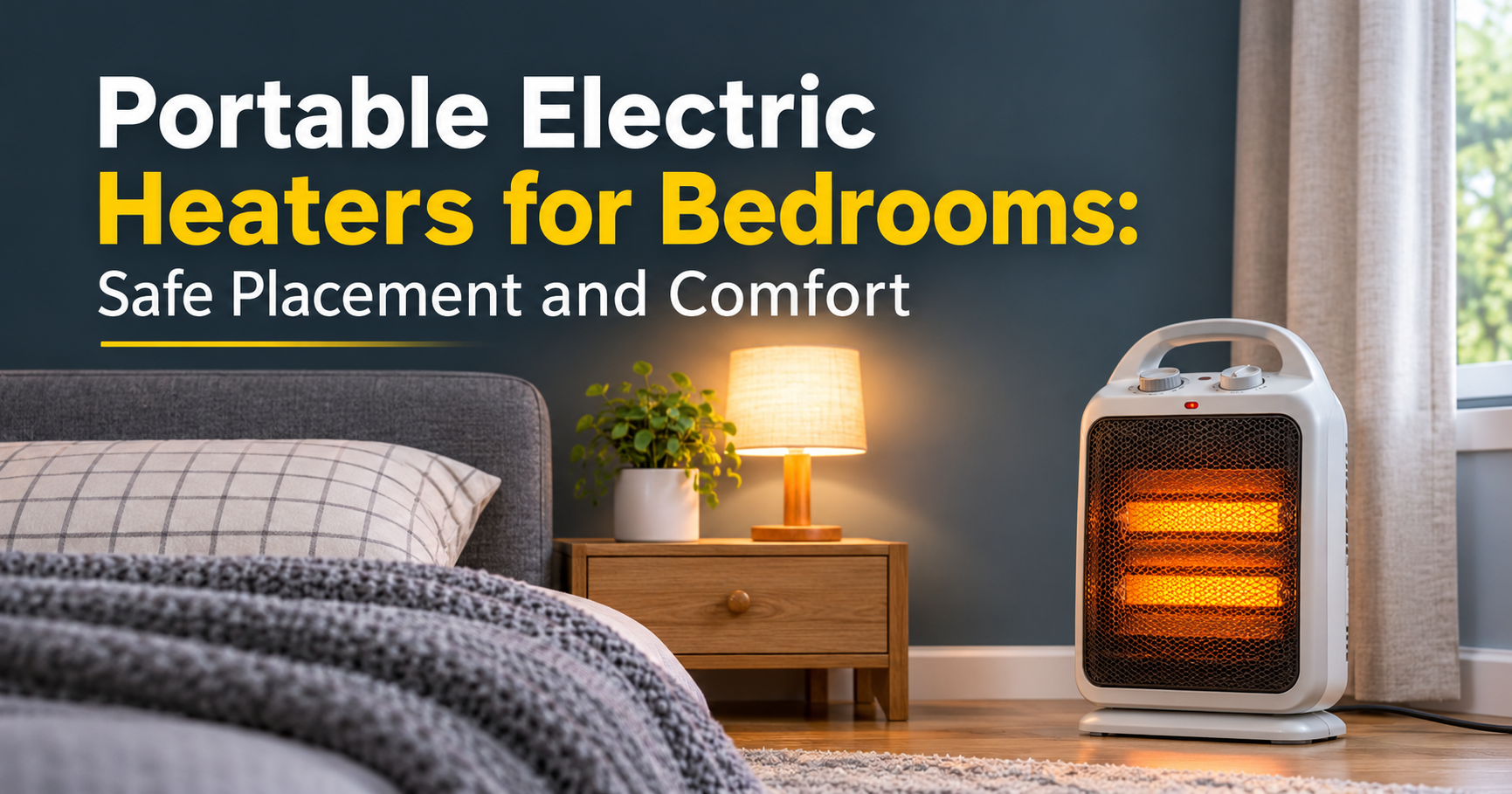
Placement affects both safety and comfort. Keep the heater at least three feet (about one meter) away from the bed, curtains, bedding, clothes and any other flammable item. Place it on a flat, hard surface, never on a bed, rug pile or soft furniture.
For the most even heating, position the heater near the coldest part of the room, usually below a window or beside an outside wall. This lets warm air circulate across the whole space. Leave open space around the front and sides so air can flow freely, and avoid placing it in a doorway where people might trip over it.
7. How Much Does It Cost to Run?
Electric heaters convert nearly all the electricity they use into heat, so running cost depends on wattage and hours of use. The formula is simple: watts ÷ 1000 × hours × your electricity rate per unit.
| Heater power | Energy used per hour | Energy for 4 hours |
|---|---|---|
| 800 W | 0.8 kWh | 3.2 kWh |
| 1000 W | 1.0 kWh | 4.0 kWh |
| 1500 W | 1.5 kWh | 6.0 kWh |
| 2000 W | 2.0 kWh | 8.0 kWh |
Multiply the kilowatt-hours by your local rate to see the real cost. A thermostat can lower actual consumption noticeably, because the heater stops drawing full power once the room reaches the set temperature.
8. Tips to Keep the Room Warm for Less
- Seal gaps around windows and doors with weather strips or draft stoppers.
- Close thick curtains at dusk to trap heat and block cold glass.
- Place a rug on bare floors to reduce heat loss.
- Heat the room 20 to 30 minutes before bedtime, then switch to a low setting or use a timer.
- Use warm bedding layers so you can set the thermostat a few degrees lower.
- Keep the bedroom door closed while heating.
9. Common Mistakes to Avoid
- Buying the most powerful heater instead of the right-sized one.
- Ignoring the thermostat and running the heater at full power all night.
- Using extension cords or loose sockets.
- Placing the heater too close to the bed or curtains.
- Skipping regular cleaning, which lets dust collect inside the heater.
- Choosing a model without tip-over and overheat protection just to save money.
10. Frequently Asked Questions
What size heater is best for a small bedroom?
Most small bedrooms do well with 1000 to 1500 watts. Use about 10 watts per square foot as a starting point and add a little extra for large windows or poor insulation.
Is it safe to leave a room heater on all night?
Only if it has modern safety features such as tip-over and overheat protection, sits on a flat surface at a safe distance from flammable items, and plugs directly into a wall socket. Using a timer or thermostat is even safer.
Which type of heater is quietest for sleeping?
Oil-filled radiators and panel heaters are the quietest because they do not use a fan.
Do room heaters dry out the air?
Fan heaters tend to dry the air more. Oil-filled and panel heaters are gentler. A small bowl of water or a humidifier can help balance humidity.
Is a ceramic heater or an oil-filled heater better?
Ceramic is better for speed, while oil-filled is better for steady, silent warmth. Many people choose ceramic for quick warm-ups and oil-filled for overnight use.
Can a heater cause headaches or breathing problems?
A new heater may give off a slight smell at first as dust burns off. Persistent dryness or headaches can be reduced by good ventilation, regular cleaning and keeping the temperature moderate.
What temperature should a bedroom be for sleep?
Most sleep experts suggest a cool but comfortable range, roughly 16 to 20 degrees Celsius (60 to 68 degrees Fahrenheit).
Final Verdict
The best room heater for a small bedroom is the one that matches your room size, runs quietly and has strong safety features. For quick warmth, a compact ceramic fan heater is hard to beat. For all-night comfort, an oil-filled or panel heater delivers steady, silent heat. Whatever you choose, aim for 1000 to 1500 watts, a reliable thermostat and tip-over plus overheat protection.
Measure your room, decide how you will use the heater, and use the checklist in this guide. With the right choice and sensible placement, your bedroom will stay warm, safe and comfortable all winter long.