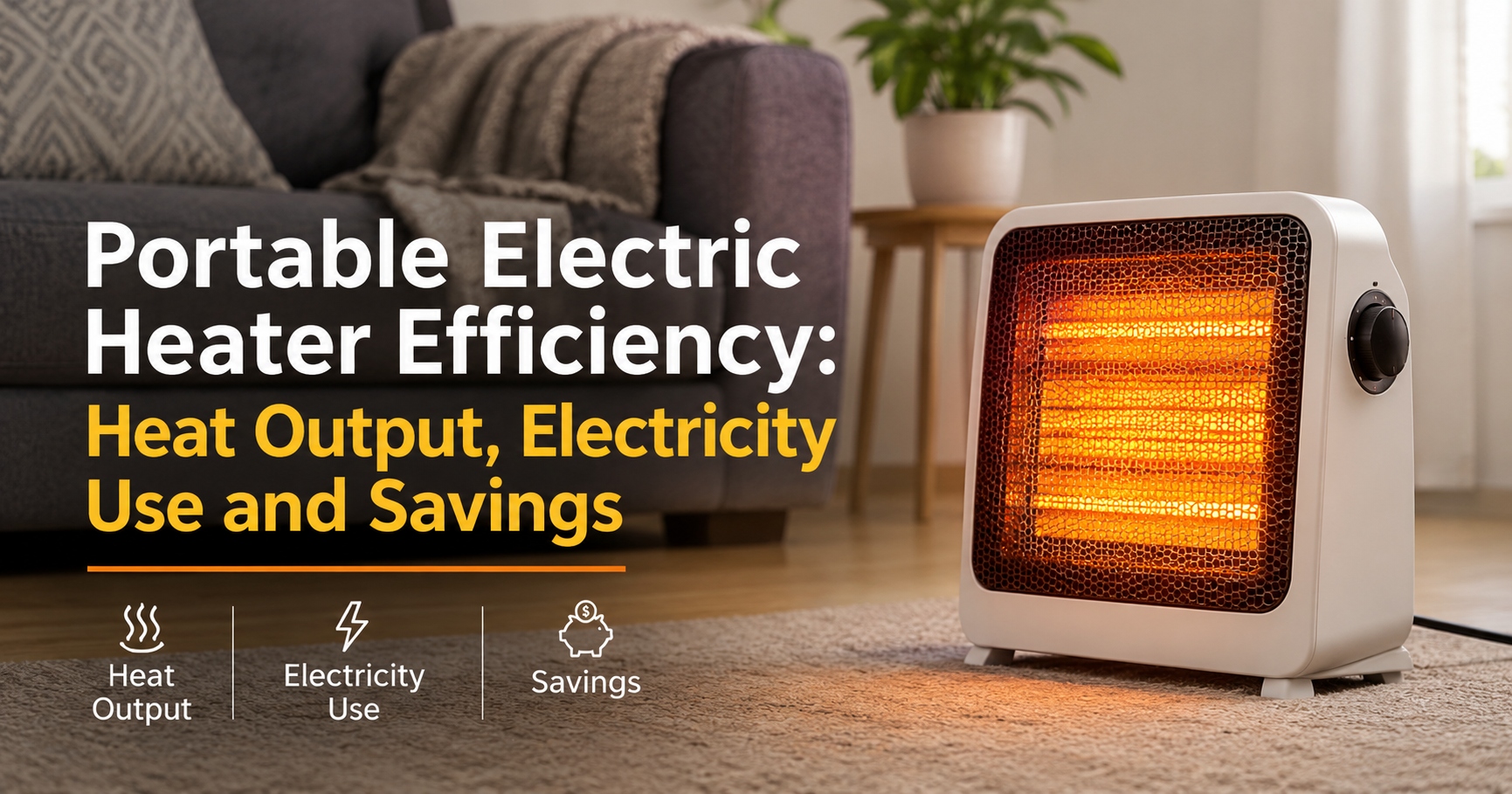

When temperatures drop, a portable electric heater is often the fastest way to make one room comfortable. It plugs into a standard outlet, needs no installation and warms up in minutes. But it also raises a fair question: how energy efficient is a portable electric heater, and what will it really cost to run?
The answer is more interesting than a simple “yes” or “no.” In this guide you will learn how heater efficiency actually works, how to calculate running costs, which heater types suit which situations, and the practical habits that lower your electricity use without sacrificing comfort.
What Does “Energy Efficiency” Mean for a Portable Electric Heater?
Electric resistance heaters, which include ceramic, oil-filled, infrared and fan-forced models, convert nearly all of the electricity they draw into heat. In technical terms they are close to 100% efficient at the point of use. Unlike gas or wood heating, there is no flue and no exhaust, so no warmth is lost up a chimney.
That does not automatically make them cheap to run. A heater can be 100% efficient and still be expensive if it runs for many hours at high power, or if it heats a room that is too large for it. Real-world efficiency is about three things:
- How much power it draws (wattage).
- How long it runs (hours of use, controlled by the thermostat and timer).
- How well the heat is delivered to the people and space that need it.

Understanding Wattage, kWh and Running Cost
Your electricity bill is based on kilowatt-hours (kWh). One kWh equals using 1,000 watts for one hour. The formula is simple:
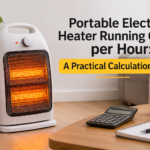
Running cost = (Heater watts ÷ 1,000) × Hours used × Price per kWh
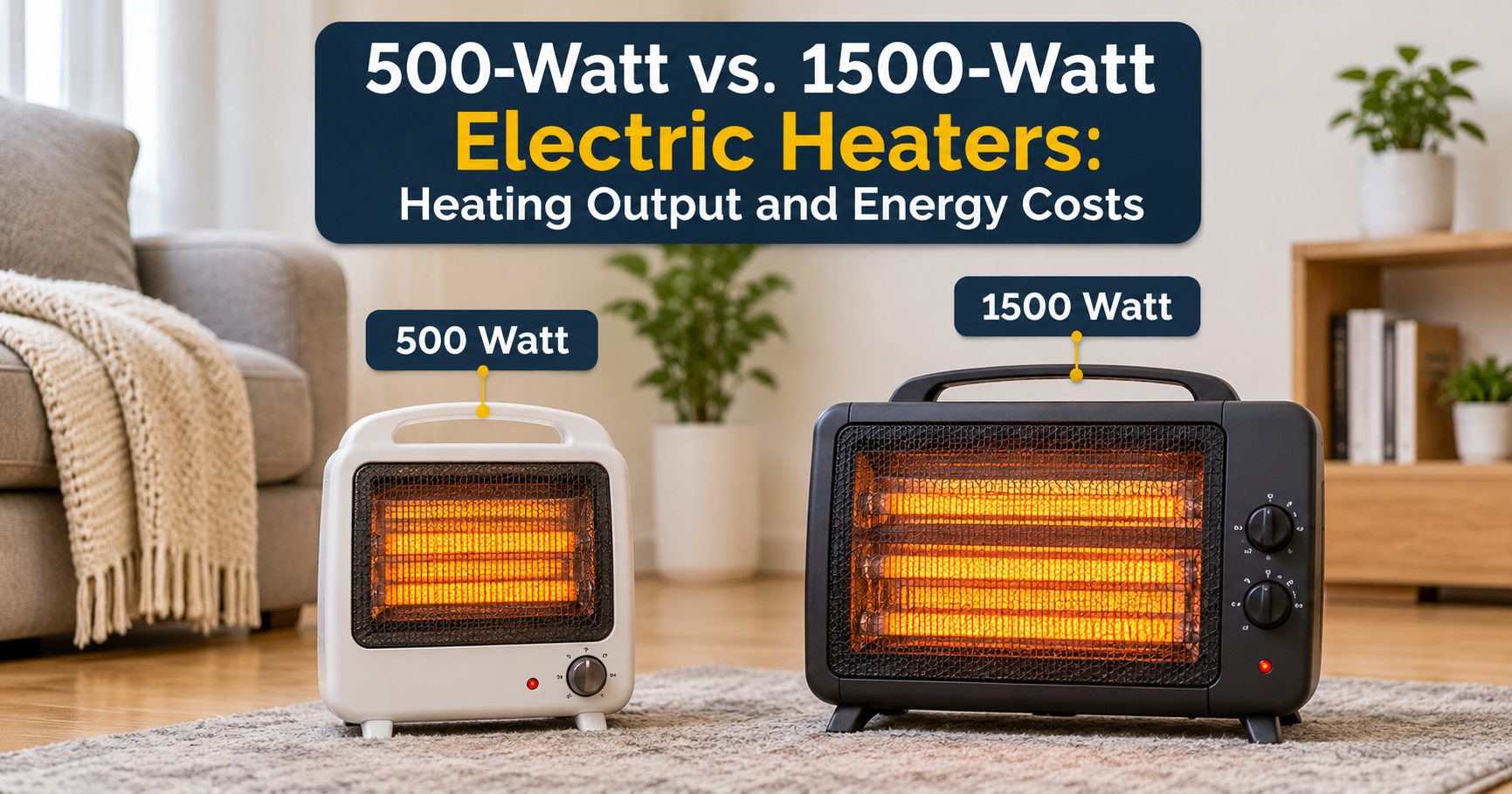
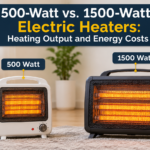
Most portable heaters have a maximum output of 1,500 watts, which equals about 5,120 BTU per hour. Many also offer lower settings such as 750 W or 1,000 W. The table below uses an example rate of $0.15 per kWh. Check your own electricity bill and adjust the numbers to your local rate.
| Heater setting | Hours per day | Energy per day | Cost per day | Cost per 30 days |
|---|---|---|---|---|
| 500 W | 4 | 2 kWh | $0.30 | $9.00 |
| 750 W | 4 | 3 kWh | $0.45 | $13.50 |
| 1,000 W | 4 | 4 kWh | $0.60 | $18.00 |
| 1,500 W | 4 | 6 kWh | $0.90 | $27.00 |
| 1,500 W | 8 | 12 kWh | $1.80 | $54.00 |

Notice that doubling the hours doubles the cost. This is why controlling run time is the single biggest efficiency lever you have.
Types of Portable Electric Heaters and How They Compare
Because every resistance heater converts power to heat at roughly the same rate, the difference between types is not how much heat they make from a watt. It is how that heat reaches you, and that affects how long you need to run the unit.
| Type | How it heats | Best for | Efficiency notes |
|---|---|---|---|
| Ceramic (fan-forced) | Fan blows air across a heated ceramic element | Small to medium rooms, quick warm-up | Heats air fast; good with a thermostat to avoid overheating the room |
| Oil-filled radiator | Heats oil sealed inside fins, which radiate warmth slowly | Bedrooms, long steady use | Keeps radiating after the element cycles off, so the thermostat can rest often |
| Infrared / radiant | Warms people and objects directly, not the air | Spot heating at a desk or seating area, drafty spaces | Efficient when you only need to warm yourself, not the whole room |
| Convection panel | Warm air rises naturally from a heated panel | Quiet rooms, offices, nurseries | Silent and even, but slower to warm a cold room |
| Micro-thermic panel | Combines convection and radiant heat | Medium rooms where even warmth matters | Balanced warm-up speed and comfort |
A quick rule: choose radiant heat when you want to warm a person, choose oil-filled or convection when you want to warm a whole room for hours, and choose ceramic fan-forced when you need fast heat in a small space.
How to Choose the Right Size Heater
A heater that is too weak runs constantly and never reaches the target temperature. One that is too powerful may switch on and off aggressively. A widely used guideline is about 10 watts of heating power for every square foot of floor area in a room with a standard 8-foot ceiling and reasonable insulation.
| Room size | Approximate wattage needed | Typical use |
|---|---|---|
| 50 sq ft (small office, bathroom) | 500 W | Spot or short-term heating |
| 100 sq ft (small bedroom) | 1,000 W | Bedroom or study |
| 150 sq ft (medium room) | 1,500 W | Living room corner or large bedroom |
| 200+ sq ft (large or open room) | 2,000 W or more | Use a stronger source or combine units |
If your room has high ceilings, large windows, an uninsulated floor or an exterior wall, increase the estimate. A well-sealed, small room needs less.
Features That Make a Portable Heater More Efficient
- Adjustable thermostat: holds the room at your chosen temperature and cuts power once it is reached. This is the most important efficiency feature.
- Multiple power settings: lets you use 750 W or 1,000 W when 1,500 W is unnecessary.
- Timer or programmable schedule: prevents the heater from running while nobody is in the room.
- Eco mode: automatically adjusts power to maintain temperature with less energy.
- Digital display and remote control: make precise adjustments easier, so you are less likely to overheat the room.
- Oscillation: spreads warm air more evenly in larger spaces.
- Tip-over and overheat protection: not an efficiency feature, but essential for safe operation.
Portable Heater vs. Whole-House Heating
Portable heaters shine at zone heating. If you spend most of the day in one room, warming only that room while lowering the central thermostat elsewhere can reduce your overall energy use. They are less sensible as the primary heat source for an entire home, because running several high-wattage units for long hours can become costly.
It is also worth knowing that heat pumps can deliver two to four units of heat for every unit of electricity, which makes them more efficient than any resistance heater over a full season. For a single room, short sessions or occasional cold snaps, however, a portable electric heater remains a practical and affordable choice.
12 Proven Tips to Reduce Your Heater’s Energy Use
- Use the thermostat and set it to a comfortable but modest temperature rather than the maximum.
- Heat only the room you are in and keep the door closed.
- Warm up on high, then drop to low. Use full power briefly, then switch to a lower setting to maintain the temperature.
- Seal drafts around doors and windows with weatherstripping or draft stoppers.
- Close curtains at night to reduce heat loss through glass, and open them on sunny days.
- Use rugs on cold floors to reduce heat loss and improve comfort.
- Choose radiant heat for personal warmth when you are sitting at a desk.
- Use a timer to switch the heater off before you leave or fall asleep, or to pre-warm a room before you arrive.
- Position the heater wisely near the coldest part of the room, with clear space around it so air can circulate.
- Dress in layers and use a blanket. Lowering the thermostat by a degree or two adds up over a season.
- Keep the unit clean. Dust on vents or elements can reduce airflow and performance.
- Track your usage with a plug-in energy monitor to see exactly what your heater costs.
Safety Essentials for Portable Electric Heaters
Efficiency means little if the heater is unsafe. Follow these basics:
- Plug the heater directly into a wall outlet. Avoid extension cords and power strips unless the manufacturer explicitly allows them.
- Keep at least three feet (about one meter) of clear space around the heater, away from curtains, bedding, furniture and paper.
- Place it on a flat, stable, hard surface, never on a bed or sofa.
- Never leave a heater running unattended or while you sleep unless it is designed for that and has proper safety cut-offs.
- Look for recognized safety certification marks, plus tip-over and overheat protection.
- Do not share the circuit with other high-power appliances, and inspect the cord and plug regularly for damage.
- Keep it away from water unless it is specifically rated for bathroom use.
Buyer’s Checklist: What to Look For
- Wattage that matches your room size.
- An accurate, adjustable thermostat.
- Several heat settings, plus a timer or eco mode.
- The right heat style for how you will use it: radiant, convection or fan-forced.
- Noise level, which matters for bedrooms and offices.
- Safety certification, tip-over protection and overheat shut-off.
- Portability: handle, weight, cord length and a stable base.
- Warranty length and available customer support.
Common Myths About Portable Heater Efficiency
Myth 1: “Ceramic heaters use less electricity.” A 1,500 W ceramic heater uses the same energy as a 1,500 W oil-filled heater running at full power. The difference is in how the warmth is delivered and controlled.
Myth 2: “Leaving it on low all day is cheaper.” Not usually. Continuous operation, even at low power, consumes energy for every hour it runs. A thermostat and timer are far better tools.
Myth 3: “A higher wattage heats the room more efficiently.” Higher wattage heats faster, but it also draws more power. Efficiency depends on matching the heater to the room.
Myth 4: “Special ‘energy saver’ heaters produce more heat per watt.” A resistance heater cannot create more heat than the electricity it consumes. Real savings come from controls, sizing and smart use.
Frequently Asked Questions
Are portable electric heaters expensive to run?
It depends on wattage, hours of use and your electricity rate. A 1,500 W heater costs roughly 22 cents per hour at $0.15 per kWh, so a few hours of targeted use is modest, while all-day use adds up quickly.
Which type of portable heater is the most energy efficient?
All resistance heaters convert power to heat at about the same rate. The most efficient choice is the one that matches how you use it: radiant for personal spot heating, oil-filled or convection for steady room heating, and ceramic for fast warm-ups.
How can I calculate my heater’s monthly cost?
Multiply the heater’s kilowatts by the hours used per day, by the number of days, and by your electricity price per kWh. For example, 1.5 kW × 4 hours × 30 days × $0.15 equals $27.
Can a portable electric heater heat a whole house?
Not economically. These units are designed for single rooms or personal spaces. For whole-home heating, central systems or heat pumps are better suited.
Is it safe to leave a portable heater on overnight?
Many safety authorities advise against it. If you must use one in a bedroom, choose a model with tip-over protection, overheat shut-off, a thermostat and a timer, and follow the manufacturer’s instructions closely.
Does a heater with a thermostat really save energy?
Yes. A thermostat stops the heating element once the target temperature is reached, so the heater uses power only when needed.
Final Thoughts
Portable electric heaters are simple, convenient and, at the point of use, almost perfectly efficient at turning electricity into heat. Your real savings come from smart choices: pick the right size, choose the heat style that fits your routine, use a thermostat and timer, heat only the space you occupy, and reduce heat loss from drafts and windows.
Apply these tips, and you can stay comfortable through the coldest days while keeping your energy bill under control.