
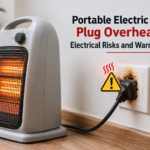
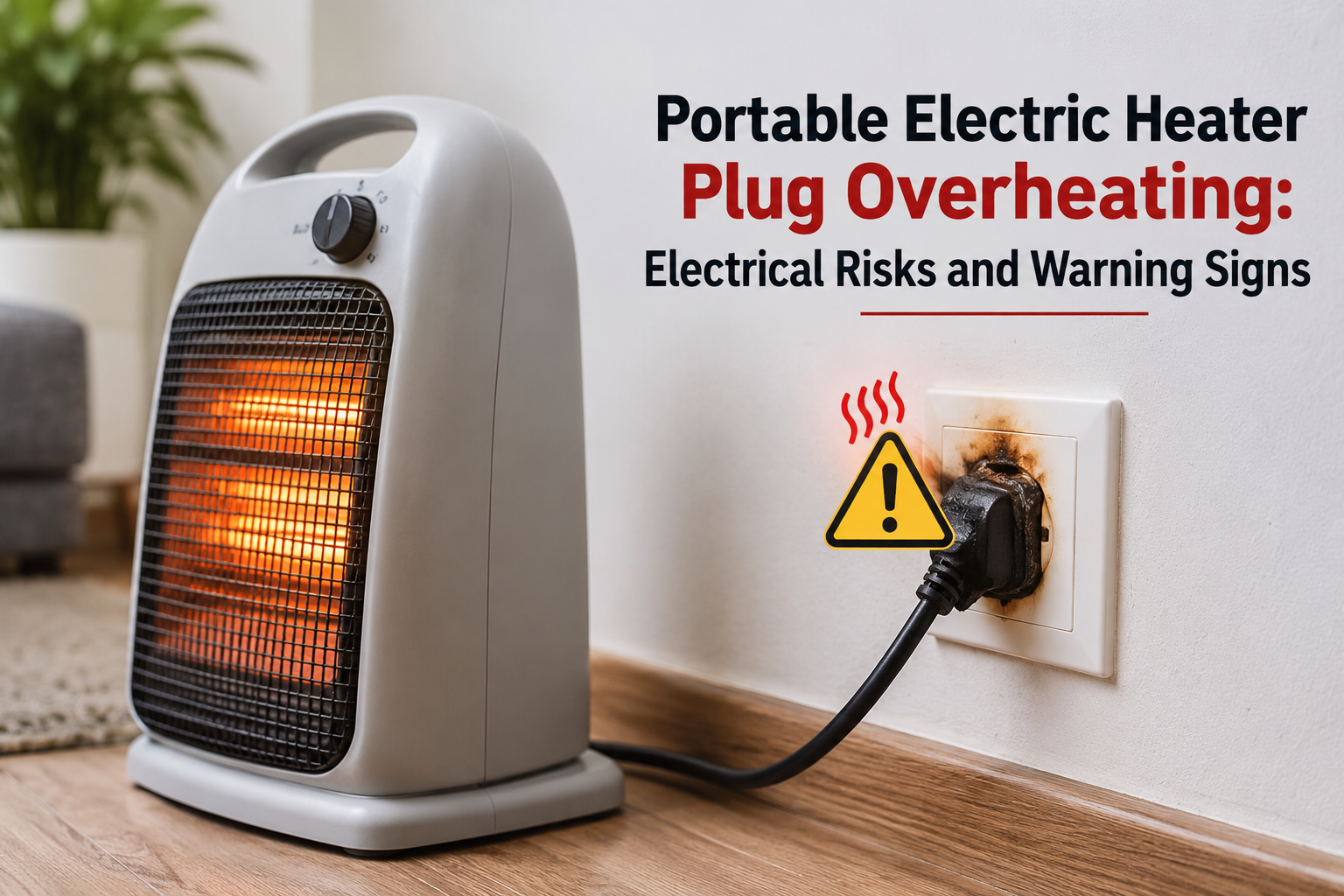

A portable electric heater can turn a freezing room into a comfortable one in minutes. But if the plug on that heater starts to feel hot, soft, or smells like burning plastic, it is not something to ignore. Plug overheating is one of the most common warning signs of an electrical problem, and it is a leading reason portable heaters are linked to home fires every winter.
In this guide, you will learn exactly why a portable electric heater plug overheats, how to tell normal warmth from a real danger, what to do the moment it happens, and how to prevent it. You will also find a practical buying checklist so your next heater is safer from day one.
Quick answer
A portable electric heater plug overheats when electricity meets resistance at the connection point. The most common causes are a loose or worn outlet, an extension cord or power strip, a damaged plug, and the heater drawing close to the full capacity of the circuit.
If the plug is too hot to keep your hand on, switch the heater off, unplug it, let it cool, and do not use it again until the plug, cord and outlet have been checked.
Is It Normal for a Heater Plug to Get Warm?
A little warmth is normal. A heater pulls a large amount of current, often more than any other appliance in a room, so the plug and cord can feel slightly warm to the touch after an hour or two of use. Warm is not the same as hot.
Here is a simple way to judge it. After the heater has run for at least 30 minutes, carefully touch the plug body (not the metal prongs). If it feels mildly warm, similar to a cup of tea that has been sitting for a few minutes, that is usually acceptable. If it is uncomfortable to hold, if you pull your hand away, or if the plastic feels soft, the plug is overheating and needs attention right away.
Why a Portable Electric Heater Plug Overheats
Electricity creates heat whenever it passes through resistance. A healthy plug and outlet have very low resistance, so very little heat is produced. When something degrades the connection, resistance rises, and because a heater draws so much current, that small increase turns into serious heat right at the plug.

1. A loose or worn-out wall outlet
Outlets contain small metal contacts that grip the plug blades. After years of plugging and unplugging, these contacts lose their spring tension. The plug then sits loosely and touches only a small area of metal. That tiny contact area is where heat concentrates. If a plug wiggles in the outlet or slides out easily, the outlet is a prime suspect.
2. Extension cords and power strips
This is the single most common cause. Every extra connection adds resistance, and many ordinary extension cords and power strips are built for lamps, phone chargers and televisions, not for a heater drawing 10 to 13 amps continuously. Thin cords, coiled cords and cords with several devices on them overheat quickly. Many heater manufacturers state clearly in the manual that the heater must be plugged directly into a wall outlet.
3. A damaged, bent or dirty plug
Bent prongs, cracked plug housing, corrosion on the blades, or a plug that has been pulled out by the cord many times can all reduce contact quality. Dust, lint and oxidation on the metal create an insulating film that makes the connection hotter. A plug that has previously overheated is often permanently damaged, since the plastic has already softened and the metal has lost its temper.
4. High wattage on a shared circuit
Most portable heaters have a top setting of 1500 watts. At 120 volts, that is about 12.5 amps, and a standard 15-amp household circuit should not carry more than about 12 amps continuously. If other devices share that circuit, such as a TV, a laptop, a vacuum or a second heater, the wiring and plug are pushed beyond their comfortable limit.

In countries with a 230-volt supply, a 2000-watt heater draws roughly 8.7 amps. The current is lower, but the same rule applies: loose contacts, poor cords and overloaded sockets still create dangerous heat.
5. Cheap or undersized cords
The cord on a heater should be thick enough for the current it carries. Low-quality heaters and unbranded replacement cords sometimes use conductors thinner than the rating requires. A thin conductor heats up along its whole length, and the plug end often becomes the hottest point because of the added resistance of the connection.
6. Old wiring and poor-quality outlets
In older buildings, outlets may be connected with push-in (back-stab) terminals instead of screw terminals, or wiring may have loosened over time. These weak connections sit behind the wall plate, where you cannot see them, and they can overheat even when the plug itself looks fine. If the wall plate is hot, discolored or warm without anything plugged in, the problem is inside the wall box.
7. A fault inside the heater or cord
Sometimes the plug is only where the heat shows up. A partially broken conductor inside the cord, a damaged strain relief where the cord meets the plug, or an internal fault in the heater can create resistance and heat. A cord that has been crushed under furniture, pinched in a door or tightly wrapped around the heater is especially at risk.
Warning Signs Your Heater Plug Is Overheating
Catching the early signs gives you time to act before damage or fire. Stop using the heater immediately if you notice any of the following.

- The plug is too hot to hold. If you cannot keep your hand on it comfortably, it is overheating.
- Discoloration. Brown, yellow or black marks on the plug, outlet cover or prongs.
- A burning or fishy smell. Hot plastic and insulation give off a sharp, unpleasant odor.
- Melted, soft or warped plastic. Even slight deformation means temperatures went far beyond normal.
- Crackling, buzzing or sparks. These point to arcing, which can ignite nearby material.
- A tripping breaker or flickering lights. The circuit is overloaded or a fault is developing.
What to Do Immediately If Your Heater Plug Gets Hot

- Turn the heater off and unplug it. Grip the plug body, not the cord. If the plug is too hot to touch, switch off the breaker for that circuit first.
- Let everything cool down. Give the plug, cord and outlet plenty of time to cool completely.
- Inspect the plug, cord and outlet. Look for melted plastic, burn marks, bent or blackened prongs, a cracked housing, and a loose fit in the outlet.
- Do not keep using damaged equipment. A plug that has melted or scorched should never go back in service, and a damaged heater cord should not be repaired with tape.
- Replace and test. Replace the heater if the plug or cord is damaged, and have a licensed electrician test the outlet and circuit before you plug in a new one.
Do not do this
- Do not wrap tape around a hot or melted plug and keep using it.
- Do not move the heater to an extension cord to “fix” the problem.
- Do not leave a heater running unattended to see whether the plug cools down.
Safe vs Unsafe: How You Plug In Matters
Where and how you connect the heater has a bigger effect on plug temperature than almost any other factor. The safest approach is always the simplest: one heater, one wall outlet, no adapters in between.

| Setup | Risk level | Why |
|---|---|---|
| Heater directly into a wall outlet | Lowest | One connection, full contact area, manufacturer’s intended use. |
| Heater into a heavy-duty extension cord (only if unavoidable) | Moderate to high | Extra connection and a long run of cable. Needs a thick, short cord rated for the heater’s amps. |
| Heater into a power strip or surge protector | High | Not designed for continuous heater loads. Internal contacts and switches can overheat. |
| Heater plus other devices on the same circuit | High | Combined load can exceed the safe continuous limit of the wiring. |
| Heater into a multi-plug travel adapter | Very high | Loose fit and thin internal contacts concentrate heat. |
How to Prevent Heater Plug Overheating
- Plug straight into the wall. Avoid power strips, surge protectors, timers and adapters unless the heater’s manual explicitly allows them.
- Give the heater its own circuit when possible. Avoid running other high-draw appliances on the same circuit at the same time.
- Use a lower power setting. Running at 750 or 1000 watts instead of 1500 watts reduces current and plug heat considerably.
- Check the outlet fit. The plug should feel snug. If it is loose, have the outlet replaced.
- Inspect the plug and cord regularly. Check before each heating season and every few weeks of regular use.
- Pull by the plug, not the cord. Tugging on the cord loosens the internal connections over time.
- Keep the cord uncoiled and uncovered. Do not run it under rugs, furniture or bedding, where heat cannot escape.
- Keep dust away. Vacuum around the heater and outlet, and keep the plug area clean and dry.
- Keep flammables at a distance. Curtains, bedding and furniture should be at least three feet (about one meter) from the heater.
- Never leave it running unattended. Turn the heater off when you leave the room or go to sleep, unless it is specifically designed and approved for that.
How to Choose a Safer Portable Electric Heater
A well-designed heater makes plug overheating far less likely and adds protection if something does go wrong. Whether you are replacing a damaged unit or buying your first heater, check the following features before you buy.
| Feature | What to look for | Why it matters |
|---|---|---|
| Safety certification | A recognized mark such as UL, ETL, CE or an equivalent national standard | Shows the heater was independently tested for fire and shock hazards. |
| Overheat protection | Automatic shut-off if internal temperature climbs too high | Cuts the power before components reach dangerous temperatures. |
| Tip-over switch | Shuts the heater off if it falls or is knocked over | Prevents fires from a heater lying on carpet or bedding. |
| Power cord quality | Thick, flexible cord with a sturdy molded plug and strain relief | Better conductors and a firmer plug generate less heat. |
| Adjustable power levels | Low, medium and high settings or a thermostat | Lets you heat a room with less current and less stress on the plug. |
| Plug safety protection | Plug with built-in protection such as a leakage current device, or a temperature-sensing plug | Can cut power if the cord or plug is damaged. |
| Built-in timer and thermostat | Programmable timer and accurate room thermostat | Reduces long, continuous runs at full power. |
| Cool-touch housing | Exterior stays cool during use | Reduces burn risk, especially around children and pets. |
Which type of portable heater is easiest on the plug?
| Heater type | Best for | Typical power | Plug stress |
|---|---|---|---|
| Ceramic fan heater | Small to medium rooms, fast warm-up | 750 to 1500 W | High on the top setting; use the low setting once the room warms. |
| Oil-filled radiator | Steady, quiet heat in bedrooms and offices | 700 to 1500 W | Cycles on and off with the thermostat, so average load is lower. |
| Infrared (radiant) heater | Spot heating where you sit | 400 to 1500 W | Moderate to high; choose a model with adjustable power. |
| Micathermic panel heater | Quiet, even warmth with a slim profile | 750 to 1500 W | Moderate; look for thermostat control. |
| Low-wattage personal heater | Desk or under-desk use | 200 to 500 W | Low; the easiest option on plugs and circuits. |
Helpful accessories for a safer heating setup
- An outlet tester to catch wiring faults, open grounds and reversed wiring.
- An infrared thermometer to check plug and outlet temperature without touching anything.
- Smoke alarms and a carbon monoxide alarm on every floor and near sleeping areas.
- A heater-rated outlet cover or replacement outlet installed by an electrician when your wall outlet is worn.
- A small fire extinguisher suitable for electrical fires, kept within easy reach of the exit.
When to Call a Licensed Electrician
Some problems are beyond a plug swap. Call a qualified electrician if you notice any of these.
- The wall outlet or cover plate is discolored, warm or soft, even with nothing plugged in.
- The plug fits loosely in the outlet, or falls out when you move the cord.
- The breaker trips repeatedly when the heater is on.
- Lights dim or flicker when the heater switches on.
- You smell burning, hear buzzing or see sparks from the outlet or wall.
- A new heater overheats the plug on a circuit that has never given you trouble before.
An electrician can check the outlet, the terminals behind it, the breaker and the wiring on that circuit. Replacing a worn outlet is usually quick and inexpensive compared with the cost of fire damage.
Frequently Asked Questions
Why does my space heater plug get so hot?
Heaters draw a very high current. If the connection between the plug and outlet is loose, worn, dirty or extended with a cord or strip, resistance rises and the plug turns that extra resistance into heat.
Is it safe to use a heater if the plug is slightly warm?
A mildly warm plug can be normal. A plug that is hot enough to be uncomfortable to hold, or that shows discoloration, softening or odor, is not safe, and the heater should be unplugged immediately.
Can I use an extension cord with a portable heater?
It is best not to. Most manufacturers and safety organizations advise plugging heaters directly into a wall outlet. If you absolutely must, use a short, heavy-duty cord with a thick conductor (14 gauge or heavier, and 12 gauge for longer runs), rated for the heater’s wattage, uncoiled and fully uncovered. Never use a power strip.
Why does the wall outlet get hot with the heater plugged in?
A hot outlet usually means worn internal contacts, loose wire terminals behind the outlet, or an overloaded circuit. This needs to be looked at by an electrician before further use.
Can a hot heater plug cause a fire?
Yes. Overheated plugs can melt plastic, ignite nearby materials and cause arcing at the outlet. Fire safety data consistently shows that heating equipment, including portable heaters, accounts for a significant share of home heating fires every year.
Should I replace the plug on my heater myself?
It is safer to replace the whole heater or have a qualified technician replace the cord set. A poorly attached plug can create the very resistance and heat you are trying to fix, and cutting the cord usually voids the safety certification.
Does running a heater on a lower setting help?
Yes. A lower power setting draws less current, so the plug, cord and outlet stay cooler. For a small room, a lower setting with a thermostat is often enough once the room reaches temperature.
Final Thoughts
A portable electric heater plug that gets too hot is a clear warning that something in the electrical path needs attention. In most cases the cause is a simple, fixable problem: a worn outlet, an extension cord, a damaged plug or a circuit that is carrying too much. The right response is the same each time: unplug the heater, let it cool, inspect the plug, cord and outlet, and fix the cause before you use it again.
Plug the heater straight into a healthy wall outlet, choose a certified heater with overheat and tip-over protection, run it at the lowest setting that keeps you comfortable, and never leave it unattended. These habits keep your home warm without putting it at risk.
This article is for general information only and is not a substitute for advice from a licensed electrician or the heater manufacturer. Always follow the instructions supplied with your heater and your local electrical safety regulations.