

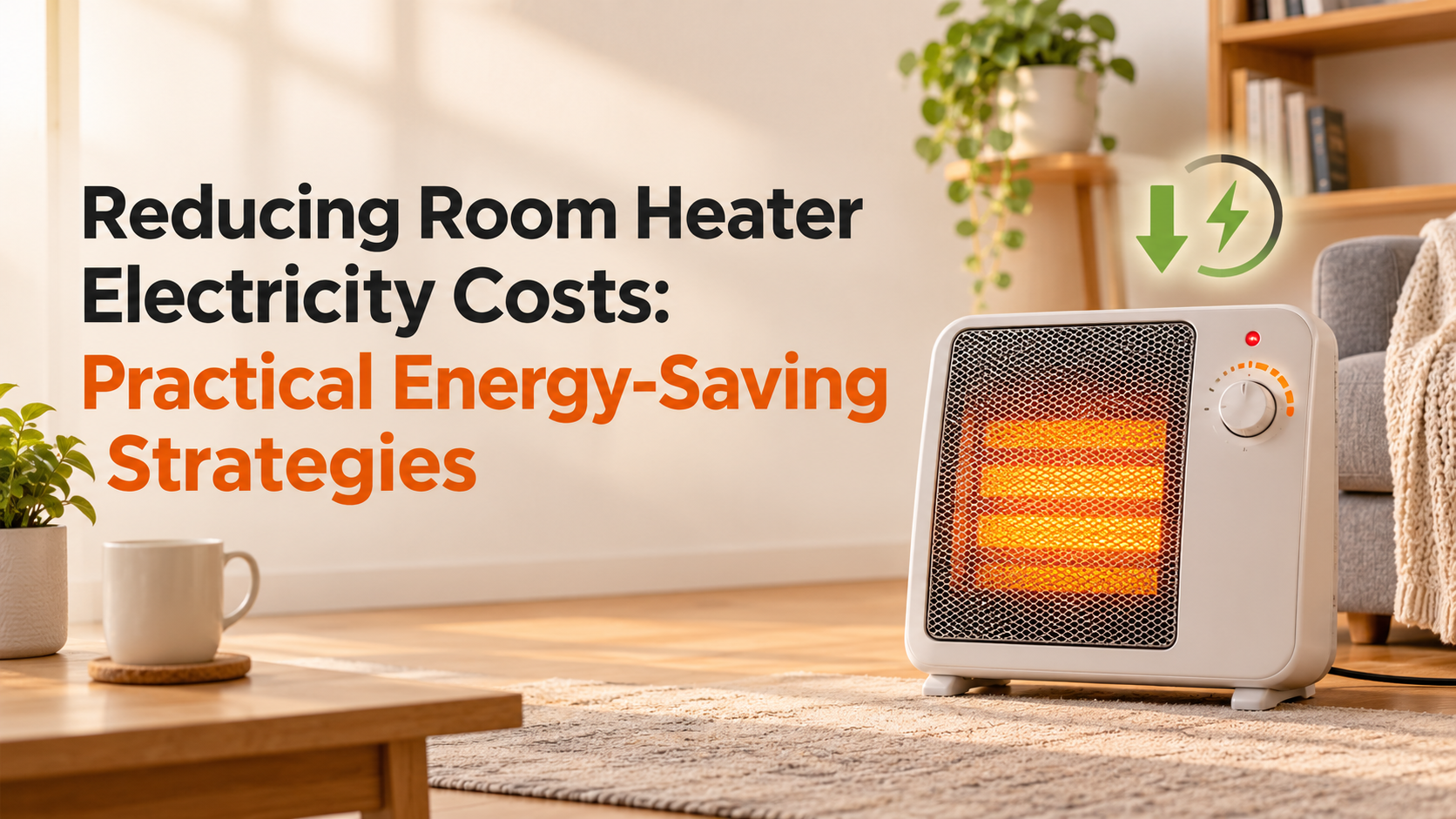

When winter arrives, a room heater feels like a lifesaver. But when the electricity bill lands at the end of the month, the warm feeling quickly turns into a shock. A single heater can use more power than a refrigerator, a TV, a ceiling fan and several lights combined, and it is often switched on for many hours a day.
The good news is that you do not have to sit in the cold to save money. With a few smart habits, small home improvements and the right choice of heater, you can reduce your room heater electricity bill and still enjoy a warm, comfortable room. This guide explains why heaters cost so much to run, how to calculate your real cost, and 12 proven ways to cut it down.
Why Does a Room Heater Increase Your Electricity Bill So Much?
Most portable room heaters work by passing electricity through a heating element (a coil, ceramic plate or halogen tube). Almost every unit of electricity is converted directly into heat. That sounds efficient, but heaters are rated at very high power, usually between 1,000 and 2,500 watts, and they run for hours.
Compare that with a ceiling fan (about 60–75 watts) or an LED bulb (about 9 watts). A 2,000-watt heater uses as much power as roughly 25 ceiling fans running at the same time. That is why even a few hours of daily use can raise your bill sharply.
Three things decide your heating cost: how powerful the heater is, how many hours it runs, and how much heat your room loses. You can control all three.
How to Calculate the Running Cost of Your Room Heater
Before you start saving, it helps to know exactly what your heater costs. The calculation is simple, and you only need three numbers: the heater’s wattage (printed on its label), the hours you use it, and the price per unit (kWh) on your electricity bill.

Once you know this number, every tip below becomes more meaningful. Cutting usage from 5 hours to 3 hours, for example, saves 120 units a month on the same heater.
12 Proven Ways to Reduce Room Heater Electricity Bill
1. Choose the Right Heater Size for Your Room
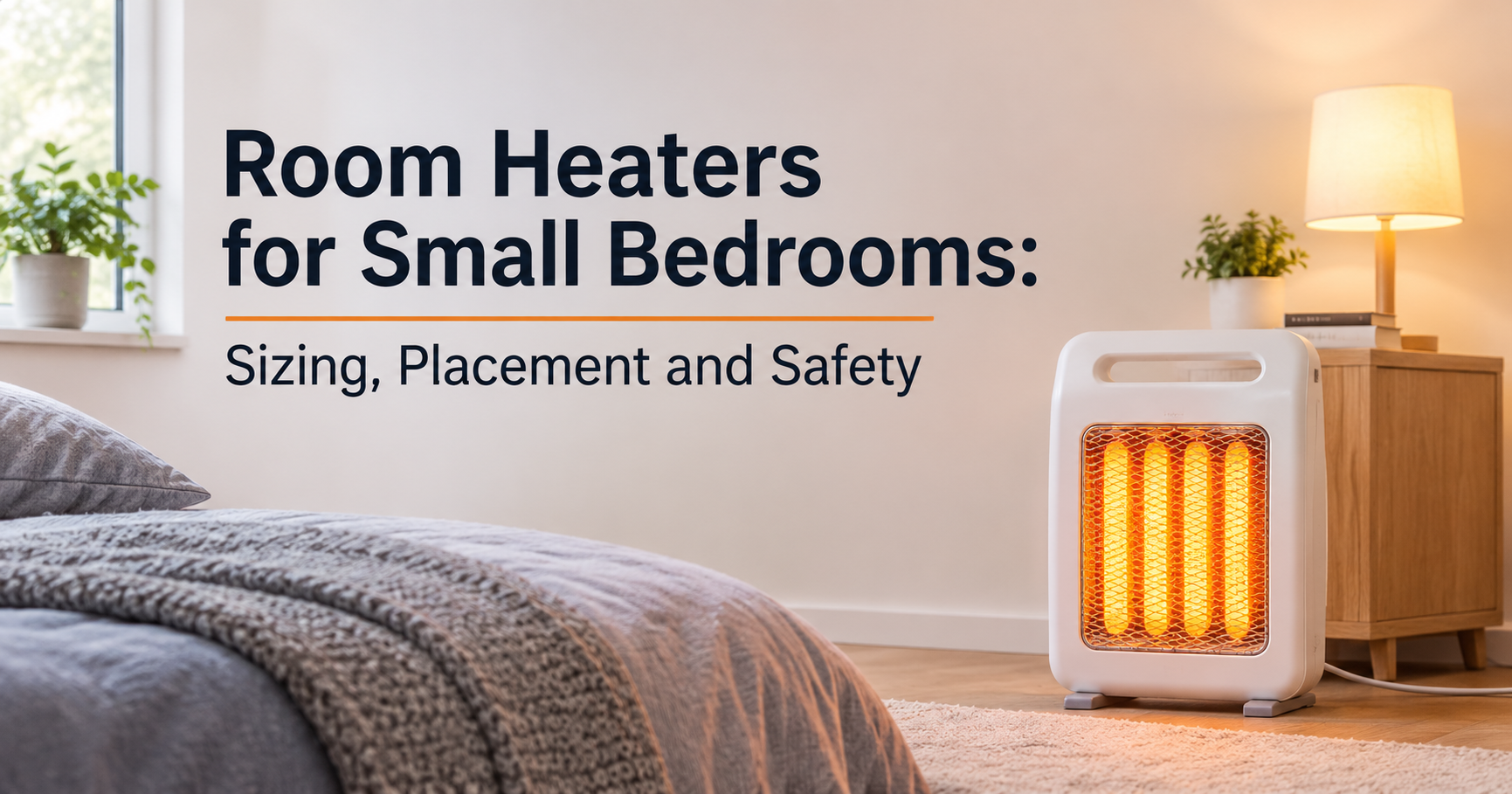
A heater that is too small runs non-stop and never warms the room properly. One that is too large wastes money and switches on and off constantly. As a rough guide, a well-insulated room needs around 10 watts per square foot (about 100 watts per square metre). A 120 sq ft bedroom is usually happy with a 1,200–1,500 W heater, not a 2,500 W one.
2. Use a Thermostat and Set a Sensible Temperature
A heater with an adjustable thermostat switches itself off once the room reaches your chosen temperature, then switches back on only when needed. Most people feel comfortable between 20°C and 22°C (68°F to 72°F). Every extra degree you add means more running time, so avoid turning the dial to maximum “just to heat up faster.”
3. Use a Timer or a Smart Plug
Many bills rise simply because heaters are left on while people are asleep, out of the room, or at work. A built-in timer or an inexpensive smart plug lets you switch the heater off automatically. Warm the room 20–30 minutes before bedtime, then let the timer shut it down. Thick blankets will take care of the rest of the night.
4. Heat Only the Room You Are Using
A room heater is designed for spot heating, not for warming the whole house. Close the doors of the room you are in, and keep the doors of unused rooms shut. A small closed room heats faster and holds warmth longer than an open hallway-style space.
5. Seal Drafts and Gaps
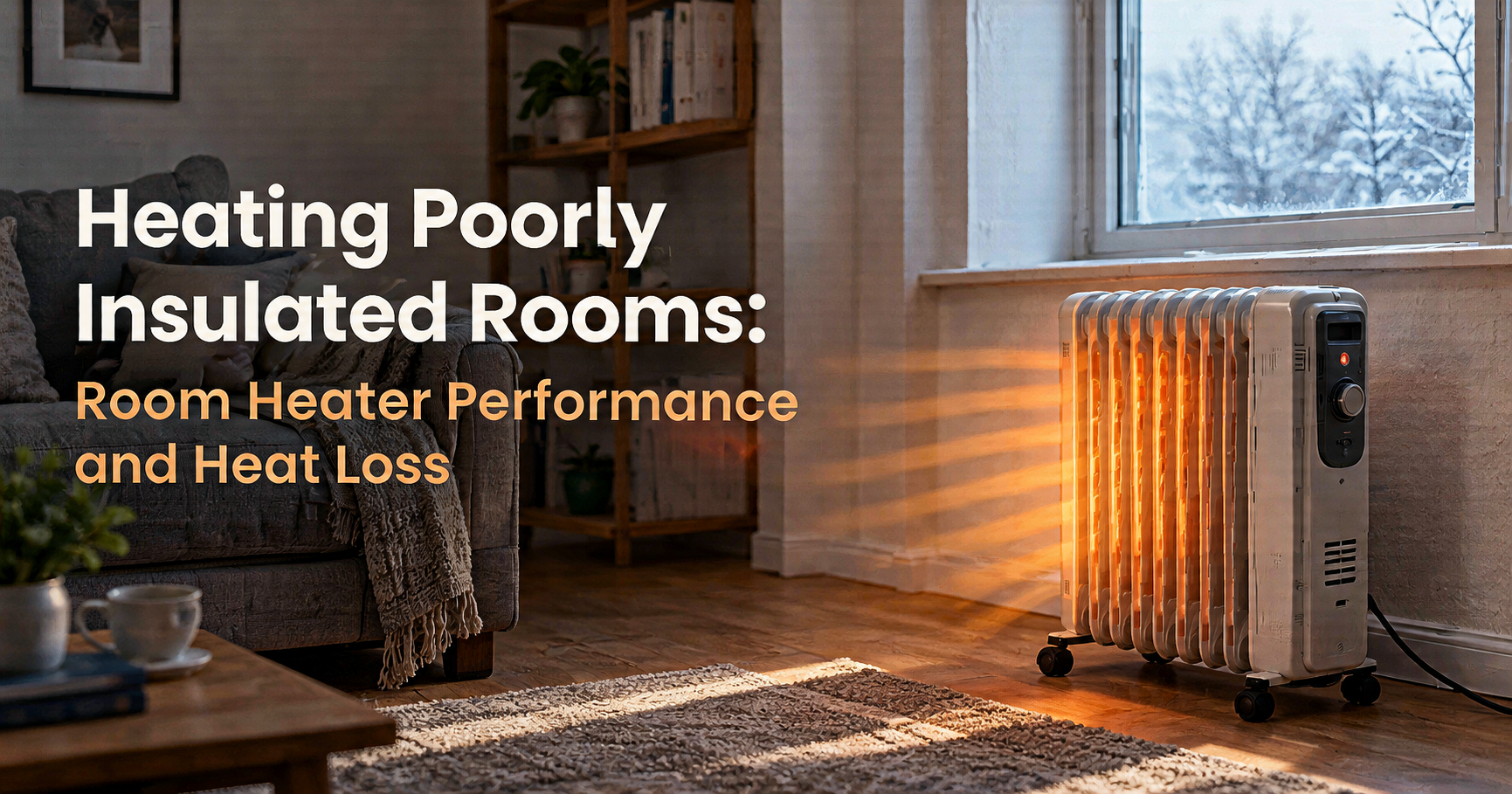
Cold air sneaking in through gaps is one of the biggest reasons heaters work overtime. Check the edges of doors and windows, and look for gaps under doors and around window frames. Cheap draft stoppers, weather-strip tape and rubber seals can make a noticeable difference. A simple test: hold a thin piece of paper near the edges, and if it moves, air is leaking.

6. Use Thick Curtains and Let the Sun In
Windows are a major source of heat loss. Heavy or thermal curtains act like a blanket over the glass. Keep them open during sunny hours to let free solar heat in, then close them at sunset to trap the warmth inside.
7. Cover Bare Floors with Rugs or Carpets
Cold floors make a room feel colder than it really is, which tempts you to raise the heater setting. A rug, carpet or foam floor mat adds insulation and makes the same temperature feel noticeably warmer under your feet.
8. Place the Heater in the Right Spot
Keep the heater on a flat, hard surface, away from curtains, beds, sofas and furniture. Many people place it near a cold wall or under a window, which can help warm the cold air coming from that area. Always leave open space in front of the heater so heat can spread freely. Good airflow means faster warming and shorter running time.
9. Dress Warm Instead of Heating Harder
Warm clothing is the cheapest heater there is. Wear layers, socks and a light cap, and use a blanket while sitting. A hot water bottle or a warm drink also keeps your body comfortable at a slightly lower room temperature, so the heater can stay off longer.
10. Choose a More Efficient Type of Heater
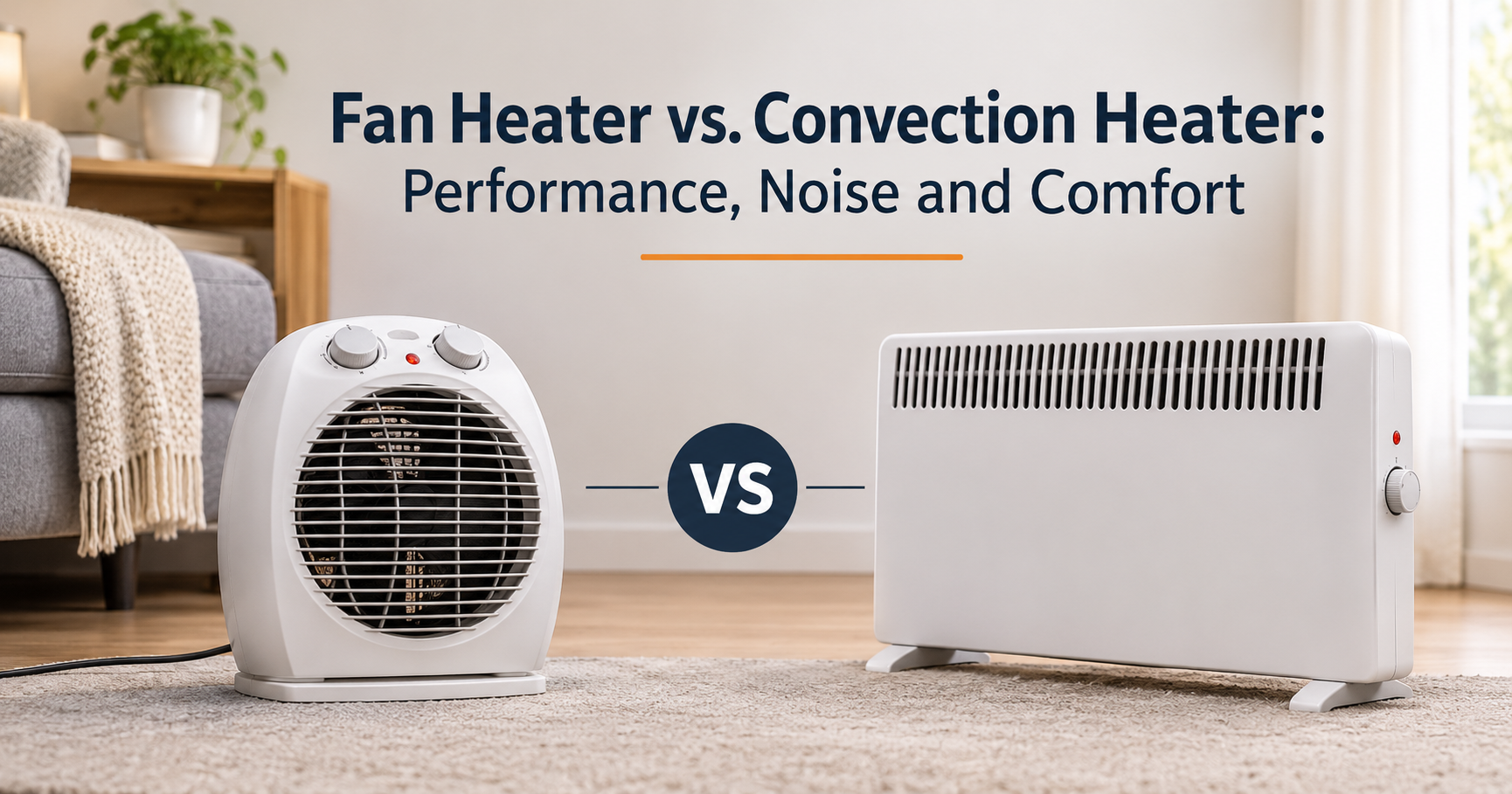
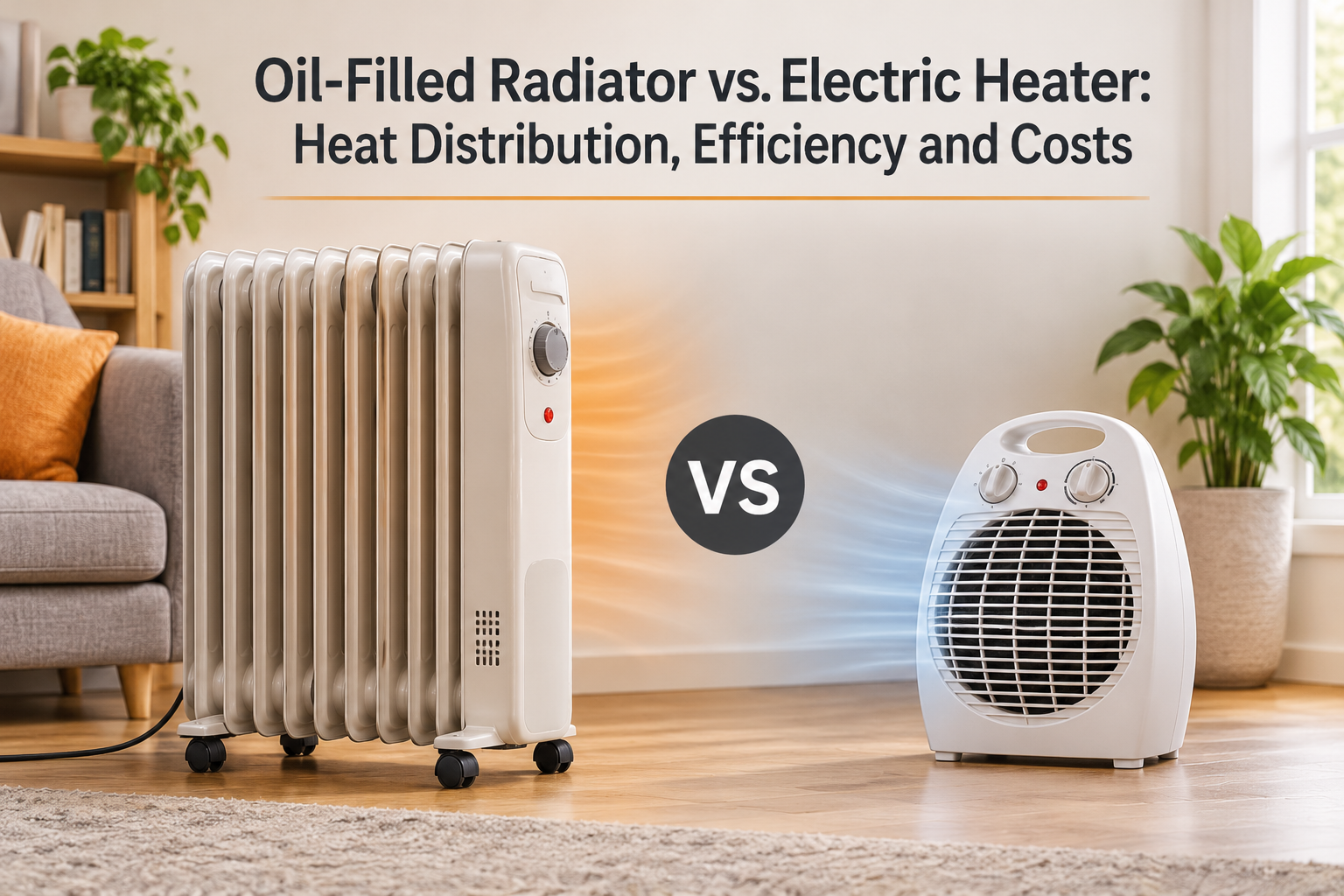
Not every heater is equally suited to every situation. Oil-filled radiators hold heat well and are good for long, steady use in bedrooms. Infrared and radiant heaters warm people directly, which suits short sessions at a desk. Fan heaters warm up quickly but are best for short bursts. If you already have an inverter air conditioner with a heating mode, it can deliver two to four times more heat per unit of electricity than a standard resistance heater.

11. Keep Your Heater Clean and Well Maintained
Dust on the grille, filter or heating element blocks airflow and makes the heater less effective. Unplug the heater, let it cool completely, and gently clean it with a dry cloth or soft brush every couple of weeks during the season. A clean heater works better and is also safer.
12. Use a Ceiling Fan on Low to Spread the Heat
Warm air rises and collects near the ceiling. If your ceiling fan has a reverse (winter) mode, run it on its lowest speed so it gently pushes the warm air back down. If the fan has no reverse mode, skip this tip, because a fan on normal mode will only make the room feel cooler.

Types of Room Heaters Compared
The table below gives a simple comparison of common heater types. Actual running cost depends on wattage, hours of use, and your local electricity rate.
| Heater Type | Best For | Typical Power | Main Advantage |
|---|---|---|---|
| Oil-Filled Radiator | Bedrooms, long hours | 1,000–2,500 W | Keeps heat after switching off |
| Fan Heater | Quick warm-up, small rooms | 1,000–2,000 W | Heats air fast |
| Convector Heater | Steady heating, medium rooms | 1,500–2,500 W | Silent, even warmth |
| Halogen / Infrared Heater | Spot heating at a desk or sofa | 400–1,200 W | Warms you directly, instantly |
| Inverter AC (Heating Mode) | Whole room, long use | 600–1,200 W (average draw) | Most heat per unit of electricity |
Buying Guide: What to Look for in an Energy-Saving Room Heater
If you are planning to buy a new heater this winter, a few features can save you money for years. Look for these before you decide:
- Adjustable thermostat: This lets the heater switch off automatically and avoids wasted power.
- Multiple power settings: A heater with 2 or 3 heat levels lets you use low power once the room is warm.
- Built-in timer: This helps you avoid running the heater while you sleep or leave the room.
- Correct wattage for your room size: Match the heater to your room, not to the biggest model in the shop.
- Safety features: Tip-over protection and overheat cut-off are very important, especially in homes with children and pets.
- Good build and warranty: A reliable brand with a clear warranty helps you avoid repair costs and replacement.
- Low noise level: This is useful for bedrooms and study rooms.
Heater Safety Tips While Saving Energy
- Never dry clothes on top of or directly in front of a heater.
- Plug the heater directly into a wall socket. Avoid cheap extension cords and multi-plugs, which can overheat with high-wattage appliances.
- Keep the heater at least one metre away from curtains, bedding and furniture.
- Switch off and unplug the heater when you leave the house or go to sleep, unless it is designed for safe overnight use.
- Make sure there is fresh air in the room, especially if you use any fuel-burning heater.
Common Mistakes That Waste Electricity
- Leaving the heater on while the room is empty.
- Setting the thermostat to maximum all the time.
- Heating a room with open doors or windows.
- Using a heater that is too large or too small for the space.
- Ignoring dust and never cleaning the heater.
- Not fixing small draft gaps around windows and doors.
Frequently Asked Questions
Which room heater uses the least electricity?
A low-wattage radiant or halogen heater uses less power for short spot heating, while an inverter AC in heating mode delivers the most heat per unit of electricity for whole-room warmth. The best choice depends on how you use the room.
Does a thermostat really reduce the electricity bill?
Yes. A thermostat stops the heater from running continuously once the room has reached the set temperature. This reduces the total running time and, therefore, the units consumed.
How many hours a day should I run a room heater?
There is no fixed rule, but the fewer hours the better. Warm the room before you use it, switch the heater off when you leave, and rely on blankets and warm clothes for the rest of the time.
Is it cheaper to leave a heater on low all day or turn it on and off?
For a portable room heater in a room that is not always occupied, it is usually cheaper to use it only when needed, with a thermostat and timer. Leaving it running all day wastes electricity on an empty room.
Can I use a room heater all night?
It is better not to, both for safety and for cost. Preheat the room before bed, use a timer, and use warm bedding. If you do use a heater overnight, choose a model with a thermostat, tip-over protection and overheat protection.
Final Thoughts
Lowering your room heater electricity bill does not mean freezing through winter. Start with the easy wins: set a sensible temperature, use a timer, close the doors, and seal the drafts. Then add thick curtains, rugs and warm layers. If your heater is old or oversized, upgrading to an efficient model with a thermostat and timer can pay for itself over a few winters.
Try two or three of these tips this week, check your meter reading or your next bill, and keep building on what works. Small changes, repeated every day, add up to a warm home and a lighter electricity bill.