





You switch on your room heater on a cold evening, and within minutes a sharp smell of hot or burning plastic fills the room. It is an unsettling moment. Is the heater about to fail? Is the air safe to breathe? Or is this simply what new heaters do?
The honest answer is: it depends on when the smell appears, how strong it is, and whether it goes away. A faint odour during the first few uses is common and usually harmless. A strong, persistent or chemical smell from a heater you have used for months can be an early warning of overheating, damaged wiring or melting parts. This guide explains every common cause, how to tell the difference, which warning signs mean you should stop using the heater immediately, and how to solve the problem safely.
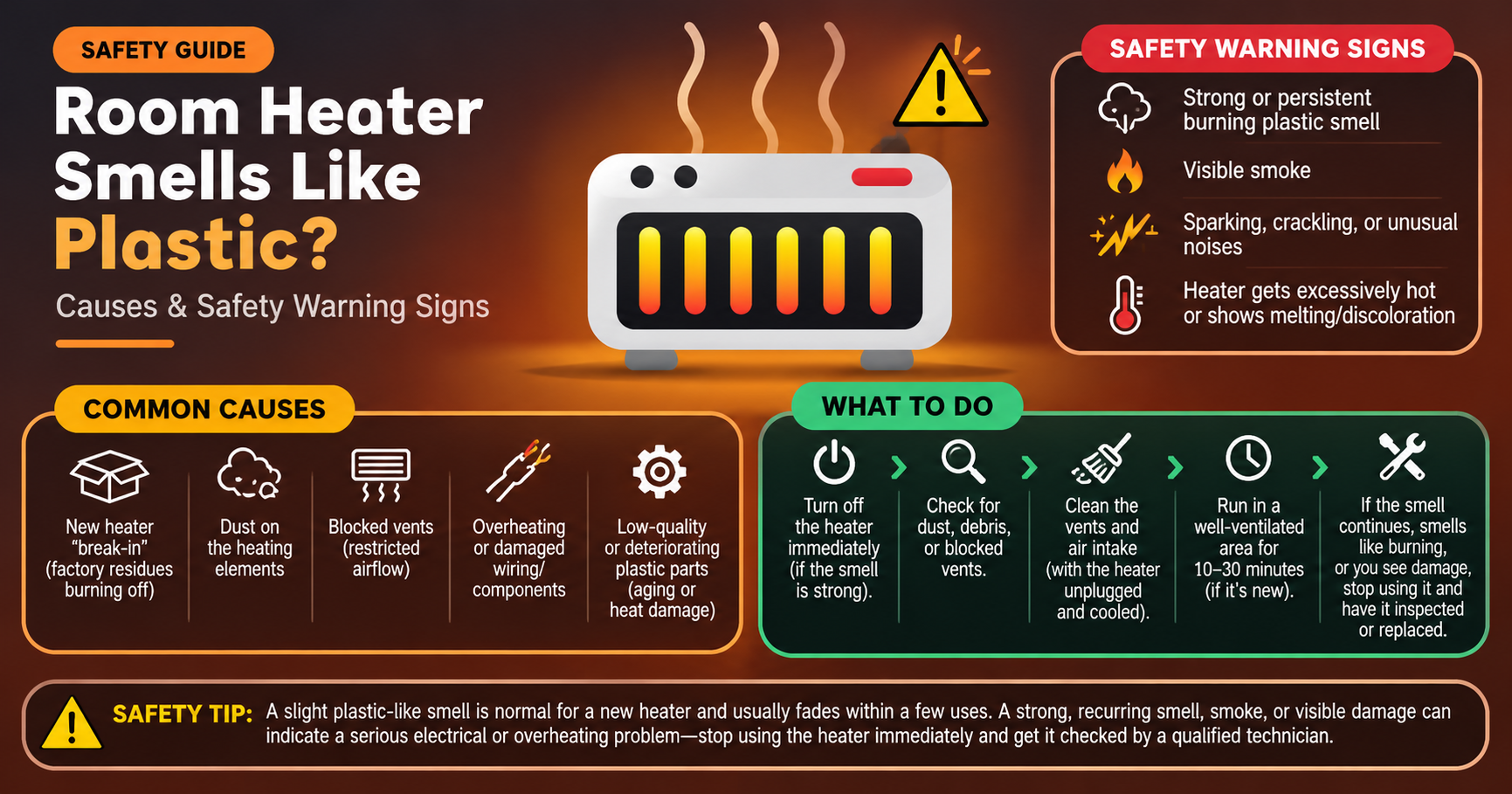
A new heater may smell for the first one to three uses as factory residue burns off. If an older heater smells like plastic, or if any smell is strong, sharp, returns every time, or comes with smoke, discolouration or a hot plug, unplug it and do not use it until it has been inspected.
Is It Normal for a Room Heater to Smell Like Plastic?
Sometimes, yes. Electric room heaters contain metal heating elements, plastic or painted housings, internal wiring, thermostats and often a fan. During manufacturing and shipping, these parts pick up thin films of oil, protective coating, adhesive and dust. When the heater runs hot for the first time, those residues evaporate or burn off and create a smell that many people describe as hot plastic, paint or dust.
This type of odour is usually:
- Mild to moderate, and strongest in the first 10 to 30 minutes
- Present only during the first few uses of a new heater, or the first use after long storage
- Free of smoke, sparks, crackling or visible damage
- Gradually fading each time the heater runs
If the smell follows this pattern, it is typically a break-in effect rather than a fault. If it does not, read on.
7 Common Causes of a Plastic Smell from a Room Heater
1. Manufacturing residue burning off (new heaters)
This is the most frequent cause. Lubricants used on metal parts, protective coatings on the element and curing agents in paint all produce odour when heated for the first time. It is temporary and usually disappears after a few hours of total running time.
2. Dust and lint on the heating element
A heater stored in a cupboard or left unused over summer collects dust and fibres. When the element heats up, that dust scorches and smells like burning plastic or hair. This is why many heaters smell on the first cold day of the season, even though they were fine last winter. Regular cleaning prevents the problem and also reduces fire risk.
3. Plastic parts getting too hot
Housings, knobs, switches, fan blades and air-outlet grilles on some heaters are made of plastic. If airflow is blocked, the thermostat is faulty or a fan has stopped working, these parts can overheat, soften and give off a true melting-plastic smell. This is a genuine safety concern. Look for warping, shiny patches, brown or yellow discolouration, or a deformed grille.
4. Overheated wiring, plug or socket
Heaters draw a lot of current. If a plug is loose, the socket is worn, an extension lead is used, or internal connections have loosened, resistance builds up and the insulation around the cable or the plug body can heat and smell. A fishy, sharp or chemical odour is often associated with overheated electrical insulation and components. A plug that feels hot to the touch is a clear red flag.
5. Objects or fabric too close to the heater
Plastic bags, synthetic curtains, clothes, cables or toys near the heater can warm up enough to smell, melt or ignite. Sometimes the smell comes from a small item that fell behind or beneath the heater. Always check the surrounding area first, since this is the easiest cause to fix.
6. A failing fan or motor (fan heaters)
In fan heaters and ceramic fan models, worn bearings or overheated motor windings can create a hot, acrid smell, often along with a grinding, rattling or humming noise, or weak airflow. A motor that is struggling can overheat the plastic around it.
7. Fumes from non-stick coatings or spilled substances
Some heaters use coated components, and spilled liquids, cleaning sprays, candle wax or air-freshener residue on the casing can also smell when heated. Never spray aerosols near a heater. If you keep pet birds, be especially careful: fumes from certain overheated coatings can be dangerous to birds, so move them to another well-ventilated room whenever a heater smells.
Normal Smell vs Warning Sign: How to Tell the Difference
| What you notice | Likely meaning | Action |
|---|---|---|
| Light dusty or oily smell on a brand-new heater | Factory residue burning off | Run in a ventilated room until it fades |
| Dusty or hot-hair smell on the first cold day of the season | Dust on the element or vents | Unplug, cool, clean, then retest |
| Strong melting-plastic smell from an older heater | Overheating plastic or an obstructed vent | Stop using it and inspect |
| Fishy, sharp or chemical odour | Possible overheated electrical parts | Unplug immediately; have it checked |
| Smell with smoke, sparks or crackling | Electrical fault or fire risk | Unplug if safe, leave heater off, get professional help |
| Smell with hot plug or tripped breaker | Overloaded circuit or damaged plug | Stop using it; check socket and plug |
Safety Warning Signs You Should Never Ignore
If you notice any of the following, switch the heater off at the wall (only if it is safe to reach the plug), unplug it, and keep it off:
- Visible smoke coming from vents, the casing or the plug
- Sparks, flashes or crackling sounds inside the heater or at the socket
- Melted, bubbled, warped or brown plastic on the housing, knobs or grille
- A plug, cord or socket that is hot to the touch or discoloured
- A circuit breaker or fuse that trips repeatedly when the heater is on
- A smell that is getting stronger or that returns every time you use the heater
- Buzzing, grinding or rattling noises that were not there before
- The heater switching itself off repeatedly due to the overheat protection
- Headaches, dizziness, watery eyes or throat irritation while the heater runs, especially if the smell is strong
If you see flames or heavy smoke, do not try to fight the fire yourself. Leave the room, get everyone out and call your local emergency number. Never pour water on an electrical heater.
What to Do Right Away If Your Heater Smells Like Plastic
- Turn it off and unplug it. Pull the plug from the wall rather than just using the heater switch. Do not touch the heater if there is smoke or the plug looks damaged; switch off the power at the circuit breaker instead.
- Ventilate the room. Open windows and doors, and move people, pets and especially birds into fresh air.
- Let it cool completely. Wait at least 30 minutes before handling it.
- Inspect it. Check the plug pins, the cable along its whole length, the socket, the vents, the grille and the area around the heater for melted plastic, scorch marks, loose items or debris.
- Decide the next step. If the cause is dust or a stray object, clean it and retest. If you find damage, discolouration or you cannot find the cause, stop using the heater and have it checked or replace it.
How to Get Rid of the Smell Safely
Burn off a new heater properly
- Place the heater on a flat, hard surface in a large, well-ventilated room, with windows slightly open.
- Keep people, pets and anything flammable away from it.
- Run it on a medium or high setting for 30 to 60 minutes while you stay nearby, then switch it off and let it cool.
- Repeat once or twice if a faint odour remains. If the smell does not fade after a few sessions, stop using it and contact the seller or manufacturer.
Clean a dusty heater
- Unplug it and wait until it is fully cool.
- Use a vacuum cleaner with a brush attachment on the vents, grille and fan inlet.
- Wipe the casing with a slightly damp cloth, and let it dry completely before use.
- Never use water, sprays or solvents inside the heater, and never use a heater that is still damp.
Check the plug and socket
Plug the heater directly into a wall socket that is in good condition. Avoid extension leads, multi-way adaptors and worn sockets. If the plug looks dark, melted or feels hot after use, stop using it. A damaged plug or cable should be repaired or replaced by a qualified person, not patched with tape.
How to Prevent Plastic Smells and Overheating
- Keep a clear zone of at least one metre (about three feet) around the front and sides of the heater, free of curtains, furniture, clothing and bedding.
- Place it on a stable, level, non-flammable surface and never on carpet that blocks the base or intake.
- Never cover the heater or use it to dry clothes.
- Clean the vents and element before each heating season and every few weeks during heavy use.
- Do not leave it running unattended or overnight in a sealed room, unless it is designed for that and you follow the manual.
- Store it in its box or a covered area in the off-season to keep dust out.
- Follow the power rating in the manual and avoid sharing the same circuit with other high-power appliances.
- Check the plug and cable regularly for heat, cracks, fraying or discolouration.
Is a Fuel-Burning Heater Different?
Everything above applies mainly to electric room heaters. Gas, kerosene and other fuel-burning heaters can produce carbon monoxide, a colourless and odourless gas that is extremely dangerous. If you use such a heater, use it only in a well-ventilated space, keep a working carbon monoxide alarm nearby, and treat any unusual smell, soot, yellow flame or headache as a reason to switch it off and ventilate immediately.
Which Types of Room Heaters Are Less Likely to Smell?
Every heater can produce some odour when new or dusty, but design affects how often smells occur and how hot the exposed surfaces become.
| Heater type | Smell tendency | Notes |
|---|---|---|
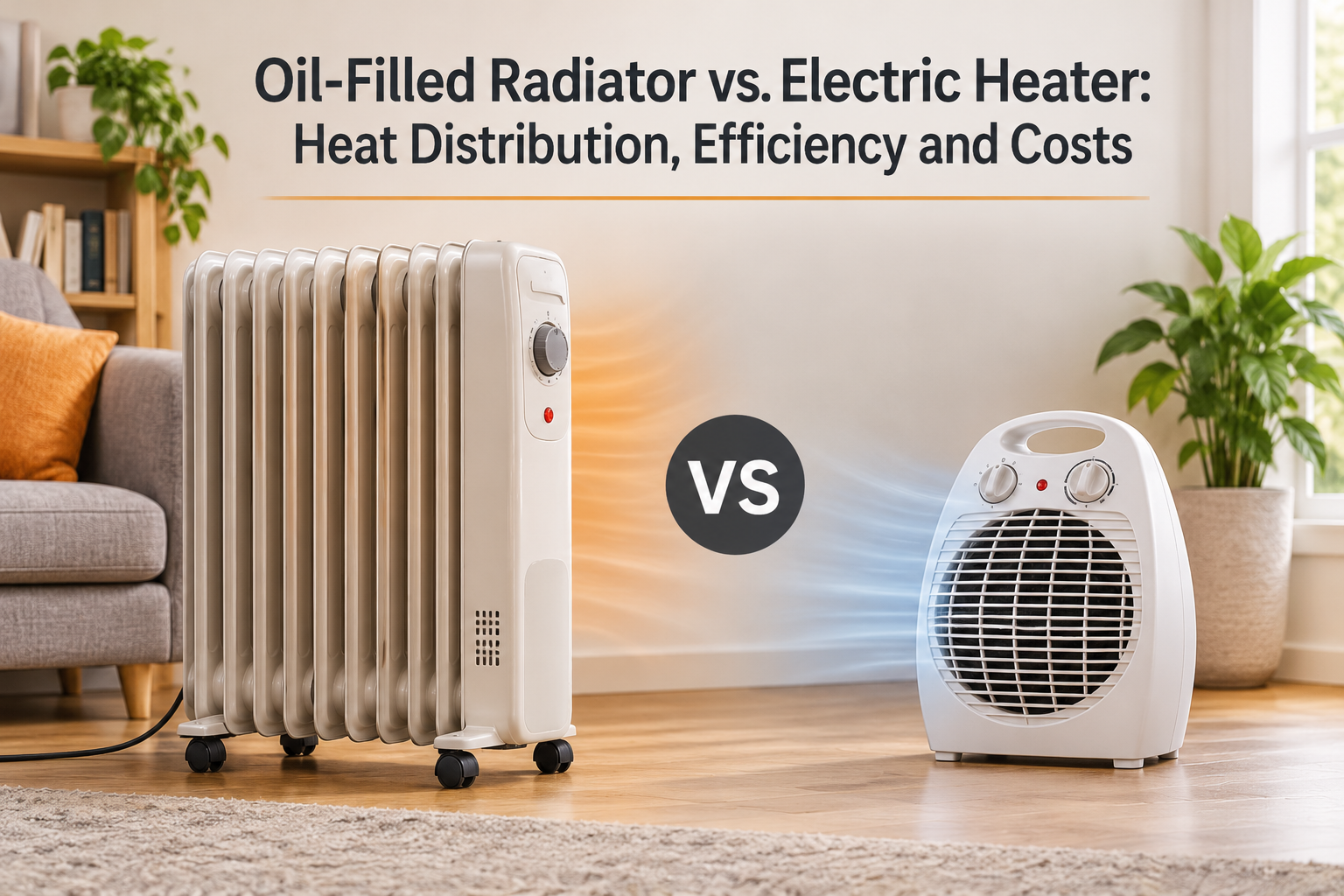
| Oil-filled radiator | Low | Lower surface temperature and no exposed glowing element; fewer dust-burning smells. |
| Ceramic (PTC) fan heater | Low to moderate | Self-regulating element; fan inlet can collect dust and needs cleaning. |
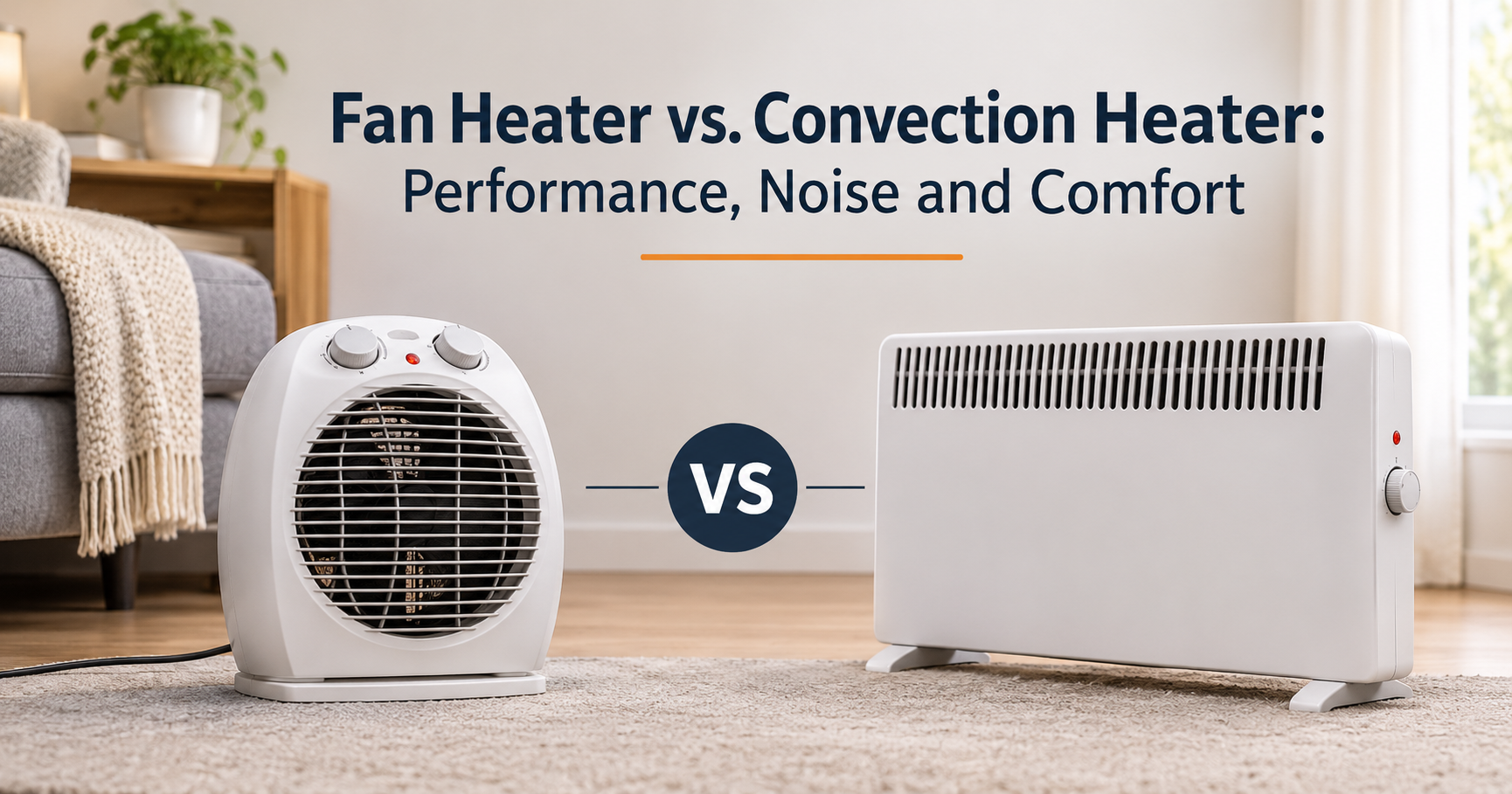
| Convector heater | Low to moderate | Quiet and steady; dust on the element can still smell at first use. |
| Halogen or quartz heater | Moderate | Very hot exposed element; dust and nearby objects burn easily. |
| Bar or coil radiant heater | Moderate to high | Glowing element heats dust and nearby items quickly; keep the clear zone strictly. |
What to Look for When Buying a Replacement Heater
If your heater is old, damaged or keeps smelling, replacing it is often safer than repairing it. Look for these features:
- Tip-over protection that switches the heater off if it falls
- Overheat protection that cuts power if internal temperatures rise too high
- Adjustable thermostat for stable temperature control
- Safety certification marks recognised in your country, such as UL, ETL, CE or similar
- Flame-retardant housing and a cool-touch exterior where possible
- Correct power rating for your room size and your home wiring
- A removable or accessible filter or grille that makes cleaning easy
- A clear warranty and instruction manual from a reliable seller
Repair or Replace?
Cleaning or a simple fix is usually enough when the smell is mild, appears after storage, disappears after cleaning, and the heater shows no damage.
Replacement is the safer choice when the plastic is melted or discoloured, the plug or cable is damaged, the smell keeps returning, the breaker trips, the heater is old and has unreliable thermostats, or you cannot identify the cause. Internal electrical repairs should be done only by a qualified technician or the manufacturer.
Frequently Asked Questions
How long should a new heater smell?
Typically for the first one to three uses, or a few hours of total running time. If the smell is still strong after that, stop using the heater and contact the seller.
Is a plastic smell from a room heater dangerous?
A faint, temporary smell from a new or dusty heater is usually not dangerous. A strong, persistent or chemical smell can signal overheating or damaged parts, which can be a fire risk, and the fumes may irritate the eyes, nose and throat. When in doubt, switch it off and ventilate.
Why does my heater smell like burning plastic the first time each winter?
Dust and lint settle on the element and vents during storage. They burn off when the heater first heats up. Cleaning the heater before the season usually prevents this.
Can I keep using the heater if the smell is faint?
If it is new and the smell fades with each use, generally yes, in a ventilated room and while you are present. If the heater is older, if the smell is not fading, or if there are any other warning signs, do not keep using it.
Why does my heater smell like something fishy or chemical?
This type of odour is often associated with overheated electrical insulation or components. Unplug the heater and have it examined before using it again.
Can a heater smell if the wall socket is the problem?
Yes. A loose or worn socket and plug can overheat under the heater’s high current and create a plastic smell. Check whether the plug or socket feels hot, and avoid extension leads.
Is it safe to sleep with a heater that smells?
No. Do not leave a heater running while you sleep if it smells unusual. Switch it off, ventilate, and resolve the cause first.
Can I fix it myself?
You can safely clean the outside, vents and grille, and clear obstructions. Do not open the heater or repair internal wiring or the thermostat yourself unless you are qualified.
Final Thoughts
A room heater that smells like plastic is not always a disaster, but it should never be ignored. A faint, short-lived smell from a new or freshly cleaned heater is normal. A strong, persistent, chemical or fishy smell, or any smell that comes with smoke, discolouration, noise or a hot plug, is a warning sign that deserves immediate action.
Unplug the heater, ventilate the room, find the cause, clean what can be cleaned, and replace the heater if there is any sign of damage. Keeping the area around the heater clear, cleaning it regularly and choosing a model with proper safety protection will keep your home warm and safe all winter.
This article is for general information only and does not replace advice from a qualified electrician or the heater manufacturer. Always follow the instructions in your heater’s manual.