




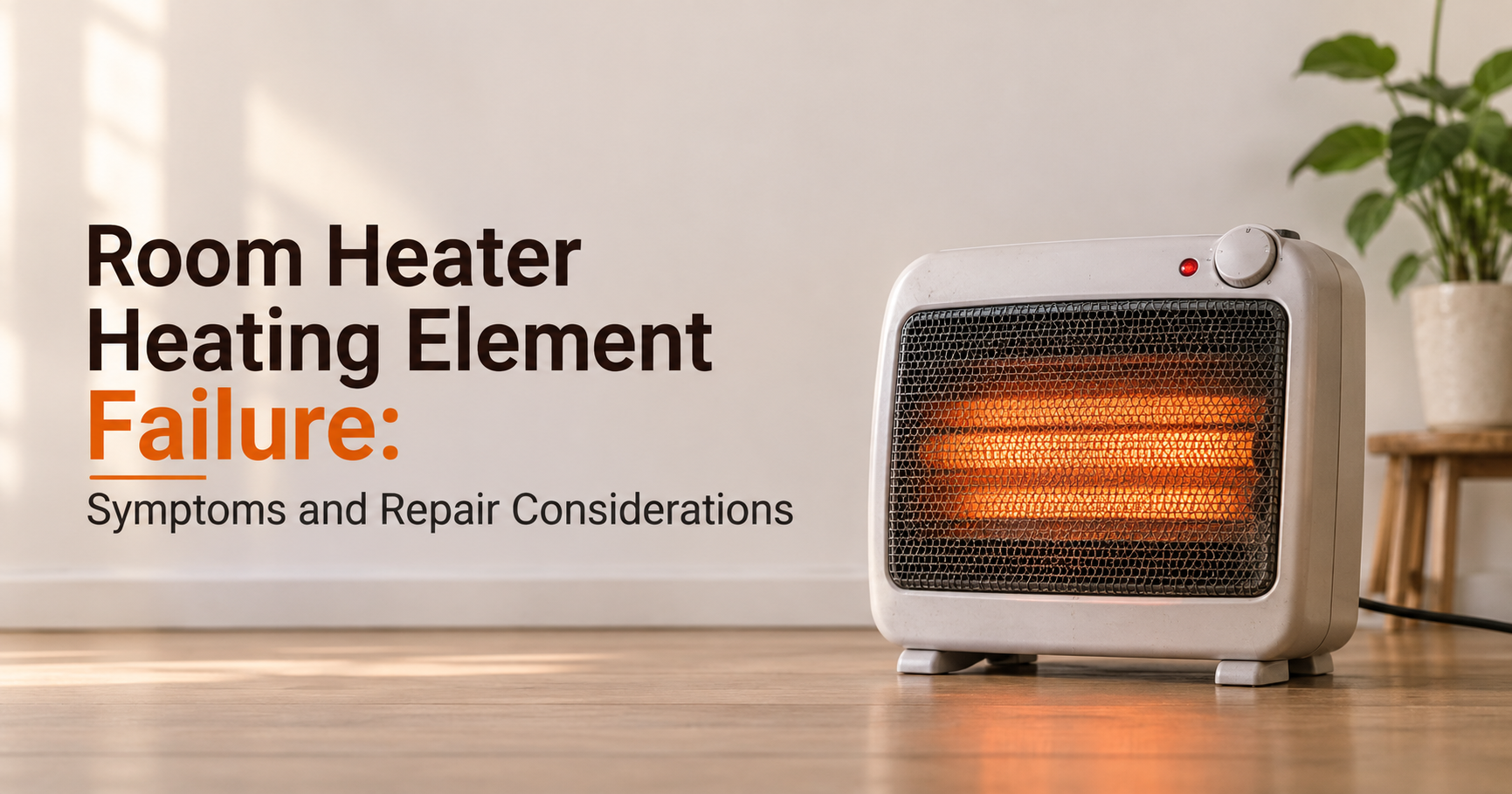

You flip the switch, the fan hums, the indicator light glows, and yet the air coming out of your room heater is cold. Or maybe there is no sound, no glow and no warmth at all. In many of these cases the heating element is the first suspect, and for good reason: it is the part that actually creates the heat, and it works hard every time you use the heater.
The good news is that a room heater with a bad heating element is not always a lost cause. Sometimes the element is perfectly fine and a much cheaper part is to blame. In this complete guide you will learn how a heating element works, how to spot the warning signs, how to test it safely with a multimeter, and how to decide between repairing and replacing your heater.
Quick Answer
If your room heater runs but does not heat, the usual causes are a burnt-out heating element, a faulty thermostat, a blown thermal fuse, a stuck tip-over switch, a damaged cord or plug, or dust that has triggered the overheat protection. Unplug the heater, let it cool, clean the vents, and then test the element for continuity with a multimeter. A reading of OL (infinite resistance) means the element is broken.
What Is a Heating Element and How Does It Work?
A heating element is a resistor designed to get hot. When electric current flows through it, the material resists the flow, and that resistance turns electrical energy into heat. Most room heaters use a wire made from a nickel-chromium alloy (often called nichrome) because it can glow hot again and again without melting or rusting quickly. Other heaters use ceramic plates, quartz tubes or sealed metal tubes to do the same job.
The element does not work alone. Electricity has to pass through the plug, cord, switches, thermostat and safety devices before it reaches the element. If any part of that chain fails, the heater may stop producing heat even though the element itself is healthy.

Common Types of Heating Elements
| Element type | Where it is used | Typical failure | Repairable? |
|---|---|---|---|
| Open nichrome coil | Fan heaters and some radiant heaters | Wire snaps, sags or corrodes at the terminals | Sometimes, if a matching replacement element is available |
| Quartz or halogen tube | Infrared and radiant heaters | Filament breaks or the tube cracks | Often, because the tube can be swapped on many models |
| Ceramic PTC plates | Compact ceramic fan heaters | Plates crack or lose output | Rarely, since the module is usually sold as one assembly |
| Sealed tubular element in oil | Oil-filled radiator heaters | Internal failure or a leak | No, replacing the whole heater is the practical option |
Signs Your Room Heater’s Heating Element Is Not Working
A failing element rarely gives just one clue. Look for these common signs:
- The fan runs but the air stays cold. The motor and controls get power, but the element does not heat up.
- No glow from the coils. On radiant or quartz heaters, the element should glow orange or red when on.
- Weak or uneven heat. Part of a broken coil may still work, so the output drops while the heater still seems to run.
- The heater trips the breaker or blows a fuse. A shorted element can draw too much current.
- A burning or metallic smell. A little dust smell at the start of the season is normal, but a sharp burning smell is not.
- Visible damage. Look for a broken coil, black spots, blistering or a cracked ceramic plate.
- Heat that comes and goes. A loose or cracked element can make contact only when the heater vibrates or warms up.
Safety First: Before You Touch Anything
Important Safety Rules
Always unplug the heater and let it cool for at least 30 minutes before any inspection. Never test or touch internal parts while the heater is connected to power. Keep the heater dry, work on a clean flat surface, and never remove safety guards. Opening the casing may void your warranty, so check the warranty first. If you are not comfortable working with electrical parts, ask a qualified technician.
6 Common Reasons a Room Heater Stops Heating

1. Burnt-Out or Broken Heating Element
Every heating cycle makes the element expand and contract. After years of use, the wire can become brittle and snap, or the metal can oxidise until it breaks. A broken element creates an open circuit, so current can no longer flow and no heat is produced.
2. Faulty Thermostat
The thermostat tells the element when to switch on and off. If its contacts are worn or it is out of calibration, the element may never receive power. This is a very common issue, and thermostats usually cost much less than a full heater.
3. Blown Thermal Fuse
A thermal fuse is a one-time safety device. If the heater overheats, perhaps because the vents were blocked, the fuse opens and cuts power to the element permanently. The fuse must be replaced, and the cause of the overheating must be fixed first.
4. Stuck or Faulty Tip-Over Switch
Most modern heaters shut off if they tilt or fall. If the switch is jammed, dirty or placed on carpet or an uneven floor, it may think the heater is not upright and block power to the element. Move the heater to a hard, flat surface and test again.
5. Damaged Power Cord, Plug or Internal Wiring
Heaters draw a lot of current, so loose connections heat up quickly. Discoloured plugs, melted plastic or a cord that works only when you wiggle it all point to a wiring problem. Do not use a heater with a damaged cord or plug.
6. Dust and Overheating Protection
Dust builds up on grilles, filters and the element itself. Blocked airflow makes the heater run hot, and the overheat protection then shuts the element off. Cleaning the vents often brings the heat back.
Step-by-Step: How to Diagnose a Room Heater That Is Not Heating
Work through these steps in order, from the easiest and safest check to the most technical. The flowchart below gives you the short version.

- Check the power source. Try a different wall outlet and reset the circuit breaker if needed. Plug the heater straight into the wall, because extension cords and power strips can overheat with high-wattage heaters.
- Inspect the plug and cord. Look for burn marks, discolouration, bent pins, cuts or soft spots.
- Check the settings. Make sure the thermostat is set higher than the room temperature, the timer is not off, and eco or low-power modes are not limiting the heat.
- Check the tip-over and overheat protection. Place the heater upright on a hard, level floor. Some models have a reset button, so check the manual.
- Clean the vents and filter. Unplug the heater, then use a vacuum with a soft brush attachment to remove dust from the intake and outlet grilles.
- Inspect the element visually. Once the heater is unplugged and fully cool, look through the grille with a torch. Check for breaks, blistering, black spots or cracks. Do not open the casing if the heater is under warranty.
- Test the element with a multimeter. This is the most reliable way to confirm a broken element, as explained in the next section.
How to Test a Heating Element with a Multimeter
A multimeter lets you measure the resistance of the element. You only need a basic model. Make sure the heater is unplugged and cool, and that you have access to the element terminals.
- Set the multimeter to the resistance (Ω) setting, or to the continuity setting that beeps.
- Disconnect at least one wire from the element so that other parts of the circuit do not affect the result.
- Touch one probe to each terminal of the element.
- Read the display and compare it with the expected resistance.

How to Calculate the Expected Resistance
Use this simple formula: Resistance (Ω) = Voltage² ÷ Wattage. Your heater’s label shows the voltage and wattage. A healthy element should measure close to the calculated value, usually within about 10 percent.
| Heater rating | Calculation | Expected resistance |
|---|---|---|
| 120 V, 1000 W | 120 × 120 ÷ 1000 | About 14.4 Ω |
| 120 V, 1500 W | 120 × 120 ÷ 1500 | About 9.6 Ω |
| 230 V, 1000 W | 230 × 230 ÷ 1000 | About 52.9 Ω |
| 230 V, 1500 W | 230 × 230 ÷ 1500 | About 35.3 Ω |
| 230 V, 2000 W | 230 × 230 ÷ 2000 | About 26.5 Ω |
What the Result Means
- A steady reading close to the expected value: the element is healthy. Look at the thermostat, thermal fuse and wiring next.
- OL, 1 or infinity: the circuit is open, so the element is broken and needs replacing.
- 0 Ω or a value far below the expected one: the element is shorted and should be replaced.
- A reading that jumps around: a loose connection or a partly cracked element. Check the terminals and wiring.
If the Element Passes the Test
If the element reads normally, test the other parts in the power path. A thermal fuse should show close to 0 Ω (continuity). A thermostat turned to its highest setting should also show continuity across its contacts. A part that reads OL where it should read near zero is the faulty one. Switches, relays and control boards can fail too, especially on digital models, and these are best checked by a technician.
Can You Fix a Broken Heating Element?
It depends on the type of heater and how the element is built. Here are the realistic options:
- Replace the element. On many fan, radiant and quartz heaters, the element is a separate part that can be swapped for one with the same wattage, voltage and shape. This is usually the best fix when parts are available.
- Clean or tighten the connections. If the element is fine but its terminals are corroded or loose, cleaning and securing them can restore heat.
- Replace the thermal fuse or thermostat. If one of these is the culprit, the heater can often be saved for a small cost.
- Replace the whole heater. Sealed oil-filled heaters and many compact ceramic heaters are designed to be replaced as a unit.
Do Not Twist or Splice a Broken Coil
Joining the broken ends of a heating wire by hand is a fire risk. The joint creates a hot spot, and the shortened wire changes the resistance and draws more current. Always use a proper replacement part of the same rating.
Repair or Replace? A Simple Rule
If the repair cost, including parts and labour, is more than about half the price of a comparable new heater, replacing it is usually smarter. Also replace the heater if the casing is warped or melted, if the cord is damaged, if it is a very old model without modern safety features, or if it has failed more than once.
How to Prevent Heating Element Problems
- Clean the heater regularly. Vacuum the grilles and vents every few weeks during the heating season and before storing it.
- Plug directly into the wall. Avoid extension cords and power strips unless they are rated for the heater’s power.
- Keep it on a flat, hard surface. This protects the tip-over switch and keeps airflow clear.
- Keep clearance. Leave plenty of space around the heater and keep curtains, bedding and furniture away from it.
- Avoid moisture. Do not use a standard room heater in a wet bathroom or near water unless it is specifically rated for it.
- Do not move it while it is hot. Shock and vibration can crack a hot element.
- Store it properly. Keep it in a dry, dust-free place in the off season, ideally in its original box.
Choosing a New Room Heater If Yours Is Beyond Repair
If you decide to replace your heater, a little planning helps you avoid the same problem. As a rough guide, you need about 10 watts per square foot (around 100 watts per square metre) to heat a room with normal insulation. That means a 1500 W heater suits a room of roughly 150 square feet (14 square metres).
| Heater type | Best for | Main advantages | Main drawbacks |
|---|---|---|---|
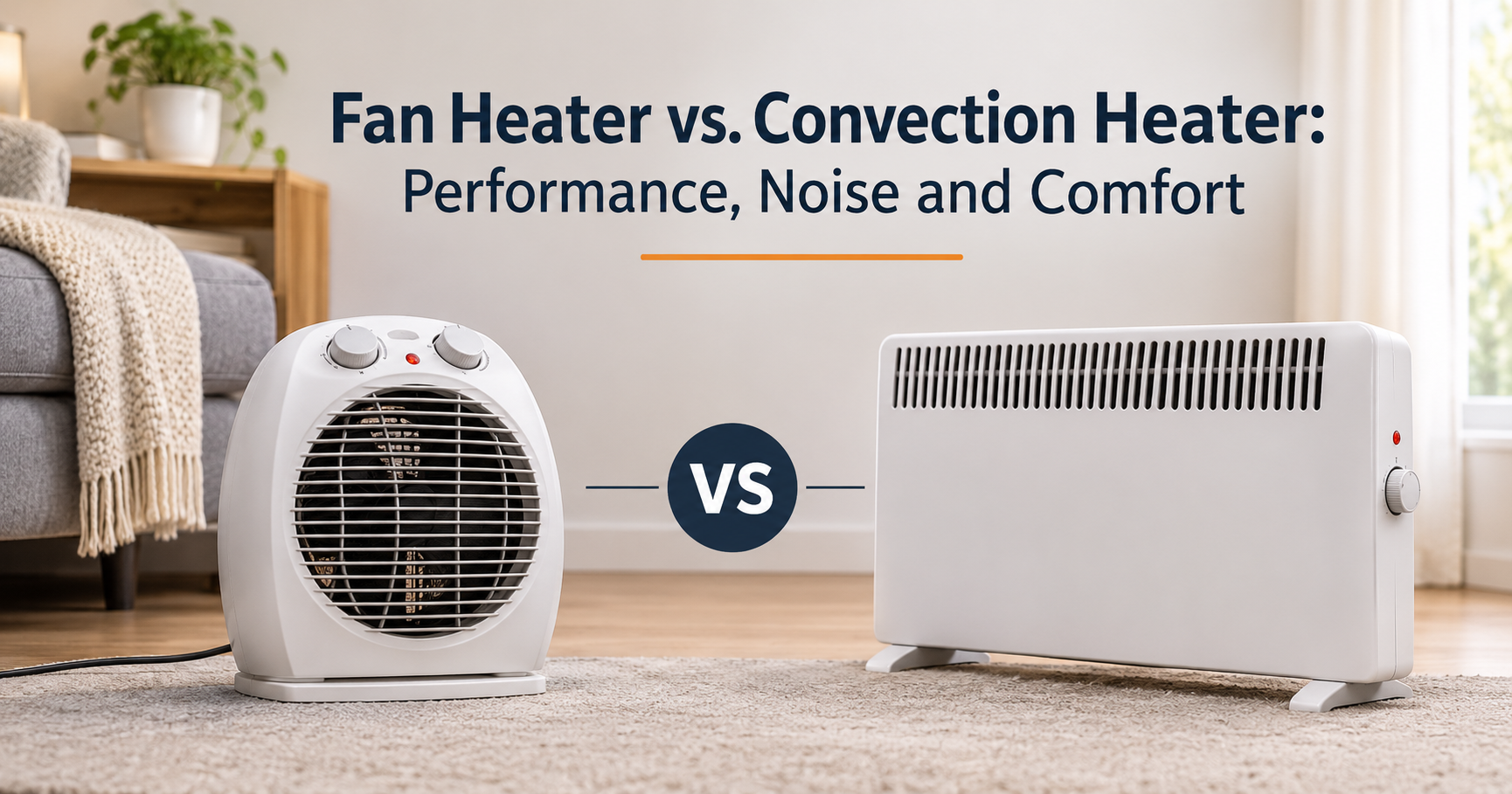
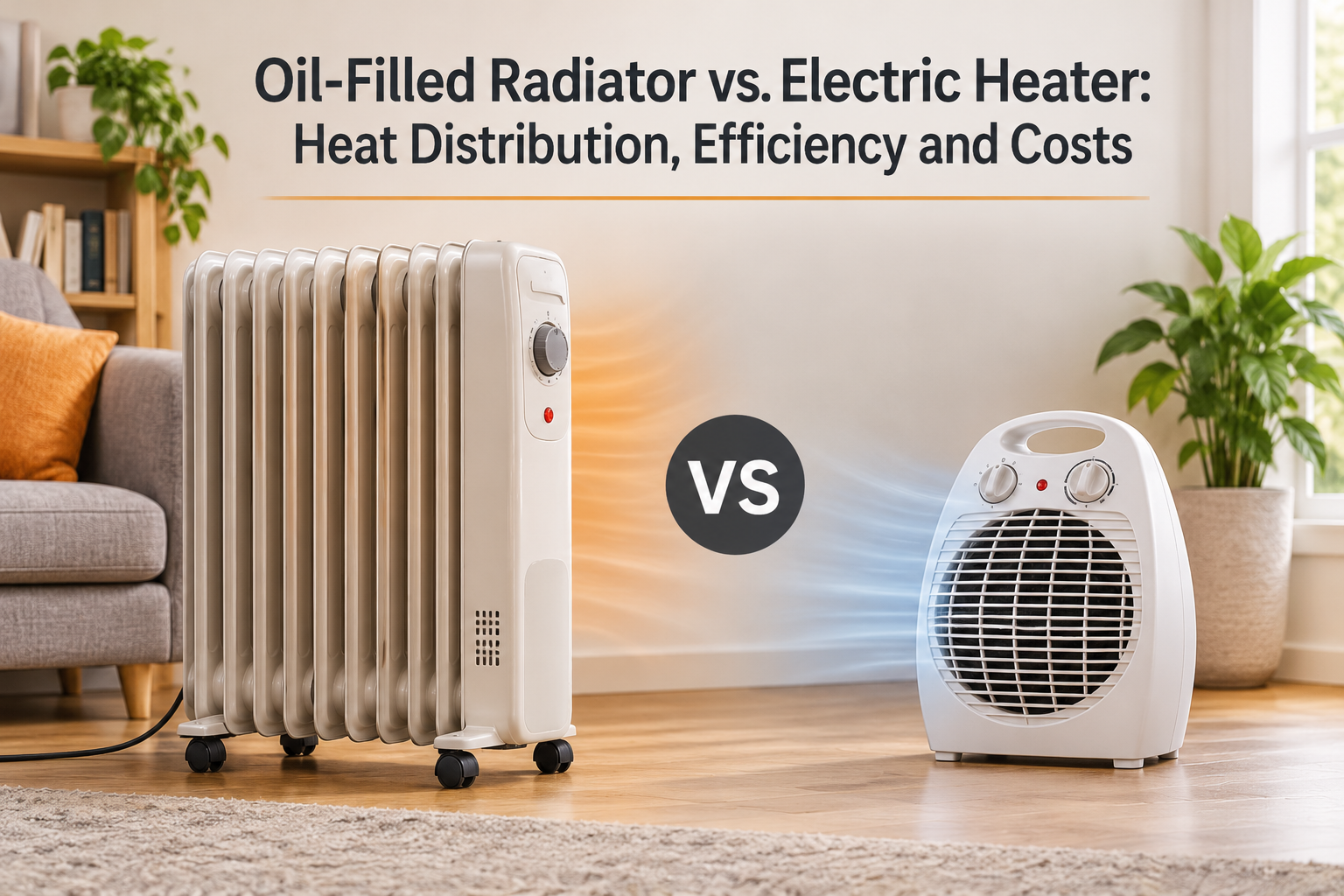
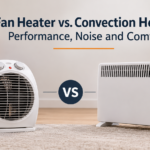
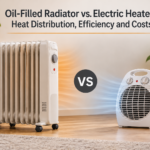
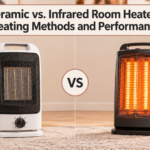
| Ceramic fan heater | Small to medium rooms, quick warm-up | Heats fast, compact, often has a thermostat and tip-over protection | Fan noise, heat stops soon after switching off |
| Oil-filled radiator | Bedrooms and long, steady heating | Quiet, keeps giving off heat after switching off, sealed element | Slow to warm up, heavy |
| Infrared or quartz heater | Spot heating for one person | Instant, direct warmth | Warms objects and people, not the whole room |
| Convection panel heater | Whole-room background heat | Silent, slim, wall-mountable on some models | Slower to heat a room, less spot warmth |
Before buying, look for these features:
- Tip-over protection and automatic overheat shut-off
- An adjustable thermostat and, ideally, a timer
- Multiple heat settings so you do not run it on maximum all the time
- A recognised safety certification mark for your country
- A cool-touch housing, which helps if you have children or pets
- A clear warranty and available replacement parts
Frequently Asked Questions
Why is my room heater blowing cold air?
The fan is working but the element is not getting power or is broken. Common causes are a burnt-out element, a faulty thermostat, a blown thermal fuse or overheat protection triggered by dust. Clean the vents first, then test the element with a multimeter.
Can a heating element be repaired?
A broken element cannot be safely repaired by joining the wire. On many models you can replace the element with a matching part. On sealed oil-filled and many ceramic heaters, replacing the whole unit is the practical choice.
How much does it cost to replace a heating element?
Prices vary by brand, wattage and region. For serviceable models, a replacement element is often much cheaper than a new heater, but labour and part availability matter. If the total repair cost is more than about half the price of a new equivalent, replacing the heater is usually better.
How long does a heating element last?
There is no fixed lifespan. With normal use and regular cleaning, many elements last several years. Heavy daily use, dust, voltage fluctuations and moisture can shorten that life.
Is it safe to use a heater if the element works only partly?
No. A partly broken element can overheat in one spot, trip breakers or cause a fire. Stop using the heater until it has been checked and repaired or replaced.
Why does my heater trip the circuit breaker?
A shorted element, damaged wiring or an overloaded circuit can all trip the breaker. Do not keep resetting it. Unplug the heater, try it on a different circuit, and have it inspected if the problem continues.
Can I check the heating element without a multimeter?
You can do a visual check for breaks, cracks or black spots once the heater is unplugged and cool. However, a multimeter is the only reliable way to confirm whether the element has continuity.
Can the heating element in an oil-filled heater be replaced?
In most cases no. The element is sealed inside the unit and surrounded by oil, so a failure usually means replacing the whole heater.
Final Thoughts
A room heater that no longer heats is frustrating, but you do not have to guess what is wrong. Start with the simple checks: the outlet, cord, settings, tip-over switch and dusty vents. If those are fine, test the heating element with a multimeter. A reading of OL tells you the element is broken, while a normal reading sends you to the thermostat, thermal fuse or wiring.
Above all, put safety first. Always unplug and cool the heater before inspecting it, never patch a broken heating wire, and replace any heater with a damaged cord or casing. With careful troubleshooting and regular cleaning, you can often bring a heater back to life, and when you cannot, you will know exactly what to look for in your next one.
Safety Reminder
This guide is for general information only. Electrical repairs can be dangerous. If you are unsure at any step, stop and contact a qualified technician or the manufacturer.