


Room Heater Fan Not Spinning: Causes, Safe Fixes and When to Replace It

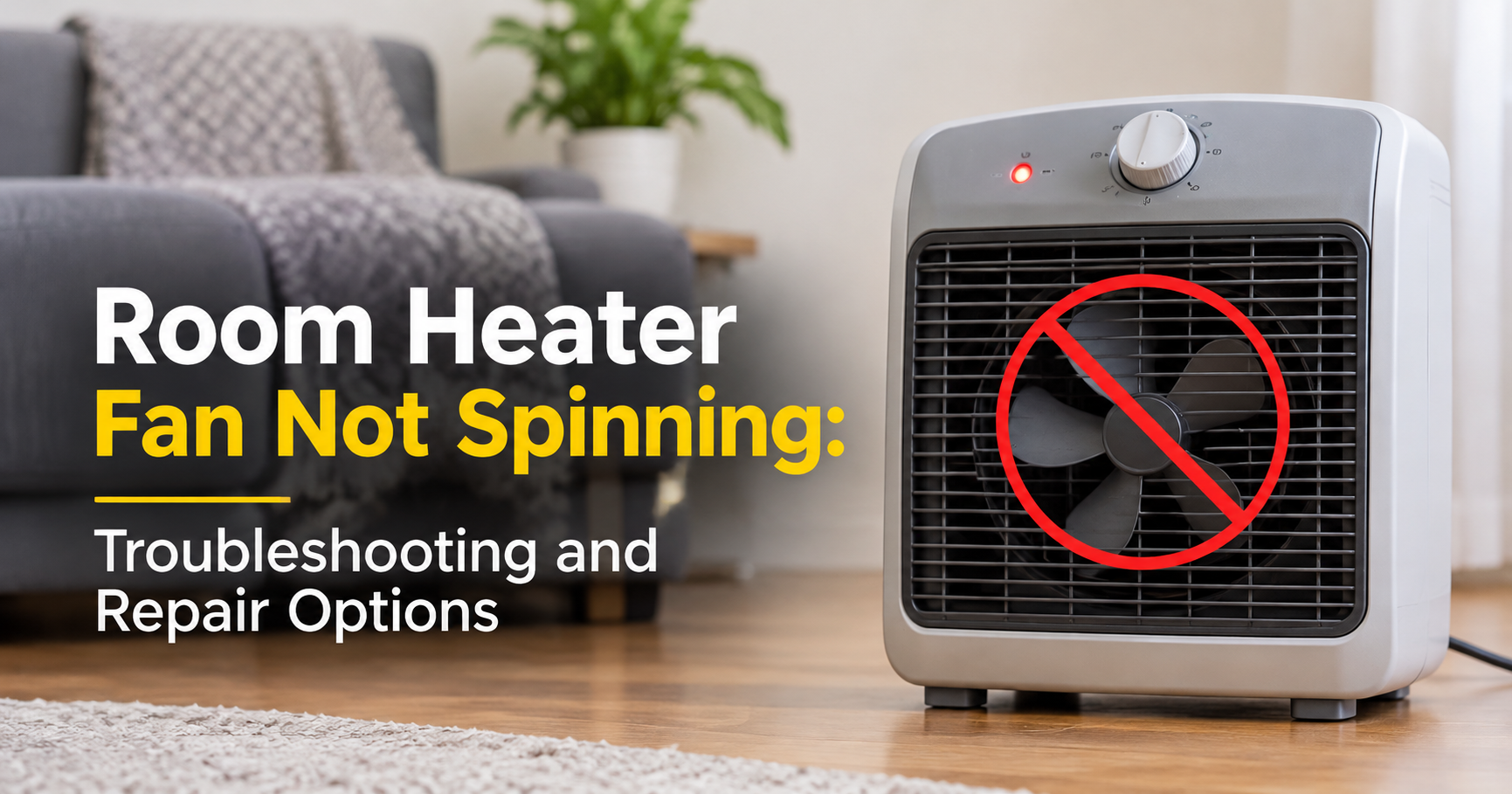
You switch on your room heater on a cold evening, the heating element starts to glow, and then you notice something is wrong. The fan is not spinning. There is no gentle whoosh of warm air, only a faint hum, a warm smell, or complete silence. It is a common problem, and it is one worth taking seriously.
This guide explains why a room heater fan stops spinning, which causes you can check safely at home, which problems need a qualified technician, and how to decide between repair and replacement. It also covers simple habits that keep the fan running for many winters.
Important safety note
Do not keep using a fan heater whose fan is not turning. The fan carries heat away from the heating element. Without airflow, the element and the plastic parts around it can overheat, which raises the risk of damage, a burning smell, or fire. Unplug the heater first, then read on.
What You Will Learn in This Article
- How a fan heater works and why the fan matters
- The most common reasons a room heater fan will not spin
- A step-by-step safe troubleshooting routine
- Which repairs are suitable for DIY and which are not
- How to decide whether to repair or replace the heater
- Maintenance habits and buying tips to prevent the problem
How a Fan Heater Works
Most portable room heaters that blow warm air, including ceramic fan heaters, bar heaters with a blower, and compact tower heaters, share the same basic design. A small electric motor spins a fan or blower wheel. The fan pulls cool room air across a heating element, such as a ceramic plate or a metal coil, and pushes the heated air back into the room.

Because the fan and the element work together, a stalled fan is not just a comfort issue. Most modern heaters include an overheat protection device, often a thermal cut-out or thermal fuse, that switches the heater off when temperatures climb too high. If the fan stops, that safety device may trip quickly, and the heater may shut down or behave strangely.
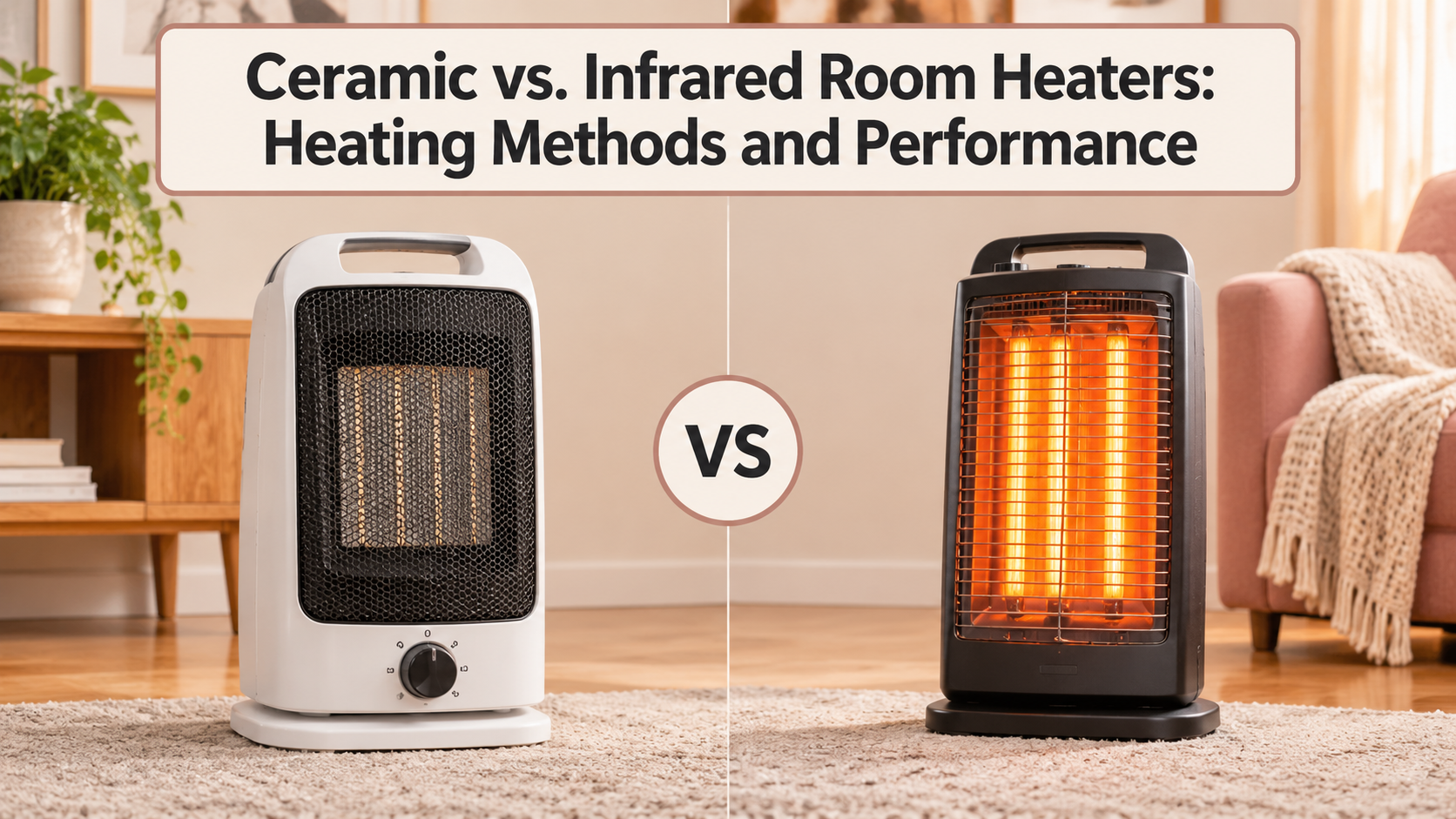
One quick clarification: oil-filled radiators, panel heaters, and infrared heaters usually have no fan at all. If your model is one of those, it is not supposed to blow air. This article applies to heaters that include a fan or blower.
Common Signs the Fan Has a Problem
- The heater lights up or clicks on, but no air comes out
- The fan hums but the blades do not turn
- The fan turns slowly, wobbles, or starts only after a push
- Grinding, rattling, or squealing noise from the back or front
- The heater runs for a short time, then switches itself off
- A hot or faintly burning smell without much airflow
8 Common Reasons a Room Heater Fan Will Not Spin

1. Dust, Lint and Pet Hair Build-Up
This is the most common cause. Heaters sit unused for months, then start pulling in dust, lint, carpet fibers, and pet hair. Over time, the debris coats the blades, packs around the motor shaft, and clogs the grille. The added weight and friction can slow the fan or stop it completely.
2. A Blocked or Obstructed Fan
A loose cord, a small toy, a piece of paper, or any item that slips through the grille can jam the blades. Even a strand of hair or thread wrapped around the shaft can stop a small motor from starting.
3. Worn or Dry Bearings
The motor shaft rides in small bearings or bushings. When they dry out or wear down, the shaft turns with more resistance. You may hear squealing or grinding, the fan may spin slowly, or it may stick altogether. Heaters that run for long hours every day tend to reach this point sooner.
4. A Failed or Burnt-Out Motor
Motor windings can burn out after long use, repeated overheating, or a power surge. A failed motor may give no response at all, or it may hum without turning. A motor that has seized from heat or rust usually cannot be revived and needs replacement.
5. A Faulty Start Capacitor
Many small AC fan motors use a capacitor to give the motor its starting push. When the capacitor weakens, the motor hums but cannot start, or it starts slowly. This is a typical cause when the blades spin freely by hand but do nothing when powered. Capacitors can hold a charge even when unplugged, so replacing one is a job for a qualified person.
6. A Faulty Switch, Selector or Control Board
Fan speed and mode selectors, thermostats, and electronic control boards can fail. The heating element may work while the fan receives no power. This is more common in heaters with digital displays, remote controls, or multiple fan speeds.
7. Loose or Damaged Wiring
Heat, vibration, and repeated moving or tilting can loosen terminals or damage insulation. A loose connection to the motor can make the fan work intermittently or not at all. Damaged wiring is a safety hazard and should not be handled casually.
8. A Tripped Safety Cut-Out or Tip-Over Switch
Heaters have safety devices that cut power when something looks unsafe. An overheat cut-out may trip after the vents have been blocked. A tip-over switch may cut power if the heater is tilted or standing on an uneven or soft surface. Some cut-outs reset by themselves once the heater cools, and some are one-time thermal fuses that need a technician to replace.
Before You Start: Safety Rules
- Always unplug the heater from the wall, not just switch it off.
- Let the heater cool completely, at least 30 minutes, before touching or opening it.
- Work on a dry, stable surface in good light.
- Never spin the fan with a pencil, screwdriver, or finger while the heater is plugged in.
- Do not bypass, bridge, or remove a thermal fuse or cut-out.
- Read the manual. Some manufacturers advise against opening the housing, and opening it may affect your warranty.
Step-by-Step Troubleshooting

Step 1: Check the Power Supply
Plug the heater into a different wall outlet. Avoid extension cords and power strips, as these can cause voltage drops and overheating with high-wattage appliances. Inspect the cord and plug for scorch marks, discoloration, bent pins, or cracks. If you see any of these, stop using the heater.
Step 2: Check the Settings
Make sure the mode selector is not set to a heat-only or off position, if your model has one. Turn the thermostat to the highest setting, since in some models the fan will not run when the room is already at the target temperature. Check that the tip-over switch is not held down by a rug, and that the heater is on a flat, hard surface.
Step 3: Look and Listen for Clues
Plug the heater back in only if the cord and plug look fine, then switch it on for a few seconds from a safe distance. Listen carefully. A hum with no movement points to a stuck fan or weak capacitor. Silence suggests a power or switch problem. A grinding noise points to bearing or debris trouble. If you notice a burning smell, unplug it immediately and do not run it again.
Step 4: Inspect and Clean the Fan Area
With the heater unplugged and cool, look through the grille with a flashlight. Remove any visible debris that you can reach safely. Use a vacuum with a soft brush attachment to clear dust from the vents and grille.

If the manual allows it, remove the outer grille or cover using the specified screws. Wipe the blades with a dry or slightly damp cloth, then let them dry fully. Use a cotton swab or soft brush to clear dust from around the motor. Do not spray liquids into the heater or soak any part.
Step 5: Spin the Blades by Hand
With the heater unplugged, gently turn the fan blades with your finger. A healthy fan turns smoothly and freely, then coasts for a moment. If the blades feel stiff, scrape, wobble, or will not turn, the bearings or motor are likely at fault. If they spin freely but the fan does not start when powered, suspect the capacitor, switch, wiring, or control board.
Step 6: Reassemble and Test
Put every cover and screw back exactly as it was. Plug the heater in on a hard, flat surface, away from curtains and furniture, and run it on a low setting while you stay in the room. If the fan runs normally and the airflow is steady, the cleaning worked. If the problem returns or the heater switches off by itself, stop using it.
Which Fixes Are Safe to Do Yourself?
Cleaning, clearing a blockage, using a different outlet, and correcting the settings are reasonable DIY steps for most people. Anything that involves electrical components inside the housing is different.
- Generally safe for most people: cleaning the vents and blades, removing debris you can reach, adjusting settings, and testing another outlet.
- Possible for experienced DIYers, if the manual allows it: a very small drop of light machine oil on an exposed sleeve bearing, only if the manufacturer permits it. Do not use heavy grease, and do not oil sealed motors.
- Leave to a qualified technician: replacing a capacitor, motor, thermal fuse, switch, or control board, or repairing any wiring.
Never do this
Do not jump or bypass a thermal fuse, do not tape down a tip-over switch, and do not run the heater with the cover removed. These protections exist to prevent fires. A heater that needs them bypassed to run is not safe to use.
Repair or Replace the Heater?
Many room heaters are low-cost appliances. For a simple blockage, repair costs nothing. For internal electrical faults, the repair bill plus labor may come close to the price of a new heater, especially for a basic model. Use the guide below as a starting point.

Replacement usually makes more sense when the heater is several years old, has a history of tripping or odd smells, shows melted plastic or scorch marks, has a damaged cord, or is a budget model with no available parts. Repair can make sense for a newer or higher-quality heater under warranty, or one with a single clear fault, such as a capacitor, that a technician can replace quickly.
If the heater is still under warranty, contact the seller or manufacturer before opening it. Doing your own repairs may void the warranty.
How to Prevent the Fan From Stopping Again
- Clean it regularly. Before the heating season and every few weeks of heavy use, unplug the heater and vacuum the vents and grille.
- Store it properly. Keep the heater in a clean, dry place, covered or in its box, so dust does not collect inside.
- Keep the area clear. Leave space around the heater and keep cords, curtains, clothes, and toys away from the intake and outlet.
- Use a good surface. Place it on a hard, level surface, not on thick carpet or soft furniture.
- Plug directly into the wall. Avoid extension cords whenever possible.
- Do not move it while hot or running. Vibration and knocks can loosen internal parts.
- Give it breaks. If you run it for many hours, switch it off now and then to let the motor cool.
What to Look for When Buying a New Fan Heater
If you decide to replace your heater, a few features can reduce the chance of the same problem and make the new one safer to use.
- Tip-over and overheat protection: Both are standard safety features and should be clearly listed.
- Removable or easy-to-clean grille: A design that lets you clean the intake saves a lot of trouble later.
- Quiet, quality motor: Look for a design with sealed or well-lubricated bearings and reviews that mention long-term reliability.
- Right size for the room: A heater that is too small runs flat out for hours, which wears the fan faster.
- Thermostat and timer: These reduce continuous running and extend the life of the motor.
- Safety certification and warranty: Look for recognized safety marks and a clear warranty period.
- Good cord and plug: A thick, well-made cord and a firm plug matter for high-wattage appliances.
Frequently Asked Questions
Why is my room heater fan not spinning but the heater is hot?
The element may still receive power while the fan does not. Common causes are dust or debris, worn bearings, a weak capacitor, a failed motor, or a control fault. Unplug the heater and let it cool. Do not keep running it, because heat without airflow can cause overheating.
Why does my heater fan hum but not spin?
A humming sound with no movement usually means the motor is receiving power but cannot turn. The fan may be jammed by dust or debris, the bearings may be stiff, or the start capacitor may be weak. Unplug it and spin the blades gently by hand to see which case applies.
Can I use a heater if the fan is not working?
No. A fan heater relies on airflow to carry heat away from the element. Using it with a dead fan risks overheating, damaged parts, and possibly fire. Wait until the fan is fixed or the heater is replaced.
Is it worth repairing a room heater fan?
It depends on the fault and the heater. Cleaning is free and often fixes the problem. Replacing a motor or control board on a low-cost heater is often not worth it. For a newer or higher-quality model, or one under warranty, repair may be sensible.
How often should I clean my room heater?
Clean the vents and grille before you use the heater for the season, then every few weeks of regular use. Heaters in homes with pets or dusty rooms may need cleaning more often.
Why does the heater turn off after a few minutes?
This is often the overheat protection working. If the fan is slow, blocked, or stopped, the heater overheats and shuts itself off. Clean the vents and check the fan. If it keeps happening, stop using the heater and have it inspected.
Can I oil the heater fan motor?
Only if the manual permits it and the motor has an exposed sleeve bearing. Use a tiny drop of light machine oil, not heavy grease and not a spray solvent. Many modern motors are sealed and cannot be oiled.
Final Thoughts
A room heater fan that is not spinning is a warning sign, not just an inconvenience. In many cases the cause is simple: dust, a blocked grille, or a different outlet fixes it. But if the blades are stuck, the heater smells hot, or the fan will not start after a careful clean, stop using it and get professional help or replace the unit.
Keep the intake clean, give the heater room to breathe, and never override its safety features. A little regular care keeps your heater safe, quiet, and warm all winter.