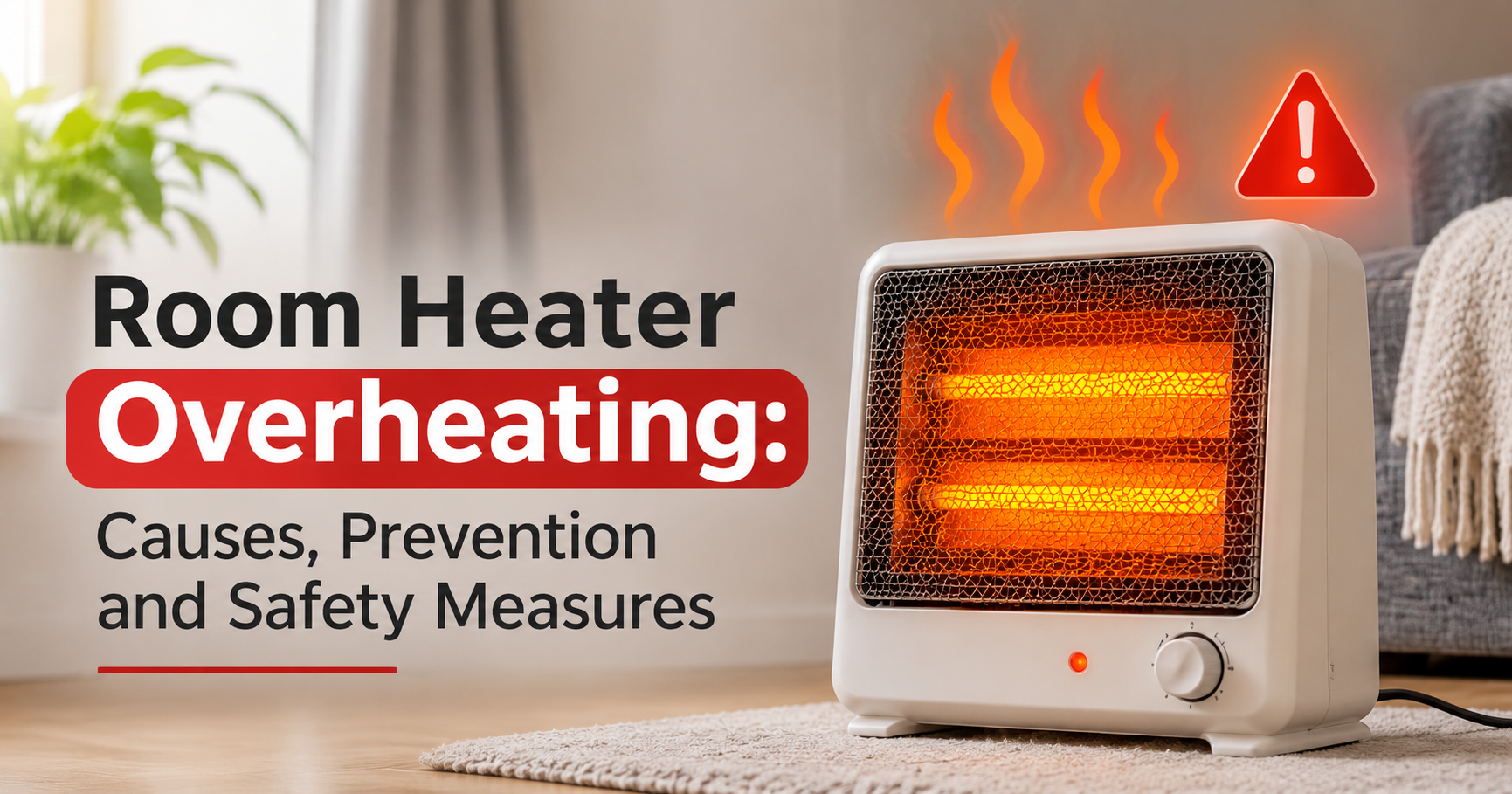
A room heater is supposed to make your space comfortable, not make you nervous. If your heater is getting too hot, shutting off by itself, or giving off a strange smell, it is sending you a message. Overheating is one of the most common heater problems, and it is also one of the most serious, because the same heat that warms your room can damage the heater, its cord and the things around it.
This guide explains what overheating really means, how to recognize the warning signs, why it happens, what to do right away, and how to prevent it. You will also find practical buying tips for choosing a safer heater next time.
Quick Safety Answer
If your heater smells like burning, has a casing or plug that is too hot to touch, or shows sparks, switch it off, unplug it once it is safe to do so, and stop using it until the cause is found and fixed.
What Does “Overheating” Mean for a Room Heater?
Every heater gets hot. That is its job. Overheating means the heater, or a part of it, is getting hotter than it was designed to be. Heaters are built with a thermostat and an overheat protection device so that they switch off before temperatures reach a dangerous level. When a heater overheats, one of two things has usually gone wrong: heat is not escaping the way it should, or the controls meant to limit the heat are not working properly.
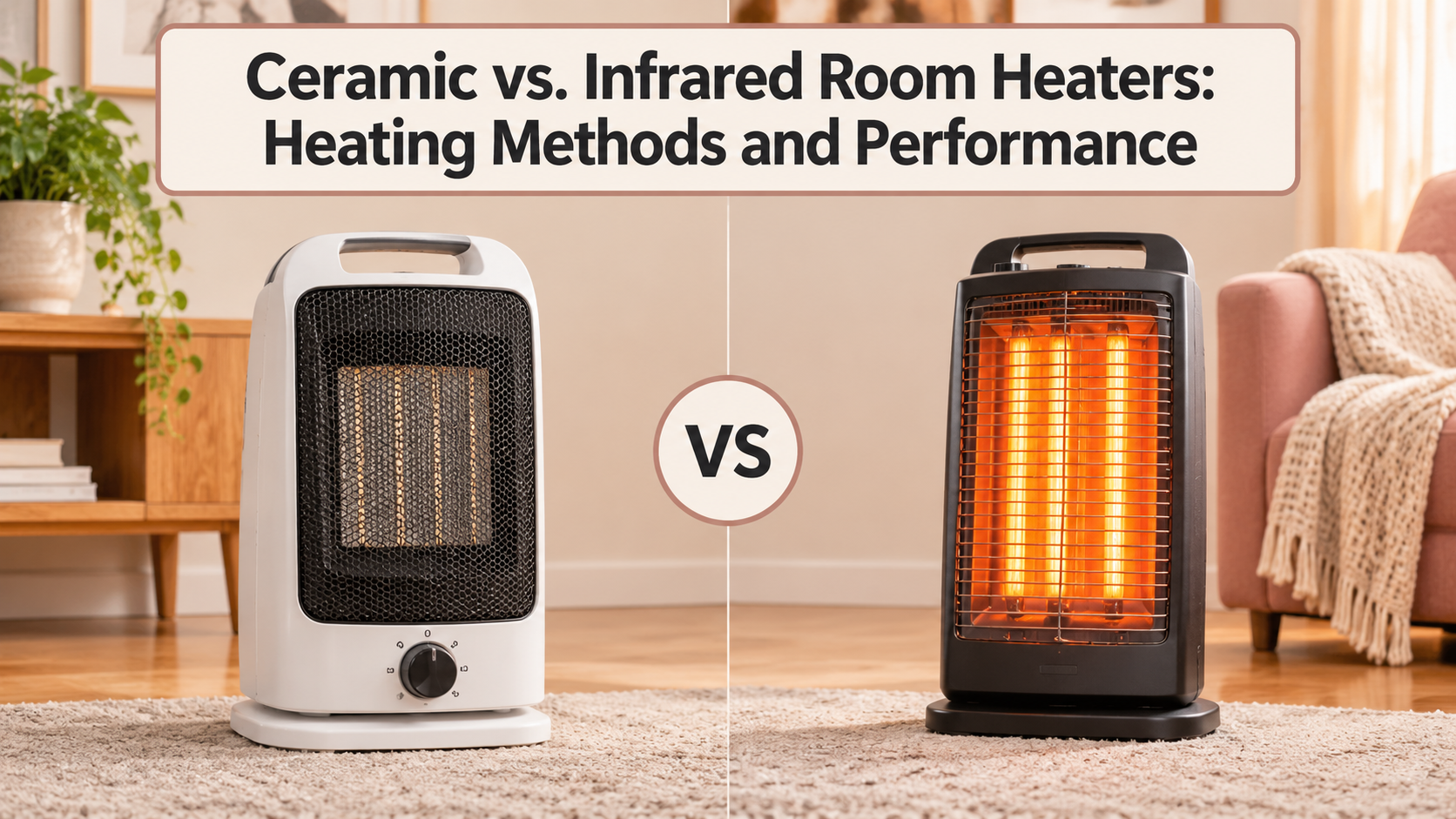
It helps to know what is normal for your type of heater. A radiant heater has a very hot element on purpose. A fan heater blows hot air from a warm outlet. An oil-filled radiator feels hot on the fins. The problem begins when the body, the cord, the plug or the surrounding area becomes hotter than you would expect, or when the heater keeps switching itself off.
Warning Signs of an Overheating Room Heater
Overheating rarely happens without clues. Learning to spot them early can protect your heater and your home.
- Burning or plastic smell: A light dusty smell on first use is common, but a strong or lasting burning smell is not.
- Very hot casing: The outer body should be warm or hot depending on the type, but not so hot that you cannot briefly touch it.
- Repeated shutdowns: If the heater turns off and on again and again, the overheat protection is probably activating.
- Hot plug, socket or cord: A plug that feels very warm, looks discolored or smells odd points to an electrical heat problem.
- Sparks, crackling or flickering lights: These suggest a loose connection or damaged wiring.
- Yellowing or melted plastic: Heat damage is already happening.
- Weak, noisy or stopped fan: In fan heaters, poor airflow causes heat to build up inside.
- Tripping circuit breaker: The heater or the circuit is overloaded.
Common Causes of Room Heater Overheating
1. Blocked Air Vents and Grilles
Heaters need airflow to release heat safely. When the intake or outlet is blocked by furniture, a wall, a towel or a pile of clothes, heat builds up inside the unit. This is the most common cause and the easiest to prevent.
2. Dust and Lint Build-Up
Dust, pet hair and lint collect on heating elements, fan blades and inside vents over time. This dust can trap heat, reduce airflow and create the burning smell many people notice when they switch on a heater after months of storage. In heavy cases, built-up dust can overheat and become a fire hazard.
3. Faulty Thermostat
The thermostat tells the heater when to stop heating. If it fails, the heater may run at full power continuously, so the room and the heater keep getting hotter. A heater that never seems to cycle off even in a warm room may have a thermostat problem.
4. Failed or Slow Fan
In fan heaters, the fan moves heat away from the element. If the fan motor is worn, clogged with dust or has failed, the element can overheat quickly. Unusual noises, weak airflow and frequent shutdowns are typical symptoms.
5. Faulty Overheat or Tip-Over Protection
Most modern heaters include safety devices that cut power if the unit gets too hot or falls over. If those parts are damaged or worn out, the heater loses its last line of defense. This is why a heater that has shown any sign of overheating should not be used until it has been checked.
6. Poor Placement
Placing a heater too close to curtains, beds, sofas, clothes or walls reflects heat back toward the unit and keeps surrounding materials dangerously warm. Heaters placed on soft surfaces such as carpet or bedding can also tip, block their own base vents or heat the surface underneath.
7. Overloaded Socket or Unsuitable Extension Cord
Room heaters draw a lot of power. A thin, long or low-quality extension cord, a multi-plug adapter or a socket shared with other devices can heat up even if the heater itself is fine. A warm plug or cord is a serious warning sign.
8. Using the Heater Non-Stop in a Large or Drafty Room
A heater that is too small for the room, or a room that loses heat through gaps and open doors, will run at full power for hours. Long continuous use adds stress to the heating element, thermostat and wiring.
9. Age and Wear
Over the years, internal wiring, connectors, switches and insulation wear out. An old heater may have weakened safety features even if it still seems to work.
What to Do Immediately If Your Heater Is Overheating
- Turn it off using the power switch.
- Unplug it from the wall, but only if the plug and socket are safe to touch. If they are very hot, melted or sparking, turn off power at the main switch or circuit breaker instead.
- Move flammable items away such as curtains, paper and fabric.
- Let it cool completely before touching, moving or cleaning it.
- Ventilate the room if there is a burning smell.
- Do not turn it back on until you have found and fixed the cause.
Emergency Note
If you see flames or heavy smoke, leave the room, keep everyone away and call your local emergency number. Do not use water on an electrical heater fire.
How to Safely Fix an Overheating Room Heater
Step 1: Check Placement and Airflow
Move the heater to a flat, hard surface with open space on all sides. Make sure nothing touches or covers the vents. Many overheating cases stop after this simple change.
Step 2: Clean the Heater
With the heater unplugged and fully cool, remove loose dust from the grilles and vents using a soft brush or a vacuum with a brush attachment. Wipe the outside with a dry or slightly damp cloth. Do not use water inside the unit, and do not use sprays or liquid cleaners on electrical parts. Let it dry fully before using it again.
Step 3: Inspect the Plug, Cord and Socket
Look for discoloration, melted plastic, cracks, bent pins or a loose fit. A damaged cord or plug means the heater should not be used. Replace it through a qualified technician or the manufacturer rather than taping it.
Step 4: Plug Directly Into a Wall Socket
Remove extension cords and multi-plug adapters. Use a wall socket that is in good condition and is not shared with other high-power appliances.
Step 5: Test Carefully
After cleaning and fixing placement, run the heater on a low setting for a short time while you stay in the room and watch for smells, noises and abnormal heat. If the problem returns, stop using it.
Step 6: Get Professional Help for Internal Faults
If the thermostat, fan motor, thermal fuse, wiring or heating element is suspected, do not open the heater yourself. A qualified technician should inspect and repair it.
Where to Place Your Room Heater
Placement is one of the easiest ways to prevent overheating. A common safety guideline is to keep at least about one metre (three feet) of clear space around a heater.
- Place the heater on a flat, stable, hard surface.
- Keep it away from beds, sofas, curtains, clothes and papers.
- Never cover the heater or use it to dry clothes.
- Keep children and pets away from it.
- Do not use it in a very small, closed space with no airflow.
- Avoid damp areas such as bathrooms unless the heater is specifically designed for that use.
Which Heater Types Overheat Most Easily?
Any heater can overheat if it is misused or damaged, but different designs carry different risks.
| Heater type | How it heats | Overheating risk | Most common trigger |
|---|---|---|---|
| Oil-filled radiator | Heats oil that warms the metal fins | Low to moderate | Blocked fins, covered with clothes, extension cord overload |
| Ceramic fan heater | Fan blows air across a hot ceramic element | Moderate | Dust on the element, failed fan, blocked intake grille |
| Radiant (bar or quartz) | Glowing element radiates heat directly | High | Too close to furniture, curtains or bedding |
| Convection panel heater | Warms air that rises through the unit | Low to moderate | Blocked top or bottom vents, faulty thermostat |
Should You Repair or Replace an Overheating Heater?
Repair may make sense if:
- The problem was blocked vents or dust, and cleaning fixed it.
- A technician has confirmed a single faulty part such as a fan or thermostat.
- The heater is fairly new, undamaged and the repair cost is reasonable.
Replace it if:
- The casing, plug or cord is melted, yellowed or cracked.
- Overheating comes back after cleaning and correct placement.
- Tip-over or overheat protection is not working.
- The heater is very old, or repair costs are close to the price of a new one.
A cheap repair is not worth it if it leaves safety features unreliable. Your home and family are worth more than the heater.
How to Prevent Room Heater Overheating
- Clean vents and grilles regularly during the heating season.
- Give the heater open space on all sides.
- Use it on a flat, hard surface.
- Plug it directly into a wall socket.
- Choose a heater that matches your room size.
- Use a thermostat and timer where available instead of running it non-stop.
- Turn it off when you leave the room or go to sleep.
- Inspect the cord and plug at the start of each season.
- Store it in a dry, dust-free place when not in use.
What to Look For When Buying a Safer Room Heater
If your current heater keeps overheating, replacing it with a better-protected model is a smart move. These features make a real difference:
- Overheat protection: Automatically cuts power if internal temperature gets too high.
- Tip-over protection: Switches the heater off if it falls or is knocked over.
- Adjustable thermostat: Maintains the room temperature without running at full power all the time.
- Timer: Helps you avoid leaving it on for too long.
- Cool-touch or well-insulated housing: Reduces burn risk, especially around children and pets.
- Heavy-duty cord and plug: A thick, good-quality cord handles high power better.
- Safety certification marks: Look for recognized safety marks that apply in your country.
- Suitable wattage: Match heater power to your room size rather than choosing the highest wattage.
A heater with proper safety features may cost a little more, but it protects your home, which is worth far more than the price difference.
Frequently Asked Questions
Is it normal for a room heater to feel very hot?
Some heat is normal. Radiant and fan heaters have hot outlets or grilles by design. What is not normal is a casing, plug or cord that becomes too hot to touch, a burning smell, or repeated automatic shutdowns.
Why does my room heater keep shutting off by itself?
Most modern heaters have an overheat protection cut-off. If it keeps tripping, the likely causes are blocked vents, a dusty element, a slow fan, or placing the heater in a tight space. Clean it and give it airflow. If it still trips, stop using it and get it checked.
Can I leave a room heater on all night?
It is safer not to. Even a healthy heater can fail, and sleeping removes your ability to notice early warning signs. If you must use one, choose a model with a thermostat, tip-over protection and a timer, and keep the area around it completely clear.
Is an overheating heater dangerous to ignore?
Yes. Overheating can melt plastic parts, damage wiring and set nearby materials on fire. Treat any persistent overheating as a stop-using-it problem, not a quirk.
Should I use an extension cord with a room heater?
Avoid it whenever possible. Heaters draw a lot of current, and a thin or long cord can heat up. Plug the heater straight into a wall socket that is in good condition and not shared with other high-power devices.
Can I repair an overheating heater myself?
Cleaning dust from the outside vents and grilles is fine when the unit is unplugged and cool. Anything involving the thermostat, thermal fuse, wiring or heating element should be handled by a qualified technician.
When should I replace my heater instead of repairing it?
Replace it if the casing is melted or yellowed, the cord or plug is damaged, safety switches have failed, or the repair would cost close to the price of a new, safer model.
Final Thoughts
Room heater overheating is rarely random. Blocked airflow, dust, poor placement, overloaded sockets and failing safety parts are behind most cases, and many of them can be prevented with simple habits. Keep your heater clean, give it space, plug it straight into the wall and listen to the warning signs.
If a heater keeps overheating, shows a burning smell or has damaged parts, do not take chances. Stop using it, get it checked by a professional or replace it with a model that has proper safety features. A warm, comfortable room is only worth it when it is also a safe one.