




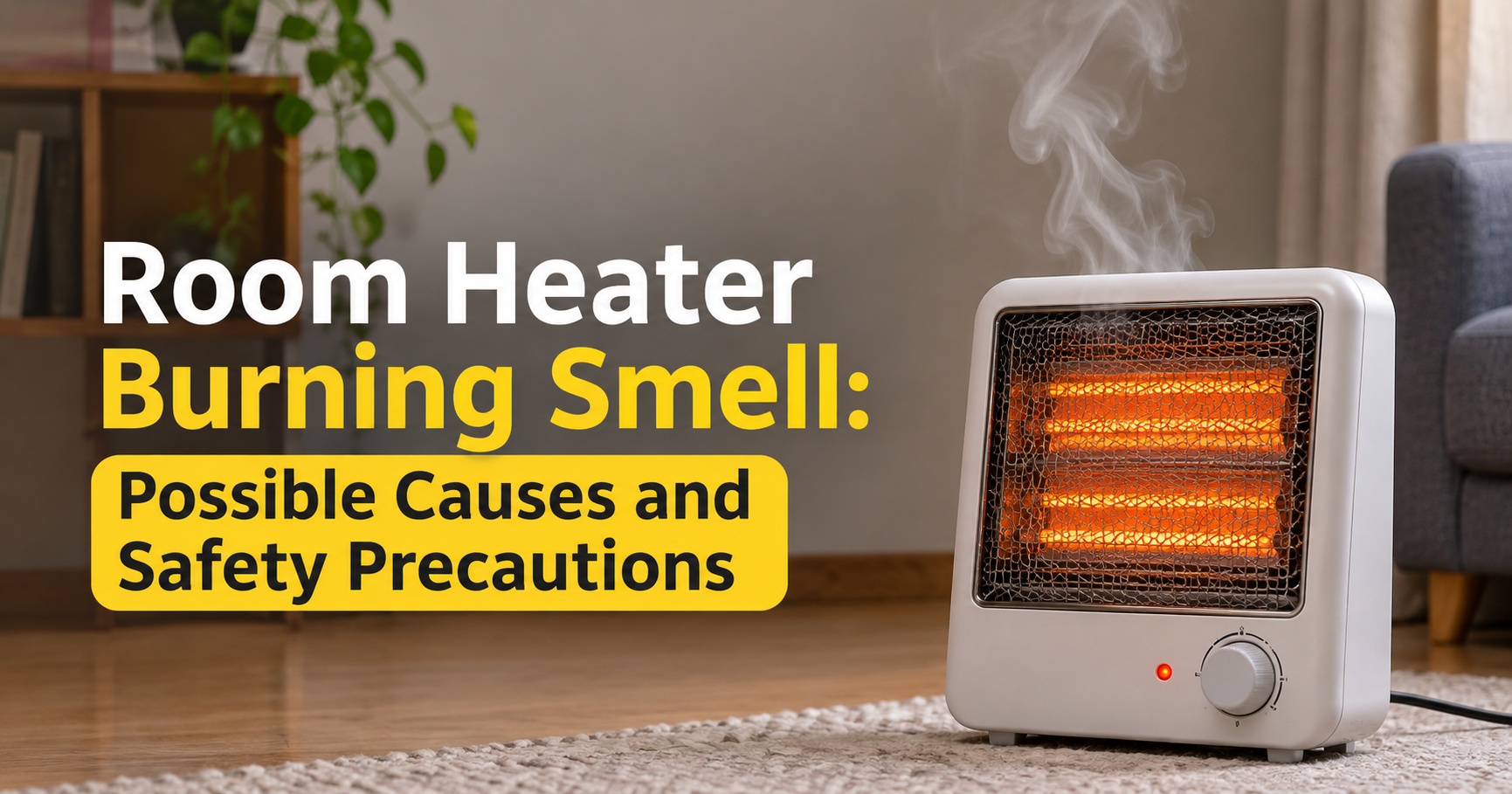
Room Heater Burning Smell: Causes, Safety Risks and How to Fix It

You switch on your room heater on a cold evening and a few minutes later a strange burning smell fills the room. It is a worrying moment. Is the heater about to catch fire? Is it safe to keep running? Should you unplug it right now?
The honest answer is: it depends on the type of smell, how long it lasts and whether there are other warning signs. Sometimes a room heater burning smell is nothing more than dust burning off the heating element after months in storage. Other times it points to melting wiring, an overheating motor or a blocked vent, and continuing to use the heater can be dangerous.
This guide explains every common cause, how to tell a harmless smell from a risky one, what to do step by step, how to clean your heater properly and how to prevent the problem from coming back.
Quick Answer: Is a Burning Smell From a Room Heater Normal?
A light, dusty or toasty smell that appears when you first use a heater, or the first time you use it after a long break, is common and usually harmless. It should fade within about 15 to 30 minutes in a ventilated room.
A strong, sharp or chemical smell, a smell of melting plastic or burning rubber, a fishy or electrical odour, visible smoke or any smell that grows stronger over time is not normal. In those cases, switch the heater off, unplug it and stop using it until it has been inspected.

What Does a Burning Smell From a Heater Mean? Smell Guide
Different smells point to different problems. Matching the smell you notice to the likely cause helps you decide what to do next.
| What it smells like | Most likely cause | Risk level | What to do |
|---|---|---|---|
| Dusty, toasty, like warm toast or hot dust | Dust and lint burning on the heating element after storage | Low | Ventilate the room and let it burn off for 15 to 30 minutes, then clean the heater |
| Hot metal, paint or chemical (new heater) | Protective coating or manufacturing residue burning off | Low | Run it on low in a ventilated room for the first few sessions |
| Burning plastic or melting insulation | Overheated wiring, plug, switch or internal plastic parts | High | Switch off, unplug and stop using. Have it checked or replace it |
| Burning rubber or hot varnish | Failing fan motor, worn bearings or belt friction | Medium to high | Stop using and book a repair or replace the unit |
| Fishy, sharp or ozone-like | Overheating electrical components or a failing circuit | High | Stop using immediately. Do not switch it on again |
| Oily or greasy burning smell (oil-filled radiator) | Oil leak onto a hot surface or overheating oil | High | Unplug, let it cool, and do not use it. Seek professional help |
| Smell of gas (gas or kerosene heater) | Gas leak or poor combustion | Very high | Turn off the supply, ventilate, leave the room and seek help |
Top 8 Causes of a Room Heater Burning Smell

1. Dust and Lint on the Heating Element
This is the most common reason of all. While a heater sits in a cupboard or in a corner, a thin layer of dust, lint, pet hair and tiny fibres settles on the element, the grille and the inside of the casing. When you switch the heater on, that debris heats up and burns, creating a smell people often compare to burnt toast or hot dust.
If the smell is mild and disappears quickly, you can treat it as normal. If it returns every time you use the heater, the build-up is probably heavy and the heater needs a proper clean.
2. Manufacturing Residue and Protective Coatings
A brand-new heater often smells the first few times you use it. Oils, coatings and residues left from manufacturing burn off as the element reaches full temperature. This usually lasts a few hours of total use and then stops. A new heater that keeps smelling strongly after several sessions, or one that produces smoke, should not be ignored.
3. Blocked Vents and Poor Airflow
Room heaters need space around them to release heat. Curtains, bedding, clothes, furniture or a blanket thrown over the heater trap the heat. The casing and internal parts then run hotter than designed, which can cause plastic to smell, paint to bake and safety cut-outs to trip. Blocked air intakes and dirty grilles have the same effect.
4. Clogged or Dirty Filter
Many fan heaters have an air intake filter or mesh. When it is clogged, the fan cannot pull in enough air, so the element and the motor overheat. Dirty filters also collect dust that then burns, adding to the smell.
5. Worn Fan Motor or Bearings
In fan heaters and ceramic fan heaters, an ageing motor can overheat as the bearings wear out. The smell is often described as hot rubber, hot varnish or an electrical burning odour. You may also hear squealing, grinding or a rattling noise. A failing motor is a repair or replacement issue, not something to run through.
6. Damaged Cord, Plug or Loose Connections
A loose plug, a worn socket or a damaged cord creates resistance, and resistance creates heat. A plug that feels hot, discolouration on the pins or a cord that has become soft or deformed are serious warning signs. The smell is typically plastic or a sharp electrical odour. This is one of the most dangerous causes because it can lead to a fire at the wall.
7. Objects, Fabric or Pet Hair Touching the Element
A sock, a scrap of paper, a strand of fabric or a clump of pet hair that falls onto or touches the hot element will scorch quickly and produce a sharp burning smell. Check the heater with the power off and remove anything lodged in or against it.
8. Faulty Thermostat or Overheating Internal Parts
If the thermostat or temperature limiter fails, the heater may keep heating beyond its normal range. That causes internal plastics, wiring insulation and other parts to overheat and smell. If your heater feels unusually hot on the outside, switches itself off repeatedly, or never seems to cycle off, treat it as a fault and stop using it.
Important note on gas and kerosene heaters
If you use a gas or kerosene heater, a burning smell can mean incomplete combustion. These heaters can release carbon monoxide, which has no smell and can cause headaches, dizziness and nausea. Never run them in a closed bedroom. Turn the heater off, open windows and doors, move everyone into fresh air and get the heater checked before using it again.
When You Should Stop Using the Heater Immediately
Do not wait to see if the smell goes away if you notice any of the following:
- A smell of melting plastic, burning rubber or burning wires
- A fishy or sharp electrical odour
- Visible smoke coming from the heater, plug or socket
- Sparks, crackling or popping sounds
- A plug, cord or wall socket that feels hot or looks discoloured
- Melted, warped or blackened plastic on the casing
- The heater trips the breaker or fuse repeatedly
- A smell that becomes stronger the longer the heater runs
If you see flames or heavy smoke, do not try to fight the fire yourself. Leave the room, get everyone out and call your local emergency number.
What to Do Right Away When You Smell Burning
- Switch the heater off using its power switch.
- Unplug it from the wall only if the plug and socket are safe to touch. If the plug feels very hot or you see smoke at the socket, switch off power at the main board or breaker instead.
- Open windows and doors to let fresh air in and the smell out.
- Let the heater cool down completely for at least 30 minutes before touching or moving it.
- Inspect it for dust, trapped objects, damage to the cord or plug and blocked vents.
- Clean it if the cause looks like dust or lint (see the next section).
- Test it once, on a low setting, in a ventilated room while you stay in the room and watch it.
If the smell comes back, even faintly, stop using the heater and have it checked.
How to Clean a Room Heater Safely
Regular cleaning solves most dust-related smells and also helps the heater run more efficiently. Always clean it only when it is unplugged and fully cool.

What You Will Need
- A vacuum cleaner with a soft brush attachment
- A dry, soft cloth and a slightly damp cloth
- A small, soft brush such as a clean paintbrush
- A screwdriver (only if your manual allows opening the casing)
Step-by-Step Cleaning
- Unplug and cool. Disconnect the heater from the wall and wait at least 30 minutes.
- Vacuum the vents. Use the brush attachment to remove dust from the front grille, the back intake and the sides.
- Use a soft brush. Gently loosen dust between the slats and around the element. Do not bend or press the element.
- Wipe the body. Use a slightly damp cloth on the outside casing only. Never spray cleaner or pour water into the heater.
- Clean or replace the filter if your model has a removable one, following the manual.
- Let it dry fully. Leave it for about an hour so no moisture remains.
- Run a test. Switch it on low in a ventilated room for 15 to 20 minutes and check for smell, smoke or unusual noise.
Do not do this
Do not use water sprays, harsh chemicals or solvent cleaners on or inside the heater, and do not open sealed oil-filled radiators. If your heater needs internal repairs, use a qualified technician.
How to Handle the Burning Smell From a New Heater
If your heater is new and the smell is mild, you can usually help the burn-off process safely:
- Place the heater on a flat, hard surface away from furniture and curtains.
- Open a window or door to keep fresh air moving.
- Run it on a medium or low setting for 20 to 30 minutes while you stay in the room.
- Switch it off and let it cool, then repeat once or twice if a mild smell remains.
People with asthma, children, elderly family members and pets are better off in another room during this first burn-off. If the smell stays strong, turns chemical or you see smoke, stop and contact the seller or manufacturer.
Burning Smell by Heater Type
Every heater type behaves a little differently. Here is what to expect from the most common ones.
| Heater type | Common smell causes | Typical safety features | Extra tip |
|---|---|---|---|
| Fan heater | Dust on element, dirty intake, worn fan motor | Tip-over switch, overheat cut-off | Clean the intake regularly |
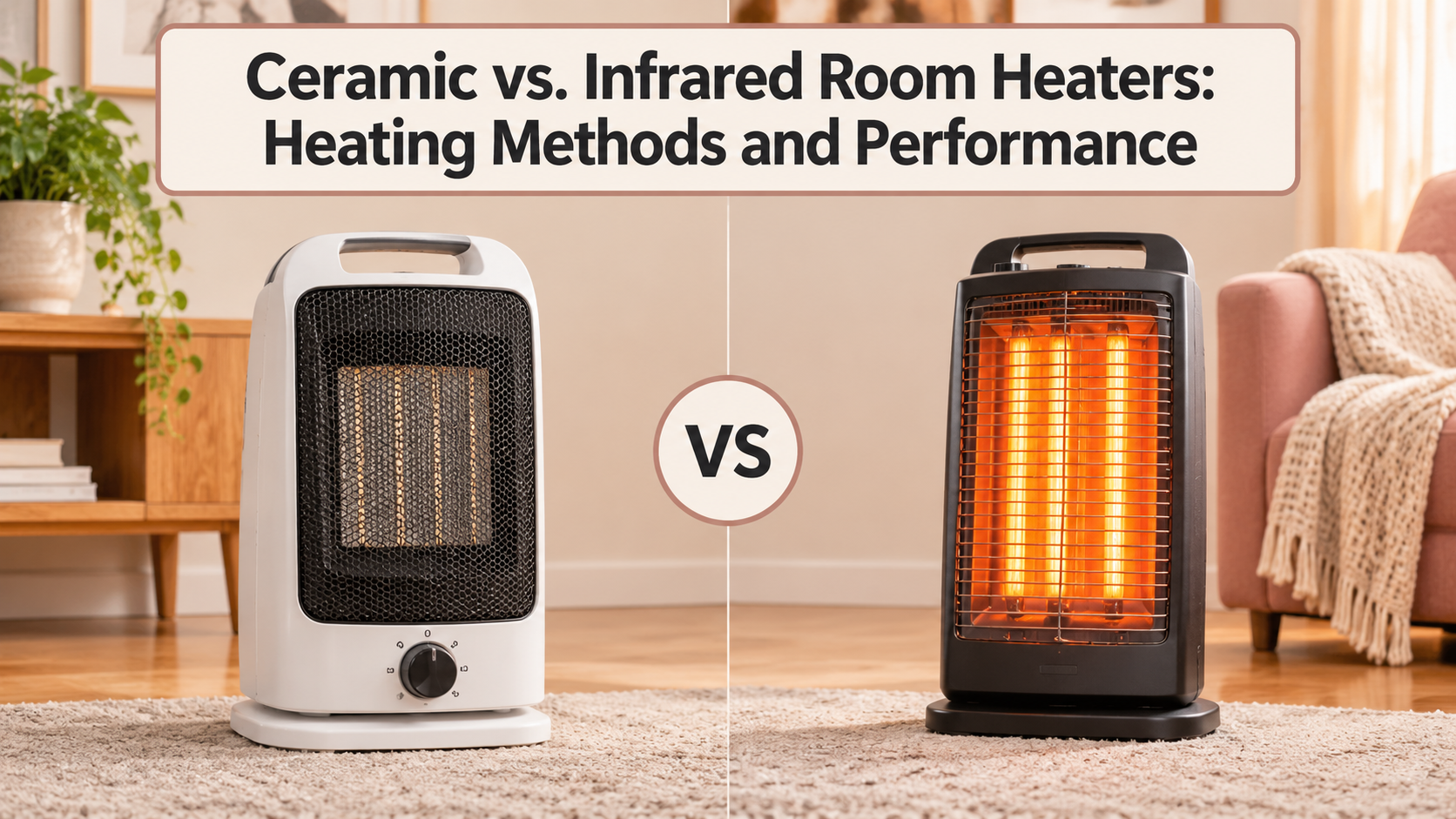
| Ceramic heater | Dust, blocked airflow, motor wear | Self-regulating element, tip-over switch | Often cleaner burning but still needs vent cleaning |
| Oil-filled radiator | Dust on the fins, leaked oil on a hot surface | Thermal cut-off, thermostat | Never open the sealed unit. Oil smell means stop using it |
| Halogen or infrared heater | Dust and fingerprints on the tube, objects too close | Tip-over switch, guard grille | Do not touch the tube and keep fabrics well clear |
| Quartz or rod heater | Dust on the rods, dirty reflectors | Guard, tip-over switch | Wipe the reflector gently when cool |
| Gas or kerosene heater | Poor combustion, dirty burner, blocked flue | Oxygen sensor, flame failure device | Use only in well-ventilated spaces and never while sleeping |
How to Prevent a Room Heater Burning Smell
Prevention is simple and takes only a few minutes a month. These habits protect your heater, your home and your health.

- Clean before the cold season. Vacuum the vents and wipe the casing before first use each winter.
- Keep a safe distance. Leave at least 3 feet (about 1 metre) of clear space around the heater, away from curtains, bedding, sofas, paper and clothing.
- Plug directly into the wall. Heaters draw a lot of power, so avoid extension cords and power strips.
- Inspect the cord and plug. Look for cracks, heat marks, discolouration or a plug that feels warm after use.
- Use a flat, stable surface. Never place a heater on a soft rug edge, bed or unstable table.
- Never leave it unattended. Switch the heater off when you sleep or leave the room, even if it has a timer or tip-over protection.
- Store it properly. Cover it or keep it in its box in a dry place during summer to reduce dust build-up.
- Do not dry clothes on it. Draping laundry over a heater blocks airflow and is a common fire risk.
Repair or Replace? How to Decide
Not every smelly heater needs to be thrown away, but safety comes first.
Cleaning is usually enough when:
- The smell is mild, dusty and fades quickly
- There is no smoke, sparks or odd noise
- The plug, cord and socket look and feel normal
Consider repair or replacement when:
- The smell returns after cleaning
- You notice plastic, rubber, fishy or electrical odours
- The casing, cord or plug is damaged, warped or discoloured
- The heater is very old, has no safety cut-offs or has been dropped
- The cost of repair is close to the price of a new, safer model
As a rule of thumb, if the problem involves wiring, a plug, a motor or the thermostat, it is safer to replace the heater or have a qualified technician look at it than to experiment yourself.
What to Look for in a Safer Room Heater
If you are replacing your heater, choosing a model with proper safety features reduces the chance of burning smells and accidents. Consider these points before you buy:
- Tip-over protection: automatically switches the heater off if it is knocked over.
- Overheat protection: a thermal cut-off that shuts the heater down if it gets too hot.
- Adjustable thermostat: keeps the room at your chosen temperature without running at full power constantly.
- Cool-touch housing: reduces burn risk, especially in homes with children and pets.
- Removable, washable filter: makes regular cleaning faster and easier.
- Correct size for the room: as a rough guide, many people need about 10 watts per square foot of floor area. A 1500 watt heater suits a room of roughly 150 square feet. An undersized heater runs flat out and wears faster.
- Recognised safety certification: look for a mark from a trusted safety testing body on the product and the box.
- Good build quality: a firm plug, thick cord and solid casing are signs of a better-made heater.
Frequently Asked Questions
Is it normal for a room heater to smell like burning when first turned on?
Yes, a mild burning or dusty smell is normal when you use a heater for the first time or after months of storage. It happens because dust and residue burn off the element. The smell should fade within 15 to 30 minutes. A strong or chemical smell, or any smoke, is not normal.
How long does a new heater smell last?
Most new heaters stop smelling after a few hours of total use. If a strong smell continues after several sessions, stop using the heater and contact the seller or manufacturer.
Can a burning smell from a heater make you sick?
Mild dust burning rarely causes problems, but it can irritate the nose, throat and eyes, especially for people with asthma or allergies. Fumes from overheated plastic or insulation can be harmful. Ventilate the room and avoid breathing the fumes. With gas or kerosene heaters, carbon monoxide poisoning is a serious risk, so never ignore smells or symptoms such as headache, dizziness or nausea.
Why does my heater smell like burning plastic?
A plastic smell usually means plastic parts, wire insulation or the plug are overheating, or a foreign object has melted on the element. Switch off and unplug the heater and do not use it again until a qualified person has inspected it.
Why does my heater smell like fish?
A fishy or sharp electrical smell is often linked to overheating electrical components or insulation. Treat it as a serious fault and stop using the heater immediately.
Should I keep running the heater to burn off the smell?
Only if the smell is mild, dusty and clearly fading, and only while you are present and the room is ventilated. If the smell is strong, chemical or gets worse, switch it off and investigate.
Can I leave a heater on overnight?
It is safest not to. Even heaters with tip-over and overheat protection can fail. Switch the heater off when you sleep or leave the room, and use warm bedding or a safer, regulated source of warmth instead.
How often should I clean my room heater?
Clean it before the start of the heating season and at least once a month while you use it regularly. Homes with pets, carpets or a lot of dust may need cleaning more often.
Final Thoughts
A room heater burning smell is not always an emergency, but it is always worth paying attention to. A light, dusty smell that fades quickly is normal. A strong, sharp, fishy, plastic or rubber smell, or any smoke or sparks, means the heater should be switched off and checked.
Clean your heater before every winter, keep it clear of anything flammable, plug it directly into the wall and never leave it running unattended. If you are ever unsure, choose safety: switch it off, let it cool and get it inspected or replaced. A few minutes of care can keep your home warm and safe all season.