






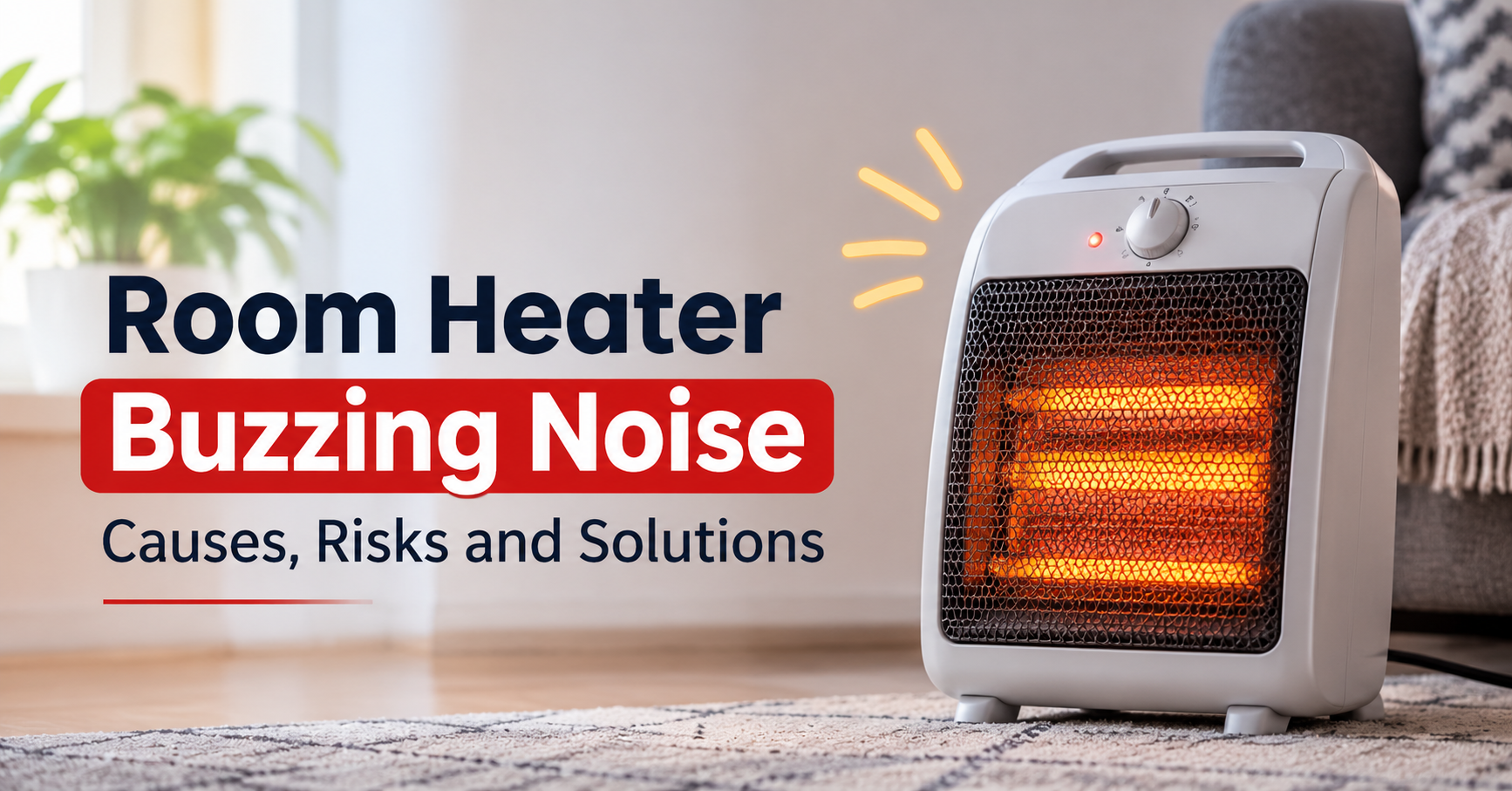
You switch on your room heater on a cold evening, expecting warmth and quiet. Instead, a steady buzzing noise starts to fill the room. It might be a faint hum you notice only when the TV is off, or a loud, vibrating drone that makes it impossible to relax. Either way, a buzzing room heater is a sign that something is worth checking.
The good news is that most buzzing noises come from simple, fixable causes such as a loose panel, dust on the fan, or an unstable surface. The less common causes, such as a failing electrical component or loose wiring, need more care. This guide explains why a room heater buzzes, how to find the exact cause, what you can safely fix at home, and when it is time to stop using the heater altogether.
- Is a buzzing noise normal?
- The most common causes of a buzzing room heater
- Buzzing causes by heater type
- Step-by-step: how to stop the buzzing
- Warning signs that mean “stop using it now”
- How to prevent heater noise
- Repair or replace?
- What to look for in a quieter heater
- Frequently asked questions
Is a Buzzing Noise From a Room Heater Normal?
A little sound is normal. Metal parts expand as they warm up, so you may hear soft ticking at start-up. Fan heaters produce a gentle whooshing sound, and a thermostat may make a small click when it switches on and off. Those sounds are expected.
A constant buzz, rattling hum, or a sound that is getting louder over time is different. It usually means a part is vibrating, a motor is struggling, or an electrical component is under stress. The sound itself is often your first clue, so listen carefully before you start troubleshooting.
| Sound | Usually means | Seriousness |
|---|---|---|
| Soft ticking or pinging while warming up or cooling down | Normal metal expansion and contraction | Normal |
| Steady low hum | Vibrating panel, loose screw, or normal transformer or relay hum | Usually minor |
| Rattling buzz that changes with fan speed | Loose fan blade, dust on the fan, or a worn motor bearing | Moderate |
| Loud grinding or squealing | Failing fan motor bearing | Moderate to high |
| Crackling, popping, or sizzling with a burning smell | Loose wiring, arcing, or damaged element | Dangerous: stop at once |
The Most Common Causes of a Buzzing Room Heater
1. Loose Panels, Screws, or Grilles
This is the simplest and most frequent cause. Heaters go through repeated heating and cooling cycles, and the metal casing expands and shrinks every time. Over months, screws can work loose and thin panels begin to vibrate against each other, producing a buzzing or rattling sound that gets louder when the fan or element is running.
2. Dust and Debris on the Fan or Inside the Heater
Dust collects quickly inside a heater that sits on the floor. If dust builds up unevenly on the fan blades, the fan loses its balance and wobbles, which creates a buzz or whirring vibration. Dust that lands on a hot heating element can also burn off with a faint sizzling or buzzing sound and a hot-dust smell. This is common at the start of winter, when a heater has been stored for months.
3. A Worn Fan Motor or Bearings
Fan heaters, ceramic heaters, and many convection models use a small motor to push air across the heating element. Over time, the bearings wear out or lose lubrication. The motor then produces a buzzing, humming, or grinding sound that often gets worse as the heater warms up. If the noise changes when you switch between fan speeds, the motor is a likely suspect.
4. Normal Electrical Hum From Transformers and Relays
Many heaters contain a small transformer, a relay, or electronic control board. These parts can produce a mild electrical hum as current passes through them, and the sound is sometimes more noticeable in a quiet room or at night. A faint, steady hum from the controls is usually harmless. A hum that grows louder, or one that comes with heat, a smell, or flickering lights, should not be ignored.
5. Unstable Surface or Tilted Position
A heater standing on an uneven floor, a thick rug, or a hard surface that amplifies vibration can sound much louder than it really is. Tile and wooden floors act like a speaker, carrying small vibrations through the whole room. A heater that is not level can also place stress on its stand, causing buzzing from the base.
6. A Problem With the Power Supply or Extension Cord
A damaged or low-quality extension cord, a worn wall socket, or a loose plug can cause electrical buzzing at the connection point. Room heaters draw a lot of power, and a poor connection creates resistance and heat. If the sound seems to come from the plug or socket rather than the heater body, this is a safety issue and needs immediate attention.
7. Air or Liquid Movement in Oil-Filled Radiators
Oil-filled radiator heaters are usually among the quietest, but they can make bubbling, gurgling, or humming sounds when the oil heats up and moves inside the fins. Mild sounds of this kind are normal. A loud buzz in an oil-filled heater more often comes from the thermostat, the control switch, or a loose casing rather than the oil itself.
8. Aging or Damaged Heating Elements and Wiring
As a heater ages, the heating element can become brittle or coated with residue, and internal wiring connections can loosen. A loose connection can arc, a tiny spark that produces a buzzing, crackling, or sizzling sound. This is the most serious cause on the list and needs professional inspection or replacement.
Buzzing Causes by Heater Type
Different heater designs tend to produce different kinds of noise. Knowing your heater type helps narrow down the cause faster.
| Heater type | Typical buzzing causes | Best first check |
|---|---|---|
| Fan heater / ceramic fan heater | Dusty or unbalanced fan, worn motor bearings, loose grille | Unplug, cool down, and clean the fan area |
| Oil-filled radiator | Loose casing or caster wheels, thermostat or switch hum, uneven floor | Check that the heater sits level and the casing is tight |
| Quartz / halogen / infrared heater | Loose reflector, dust burning on the tube, electrical hum from controls | Check the reflector and clean the tube once cool |
| Convector heater | Loose panels, metal expansion, relay hum | Tighten screws and check the surface |
| Heater with remote or digital display | Electronic control board or power supply hum | Test on a different outlet with no extension cord |
Step-by-Step: How to Stop a Room Heater From Buzzing
Work through these steps in order. Always begin with safety: switch the heater off, unplug it, and let it cool completely before you touch it or open any cover.
Step 1: Find Out Where the Sound Is Coming From
Turn the heater on, stand about a metre away, and listen. Is the noise coming from the top, the base, the front grille, or the plug? Then switch between fan speeds or heat settings. If the sound changes with the fan, the cause is probably the fan or motor. If it stays the same, look at the casing, the controls, or the surface.
Step 2: Check the Surface and Position
Move the heater to a flat, hard, level surface away from walls and furniture. If the buzzing disappears, the problem was vibration transferring through the floor or a nearby object. Try placing the heater on a firm, flat, heat-resistant mat. Never place a heater on a thick rug, bed, or sofa, because this is a fire hazard and can block the air intake.
Step 3: Tighten Loose Screws and Parts
With the heater unplugged and cool, check the visible screws on the casing, base, and grille, and tighten any loose ones with a suitable screwdriver. Press gently on the panels to see whether any move or rattle. Do not open sealed sections or remove internal covers unless the manufacturer’s manual says it is safe to do so.
Step 4: Clean Out Dust
Use a soft brush and a vacuum cleaner with a brush attachment to clean the air intake, the grille, and the visible fan area. Remove dust gently, without bending the fan blades or pushing debris deeper inside. Dust is one of the most common reasons for a buzzing heater, and cleaning it often removes both the noise and the burning smell.
Step 5: Test a Different Outlet Without an Extension Cord
Plug the heater directly into a wall socket that you know is in good condition. Avoid extension cords and multi-plug adapters, because heaters draw heavy current. If the buzzing stops, the original socket or cord had a poor connection. Inspect the plug and cord for discolouration, bent pins, or a loose fit.
Step 6: Check the Fan by Hand (Only When Unplugged)
If you can reach the fan safely without disassembling the heater, turn it gently by hand. It should spin freely and quietly. If it feels stiff, wobbles, rubs against the housing, or makes a scraping sound, the bearings or blades need attention. A light cleaning may help, but a fan motor that is clearly worn is usually best repaired or replaced by a technician.
Step 7: Decide What to Do Next
If the noise is gone, continue to use the heater but keep an eye on it for the next few days. If the buzzing remains, or you notice any warning sign from the next section, stop using the heater and arrange a repair or replacement.
Warning Signs That Mean “Stop Using It Now”
Most buzzing is harmless, but some combinations of symptoms point to an electrical or fire risk. Switch the heater off, unplug it, and stop using it if you notice any of the following, along with, or instead of, the buzzing:
- A burning or melting plastic smell that does not fade after a few minutes of use
- Crackling, popping, or sparking sounds from inside the heater or from the plug
- A very hot plug, socket, or power cord, or visible browning or discolouration
- The circuit breaker tripping or the lights flickering when the heater runs
- Smoke or visible sparks of any kind
- Damaged, frayed, or exposed wiring on the cord or plug
- A buzzing noise that is getting louder from one day to the next
A heater is a high-power appliance that runs for hours at a time. If you are unsure whether a noise is safe, do not keep using it “just to see”. Unplug it and get it checked. Do not try to repair internal wiring, the heating element, or control boards yourself unless you are a qualified technician.
How to Prevent Heater Noise
A little regular care keeps most heaters quiet and extends their working life.
- Clean before the season starts. Brush or vacuum dust from the grille and air intake before you use the heater for the first time each winter.
- Clean regularly while in use. A quick monthly wipe of the vents and grille prevents dust from building up on the fan and element.
- Place it on a flat, hard surface. Keep it away from thick carpets, soft furniture, and curtains.
- Plug directly into the wall. Avoid extension cords and adapters, which can overheat and hum.
- Store it carefully. At the end of winter, clean it, let it dry, wrap the cord loosely, and keep it in a dry place covered from dust.
- Do not use it as a dryer. Hanging clothes or towels over a heater blocks airflow and can cause overheating.
- Check the cord and plug now and then. Look for kinks, cracks, bent pins, or discolouration.
If you hear a mild buzz only in a silent bedroom at night, the heater may simply be loud for its design. Try a heater with a “quiet” or “night” mode, or place it further from the bed on a surface that does not carry vibration.
Repair or Replace? How to Decide
Whether to repair a buzzing heater depends on its age, its cause, and the cost.
- Repair makes sense when the cause is simple: a loose part, dust, a worn fan, or a faulty cord that can be replaced. The heater is relatively new or still under warranty, and the repair cost is a small fraction of a new heater.
- Replace it when the problem involves the heating element, internal wiring, or a control board, when the heater is many years old, or when the repair quote is close to the price of a new unit.
- Always replace it if there are signs of arcing, scorch marks, melted plastic, or repeated tripping of the circuit breaker.
If the heater is still under warranty, contact the manufacturer or seller first. Opening the case yourself can void the warranty, and a warranty claim is usually the cheapest solution.
What to Look For in a Quieter Room Heater
If your current heater is beyond saving, or you simply want a quieter one, these features make a real difference:
- Oil-filled radiators are generally among the quietest heater types because they have no fan. They heat more slowly but keep the room warm for longer once switched off.
- Heaters with a published noise level. Some manufacturers list the sound level in decibels. Lower numbers mean a quieter heater.
- A night or quiet mode. This reduces fan speed and power, which is useful for bedrooms and offices.
- A good thermostat. A reliable thermostat that switches smoothly keeps the room at a steady temperature instead of switching on and off loudly.
- Safety features. Look for tip-over protection and overheat protection, which switch the heater off if it falls or gets too hot.
- The right size for the room. A heater that is too small runs flat out all the time, which means more noise and more wear. Match the heater’s power to the size of your room.
- Sturdy construction. Heavier, well-built casings vibrate less than thin, lightweight panels.
- Warranty and easy-to-clean design. Removable grilles and accessible vents make regular cleaning much easier.
Frequently Asked Questions
Why is my room heater buzzing when it is turned on?
The most common reasons are loose casing parts, dust on the fan, an unstable surface, or a small hum from the transformer, relay, or controls. A hum that comes with a burning smell, sparks, or a hot plug points to an electrical fault.
Is it dangerous if my room heater buzzes?
Not always. A mild buzz from a loose panel or a dusty fan is usually harmless once fixed. It becomes dangerous when it comes with a burning smell, crackling, sparking, a hot plug, or a tripping circuit breaker. In those cases, stop using it immediately.
Why does my heater buzz only on one setting?
Different settings use different parts of the heater. A buzz on high heat may come from the relay or element under load, while a buzz that changes with the fan speed points to the fan or motor.
Can dust make a heater buzz?
Yes. Dust on the fan blades can unbalance them and cause vibration, and dust on the heating element can sizzle or hum as it burns off. Cleaning the heater when it is cool and unplugged often solves the problem.
Why is my oil-filled heater buzzing?
Soft gurgling or ticking as the oil heats is normal. A true buzzing is more likely from the thermostat, a control switch, or a loose casing than from the oil itself. Check that the heater is level and the casing is tight.
Is a humming heater normal at night?
A faint hum can be more noticeable in a quiet bedroom. If it is steady, does not change, and there are no smells or hot spots, it is often a normal electrical hum. If it is loud or getting worse, have the heater checked.
Can I open the heater to fix the buzzing myself?
You can safely do simple external checks, such as tightening visible screws and cleaning vents. Avoid opening sealed sections or touching internal wiring, the element, or control boards unless you are qualified. Doing so can be dangerous and may void the warranty.
Should I keep using a heater that buzzes?
If the noise is mild, goes away after cleaning or repositioning, and there are no warning signs, it is generally fine to continue while monitoring it. If the buzzing is loud, getting worse, or comes with any warning sign, stop using it.
Final Thoughts
A room heater that buzzes is annoying, but in most cases the cause is simple: a loose part, dust on the fan, a bad surface, or a mild electrical hum that is normal for the design. Start with the easy steps of unplugging the heater, moving it to a flat surface, tightening the screws, and cleaning the vents, and you will fix the problem more often than not.
Pay close attention to the warning signs. A burning smell, crackling, a hot plug, or a tripping breaker are not noises to live with. Unplug the heater, and get it inspected or replaced. A little caution costs far less than the damage a faulty heater can cause, and a good, well-maintained heater will keep your room warm and quiet for many winters.