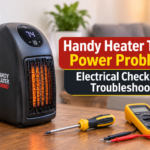
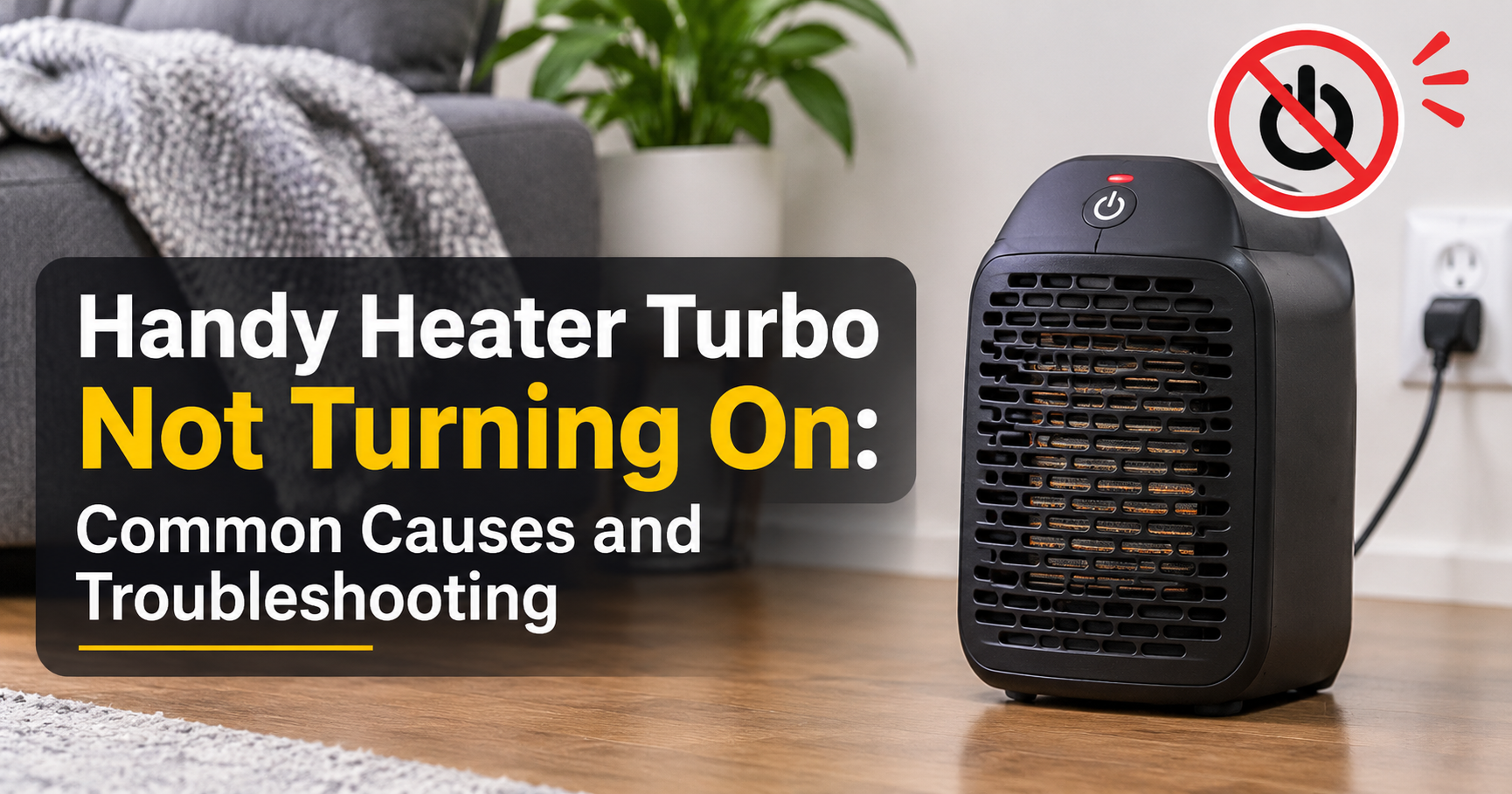
It is a cold evening, you plug in your Handy Heater Turbo, press the power button and nothing happens. No fan, no glow, no warm air. It is frustrating, but in most cases a Handy Heater Turbo that is not turning on has a simple, fixable cause: a dead outlet, a tripped safety feature, a blocked vent or a control that is not set the way the heater expects.
This guide walks you through every common reason a portable turbo heater refuses to start, how to test each one safely at home, and how to tell when the unit has reached the end of its life. Follow the steps in order. Most people solve the problem within the first five minutes.
Quick Answer
If your Handy Heater Turbo will not turn on, first unplug it and test the wall outlet with another device. Then inspect the plug and cord, make sure the heater is standing upright on a flat surface, clear dust from the vents, let it cool for 30 minutes so the overheat protection can reset, and finally set the power, thermostat and Turbo controls correctly. If it is still dead, stop using it and contact the seller.
What You Will Learn in This Guide
- How a turbo heater starts up and why it sometimes refuses to
- The six most common causes of a heater that will not power on
- A nine-step troubleshooting checklist you can do without tools
- Safety rules to follow while troubleshooting
- How to prevent the problem in the future
- When to repair, claim a warranty or replace the heater
- Frequently asked questions
How a Handy Heater Turbo Works (and Why It Matters)
A portable turbo heater is a small electric room heater that uses a heating element, usually ceramic, and a fan to push warm air into the room. The “Turbo” setting runs the fan and heating element at a higher output so the room warms faster. To start, the heater needs several things to be true at the same time:
- Electricity is reaching the plug. The outlet, breaker and cord must all be delivering power.
- The safety switches are satisfied. Most heaters have a tip-over switch and an overheat sensor that block startup if something looks unsafe.
- The controls are in a valid position. The power switch must be on, the thermostat must be calling for heat, and the mode selector must be fully seated in a setting.
- The internal parts are healthy. The thermal fuse, switch and heating element must all be intact.
If any one of these four conditions fails, the heater appears completely dead. Understanding that makes troubleshooting much easier, because you are simply checking each condition one at a time.
The 6 Most Common Reasons a Turbo Heater Will Not Turn On

1. A Dead Outlet or Tripped Breaker
This is the number one cause. Space heaters draw a lot of power, often around 1,500 watts on high settings, and that can trip a breaker or a ground fault (GFCI) outlet, especially if other appliances share the same circuit. When this happens the outlet goes silent and the heater looks broken even though it is perfectly fine.
2. A Damaged Plug or Power Cord
Bent or loose prongs, a plug that does not sit firmly in the outlet, or a cord with cracks or kinks can all interrupt the electrical connection. Heating appliances put stress on plugs, so wear shows up here first. A plug that feels warm or smells burnt is a serious warning sign.
3. The Tip-Over Safety Switch
Nearly every modern portable heater has a switch that cuts power when the unit is tilted or knocked over. If the heater is sitting on a thick carpet, a slightly sloped floor, a cushion or a wobbly surface, the switch may think the heater has fallen and refuse to start.
4. Overheat Protection That Has Tripped
If the vents are blocked by dust, pet hair, fabric or furniture, the internal temperature rises and the overheat protection shuts the heater down. Some units will not restart until they have cooled completely, and a few require unplugging for a period before they reset.
5. Controls Not Set Correctly
If the thermostat is set lower than the current room temperature, the heater may see no reason to run. A mode dial resting between two positions, or a power switch that is only half pressed, can also prevent startup. Remote controls with dead batteries can leave the heater unresponsive if the unit relies on them.
6. Internal Component Failure
Thermal fuses, switches, circuit boards and heating elements wear out over time. When one of these fails, the heater will not start no matter what you try. This is the cause to suspect only after everything else has been ruled out, and it is not a do-it-yourself repair.
Safety First: Before You Troubleshoot
Electric heaters carry real fire and shock risks, so a few rules apply to every step below.

- Always unplug the heater before inspecting the plug, cord or vents.
- Let it cool if it has been running recently. Metal and ceramic parts stay hot for a while.
- Never use an extension cord or power strip. High-wattage heaters can overheat these accessories.
- Never open the housing. Internal repairs on heating appliances should be left to qualified technicians or the manufacturer.
- Keep the area dry. Do not troubleshoot with wet hands or near standing water.
Step-by-Step: How to Fix a Handy Heater Turbo That Will Not Turn On

Step 1: Test the Wall Outlet
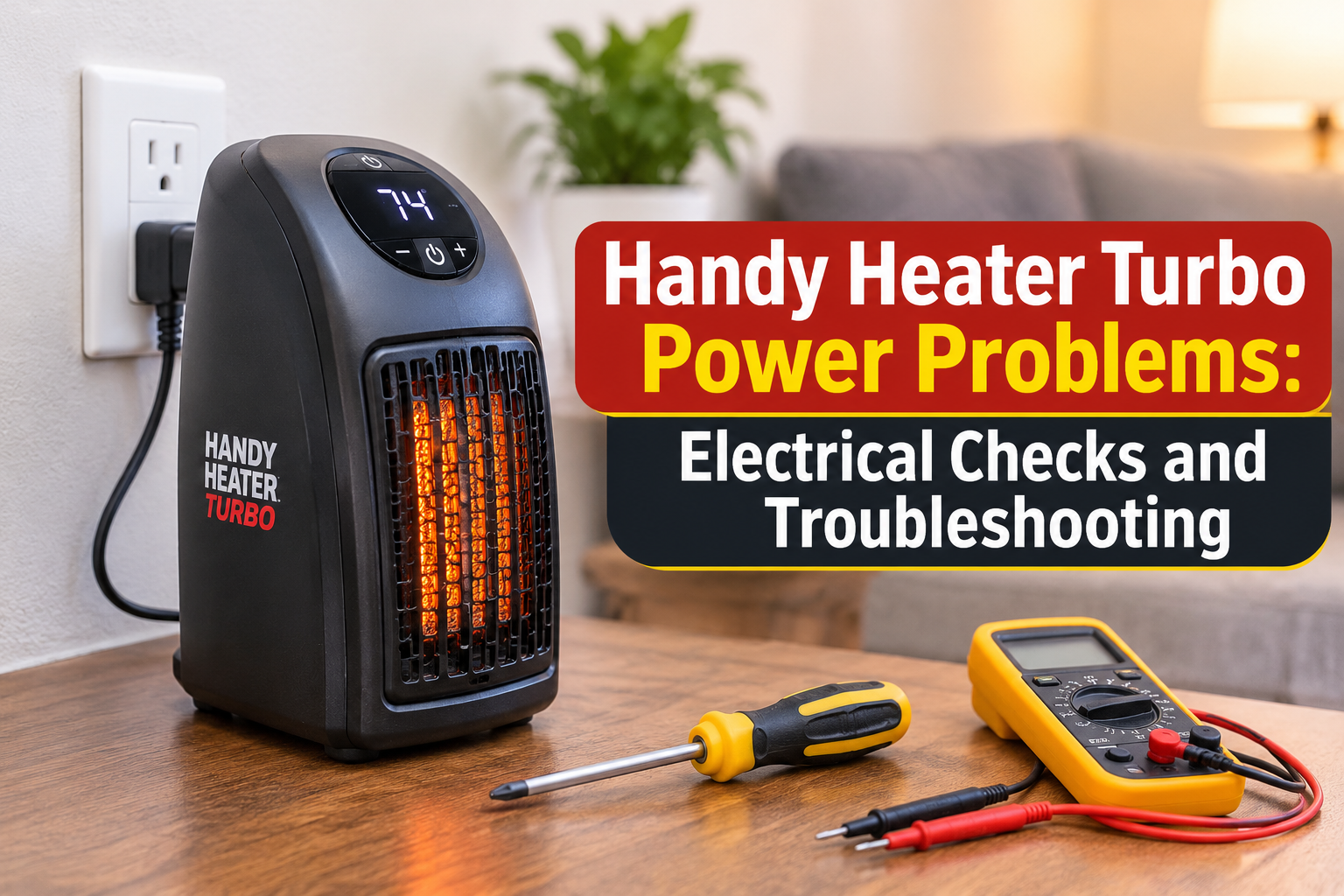
Plug a lamp, phone charger or hair dryer into the same outlet. If that device does not work either, the problem is the outlet, not the heater. Check your breaker panel for a tripped switch, and press the reset button if the outlet is a GFCI type (common in kitchens, bathrooms and garages). Try a different wall outlet in another room as well.
Step 2: Check the Circuit Load
If the breaker keeps tripping, something else on the same circuit may be using power at the same time, such as a microwave, kettle, air conditioner or hair dryer. Turn off or unplug other appliances on that circuit, then try the heater again. A heater should ideally have an outlet mostly to itself.
Step 3: Inspect the Plug and Power Cord
With the heater unplugged, look closely at the prongs and the entire length of the cord. You are looking for bent or discolored prongs, black scorch marks, melted plastic, cracked insulation or a cord that feels unusually stiff or hot after use. If you see any of these, do not use the heater again. A damaged cord is a fire hazard and the unit should be replaced or inspected by the manufacturer.
Step 4: Make Sure the Plug Fits Firmly
A loose outlet can hold the plug too weakly to make good contact. Push the plug in fully and check that it does not wiggle. If the plug slides out easily, try a different outlet. A worn outlet that does not grip the plug firmly should be repaired by an electrician.
Step 5: Place the Heater on a Flat, Hard Surface
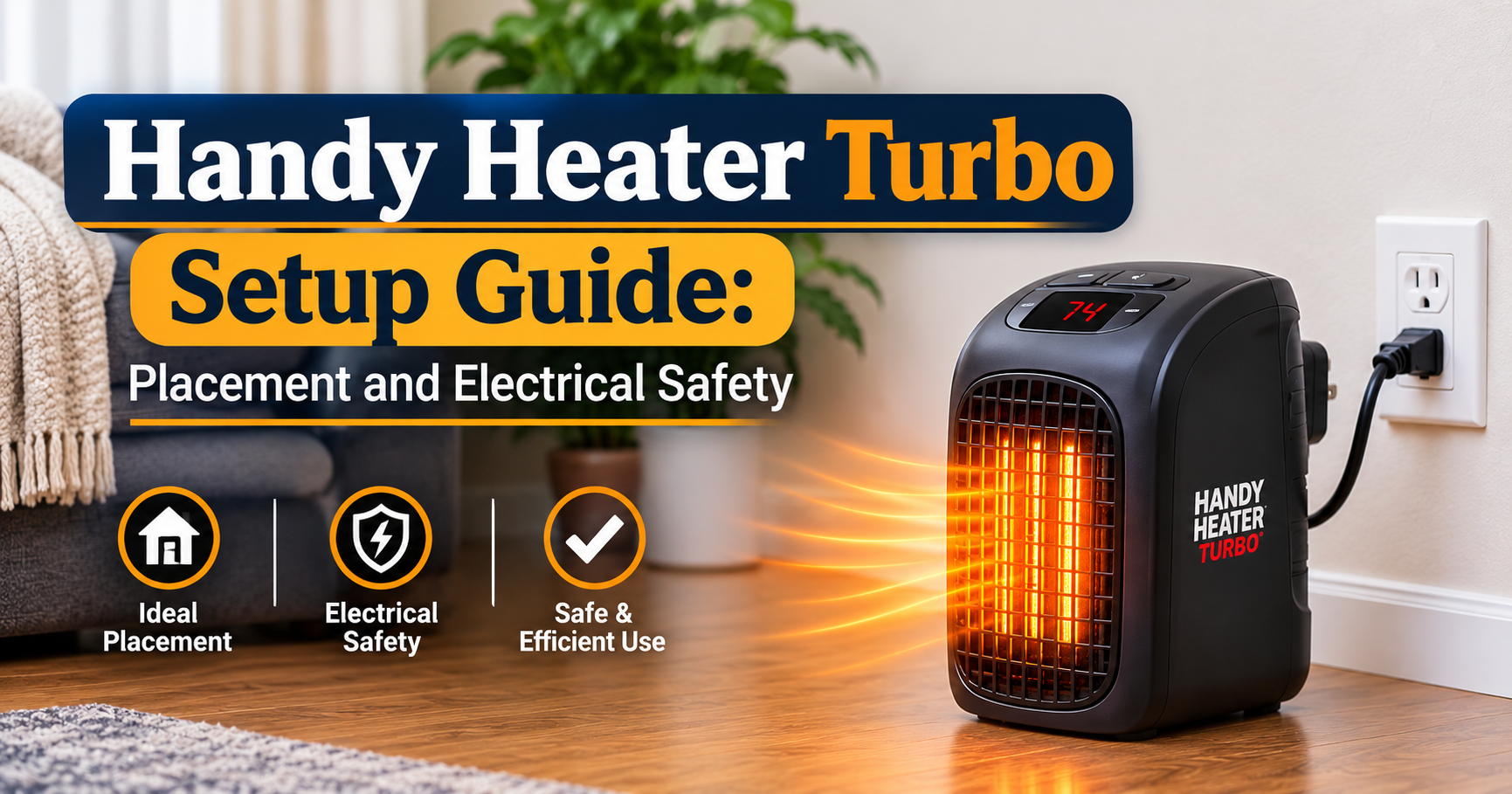
Move the heater to a level floor, such as tile, wood or laminate. Make sure it stands fully upright and does not lean against anything. Lift it slightly and set it down again to reseat the tip-over switch. Avoid carpets with thick pile, since the heater can sink and tilt a few degrees, which is enough to trigger the safety cutoff.
Step 6: Clear the Air Vents and Let the Unit Cool
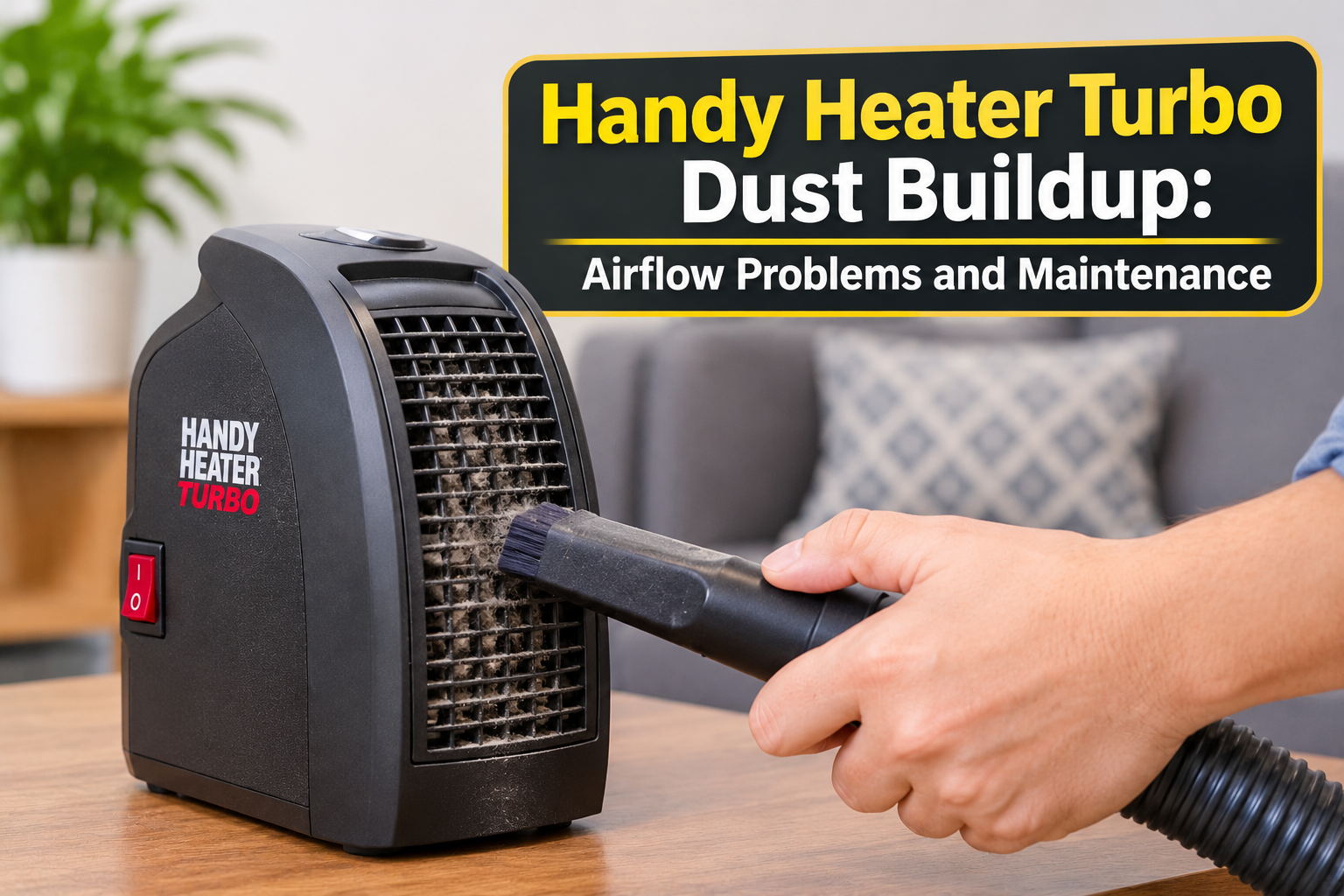
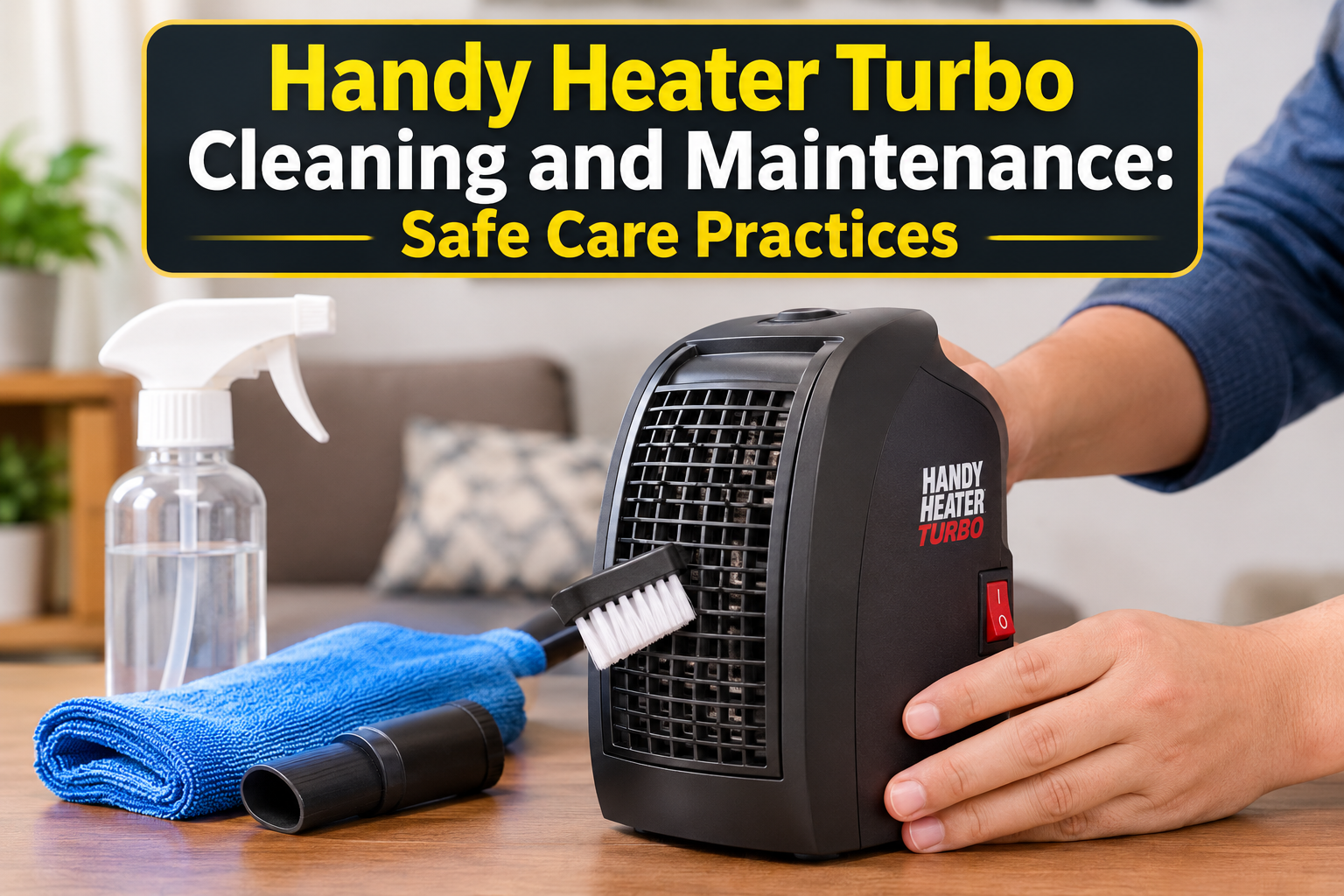
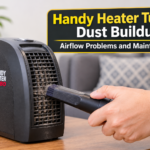
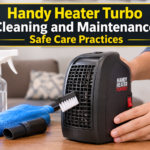
Look at the front grille and the rear intake. Remove visible dust, lint or pet hair with a soft, dry brush or the brush attachment of a vacuum cleaner. Then leave the heater unplugged for at least 30 minutes so that the overheat protection has time to reset. Never use water or sprays on the vents.
Step 7: Perform a Power Reset
Unplug the heater and leave it for about 10 minutes. Plug it back in directly into the wall, then press the power button once and wait a few seconds. This clears temporary electronic faults and gives sensors a chance to reset.
Step 8: Check the Thermostat, Power and Turbo Settings
Turn the thermostat to its highest setting so the heater is certain to call for heat. Confirm the main power switch is fully on. Then select the standard heat mode before pressing Turbo, since some heaters will not enter the turbo setting unless they have already started normally. If your model uses a remote, replace its batteries and try the buttons on the unit itself.
Step 9: Watch for Signs of Internal Failure
If the heater has power, sits upright, has clear vents and correct settings, but still shows no sign of life, an internal part has probably failed. Signs include a faint burning smell, a clicking sound with no heat, a fan that spins but no warmth, or a completely dead unit. At this stage, stop using the heater. Do not open it or try to bypass any safety parts.
Quick Troubleshooting Table
| Symptom | Likely Cause | What To Do |
|---|---|---|
| No light, no sound | No power at outlet or damaged cord | Test the outlet, check breaker and inspect the cord |
| Works on one outlet, not another | Faulty outlet or tripped GFCI | Reset the GFCI or use a different outlet |
| Turns on, then shuts off at once | Overheat protection or blocked vents | Clean vents and let it cool for 30 minutes |
| Will not start on carpet | Tip-over switch active | Move to a flat, hard surface |
| Fan runs, no heat | Thermostat too low or failed heating element | Raise the thermostat; if no heat, stop using and contact support |
| Burning smell or warm plug | Damaged plug, cord or internal fault | Unplug immediately and stop using the heater |
When the Turbo Mode Specifically Will Not Work
Sometimes the heater powers on normally but the Turbo setting does nothing. That points to a different set of causes:
- The heater has not warmed up yet. Some units need a short period in normal mode before turbo engages.
- The thermostat is satisfied. If the room is already at or above the set temperature, the heater will not enter a higher output mode.
- The overheat sensor is limiting output. Dusty vents can cause the heater to protect itself by refusing high-power operation.
- The mode selector is loose or worn. If the switch does not click firmly into the turbo position, the circuit may not complete.
- An internal part has failed. A weak switch or heating element can cause the heater to work on low but not on turbo.
Raise the thermostat, clean the vents and try cycling through the modes slowly. If it still will not enter turbo, the heater may need service.
How to Prevent Your Heater From Failing to Start
A little routine care makes a big difference to how reliable a portable heater is from season to season.
- Clean the vents regularly. Once a month during heavy use, wipe the grille and clear dust from the intake with a dry brush.
- Plug into the wall directly. Avoid extension cords, power strips and surge protectors.
- Do not wrap the cord tightly. Loose coils protect the internal wires from stress and damage.
- Store it properly. At the end of the season, wipe it down and store it in a dry place, ideally in its original box.
- Keep it on a stable surface. A flat, hard floor keeps the tip-over switch happy and the heater safe.
- Do not run it constantly at the highest setting. Use the thermostat so that the heater can cycle on and off.
- Inspect before the first use each winter. Look at the plug, cord and grille before you turn it on.
Repair, Warranty or Replace: What Should You Do?
If the basic checks have not brought the heater back to life, you have three options.
Check the Warranty First
Many small heaters come with a limited warranty. Find your receipt and the paperwork in the box. If the heater is still covered, contact the seller or manufacturer with your order details and a short description of what you have already tried. This often results in a replacement or refund.
Professional Repair
Because low-cost portable heaters are inexpensive, repair is rarely worth the cost. Any work on the internal parts should be done only by a qualified technician. Do not attempt to bypass safety fuses or switches yourself.
Replace the Heater
Replacement is the safest choice if the cord is damaged, the plug has melted, the unit smells of burning or the heater is several years old and no longer starts reliably. When choosing a new model, look for these features:
- Tip-over protection and overheat protection
- An adjustable thermostat
- A cool-touch exterior and a sturdy base
- Safety certification marks that apply in your country
- A cord of sufficient length so you never need an extension cord
Frequently Asked Questions
Why is my Handy Heater Turbo not turning on at all?
The most common reasons are a dead outlet, a tripped breaker, a damaged plug or cord, the tip-over switch being triggered, or blocked vents causing the overheat protection to shut the unit down. Check these in order before assuming the heater has failed.
Does a heater have a reset button?
Some models do and some do not. If yours has no visible reset button, unplugging the heater for about 10 minutes and plugging it back in directly to the wall usually resets the electronics and the overheat protection.
The light comes on but there is no heat. Is that normal?
Not usually. It can mean the thermostat is set too low, the heating element has failed or the overheat protection is limiting operation. Raise the thermostat, clean the vents and try again. If there is still no heat, stop using the unit and contact support.
Can a power strip or extension cord cause the heater not to start?
Yes. High-power heaters can overload extension cords and power strips, which can trip them or cause overheating. Always plug the heater directly into a wall outlet.
Is it safe to open the heater and fix it myself?
No. Heaters contain high-power components and safety parts that must not be bypassed. If the heater needs internal repair, contact the manufacturer or a qualified professional.
How long should a portable heater last?
With regular cleaning and careful use, a portable heater can last several heating seasons. Heavy use, dusty environments and heavy-handed storage can shorten its life considerably.
Why does my heater work on low but not on turbo?
Turbo mode draws the most power. If the outlet, cord or internal switch is weak, the heater may run on low but fail on turbo. Dusty vents and a thermostat that is already satisfied can also prevent turbo from starting.
Final Thoughts
A Handy Heater Turbo that is not turning on is usually caused by something simple: no power at the outlet, a safety switch that is doing its job, a blocked vent or a control that is set incorrectly. Work through the checklist step by step, stay safe by unplugging the heater at each stage, and never open the unit or bypass its safety parts.
If you have tried every step and the heater still will not start, or if you notice a damaged cord, a hot plug or a burning smell, stop using it right away. Contact the seller for warranty support or replace it with a heater that has modern safety protection. Staying warm should never come at the cost of your safety.