




Winter nights make a room heater feel like a necessity, but the choice is confusing. Two names come up most often: the compact handy heater (turbo heater) and the ceramic heater. They look similar, yet they behave very differently when it comes to heat quality, safety, electricity use and price.
In this guide to handy heater turbo vs ceramic heater, we compare them side by side so you can pick the right one for your room, family and budget.
Quick Answer
Pick a turbo/handy heater if you want instant warmth at a low price for short periods. Pick a ceramic heater if you want safer, more even and more comfortable heat for longer use, especially with children or elderly people at home.
What Is a Handy Heater (Turbo Heater)?
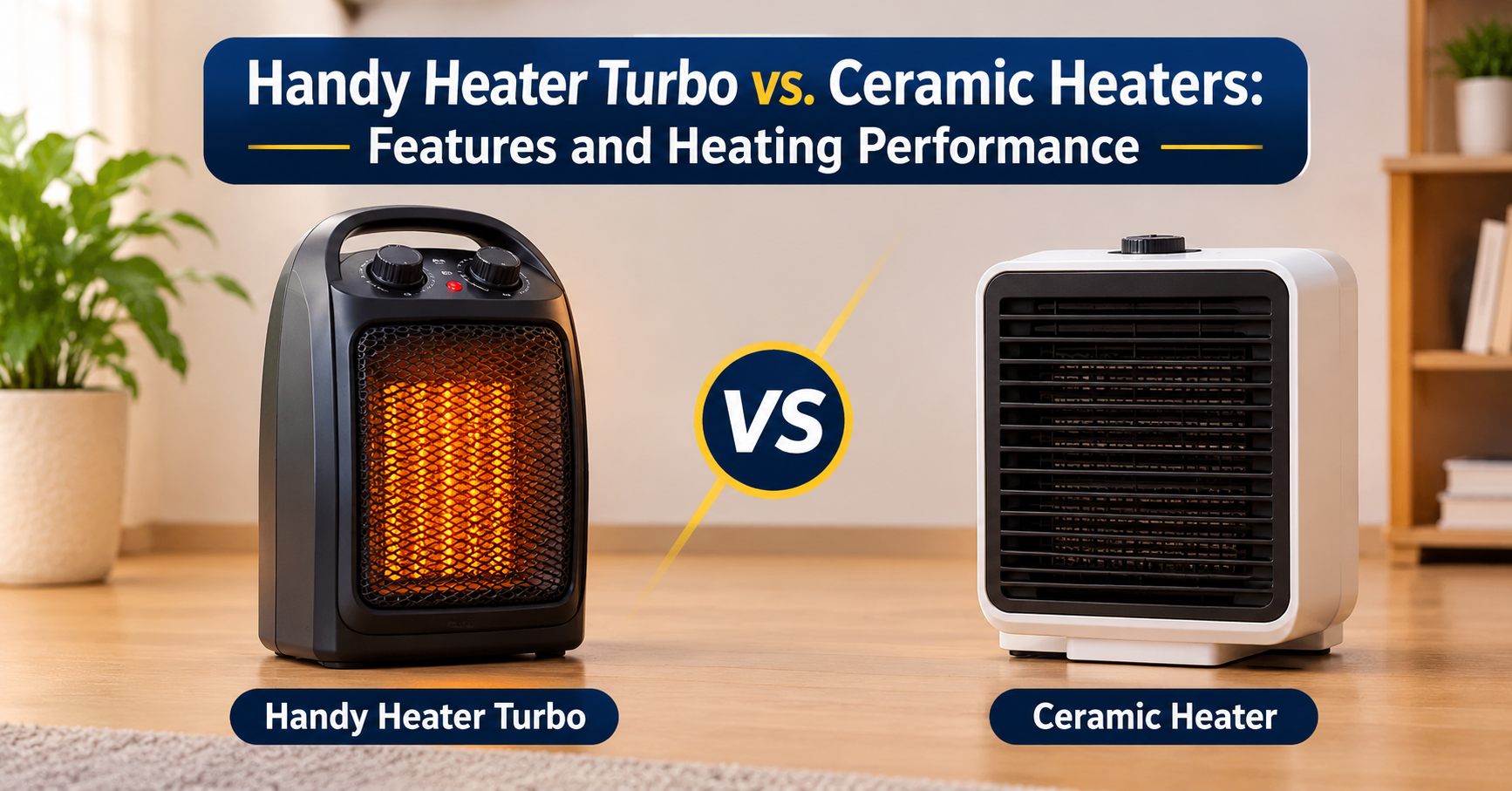
A handy heater, often sold as a turbo heater, is a small portable electric fan heater. Air is pushed over a hot element, usually a metal coil or a halogen/quartz style element, and blown into the room. Because the element gets hot very quickly, you feel warmth almost the moment you switch it on.
Its biggest strengths are size and price. It is light, easy to carry from the bedroom to the study, and usually the cheapest option on the shelf.
Pros of a Turbo Heater
- Very fast heating, ideal for chilly mornings
- Compact and lightweight
- Lower purchase price
- Easy to store when winter ends
Cons of a Turbo Heater
- Heat can feel dry and harsh
- Cheap models may have exposed hot parts and weaker safety features
- Fan and element noise can be noticeable
- Less suited to running for many hours
What Is a Ceramic Heater?
A ceramic heater uses PTC (positive temperature coefficient) ceramic plates as the heating element. These plates limit their own temperature: as they get hotter, their electrical resistance rises and power draw falls. That self-regulating behavior is why ceramic heaters have a good safety reputation.
A fan carries the warmth into the room, which gives a softer and more even heat than a simple coil.
Pros of a Ceramic Heater
- Safer design with self-regulating elements
- Usually includes tip-over and overheat protection
- Even, comfortable heat
- Quieter and more durable in daily use
Cons of a Ceramic Heater
- Higher price
- Slightly slower to reach full warmth
- Often a bit heavier
Handy Heater Turbo vs Ceramic Heater: Side-by-Side Comparison
| Feature | Turbo / Handy Heater | Ceramic Heater |
|---|---|---|
| Heating element | Metal coil or halogen/quartz style, often with a small fan | PTC ceramic plates with a fan |
| Heat-up speed | Very fast; heat is felt within seconds | Fast; slightly slower to reach full output |
| Heat quality | Strong and direct, can feel dry | Even, softer and more comfortable |
| Safety | Depends on build quality; exposed hot parts on cheap models | Self-regulating element, usually with tip-over and overheat cut-off |
| Typical power | About 500W to 2000W | About 500W to 2000W |
| Noise | Fan plus buzzing of the coil can be noticeable | Generally quieter fan operation |
| Portability | Very compact and light | Compact, slightly heavier |
| Price | Usually cheaper | Usually costs more |
| Best for | Quick warm-up, small spaces, short use | Longer use, bedrooms, family homes |

Heating Performance
A turbo heater wins on raw speed. Its element glows hot almost immediately, so the air in front of it warms up fast. This makes it great for a small bathroom, a study corner or the first ten minutes of a cold morning.
A ceramic heater takes a little longer but spreads warmth more evenly, so the whole room feels comfortable instead of only the area near the heater.
Safety
Safety is where ceramic heaters have a clear advantage. Self-regulating PTC plates reduce the risk of overheating, and most decent models add a tip-over switch and thermal cut-off. Turbo heaters can be safe too, but quality varies widely, so check for these protections before buying.
Whatever you choose, keep it away from curtains, bedding and sofas, place it on a flat surface, and never cover it.
Electricity Consumption
Both types are rated in watts, and the rating matters more than the type. A 1000W heater uses about 1 kWh per hour at full power, and a 2000W heater about 2 kWh. Ceramic models with a thermostat can cut consumption because they reduce power once the room reaches the set temperature, while basic turbo heaters often run continuously.
Noise and Air Comfort
Ceramic heaters usually run quieter. Both types dry the air, so a bowl of water or a humidifier helps, especially if you have asthma or dry skin.
Which One Should You Buy?

Best for a Bedroom
Ceramic. It is quieter and safer for longer use. Choose a model with a thermostat and timer.
Best for Small Rooms and Short Use
Turbo. Fast warmth, low cost and easy to carry.
Best for Families with Kids or Elderly Members
Ceramic, because of its safety features and cooler outer body on many models.
Best on a Tight Budget
Turbo, but buy from a trusted brand and look for overheat protection.
Buying Checklist
- Wattage: 1000W for small rooms, 1500W to 2000W for medium rooms
- Thermostat: keeps temperature steady and saves power
- Tip-over protection: switches off the unit if it falls
- Overheat cut-off: an essential safety feature
- Heat settings: at least two levels plus a fan-only mode
- Build quality: sturdy body and a thick power cable
- Warranty: choose a brand that offers one
Safety Tips for Using Any Room Heater
- Plug directly into a wall socket, not a weak extension board
- Keep at least three feet from flammable items
- Do not dry clothes on the heater
- Turn it off when leaving the room or going to sleep
- Clean the dust from the grill regularly
Frequently Asked Questions
Is a ceramic heater better than a turbo heater?
For long hours of use and safety, a ceramic heater is usually the better choice. For fast, short-term warmth on a small budget, a turbo (handy) heater is practical.
Which heater uses less electricity?
Both models draw power according to their wattage rating. A 1000W heater of either type consumes about 1 unit (1 kWh) per hour at full power. Ceramic heaters with a thermostat can save power because they cycle on and off once the room is warm.
Can I sleep with a heater on?
It is not recommended to leave any heater running while you sleep. If you must use one, choose a model with a thermostat, tip-over protection and a timer, and keep it far from bedding and curtains.
Does a heater make the air dry?
Yes, most electric heaters reduce comfort by drying the air. Keep a bowl of water in the room or use a humidifier.
What wattage should I buy?
As a rough rule, 1000W suits a small room up to about 100 sq ft, and 1500W to 2000W suits medium rooms. Insulation and ceiling height change this.
How do I make my heater last longer?
Clean dust from the grill regularly, never cover the unit, avoid extension cords and unplug it when not in use.
Final Verdict
There is no single winner in handy heater turbo vs ceramic heater; the right answer depends on how you will use it. If you want quick, cheap warmth for short periods, a turbo heater does the job. If you want safer, steadier and more comfortable heating for longer hours, a ceramic heater is worth the extra cost.
For most families, a ceramic heater with a thermostat and tip-over protection is the smarter long-term choice. Whichever you pick, check the wattage, safety features and warranty before you buy, and stay warm this winter.