







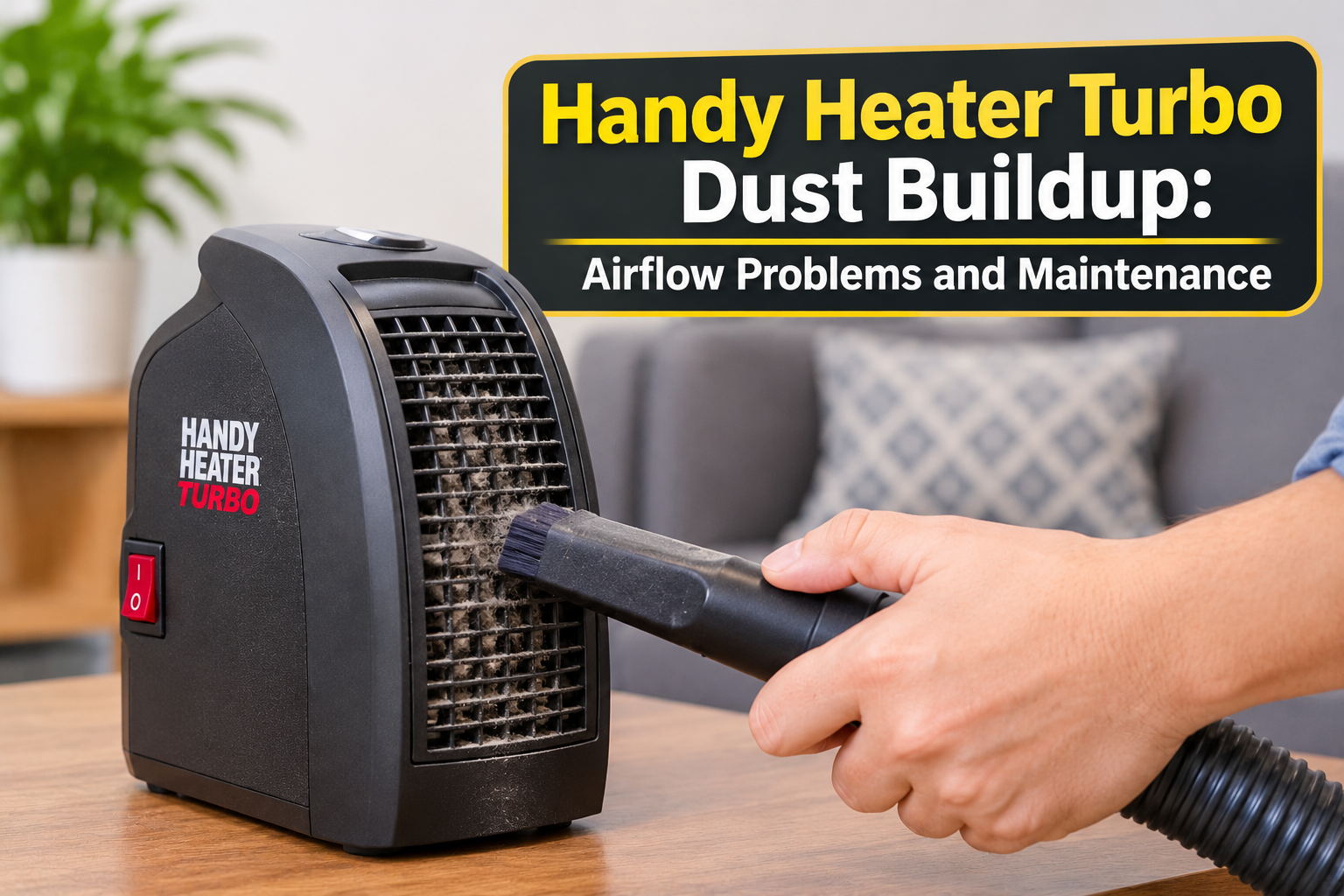
Dust buildup is a common maintenance concern for compact electric heaters like the Handy Heater Turbo. During regular operation, the heater moves air through its ventilation openings, and small dust particles can gradually collect around the exterior grille and accessible air intake areas. Over time, excessive dust may interfere with airflow, contribute to unusual operating noises, and make routine maintenance more important.
Although a small amount of surface dust is normal, allowing it to accumulate for long periods is not a good maintenance practice. Regular inspection and careful cleaning can help keep the heater’s accessible air openings clear and make it easier to identify potential problems. In this guide, you will learn why dust builds up, how to recognize it, how to remove it safely, and how to prevent excessive accumulation.
What Causes Dust Buildup in the Handy Heater Turbo?
Dust buildup usually happens naturally as the heater operates in an indoor environment. Air contains tiny particles from clothing fibers, carpets, furniture, household activities, and other sources. Some of these particles can settle on the heater’s outer surfaces and ventilation grille.
Several environmental factors can make the problem more noticeable:
- Carpets and rugs: Walking across carpets can release small fibers and dust particles into the air.
- Pet hair: Homes with cats or dogs may have more loose hair and dander circulating indoors.
- Open windows: Outdoor dust and airborne particles can enter through open windows and doors.
- Frequent use: A heater used regularly may accumulate dust over time, particularly around accessible air openings.
- Dusty rooms: Storage areas, workshops, and rooms with limited cleaning may expose appliances to more airborne debris.
Dust accumulation depends on the room environment, usage frequency, and heater design. Not every Handy Heater Turbo model has the same internal construction or cleaning requirements.
Signs of Dust Buildup in Your Handy Heater Turbo
Dust is not always easy to notice, especially when it collects around narrow ventilation openings. However, several visible or operational signs may indicate that the heater needs attention.
1. Visible Dust Around the Grille
One of the easiest signs to recognize is a layer of dust around the air intake or outlet grille. You may notice gray particles, small fibers, or dirt collecting along the edges of the openings.
2. Reduced Airflow
If dust collects around accessible ventilation openings, airflow may become restricted. You might notice that the heater does not seem to distribute warm air as effectively as before. However, reduced airflow can also indicate a fan or mechanical problem.
3. Unusual Fan Noise
Excessive dust or debris around accessible areas may contribute to unusual operating sounds. If the heater starts making rattling, scraping, or grinding noises, switch it off and unplug it. Do not assume that dust is the only possible cause.
4. Dusty Smell During Operation
Dust that has settled around heating components may produce a temporary dusty odor when the appliance warms up. A strong burning smell, smoke, or melting-plastic odor is different and should be treated as a potential safety issue.
5. Frequent Need for Exterior Cleaning
If the heater repeatedly collects visible dust shortly after cleaning, the surrounding room may have a high level of airborne particles. You may need to clean the area more frequently and reconsider where the appliance is positioned.
How Dust Buildup Can Affect Heater Performance
Dust accumulation does not automatically mean that the heater is damaged. However, excessive debris around ventilation openings can create maintenance and performance concerns.
- Restricted airflow: Dust around accessible openings may interfere with the movement of air.
- Inconsistent heating: Poor airflow may affect how effectively warm air is distributed into the room.
- Unusual operating sounds: Debris or other obstructions may contribute to abnormal noise.
- More frequent maintenance: Dusty environments may require more regular inspection and cleaning.
- Potential overheating concerns: A heater that cannot maintain proper airflow may not operate as intended. Built-in safety protections should never be treated as a substitute for cleaning and safe use.
If the heater repeatedly shuts off, becomes unusually hot, produces smoke, or develops a persistent burning smell, stop using it. Unplug it if safe to do so and contact the manufacturer or seller.
How to Remove Dust Buildup from the Handy Heater Turbo
Basic dust removal is usually straightforward when limited to accessible exterior areas. Before starting, check your model’s manual for approved cleaning methods.
Step 1: Turn Off and Unplug the Heater
Switch off the Handy Heater Turbo and disconnect it from the wall socket. Never attempt to remove dust while the appliance is connected to electricity.
If the heater has been operating, allow it to cool completely. Do not touch the grille or housing while the appliance is still hot.
Step 2: Inspect the Exterior and Ventilation Openings
Look carefully at the outer body, air intake, and outlet grille. Identify where dust has accumulated and check for visible damage, loose parts, or discoloration.
If you notice melted plastic, damaged electrical connections, or signs of overheating, do not continue using the appliance.
Step 3: Remove Surface Dust with a Microfiber Cloth
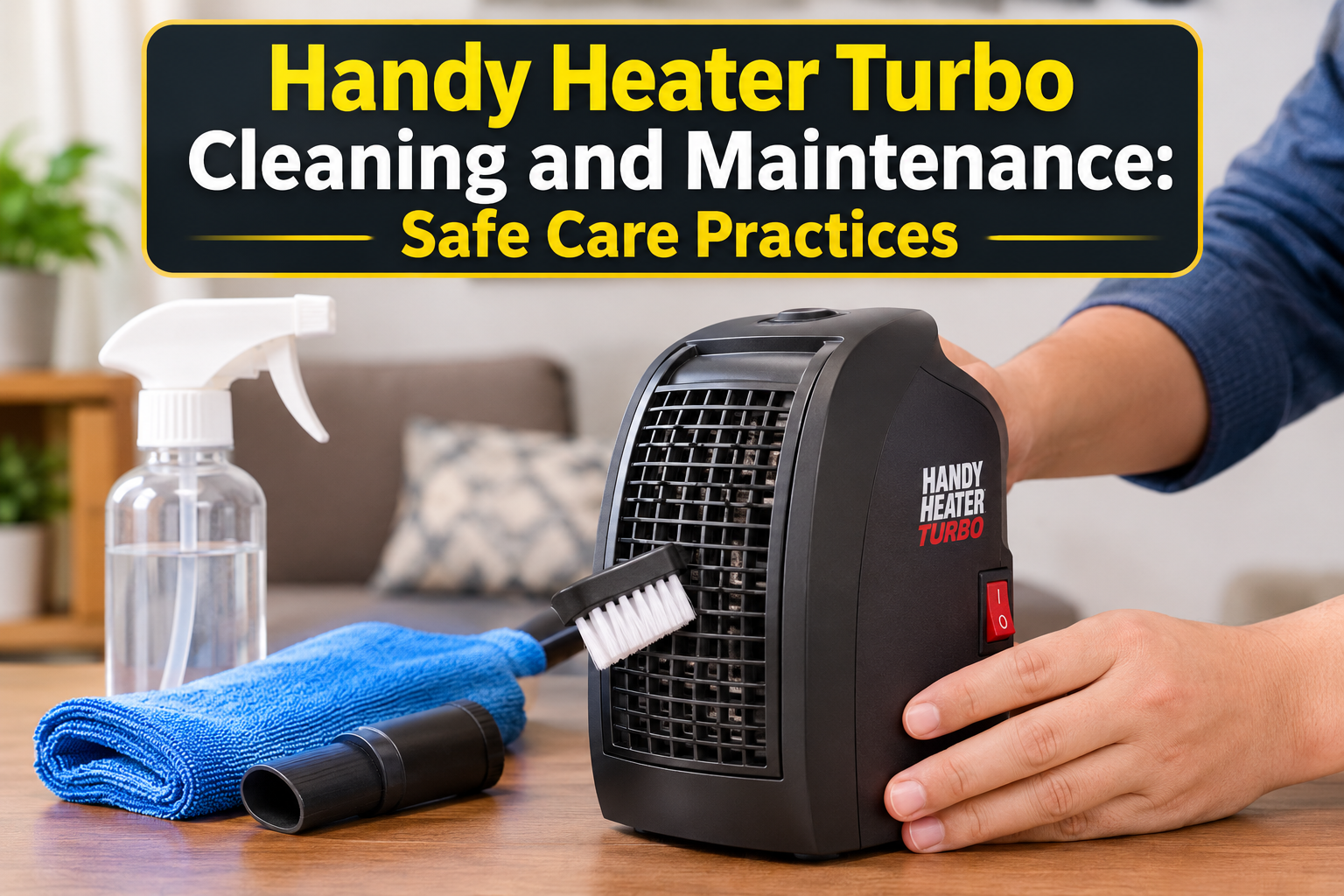
Use a clean, dry microfiber cloth to wipe the outer housing. Move gently across the surface and pay attention to corners and areas where dust tends to collect.
Avoid abrasive materials or excessive pressure that could scratch the plastic body.
Step 4: Brush Dust Away from the Grille
Use a soft-bristled brush to remove loose dust from accessible ventilation openings. Brush gently so that particles are not pushed farther inside the appliance.
Do not insert the brush deeply into the grille or attempt to reach internal electrical or heating components.
Step 5: Use a Vacuum Cleaner if the Manual Allows It
A vacuum cleaner with a suitable brush attachment and low suction may help collect loose dust around accessible exterior openings, provided the manufacturer permits this method.
- Keep the vacuum attachment outside the ventilation grille.
- Use gentle suction rather than maximum power.
- Do not press the attachment against delicate openings.
- Never use a vacuum to reach or disturb internal components.
Step 6: Check the Heater Again
After cleaning, inspect the exterior and grille to make sure loose dust has been removed. Check that no brush fibers or cleaning materials remain around the openings.
If you used a slightly damp cloth on permitted exterior surfaces, allow everything to dry completely before reconnecting the appliance. Never spray water or cleaning products directly onto the heater.
Step 7: Resume Use Only if Everything Is Normal
Once the heater is clean, dry, and free from visible damage, it can be used according to the manufacturer’s instructions. If unusual sounds, strong odors, weak airflow, or overheating continue, stop using it and seek appropriate assistance.
Tools That Help Prevent Excessive Dust Buildup
Keeping a few basic cleaning tools nearby can make routine maintenance easier. You do not need specialized chemicals or complicated equipment for ordinary exterior dust removal.
| Cleaning Tool | Main Purpose | Important Note |
|---|---|---|
| Microfiber cloth | Removing surface dust | Use dry for routine dusting |
| Soft cleaning brush | Loosening dust around the grille | Do not push it deep into openings |
| Vacuum brush attachment | Collecting loose exterior dust | Use only if the manual allows it |
| Soft storage cover | Protecting the cooled heater during storage | Never cover the heater while operating |
How to Prevent Dust Buildup in the Future
Cleaning removes existing dust, but a few simple habits can help reduce how quickly it returns. The goal is to keep the surrounding environment cleaner and avoid placing the heater where dust collects easily.
1. Keep the Area Around the Heater Clean
Vacuum carpets, sweep floors, and remove visible dust from nearby furniture regularly. A cleaner surrounding area can reduce the amount of debris circulating near the heater.
2. Avoid Placing It Near Dust Sources
Keep the heater away from dusty storage areas, pet bedding, heavily used carpets, and locations where household debris frequently collects.
3. Keep Ventilation Openings Unobstructed
Do not place objects directly against the heater’s air intake or outlet. Clear ventilation helps the appliance operate as designed and makes it easier to inspect the openings for dust.
4. Clean the Heater Regularly
Do not wait until the grille looks heavily covered in dust. A simple exterior inspection and occasional cleaning can prevent excessive accumulation.
5. Store It Properly During the Off-Season
Before storing the heater, unplug it and allow it to cool completely. Clean the accessible exterior surfaces and keep the appliance in a clean, dry storage location. If you use a cover, make sure the heater is completely cool and the cover is removed before the next use.
Suggested Dust Prevention and Cleaning Schedule
The following schedule is a practical starting point for households using a compact heater. Adjust it according to room conditions and the manufacturer’s maintenance instructions.
| Maintenance Activity | Suggested Frequency |
|---|---|
| Wipe the exterior | Every 1–2 weeks |
| Inspect ventilation openings | Every 1–2 weeks |
| Remove visible grille dust | Every 2–4 weeks or as needed |
| Inspect plug and power cord | Before regular use and periodically |
| Clean before seasonal storage | At the end of the heating season |
Common Dust-Related Problems and Solutions
Dust buildup may be one possible explanation for certain heater problems, but it is not always the actual cause. Use the following table as a basic troubleshooting reference.
| Problem | Possible Cause | Recommended Action |
|---|---|---|
| Visible dust on grille | Normal airborne dust accumulation | Unplug, cool, and clean accessible areas with a soft brush. |
| Weak airflow | Blocked openings or possible fan malfunction | Clear accessible dust. If airflow remains weak, stop using it and seek assistance. |
| Dusty odor | Dust warming during operation | Switch off, unplug, and clean accessible areas. Stop use if the odor is strong or persistent. |
| Rattling or scraping noise | Possible debris or loose internal component | Unplug the heater. Do not open it; contact the manufacturer or seller. |
| Repeated shutdowns | Possible overheating, obstruction, or electrical fault | Stop using it and have the problem assessed by an appropriate service professional. |
Pros and Cons of Preventing Dust Buildup
Regular dust prevention is a useful part of heater maintenance, although it cannot eliminate every possible performance or electrical problem.
| ✓ Pros | ✕ Cons |
|---|---|
|
✓ Helps keep accessible air openings clear
✓ Reduces visible dust accumulation
✓ Makes routine inspections easier
✓ Requires only basic cleaning supplies
|
✕ Requires regular maintenance
✕ Cannot prevent all internal dust accumulation
✕ Cannot fix mechanical or electrical faults
✕ Cleaning methods depend on the model’s instructions
|
Frequently Asked Questions
1. Why does my Handy Heater Turbo collect so much dust?
Dust accumulation is influenced by the surrounding environment. Carpets, pet hair, open windows, and frequent household activity can increase airborne particles that settle around the heater’s exterior and ventilation openings.
2. Can dust buildup make my Handy Heater Turbo stop working?
Excessive dust around ventilation openings may contribute to restricted airflow. However, a heater that stops working may also have an electrical, mechanical, or control problem. Cleaning alone may not resolve the issue.
3. Is dust inside the heater dangerous?
Small amounts of dust are common in household appliances. However, excessive accumulation around heating or electrical components may create operational and safety concerns. Do not open the heater to remove internal dust yourself.
4. Can compressed air remove dust from the heater?
Do not use compressed air unless the manufacturer specifically approves it and provides instructions. High-pressure air can push dust deeper into the appliance or damage delicate internal components.
5. Does dust buildup reduce heating performance?
Dust around accessible ventilation openings may interfere with airflow and affect heat distribution. If the heater continues to provide weak airflow after exterior cleaning, another problem may be responsible.
6. How can I prevent dust from collecting around the heater?
Keep the surrounding floor and furniture clean, avoid dusty locations, maintain clear ventilation space, and inspect the heater regularly. Homes with pets or carpets may need more frequent cleaning.
7. Should I clean the heater before storing it?
Yes. Switch it off, unplug it, allow it to cool completely, and clean the accessible exterior surfaces before storing it in a dry, clean location. Follow the storage instructions supplied with your model.
8. What if dust cleaning does not solve the problem?
If the heater still has weak airflow, unusual noises, repeated shutdowns, or a persistent burning smell, stop using it. Contact the seller or manufacturer for further inspection rather than attempting internal repairs.
Final Thoughts
Handy Heater Turbo dust buildup is a normal maintenance concern, particularly when the appliance is used regularly in rooms with carpets, pets, or airborne household dust. Although some surface dust is unavoidable, regular inspection and gentle cleaning can help keep accessible ventilation openings clear and the exterior in better condition.
The best approach is simple: unplug the heater, allow it to cool completely, remove loose dust with a soft cloth or brush, and avoid introducing moisture into the appliance. Keeping the surrounding area clean and following a regular maintenance schedule can also reduce excessive dust accumulation.
Remember that cleaning is not a substitute for professional inspection. If the heater develops unusual noises, persistent odors, weak airflow, or signs of electrical damage, stop using it and seek assistance from the manufacturer or a qualified professional.
Disclaimer: This article is intended for general informational purposes only. Cleaning procedures and maintenance requirements may vary by Handy Heater Turbo model or version. Always follow the manufacturer’s manual and applicable electrical safety guidance.