








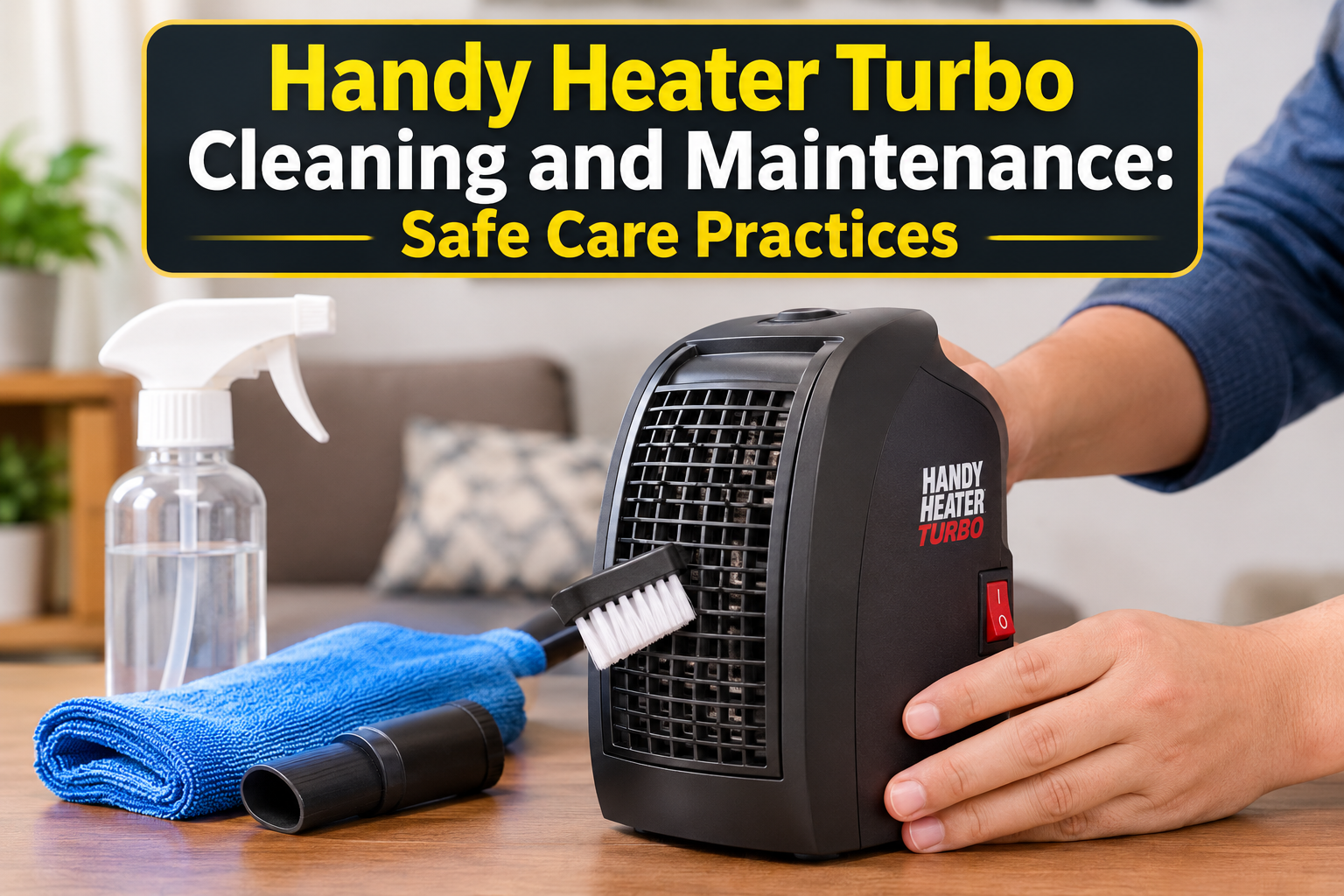
Keeping your Handy Heater Turbo clean is important for maintaining its performance, supporting proper airflow, and reducing the buildup of dust around its heating components. Like other compact electric heaters, it can collect dust on its exterior, air intake openings, and ventilation grille during regular use. If these areas become clogged, the heater may produce less airflow, make unusual noises, or become less effective at warming a small space.
Fortunately, basic Handy Heater Turbo cleaning does not have to be complicated. With the right precautions and a few simple tools, you can remove surface dust and keep the unit in better condition. In this guide, you will learn how to clean the heater safely, which tools to use, how often to clean it, what to avoid, and how to recognize problems that require professional attention.
Why Is Cleaning the Handy Heater Turbo Important?
Dust and debris can gradually collect around the heater’s ventilation openings. Because compact fan heaters depend on airflow to distribute warm air, keeping these openings clear is an important part of routine maintenance.
Regular cleaning can help with several things:
- Better airflow: Removing loose dust from the grille helps keep air openings clear.
- Consistent performance: Clear ventilation openings help the heater operate as intended.
- Less dust buildup: Routine cleaning prevents excessive dust from collecting on accessible surfaces.
- Early problem detection: Cleaning gives you an opportunity to notice damaged plugs, loose parts, or other visible issues.
- General maintenance: A clean exterior and ventilation grille help keep the appliance in better condition.
Cleaning does not repair damaged heating elements, electrical faults, or internal mechanical problems. If the heater shows signs of malfunction, stop using it and contact the seller or manufacturer.
What You Need to Clean the Handy Heater Turbo
You usually do not need expensive cleaning products for basic exterior maintenance. A few gentle cleaning tools are enough to remove loose dust from accessible areas.
- Soft, dry microfiber cloth
- Soft-bristled cleaning brush
- Vacuum cleaner with a brush attachment and low suction, if suitable
- Clean, dry workspace
- Slightly damp cloth for exterior surfaces, if permitted by the manual
Before using any cleaning tool, check the manufacturer’s instructions. Some appliances have specific cleaning requirements, and not every method is suitable for every heater design.
Handy Heater Turbo Cleaning: Step-by-Step Guide
Follow these basic steps to clean the accessible exterior and ventilation areas without exposing the appliance to unnecessary moisture or damage.
Step 1: Switch Off and Unplug the Heater
Turn off the Handy Heater Turbo using its control, then unplug it from the wall socket. Never attempt to clean an electric heater while it is connected to a power supply.
If the heater has been operating, allow it to cool completely before touching or cleaning it. The heating components and surrounding surfaces may remain hot for some time after switching it off.
Never clean a warm, operating, or plugged-in heater. Always disconnect the power first and wait until the unit is completely cool.
Step 2: Inspect the Heater Before Cleaning
Examine the exterior, power plug, and cord (if your version has one). Look for visible cracks, damaged plastic, loose components, discoloration, or signs of overheating.
If you notice a burnt smell, melted plastic, a damaged plug, or blackened areas around the outlet, do not continue using the heater. Cleaning will not make an electrically damaged appliance safe.
Step 3: Remove Loose Dust from the Exterior
Use a clean, dry microfiber cloth to gently wipe the heater’s outer body. Move around the accessible surfaces without pressing too hard on the plastic housing or ventilation grille.
Pay attention to corners and areas where dust tends to settle. Avoid using rough towels, abrasive sponges, or sharp objects because they may scratch the surface or damage the housing.
Step 4: Clean the Air Intake and Ventilation Grille
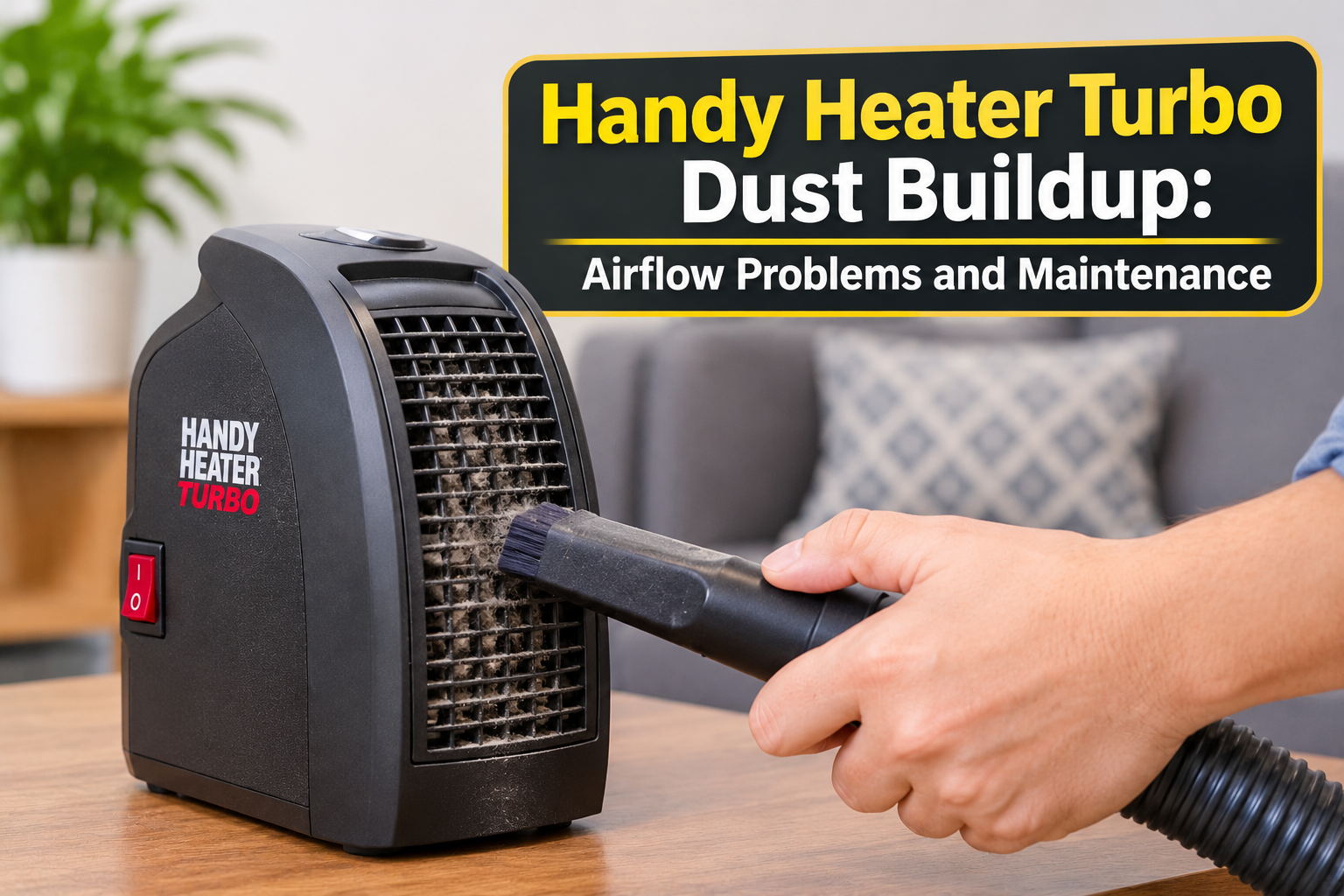
Dust can collect around the air intake and outlet openings during regular use. Use a soft-bristled brush to loosen visible dust from the accessible grille surfaces.
If the manufacturer’s instructions allow it, you may also use a vacuum cleaner with a suitable brush attachment on low suction to remove loose dust from the exterior openings.
- Clean gently without forcing the brush into the openings.
- Do not push dust or debris deeper into the heater.
- Do not insert metal objects, screwdrivers, or sharp tools into the grille.
- Never remove the housing to reach internal components unless the manufacturer specifically authorizes the procedure.
Step 5: Wipe the Exterior Carefully
If the user manual permits it, use a slightly damp microfiber cloth to remove marks from the exterior housing. The cloth should be damp rather than wet, with no dripping water.
Never spray cleaning solution directly onto the heater. Keep water away from the plug, electrical connections, controls, and ventilation openings. Do not immerse any part of the appliance in water.
Step 6: Allow the Heater to Dry Completely
After wiping the exterior, leave the heater disconnected from the power supply until all cleaned surfaces are completely dry. Check that no moisture remains around the ventilation openings or controls.
Do not use a hair dryer, heat gun, or another heating appliance to speed up the drying process. Allow the unit to air-dry naturally.
Step 7: Inspect and Store or Use the Heater
Once the heater is completely dry, inspect the exterior and ventilation grille again. Make sure there are no loose cleaning materials, visible damage, or remaining moisture.
If everything appears normal, you can use the heater according to its manual. If you notice unusual noise, a burning smell, overheating, or other abnormal behavior, switch it off, unplug it, and contact the manufacturer or seller.
How Often Should You Clean the Handy Heater Turbo?
Cleaning frequency depends on how often you use the heater and how much dust is present in your home. A heater used every day in a dusty room may need more frequent attention than one used occasionally in a clean environment.
The following schedule is a general maintenance guide, not an official manufacturer cleaning interval.
| Cleaning Task | Suggested Frequency | Purpose |
|---|---|---|
| Exterior dusting | Every 1–2 weeks | Remove surface dust and dirt |
| Ventilation grille cleaning | Every 2–4 weeks | Keep accessible air openings clear |
| Power cord and plug inspection | Before regular use and periodically | Identify visible electrical damage |
| Full exterior inspection | At the beginning and end of the heating season | Check the overall condition before storage or use |
If the room contains pets, carpets, or heavy dust, consider checking the ventilation openings more frequently. Always follow the cleaning schedule provided in your specific model’s manual if one is available.
What Should You Avoid When Cleaning the Heater?
Using the wrong cleaning method can damage the appliance or create an electrical safety risk. Keep these precautions in mind whenever you clean your Handy Heater Turbo.
- Do not use water directly: Water entering electrical components can cause damage or electric shock.
- Avoid harsh chemicals: Strong solvents, bleach, and abrasive cleaners may damage the exterior housing.
- Do not spray cleaning products: Sprays can enter ventilation openings and reach internal components.
- Never clean while plugged in: Disconnect the heater before performing any maintenance.
- Do not open the housing: Internal electrical components should not be accessed during routine cleaning.
- Avoid sharp tools: Knives, needles, and metal objects can damage the grille or internal parts.
- Do not operate while wet: Make sure the heater is completely dry before reconnecting it.
Common Cleaning Problems and What to Do
Sometimes, you may notice an issue while cleaning the heater or after returning it to service. The following table explains some common situations and the appropriate response.
| Problem | Possible Cause | What to Do |
|---|---|---|
| Dust remains inside the grille | Dust is beyond the accessible exterior area | Clean only accessible areas. Contact the manufacturer if internal cleaning is needed. |
| Airflow seems weak | Blocked ventilation openings or a possible fan issue | Unplug, cool completely, and clean accessible openings. If the problem continues, stop using it. |
| Unusual noise after cleaning | Possible loose part, debris, or internal fan problem | Switch off and unplug. Do not open the unit; contact the seller or manufacturer. |
| Burning smell during operation | Dust heating up or a possible electrical or mechanical fault | Turn it off and unplug immediately. Do not use it again until the cause has been checked. |
| Heater does not turn on after cleaning | Possible power connection issue, moisture, or appliance fault | Check that the unit is completely dry and inspect the plug and outlet. If it still does not work, contact the manufacturer. |
If the heater produces smoke, sparks, a persistent burning smell, or shows signs of melting or electrical damage, unplug it if safe to do so and stop using it. Do not attempt to fix an internal electrical problem yourself.
Pros and Cons of Regular Heater Cleaning
Routine cleaning offers several practical benefits, but it also has limitations. Understanding both can help you maintain the heater without attempting unnecessary repairs.
| ✓ Pros | ✕ Cons |
|---|---|
|
✓ Helps keep ventilation openings clear
✓ Removes visible dust buildup
✓ Makes it easier to notice visible damage
✓ Requires only basic cleaning tools
|
✕ Requires regular attention
✕ Cannot repair internal faults
✕ Must be completely cool and unplugged first
✕ Some internal areas may require manufacturer service
|
Frequently Asked Questions
1. How do I clean my Handy Heater Turbo?
Switch it off, unplug it, and allow it to cool completely. Use a dry microfiber cloth and a soft brush to remove dust from the exterior and accessible ventilation openings. Follow the manufacturer’s cleaning instructions.
2. Can I wash the Handy Heater Turbo with water?
No. Do not rinse, immerse, or spray water directly onto the heater. Moisture can damage electrical components and create a safety hazard. Use only a slightly damp cloth on permitted exterior surfaces, and keep all openings and electrical connections dry.
3. Can I use a vacuum cleaner to remove dust?
A vacuum cleaner with a suitable brush attachment and low suction may help remove loose dust from accessible exterior grille areas if the manufacturer permits it. Do not force the attachment into the openings or attempt to vacuum internal components.
4. How often should I clean my Handy Heater Turbo?
For general maintenance, wipe the exterior every one to two weeks and inspect the ventilation grille every two to four weeks. Clean more frequently if the heater is used in a dusty environment. Your model’s manual should take priority over this general schedule.
5. Why does my heater smell dusty when I turn it on?
Dust that has collected around heating components may produce an odor when the heater warms up. However, a strong, persistent, or burning-plastic smell should never be ignored. Switch off and unplug the heater, then contact the manufacturer or seller if the smell continues or returns.
6. Can I open the heater to clean the fan?
Do not open the housing for routine cleaning unless the manufacturer specifically provides an authorized procedure. Internal components may contain electrical connections and other parts that can be damaged or create a safety risk if handled incorrectly.
7. What should I do if the heater still does not work after cleaning?
Make sure the heater is completely dry and inspect the plug and wall outlet for visible damage. If it still does not turn on or operates abnormally, stop using it and contact the seller or manufacturer rather than attempting an internal repair.
8. Does cleaning improve the heater’s performance?
Removing dust from accessible ventilation openings may help maintain proper airflow. However, cleaning cannot increase the heater’s rated heating capacity or fix a damaged fan, heating element, or electrical component.
Final Thoughts
Regular Handy Heater Turbo cleaning is a simple part of responsible heater maintenance. Removing surface dust, keeping accessible ventilation openings clear, and inspecting the plug and exterior can help you identify potential problems before they become more serious.
The most important steps are to switch off and unplug the heater, let it cool completely, use gentle cleaning tools, avoid direct water contact, and allow all cleaned surfaces to dry before reconnecting it. Never open the housing or attempt to repair internal electrical components during routine maintenance.
With careful cleaning and proper use, you can keep your heater in better condition throughout the heating season. Always refer to the manual supplied with your specific unit for approved cleaning methods and maintenance instructions.
Disclaimer: This article is for general informational purposes only. Cleaning requirements may vary by Handy Heater Turbo model or version. Always follow the manufacturer’s instructions and consult a qualified professional for electrical or internal appliance problems.