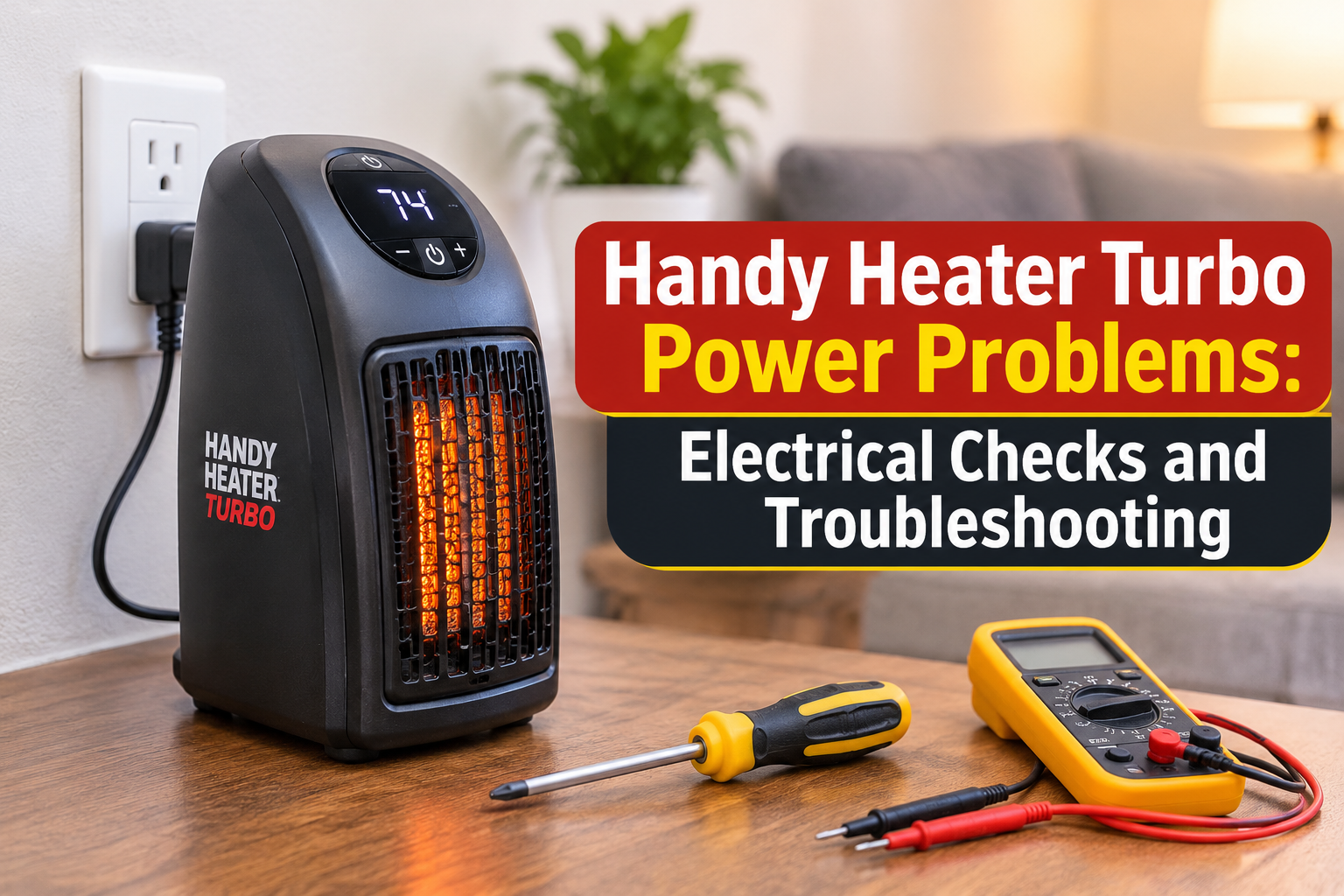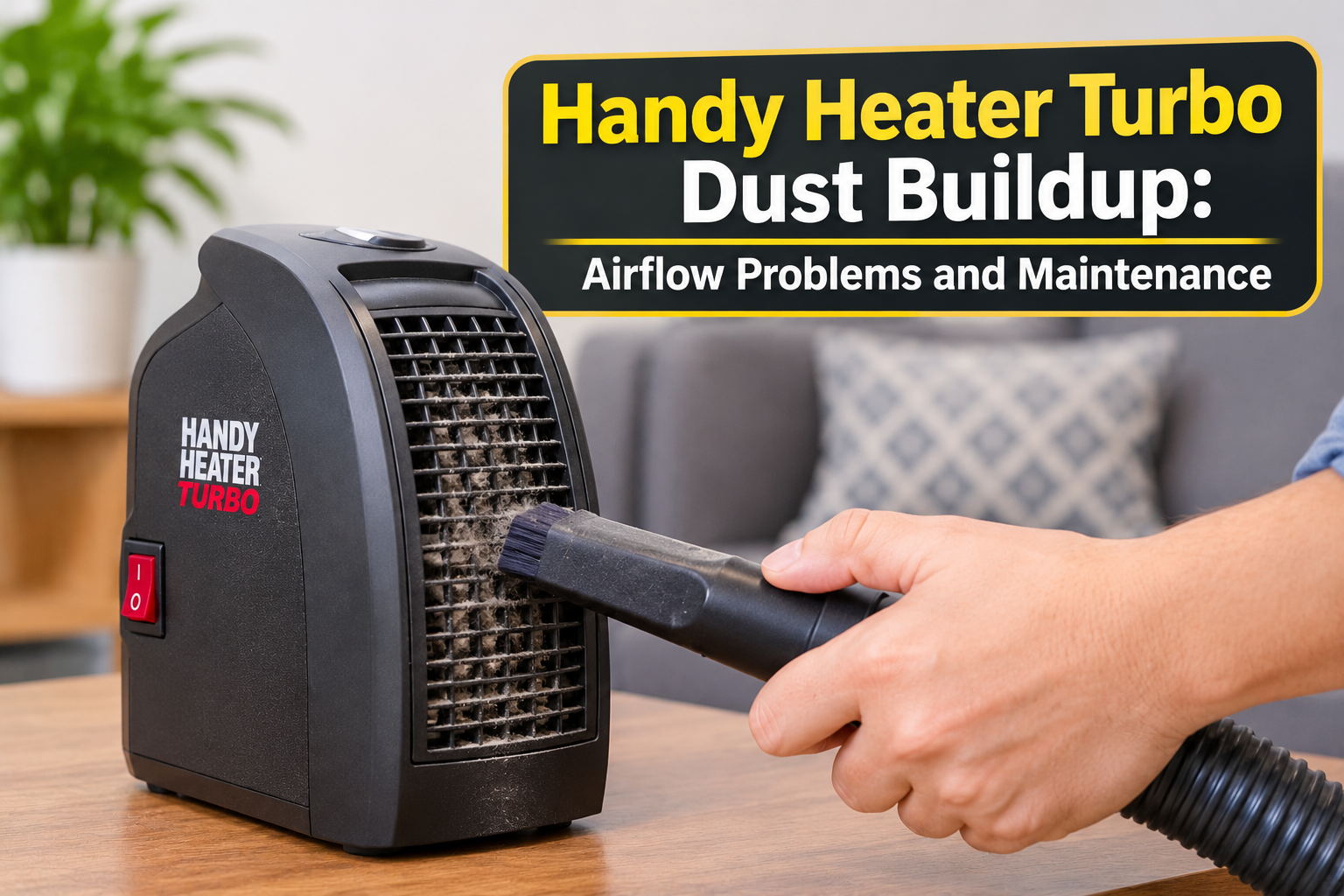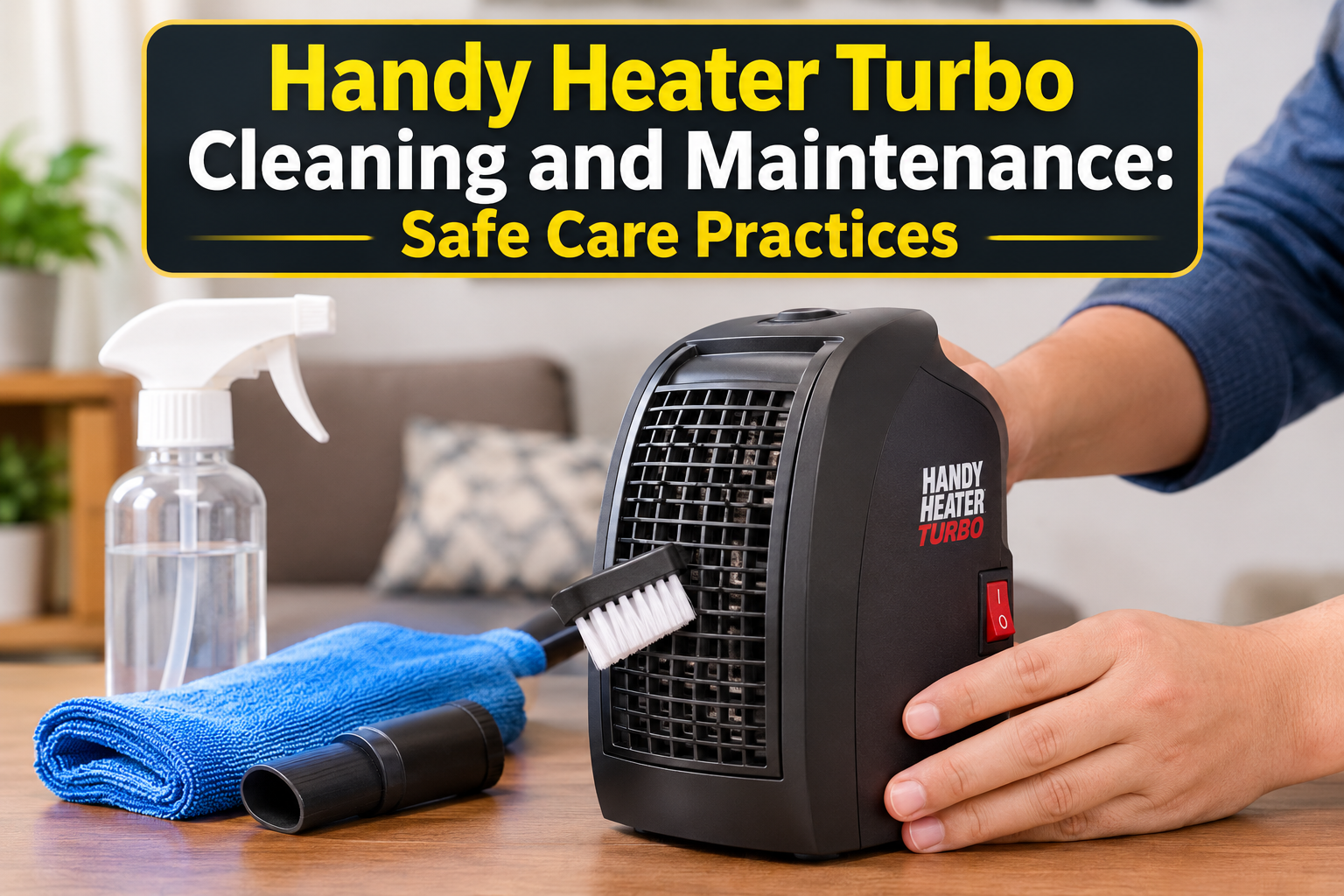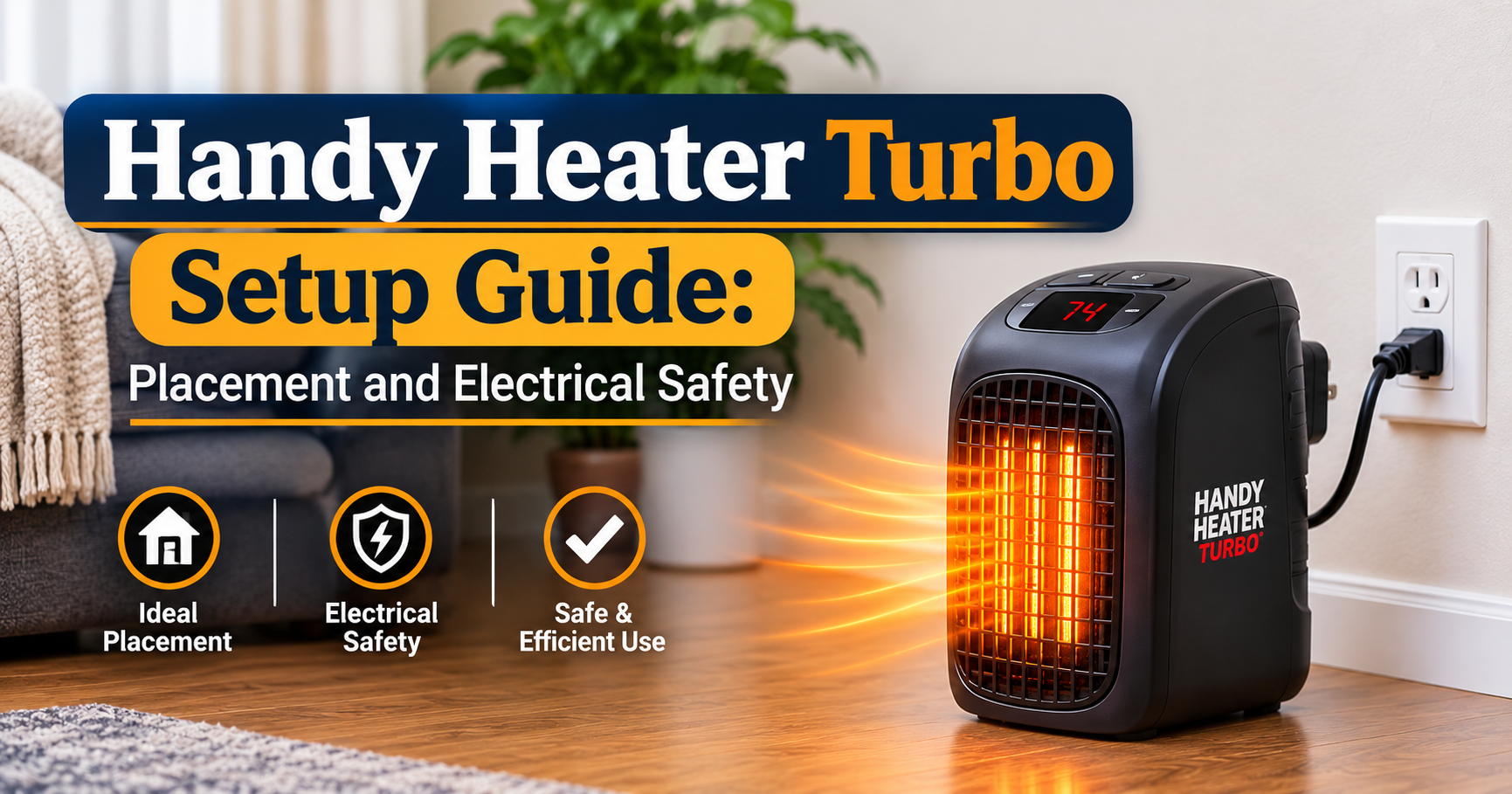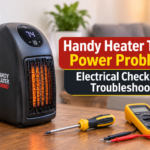
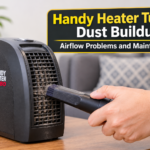

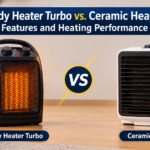
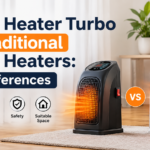
When the temperature drops, a small electric heater suddenly feels like the most important thing in the house. Two names come up again and again in searches: the compact Handy Heater Turbo, which is heavily advertised as a fast, portable heater, and the traditional space heater in its many forms. If you are deciding between them, this guide compares heat output, running costs, safety and real-world use so you can pick with confidence.
Quick Verdict
- Choose the Handy Heater Turbo if you only need quick warmth in a small area such as a desk, bathroom, bedside or reading corner, and you value a compact, lightweight unit.
- Choose a standard space heater if you want to warm a whole room, need a precise thermostat, or plan to use it for long hours.
What Is the Handy Heater Turbo?
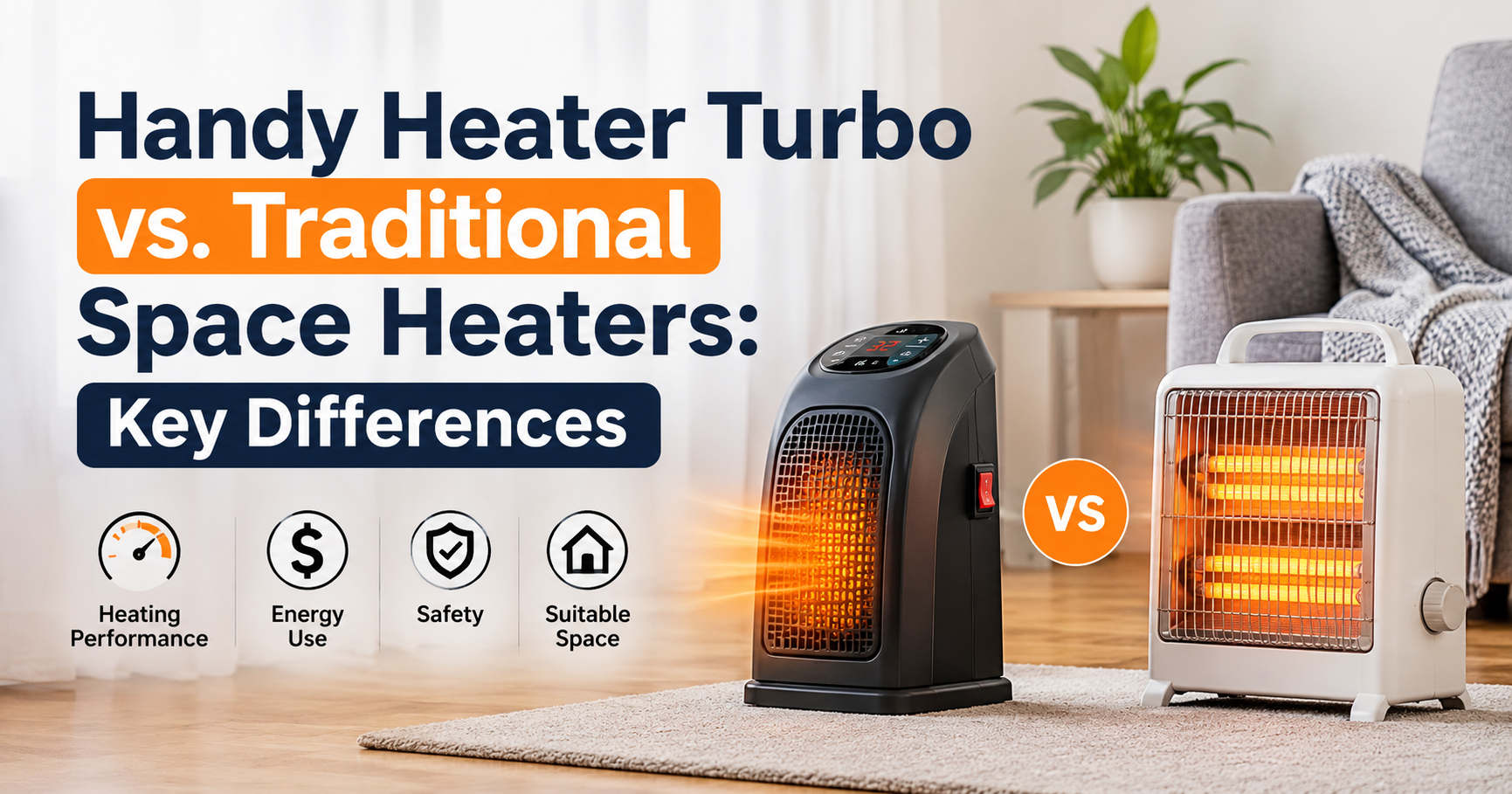
The Handy Heater Turbo is a compact plug-in ceramic-style heater marketed through direct-response advertising. It is promoted as a small, easy-to-carry unit that gives fast heat with a turbo-style boost. Because it is small, it heats the air and objects directly around it very quickly, which makes it feel powerful at close range.
It is worth remembering that products sold through television-style marketing often make bold claims. A small heater cannot defy basic physics: a 1500W heater, whatever its shape or name, produces roughly the same amount of heat as any other 1500W heater. The difference lies in airflow, design, controls and build quality.
What Is a Standard Space Heater?
“Space heater” is a broad category. The most common types are:
- Ceramic fan heaters: Heat up very quickly and push warm air into the room. Good for small to medium spaces.
- Oil-filled radiators: Slower to warm up but provide gentle, silent, long-lasting heat. Ideal for bedrooms.
- Infrared (radiant) heaters: Warm people and objects directly, useful in drafty or large spaces.
- Convection panel heaters: Quiet, slim and often wall-mountable.
Handy Heater Turbo vs Space Heater: Side-by-Side Comparison
| Feature | Handy Heater Turbo | Typical Space Heater |
|---|---|---|
| Heating power | Small ceramic unit, often advertised up to 1500W | Ranges from 400W to 1500W depending on type |
| Best room size | Up to about 100 sq ft (personal area) | 150 to 300+ sq ft depending on model |
| Heat-up speed | Fast for the area right in front of it | Fast (ceramic/fan) or slow but steady (oil-filled) |
| Portability | Very compact and light | Compact to medium; oil radiators are heavy |
| Thermostat & timer | Basic controls on most versions | Often adjustable thermostat, timer and remote |
| Safety features | Overheat and often tip-over protection claimed | Overheat, tip-over protection standard on certified models |
| Noise | Fan noise, usually moderate | Fan models noisy, oil-filled nearly silent |
| Price | Low to mid, often promoted with bundle deals | Wide range from budget to premium |
| Best for | Desk, bathroom, bedside, small nook | Whole-room or all-day heating |
Heating Performance and Room Size
Heating performance depends on wattage, room size, insulation and airflow. Most plug-in heaters in the US are capped at 1500W because of standard 15-amp household circuits, so the real difference between models is how efficiently they distribute that heat.

The Handy Heater Turbo shines in what experts call personal heating. Sit within a few feet and you feel the warmth almost immediately. Move across the room and the effect fades quickly. A full-size ceramic tower or oil-filled radiator spreads heat more evenly and raises the overall room temperature, which is why it is better for living rooms and larger bedrooms.
Energy Use and Running Cost
Electric heaters convert nearly all electricity into heat, so efficiency is almost identical between brands. Running cost is simply power multiplied by time multiplied by your electricity rate. A 1500W heater uses 1.5 kWh every hour.

The best way to cut costs is not to choose a “magic” heater but to use one with a good thermostat, heat only the room you are in, close doors, and block drafts. Heaters with a thermostat switch off when the target temperature is reached, which can noticeably lower your bill compared with a heater that runs non-stop.
Safety: The Most Important Factor
Portable heaters are a leading cause of home heating fires, so safety deserves more attention than price. Whichever you choose, follow these rules:
- Look for independent safety certification such as UL or ETL.
- Choose a model with automatic tip-over and overheat shut-off.
- Plug directly into a wall outlet. Never use an extension cord or power strip.
- Keep at least 3 feet (about 1 meter) of clear space around the heater, away from curtains, bedding and furniture.
- Never leave it running unattended or while you sleep unless the manufacturer explicitly allows it.
- Keep it away from water and out of reach of children and pets.
Because the Handy Heater Turbo is small and often placed on desks or floors close to people, keeping those clearances is especially important. Check that the exact product you receive carries proper safety markings and read the manual before first use.
Noise, Portability and Convenience
Compact fan-based heaters such as the Handy Heater Turbo produce a steady fan hum that most people find acceptable in a living area but may notice in a quiet bedroom. Oil-filled and panel space heaters are nearly silent. On portability, the Handy Heater Turbo wins easily: it is light, tiny and easy to store or move between rooms. Large oil-filled radiators are heavy, though many have wheels.
Pros and Cons
Handy Heater Turbo
Pros: Compact and lightweight, quick warmth at close range, easy to store, suited to personal spaces, often affordable.
Cons: Limited coverage, simpler controls on many versions, marketing claims can be exaggerated, quality can vary between sellers.
Standard Space Heater
Pros: Heats larger areas, more choice of types, better thermostat and timer options, quieter options available.
Cons: Bulkier, price varies widely, cheap models can be noisy or poorly built.
Which One Should You Buy?

If your main need is warming your feet under a desk, taking the chill off a bathroom in the morning, or heating a small corner, the Handy Heater Turbo can be a reasonable, budget-friendly choice. If you want to heat an entire room, stay warm for long periods, or enjoy precise temperature control, a quality ceramic, oil-filled or panel space heater with a thermostat is the smarter investment.
Buying Tips Before You Order
- Measure your room and match the heater to its size.
- Check safety certification and avoid unbranded units with no markings.
- Prefer a thermostat and timer for comfort and lower bills.
- Read recent customer reviews, focusing on long-term durability and real heating experiences.
- Check return policy and warranty before purchasing, especially for heavily advertised products.
Frequently Asked Questions
Is the Handy Heater Turbo better than a regular space heater?
Not universally. It is convenient for small personal spaces, but a regular space heater with a thermostat and higher-quality build is usually better for whole rooms and long hours of use.
Can the Handy Heater Turbo heat a whole room?
Most buyers find it works best for a small area such as a desk, bathroom or bedside. For a large room, a full-size ceramic or oil-filled heater is a better fit.
Which uses less electricity?
At the same wattage they use the same energy. What saves money is a thermostat that cycles the heater off once the room is warm, and matching the heater to your room size.
Is it safe to leave a heater running overnight?
Safety experts generally advise against running any portable heater unattended or while you sleep unless the manual explicitly allows it and the unit has a timer and tip-over protection.
Can I use an extension cord?
No. Plug the heater directly into a wall outlet. Heaters draw high current and extension cords or power strips can overheat.
What should I look for when buying?
Independent safety certification (such as UL or ETL in the US), a thermostat, tip-over and overheat protection, and a wattage suited to your room size.
Final Verdict
The Handy Heater Turbo is not a miracle machine, but it is a handy, portable option for personal warmth in small spaces. A standard space heater remains the better all-round solution for larger rooms, longer use and finer control. Match the heater to your space, prioritize safety features, and you will stay warm without overspending.