

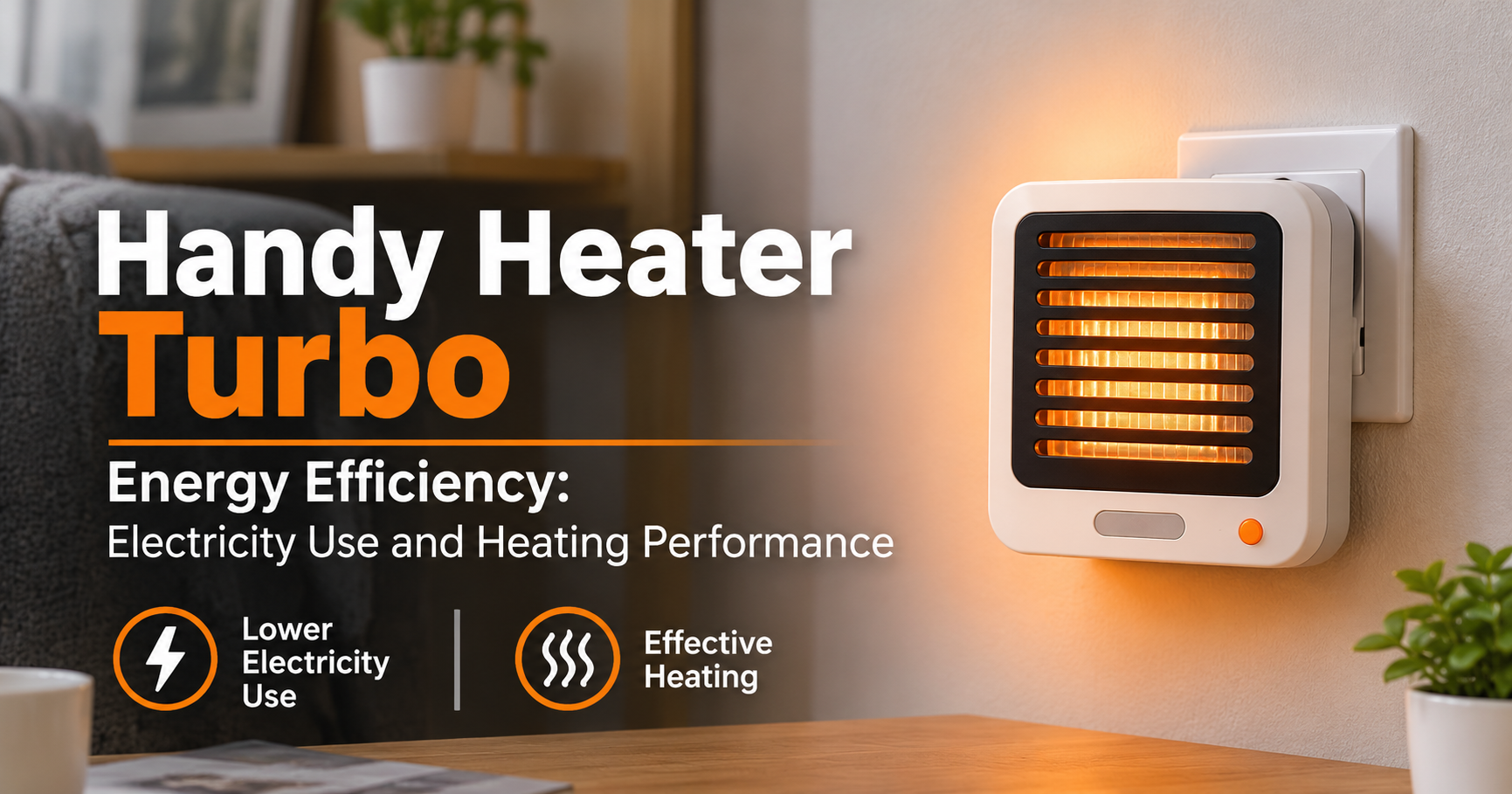
Cold evenings make you look for a quick fix, and compact plug-in heaters like the Handy Heater Turbo promise exactly that. But before you buy, one question matters more than any other: how energy efficient is it, and what will it cost you to run? This guide answers that honestly, without hype.
Quick summary
- A small electric heater turns almost all the electricity it uses into heat, so it is “efficient” in the technical sense.
- That does not mean it is cheap. Running cost depends on wattage, hours of use and your electricity rate.
- It works best as a personal or small-room heater, not as a replacement for central heating.
- Be careful with marketing claims such as “cuts your heating bill by half”. Always check the wattage on the label.
What is the Handy Heater Turbo?
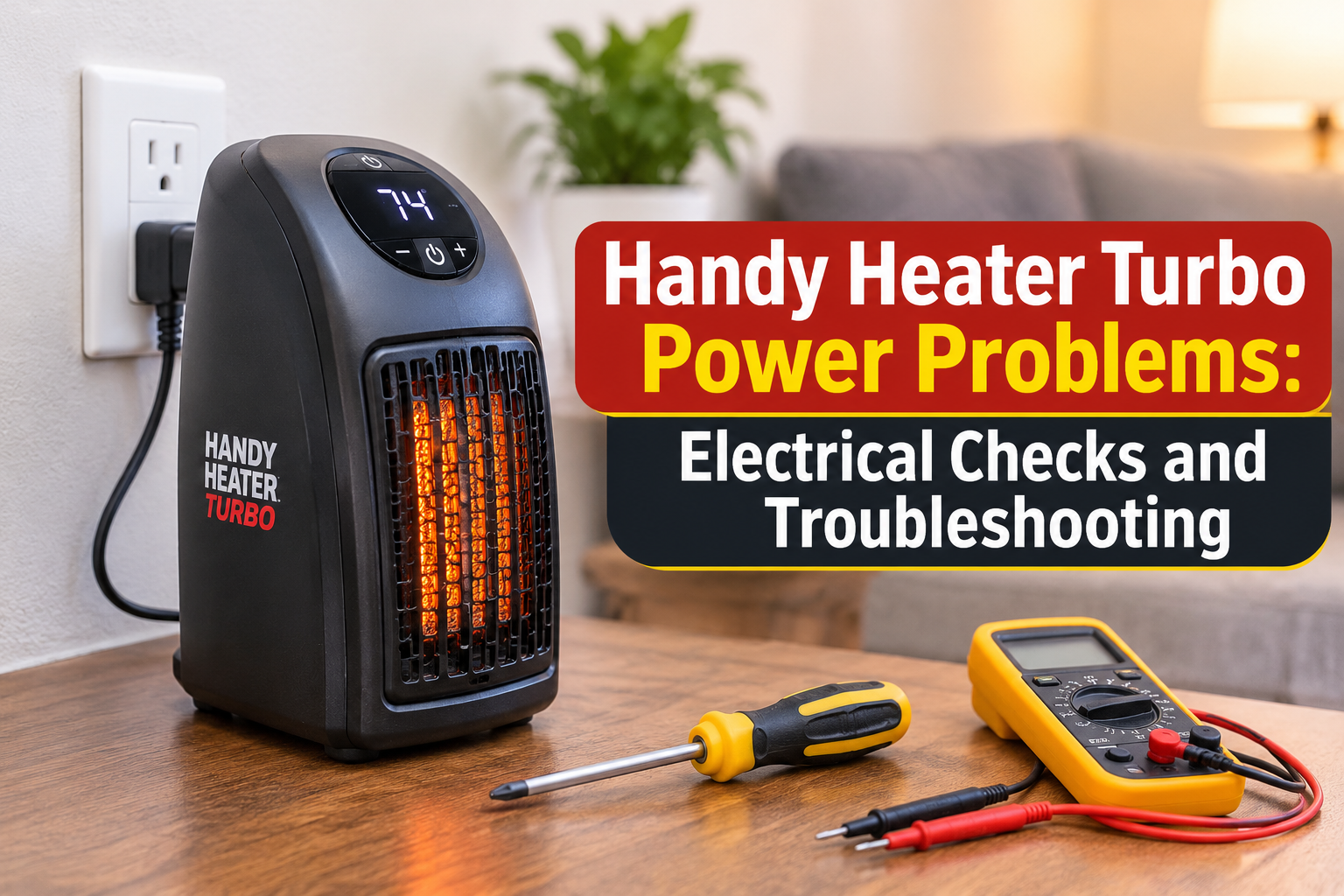
The Handy Heater Turbo is a compact, plug-in space heater of the kind sold for bedrooms, home offices, bathrooms and small living areas. Heaters in this category usually use a ceramic heating element and a small fan to push warm air into the room. They are light, easy to move and need no installation.
How does it produce heat?
Electricity flows through a ceramic element, which heats up. A built-in fan blows air across the element and into the room, so you feel warmth within a minute or two instead of waiting for a whole room to warm gradually. Many models also include a thermostat that switches the element off when the room reaches your chosen temperature.
Is it really energy efficient?
Here is the honest answer in two parts.
Conversion efficiency: very high. Nearly every unit of electricity a resistance heater uses ends up as heat in your room. Very little is wasted.
Cost efficiency: depends on how you use it. A heat pump can deliver two to four units of heat for each unit of electricity, so a plug-in heater is not the cheapest way to heat a whole home. Its real advantage is targeted heating: you warm only the space you are in and leave the rest of the house cooler.
How much does it cost to run?
You can estimate it with a simple formula:
Cost = (watts ÷ 1000) × hours × price per kWh
Example: a heater on its 1500 W setting for 8 hours uses 12 kWh. At $0.16 per kWh that is $1.92. On a 400 W low setting the same 8 hours costs about $0.51.
Check your own electricity bill for the price per kWh and the heater’s label for its maximum wattage, then plug both into the formula.
Things that change how efficient it feels
- Room size: small rooms heat fast. A large open space will make any plug-in heater work hard.
- Insulation and drafts: closing doors and blocking gaps stops heat escaping.
- Thermostat use: a thermostat prevents overheating and saves electricity.
- Placement: keep it clear of curtains and furniture so air can circulate.
- Power setting: use the low setting once the room is warm.
Safety features to look for
- Overheat protection that cuts power automatically
- Tip-over switch
- Cool-touch or well-guarded housing
- Safety certification marks that apply in your country
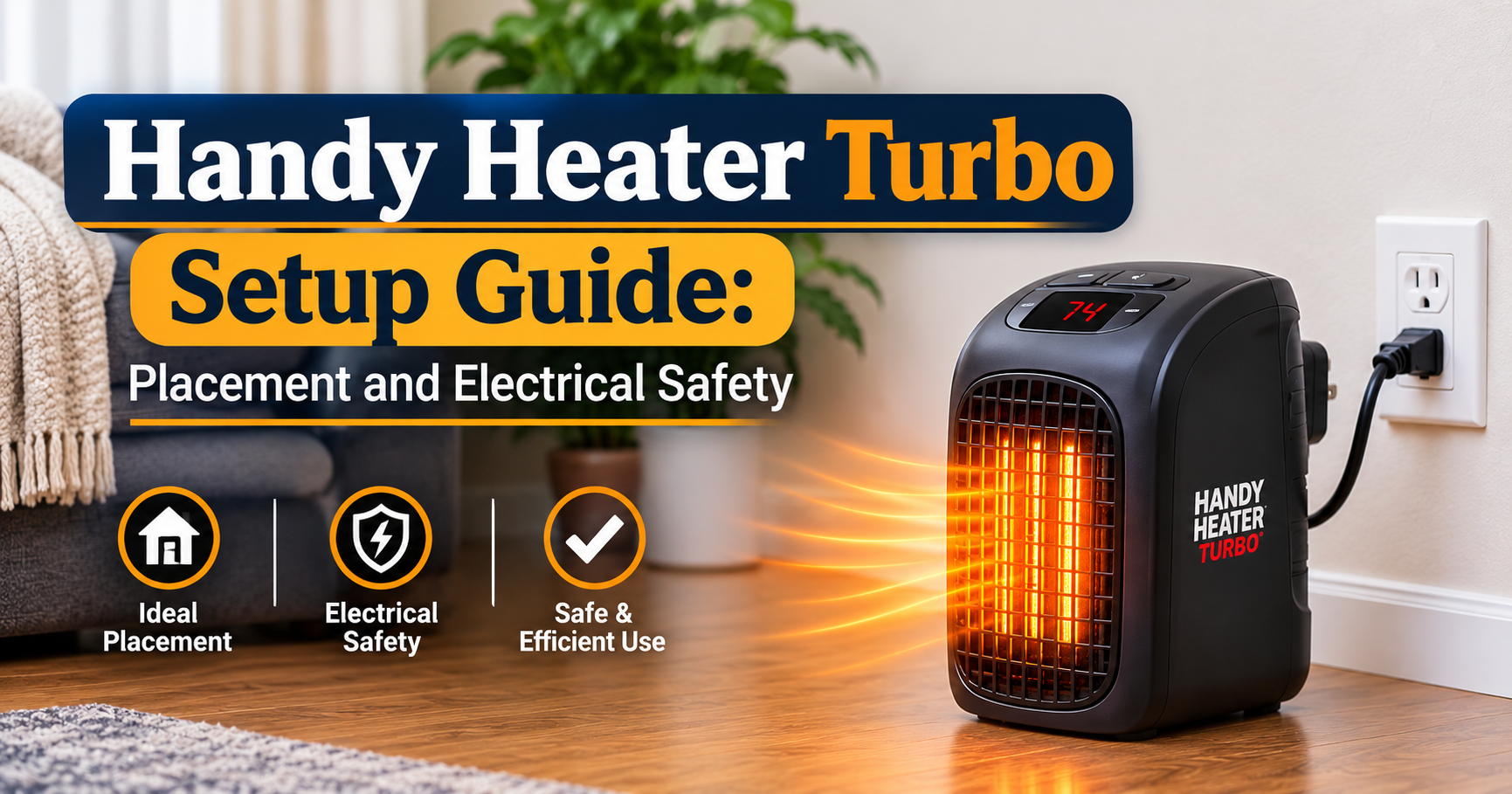
Plug it directly into a wall socket. Do not use extension cords or multi-plug adapters with high-wattage heaters, and never leave it running unattended or while you sleep unless the manual clearly allows it.
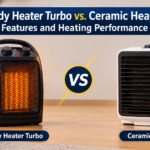
Handy Heater Turbo compared with other options
| Heating option | Best for | Running cost |
|---|---|---|
| Small plug-in heater | One small room, short use | Low to moderate |
| Oil-filled radiator | Steady, quiet heat | Moderate |
| Heat pump or inverter AC | Whole rooms, long use | Lowest per unit of heat |
| Central heating | Whole house | Depends on fuel |
Pros and cons
Pros
- Fast warm-up and easy to carry
- No installation needed
- Good for heating just one person or one small room
- Low upfront price
Cons
- Not suited to large or open spaces
- Running cost rises quickly at high wattage
- Marketing savings claims can be exaggerated
- Needs careful, sensible placement for safety
Who should buy it?
It suits people who work from a small home office, renters who cannot install central heating, and anyone who wants a bathroom or bedroom warmed briefly. It is a poor fit if you need to heat a large living area for many hours every day.
Tips to save energy with a plug-in heater
- Close the door of the room you are heating.
- Use a thermostat setting you find comfortable rather than the maximum.
- Warm the room before you need it, then drop to low power.
- Wear warm clothing to reduce how much heating you need.
- Seal gaps around windows and doors.
Frequently asked questions
Does the Handy Heater Turbo really save electricity?
It can reduce your bill if it lets you heat one small room instead of the whole house. It will not save money if you use it to heat a large space for many hours.
How many watts does it use?
Models in this category often run between a few hundred watts and about 1500 W. Always read the rating on your unit or its packaging.
Is it safe to leave on overnight?
Follow the manufacturer’s manual. As a general rule, avoid leaving any space heater running unattended.
Is a plug-in heater cheaper than air conditioning in heating mode?
An efficient heat pump or inverter AC usually costs less per unit of heat, but a small heater is cheaper to buy and good for short bursts.
Final verdict
The Handy Heater Turbo can be a practical, affordable way to stay warm in a small space. Its energy efficiency is real in the sense that almost all electricity becomes heat, but your bill still depends on wattage and hours of use. Buy it for targeted, short-term heating, check the label rather than the slogan, and use it safely, and it can be a sensible addition to your winter routine.