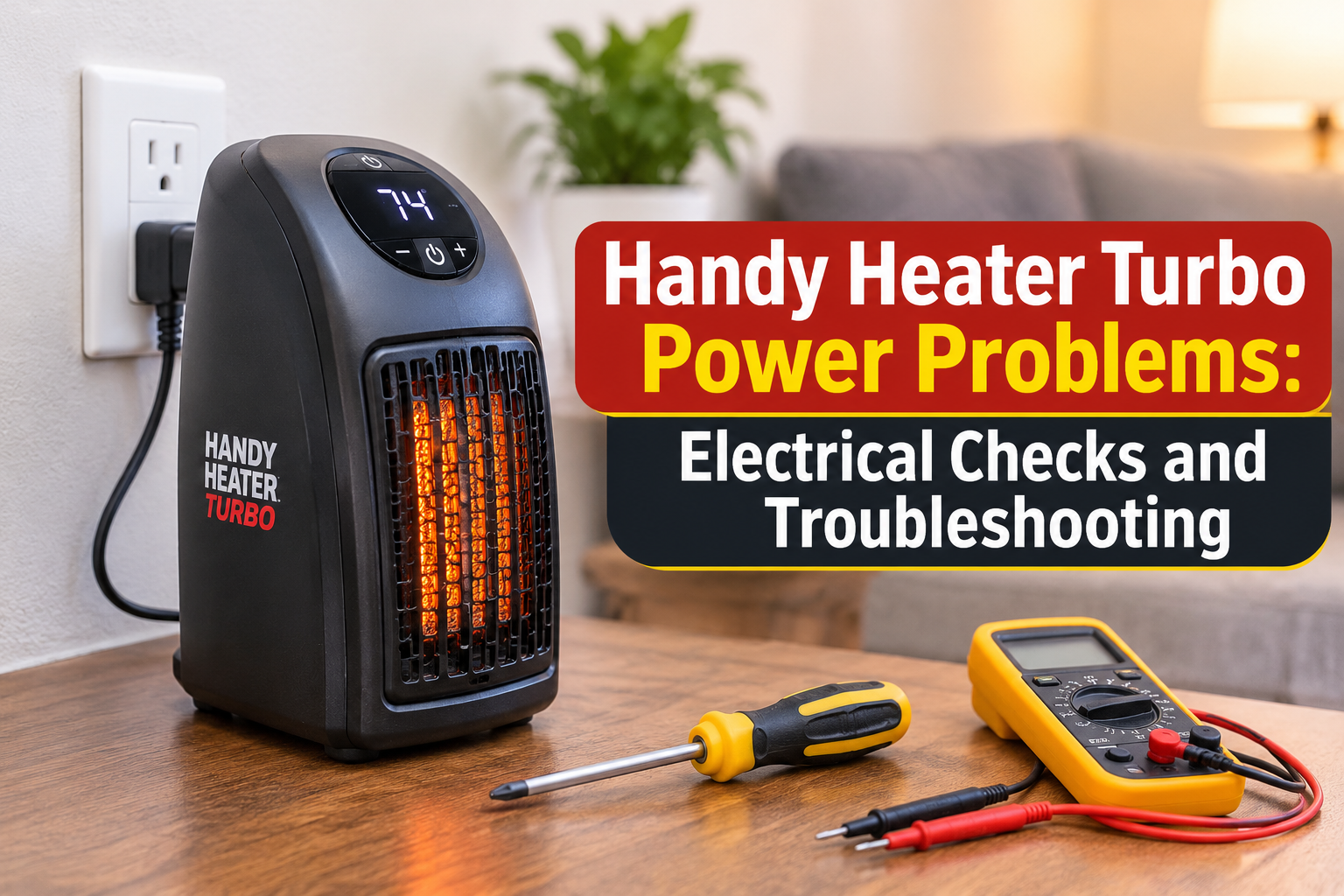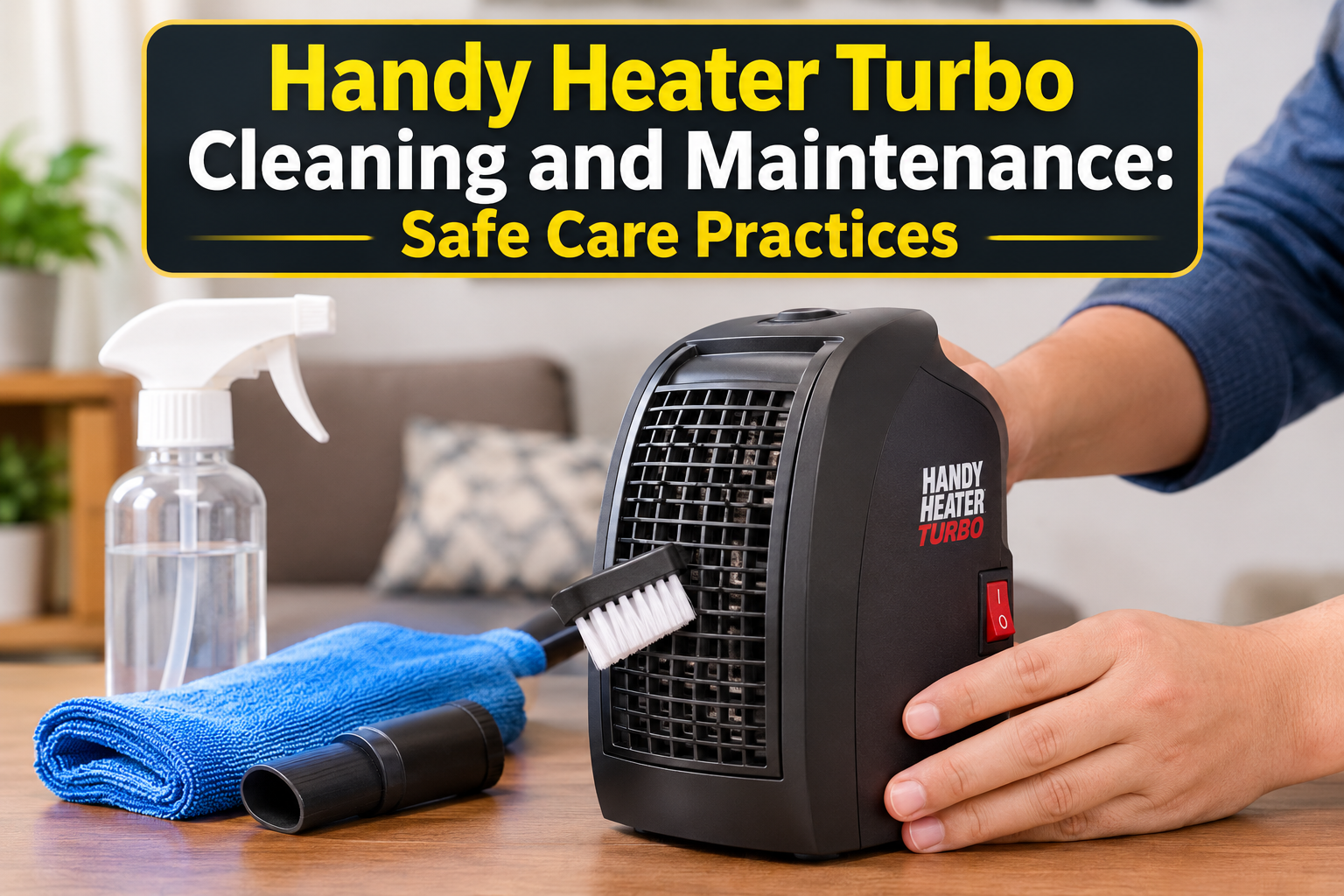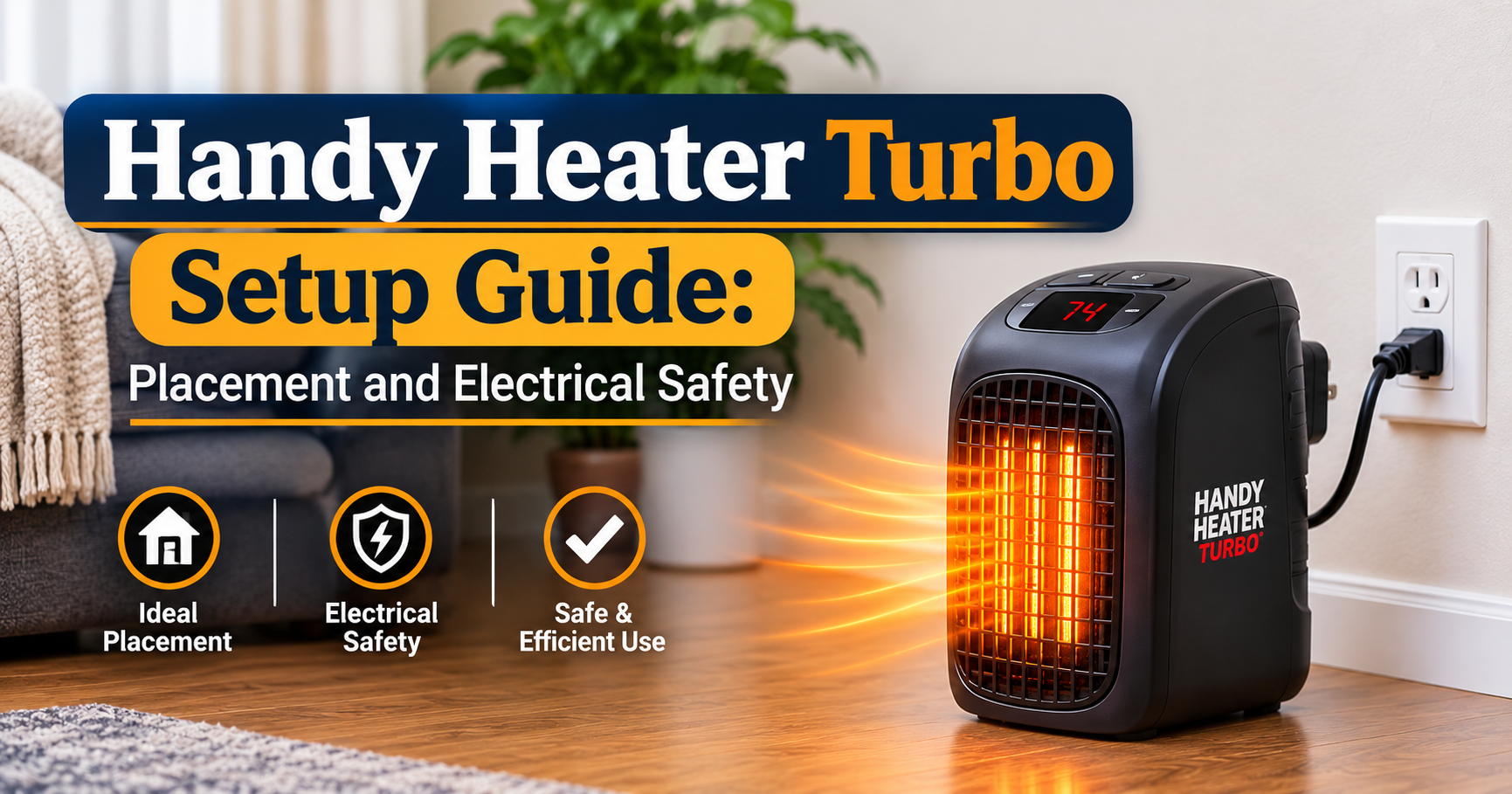








When the temperature drops, a portable electric heater is one of the quickest ways to make a cold room comfortable. But once you start shopping, you run into two names again and again: ceramic portable heaters and fan heaters. They look similar, they plug into the same wall socket, and many sellers use the terms interchangeably. So what is the real difference, and which one deserves your money?
In this guide, we compare a ceramic portable heater vs a fan heater on the things that actually matter: how they work, safety, running cost, heat-up speed, noise, lifespan, and the right room size. By the end, you will know exactly which type fits your home.
Ceramic Heater vs Fan Heater: What Is the Difference?
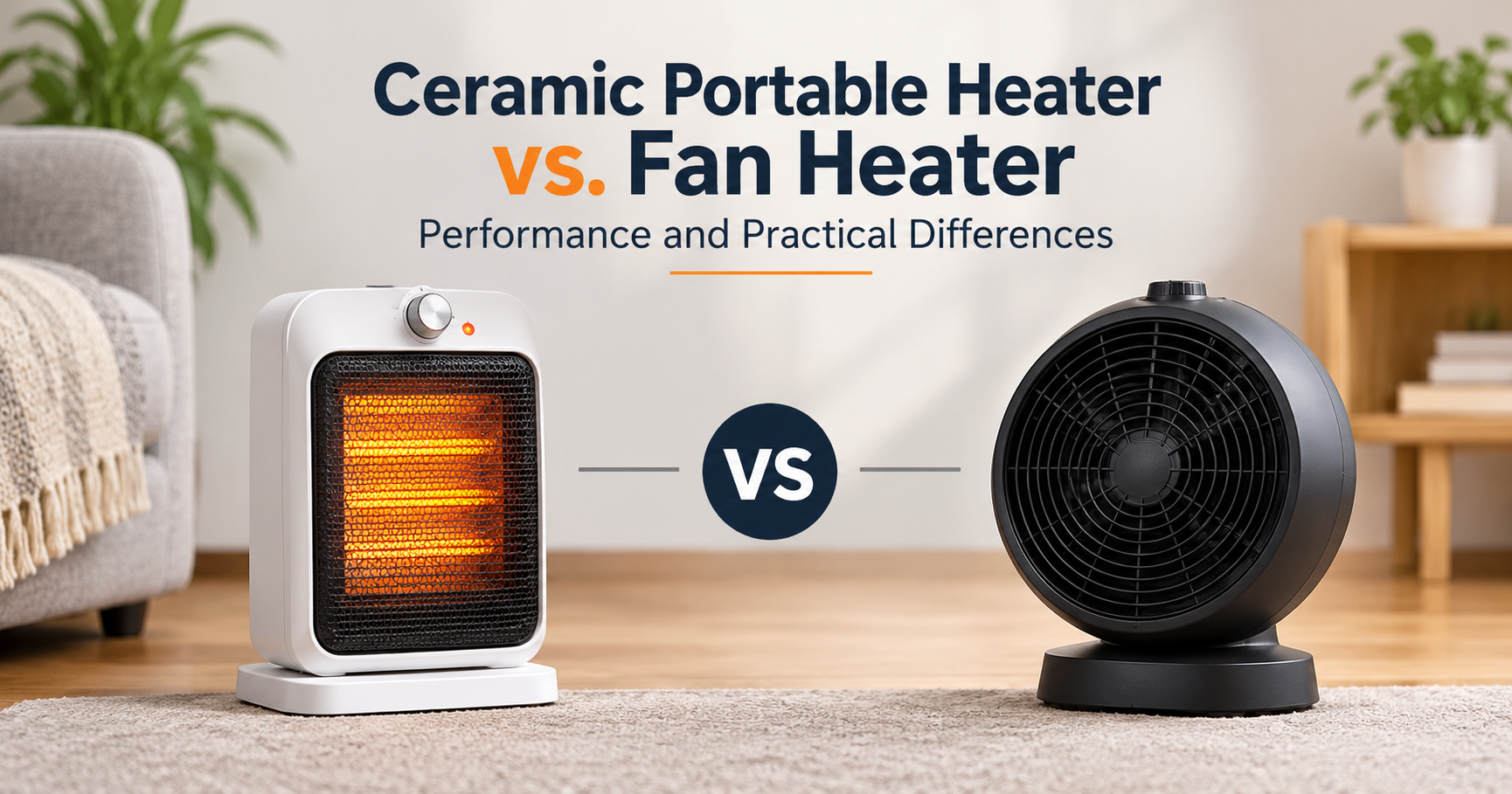
Before comparing, it helps to clear up one common confusion. A fan heater is any heater that uses a fan to blow air across a hot element. A ceramic heater is a heater whose hot element is made of ceramic. Most ceramic heaters also use a fan, so the real difference lies in the heating element:
- Ceramic portable heater: uses PTC (Positive Temperature Coefficient) ceramic plates, usually attached to aluminium fins. A fan then pushes warm air into the room.
- Traditional fan heater: uses an exposed metal coil, normally a nichrome wire, that glows red when it is on. A fan blows air through the coil.
That one design choice affects safety, noise, smell, durability and price. It is the heart of this comparison.
How a Ceramic Portable Heater Works
Inside a ceramic heater are small ceramic stones or plates made from a special material. When electricity passes through them, they heat up quickly. Here is the clever part: as a PTC ceramic gets hotter, its electrical resistance rises, which automatically reduces the current flowing through it. In simple words, the element limits its own temperature.
The heat moves into aluminium fins, and a fan blows air across the fins and out into your room. Some ceramic models also add a thermostat, oscillation, a timer and a remote control. There are also quieter ceramic tower and radiant versions that rely less on a loud fan.
Pros of ceramic heaters
Advantages
- Self-regulating element lowers the risk of overheating
- The outer body usually stays cooler than a bare coil heater
- No glowing red wire and little burnt-dust smell
- Steady, even warmth with a thermostat
- Elements often last longer than thin metal coils
- Many models offer timers, oscillation and remotes
Drawbacks
- Higher upfront price than a basic fan heater
- Takes a few moments longer to feel warm
- The fan can still make some noise
- Better models are a little heavier
How a Fan Heater Works
A traditional fan heater is beautifully simple. Electricity flows through a coil of resistance wire, the coil gets very hot, and a small fan blows room air across it. The warm air leaves through the front grille. Because the coil gets hot almost instantly, you can feel warmth within seconds of switching it on.
Pros and cons of fan heaters
Advantages
- Usually the cheapest type to buy
- Very fast initial warmth
- Compact and lightweight, easy to carry from room to room
- Great for a small space or a short burst of heat
Drawbacks
- Exposed hot coil is less forgiving if something goes wrong
- Often noisier, because the fan runs hard
- May give off a burnt-dust smell, especially when new
- Warmth can feel uneven, with hot then cool cycles
- The coil can wear out sooner than a ceramic element
Ceramic vs Fan Heater: Side-by-Side Comparison
| Feature | Ceramic portable heater | Fan heater (metal coil) |
|---|---|---|
| Heating element | PTC ceramic plates with aluminium fins | Exposed nichrome wire coil |
| Safety | Self-regulating element; generally the safer design | Safe when well made, but the coil gets very hot |
| Heat-up speed | Quick, a few moments to reach full output | Almost instant warm air |
| Warmth quality | Steady and even with a thermostat | Can feel hot and cool in bursts |
| Noise | Moderate; quieter models exist | Often louder |
| Smell | Minimal | Burnt-dust smell is common at first |
| Lifespan | Often longer | Often shorter |
| Upfront price | Medium to high | Low |
| Running cost | Same as a fan heater at the same wattage | Same as a ceramic heater at the same wattage |
| Best for | Bedrooms, home offices, daily use | Small spaces, quick and occasional heat |
Which One Is Safer?
Safety is the biggest reason people lean towards ceramic. Because a PTC element limits its own temperature, it is much less likely to overheat. A bare metal coil keeps getting hotter as long as current flows, so it relies more heavily on the thermostat and the overheat cut-off to stay safe.
That said, the heater type matters less than the build quality. A well-made fan heater with proper protections can be safer than a cheap, uncertified ceramic unit. Whatever you buy, look for these features:
- Tip-over switch that cuts power if the heater falls
- Overheat protection that shuts the unit off at unsafe temperatures
- Flame-retardant housing made of heat-resistant material
- Cool-touch or well-guarded grille so small fingers cannot reach hot parts
- A recognised safety certification such as CE, UL or ETL, along with your local standard
Running Cost: Is a Ceramic Heater Cheaper to Use?
This is where many websites mislead buyers. Electric heaters turn almost all the electricity they use into heat. That means a 1500 W ceramic heater and a 1500 W fan heater put out essentially the same heat and cost the same to run per hour. A ceramic heater is not magically cheaper to operate.
The real savings come from how you use it. A heater with an accurate thermostat switches off once the room is warm, so it does not waste power. You can work out your own cost with this simple formula:
Example: a 1500 W heater running for 4 hours uses (1500 ÷ 1000) × 4 = 6 units (kWh). Multiply 6 by your own rate to see the cost for that session.
To keep bills low, choose a heater with an adjustable thermostat, heat only the room you are using, close doors and windows, and use the lower power setting once the room reaches a comfortable temperature.
Heat-Up Speed and Warmth Quality
If you walk into a freezing room and want warm air right now, a fan heater wins the first minute because its coil heats almost instantly. A good ceramic heater is not far behind, usually reaching full output within a short time, and it tends to deliver a more stable and comfortable temperature afterwards.
Both types heat the air that passes through them, so neither will warm a large, draughty space quickly. They work best in rooms where you can close the door.
Noise Levels
The fan is the main source of noise in both designs. Basic fan heaters tend to run the fan faster and harder, which makes them louder. Ceramic models, especially those with a lower fan speed, are often quieter and more pleasant in a bedroom or home office. If silence matters, check for a low-noise or sleep mode, or consider a ceramic tower model.
Air Quality, Smell and Dryness
A common myth says electric heaters “burn the oxygen” in a room. They do not. Electric heaters have no flame and do not consume oxygen. What can happen is more subtle:
- A coil heater can burn dust that has settled on it, causing a brief burnt smell. Clean the grille and switch on at a lower setting after storage.
- Any heater can make the air feel drier. A bowl of water or a humidifier helps if you notice dry skin or a dry throat.
- Ceramic heaters generally produce less odour thanks to their cleaner, lower-surface-temperature design.
What Size Heater Do You Need?
The right wattage depends on your room. A common rule of thumb is about 10 watts per square foot (roughly 100 watts per square metre) for a typical insulated room. Colder climates, poor insulation and high ceilings need more.
| Room size | Approximate wattage | Typical use |
|---|---|---|
| Up to 100 sq ft (about 9 m²) | 800 to 1000 W | Small bedroom, study nook, desk area |
| 100 to 150 sq ft (9 to 14 m²) | 1000 to 1500 W | Average bedroom, home office |
| 150 to 200 sq ft (14 to 19 m²) | 1500 to 2000 W | Larger bedroom, small living room |
| Over 200 sq ft (19 m²+) | Consider more than one heater, or a different heating system | Open-plan or high-ceiling rooms |
Check that your wiring and socket can safely handle the wattage you choose, especially for models above 1500 W.
Which Should You Buy? Quick Decision Guide
Best for a bedroom
A ceramic heater with a thermostat, timer and tip-over protection. Use it to warm the room before bedtime, then switch it off before you sleep.
Best for a home office or study
A quiet ceramic model with oscillation. Steady warmth and lower noise help you concentrate.
Best for a bathroom or damp space
Only use a heater clearly rated for bathrooms and wet areas. Standard portable ceramic and fan heaters are not suitable for use near water.
Best on a tight budget
A basic fan heater from a reputable brand with full safety protections. It will warm a small room quickly, as long as you use it sensibly and with supervision.
Best for homes with kids or pets
A ceramic heater with a cool-touch body and a fine grille, placed out of reach and on a flat, stable surface.
Buying Checklist: Features to Look For
- Adjustable thermostat for steady temperature and lower power waste
- Multiple heat settings such as low, medium and high
- Tip-over and overheat protection, which should be non-negotiable
- Safety certification from a recognised body
- Timer and remote control for convenience and safer use
- Oscillation to spread heat across the room
- Washable or easy-to-clean filter and grille
- Carry handle and a cord storage area if you plan to move it often
- Warranty and brand reputation, since heaters are safety-critical appliances
Frequently Asked Questions
Is a ceramic heater better than a fan heater?
For most households, yes. Ceramic heaters generally offer better safety, steadier warmth and a longer lifespan. A fan heater is still a sensible choice if you need a cheap, lightweight unit for short use in a small room.
Does a ceramic heater use less electricity?
Not at the same wattage. Both types convert nearly all electricity into heat, so a 1500 W unit costs about the same per hour either way. A good thermostat is what helps you save energy.
Can I leave a portable heater on overnight?
It is not recommended. Even with safety features, portable heaters should be supervised. Warm the room before bed and switch the heater off before you sleep.
Why does my new heater smell when I first turn it on?
New heaters can release a faint odour from protective coatings and dust on the element. It usually fades after a short period of use in a ventilated room. If the smell is strong, persistent or smells like burning plastic, switch it off and stop using it.
Do ceramic heaters dry out the air?
All electric heaters lower the relative humidity as they warm the air. Ceramic heaters are not unusually drying, but a humidifier or a bowl of water can help if the room feels dry.
Is a ceramic heater good for a large room?
A single portable heater is best for small to medium rooms. For large or draughty spaces, use a higher-wattage model, close doors, or consider a fixed heating solution.
How long does a ceramic heater last?
Lifespan depends on the brand and how often you use it, but ceramic elements often outlast thin metal coils. Regular cleaning and proper storage extend the life of any heater.
Final Verdict
The ceramic portable heater vs fan heater decision comes down to priorities. If you want a safer, steadier and longer-lasting heater for regular use, a ceramic portable heater is the better investment. If you want the cheapest and quickest way to take the chill off a small room for short periods, a well-made fan heater does the job.
Whichever you pick, remember the three things that matter most: choose the right wattage for your room, buy a certified model with tip-over and overheat protection, and never leave it running unattended. Stay warm and stay safe this winter.