




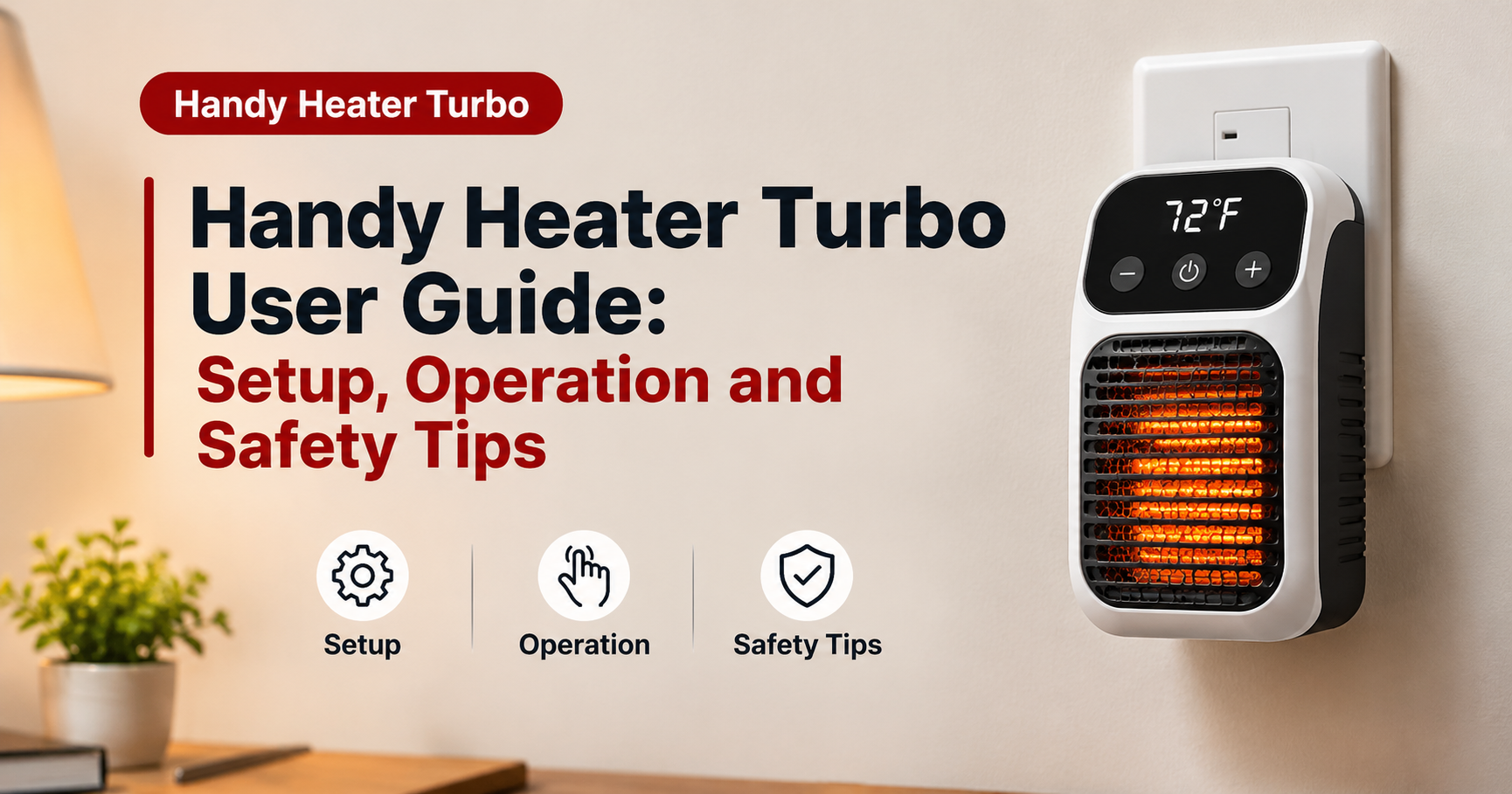
The cold season makes everyone look for a fast, simple way to warm up a room without a big bulky heater. That is exactly why the Handy Heater Turbo became so popular. It is a compact, plug-in ceramic heater that sits directly on your wall outlet, so it takes up no floor space at all. But a heater only works well if you set it up and use it correctly.
In this guide you will learn how to use the Handy Heater Turbo from the very first plug-in to daily use. We cover the control panel, the right temperature and timer settings, the best placement, safety rules, energy cost, cleaning, troubleshooting and the most common questions. Read it once and you will get safer and better results from your heater.
- What the Handy Heater Turbo is and its main specifications
- 8 simple steps to set it up and use it
- How to read the control panel, set temperature and use the timer
- Best placement and the right room size
- Safety rules, cleaning and troubleshooting
- Electricity cost, pros and cons, and FAQs
What Is the Handy Heater Turbo?
The Handy Heater Turbo (often sold as Handy Heater Turbo 800) is a small wall-outlet space heater that uses ceramic heating technology. It is rated at 800 watts, which the brand describes as about double the power of the original 350-watt Handy Heater. Because it plugs straight into a standard wall socket, you do not need a stand, a cord running across the floor or any installation.
Most versions include a digital LED display, an adjustable thermostat, a programmable timer of up to 12 hours, a stay-cool housing and an automatic shut-off feature. It is made for personal, indoor, household use in small spaces.
Quick Specifications
| Feature | Details |
|---|---|
| Power | 800 watts |
| Voltage | 120V AC, 60Hz (US-style outlet) |
| Heating type | Ceramic heating element |
| Installation | Plugs directly into a wall outlet |
| Thermostat range | About 60°F to 90°F (15°C to 32°C), as listed by most sellers |
| Timer | Programmable, up to 12 hours |
| Safety features | Stay-cool housing and auto shut-off |
| Best for | Small rooms such as bedrooms, offices and dorms |
| Use | Indoor, household use only |
Note: Features and button layout can differ slightly between versions and sellers. Always follow the user manual that comes in your box.
Before You Start: Quick Checks
Spend one minute on these checks before the first use. They prevent most problems.
- Check the voltage. The standard Handy Heater Turbo is built for a 120V outlet. If your country uses 220V to 240V, do not plug it in unless the heater is clearly rated for that voltage.
- Inspect the heater. Look for cracks, damaged prongs or a loose housing. Do not use a damaged unit.
- Check the outlet. The socket should be in good condition and hold the plug firmly. A loose or burnt outlet is not safe for a heater.
- Clear the area. Remove curtains, paper, clothes and bedding from the space in front of the heater.
- Read the manual. It shows the exact buttons and functions of your version.
How to Use Handy Heater Turbo: 8 Simple Steps

Step 1: Choose the Right Outlet
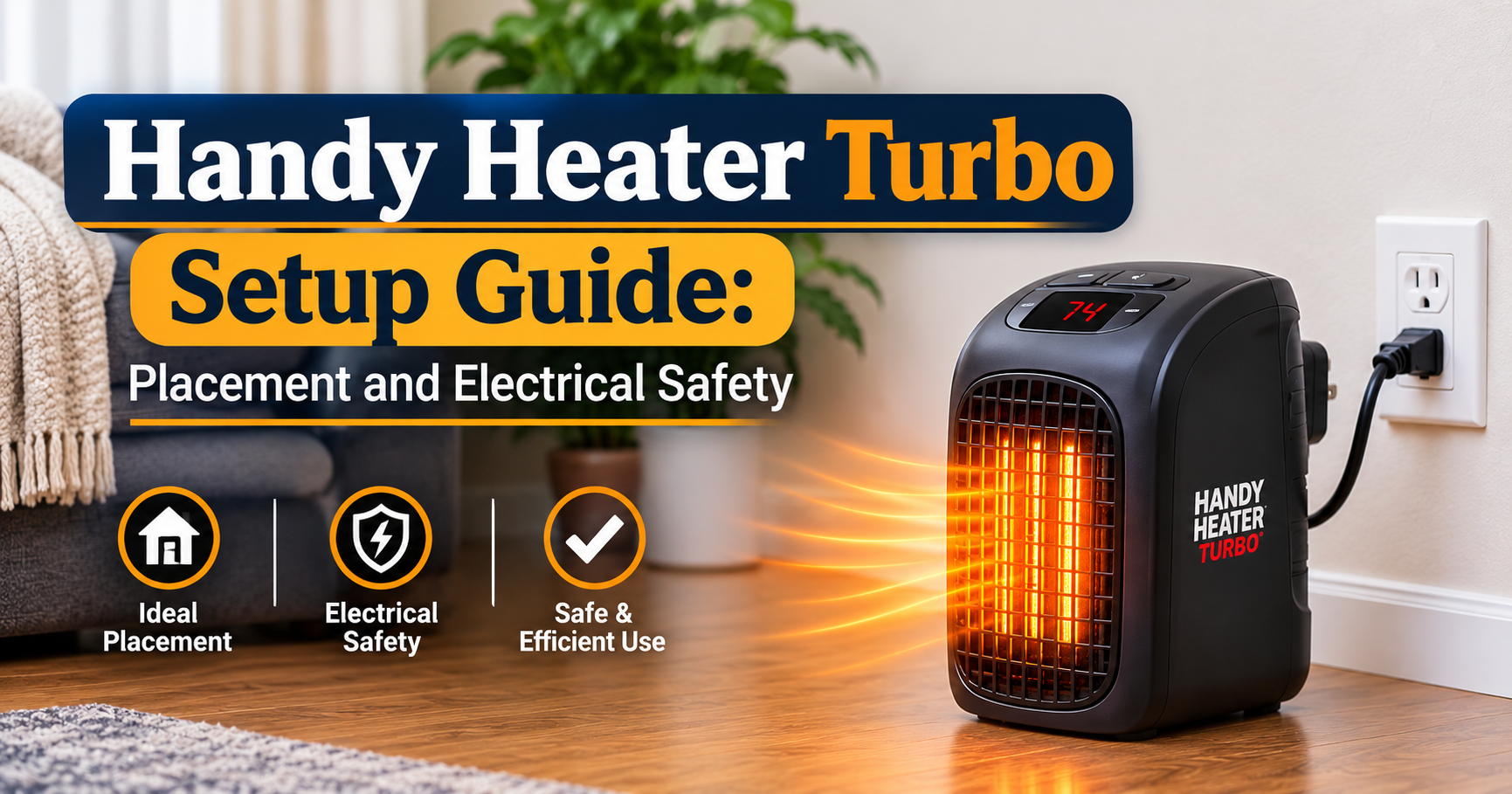
Pick a wall outlet in the room you want to warm. Choose one that is not hidden behind a sofa, bed or curtain. Ideally the outlet should be a few feet above the floor with open space in front of it. This is the single most important choice, because it decides how well the warm air can spread.
Step 2: Plug It In Firmly
Hold the heater by its body and push the prongs fully into the socket until it sits flush against the wall plate. Never use an extension cord, a power strip or a stack of adapters. Heaters draw a lot of current and these accessories can overheat.
Step 3: Turn the Power On
Press the power button. The LED display should light up. Most versions start by showing the room temperature or the last temperature you set. If the display stays dark, check that the plug is fully inserted and that the outlet has power.
Step 4: Set Your Temperature
Use the temperature buttons (the minus and plus buttons) to choose how warm you want the room. The heater works like a thermostat. It heats until the room reaches your set temperature, then it pauses and starts again when the room cools down. For everyday comfort, many people choose a setting around 68°F to 72°F (20°C to 22°C). Higher settings use more electricity, so only raise it when you really need to.
Step 5: Use the Timer
The timer lets the heater switch itself off after a set number of hours (up to 12 on most versions). It is a smart habit to use it. For example, set 1 or 2 hours before you go to sleep or while you work at your desk, so the heater does not run longer than you need.
Step 6: Adjust the Fan Setting (If Your Version Has It)
Some versions and listings mention fan speed settings. If yours has them, choose the lower speed when you want quiet operation, for example at night, and the higher speed when you want the room to warm up faster.
Step 7: Give It a Few Minutes
Ceramic heaters warm up quickly, and you can usually feel warmth near the unit within a short time. Warming a whole room takes longer, and it depends on room size, insulation, drafts and outside weather. Close the door and windows to help the heat stay in.
Step 8: Turn Off and Unplug After Use
When you are finished, press the power button to switch the heater off, wait for it to cool and then unplug it. Unplugging is best when you leave the house, go out of the room for a long time or finish for the day.
Understanding the Control Panel
The controls are simple, but it helps to know what each part does. Here is the typical layout.

- LED display: shows the temperature you set, and sometimes the timer value while you adjust it.
- Power button: switches the heater on or off.
- Temperature minus and plus: lower or raise the target temperature.
- Timer button: sets the automatic off time.
Pro tip: If the display shows a set temperature that is lower than the current room temperature, the heater will not produce heat. It is not broken. Simply raise the set temperature above the room temperature.
Best Placement for the Handy Heater Turbo
Where you plug in the heater changes how warm you feel. Follow these rules for the best and safest results.

- Keep about 3 feet (1 meter) clear in front of the heater. This is a widely used safety distance for space heaters.
- Never cover the vents. Blocked airflow can trigger the auto shut-off or cause overheating.
- Keep flammable items away. This includes curtains, bedding, clothes, paper and cardboard.
- Place it near where you sit or sleep so you feel the warmth directly, but still keep the safe distance.
- Avoid outlets behind furniture. Furniture blocks the airflow and traps heat.
Which Room Size Is It Good For?
The Handy Heater Turbo is a personal heater for small spaces. It is not a whole-house heater. As a rough guide, 800 watts suits a small room of about 100 square feet very well. In a well-insulated room that is a little larger it can still help, but expect slower and uneven warming. For large living rooms or open-plan spaces, a bigger heater is the better choice.

Good places to use it
- Small bedrooms and kids’ rooms (with supervision and the timer)
- Home offices and study rooms
- Dorm rooms and rented apartments
- Small basements and RV or camper spaces with suitable power
Be careful in bathrooms
Many sellers list bathrooms as a use. If you use it there, keep the heater far away from water, make sure the outlet is protected and dry, and never use it where it could fall into a bathtub, sink or shower. If you are unsure, skip the bathroom and warm the room before you go in.
Tips to Get More Warmth from Your Heater
- Close the door. A small closed room warms far faster than an open hallway.
- Block drafts. Use a door draft stopper and seal gaps around windows.
- Use thick curtains at night. Just keep them well away from the heater.
- Add a rug. A rug on a cold floor makes the room feel warmer.
- Pre-heat the room. Switch the heater on 20 to 30 minutes before you need the warmth, and use the timer.
- Do not set the maximum temperature all the time. A moderate setting is more comfortable and uses less power.
- Wear warm clothes. A layer or a blanket (kept away from the heater) lets you use a lower setting.
Safety Rules You Should Always Follow
Any electric heater needs respect. The Handy Heater Turbo has built-in protection such as a stay-cool housing and auto shut-off, but your habits matter most.

- Plug directly into a wall outlet. Never use extension cords or power strips.
- Keep children, pets and flammable items away from the heater.
- Do not cover the heater or dry clothes on it.
- Do not use it near water or with wet hands.
- Use it indoors only and only for household use.
- Do not use a damaged heater, a cracked housing or a loose outlet.
- Use the timer and unplug the heater when you leave the room or the house.
- Check that your smoke detector works, especially in rooms where you use a heater.
How to Clean and Maintain the Handy Heater Turbo
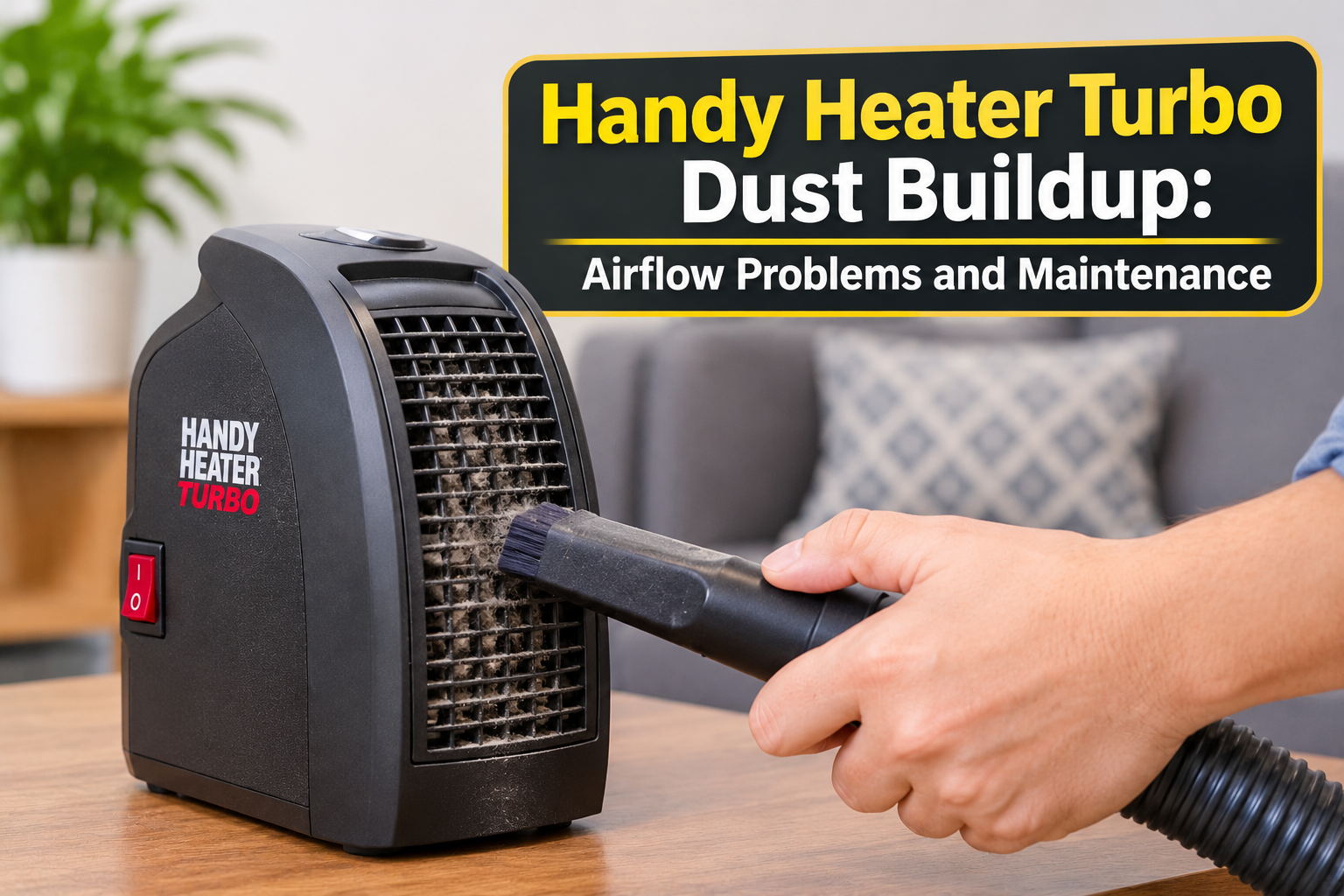
Dust is the enemy of every heater. A little care keeps it working well.
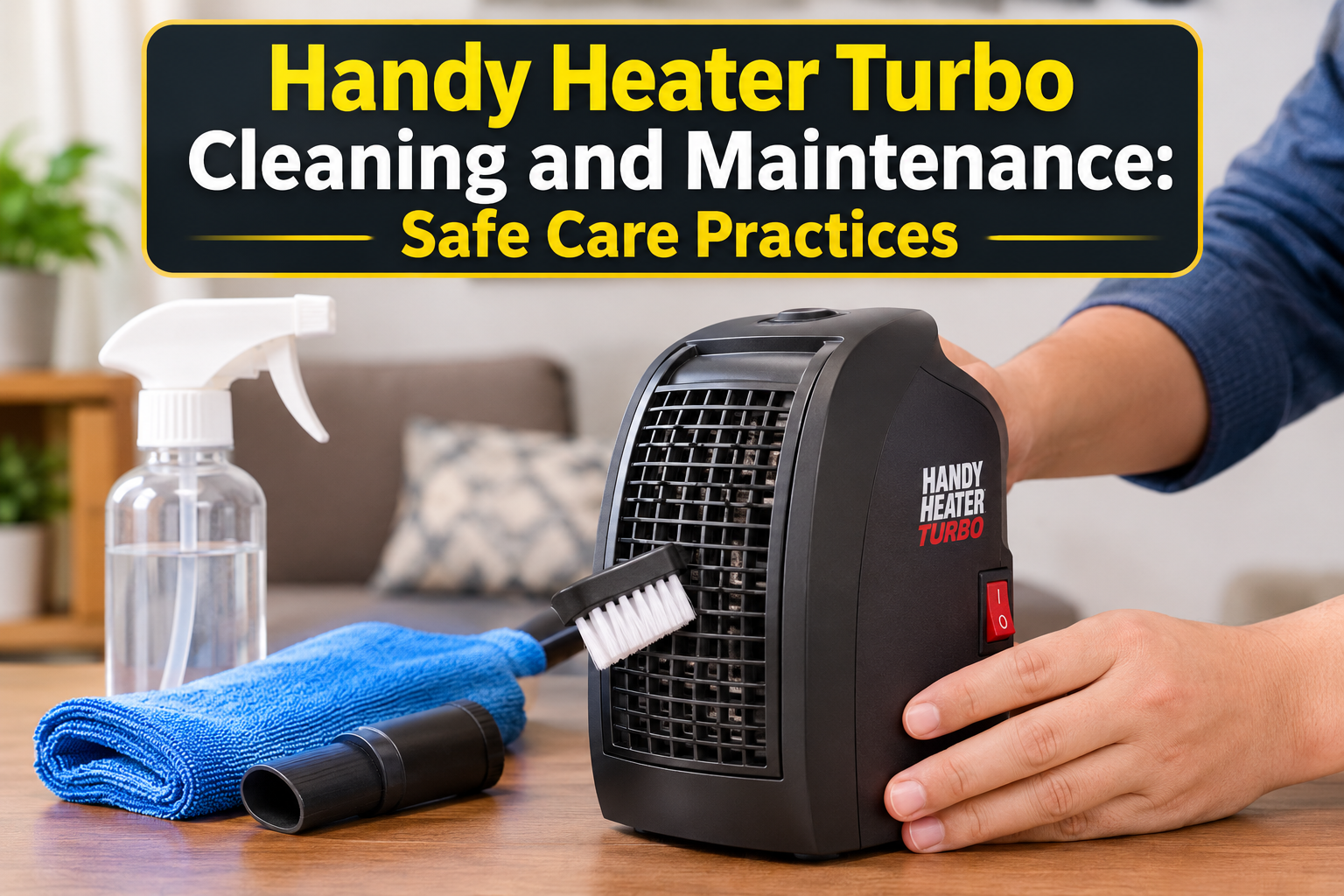
- Unplug the heater and let it cool completely.
- Gently remove dust from the vents with a soft brush or a dry cloth. A vacuum cleaner with a brush attachment also works.
- Wipe the outside with a slightly damp cloth, then dry it fully.
- Never pour water on the heater or let liquid enter the vents.
- Do not use harsh chemicals or abrasive pads.
- Store it in a dry place away from dust when you do not use it in summer.
Light smell the first time you use a new heater is common, because of dust or protective residue burning off. It should fade quickly. Run it in a ventilated room for the first session.
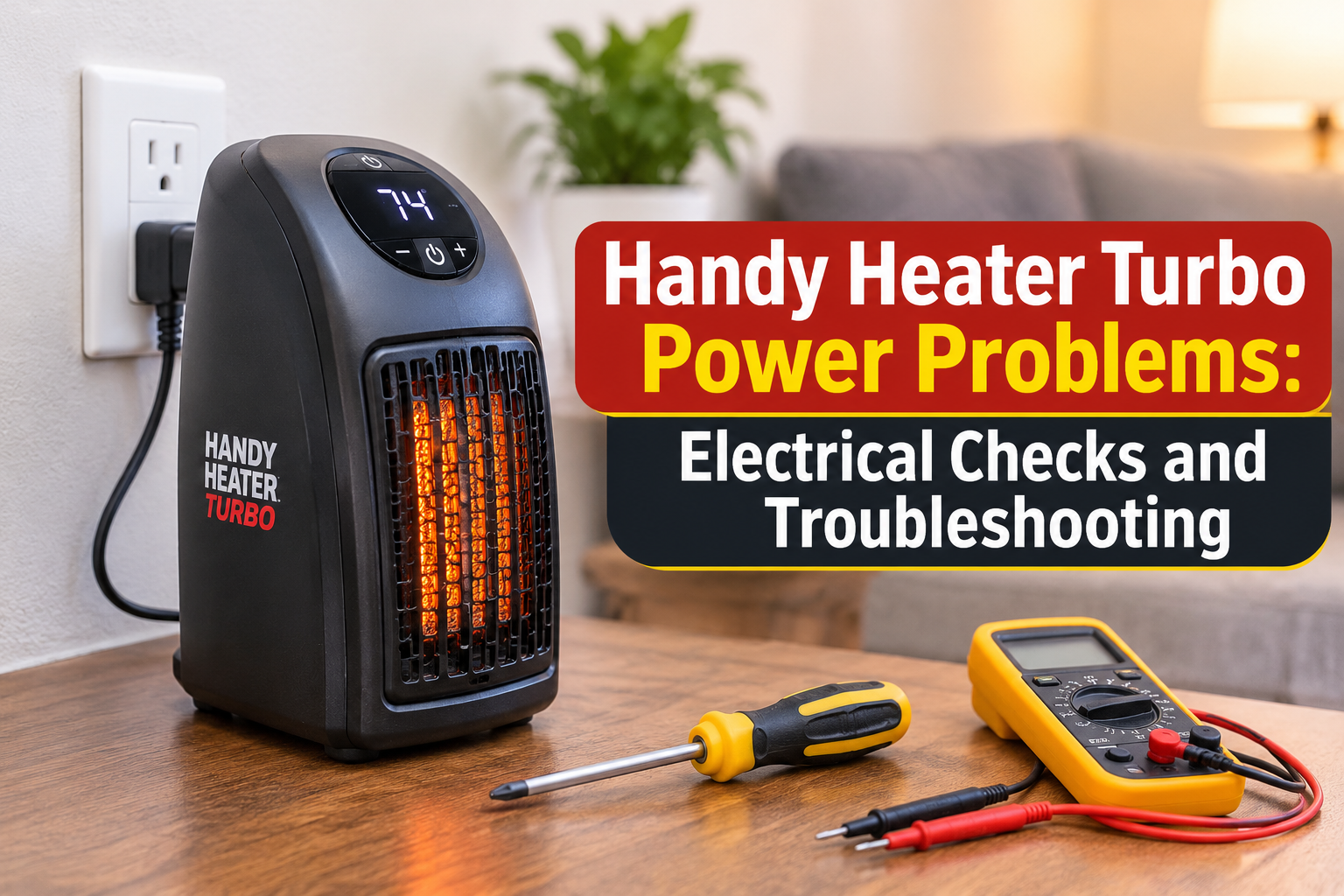
Troubleshooting: Common Problems and Fixes
| Problem | Possible cause | What to try |
|---|---|---|
| Display does not light up | Loose plug or no power at the outlet | Push the plug in fully, test the outlet with another device, check the breaker |
| Display is on but no heat | Set temperature is lower than the room temperature | Raise the set temperature a few degrees |
| Heater turns off by itself | Timer ended, target temperature reached or auto shut-off activated | Check the timer, clear anything blocking the vents, let it cool and restart |
| Weak warmth | Room too big, drafts or blocked airflow | Close doors, seal drafts, move furniture away, use it in a smaller room |
| Burning smell on first use | Dust or residue on a new element | Ventilate the room. If the smell continues, stop using it |
| Plug feels loose or very hot | Worn outlet or poor contact | Unplug immediately and have the outlet checked by an electrician |
How Much Electricity Does It Use?
An 800-watt heater uses 0.8 kilowatt-hours (kWh) of electricity for every hour it runs at full power. To estimate the cost, multiply 0.8 by your electricity price per kWh. Because the thermostat switches the heater on and off, the real consumption is often lower than the maximum.
| Running time | Energy at full power | Example cost at $0.15 per kWh (maximum) |
|---|---|---|
| 1 hour | 0.8 kWh | $0.12 |
| 4 hours | 3.2 kWh | $0.48 |
| 8 hours | 6.4 kWh | $0.96 |
Your price per kWh will be different, so check your own electricity bill. The idea is simple: heat only the room you use, only for as long as you need it. That is where a small plug-in heater saves money compared to heating a whole house.
Handy Heater Turbo Pros and Cons
Pros
- Compact and saves floor space
- No installation, just plug in
- Ceramic element heats up fast
- Digital display and adjustable thermostat
- Timer and auto shut-off for peace of mind
- Quiet operation for bedrooms and offices
- Affordable compared to many larger heaters
Cons
- Best only for small rooms
- Not suited for large or open spaces
- Blocks one outlet while in use
- Standard version is made for 120V outlets
- Indoor use only
- Does not replace central heating
Who Should Buy the Handy Heater Turbo?
It is a great choice for students, renters, home workers and anyone who wants a little extra warmth in one small room without paying to heat the whole home. It is also useful as a backup for cold corners of the house.
It is not the right pick if you need to heat a big living room, a garage, a workshop or an outdoor area. In those cases choose a higher-capacity heater designed for that space.
Frequently Asked Questions (FAQ)
How do I turn on the Handy Heater Turbo?
Plug it into a wall outlet, press the power button, then use the temperature buttons to set the temperature higher than your current room temperature. Optionally set the timer.
Can I use the Handy Heater Turbo with an extension cord?
No. Use it only in a wall outlet. Extension cords and power strips are not recommended for heaters because they can overheat.
Is it safe to leave the heater on all night?
It has an auto shut-off and a timer, but any heater is safest when it is not left running unattended for long periods. Use the timer, keep the area clear and follow the manufacturer’s instructions. If you are not comfortable, unplug it before you sleep.
Does the Handy Heater Turbo heat a whole room?
It can warm a small room, especially if the door is closed and the room is well insulated. It is a personal heater and not a replacement for a central heating system.
How long does it take to warm up a room?
You can feel heat near the unit quickly, but warming the whole room depends on its size, insulation, drafts and outside temperature. Small closed rooms warm up fastest.
Why is my heater on but not producing heat?
Most often the set temperature is lower than the room temperature, so the heater pauses. Increase the set temperature. Also check the timer and make sure the vents are not blocked.
Does it make the air dry?
Sellers say the ceramic technology helps keep moisture in the air better than some other heaters, but any heater can make a room feel dry. A small bowl of water or a humidifier can help if you are sensitive to dry air.
Can I use it in a country with 220V or 240V electricity?
The standard Handy Heater Turbo is designed for 120V, 60Hz outlets. Do not plug it into a higher-voltage outlet, and be careful with cheap converters, because an 800-watt heater needs a properly rated transformer. Look for a heater made for your local voltage.
Is it safe around kids and pets?
The housing is designed to stay cooler than the heating element, but the front can still get warm. Keep children and pets away from the heater, and never let them touch it or play near it.
How do I clean it?
Unplug it, let it cool, brush the dust out of the vents and wipe the outside with a slightly damp cloth. Never let water enter the vents.
Final Verdict
The Handy Heater Turbo is a simple, compact way to bring warmth to a small room. Using it is easy: plug it directly into the wall, set the temperature, use the timer and keep the area in front of it clear. If you follow the steps and safety rules in this guide, you will get comfortable, steady warmth with very little effort.
Remember its limits. It is a personal heater for small spaces, it is made for indoor household use and the standard version needs a 120V outlet. Used in the right room and in the right way, it is an affordable and convenient helper for the cold season.