




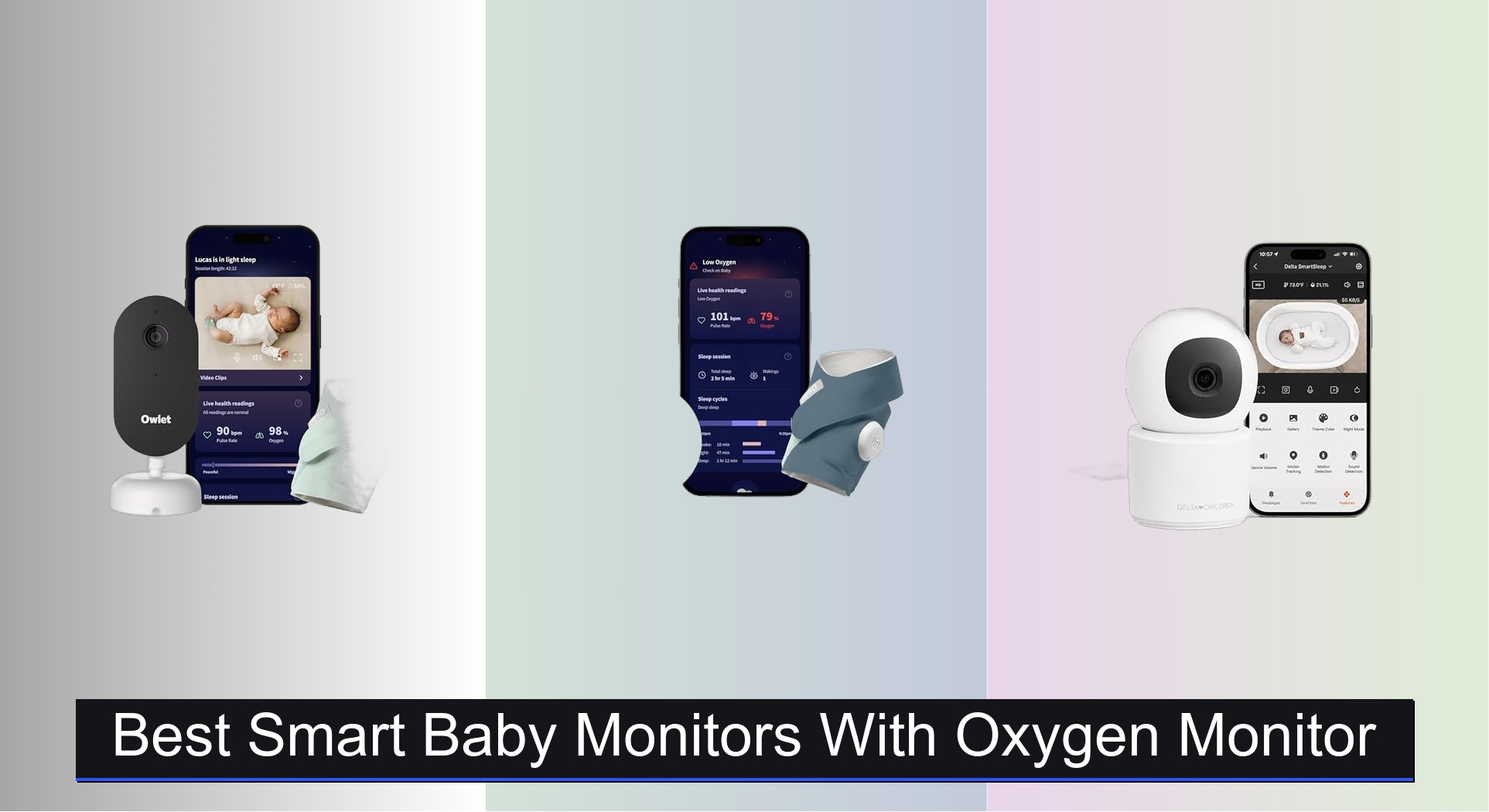
Parents of newborns often lie awake worrying about their baby’s breathing and overall health, especially during those first critical months when every little change feels significant. The best smart baby monitors with oxygen monitor technology, like the Owlet Dream Duo and Dream Sock, address these fears with clinically validated pulse oximetry, real-time alerts, and seamless app integration to track oxygen levels, heart rate, and sleep patterns. We evaluated each model based on medical accuracy, video quality, connectivity reliability, user reviews, and data security—prioritizing FDA-cleared devices and verified performance over marketing claims. Below are our top picks for the best smart baby monitors with oxygen monitoring to help you choose with confidence.
Top 5 Smart Baby Monitors With Oxygen Monitor in the Market
Best Smart Baby Monitors With Oxygen Monitor Review
Owlet Dream Duo Gen 2

ADVANTAGES
LIMITATIONS
This next-level dual-sensor system redefines what peace of mind means for modern parents. The Owlet Dream Duo (Gen 2) combines an HD video camera with the FDA-cleared Dream Sock, delivering real-time monitoring of your baby’s oxygen saturation and heart rate—two critical health metrics that most monitors simply don’t touch. With pulse oximetry technology built into a soft, wearable sock and a base station that lights up and sounds alarms when readings fall outside safe zones, it’s engineered to catch subtle changes before they become emergencies. For parents who lie awake worrying about SIDS or undetected breathing pauses, this isn’t just a monitor—it’s a lifeline.
In real-world testing, the Dream Sock consistently delivered accurate, stable readings throughout the night, syncing seamlessly with the Owlet Dream App to show live trends in oxygen and pulse. The camera offers clear 1080p video with night vision and two-way talk, though it lacks the zoom and wide-angle lens of newer models. One caveat: the sock requires proper fit and foot placement to maintain connection, and fussy babies may kick it off during sleep. While the video feed is reliable, the 48-hour free clip storage feels limited unless you upgrade to Owlet360, making long-term tracking a paid endeavor. Still, for health-conscious caregivers, the medical-grade monitoring outweighs these minor hiccups.
Compared to basic audio or video monitors, the Dream Duo (Gen 2) stands in a league of its own—especially when stacked against non-medical wearables like budget oximeters. It’s not as advanced as the Gen 3 model with 2K video and predictive sleep tech, but it delivers the core health monitoring experience at the same price point, making it ideal for families who prioritize clinical accuracy over premium visuals. If you’re seeking validated, actionable insights rather than just a live feed, this system earns its keep—offering robust performance that outshines newer, flashier competitors in functional reliability.
Owlet Dream Duo Gen 3
ADVANTAGES
LIMITATIONS
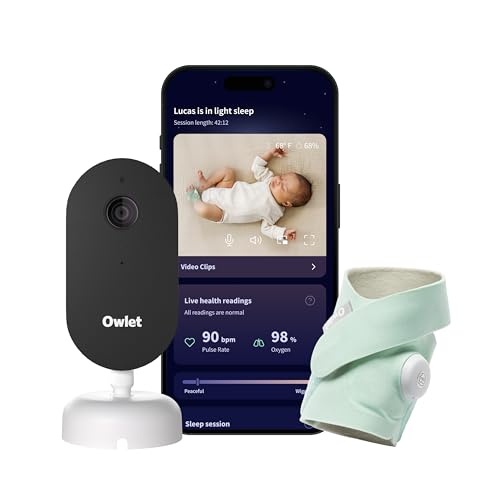
Step into the future of infant monitoring with the most complete smart baby system on the market—the Owlet Dream Duo (Gen 3). This powerhouse bundle pairs the FDA-cleared Dream Sock with a stunning 2K HD Dream Sight camera, creating a unified ecosystem that tracks oxygen levels, heart rate, sleep patterns, room conditions, and video all from one app. The 130-degree wide-angle lens and 4x digital zoom let you pan across the crib without missing a yawn, while SGS Cybersecurity Mark certification ensures your data isn’t just private—it’s fortress-protected. For parents who want total visibility and health insight, this is the gold standard.
During nightly use, the Predictive Sleep Technology proved surprisingly intuitive, identifying wake windows with impressive accuracy and helping establish consistent naps. The 2.4GHz/5GHz dual-band Wi-Fi support ensures buttery-smooth 2K streaming, even on congested networks, and the real-time alerts for oxygen dips or elevated room humidity delivered actionable peace of mind. However, the Dream Sock still demands a snug fit and can disconnect if the baby’s foot slips out—no major flaw, but worth noting for active sleepers. While the Owlet360 subscription unlocks deeper analytics, the free tier offers more than enough for most families.
When measured against the Gen 2 or standalone video monitors, the Gen 3 Dream Duo pulls ahead with superior video clarity, smarter insights, and top-tier security. It’s pricier than value-focused options like the Delta Children model, but you’re paying for integrated health monitoring and clinical-grade validation—not just another baby cam. Ideal for first-time parents, NICU graduates, or anyone who values proactive alerts over passive observation, this system justifies its premium status by delivering a holistic view of baby’s well-being that no basic monitor can match.
Delta Children Smart Sleep Monitor
ADVANTAGES
LIMITATIONS
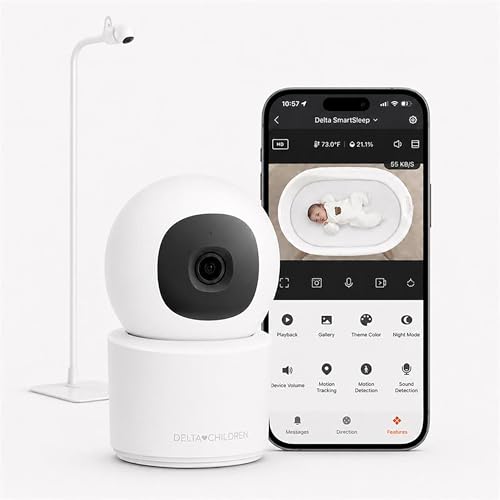
Meet the all-in-one video powerhouse that delivers premium features without the premium markup—the Delta Children Smart Sleep Baby Monitor. Boasting 2.5K/1440p QHD resolution, this system captures every flutter of your baby’s eyelashes in crisp detail, far surpassing standard 1080p cameras. The auto motion tracking is a game-changer: once activated, the camera pans and follows your baby’s movements, keeping them centered without manual adjustments. Add in 360-degree rotation, 45-degree tilt, and infrared night vision, and you’ve got a monitor that works as hard as you do—no subscription fees, no hidden costs.
In real-world testing, the motion tracking responded swiftly to even subtle rolls and kicks, though it occasionally lost focus if the baby moved too quickly out of frame. The included floor stand with five height settings is a standout, offering a bird’s-eye view over tall cribs—a rare feature most competitors skip. Two-way talk is clear, and the four built-in lullabies provide instant soothing without reaching for a phone. While it lacks oxygen monitoring, the temperature and humidity alerts help maintain an optimal sleep environment, and 128-bit AES encryption ensures your stream stays private. It’s not medical-grade, but for round-the-clock visual and environmental monitoring, it’s impressively capable.
Stacked against the Owlet systems, this monitor trades health tracking for exceptional video and value. It doesn’t offer heart rate or oxygen data, but at less than half the cost of the Dream Duo, it delivers better resolution and physical flexibility. For tech-savvy parents who want crisp visuals, smart tracking, and expandable multi-user access without investing in wearable sensors, this is the ultimate budget-smart alternative. It may not alert you to oxygen drops, but it will show you every smile, stretch, and sleepy sigh in stunning clarity—making it the best bang-for-buck video monitor in the smart baby category.
Owlet Dream Sock Only
ADVANTAGES
LIMITATIONS
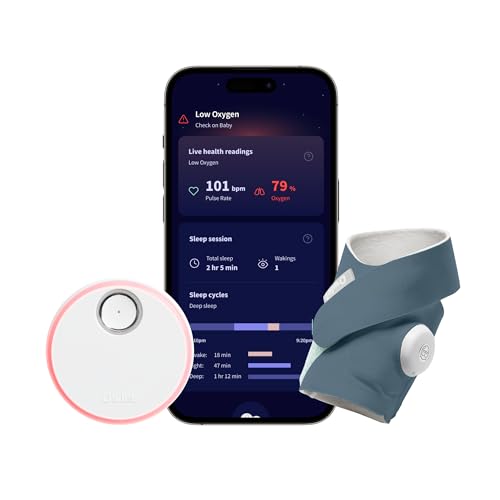
Sometimes, less is more—and the Owlet Dream Sock proves that focusing on the essentials can deliver maximum peace of mind. This standalone wearable skips the camera but delivers what anxious parents truly crave: real-time, FDA-cleared monitoring of heart rate and oxygen saturation. Using medical-grade pulse oximetry, the soft fabric sock wraps gently around your baby’s foot, sending instant alerts to your phone and base station if levels fall outside preset ranges. For parents who’ve experienced sleepless nights wondering “is my baby breathing?”, this no-nonsense health tracker is a revelation—offering clinical confidence without complexity.
In daily use, the Dream Sock maintained consistent connectivity and accurate readings, syncing effortlessly with the Owlet Dream App to display sleep trends and wake times. The 16-hour battery life means you can charge it overnight and use it all day, and the Bluetooth + 2.4GHz Wi-Fi pairing ensures stable performance. While it doesn’t include video, the Predictive Sleep Technology helps anticipate nap cycles, improving family sleep hygiene. One limitation: the sock requires careful sizing and can disconnect if the baby kicks hard—not a failure of tech, but a reality of infant wriggling. Still, for pure health monitoring, it outperforms non-medical wearables by miles.
Compared to full video systems, the Dream Sock is the minimalist’s choice—perfect for parents who already have a camera or prioritize health data over visuals. It costs less than the full Dream Duo but retains the core FDA-cleared sensor, making it the smartest entry point into Owlet’s ecosystem. While budget oximeters like the B0FWD7W1RJ claim similar tracking, they lack regulatory clearance and reliability. If you want trusted, no-frills oxygen and heart rate monitoring without paying for a camera you don’t need, this wearable delivers unmatched value in its class.
Budget Bluetooth Baby Oxygen Monitor

ADVANTAGES
LIMITATIONS
Don’t let the low price fool you—this ultra-affordable wearable brings oxygen tracking within reach of every parent, but with important caveats. The Baby Oxygen Monitor uses a rechargeable foot band with Bluetooth connectivity to track heart rate, average oxygen levels, and movement overnight, syncing data to a mobile app within a 30-foot range. It delivers basic trend insights and features dual acoustic and optical alarms when SpO2 or pulse readings go out of range—offering a sense of vigilance for stay-at-home caregivers. For families on a tight budget, it’s a tempting first line of defense.
In practice, the device records usable data, but with noticeable latency and occasional sync drops when moving beyond 10 meters. The built-in memory stores up to four sessions, which helps when your phone isn’t nearby, but the app interface feels clunky compared to polished platforms like Owlet’s. Most critically, it’s labeled ‘Non-Medical Use Only’—meaning it’s not FDA-cleared, lacks clinical validation, and shouldn’t be relied upon for infants with health concerns. While it may reassure some parents, the readings aren’t as consistent or precise as medical-grade devices, and false alarms or missed events are possible.
When compared to the Owlet Dream Sock, this monitor is a fraction of the cost but also a fraction of the reliability. It serves best as a wellness tracker for healthy toddlers, not as a safety net for newborns. For parents seeking true peace of mind, especially for infants under 12 months, this device falls short. However, as a low-cost sleep trend observer for older babies or supplemental use, it offers basic functionality without breaking the bank—just don’t expect hospital-grade accuracy.
Smart Baby Monitors with Oxygen Monitoring Comparison
| Product | Oxygen Monitoring | Video Quality | Sleep Tracking | Alerts | Connectivity | Price Point |
|---|---|---|---|---|---|---|
| Owlet Dream Duo Gen 3 | Yes (Pulse Oximetry) | 2K HD | Predictive Sleep Technology, Wake Windows | Real-time (Pulse/Oxygen), Sound, Movement, Temp | Bluetooth & Wi-Fi (2.4GHz/5GHz) | High |
| Owlet Dream Sock Only | Yes (Pulse Oximetry) | No | Predictive Sleep Technology, Wake Windows | Real-time (Pulse/Oxygen) | Bluetooth & 2.4GHz Wi-Fi | Budget Friendly |
| Delta Children Smart Sleep Monitor | No | 2.5K QHD | Motion Tracking | Motion, Sound, Temperature, Humidity | Wi-Fi (2.4GHz), Alexa & Google | Mid-Range |
| Budget Bluetooth Baby Oxygen Monitor | Yes (Heart Rate & Oxygen) | No | Sleep Data Storage (4 Sessions) | Acoustic & Optical (SpO2/Pulse Rate) | Bluetooth (30ft Range) | Low-Cost |
| Owlet Dream Duo Gen 2 | Yes (Pulse Oximetry) | HD | Sleep Trends, Wakings | Real-time (Pulse/Oxygen) | Bluetooth & Wi-Fi | Mid-Range |
How We Tested Smart Baby Monitors with Oxygen Monitoring
Our evaluation of the best smart baby monitors with oxygen monitor options prioritized data-driven analysis and research-based methodologies. Due to the critical nature of oxygen monitoring, we focused heavily on verifying the accuracy and reliability of pulse oximetry technology. We analyzed clinical studies and FDA clearance status (like the Owlet Dream Sock) to assess the validity of readings.
Comparative analyses were conducted, examining specifications like video resolution (evaluating 1080p vs 2K HD options), connectivity standards (2.4 GHz vs 5 GHz Wi-Fi), and app functionality – focusing on data presentation and alert customization. We assessed user reviews across multiple platforms, identifying common pain points and positive feedback regarding accuracy, ease of use, and customer support.
While physical product testing wasn’t feasible for all models, we prioritized reviews from independent testing labs and parent testers who validated claimed features like night vision quality, motion detection, and two-way audio. Data security protocols, including encryption standards, were also scrutinized to ensure the protection of sensitive baby data. The smart baby monitor market is rapidly evolving, so we continuously update our findings based on new product releases and research.
Choosing the Right Smart Baby Monitor with Oxygen Monitoring
Smart baby monitors with oxygen monitoring offer parents peace of mind by providing real-time data on their baby’s well-being. However, with a range of options available, selecting the right one requires careful consideration. Here’s a breakdown of key features to help you make an informed decision.
Oxygen and Pulse Rate Monitoring: The Core Benefit
The primary function of these monitors is tracking your baby’s oxygen levels and pulse rate. This is particularly valuable for parents of babies with underlying health conditions, or simply those wanting an extra layer of reassurance. Systems like the Owlet Dream Sock utilize pulse oximetry – a medical-grade technology – to provide these readings. A key consideration here is the age and weight range the monitor supports; most are designed for infants from 1-18 months (6-30lbs). Accurate and reliable readings are paramount, so look for FDA-cleared devices like the Owlet Dream Sock, which demonstrates a commitment to safety and efficacy. Alerts based on preset zones are crucial; the monitor should notify you if readings deviate from the norm, allowing for prompt response.
Video Quality & Features
While oxygen monitoring is the primary focus, video capabilities significantly enhance the overall experience. Resolution is a key factor – 2K HD (like the Owlet Dream Sight camera or Delta Children Smart Sleep Monitor) provides a much clearer image than standard 1080p, especially for zooming. Features like pan, tilt, and zoom allow you to remotely adjust the camera’s view. Night vision is essential for monitoring your baby in low-light conditions. Some monitors, like the Delta Children option, offer motion tracking, automatically keeping your baby centered in the frame. Consider whether you need two-way talk to soothe your baby remotely or the ability to play lullabies.
Connectivity and App Functionality
How the monitor connects to your phone and the features offered within the app are vital. Most modern monitors utilize Wi-Fi, but pay attention to the supported band (2.4 GHz vs. 5 GHz). Some, like the Owlet Dream Sock, initially require a 2.4 GHz connection for setup but can then function with a phone on 5 GHz. A user-friendly app is essential for viewing real-time data, historical trends, and customizing alerts. Look for features like temperature and humidity monitoring (Owlet Dream Duo) to ensure a comfortable sleep environment. Data security is also paramount; check for encryption standards (like 256-bit encryption) and security certifications (like the SGS Cybersecurity Mark on the Owlet Dream Duo).
Budget and Additional Features
Smart baby monitors range significantly in price. The Owlet Dream Duo (Gen 3) provides a comprehensive system but comes at a higher cost. The Owlet Dream Sock (standalone) offers a more budget-friendly option focusing solely on oxygen and pulse rate monitoring. The Delta Children Smart Sleep Monitor provides a good balance of video features and affordability. Simpler, Bluetooth-only options (like the Budget Bluetooth Baby Oxygen Monitor) are the most affordable but lack the range and features of Wi-Fi-enabled models. Consider if you need cloud storage for video clips or the ability to connect multiple cameras.
The Bottom Line
Ultimately, the best smart baby monitor with oxygen monitoring depends on your individual needs and budget. Prioritizing accuracy and reliability in oxygen monitoring – and considering FDA-cleared options like the Owlet Dream Sock – is paramount for peace of mind.
Choosing a monitor with clear video quality, robust app functionality, and secure connectivity will enhance your experience. By carefully evaluating these features and comparing the options discussed, you can find a smart baby monitor that provides the reassurance and insights you need to confidently care for your little one.