


How to Maintain a Room Heater: Complete Guide for Safety, Efficiency and Long Life
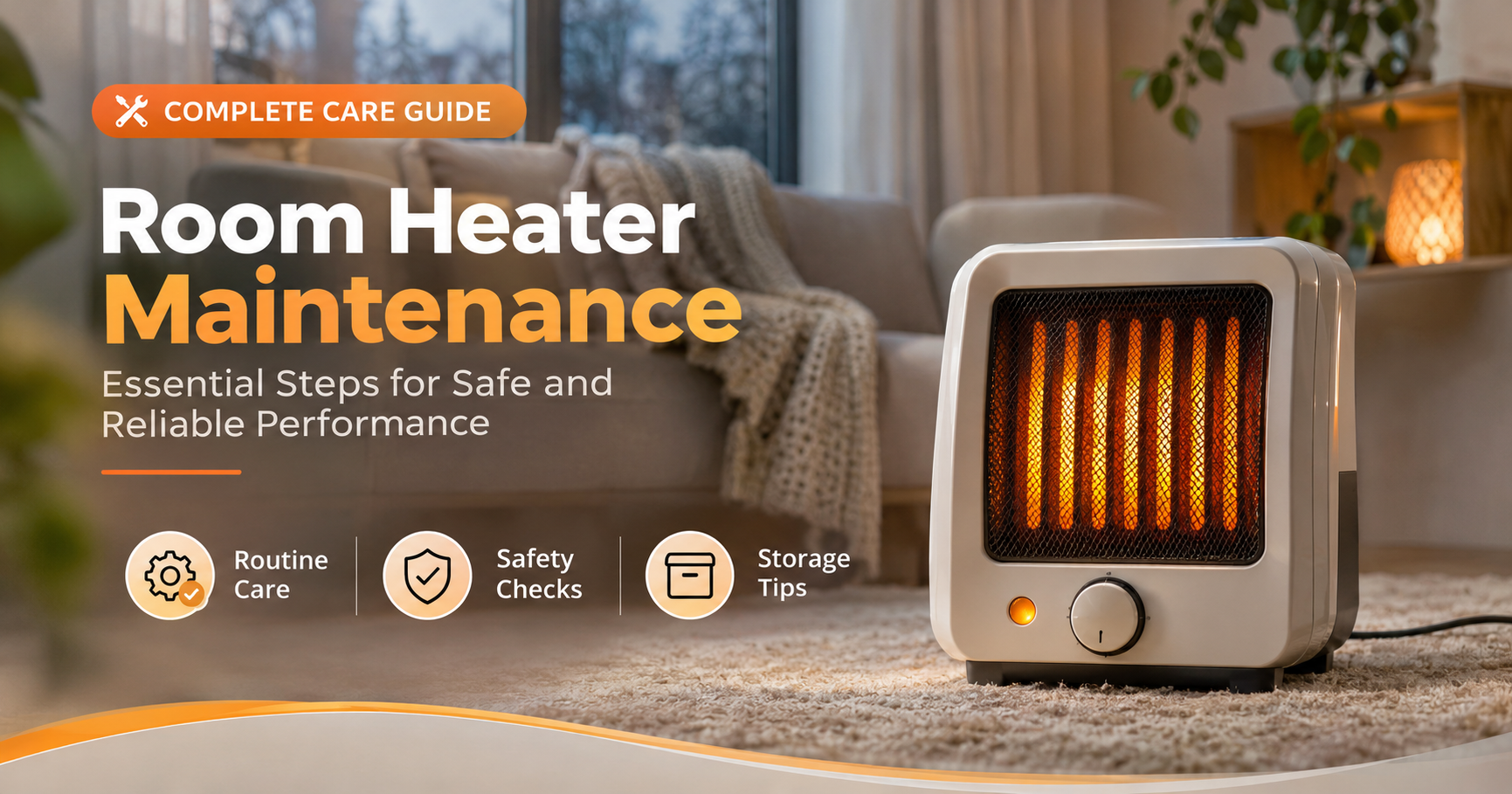
A room heater is a simple appliance, but it works hard. It runs for hours in the coldest months, handles high temperatures and draws a lot of electricity. Without basic care, it can lose efficiency, develop faults or become unsafe. With a few minutes of regular maintenance, the same heater can serve you reliably for many winters.
This guide explains how to maintain a room heater step by step: what to check before each use, a practical weekly, monthly and seasonal routine, how to care for different heater types, how to spot problems early and how to store your heater after winter.
Why Room Heater Maintenance Matters
- Safety: Most heater accidents come from damaged cords, dust buildup, blocked vents or poor placement.
- Efficiency: A well-kept heater warms the room faster and uses less electricity.
- Longer lifespan: Regular care prevents small faults from turning into expensive repairs.
- Better air quality: A clean heater does not burn dust or spread odors.
- Consistent comfort: Fewer breakdowns mean reliable warmth on the coldest nights.
Know Your Heater Type First
Maintenance needs differ by type, so always read the user manual first. The most common types are fan heaters, ceramic heaters, oil-filled radiators, halogen or quartz heaters, convection panel heaters and infrared heaters. The routine below suits all of them, with type-specific notes later in this guide.
Key Parts to Check Regularly
Daily Checks Before Using the Heater
- Look at the power cord and plug for cuts, kinks, discoloration or a loose fit.
- Place the heater on a flat, hard, stable surface.
- Keep at least 3 feet (about 1 meter) of clear space around it, away from curtains, bedding and furniture.
- Make sure the vents and grille are not blocked.
- Plug it directly into a wall socket, not a weak or overloaded extension cord.
Heater Maintenance Schedule
Weekly Maintenance
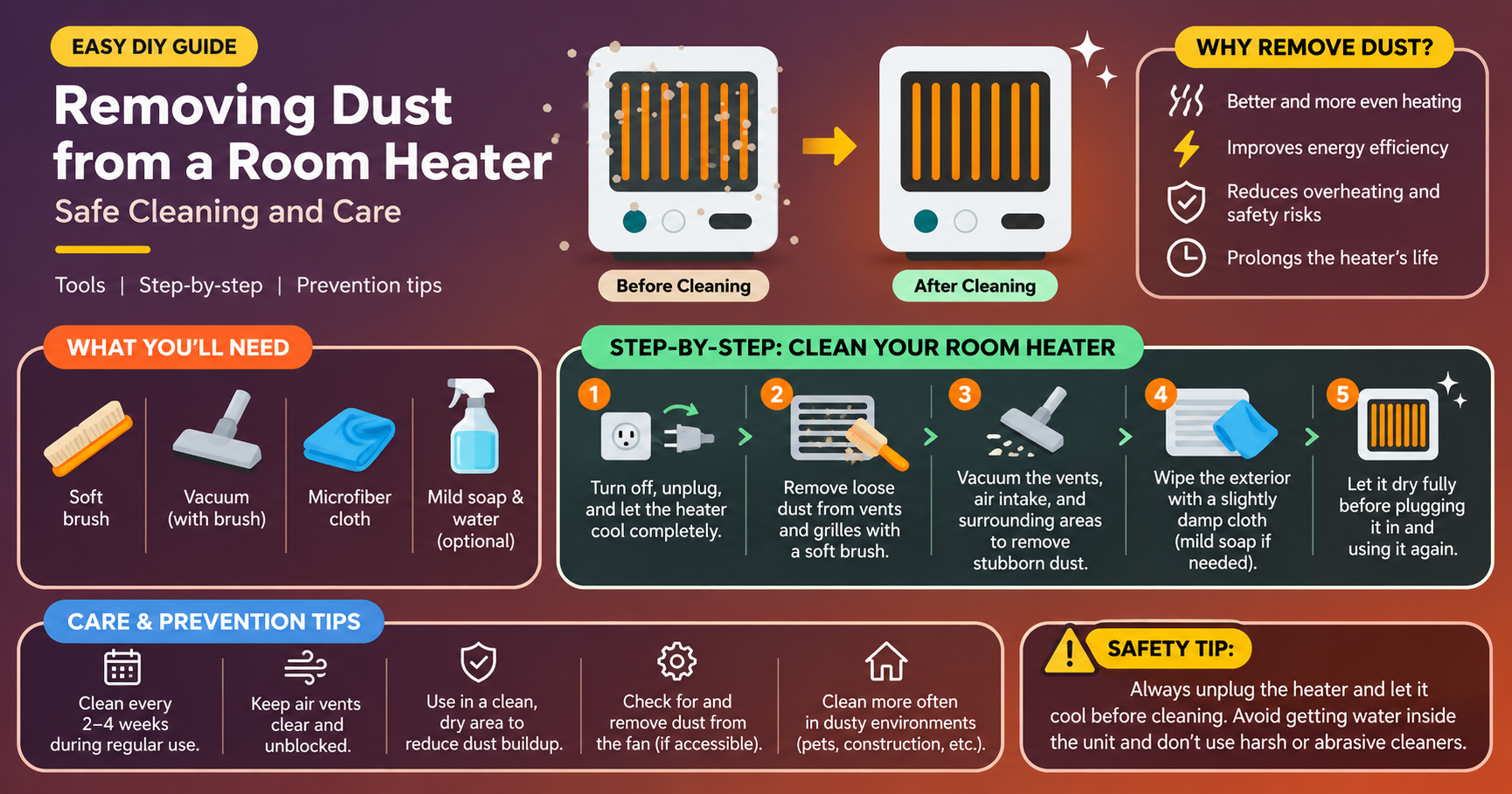
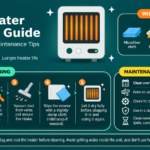
Unplug the heater, let it cool and wipe the outer body with a dry or slightly damp microfiber cloth. Dust the grille with a soft brush and inspect the plug and cord. This takes under ten minutes.
Monthly Maintenance
Vacuum the vents and air intake with a brush attachment. If your heater has a filter, remove it, clean it as the manual instructs and let it dry completely before refitting. Test the tip-over switch by gently tilting the heater while it is on, in a safe spot, only if the manual says it is safe to do so. It should shut off.
Seasonal Maintenance
Before winter, give the heater a deep clean, check every part and run it on a low setting for 10 to 15 minutes in a ventilated room. A slight dusty smell at the start is normal. At the end of the season, clean and dry the heater before storage.
Yearly Inspection
Once a year, look over the whole unit for cracks, rust, loose screws, a wobbling fan or a damaged thermostat knob. Replace worn parts or call a qualified technician for anything electrical.
How to Clean Your Heater Safely
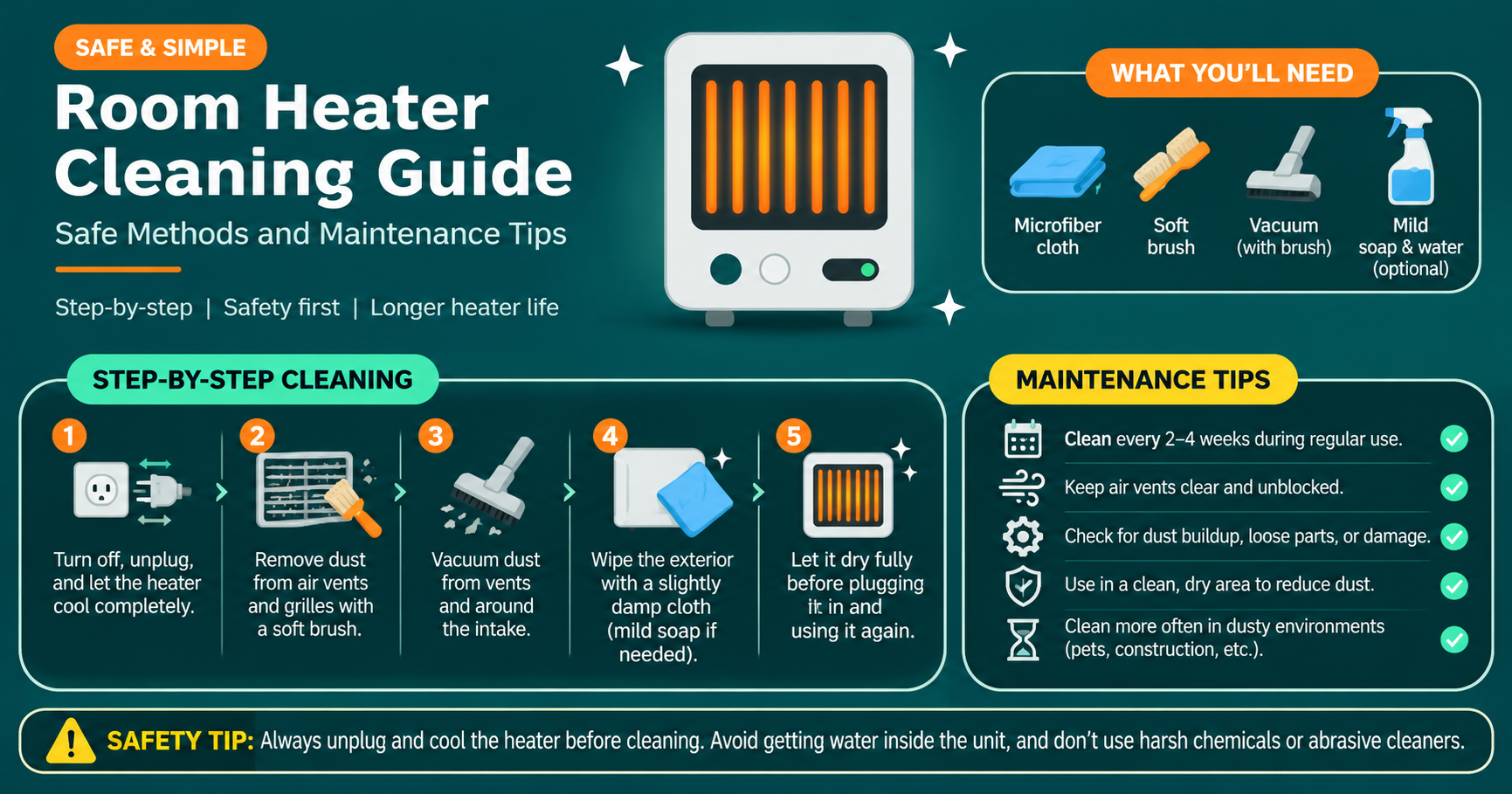
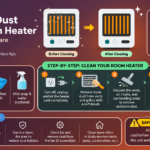
- Switch off and unplug the heater, then wait 30 to 60 minutes until it is fully cool.
- Brush loose dust from the grille and vents.
- Vacuum the intake and exhaust openings on low suction.
- Wipe the body with a slightly damp cloth, never spraying liquid onto the heater.
- Dry completely and test on a low setting.
Maintenance Tips by Heater Type
| Heater Type | Key Maintenance Tasks | Special Note |
|---|---|---|
| Fan heater | Vacuum the intake, brush the blades gently, check for rattling | Fan noise is an early warning sign of dust or wear |
| Ceramic heater | Clean the grille and filter, wipe the housing | Do not block the rear air intake |
| Oil-filled radiator | Wipe the fins and check for oil leaks | Never open the oil reservoir; place on a level surface |
| Halogen or quartz | Dust the guard and reflector with a dry cloth | Avoid touching the tube; skin oil shortens its life |
| Convection panel | Vacuum top and bottom vents, check the wall bracket if mounted | Keep the lower inlet clear of carpet |
| Infrared heater | Dry-dust the front panel | Use only a barely damp cloth on non-glass parts |
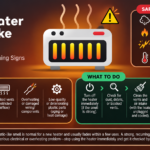
Signs Your Heater Needs Attention
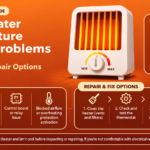
| Problem | Possible Cause | What to Do |
|---|---|---|
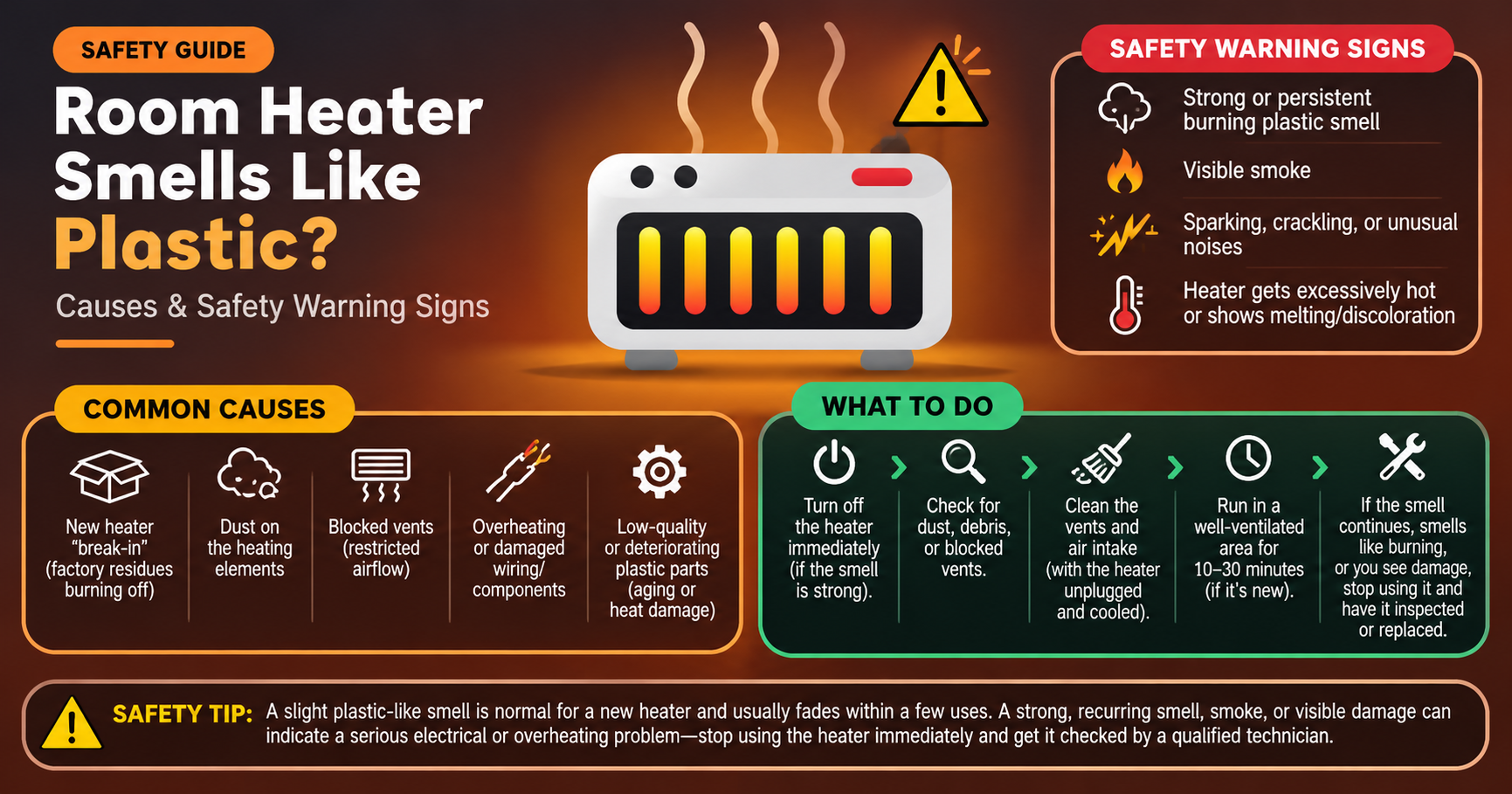
| Burning smell | Dust on the element or overheating | Switch off, cool, clean; stop use if it smells like plastic |
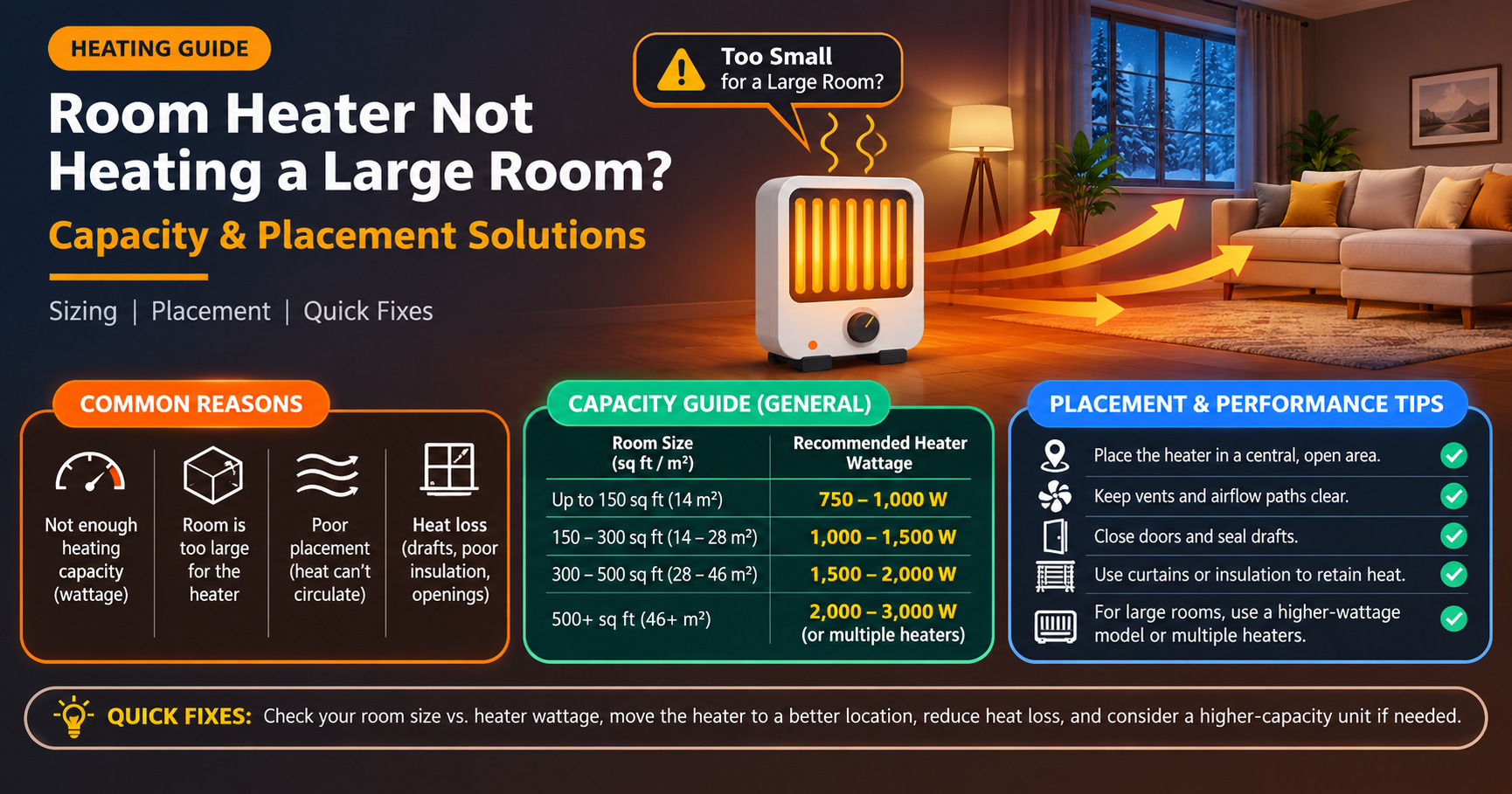
| Weak heat | Blocked vents or dirty filter | Clean the vents and filter |
| Heater turns off suddenly | Overheat protection activated | Clear airflow and let it cool before restarting |
| Loud or rattling fan | Dust or loose parts | Clean the fan area; seek service if it continues |
| Heater won’t turn on | Faulty plug, cord or switch | Check the socket and cord; contact a technician |
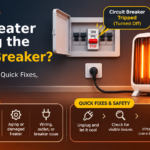
| Trips the circuit breaker | Overload or internal fault | Stop using it and have it inspected |
Energy-Saving Maintenance Habits
Safe Placement and Usage Rules
- Never dry clothes on or in front of the heater.
- Do not leave it running unattended or near sleeping children and pets without supervision.
- Avoid bathrooms and damp areas unless the heater is specifically rated for them.
- Keep flammable items such as paper, aerosol cans and fabrics well away.
- Turn it off and unplug it when leaving home.
How to Store a Room Heater After Winter
- Unplug, cool and thoroughly clean the heater.
- Make sure it is completely dry to prevent rust and odors.
- Wrap the cord loosely, without sharp bends.
- Cover the heater with a breathable cloth or its original box.
- Store it upright in a cool, dry place, away from moisture and heavy objects.
When to Repair or Replace Your Heater
- The cord or plug is damaged or overheating.
- It trips the breaker repeatedly or sparks.
- The thermostat or safety switch no longer works.
- The heater is older than 8 to 10 years and breaks down often.
- Repair costs approach the price of a new unit.
Electrical repairs should only be handled by a qualified technician.
Choosing a Heater That Is Easy to Maintain
If you are planning to buy a new heater, look for features that make upkeep simpler and use safer:
- Removable or washable filter
- Tip-over and overheat protection
- Smooth, accessible vents and grille
- Adjustable thermostat and timer
- Wattage that suits your room size
- Clear warranty and available spare parts
Frequently Asked Questions
How often should I maintain my room heater?
Do a quick check before each use, wipe it weekly, clean vents and filters monthly, and perform a full inspection at the start and end of each winter.
Can I leave my room heater on all night?
Only if your manual allows it and the heater has proper safety features. Many safety guides recommend turning heaters off when sleeping.
Why does my heater smell when I first use it each winter?
Dust accumulated during storage burns off the element. Cleaning before use reduces the smell. If it smells like burning plastic, switch it off.
Can I repair a heater myself?
Cleaning and basic checks are fine. For internal or electrical repairs, use a qualified technician.
How long does a room heater last?
With proper care, many heaters last 8 to 10 years or more, depending on type, quality and usage.
Final Thoughts
Learning how to maintain a room heater is one of the easiest ways to stay warm safely and keep energy bills under control. Check it before use, clean it regularly, inspect its key parts, store it properly and replace it when it shows serious wear. A few minutes of care today saves money, prevents accidents and keeps your heater running smoothly all winter long.
This article is for general information. Always follow your heater manufacturer’s instructions for maintenance and safe use.