

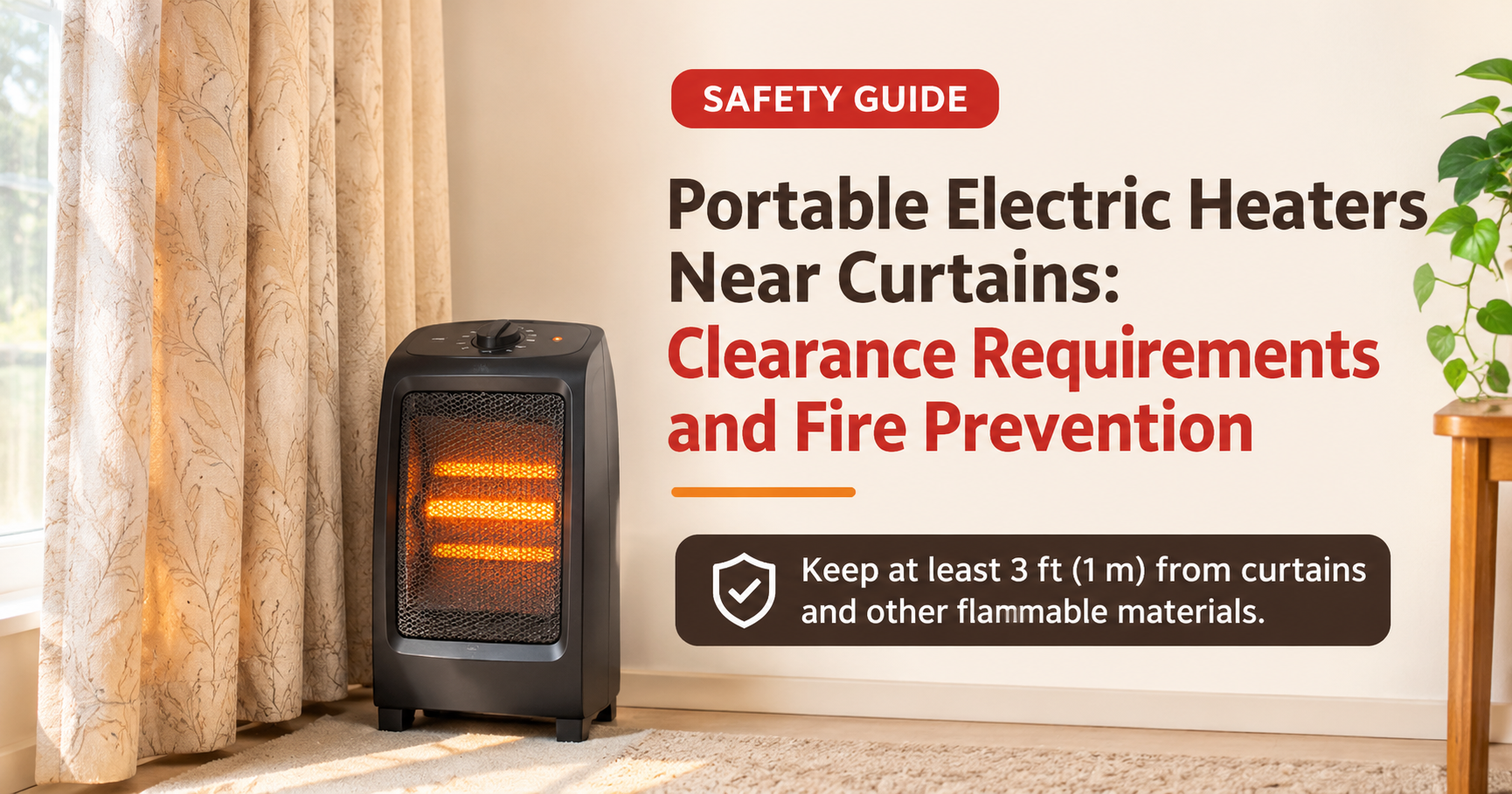
Portable Electric Heater Near Curtains: Safe Distance, Real Risks and Smart Placement Tips
When the temperature drops, most of us pull a portable electric heater close to where we sit, sleep or work. The problem is that the warmest, most convenient spot in a room is often right beside a window, and that is exactly where the curtains hang. A portable electric heater near curtains is one of the most common and most avoidable fire hazards in homes, apartments, dorm rooms and offices.
This guide explains why the combination is risky, exactly how much space you need, which heater types behave differently around fabric, and what you can do when your room layout leaves you very little choice. By the end, you will know how to stay warm without gambling with your home.
Quick answer
Keep a portable electric heater at least 3 feet (about 1 meter) away from curtains and from anything else that can burn, including bedding, furniture, clothing and paper. Never let fabric touch the heater, and never leave it running unattended.
Table of Contents
- Why curtains and heaters are a risky combination
- How far should a heater be from curtains?
- How different heater types behave near fabric
- Common mistakes people make
- Step-by-step: placing your heater safely
- Safety features to look for when buying
- Making your curtains and window area safer
- What to do when space is limited
- Safe operating rules for every day
- Frequently asked questions
Why Curtains and Heaters Are a Risky Combination
Curtains look harmless, but they have several traits that make them especially dangerous around a heat source.

1. Light, thin fabric ignites easily
Sheer and lightweight curtains have a lot of surface area compared with their weight. That means they heat up quickly and, if they ignite, burn quickly. Heavy lined drapes take longer to catch, but they are still fuel once a fire starts.
2. Curtains move
A curtain is rarely still. Air from an open window, a ceiling fan, a draft under the door, or even the airflow from the heater itself can push fabric toward the heating element. A curtain that was 2 feet away when you sat down can be touching the grille by the time you leave the room.
3. Fire climbs hanging fabric
Because curtains hang vertically, flames can run upward very fast and reach the ceiling, window frame and anything nearby. A small ignition at floor level can become a room-wide fire in moments.
4. Contact often goes unnoticed
Heaters are used while people sleep, work from home, or step out for a moment. Nobody is watching the curtain. That is why fire safety organizations repeatedly point to heating equipment placed too close to flammable items as a major cause of home heating fires.
How Far Should a Portable Heater Be From Curtains?
The widely recommended rule is the 3-foot (1 meter) rule: keep the heater at least three feet away from anything combustible on every side, not just the side facing the curtain. This includes the front (where heat is emitted), the sides, the back and the space above.

A few important notes about this distance:
- 3 feet is a minimum, not a target. If you can allow more, do it.
- Always follow your heater’s manual. Some models specify a larger clearance, especially at the front.
- Measure with the curtain open, closed and blowing. Check the worst-case position, not the neatest one.
- Floor-length curtains count. Pooling fabric on the floor can drift into a low heater even when the rod is far away.
How Different Heater Types Behave Near Fabric
All portable electric heaters need clearance, but they do not all heat the same way. Understanding the difference helps you choose a safer spot.
| Heater type | How it heats | Risk near curtains |
|---|---|---|
| Ceramic fan heater | Blows air across a hot ceramic element | Airflow can push light fabric toward the unit; front grille gets very hot |
| Oil-filled radiator | Heats oil inside fins, which warm the room slowly | Surface is hot but generally lower than exposed elements; fabric draped over fins is still a hazard |
| Radiant or infrared heater | Emits heat directly onto objects in front of it | Highest risk: fabric directly in front can heat up quickly even without touching |
| Convection panel heater | Warms air that rises from a slim panel | Rising warm air can lift curtains; wall or low-window mounting needs extra care |
The takeaway: a heater that blows air or radiates heat forward should never face a curtain, and even gentler heaters such as oil-filled models still need the full clearance distance.
Common Mistakes People Make
- Placing the heater under or beside the window. It feels logical because windows are cold spots, but it puts the heater next to the curtains.
- Tucking curtains behind the heater. Fabric caught behind or beside the unit can touch hot surfaces unseen.
- Using the heater as a clothes dryer. Drying clothes or towels over or near a heater is a serious fire risk.
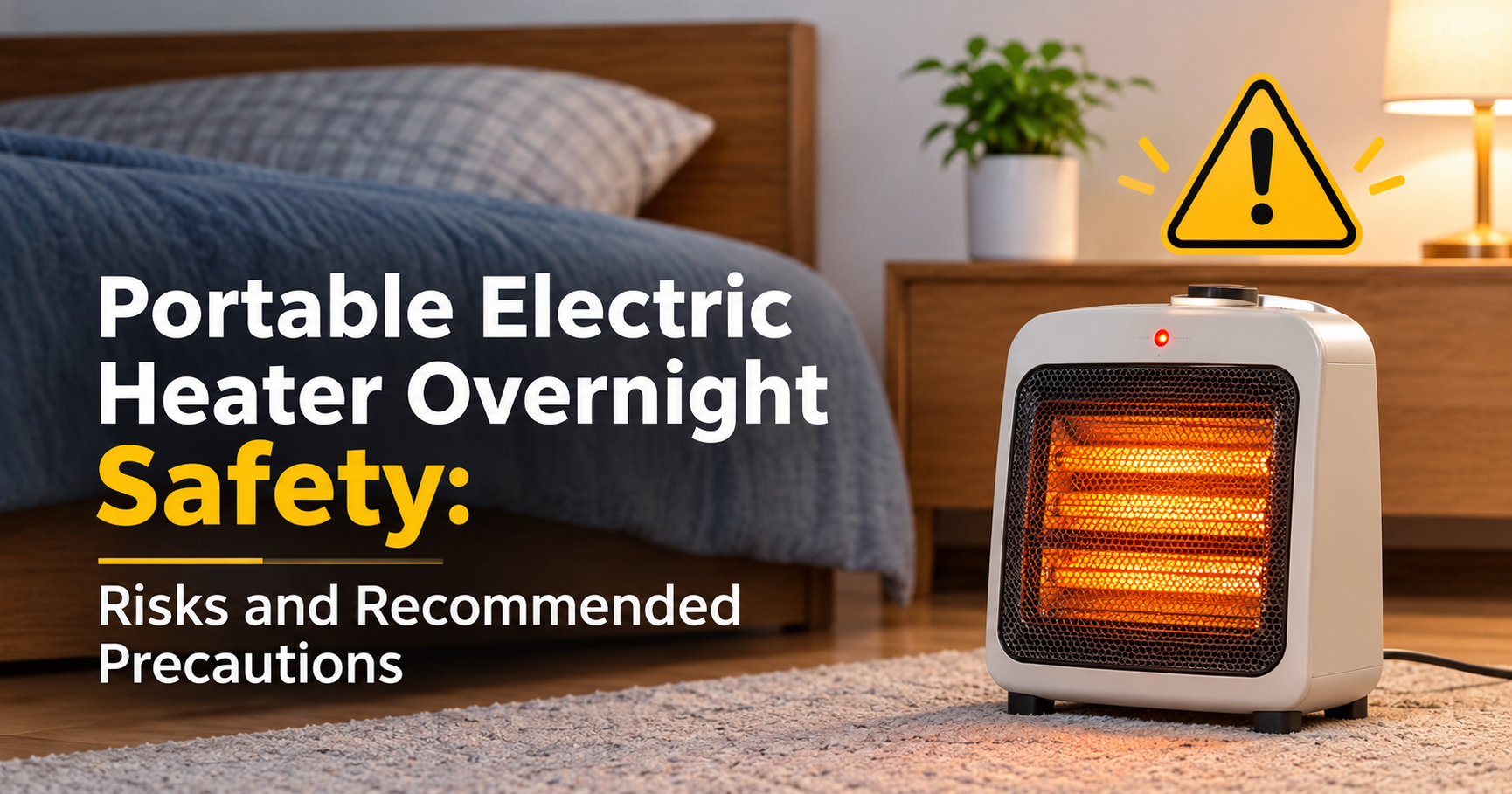
- Leaving the heater on while asleep or away. Most heater fires involve heaters left running unattended.
- Using extension cords or power strips. Heaters draw a lot of power, and these accessories can overheat.
- Placing the heater on a rug, bed or soft surface. It can tip, overheat, or ignite the surface beneath it.
- Ignoring a damaged cord or plug. Frayed wires, scorched plugs or loose sockets are warning signs to stop using the heater immediately.
Step-by-Step: Placing Your Heater Safely Near a Window Area

- Clear the area. Remove anything flammable from a 3-foot radius, including paper, laundry, blankets and cushions.
- Choose a flat, hard floor. Place the heater on a stable, level surface such as tile, wood or laminate, not on carpet that can trap heat or soft furniture that can tip.
- Measure the clearance. Use a tape measure from the closest part of the heater to the nearest curtain edge. Check both with the curtain hanging naturally and pushed by a draft.
- Face the heater into the room. Point the heat output away from fabric and toward open space or the area where you sit.
- Secure or shorten the curtains. Use tie-backs, hold-backs or clips to keep fabric well away, or choose shorter curtains for that window.
- Plug directly into a wall outlet. Avoid extension cords and power strips unless the heater’s manual explicitly allows them, and keep the cord where nobody can trip on it.
- Run a short test. After a few minutes, check whether the curtain is moving toward the heater, and adjust before you settle in.
Safety Features to Look For When Buying a Portable Heater
If you know your room has curtains, a window seat or limited floor space, a heater with built-in protection gives you an extra layer of safety. These are the features worth prioritizing:

- Tip-over automatic shut-off: cuts power if the heater is knocked over or leans too far.
- Overheat protection: turns the heater off when internal temperatures get too high, which can happen if airflow is blocked by fabric.
- Adjustable thermostat: keeps the heater from running at full power constantly and helps reduce energy use.
- Cool-touch or protected housing: lowers the chance of burns and reduces surface heat on the outside of the unit.
- Timer or auto shut-off: useful if you tend to forget to turn the heater off.
- Safety certification mark: look for a recognized testing mark for your region, such as UL, ETL or CE, on the product and packaging.
Remember that safety features are a backup, not a replacement for correct placement. A heater with every feature on the list should still stay 3 feet from your curtains.
Making Your Curtains and Window Area Safer
Sometimes the easiest fix is not moving the heater at all, but changing what hangs near it.
- Choose flame-resistant or treated fabrics where possible. Fabrics that are labeled as flame retardant or made from inherently flame-resistant fibers are slower to ignite than untreated lightweight cloth.
- Shorten the length. Sill-length curtains keep fabric off the floor and away from a low heater.
- Use tie-backs and hold-backs. Securing curtains during the hours you use the heater keeps them stable and predictable.
- Add window insulation instead of heat. Thermal curtains, window insulation film and draft stoppers reduce the cold you feel near the window, which means you may not need a heater there at all.
- Keep the area tidy. Avoid stacking clothes, boxes, paper or decorations under or beside the window.
What to Do When Your Room Has Limited Space
Small bedrooms, studio apartments and dorm rooms often leave no obvious spot with a full 3 feet of clearance. In that situation, try these options in order:
- Relocate the furniture or the heater. Moving a chair or bedside table can open up a safe corner.
- Change the curtains. Swap long curtains for shorter ones, or use blinds that do not hang loosely into the room.
- Heat a different part of the room. Place the heater on the opposite side from the window and let the warm air circulate.
- Use a smaller or lower-wattage heater. A smaller heater is not a substitute for clearance, but it reduces total heat output in a tight space.
- Warm yourself directly. Use blankets, heated throws that are certified for safe use, warm clothing and a hot drink to cut down on how much heating you need.
If you still cannot maintain safe clearance, it is better to skip the heater in that room than to use it close to fabric.
Safe Operating Rules for Every Day
- Turn the heater off when you leave the room or go to sleep.
- Never cover the heater or block its vents.
- Inspect the cord and plug before each season and regularly during use. Stop using any heater with a hot plug, damaged cord, burning smell or flickering power.
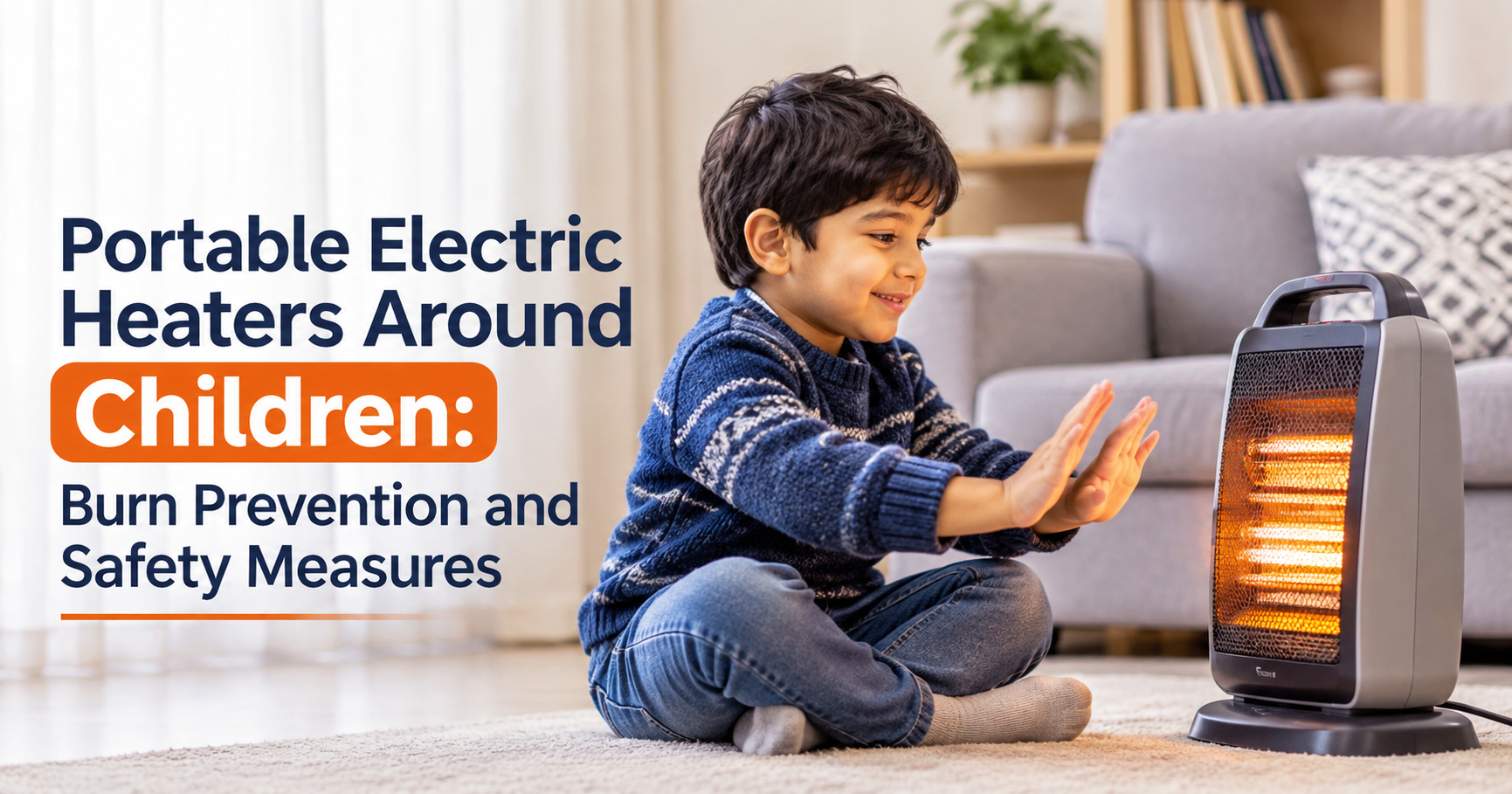
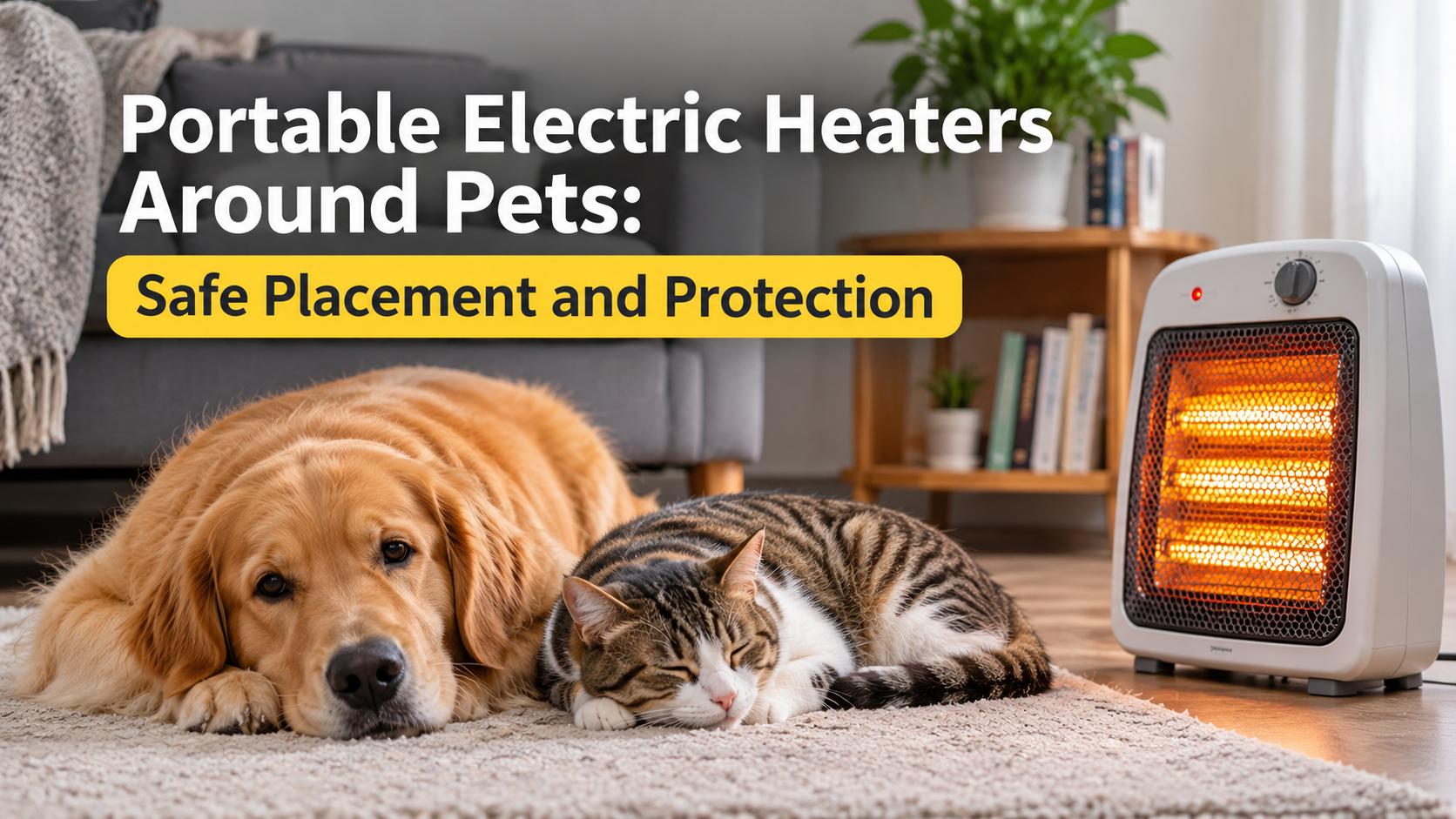
- Keep children and pets away from the heater, and place it where nobody will bump it.
- Do not use heaters in damp areas such as bathrooms unless the model is specifically designed for that use.
- Install working smoke alarms near bedrooms and living areas, and test them every month.
- Plan an escape route and make sure everyone in the home knows it.
What to Do If a Curtain Touches the Heater
If you notice fabric touching or scorching near the heater, act immediately:
- Switch the heater off at the unit and unplug it if it is safe to reach.
- Move the curtain away and check for scorch marks, melted fibers or a burning smell.
- Let the heater cool completely before moving it.
- If there is a flame or visible smoke, leave the room, close the door behind you, and call your local emergency number. Do not try to fight a growing fire.
Frequently Asked Questions
Can I put a portable electric heater under a window with curtains?
It is not recommended. Windows are naturally the coldest part of a room, so people are tempted to place heaters there, but doing so puts the heater right beside the curtains. Move the heater into the room and manage the window cold with insulation instead.
Is an oil-filled radiator safe near curtains?
Oil-filled radiators generally have lower surface temperatures than exposed element heaters, but they still get hot. Curtains should never touch or drape over the fins, and the same 3-foot clearance guideline applies.
How far should a heater be from a bed or sofa?
The same rule applies: at least 3 feet from beds, bedding, sofas, cushions and other soft furnishings. Never leave a heater running while sleeping unless the manufacturer’s instructions clearly allow it, and even then, keep it well away from the bed.
Can I use a heater with a timer near curtains?
A timer is a helpful extra, but it does not change the clearance requirement. The heater still needs 3 feet of open space around it while it is running.
Are flame-retardant curtains completely fireproof?
No. Flame-resistant fabrics are slower to ignite and spread flame, but they are not fireproof. Treat them as an added layer of protection and keep heaters clear of them regardless.
Is it safe to leave a portable heater on overnight?
Fire safety experts generally advise turning space heaters off when you go to sleep or leave the room. If you need overnight warmth, consider safer options such as extra bedding, a warmer bedroom temperature through central heating, or a heated product specifically designed and rated for overnight use.
Final Thoughts
A portable electric heater can make a cold room comfortable, but only when it is used with care. The risk with curtains is real, mainly because fabric is light, moves with the air and burns fast. The good news is that the fix is simple: keep at least 3 feet of clear space around the heater, place it on a flat hard floor, plug it directly into the wall, choose a model with tip-over and overheat protection, and never leave it running unattended.
If your room layout makes that impossible, change the layout, change the curtains, or change the way you heat the room. Warmth is worth having, but not at the cost of safety.