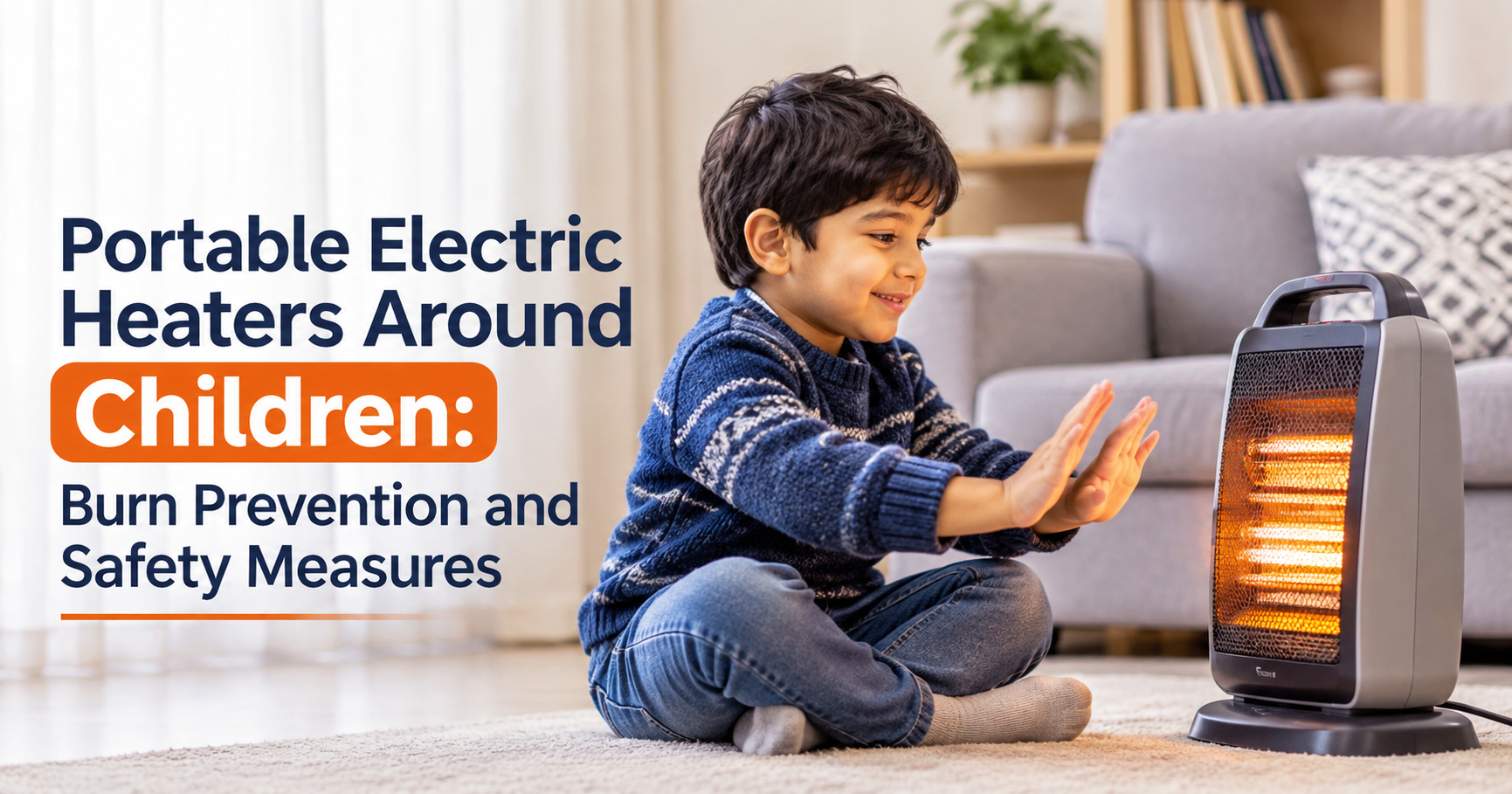
When the temperature drops, a portable electric heater is one of the quickest ways to make a cold bedroom, nursery or playroom comfortable. But if you have a baby, toddler or school-age child at home, a heater is not just an appliance. It is a hot surface, an electrical device and a possible fire source sitting at a child’s eye level.
The good news is that families can use portable electric heaters safely. It comes down to three decisions: choosing the right type of heater, placing it correctly, and following a few firm daily rules. This guide walks you through each one so you can keep your home warm without taking unnecessary risks.
Quick Answer: Is a Portable Electric Heater Safe Around Children?
It can be, but only with the right model and strict habits. Choose a heater with tip-over and overheat protection and a cool-touch body, keep a clear 3-foot (1 metre) zone around it, plug it directly into a wall socket, never leave it running unattended or while a child sleeps, and always supervise young children in the room.
Why Portable Heaters Need Extra Care Around Kids
Adults instinctively know a heater is hot. Children do not. Understanding exactly where the danger comes from helps you prevent it.
1. Burns from touching hot surfaces
Toddlers explore with their hands and move faster than most parents expect. Many heaters have metal grilles, outlet vents or panels that get hot enough to cause a painful burn in a very short time. Young children also have thinner skin than adults, so the same contact can cause a deeper injury.
2. Fire risk from nearby objects
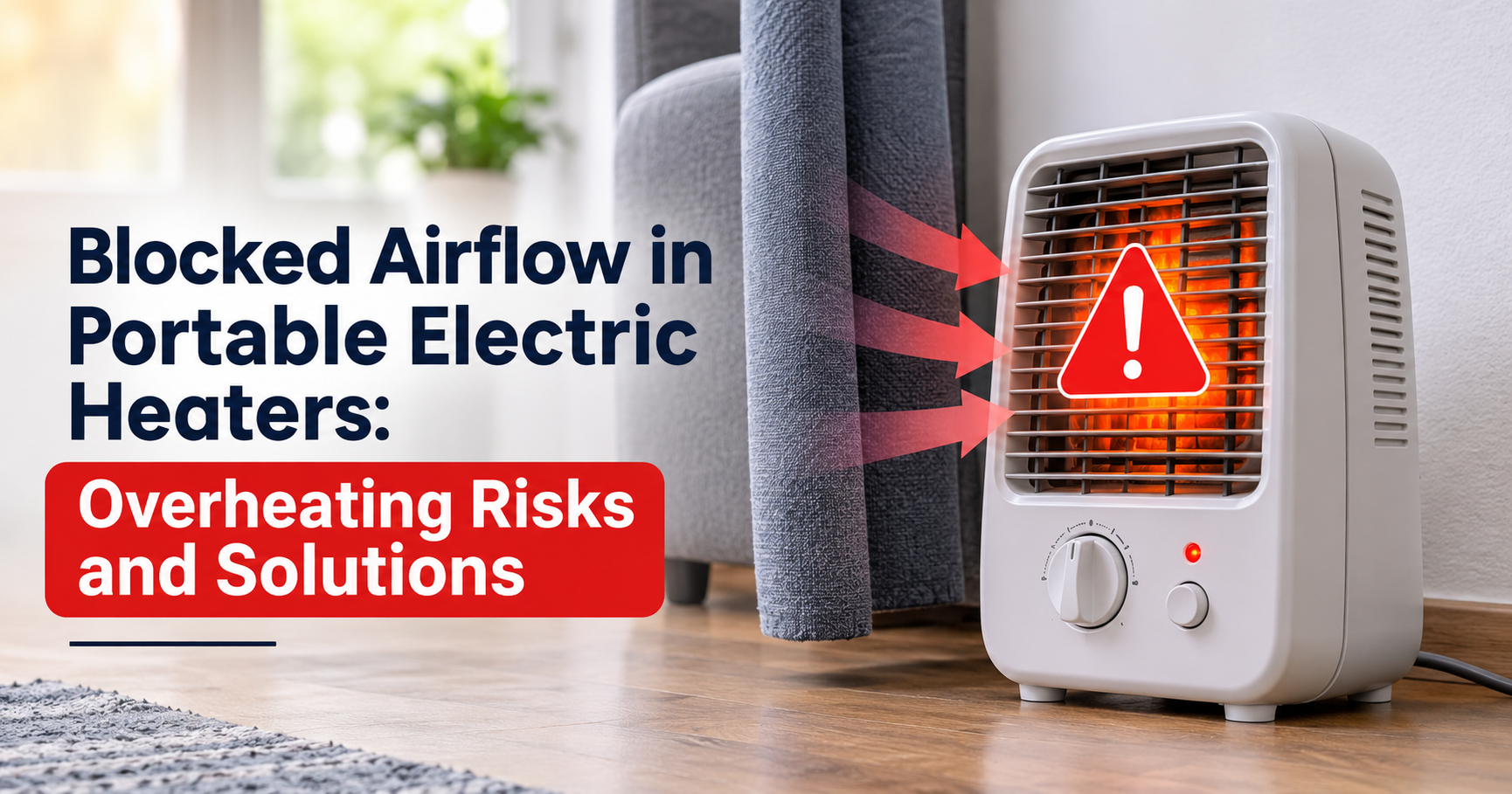
Fire safety organisations consistently list portable heaters among the leading causes of home heating fires. The most common cause is not a faulty device, but a heater placed too close to something that burns, such as bedding, curtains, sofas, clothes or paper. Children’s rooms are full of exactly these items.
3. Tipping and knocking over
A running toddler, a playful pet or a swinging toy can knock a heater over in a second. Without a working tip-over switch, a fallen heater can keep heating while pressed against carpet or fabric.
4. Overheating the room
Babies cannot regulate their body temperature as well as adults. A room that is too warm is uncomfortable and can be unsafe for sleeping infants. This is why the thermostat and a room thermometer matter as much as the heater itself.
5. Electrical hazards
Chewed or frayed cords, loose plugs, overloaded extension leads and curious fingers near sockets are all risks that increase in a home with small children.

Choosing the Safest Portable Heater for a Home with Children
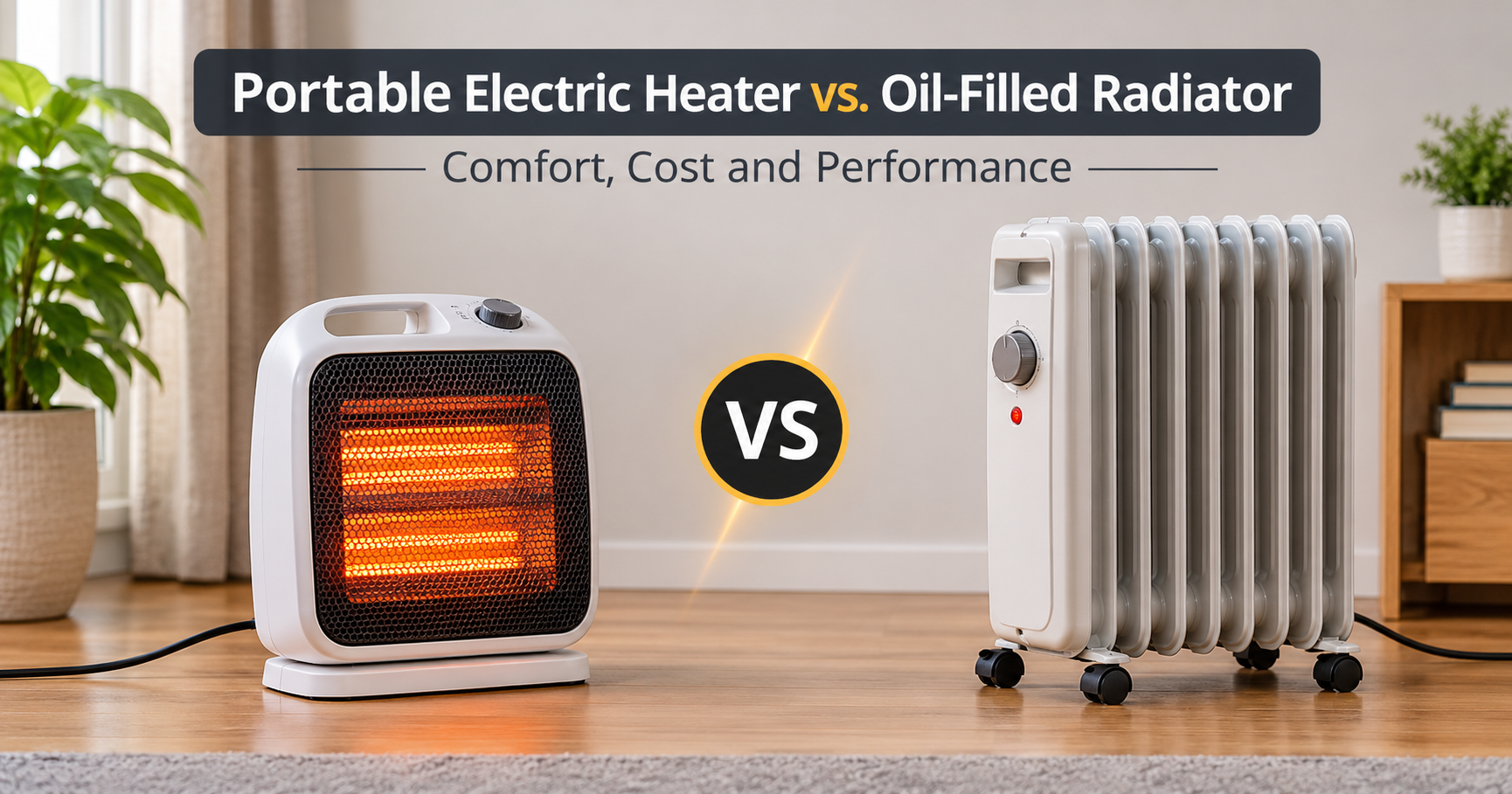
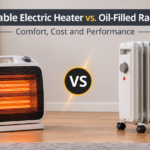
Not every heater is equally suited to a family home. Here is how the common types compare.
| Heater Type | How It Heats | Considerations with Children |
|---|---|---|
| Oil-filled radiator | Heats oil sealed inside fins; radiates warmth slowly | No glowing element and very quiet, but the large surface becomes hot. Best with a protective guard and a clear zone. |
| Ceramic fan heater | Fan blows air across a hot ceramic element | Heats quickly and many models have a cool-touch body. Hot air at the outlet means no one should sit directly in front of it. |
| Convection heater | Warms air that circulates naturally | Gentle, even warmth and quiet. The housing warms up, so keep it out of reach. |
| Radiant / quartz bar heater | Glowing element radiates heat directly | Exposed, very hot element. Generally the least suitable choice for homes with young children. |

Safety Features You Should Never Skip
If you are comparing models, treat the following as essentials rather than bonuses.
- Tip-over protection: an automatic switch that cuts power the moment the heater tilts or falls.
- Overheat protection: an internal sensor that shuts the heater down if its temperature rises too far, for example when the vents are blocked.
- Cool-touch housing: an outer shell designed to stay at a lower temperature, reducing the chance of burns from accidental contact.
- Adjustable thermostat: keeps the room at a steady temperature instead of heating continuously.
- Timer or auto shut-off: ensures the heater switches itself off if you forget.
- Child lock: prevents little hands from changing settings or switching the heater on.
- Safety certification: look for a recognised electrical safety mark that applies in your country, and buy from a reputable seller rather than an unbranded product with no documentation.
- Sturdy, wide base: a stable heater is harder to knock over in the first place.

Where to Place a Portable Heater in a Child’s Room
Placement is where most accidents are won or lost. Follow these guidelines:
- Keep a 3-foot (about 1 metre) clear zone on all sides. Nothing flammable, and no child, should be inside it.
- Use a flat, hard, level surface. Do not put a heater on a bed, sofa, thick rug or unstable table.
- Place it where children cannot reach it, ideally in a corner or beside a wall so no one walks past it. A freestanding safety guard or baby gate around the zone adds another layer of protection.
- Keep it away from curtains, bedding, wardrobes and toy boxes.
- Avoid doorways and walkways where someone could trip over it or its cord.
- Never use it in a damp area such as a bathroom unless the heater is specifically designed for it.
Plug It In the Right Way
Heaters draw a lot of power. Plug the heater directly into a wall socket and avoid extension cords and multi-plug strips, which can overheat. Route the cord so it cannot be pulled, chewed or tripped on, and never run it under a rug. Inspect the plug and cable regularly. If the plug feels hot, the cord is worn, or the heater trips the circuit repeatedly, stop using it and have it checked or replaced.
Heating a Baby’s Room or Nursery
Infant sleep guidance from child-health organisations generally recommends keeping a baby’s sleeping room comfortably cool, commonly around 16 to 20 °C (61 to 68 °F), rather than very warm. Overheating is a recognised concern for sleeping babies, so a portable heater should be used with particular care:
- Put a simple room thermometer near the cot and check it instead of guessing.
- Use the thermostat to hold a steady, moderate temperature.
- Warm the room before bedtime, then switch the heater off or use a timer rather than leaving it on all night.
- Dress the baby in suitable sleepwear layers or a baby sleeping bag instead of over-heating the room.
- Keep the heater well outside the 3-foot zone and far from the cot.
Everyday Safety Habits Every Parent Should Follow

- Supervise. Never leave young children alone in a room with a running heater.
- Switch it off when you leave the room or go to sleep.
- Do not dry clothes, towels or toys on or near the heater.
- Do not cover the vents or place anything on top.
- Teach children in simple words that the heater is hot, is not a toy and must not be touched. Older children can learn to keep toys and clothes well away.
- Test your smoke alarm regularly and make sure there is one on every floor. Plan and practise an escape route as a family.
Do Electric Heaters Affect Air Quality and Health?
Electric heaters do not burn fuel, so they do not produce carbon monoxide the way gas, kerosene or wood heaters can. That is one reason many parents prefer them for bedrooms. They can still affect comfort, however:
- Dry air: heating a closed room can lower humidity and dry out the nose and throat, which may bother children with colds, eczema or asthma. Keeping humidity in a comfortable range and ensuring some fresh air can help.
- Dust smell: a heater that has been stored may give off a mild, dusty smell when first switched on. Clean it before use. A strong burning or plastic smell, however, is a warning sign: turn it off, unplug it and do not use it until it is inspected.
- Ventilation: briefly airing the room each day keeps the air fresher.
If your child has asthma, allergies or a long-term health condition, ask your doctor which type of heating is most suitable.
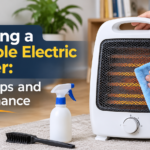
Cleaning and Maintenance Tips
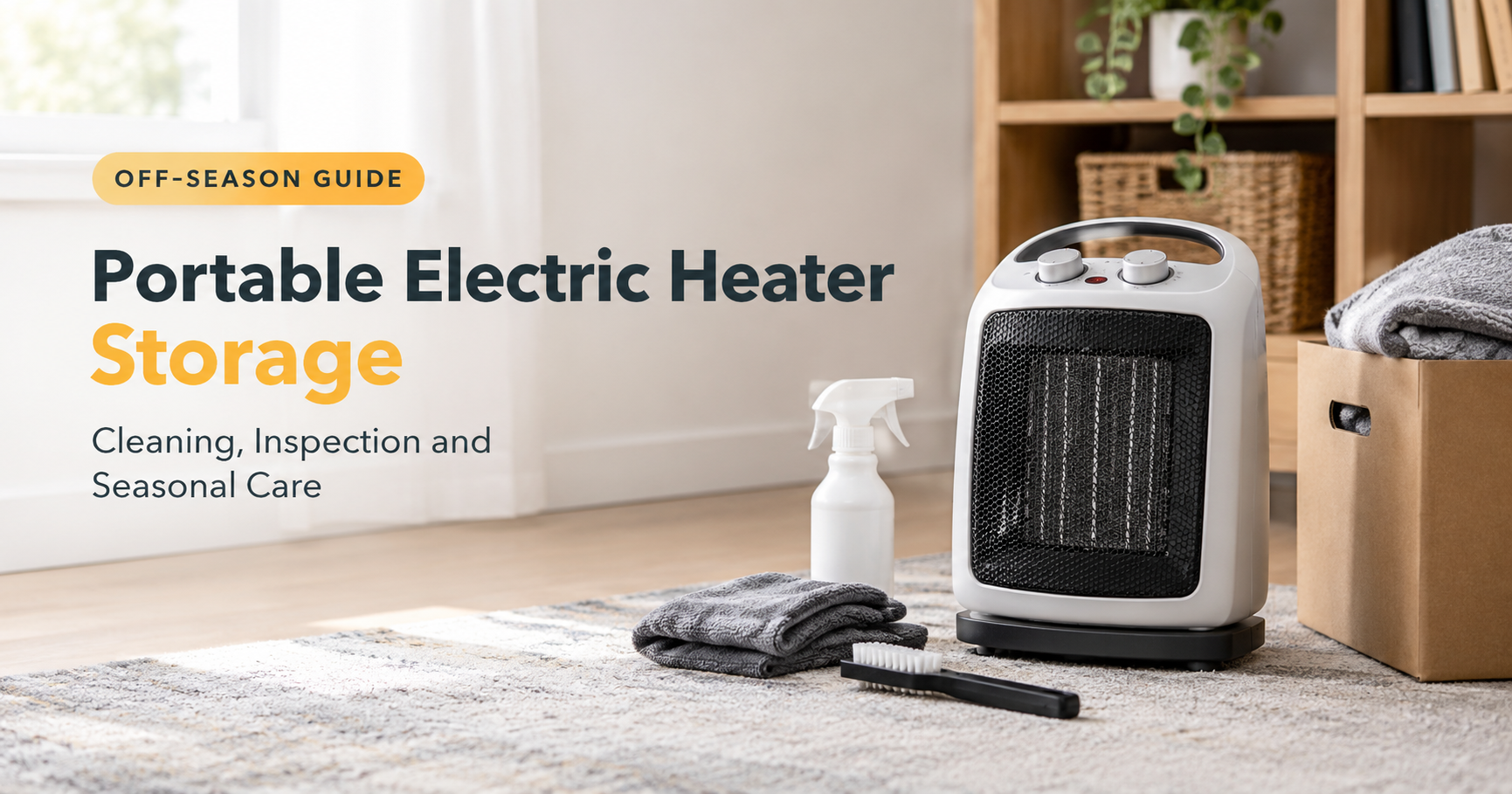
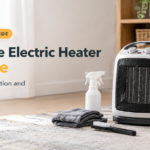
- Always unplug the heater and let it cool completely before cleaning.
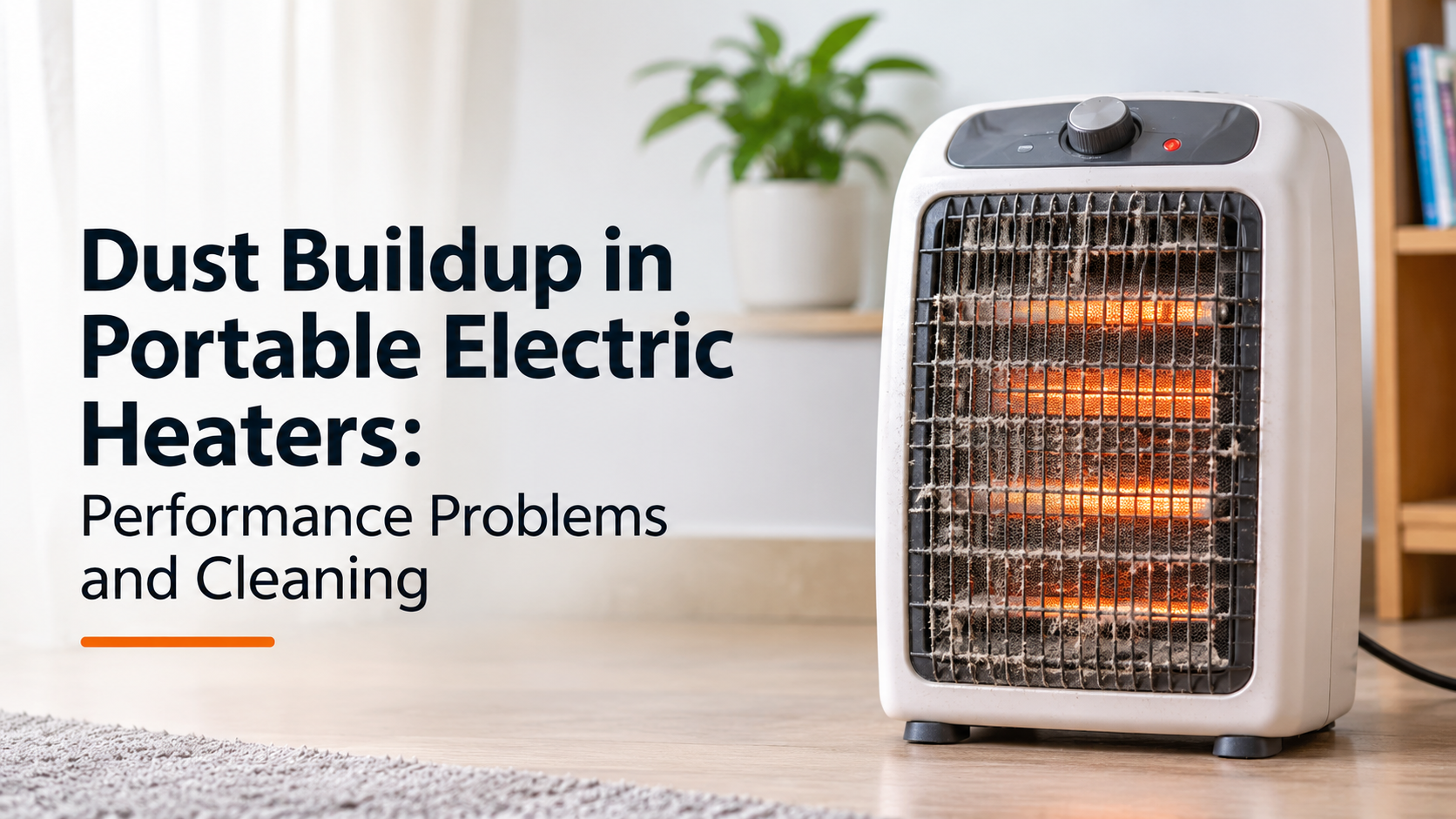
- Gently remove dust from the grille and vents with a soft brush or dry cloth. Dust build-up can cause odours and overheating.
- Never submerge the heater or spray it with liquid.
- Store it in a dry place and check for cracks, loose parts or damaged cables before each season.
- Replace any heater that shows damage rather than attempting a risky repair.
What to Do If a Child Is Burned by a Heater
Burn First Aid Basics
- Move the child away from the heater and, if safe, unplug it.
- Cool the burn under cool (not ice-cold) running water for about 20 minutes.
- Remove rings, bracelets or clothing near the burn unless it is stuck to the skin.
- Cover loosely with a clean, non-fluffy dressing or cling film. Do not use ice, butter, creams or toothpaste.
- Seek urgent medical help for burns on the face, hands, feet or genitals, large or blistering burns, or any burn on a baby or young child. When in doubt, call your local emergency number or see a doctor.
Safer Ways to Keep Children Warm
A heater does not always have to be the first answer. These options reduce how long you need to run one:
- Dress children in several thin layers rather than one thick layer, and use warm socks and hats.
- Use draught excluders on doors and close curtains in the evening to hold in heat.
- Heat only the room being used and close the door.
- Consider baby sleeping bags for infants instead of loose blankets.
- Where available, use fixed heating such as central heating or wall-mounted heaters that are out of reach.
Buying Checklist for Parents
Before you buy a portable electric heater for a home with children, run through this list:
- Does it have tip-over and overheat protection?
- Is the housing cool-touch or at least designed to stay at a lower temperature?
- Does it have an adjustable thermostat, timer and child lock?
- Is the power rating suitable for the room size, and for your home’s wiring and sockets?
- Does it carry a recognised safety certification, with clear instructions and a warranty?
- Is the base wide and stable, with a cord that is long enough to avoid extension leads but can be kept out of reach?
- Is it quiet enough for a bedroom or nursery?
- Do the reviews from other parents mention safety, build quality and reliability?
Frequently Asked Questions
Is it safe to leave a portable heater on overnight in a child’s room?
It is best not to. Safety guidance generally advises switching heaters off when you sleep. Warm the room before bedtime and use a timer or turn it off, and dress your child appropriately for the night.
How far should a heater be from a child?
Keep at least 3 feet (about 1 metre) of clear space on all sides. For young children, it is even safer to block the area with a gate or guard so they cannot get close.
Which heater is best for a nursery?
Many parents prefer an oil-filled radiator or a ceramic heater with a cool-touch body, a thermostat and tip-over protection, kept well away from the cot. The best choice depends on the room, but a model with multiple safety features always beats one without them.
Can a portable heater be used with a baby in the room?
Yes, with care. Keep the room temperature moderate, monitor it with a thermometer, place the heater far from the cot, and never leave the baby unattended near it.
What temperature should a child’s room be?
A comfortable range for most children’s rooms is roughly 18 to 21 °C (64 to 70 °F), and a little cooler for a sleeping baby. A thermometer takes the guesswork out.
Are electric heaters safer than gas or kerosene heaters?
Electric heaters do not release combustion fumes or carbon monoxide in the room, which is a major advantage. They still carry burn and fire risks, so the same placement and supervision rules apply.
Should I use a heater with an extension cord?
No. Plug heaters straight into a wall socket. Extension cords and power strips can overheat under a heater’s high power draw.
Final Thoughts
A portable electric heater can keep your children warm and comfortable through the coldest months, but only when it is chosen and used thoughtfully. Pick a model with strong built-in safety features, keep a clear 3-foot zone, plug it in correctly, never leave it running unattended, and treat the room temperature as carefully as the heater itself. A few minutes of preparation each season goes a long way toward protecting your family.
This article provides general safety information. Always read and follow the manufacturer’s instructions for your specific heater, and consult a medical professional for health concerns.