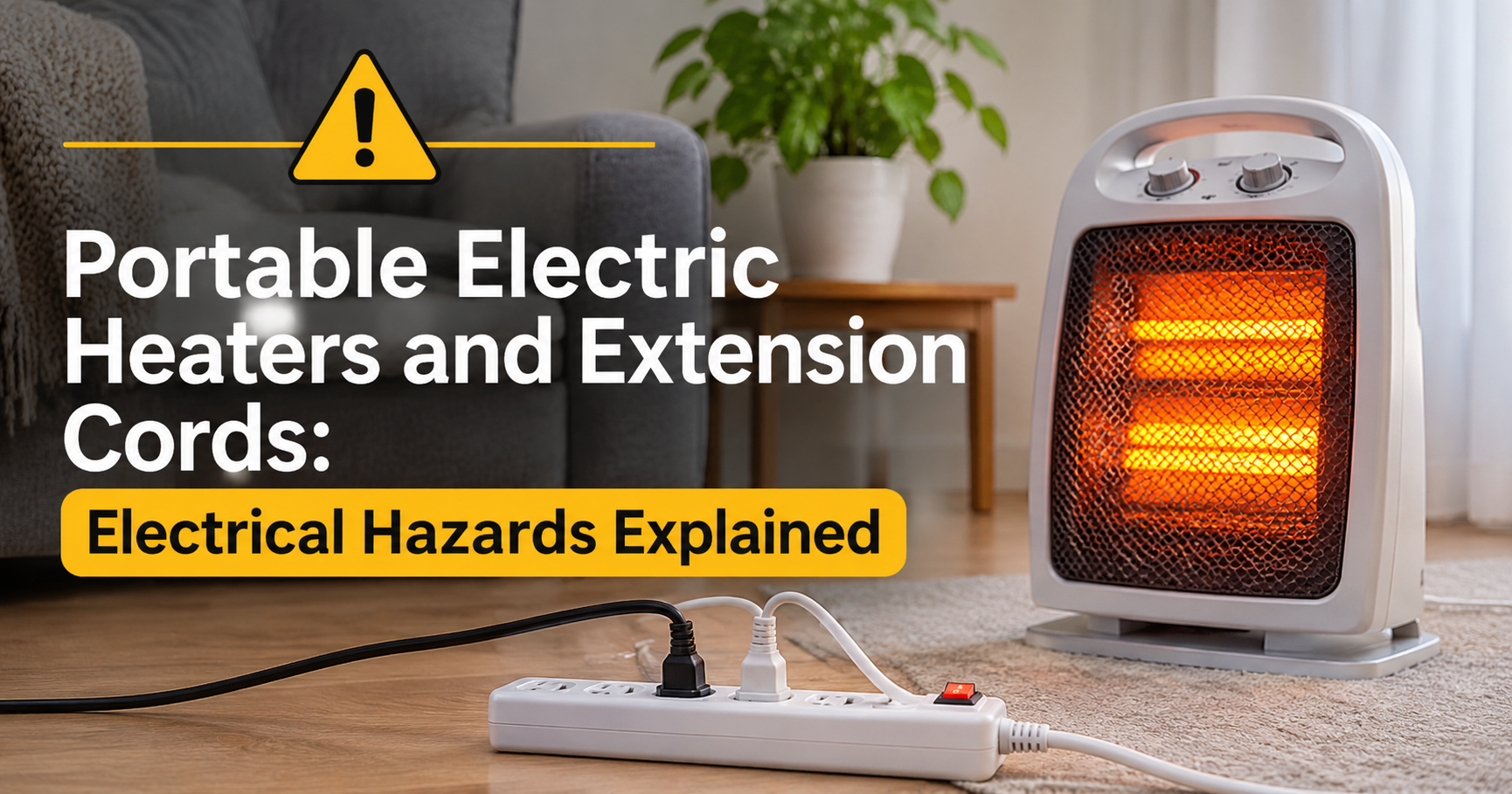

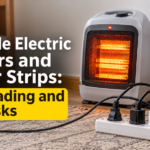
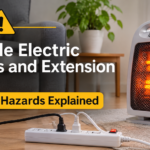
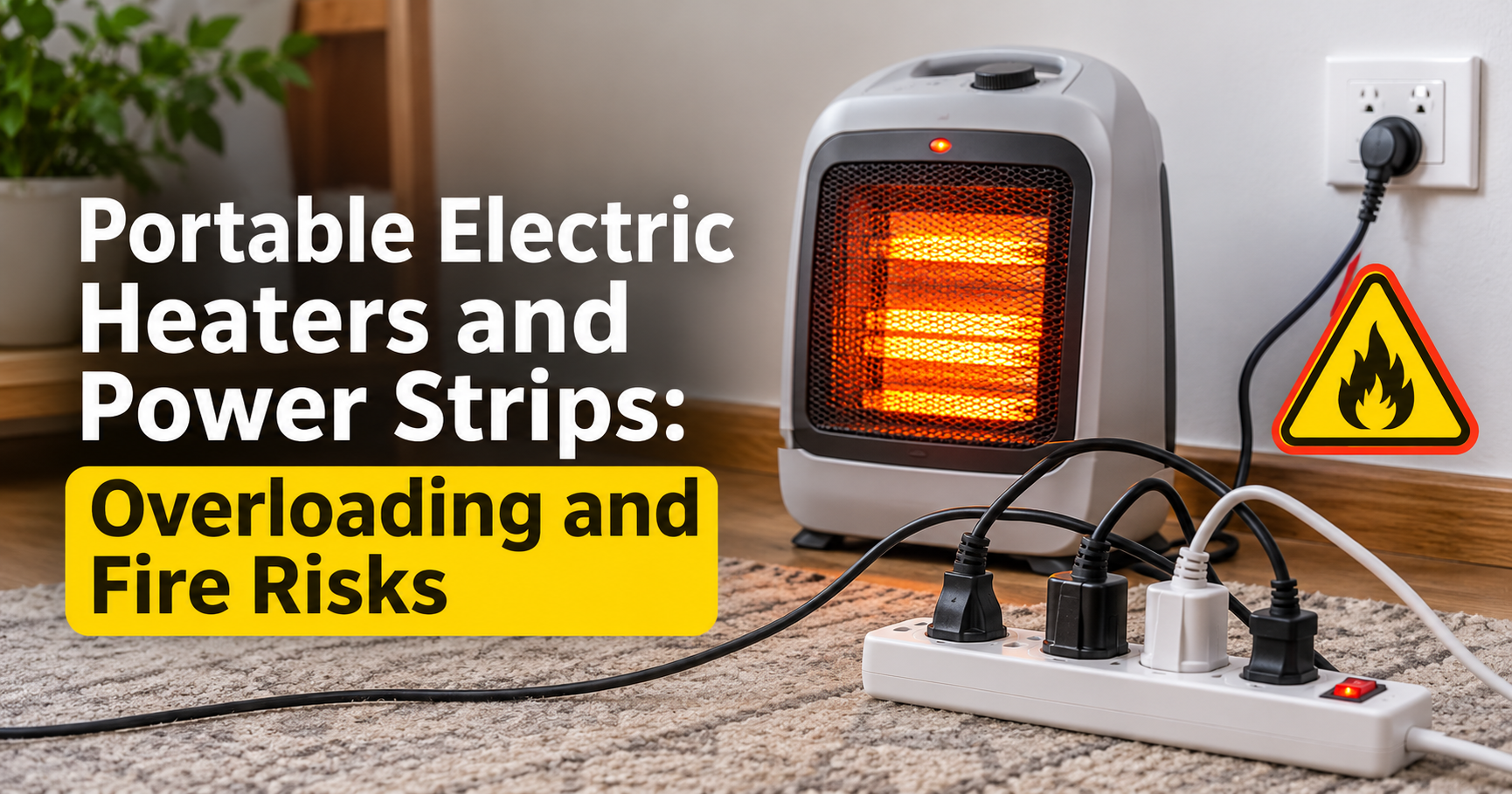
When a room gets cold and the only wall outlet is behind the sofa, a power strip looks like the easy fix. It is one of the most common and most dangerous shortcuts in home heating. Portable electric heaters pull far more electricity than most household devices, and the ordinary power strip on your desk was never designed to carry that load for hours at a time.
This guide explains exactly why power strips and portable heaters are a risky combination, how to do the quick math on your own circuit, what a safe setup looks like, and which warning signs mean you should unplug the heater right away.
The Short Answer
Plug a portable electric heater directly into a wall outlet. Do not use a power strip, surge protector, or multi-outlet adapter. Almost every heater manufacturer says so in the manual, and fire safety organizations give the same advice.
Why Portable Heaters Are Different From Other Appliances
A phone charger uses about 5 to 20 watts. A laptop uses roughly 60 watts. A typical portable electric heater uses up to 1,500 watts, which is 25 to 100 times more, and it keeps drawing that power continuously for as long as the heating element is on.
That combination of high power and long running time is what causes trouble. Electrical resistance turns current into heat. Any weak point in the path, such as a loose plug, a thin wire, or a small metal contact, becomes a hot spot when it carries a heater’s current. A hot spot can slowly melt plastic and ignite nearby material, often with no warning until the damage is done.
The Math: Watts, Amps, and Your Circuit
You do not need to be an electrician to check this. Use the formula amps = watts ÷ volts.
- A 1,500 W heater on a 120 V outlet draws about 12.5 amps.
- A standard household branch circuit is usually protected by a 15 amp breaker, which is about 1,800 W at 120 V.
- Electrical codes treat anything running for three hours or more as a continuous load and recommend staying under 80% of the breaker rating, which is 12 amps or about 1,440 W on a 15 amp circuit.
In other words, a single 1,500 W heater already uses essentially the entire safe capacity of a normal circuit. Add a lamp, a TV, or a second device on the same circuit and you are over the limit, even before a power strip enters the picture.

Why a Power Strip Is the Weak Link
The strip may say 15 amps on the label, and that is where many people get a false sense of security. The rating describes the strip’s best case, not the quality of every part inside it. Here is what goes wrong in practice:
1. Thin internal wiring and small contacts
Budget strips often use thin conductors and small metal contacts to keep costs down. Under a constant 12 amp load these parts heat up far more than a heater’s own cord does.
2. More connections means more resistance
Every plug-in point is a place where electricity must cross from one piece of metal to another. A power strip adds extra connections: wall to strip, then strip to heater. Any slightly loose or worn connection produces heat at that spot.
3. Shared load across the outlets
A heater plus anything else on the strip makes the total load climb quickly. Even if the heater alone is within the limit, a phone charger or fan on the same strip pushes the whole assembly higher.
4. Surge protectors are not built for heaters
Surge protectors contain components designed to protect electronics from short voltage spikes. A heater’s constant load can stress those components and the internal switch. Many strips also have a small resettable breaker that is less robust than the one in your wall panel.
5. Daisy chaining multiplies the risk
Plugging one strip into another, or into an extension cord, adds even more resistance and makes it impossible to tell what the real total load is.

Did You Know?
Fire safety groups consistently report that portable space heaters are involved in roughly a third of home heating fires and a large majority of fatal home heating fires. Many of those incidents involve misuse, such as placing the heater too close to combustibles or using an inadequate cord or outlet.
What About Extension Cords?
Most heater manuals say not to use an extension cord at all, and the safest answer is the same as for power strips: plug into the wall. If the manual of your specific heater permits a cord and you truly have no alternative, follow these rules:
- Use a heavy-duty cord labeled for the amperage of the heater, with a heavier wire gauge (the lower the AWG number, the thicker the wire). Light-duty household cords are not suitable.
- Choose the shortest cord that reaches, and uncoil it completely. A coiled cord traps heat.
- Pick a cord with a safety certification mark from a recognized testing laboratory and a three-prong grounded plug.
- Never run the cord under rugs, furniture, or doors where heat and damage can go unnoticed.
- Check the plug and cord every few minutes the first time you use it. If anything feels warm, stop using it.
Treat this as a last resort, not a regular setup. A better long-term fix is having a qualified electrician add an outlet where you need it.
How to Set Up a Portable Heater Safely: Step by Step
- Read the manual. Confirm the heater’s wattage and the manufacturer’s rules about cords and outlets.
- Inspect the outlet. It should grip the plug firmly and be cool, clean, and free of discoloration. A loose or cracked outlet should be replaced before use.
- Plug directly into the wall. Push the plug all the way in so no metal prongs are visible.
- Keep the circuit clear. Avoid running other high-draw devices such as hair dryers, microwaves, or a second heater on the same circuit.
- Create a clear zone. Keep at least three feet (about one meter) of open space around the heater, away from curtains, bedding, furniture, paper, and clothes.
- Use a hard, level surface. Place it on the floor on a flat, non-flammable surface and never on a table, bed, or soft carpet that could tip it over or block airflow.
- Do the touch test. After 15 to 30 minutes, carefully check that the plug and cord are only mildly warm. Hot means unplug it.
- Never leave it unattended. Turn the heater off and unplug it when you leave the room, go to sleep, or leave the house.
Warning Signs: When to Unplug Immediately
Electrical problems usually announce themselves before they cause a fire. Watch for any of the signs below, and stop using the heater and the outlet until a professional inspects them.

Features to Look For in a Safer Portable Heater
A well-designed heater reduces risk, although it never replaces safe wiring habits. When shopping, compare these features:
| Feature | Why It Matters |
|---|---|
| Tip-over switch | Cuts power automatically if the heater is knocked over. |
| Overheat protection | Shuts the unit off if internal temperature climbs too high. |
| Safety certification mark | Shows the model was tested to a recognized safety standard. |
| Plug with built-in protection | Some heaters include a plug-integrated safety device that detects dangerous current and cuts power. |
| Thermostat and timer | Prevents the heater from running nonstop and lowers energy use. |
| Cool-touch housing | Reduces burn risk for children and pets. |
| Lower wattage setting | Lets you reduce the load when a circuit is shared. |
Common Myths About Heaters and Power Strips
Myth: “My power strip is rated for 15 amps, so it is fine.”
Fact: The rating assumes ideal conditions and good components. A continuous heater load stresses every contact and often exposes weak or low-quality parts.
Myth: “A surge protector is safer than a plain strip.”
Fact: Surge protection guards electronics from voltage spikes. It does nothing to make a strip better at carrying a heater’s constant current.
Myth: “If the breaker has not tripped, the setup is safe.”
Fact: A breaker protects the wall wiring, not the strip or the plug. A strip can overheat and melt well before the breaker trips.
Myth: “Short use is harmless.”
Fact: Heat builds quickly under heavy load, and damage from earlier use can make later use more dangerous.
A Note on Voltage Differences
The numbers above use the common 120 V standard. In countries with 220 to 240 V supply, the same heater draws fewer amps, for example a 2,000 W heater on 230 V draws about 8.7 amps. The core advice does not change: high-wattage heating appliances should go directly into a properly rated wall socket rather than a multi-outlet strip.
When to Call an Electrician
- The outlet or wall plate is warm, discolored, or loose.
- The breaker trips whenever the heater runs.
- You regularly need a heater in a room that has few or poorly placed outlets.
- The home has older wiring or you are unsure of the circuit rating.
A licensed professional can inspect the wiring, replace worn outlets, and where needed install a dedicated circuit for the heater. It is a modest cost compared with the risk of an electrical fire.
Frequently Asked Questions
Can I plug a small 500 W heater into a power strip?
Lower wattage reduces the load, but most manufacturers still recommend a wall outlet for any heating appliance. If the manual allows it, use a high-quality strip with nothing else plugged in and monitor it closely.
Is a heavy-duty strip with a thick cord okay?
A better-built strip is safer than a cheap one, but it is still an extra connection point. Follow the heater manual first, and choose the wall outlet whenever possible.
Can I use a smart plug or timer with my heater?
Only if the device is explicitly rated for the heater’s full wattage and the heater’s manual does not prohibit it. Many smart plugs are rated for far less than 1,500 W.
Is it safe to run a heater overnight?
Safety organizations advise turning portable heaters off when you sleep. Use a thermostat-controlled option for brief warm-up periods and rely on bedding or central heating overnight.
What should I do if the plug feels hot?
Turn the heater off, unplug it using the plug body rather than the cord, let everything cool, and inspect the plug and outlet. Do not use them again until a professional has checked the outlet and the heater.
Final Thoughts
Portable electric heaters are convenient and effective, but they demand more from your electrical system than almost any other small appliance. The simple rule of plugging directly into a wall outlet removes one of the biggest and most avoidable fire risks in the home. Pair it with a clear space around the heater, regular checks of the plug and outlet, and a habit of switching the heater off when you are not in the room, and you can stay warm with confidence.
Quick Safety Checklist
- Heater plugged directly into a wall outlet
- No power strip, surge protector, or daisy chaining
- Nothing else heavy on the same circuit
- Three feet of clear space around the heater
- Plug and cord checked for warmth and damage
- Heater off when leaving the room or sleeping
This article is for general information and does not replace the manufacturer’s instructions or the advice of a licensed electrician. Electrical codes and ratings vary by region.