





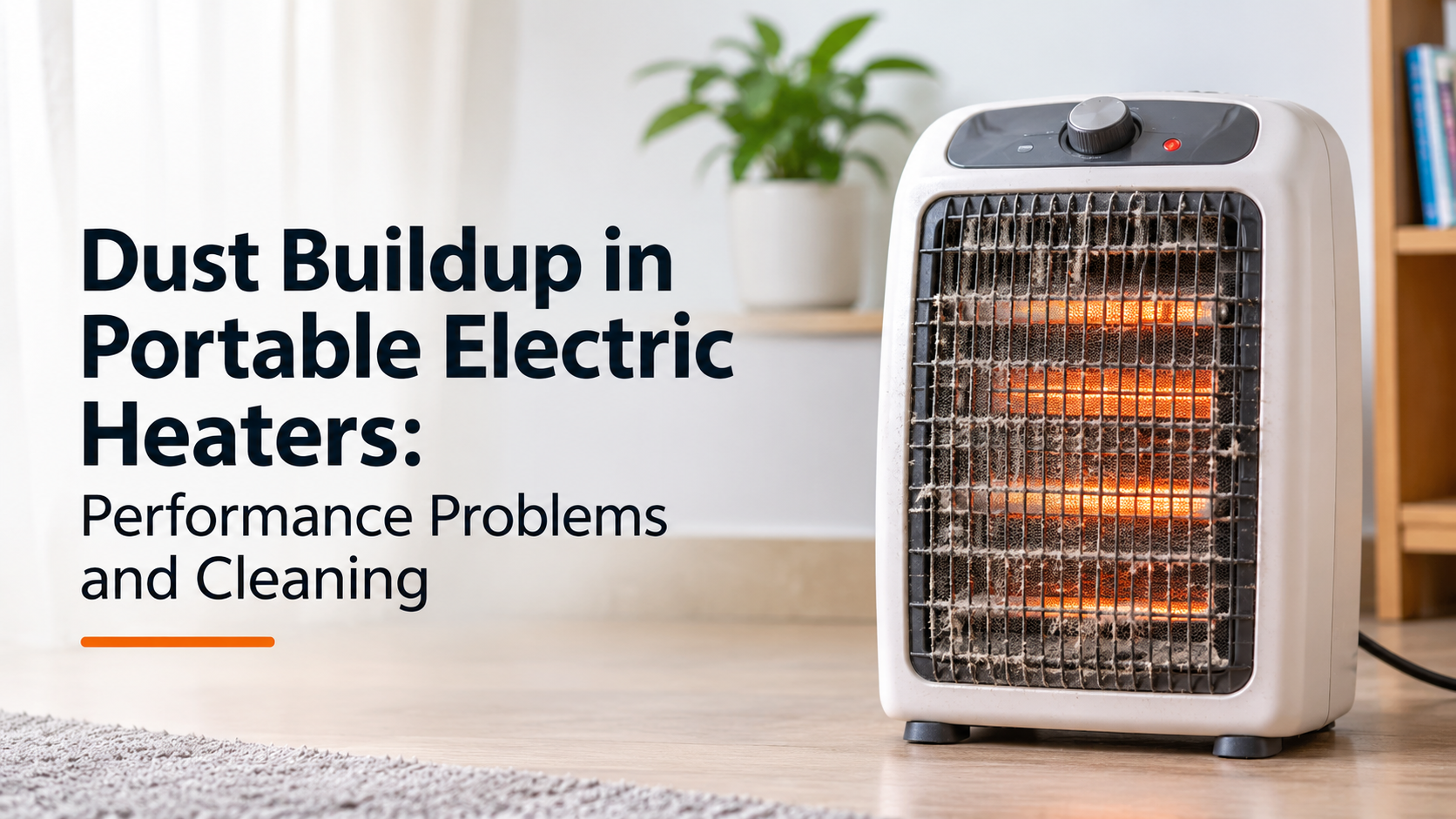
Every winter, millions of people pull a portable electric heater out of a closet or garage, plug it in, and get a faint burning smell within minutes. In most cases the cause is simple: dust that settled on the heater during the off-season is now cooking on a hot element. That smell is only the most visible symptom. Left unchecked, dust buildup quietly reduces heating performance, strains the fan motor, throws off the thermostat, and in the worst case creates a real fire risk.
This guide explains exactly how dust gets into a portable electric heater, what it does once it is there, how to spot the warning signs, and how to clean and prevent it safely. It also covers what to look for when buying a heater that is easier to keep clean.
Why Dust Builds Up in Portable Electric Heaters
Most portable heaters work by pulling room air across a heated surface and pushing it back out. That constant movement of air is exactly why dust is such a persistent problem. Several things make it worse:
- Air is pulled in continuously. Fan-forced heaters move a large volume of air through a small housing, so every particle of lint, pet hair, and fine dust in the room passes through the intake.
- Static electricity attracts particles. Plastic housings and fan blades build up a small static charge as air rushes over them, which makes fine dust cling instead of passing through.
- Storage invites settling. A heater left in a closet, garage, or basement for months collects a layer of dust on every exposed surface, including the grille and the inside of the casing.
- Floor-level placement. Most portable heaters sit on the floor, where dust, carpet fibers, and pet hair are densest.
- Heat bakes dust on. Once dust lands on a warm element or sensor, it can bake into a crust that is harder to remove than loose dust.

Where Dust Collects Inside the Heater
Knowing the typical dust zones makes cleaning faster and more effective. Here is what happens at each stage of airflow.
The intake grille
This is the first point of contact and the first place to clog. A thick layer of lint over the intake slots restricts airflow, which forces the heater to work harder and run hotter.
The dust filter (if your model has one)
Some ceramic and fan-forced heaters include a removable mesh filter behind the intake. It protects the inside of the unit, but only if you clean it. A clogged filter is nearly as bad as no airflow at all.
The fan blades and motor
Dust collects along the edges of the blades and gradually unbalances them. You may notice a new rattle, a hum, or a whining sound. Dust also works its way into the motor housing and can shorten the life of the motor.
The heating element
Whether it is a ceramic plate, a metal coil, or a quartz tube, the element reaches high temperatures. Dust that lands on it burns off, creating the familiar “burnt dust” smell and, in heavier cases, tiny amounts of smoke.
The thermostat sensor
The thermostat sensor measures the air temperature around the heater. A coating of dust acts as insulation, so the sensor can read the temperature incorrectly. The heater may shut off too early, run too long, or cycle on and off irregularly.
The outlet grille
Dust that burns inside the unit is carried out through the outlet, spreading odor into the room. A dirty outlet grille can also store enough dust to smell the next time the heater warms up.
What Dust Buildup Does to Your Heater
Dust is more than a cosmetic issue. Over time it affects performance, safety, and even the air in your room.
1. Reduced heating performance
Restricted airflow means less warm air reaches the room. Many people assume an older heater is simply “wearing out” when the real problem is a clogged intake or filter.
2. Overheating and safety shutoffs
When air cannot flow freely, internal temperatures climb. Modern heaters include overheat protection that switches the unit off to prevent damage. If your heater keeps shutting off after a short time, dust is one of the first things to check.
3. Fire risk
Fire safety organizations consistently list portable heaters among the leading causes of home heating fires. A heavy layer of dust and lint near a hot element is fuel. Light dust usually burns off harmlessly, but thick, compacted dust can smolder, and that is why regular cleaning matters.
4. Burning smells and poorer air quality
The odor of burning dust can irritate the nose and throat, particularly for people with asthma, allergies, or sensitivities. It also tells you the heater is running with more debris than it should.
5. Noisy operation
Dirty fan blades and motors create vibration and friction. If the heater has become louder over the season, dust on the fan is a likely cause.
6. Shorter lifespan
A fan motor that runs hot and a heating element that is constantly coated in debris will wear out faster than a clean one.
Warning Signs of Dust Buildup
You do not need to open the heater to know it needs attention. Watch for these signals:
- A burning or “hot dust” smell that lasts longer than the first few minutes of use
- Visible lint, hair, or gray film on the intake or outlet grille
- Weaker airflow than before
- The room taking longer to warm up
- The heater shutting off on its own or cycling more than normal
- New rattling, humming, or whining from the fan
- A casing that feels hotter than usual to the touch
- Faint smoke that appears briefly when the heater is first switched on
Important: a brief burnt-dust smell during the first use of the season is common and usually harmless. A smell that continues, gets stronger, or has a sharp plastic or electrical edge is not normal. Switch the heater off, unplug it, and inspect it before using it again.
How to Clean a Portable Electric Heater Safely
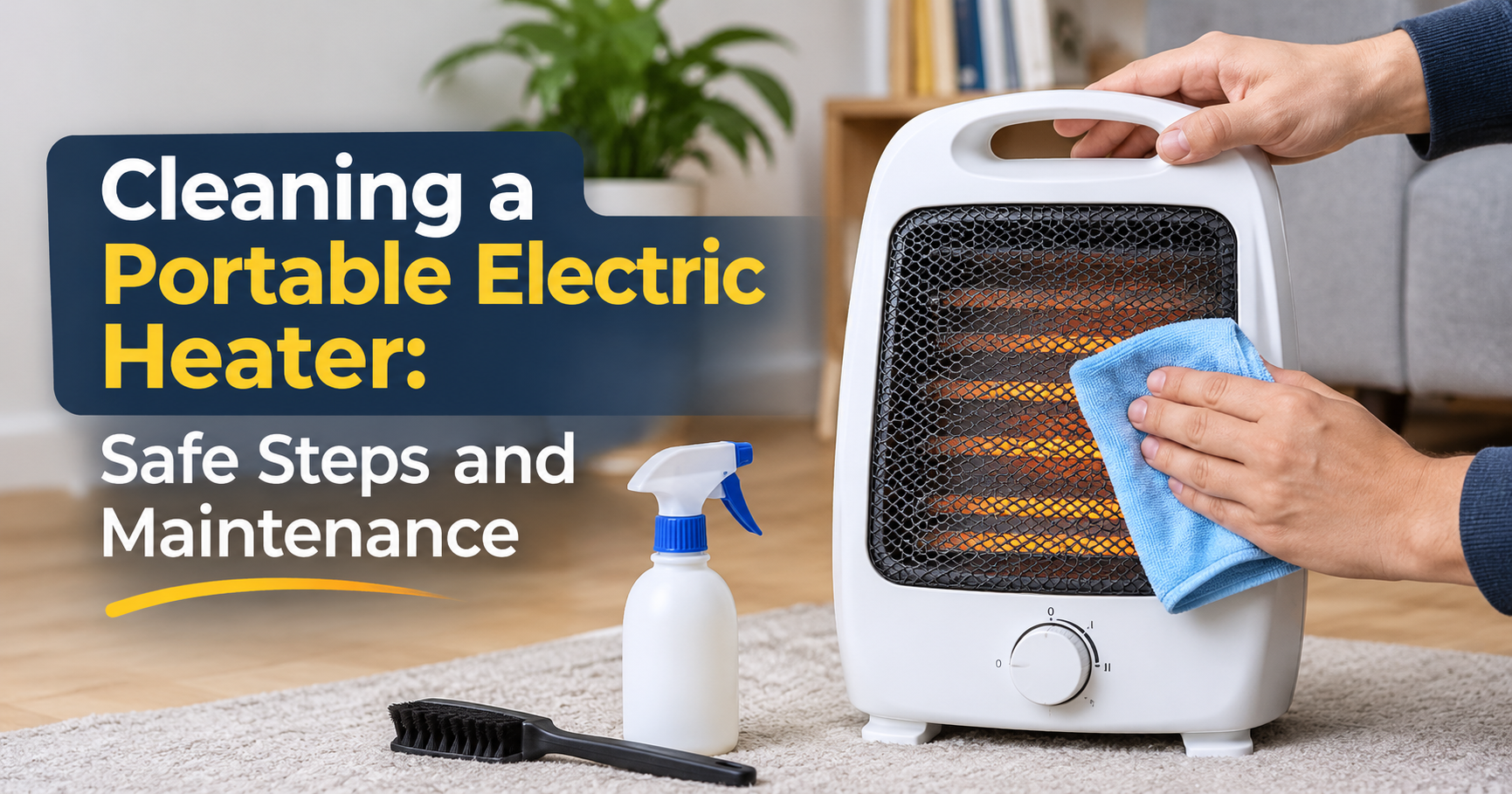
Cleaning takes about 15 minutes and requires only basic household items. Before you begin, gather a vacuum cleaner with a soft brush attachment, a dry paintbrush or soft toothbrush, a can of compressed air, and a microfiber cloth.

Step 1: Unplug the heater and let it cool
Disconnect the plug from the wall, not just the heater switch. Wait at least 30 minutes so that the element and casing are completely cool. Never clean a heater that is hot or plugged in.
Step 2: Vacuum the intake and outlet grilles
Use the soft brush attachment on low suction. Move slowly along the slats so that you pick up loose dust without bending the grille. Do both the front and the back of the unit.
Step 3: Loosen and blow out the hidden dust
Use a dry paintbrush to gently loosen dust from between the slats. Then use compressed air in short bursts, holding the can upright and about 15 centimeters (6 inches) from the grille. Work in a ventilated area and wear a mask if you are sensitive to dust. If your model has a removable filter, take it out and clean it according to the manual, usually by vacuuming or rinsing with water and drying completely.
Step 4: Wipe the exterior
Wipe the casing with a slightly damp microfiber cloth. Do not spray any liquid directly onto the heater and do not let water run into the vents. Avoid harsh chemicals and abrasive cleaners, which can damage plastic and leave residue that smells when heated.
Step 5: Dry, reassemble, and test
Let everything dry for at least 30 minutes. Plug the heater in on its lowest setting and run it for a few minutes. Listen for unusual noises and check that the smell is gone. If you notice any burning or electrical odor, switch it off and unplug it.
What not to do
- Do not use water or wet wipes on the heating element, fan, or any internal part.
- Do not remove screws or open the casing unless the manual says it is user-serviceable. Opening a sealed unit can void the warranty and may be unsafe.
- Do not use a hair dryer, open flame, or any heat source to dry the heater.
- Do not use the heater while it is still damp.
- Do not force a vacuum nozzle against the heating element, as the fragile parts can bend or crack.
How Often Should You Clean It?
The right schedule depends on where the heater is used and how much dust the environment produces.

As a general rule, vacuum the intake grille every two to four weeks during the heating season, and do a deeper clean at the start and the end of the season. Increase the frequency if you have pets, carpets, or anyone in the home with allergies. In workshops, garages, and homes with ongoing renovation work, check the heater weekly.
How to Prevent Dust Buildup
Cleaning is essential, but a few habits reduce how quickly the dust returns.
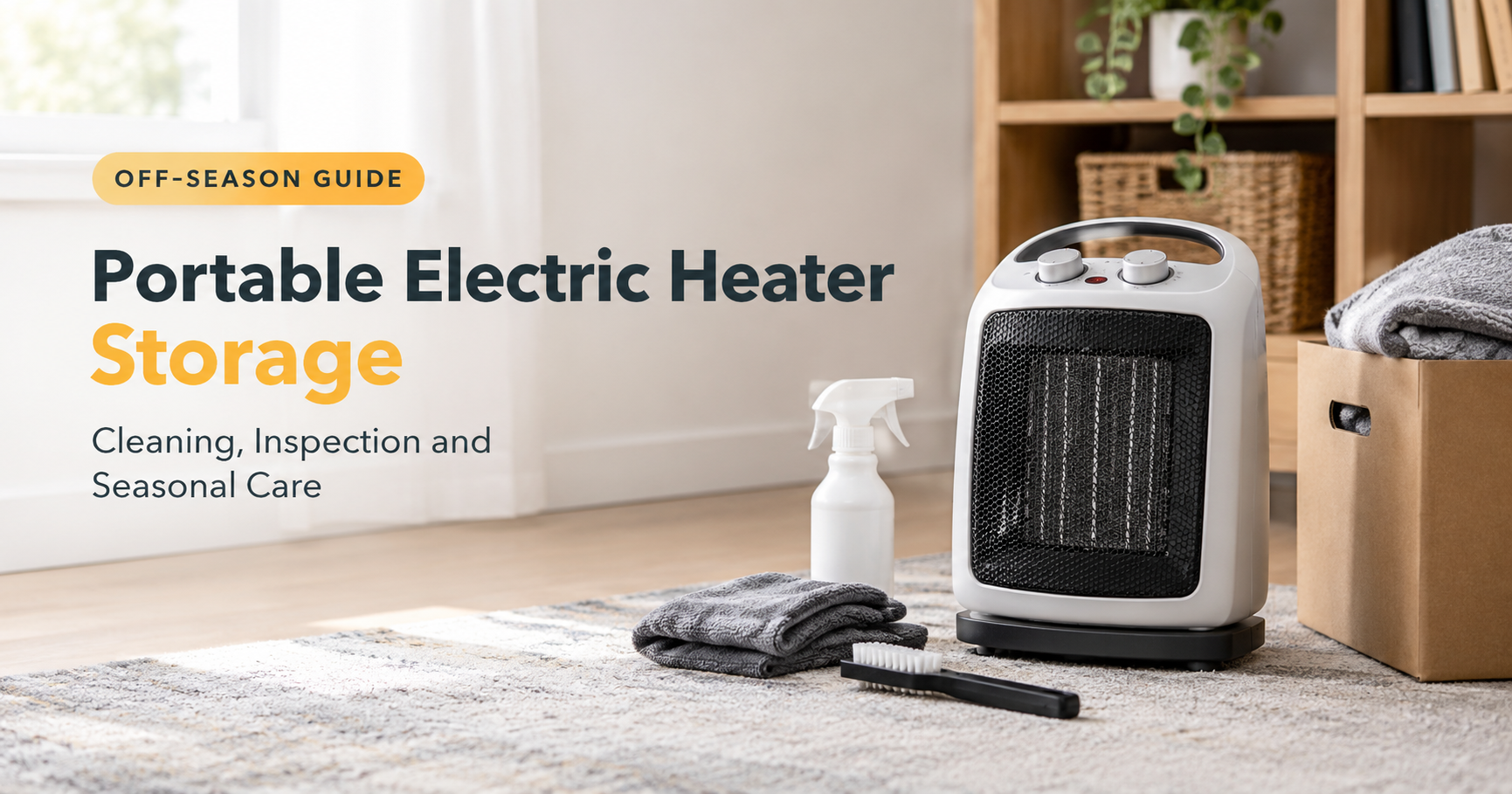
- Clean before you store it. Give the heater a full clean at the end of winter so that it does not sit for months with debris already inside.
- Store it covered and dry. Use the original box or a breathable cover. Avoid plastic bags that trap moisture.
- Raise it slightly if possible. Placing the heater on a flat, stable, non-flammable surface a little above the dustiest floor zone helps, but only if the manual allows it and the heater cannot tip.
- Keep the surroundings clean. Regularly vacuum nearby carpets and rugs, and wash or brush pet bedding close to the heater.
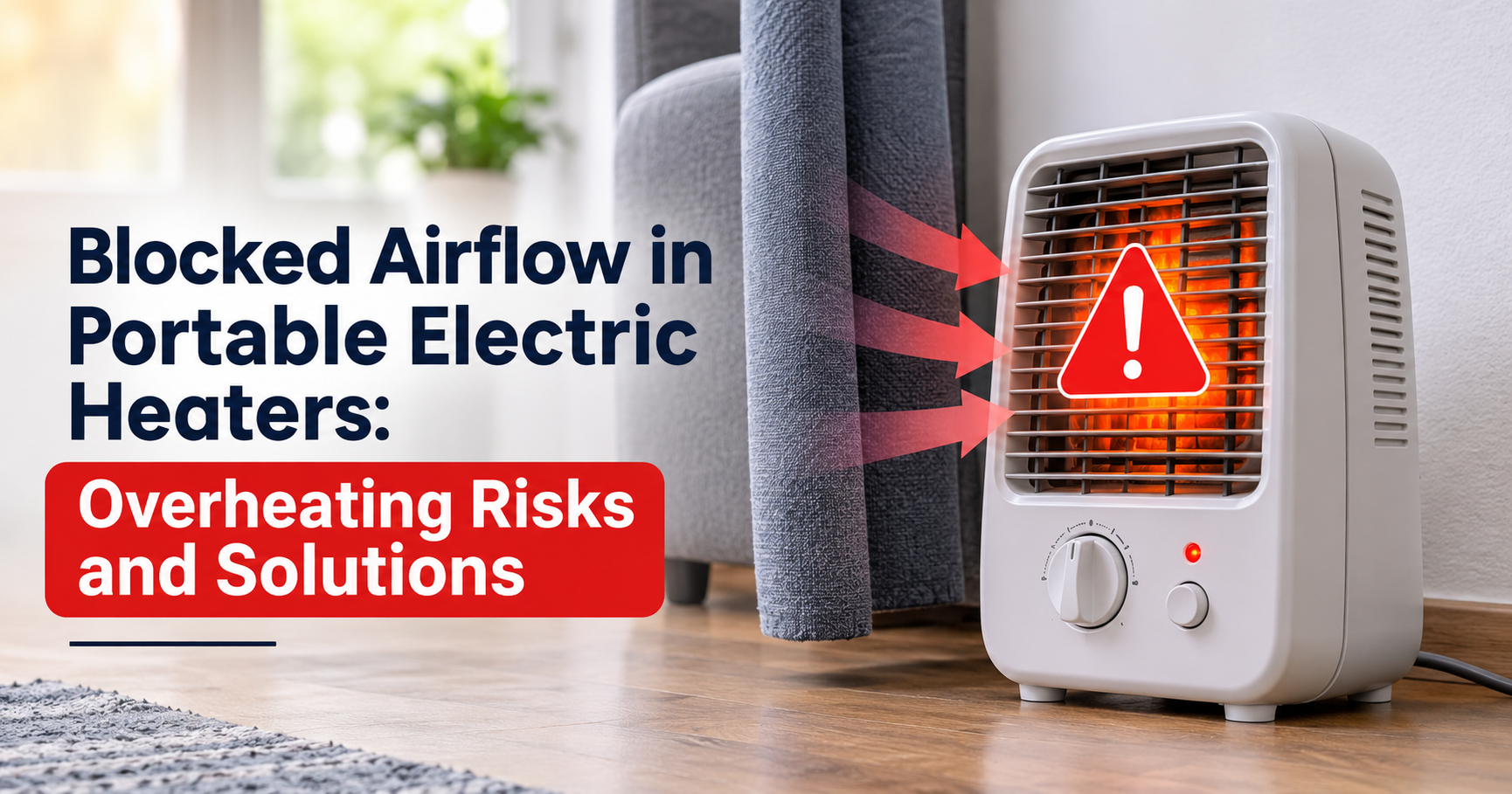
- Maintain clearance. Keep curtains, bedding, furniture, and clothing well away from the heater, following the distance in the manual. This also limits the lint it pulls in.
- Run a short test before the season. Do a quick run on a low setting in a ventilated space so that stored dust burns off before you rely on the heater in a closed room.
- Consider the room air. A clean room means a cleaner heater. Dusting and vacuuming often will lower the amount of debris that gets drawn in.
Does the Type of Heater Matter?
Every electric heater collects dust, but the way it collects it differs.
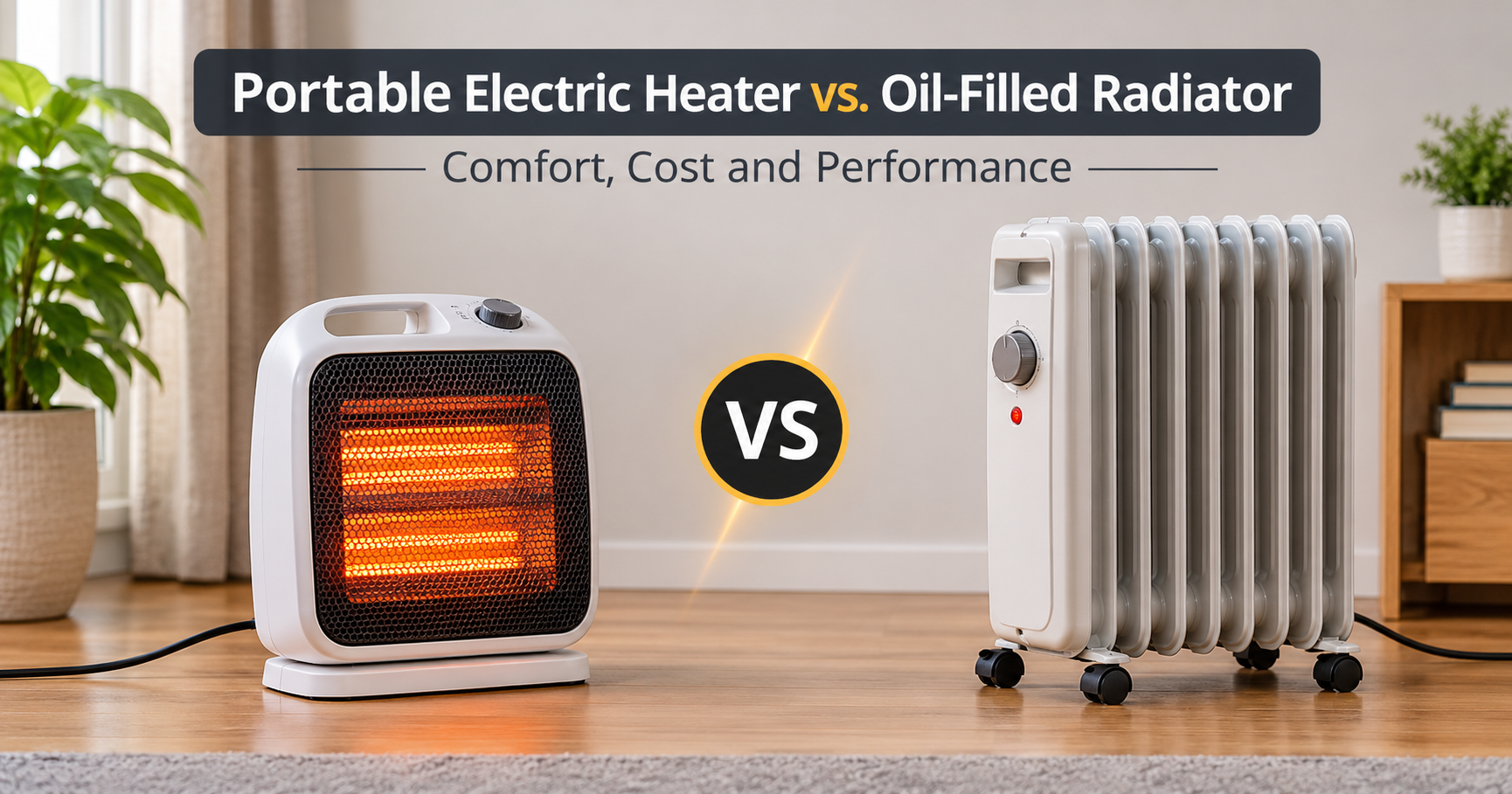
- Ceramic fan heaters move the most air, so they pull in the most dust. Look for models with a removable, washable filter.
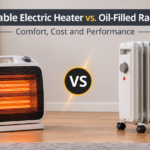
- Oil-filled radiators have no fan and no intake, so there is almost nothing inside to clog. Dust settles on the fins and surface, and a burnt-dust smell is still possible, but they are the simplest to clean with a cloth or a soft brush.
- Infrared or quartz heaters have reflectors and tubes that collect dust, which then burns off and can smell. Wipe them only when cold and unplugged.
- Convection panel heaters rely on natural airflow through vents. They collect less dust than fan models but need the vents kept clear.
If dust and allergies are a major concern in your home, an oil-filled or panel-style heater is often easier to maintain than a high-speed fan heater.
When to Stop Using the Heater
Cleaning solves most dust problems, but some signs mean the heater should not be used until it has been inspected or replaced:
- Burning, melting, or electrical smell that remains after cleaning
- Scorch marks, discoloration, or melted plastic on the casing, plug, or cord
- A plug or cord that becomes very hot
- Sparks, flickering, or tripping the household circuit
- Fan grinding, scraping, or refusing to spin
- Safety features such as the tip-over or overheat switch no longer working
Do not attempt to repair internal electrical faults yourself. If the heater is under warranty, contact the manufacturer. Otherwise, a qualified technician or replacement is the safest option.
What to Look for When Buying a Heater That Resists Dust Problems
If you are shopping for a new portable electric heater, these features make dust management much easier:
- A removable, washable filter that you can take out without tools
- Easy-access grilles that can be vacuumed thoroughly
- Tip-over and overheat protection, which are standard safety features on quality models
- Recognized safety certification from a trusted testing organization
- An adjustable thermostat, so the heater does not run at full power unnecessarily
- A smooth, simple housing without deep crevices where dust gets trapped
- A quiet, sturdy fan with a well-balanced blade design
- A clear user manual that explains cleaning and maintenance
Frequently Asked Questions
Is it normal for a heater to smell like burning dust?
Yes, briefly. Dust that has settled on the element during storage burns off in the first few minutes. If the smell lingers, becomes stronger, or smells like plastic or electrical parts, switch the heater off and inspect it.
Can dust inside a heater cause a fire?
It can contribute to one. Light dust normally burns off, but thick, compacted dust and lint near a hot element can smolder or ignite. Keeping the heater clean, using it on a stable surface, and keeping flammable items away greatly reduces the risk.
Can I use a vacuum cleaner on the heater?
Yes, on the grilles and exterior vents, with a soft brush attachment and low suction. The heater must be unplugged and cool. Do not push the nozzle forcefully against the heating element.
Is it safe to wash a heater filter?
If your manual says the filter is washable, yes. Rinse it gently with water, shake off the excess, and allow it to dry fully before putting it back. Never install a damp filter.
Why does my heater smell worse after I clean it?
Cleaning can loosen dust that was stuck deep in the unit, and a little of it may burn off when you first turn the heater on. Run it on low in a ventilated room for several minutes. If the smell persists, do another careful cleaning pass or stop using the heater and have it checked.
Do oil-filled heaters collect dust?
Yes, but only on the outside surfaces. Because they have no fan or filter, they are generally easier to clean. A simple wipe or soft-brush dusting is usually enough.
Final Thoughts
Dust buildup is one of the most common and most preventable problems with portable electric heaters. It affects how well the heater warms your room, how quietly it runs, how long it lasts, and how safe it is to use. A few minutes of cleaning every few weeks, a thorough clean at the start and the end of the season, and sensible storage habits will keep most heaters running efficiently for years.
If your heater smells strongly, shuts off unexpectedly, or shows any sign of damage after cleaning, treat that as a warning and stop using it until the problem is resolved. A clean heater is not only more efficient. It is a safer one.