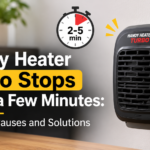
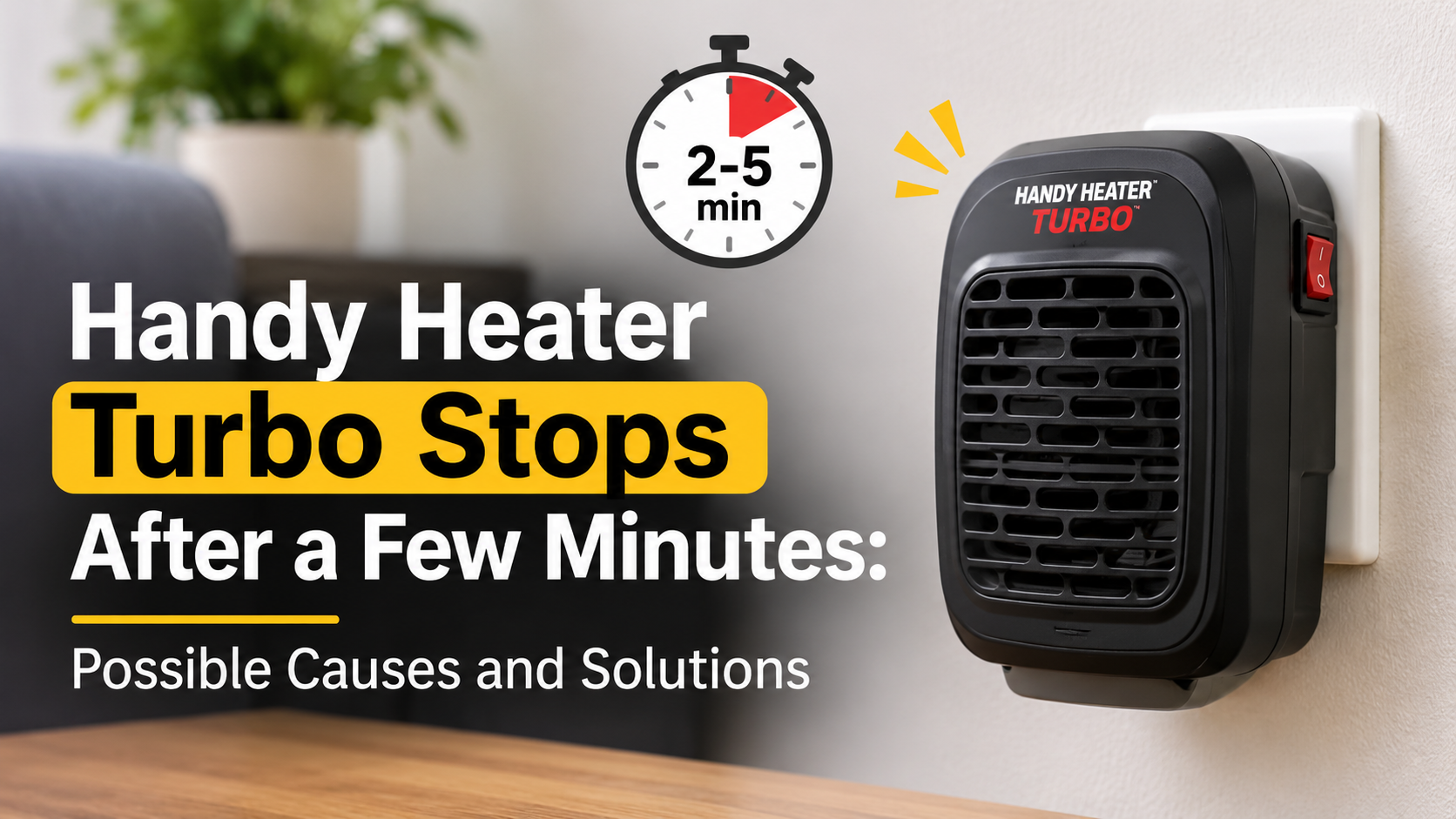
You switch on your Handy Heater Turbo, feel the warm air for a few minutes, and then it simply stops. The fan goes quiet or the light goes out, and the room starts cooling again. It is frustrating, especially on a cold evening, and it also raises a fair question: is something wrong with the heater, or with my home?
The good news is that a portable heater that shuts off after a few minutes is very often protecting itself. In most cases the cause is something simple such as dust in the vents, poor placement or a weak power connection. In other cases it points to a worn part that needs professional attention. This guide explains every common cause, how to recognize it, and how to fix it safely.
Quick Answer
A Handy Heater Turbo that stops after a few minutes is most often shutting down because of overheat protection. The usual triggers are blocked vents or dust, a heater placed too close to objects, a tip-over switch, a weak power connection, or a worn fan or sensor. Start with cleaning the vents and plugging the heater directly into a wall outlet.
Table of Contents
- How a portable heater protects itself
- 8 common reasons the heater stops after a few minutes
- A quick 5-step troubleshooting routine
- Safety rules you should never ignore
- How to prevent the problem in the future
- Repair or replace: how to decide
- What to look for in a replacement heater
- Frequently asked questions
How a Portable Heater Protects Itself
Compact heaters like the Handy Heater Turbo are small, powerful and designed to warm a limited space. Because a lot of heat is created in a small body, manufacturers add safety devices. The most common are an overheat sensor, a thermal fuse and a tip-over switch. If any of these detect a risk, they cut the power immediately.
This is a good thing. A heater that shuts off is doing its job. The goal is not to stop that protection from working, but to find out why it was triggered so the heater can run normally and safely.
8 Common Reasons the Heater Stops After a Few Minutes
1. Blocked Airflow and Dust Build-Up
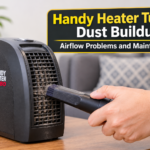
This is the number one reason a compact heater switches itself off after only a few minutes. Portable heaters pull room air through a rear grille, push it across the hot element and send it out the front. When lint, pet hair or fine dust coats the grille and the fan blades, less air moves through the unit. The element gets hotter than it should, and the internal overheat sensor shuts the heater down to protect it.
Typical signs:
- The heater runs fine for 3 to 10 minutes, then clicks off or goes silent.
- The back or sides feel much hotter than normal.
- You notice a dusty or slightly burnt smell when it first warms up.
- It works again after sitting unplugged for a while.
How to fix it
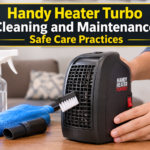
Unplug the heater and let it cool completely. Use a soft brush and a vacuum with a brush attachment to clean the front and rear grilles. Do not use water, and never spray cleaners into the vents.
2. Poor Placement and Blocked Vents
Even a clean heater will overheat if something is pressed against it. Curtains, a sofa, a blanket or a wall placed too close can trap hot air and stop the intake from drawing fresh air. Placing the unit on a thick rug or soft bedding can also block the bottom vents on some models.
Typical signs:
- The heater shuts off sooner in tight corners than in open space.
- The cut-off happens faster when placed against a wall or furniture.
How to fix it
Move the heater to a hard, flat surface with at least 90 cm (3 ft) of open space on all sides and in front. This also reduces fire risk, which is covered later in this guide.
3. Tip-Over Switch Being Triggered
Most modern portable heaters have a tip-over safety switch that cuts the power if the unit leans or falls. If the floor is slightly uneven, or the heater is sitting on a soft surface that slowly sinks or shifts, the switch may trip after a few minutes of vibration from the fan.
Typical signs:
- The heater stops suddenly, often after a small bump or vibration.
- It works when you hold it perfectly upright but not on a rug or bed.
How to fix it
Place the heater on a firm, level surface. If it keeps tripping on a flat floor, the switch itself may be sticking or worn and the unit should be checked by a technician or replaced.
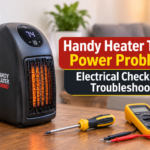
4. Weak or Unstable Power Supply
A heater draws a lot of current compared with a phone charger or a lamp. A loose plug, a worn outlet, a long thin extension cord or a power strip shared with other devices can cause a voltage drop or a poor connection. The heater may then flicker, restart or shut off after the connection warms up.
Typical signs:
- The plug or outlet feels warm to the touch.
- The heater cuts out when another appliance starts in the same circuit.
- The power light flickers before the heater stops.
How to fix it
Plug the heater directly into a wall outlet, not into an extension cord or power strip. If the plug feels hot, stop using that outlet and have an electrician inspect it.
5. Overloaded Circuit or Tripping Breaker
If the heater shares a circuit with a kettle, microwave, air conditioner or hair dryer, the total load can exceed what the circuit can supply. In that case the breaker or fuse trips and it looks like the heater stopped by itself.
Typical signs:
- The whole outlet, or the room, loses power at the same moment.
- The heater works again only after a breaker is reset.
How to fix it
Run the heater on a circuit with few other devices. Repeated tripping is a sign that the circuit needs attention from a qualified electrician.
6. Faulty Thermal Fuse or Temperature Sensor
Inside the heater there is a thermostat, a temperature sensor and often a one-time thermal fuse. As these parts age, they can become overly sensitive and trigger too early. A weakened sensor may cut the power at a lower temperature than the design intended, which looks like the heater stopping after only a few minutes even when the vents are clean.
Typical signs:
- The heater stops at the same point every time, even with clean vents and proper placement.
- It never reaches a comfortable warmth before shutting off.
How to fix it
This is an internal electrical fault. Do not open the housing or bypass any safety part. Contact the seller, the warranty service or a qualified repair technician.
7. Worn or Failing Fan Motor
The fan is what carries heat away from the element. If the motor is worn, dirty or the bearings are dry, the fan slows down or stops. Less airflow means higher internal temperature, and the overheat protection switches the unit off.
Typical signs:
- The fan sounds louder, rattles, grinds or spins slowly.
- The airflow at the front feels weaker than before.
- You can see the fan hesitate or stop before the heater shuts off.
How to fix it
A weak fan usually means the heater is near the end of its life. Clean the vents first. If the fan is still slow, replacement is usually safer and more cost effective than repair.
8. Built-In Timer, Eco Mode or Room Thermostat
Not every shutdown is a fault. Many heaters have a timer, an eco mode or a thermostat that turns the element off once the room reaches the set temperature. In a small room, this can happen within minutes, and the fan may keep running or the unit may go quiet.
Typical signs:
- The heater turns back on by itself after the room cools slightly.
- The shut-off happens faster in a small, well-sealed room.
- The settings dial or display shows a timer or target temperature.
How to fix it
Check the timer, mode and temperature settings. Raise the set temperature or turn off the timer and see whether the heater runs longer.
A Quick 5-Step Troubleshooting Routine
If you are not sure which cause applies to your heater, follow this routine in order. It takes about 40 minutes including cooling time, and it solves most cases.
- Unplug the heater and let it cool for at least 30 minutes. Never clean or move a hot heater.
- Test the outlet. Plug the heater straight into a wall outlet. Remove extension cords and power strips. Check that the plug fits firmly and does not feel hot.
- Clean the vents and grilles. Use a soft brush and a vacuum. Clean the intake at the back and the outlet at the front.
- Check the surface and the space. Put the heater on a hard, level floor with 90 cm (3 ft) clear on all sides.
- Run it again and watch it. Stay in the room for the first 10 to 15 minutes. Note when it stops, whether the fan slows down and whether the plug or cord gets warm.
What the result tells you
- It now runs normally: the cause was dust, placement or the outlet.
- It still stops at the same time: suspect the sensor, thermal fuse or fan motor.
- The plug or cord is hot: stop using it right away and have the outlet and cord checked.
Safety Rules You Should Never Ignore
A heater that keeps shutting off should never be forced to keep running. The shutdown is a warning. Follow these rules whenever you troubleshoot or use a portable heater:
- Never bypass, tape down or remove a safety switch or thermal fuse.
- Never open the housing unless you are a qualified technician. Internal parts can hold hazardous voltage even when the heater is off.
- Do not use a damaged cord, a cracked plug or a loose outlet.
- Never cover the heater to dry clothes, towels or shoes.
- Do not leave the heater running unattended or while you sleep.
- Keep children and pets away, and keep flammable items well clear of the unit.
- If you smell burning plastic, see sparks or notice melted parts, unplug it and stop using it.
How to Prevent the Problem in the Future
A little regular care keeps a portable heater running reliably for several winters.
- Clean the vents every 2 to 4 weeks during heavy use, and before storing it for the season.
- Use the heater in the right room size. A compact heater is meant for a small area, not a large open space.
- Give it a dedicated outlet where possible, away from other high-power devices.
- Store it dry and covered in the off-season to keep dust out.
- Do not move it while hot and avoid knocking it, since vibration can loosen internal parts.
- Pay attention to early signs such as new noises, a weaker fan or a slight burning smell.
Repair or Replace: How to Decide
Small portable heaters are usually inexpensive and are not designed to be opened and repaired at home. A professional repair may cost close to the price of a new unit, so the decision often comes down to age, condition and safety.
| Situation | Best action |
|---|---|
| Stops only when vents are dusty; fixed after cleaning | Keep using it, clean regularly |
| Stops only on an extension cord or specific outlet | Use a wall outlet or have the outlet checked |
| Stops at the same time every time, even when clean | Contact warranty service or replace |
| Fan is slow, noisy or stops | Replace the heater |
| Plug, cord or housing is hot, melted or discolored | Stop using it immediately and replace |
| Heater is still under warranty | Contact the seller before anything else |
What to Look for in a Replacement Heater
If you decide it is time for a new heater, a few features make a big difference in safety and day-to-day reliability:
- Overheat protection and a tip-over switch as standard features.
- An adjustable thermostat so the heater cycles properly instead of working at full power all the time.
- A removable or easy-to-clean filter and grille to make maintenance simple.
- A suitable power rating for your room. A small heater in a large room runs constantly and wears out faster.
- A sturdy cord and plug with a good fit in your outlet.
- Safety certification marks that are valid in your country, and a clear warranty.
- A cool-touch housing if you have children or pets at home.
Frequently Asked Questions
Why does my Handy Heater Turbo turn off after 5 minutes?
The most common reason is overheat protection caused by dust, blocked vents or poor placement. A weak power connection, a tip-over switch or a worn fan or sensor can also cause it.
Is it normal for a portable heater to turn off by itself?
Yes, if it has a thermostat, timer or eco mode and the room has reached the set temperature. It is not normal if it stops every few minutes in a cold room.
How long should I wait before turning the heater on again?
Unplug it and wait at least 30 minutes so all parts cool. If it keeps shutting off, do not keep restarting it repeatedly.
Can I use an extension cord with my heater?
It is best to plug a portable heater directly into a wall outlet. A thin or long extension cord can overheat and cause shut-offs and a fire risk.
Can I bypass the safety cut-off so the heater keeps running?
No. The cut-off protects you from fire and electrical hazards. Bypassing it is dangerous and should never be done.
Is it safe to repair the heater myself?
Cleaning the outside vents is safe when the heater is unplugged and cool. Opening the housing or replacing internal parts should be done only by a qualified technician.
How often should I clean the heater?
Every 2 to 4 weeks during regular use is a good habit, and again before you store it for the season.
When should I stop using the heater completely?
Stop right away if you notice a burning smell, sparks, a hot or melted plug, a damaged cord or repeated shutdowns that cleaning does not fix.
Final Thoughts
If your Handy Heater Turbo stops after a few minutes, do not panic and do not force it to keep running. Treat the shutdown as a clue. Cleaning the vents, moving the heater to a safe, open spot and plugging it directly into a wall outlet solves the majority of cases in less than an hour.
If the problem continues after those steps, the cause is likely an aging sensor, fuse or fan, and the safest choice is professional service or a replacement. Safety always comes before saving a few dollars, because a heater that is working properly keeps you warm and your home safe.