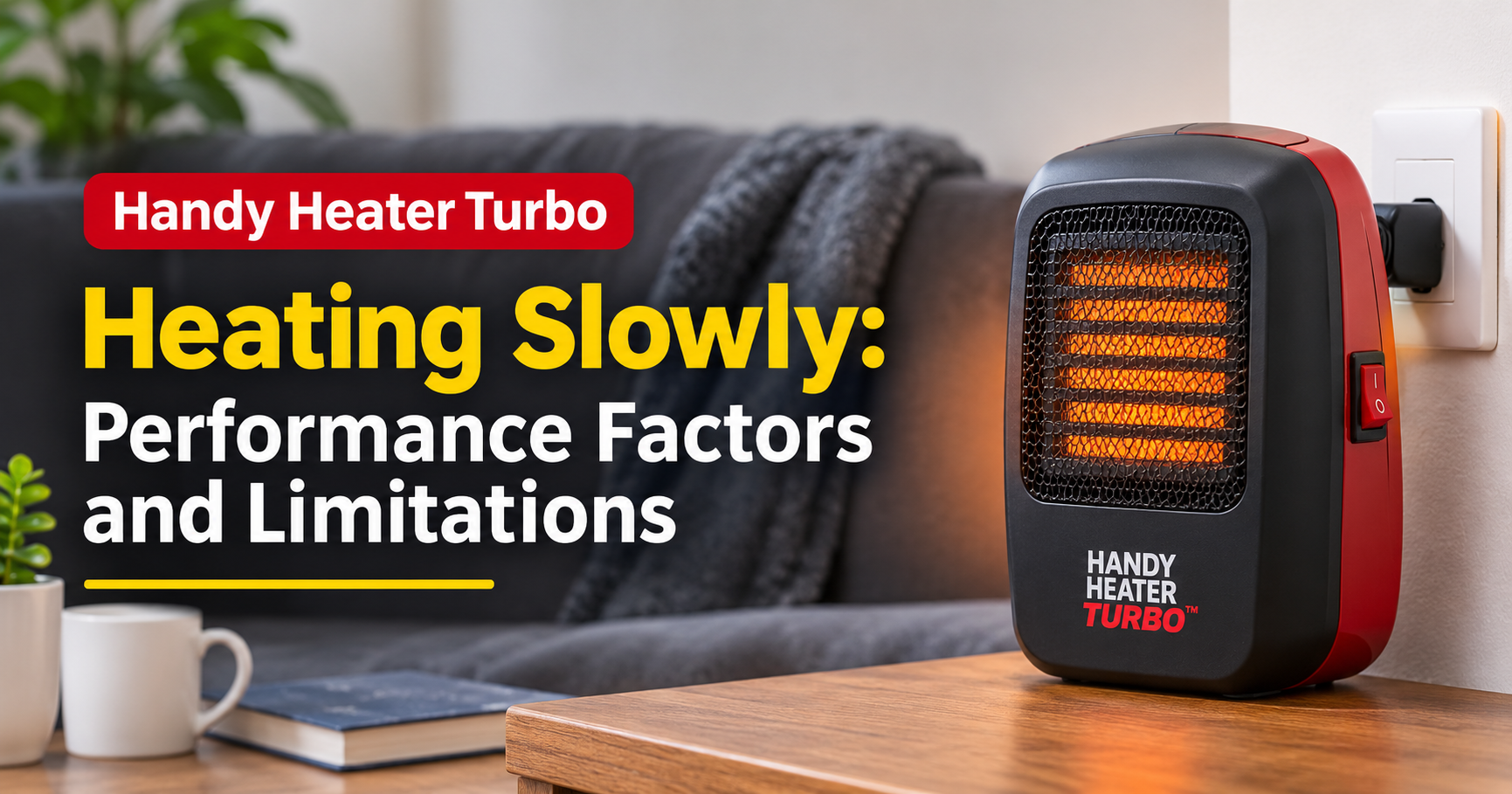
You plug in your Handy Heater Turbo on a cold evening, wait a few minutes, and the room still feels chilly. Slow heating is one of the most common complaints about compact plug-in heaters, and in most cases the heater is not broken. The cause is usually a mismatch between the heater and the space, a dusty vent, a poor power connection, or heat escaping from the room faster than the heater can replace it.
This guide explains exactly why a Handy Heater Turbo can heat slowly, how to test each cause at home, and which fixes make the biggest difference. Follow the steps in order, and you will either restore strong, quick warmth or know for certain that it is time to replace the unit.
Quick Summary
- Compact heaters warm small areas well, but struggle in large rooms.
- Dusty vents and weak sockets are the easiest problems to fix.
- Placement, closed doors, and draft control can make the heater feel far stronger.
- Never use an extension cord, and never leave the heater near fabric.
How a Compact Heater Actually Warms a Room
A compact plug-in heater like the Handy Heater Turbo converts electricity into heat using a heating element, then pushes that heat into the air, usually with a small fan. The amount of heat it can produce is fixed by its wattage. A room only becomes warm when the heat entering the space is greater than the heat leaving through windows, doors, walls, and gaps.
This is why the same heater can feel excellent in a small, closed bathroom and disappointing in a big open room. Heating time depends on three things: the heater’s power, the size of the space, and how quickly that space loses heat.
Good to Know
Heaters warm the air near them first. It can take several minutes for the warm air to spread, so judge performance after 10 to 15 minutes, not 2 or 3.
7 Reasons Your Handy Heater Turbo Is Heating Slowly
1. The Heater Is Too Small for the Room
Compact plug-in heaters such as the Handy Heater Turbo are designed for small, personal spaces. Their power draw is far lower than a standard 1500 W space heater. A common planning rule is about 10 watts of heating power for every square foot of floor area. By that rule, a 400 W unit suits roughly 40 square feet, which is about a small bathroom, a tiny study corner, or the area right around a desk or bed. In a large living room it will run constantly and still feel weak. Check the rating label on the back or side of your unit to find its real wattage, then compare it with your room size.
2. Dust Is Blocking the Air Intake and Outlet
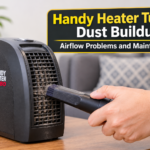
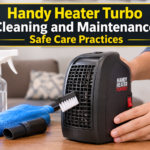
This is the most overlooked cause. Fine dust, pet hair, and lint collect on the rear intake and front grille. When airflow drops, the heating element cannot pass its warmth to the room efficiently. Worse, the element runs hotter inside the casing, and the built-in overheat protection may cut power for short periods, so the heater delivers less overall heat. Unplug the heater, let it cool fully, and clean the vents with a soft brush or a vacuum on low suction.
3. A Weak or Loose Wall Socket
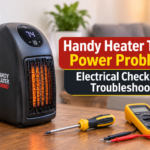
A worn outlet that holds the plug loosely creates resistance. Resistance wastes energy as heat at the plug rather than at the heater, and it can reduce the power actually reaching the element. If the plug feels warm, the outlet is old, or the heater wiggles in the socket, stop using it there and try a different wall outlet. Heating appliances demand steady current, so a poor connection often shows up first as slow, weak heating.
4. Using an Extension Cord or Shared Power Strip
Thin extension cords and multi-plug strips are a frequent hidden cause of weak heating and a genuine fire risk. Voltage can drop along a long or thin cable, and other devices on the same strip compete for power. Plug heating appliances directly into a wall socket whenever possible.
5. Poor Placement and Blocked Airflow
A heater tucked behind a sofa, pushed into a corner, or placed beside heavy curtains cannot circulate warm air. Compact heaters work best on an open wall with clear space of at least three feet (about one metre) in front. Placing it near the area where you sit or sleep gives you a faster sense of warmth than placing it across the room.
6. Heat Loss From Drafts, Windows, and Open Doors
A heater only warms a room when it adds heat faster than the room loses it. Gaps under doors, single-pane windows, thin walls, and open doorways to other rooms can drain heat as quickly as a small heater produces it. Closing the door, drawing thick curtains, and blocking door gaps with a draft stopper can make the same heater feel noticeably stronger.
7. A Worn Heating Element or Faulty Thermal Component
If the unit is old, has been dropped, or gradually loses performance even after cleaning, an internal part may be failing. Ceramic heating elements can weaken over years of use, and a faulty thermostat or thermal fuse may switch the heater off too early. These parts are not safe for home repair. If the checklist in this guide does not help, replacing the unit is the safest option.
Step-by-Step: How to Speed Up Your Handy Heater Turbo
- Unplug and let it cool. Always begin with the heater disconnected and cool to the touch.
- Clean the vents. Use a soft dry brush or a vacuum on low suction across the intake and outlet. Do not use water or sprays inside the unit.
- Move to a different wall outlet. Choose a firm, undamaged socket, and plug in directly with no extension cord.
- Clear the space. Keep at least three feet (about one metre) of open space in front of the heater and move curtains, bedding, and furniture away.
- Close the room. Shut the door, draw the curtains, and block door gaps with a rolled towel or draft stopper.
- Use the highest suitable setting. Start on the high or turbo mode to raise the temperature, then lower it once the room is comfortable.
- Test for 15 minutes. Compare the room temperature before and after with a simple thermometer to measure the real difference.
Which Room Sizes Suit a Compact Heater?
Use the table below as a rough guide. Actual results depend on insulation, ceiling height, outdoor temperature, and how many gaps or windows the room has.
| Room Type | Typical Size | Compact Heater Suitability |
|---|---|---|
| Small bathroom or toilet | 25 to 45 sq ft | Good |
| Home office nook or study desk | 40 to 60 sq ft | Good for personal warmth |
| Small bedroom | 80 to 120 sq ft | Limited, slow warm-up |
| Living room | 150 sq ft and above | Not recommended as the main heater |
Simple Ways to Make Any Heater Feel Warmer
- Heat the person, not the whole house. Place the heater close enough to warm the area where you sit, but never closer than the safe distance in the manual.
- Insulate the weak spots. Thick curtains, window film, and door draft stoppers reduce heat loss at almost no cost.
- Lay a rug on cold floors. Bare tile and concrete pull warmth out of your feet and the air.
- Close doors to unused rooms. This shrinks the space the heater has to warm.
- Wear warm layers. Socks, a light blanket, and a sweater let the heater work at a lower, more efficient level.
- Preheat before you need it. Turn the heater on 15 to 20 minutes before you enter a cold room, while supervising it.
Safety Rules You Should Never Ignore
When a heater seems weak, it is tempting to take shortcuts. Please avoid these, because they raise the risk of overheating and fire.
- Do not use extension cords, adapters, or crowded power strips with a heater.
- Do not cover the heater or place clothes, towels, or blankets on it to trap heat.
- Keep curtains, bedding, paper, and furniture well away from the front and sides.
- Do not leave the heater running unattended or while you sleep.
- Stop using it immediately if you notice a burning smell, a hot or discolored plug, sparks, or a damaged cord.
- Do not open the casing or attempt electrical repairs yourself.
Safety Warning
If the plug or cord becomes hot to the touch, unplug the heater when it is safe to do so and stop using it. A hot plug points to a connection or electrical fault, and it is not a normal sign of strong heating.
When Should You Replace the Heater?
Consider replacing the unit if it still heats poorly after cleaning and testing in a different outlet, if it turns off repeatedly in a small room, if the fan is noisy or has stopped, or if the casing, plug, or cord is damaged. Heaters are safety-critical appliances, so a faulty one is not worth the risk. When you shop for a new one, match the wattage to your room size, choose a model with tip-over and overheat protection, and look for recognized safety certification.
Frequently Asked Questions
How long should a Handy Heater Turbo take to warm a room?
In a small, closed room you should feel clear warmth near the heater within a few minutes, and the room temperature should rise noticeably in about 10 to 20 minutes. Bigger or draftier rooms will take much longer, or may never reach a comfortable level.
Why does my heater blow warm air instead of hot air?
Compact heaters deliver gentle, warm air rather than very hot air, particularly at lower wattages. If the air feels cool, check for blocked vents, a weak socket, or a worn element.
Can a dirty filter or vent really slow heating?
Yes. Reduced airflow lowers heat transfer and can trigger overheat protection, so the heater cycles off and on and produces less warmth overall.
Is it safe to plug the heater into an extension cord to reach a better spot?
No. Heaters draw high continuous current, and extension cords or power strips can overheat. Use a wall socket directly, and move the heater only as far as the supplied cord allows.
Will a higher temperature setting heat the room faster?
It helps only up to the heater’s maximum output. A higher setting keeps the heating element running without pause, but it cannot exceed the unit’s rated power. The room will still warm at the same maximum speed.
Is a compact heater cheaper to run than a larger one?
A lower-wattage heater uses less electricity per hour, but if it has to run constantly in a space that is too big, you may not get the comfort you want. The best value comes from matching the heater to the right-sized space.
Final Thoughts
When a Handy Heater Turbo heats slowly, the cause is usually simple: a space that is too large, clogged vents, a poor power connection, or heat leaking out of the room. Clean the heater, plug it directly into a firm wall socket, give it open space, close the room, and judge it over 15 minutes. These small changes often restore the warmth you expected. If performance stays weak or you notice any heat or electrical warning signs, retire the heater and choose a properly sized, safety-certified replacement.
Note: This article gives general guidance. Always follow the instruction manual and safety labels that came with your heater.