


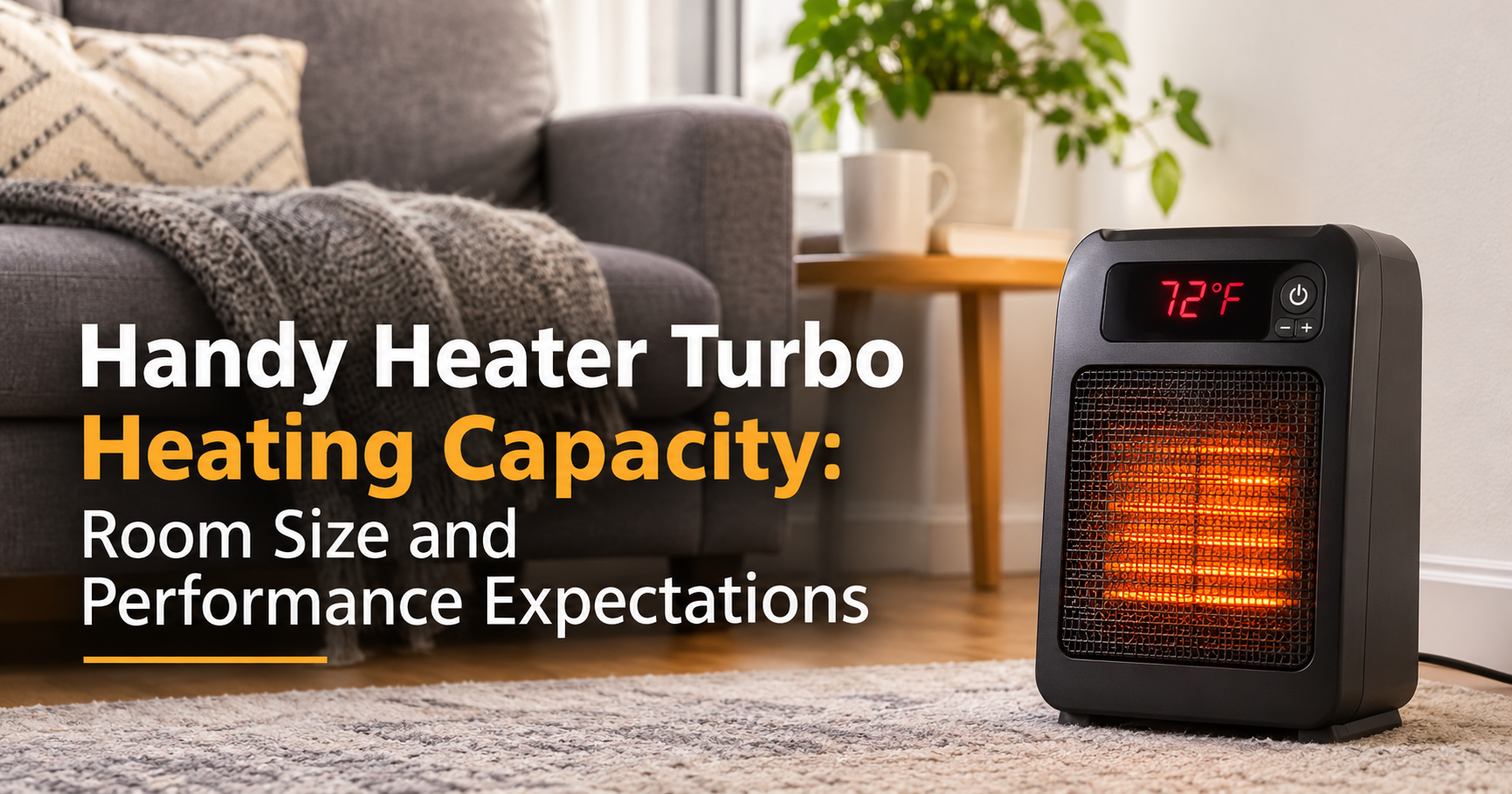
When the temperature drops, most of us do not need to heat a whole house. We only need one warm corner: a bedroom, a home office, a small bathroom, or the spot beside a desk. That is the exact job the Handy Heater Turbo was designed for. But before you buy any heater, one question matters more than design or price: how much heat can it really deliver?
In this complete guide, we break down the Handy Heater Turbo heating capacity in plain language. You will learn its wattage and BTU output, how many square feet it can realistically warm, what affects its performance, how much electricity it uses, which safety features it includes, and whether it is the right heater for your room.
Handy Heater Turbo Heating Capacity: The Quick Answer
Short answer: The Handy Heater Turbo (sold as the Turbo 800) is an 800-watt plug-in ceramic heater that runs on a standard 120-volt outlet. 800 watts converts to roughly 2,730 BTU per hour. The manufacturer rates it for personal spaces up to about 250 square feet, while many retailers list a more conservative heated area of around 100 square feet.
Best use: targeted, supplemental heat in small rooms such as bedrooms, offices, dens, and small bathrooms or kitchens.
What Is the Handy Heater Turbo?
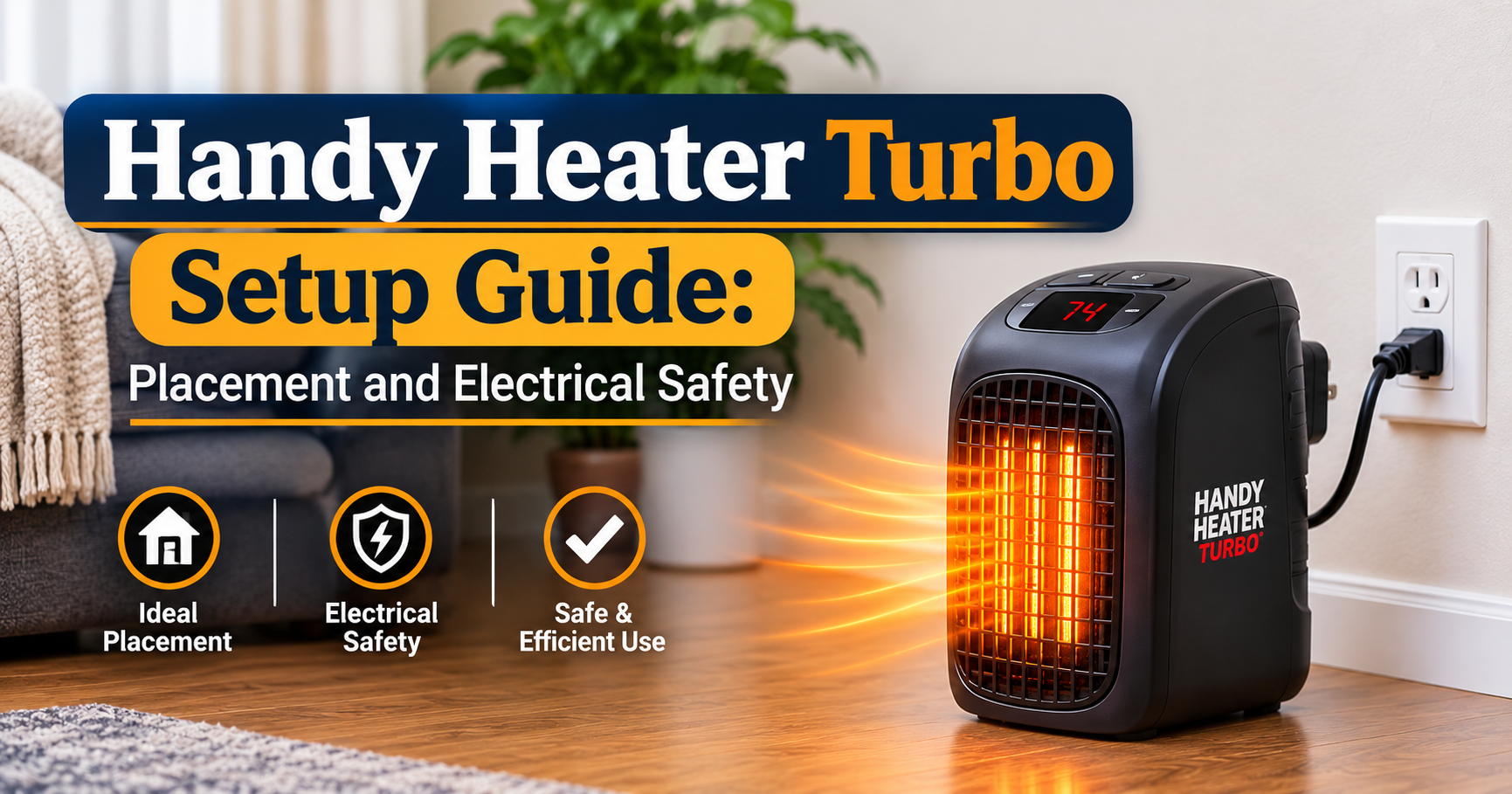
The Handy Heater Turbo is a compact, wall-outlet space heater from the brand Ontel. Instead of sitting on the floor with a long cord, it plugs directly into a standard wall outlet and stays there. This frees up floor space, removes cord clutter, and keeps the heater out of the way of children and pets walking through the room.
Inside, it uses a ceramic heating element, which warms up quickly and produces a steady, dry-free warmth that many people find more comfortable than the burning smell sometimes associated with old coil heaters. The front panel includes a digital LED display, an adjustable thermostat, and a programmable timer. Some versions also ship with a small remote control for changing the temperature and timer from across the room.
A quick note on the name: the word “Turbo” refers to the model line. The rated output of the Turbo 800 is 800 watts, and that figure is the number you should use when judging its heating capacity.
Understanding Wattage and BTU
Every electric heater converts electricity into heat at almost 100 percent efficiency. That means the wattage on the label tells you the heat output. The more watts, the more heat the heater can put into the air every hour, whatever the brand or shape. The simple conversion is:
1 watt = 3.412 BTU per hour
Applying this to the Handy Heater Turbo: 800 watts × 3.412 = about 2,730 BTU per hour. Some retailers list the figure as 2,714 BTU, which is the same number rounded slightly differently.

The chart shows where the Handy Heater Turbo sits in the market. It produces almost 80 percent more heat than a typical 450-watt plug-in heater, but only a little more than half the output of a full-size 1500-watt portable heater, which is the maximum most household outlets are designed to run safely.
How Many Square Feet Can the Handy Heater Turbo Heat?
This is where most buyers get confused, because different sources quote different room sizes. All of them can be correct depending on how you define “heat.”

| Estimate | Approximate area | What it means |
|---|---|---|
| Rule of thumb (10 watts per sq ft) | About 80 sq ft | Enough to be the main heat source in a small, well-insulated room with a standard ceiling. |
| Typical retailer listing | About 100 sq ft | A realistic area for a small bedroom, office, or den. |
| Manufacturer rating | Up to 250 sq ft | Personal and supplemental heating, where the heater takes the chill off and keeps your spot warm. |
Our practical advice: think of the Handy Heater Turbo as a heater for rooms of roughly 80 to 150 square feet when you expect a noticeably warmer room, and up to 250 square feet only when you want to raise the temperature slightly or the room is already moderately warm. If your room is much larger than that, one unit will struggle, and a higher-wattage heater is a better choice.
Key Specifications

| Specification | Detail |
|---|---|
| Brand / Model line | Ontel Handy Heater Turbo 800 |
| Heat output | 800 watts (about 2,730 BTU per hour) |
| Voltage | 120 V (standard household outlet) |
| Heating element | Ceramic |
| Thermostat range | 60°F to 90°F |
| Timer | Programmable, up to 12 hours |
| Display | Digital LED |
| Safety features | Auto shut-off, stay-cool housing, ETL listing reported by major retailers |
| Size | Approximately 5.75 in wide × 9 in high × 4.5 in deep |
| Weight | About 1.5 lb |
| Installation | Plugs directly into a wall outlet, no assembly required |
Specifications can vary slightly between retailers and production batches, so always check the label on the box and the user manual that comes with your unit.
What Affects the Heating Performance?
Two people can buy the same heater and report very different results. The reason is that heating capacity on paper is only half the story. These factors decide how warm your room actually gets:
- Insulation: A well-insulated room holds heat. A room with thin walls, old windows, or gaps under the door loses heat as fast as the heater makes it.
- Ceiling height: The 10-watts-per-square-foot rule assumes a standard 8-foot ceiling. Taller ceilings mean more air to warm.
- Outdoor temperature: An 800-watt heater easily lifts a cool room, but in freezing weather it will take longer and may not reach high targets.
- Outlet position: Because the heater is fixed in the wall, its position matters. An outlet in a corner or behind furniture will warm the room less evenly than a central outlet.
- Windows and floors: Single-pane windows, concrete floors, and basements all pull heat away from the room.
- Open doors: Heat escapes into hallways quickly. Closing the door makes a noticeable difference.
Thermostat, Timer, and Controls
A heater with a high wattage is useless if you cannot control it. The Handy Heater Turbo includes a built-in digital thermostat that you can set between 60°F and 90°F. Once the room reaches your chosen temperature, the heater switches off automatically and turns back on when the room cools, which keeps the temperature steady and prevents wasted electricity.
The 12-hour programmable timer is another useful feature. You can set it to warm a room before you wake up, run for a few hours while you work, or switch itself off after you fall asleep. The optional remote lets you change settings without leaving your bed or chair.
How Much Electricity Does It Use?
At full power, the heater draws 800 watts, or 0.8 kilowatt-hours (kWh) for every hour it runs, which equals about 6.7 amps at 120 volts. The table below shows the maximum running cost at three common electricity rates. In real use the thermostat cycles the heater on and off, so actual cost is usually lower.
| Electricity rate | Cost per hour | 8 hours per day | 30 days (8 hrs/day) |
|---|---|---|---|
| $0.12 per kWh | $0.10 | $0.77 | $23.04 |
| $0.16 per kWh | $0.13 | $1.02 | $30.72 |
| $0.20 per kWh | $0.16 | $1.28 | $38.40 |
The real saving comes from heating only the room you are using while you lower the central heating or leave it off. This is called zone heating, and it is the main reason small plug-in heaters are popular during cold months.
Safety Features and Important Precautions
The Handy Heater Turbo includes several built-in protections that are common in modern ceramic heaters:
- Auto shut-off after the timer ends or if the unit overheats.
- Stay-cool housing that reduces the risk of burns from casual contact.
- Thermostat control that prevents continuous full-power running.
- ETL listing, which major retailers report for safety compliance. Always confirm the marking on your own unit.
Even with these features, an electric heater draws real power, so follow these precautions:
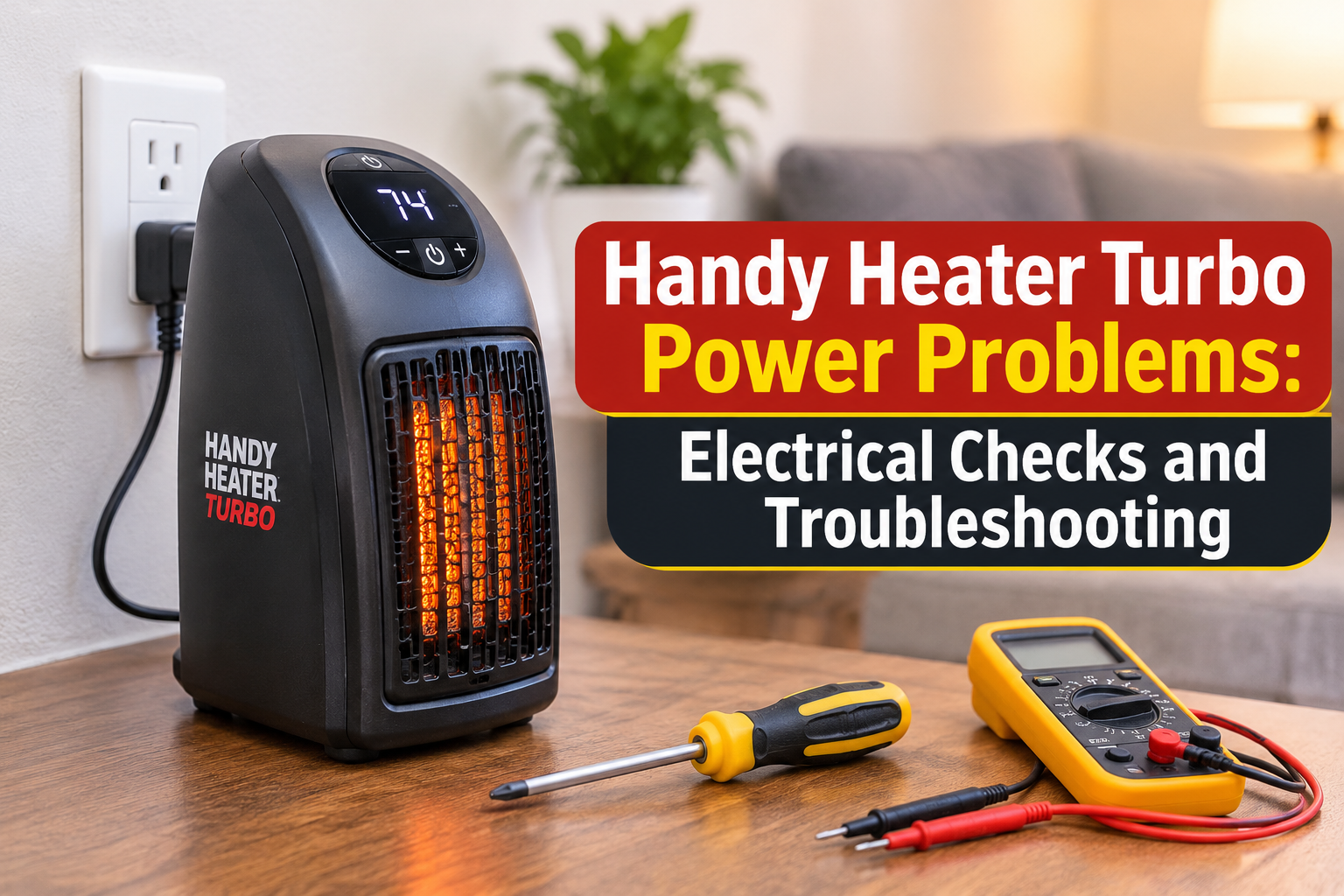
- Plug it directly into the wall. Do not use extension cords or power strips with any heater.
- Avoid sharing the circuit with other high-power devices such as a hair dryer, microwave, or another heater.
- Keep curtains, bedding, and furniture away from the front of the heater.
- Keep it away from water. Follow the manual’s instructions for use in kitchens or bathrooms and never use it where it can get wet.
- Check the outlet and plug regularly. If the plug or outlet feels very hot, loose, or discolored, stop using the heater and have the outlet checked.
- Supervise use around children and pets, and do not leave it running in an empty home.
Pros and Cons
| Pros | Cons |
|---|---|
| Compact wall-outlet design saves floor space | 800 watts is not enough for large or open-plan rooms |
| Digital thermostat with a wide 60°F to 90°F range | Fixed in the outlet, so you cannot move the heat toward you |
| 12-hour programmable timer | Heating may feel weak in very cold or poorly insulated rooms |
| Quiet operation suitable for bedrooms and offices | Can block the second socket of a duplex outlet |
| Affordable compared to larger heaters | Long-term durability is a concern in some user reviews |
| Easy to use: plug in and set the temperature | Not a replacement for central heating |
Handy Heater Turbo vs. Other Heaters
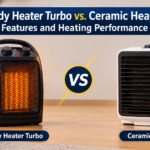
| Feature | 450W plug-in heater | Handy Heater Turbo (800W) | 1500W portable heater |
|---|---|---|---|
| Heat output | About 1,535 BTU/hr | About 2,730 BTU/hr | About 5,118 BTU/hr |
| Best for | Very small spaces, desks | Small rooms, bedrooms, offices | Medium rooms |
| Floor space needed | None | None | Yes |
| Portability | Moves between outlets | Moves between outlets | Easy to carry |
| Typical coverage | Under 100 sq ft | About 80 to 250 sq ft | Up to about 150 to 300 sq ft |
Who Should Buy the Handy Heater Turbo?
It is a good fit if you:
- Want to warm a small bedroom, home office, nursery, or den without turning up the whole house.
- Need a heater that takes no floor space and has no loose cord.
- Want a quiet heater with a timer and thermostat at a budget-friendly price.
- Are looking for a supplemental heater in a dorm, apartment, or rented room.
You should look elsewhere if you:
- Need to heat a large living room, garage, or open-plan space.
- Live in an extremely cold climate and need your main heat source.
- Want a heater you can aim and place anywhere in the room.
Tips to Get the Most Heat from Your Handy Heater Turbo
- Close the door and windows to trap the warm air in the room.
- Use a draft stopper under the door and seal visible window gaps.
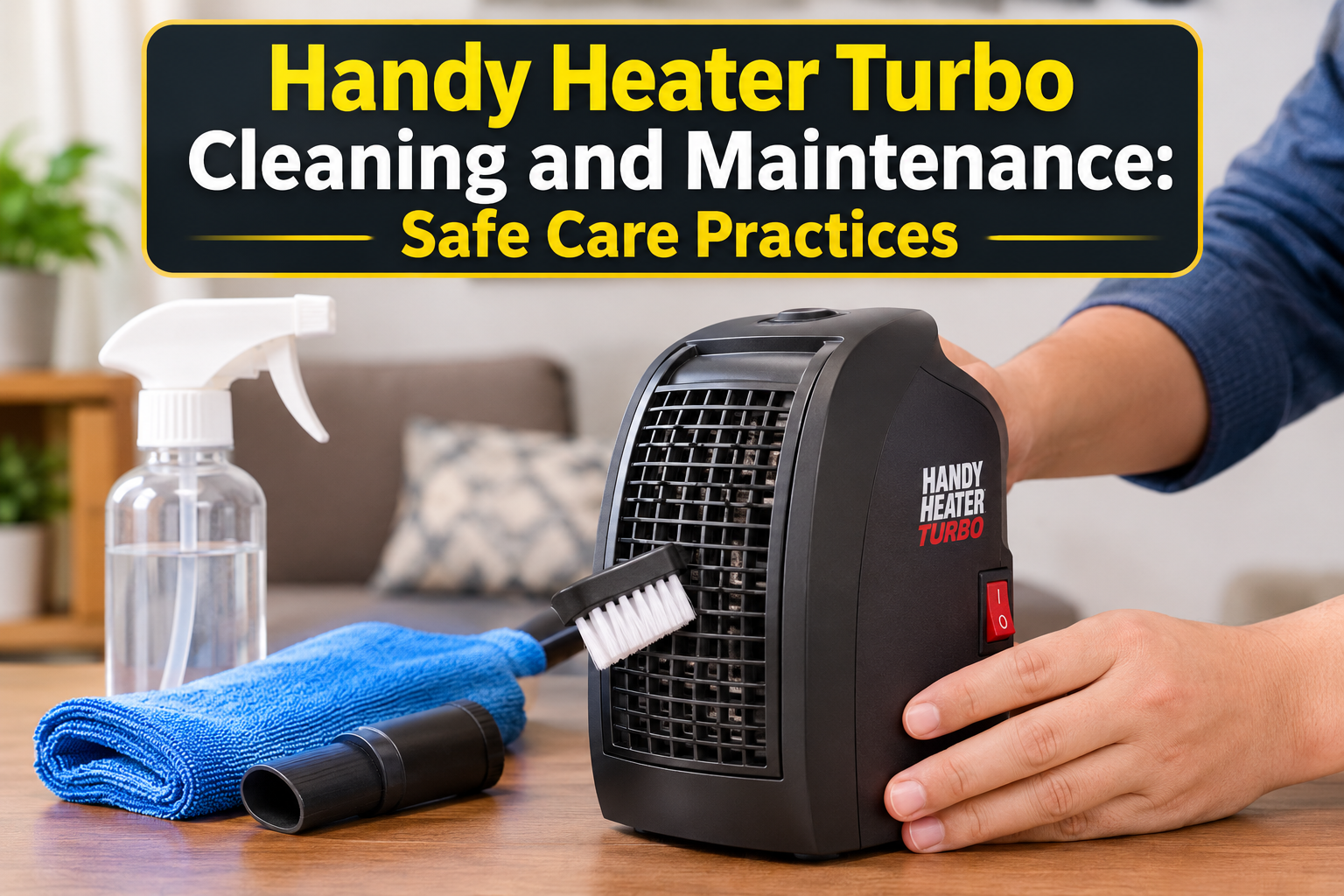
- Do not block the vents. Keep at least a few feet of clear space in front of the heater.
- Set a realistic temperature. Choosing a comfortable level such as 68°F to 72°F is more efficient than the maximum setting.
- Start early with the timer so the room is warm before you arrive.
- Use rugs and curtains. Thick curtains and rugs reduce heat loss through windows and cold floors.
- Choose the right outlet. Whenever you have a choice, plug the heater in on the side of the room where you spend the most time.
Frequently Asked Questions
What is the heating capacity of the Handy Heater Turbo?
The Handy Heater Turbo 800 has a heating capacity of 800 watts, which is about 2,730 BTU per hour. It is intended for personal spaces of up to roughly 250 square feet, though it performs best in smaller rooms.
How many square feet will the Handy Heater Turbo heat?
The manufacturer says up to 250 square feet, while many retailers list about 100 square feet. For a comfortable, noticeably warmer room, plan on about 80 to 150 square feet.
Can the Handy Heater Turbo heat a whole room?
Yes, if the room is small and reasonably insulated. For a large or very cold room, it works best as a supplemental heater rather than the only source of heat.
Is the Handy Heater Turbo expensive to run?
At full power it uses 0.8 kWh per hour, which costs roughly 10 to 16 cents per hour at common electricity rates. The thermostat reduces this because the heater cycles off once the room is warm.
Can I leave it on overnight?
The heater has an auto shut-off and a timer, and many people use the timer for sleeping hours. However, no electric heater should be left unsupervised without caution. Use the timer, keep the area clear, check your outlet, and follow the manual.
Can I use it with an extension cord?
No. Plug it straight into a wall outlet. Extension cords and power strips can overheat when used with any heater.
Is the Handy Heater Turbo the same as the Turbo 800?
Yes. Retailers list it under names such as Handy Heater Turbo, Turbo 800, and Turbo Heat. All refer to the 800-watt wall-outlet ceramic model.
Final Verdict
The Handy Heater Turbo heating capacity is 800 watts or about 2,730 BTU per hour. That is enough to make a small bedroom, office, or den noticeably more comfortable, and enough to take the edge off a slightly larger space. It will not heat a big room on its own and it will not replace central heating, but as a compact, quiet, and simple personal heater, it does exactly what it promises.
If you match it to a small room, keep the door closed, and follow the safety precautions above, the Handy Heater Turbo is a practical way to stay warm without heating the entire house.