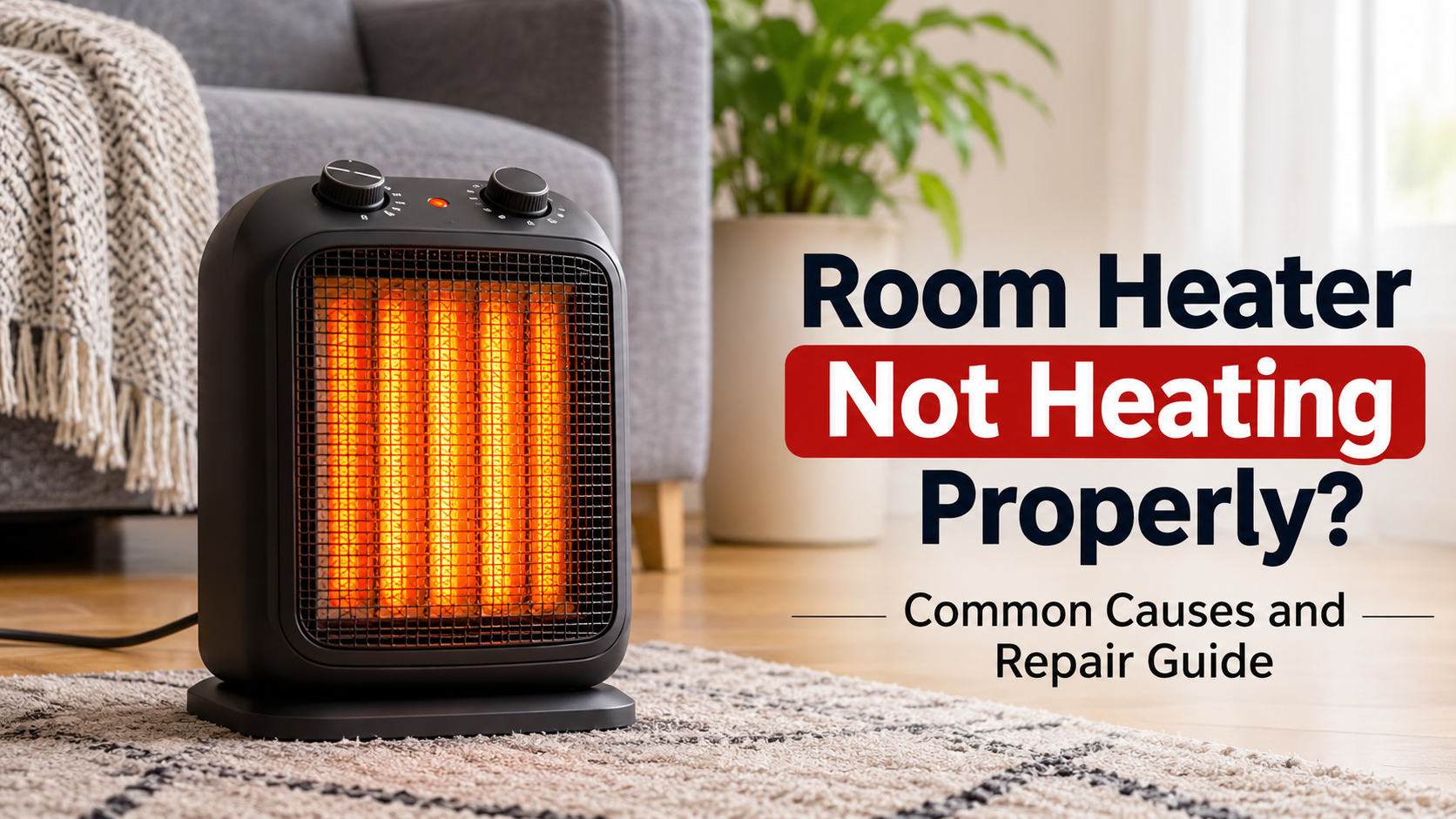

It is a cold evening. You switch on your room heater, the light comes on and the fan hums, yet the air around you stays chilly. Few things are more frustrating. The good news is that a room heater that is not heating properly is very often caused by a simple problem that you can fix in a few minutes, without any tools.
In this complete guide, you will learn how a room heater works, the ten most common reasons it produces weak heat, step-by-step checks you can do safely at home, and the warning signs that mean you should stop and call a professional. We also cover how to choose the right heater size and how to keep your heater working well all winter.
Quick answer
Most heaters that run but do not heat well have one of four problems: a dusty filter or grille, a thermostat set too low, an extension cord or weak socket cutting the power, or a heater that is too small for the room. Check these four first.
How a room heater actually works
Understanding the basics makes troubleshooting much easier. Almost all electric room heaters, whether fan heaters, ceramic heaters, oil-filled radiators or panel heaters, follow the same principle. Electric current flows through a heating element, the element resists the current and becomes hot, and that heat is passed into the room by air (convection), by a fan, or by radiation.
Three safety parts sit beside the element. The thermostat switches the element on and off to match your chosen temperature. The thermal fuse or overheat switch cuts power if the heater gets dangerously hot. The tip-over switch stops the heater if it falls or tilts. When any one of these parts, or the airflow around them, goes wrong, the heater may keep running but give you much less heat than it should.

Signs your room heater is not heating properly
Before fixing anything, it helps to know exactly what the problem looks like. Common signs include:
- The heater turns on but only blows lukewarm or cool air.
- Heat is strong for a minute, then drops.
- The heater switches itself off after a few minutes.
- Only part of an oil-filled radiator gets warm.
- The room takes far longer than usual to warm up.
- There is a burning or hot-dust smell.
- The plug, cord or wall socket feels very hot.
If you notice a burning smell, melted plastic, sparks, or a very hot plug, unplug the heater immediately and skip to the safety section of this article.
Quick diagnosis: follow the checklist
Use the flow chart below to find the likely cause in under five minutes. It covers the most frequent and easiest fixes first.

The 10 most common reasons a room heater is not heating properly
1. A clogged air filter or dusty grille
Dust and pet hair are the most common reason a heater feels weak. When the intake grille or filter is blocked, air cannot pass over the heating element. The element overheats, the safety thermostat trims the power, and the air that reaches you is only lukewarm. Fan heaters, oil-filled radiators and panel heaters all suffer from dust build-up, although fan models feel it first.
What to do:
- Unplug the heater and let it cool completely.
- Vacuum the intake and outlet grilles with a soft brush attachment.
- Wipe the casing with a dry or slightly damp cloth and let it dry fully before use.
- Wash a removable filter with mild soap, rinse it and dry it completely.
2. The thermostat is set too low or is faulty
The thermostat tells the heater when to stop heating. If the dial is set close to the current room temperature, the heater will cycle off quickly and feel as if it is not working. A faulty thermostat can also read the wrong temperature and cut the element early, or never cut it at all.
What to do:
- Turn the thermostat to the highest setting and see if the heat comes back.
- If it clicks off within a minute in a cold room, the sensor may be failing.
- Keep the heater away from drafts or direct sunlight, which can fool the sensor.
3. A worn or damaged heating element
Heating elements age. After years of use the coil can weaken, crack or burn out in sections. A partly failed element still produces some heat, which is why the heater seems to be “on” but weak. A fully failed element produces no heat at all while the fan or light still works.
What to do:
- Look for dark spots, breaks or white flaking on the visible coil (only when unplugged and cool).
- If the element is damaged, replacement is usually a job for a technician or the manufacturer.
- On low-cost heaters, replacing the whole unit is often cheaper than repair.
4. A tripped thermal fuse or overheat protection
Every modern heater has a thermal fuse or a reset cut-out. If the heater overheated once because of a blocked vent, the safety part may have tripped. Some models reset by themselves after cooling. Others have a one-time thermal fuse that must be replaced.
What to do:
- Switch off, unplug and wait at least 30 minutes.
- Check the manual for a reset button on the back or bottom.
- If a one-time fuse has blown, a qualified technician should replace it. Never bypass a safety fuse.
5. A weak power supply or an extension cord
Heaters draw a lot of current, usually between 1000 and 2000 watts. A thin extension cord, a multi-plug board or a loose wall socket causes voltage drop. The heater then receives less power than it needs and produces less heat. A hot plug or cord is a serious warning sign.
What to do:
- Plug the heater directly into a wall socket.
- Never share the socket with other high-power devices such as a kettle or iron.
- If the plug or cord feels hot, stop using the heater and have the socket checked.
6. Low voltage in your home
During cold evenings, the whole neighbourhood turns on heaters at once, and the grid voltage can drop. A heater is a simple resistive device, so power output falls sharply when voltage falls. The result is a heater that works in the afternoon but feels weak at night.
What to do:
- Compare performance at different times of day.
- Turn off other heavy appliances while using the heater.
- A voltage stabiliser rated for heaters can help, but ask an electrician for the correct rating.
7. The heater is too small for the room
Sometimes nothing is broken at all. A heater has a fixed output, and every room needs a certain amount of power. A 1000 W heater struggles in a large, high-ceilinged or poorly insulated room. In that case the heater runs correctly but never warms the space.
What to do:
- Use the chart in this article to match watts to room size.
- Close doors and windows, and block gaps under doors.
- Use two smaller heaters in a very large space instead of one overworked unit.
8. A failing fan or motor (fan heaters)
In a fan heater the motor pushes warm air out. A worn motor, dusty bearings or a loose blade slows the airflow. Slow air means the element overheats and cuts out, while the air you feel is mild. A grinding or rattling sound usually points to this problem.
What to do:
- Listen for new noises such as rattling or humming.
- Check that nothing is touching the fan blade through the grille.
- A motor that spins slowly or not at all needs professional repair or replacement.
9. Poor placement and blocked airflow
Heaters work best on a flat, hard surface with clear space in front. Placing a heater behind a sofa, under a table or beside a curtain traps the heat and can trigger the safety cut-out. It is also a fire risk.
What to do:
- Keep at least one metre (three feet) of clear space on all sides and in front.
- Do not place the heater on a carpet that blocks the intake underneath.
- Position it where air can circulate through the room.
10. Oil, gas or liquid problems in specific heater types
Oil-filled radiators are sealed units and should never be opened. If an oil-filled heater only warms in one area, an internal fault or a very low oil level may be the cause. Some heaters, such as ceramic or quartz models, depend on specific elements that can wear out in different ways.
What to do:
- Do not open or refill a sealed oil heater yourself.
- Check whether only part of the heater warms up.
- Contact the manufacturer or a service centre if the unit is under warranty.
Is your heater the right size for the room?
A very common hidden cause of poor heating is simply choosing a heater that is too weak. Heater output is measured in watts. As a rough guide, you need about 10 watts for every square foot of floor space in a room with a standard ceiling height and average insulation. Rooms with high ceilings, large windows, tile floors or poor insulation need more.

If your heater sits at the low end for your room, it may be perfectly healthy but under-powered. In that case, add insulation by closing curtains at night, sealing door gaps, and keeping the door shut while the heater is on. Running a smaller heater all day rarely works better than choosing the right size.
Different heater types and their typical problems
- Fan heaters: heat up fast but are very sensitive to dust and fan motor wear. Weak air or noise often points to dirt or a worn motor.
- Ceramic heaters: safe and efficient, but the ceramic plates can crack, and the filter must be kept clean.
- Oil-filled radiators: slow to warm up and silent. They hold heat for a long time, so a cool section can signal a fault. They should never be opened.
- Panel and convection heaters: rely on free airflow. Blocked vents and wall placement affect output.
- Halogen and quartz heaters: give direct radiant heat. A burned-out tube means no heat in that part while the others still glow.
How to clean a room heater safely
Regular cleaning prevents many of the problems above and takes only ten minutes once a month during winter.
- Unplug the heater and let it cool for at least 30 minutes.
- Use a soft brush or vacuum with a brush head on the grilles and vents.
- Wipe the outer casing with a cloth that is only slightly damp.
- Clean a removable filter with mild soap and water, then dry it fully.
- Allow every part to dry completely before plugging the heater back in.
- Never spray liquids directly into the heater or pour water into any opening.
Safety: when to stop and call a professional
Room heaters use high current, so some problems should never be handled by a beginner. Stop using the heater and contact a qualified technician or the manufacturer if you notice any of the following:
- A burning smell, smoke or visible sparks.
- A plug, cord or socket that is hot, discolored or melted.
- A damaged power cord or loose internal wires.
- The heater trips the breaker or fuse repeatedly.
- Repeated shut-offs even after cleaning and moving it to a wall socket.
- A cracked body, a broken element, or any sign of leaking oil.
Safety warning
Never open a heater that is plugged in, never bypass a thermal fuse, and never cover a heater with clothes or blankets. A heater that overheats can start a fire. If you are unsure, replacing the heater is safer than a risky repair.
Repair or replace? A simple way to decide
If the heater is less than three years old and still under warranty, contact the seller or manufacturer first. If the heater is old, the element is damaged and the repair quote is more than half the price of a new unit, replacement is usually the wiser choice. Newer heaters also offer useful features such as adjustable thermostats, timers, tip-over protection and better energy use.
When shopping for a replacement, look for the right wattage for your room, a built-in thermostat, overheat and tip-over protection, a stable base, and a reputable brand with warranty support. Checking these points avoids repeating the same problem.
Tips to get more heat from any room heater
- Close doors and windows, and use thick curtains at night.
- Place the heater on a hard, flat surface, away from furniture and curtains.
- Raise the thermostat gradually instead of leaving it at the lowest setting.
- Keep the heater clean every month.
- Heat only the room you are using.
- Use a rug or draft stopper to reduce cold air from under doors.
- Turn the heater on 20 to 30 minutes before you need the room warm.
Frequently asked questions
Why is my room heater on but not blowing hot air?
The most likely causes are a dirty filter, a thermostat set too low, a damaged element or low voltage. Clean the heater, raise the thermostat and plug directly into a wall socket first.
Why does my heater only work for a few minutes?
It is usually overheating because of blocked airflow, and the safety cut-out is switching it off. Clean the vents and give the heater clear space around it.
Can a dirty heater reduce heating?
Yes. Dust blocks airflow and traps heat around the element, which makes the heater cut out and deliver weaker warmth. It can also create a burning smell.
Is it safe to use an extension cord with a room heater?
It is not recommended. A thin or long cord can overheat and reduce power. Always use a wall socket when possible.
How long should a room heater last?
Most last around five to ten years with proper care. Frequent dust build-up, heavy daily use and poor power supply shorten that life.
Why does my oil heater only warm in some parts?
Oil-filled radiators warm unevenly while heating up, but if some fins stay cold for hours there may be an internal fault. Do not open the unit; ask the manufacturer or a technician.
Final thoughts
A room heater that is not heating properly is rarely a mystery. Start with the simple checks: clean the filter and grilles, raise the thermostat, plug it directly into the wall and make sure the heater suits the size of your room. If the problem remains, think about the heating element, the thermostat, the fan and the safety fuse, and call a professional for any electrical repair.
Most importantly, put safety first. A heater is one of the highest-power devices in your home. Regular cleaning, correct placement and a quick response to warning signs will keep you warm all winter and make your heater last longer.