





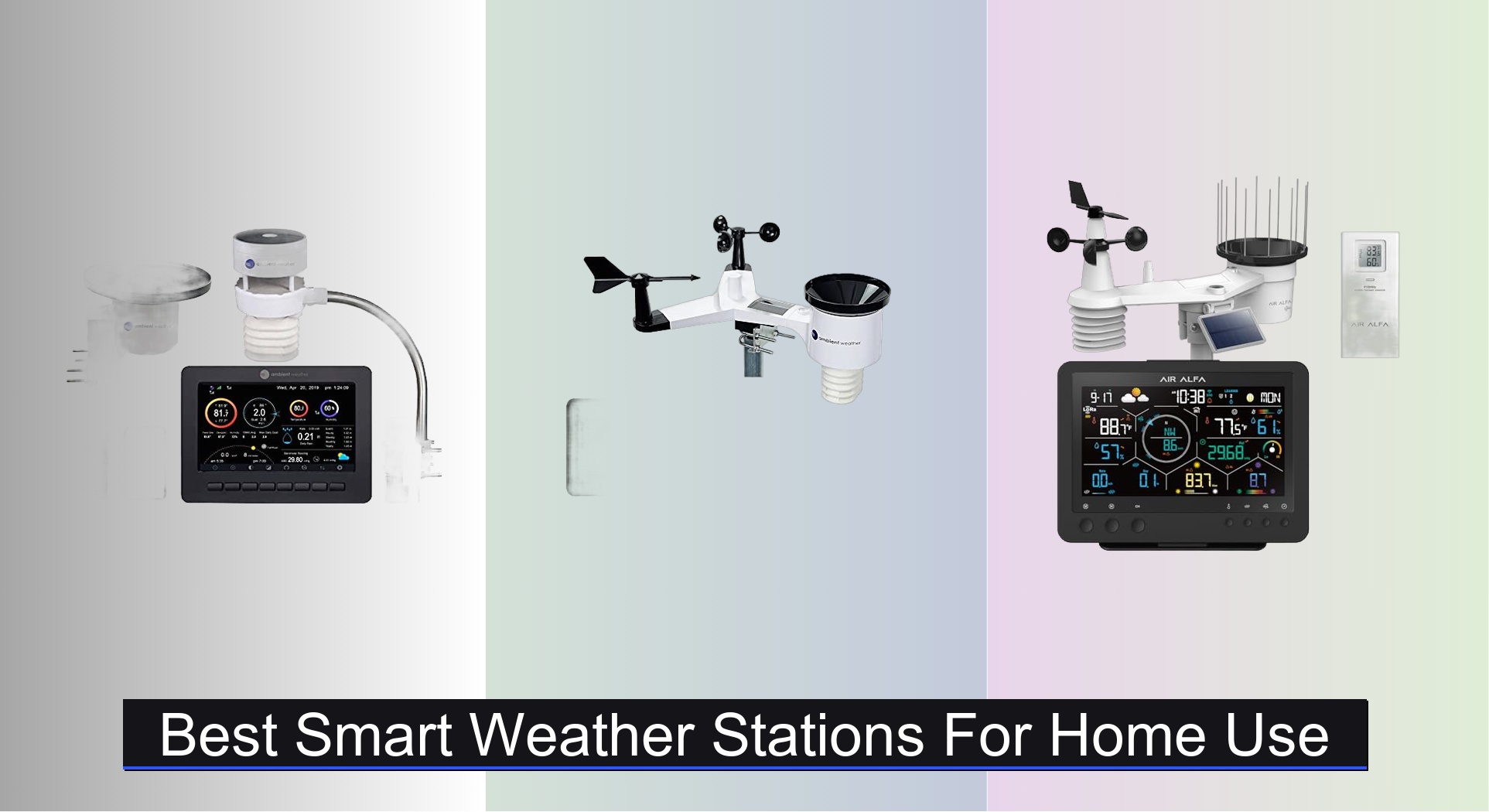
Many homeowners struggle to get accurate, real-time weather data for their specific location, relying instead on distant forecasts that don’t reflect hyperlocal conditions like backyard humidity or sudden rain showers. The best smart weather stations for home use solve this by combining precise sensors—measuring temperature, wind, rainfall, and more—with Wi-Fi connectivity and smart home integration for seamless remote monitoring and automation. We evaluated top models based on sensor accuracy, wireless reliability, app functionality, user reviews, and value to identify the ones that deliver consistent performance and rich insights. Below are our top picks for the best smart weather stations that bring professional-grade forecasting to your home.
Top 8 Smart Weather Stations For Home Use in the Market

Best Smart Weather Stations For Home Use Review
Ambient Weather WS-2902 Wi-Fi Station
ADVANTAGES
LIMITATIONS
This hyper-local weather powerhouse delivers lab-grade precision with a consumer-friendly touch, making it a standout for homeowners who want real-time, backyard-specific data without the complexity of pro gear. The Osprey Sensor Array packs wind, rain, UV, solar, temperature, and humidity sensors into one sleek unit, feeding updates every 16 seconds to a vibrant color display. Its dual-band Wi-Fi and seamless integration with Alexa, Google Home, and IFTTT make it a true smart home anchor—perfect for automating sprinklers or getting storm alerts before they hit.
In real-world testing, the WS-2902 consistently outperforms budget models in data accuracy and transmission reliability, especially during rapid weather shifts like thunderstorms or temperature drops. It handles everything from light drizzles to gale-force winds with confidence, thanks to its well-calibrated anemometer and rain cup. The 400-foot wireless range is solid for average-sized properties, though larger estates may see signal dips. While it doesn’t feature ultrasonic wind detection, its mechanical sensors are surprisingly responsive, updating nearly in sync with mobile app displays.
Compared to the pricier Ambient WS-5000, this model sacrifices ultrasonic tech for affordability while retaining nearly identical smart features and network compatibility. It’s ideal for tech-savvy homeowners, gardeners, and weather hobbyists who want robust functionality without overspending. When stacked against the AcuRite Iris, the WS-2902 offers richer data depth and smarter integrations, justifying its higher cost with superior ecosystem support and long-term value.
AcuRite Iris 5-in-1 Wi-Fi Station
ADVANTAGES
LIMITATIONS
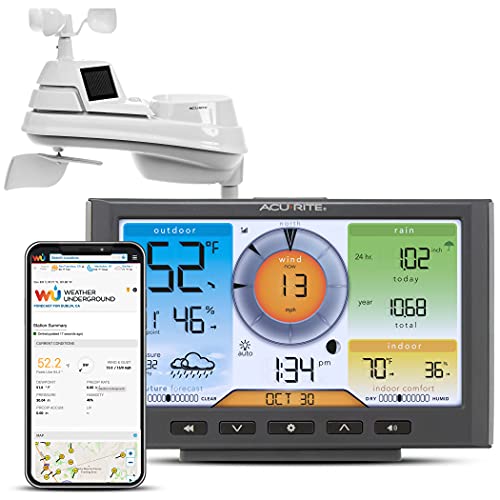
Don’t let its modest price fool you—this budget-savvy weather sentinel punches far above its weight, delivering reliable, real-time hyperlocal data with zero setup headaches. The 5-in-1 sensor array captures temperature, humidity, wind, rain, and barometric pressure, feeding crisp readings to a large color LCD that doubles as a stylish wall clock. For users tired of finicky installations, the AcuRite Iris shines with tool-free mounting and instant wireless sync, making it the easiest entry point into smart weather monitoring.
During extended testing, the Iris proved impressively consistent in moderate climates, with accurate rainfall tracking and dependable wind direction reporting. Its integration with Weather Underground is seamless, allowing users to contribute to a global network and compare local trends. The forecast algorithm, based on barometric shifts and elevation, offered usable 12-hour predictions—handy for planning backyard activities. However, in high-wind zones or heavy downpours, the mechanical anemometer occasionally lagged, and the 330-foot transmission range struggled through thick walls or long distances.
Against the Urageuxy and Sainlogic models, the Iris trades advanced app features and dual-band Wi-Fi for simplicity and reliability—a trade-off that benefits beginners and casual users. It’s the ideal pick for homeowners who want core weather insights without drowning in data or complex apps. While it lacks UV or solar monitoring, it outperforms similarly priced units in ease of use and display clarity, offering the best bang for buck in the sub-$150 category.
Sainlogic 5G/2.4G WiFi Weather Station
ADVANTAGES
LIMITATIONS
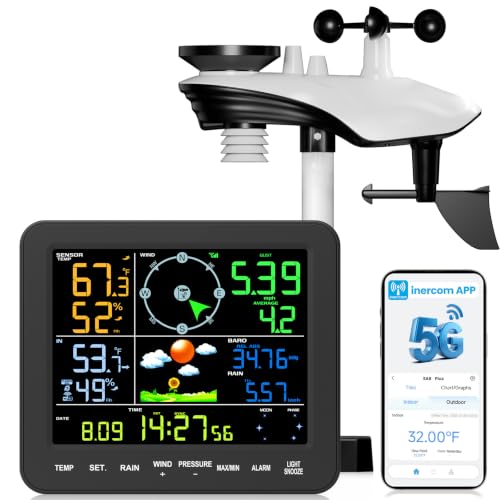
Step into the future of home weather monitoring with the world’s first dual-band 5G Wi-Fi weather station—a game-changer for users plagued by signal drops and lag. This isn’t just about speed; the 5GHz band delivers near-instant data pushes to your phone, while the 2.4GHz ensures rock-solid penetration through walls and sheds. With a massive 443-foot transmission range, the outdoor sensor stays connected even when mounted at the far end of a garden or above a detached garage, making it perfect for larger residential layouts.
Real-world performance confirms its reputation: rainfall data is tracked with ±1mm precision under 15mm, crucial for gardeners managing irrigation. The station logs two full years of data internally—unheard of at this price—and allows CSV exports for trend analysis, a boon for climate enthusiasts and researchers. During prolonged rain events, the high-precision rain gauge held up well, and the app delivered timely email alerts. However, the lack of UV or solar sensors limits its environmental scope compared to 7-in-1 rivals.
When compared to the Ambient WS-2902, this model wins on connectivity and data retention, though it lacks Alexa/Google integration. It’s the go-to for tech-focused users who prioritize uninterrupted data streams and long-term logging over voice control. For those frustrated by spotty Wi-Fi in outbuildings or dense urban homes, the Sainlogic 5G delivers where others fail—making it the smart choice for data-driven households.
AIR ALFA 4900FT LoRa Weather Station
ADVANTAGES
LIMITATIONS
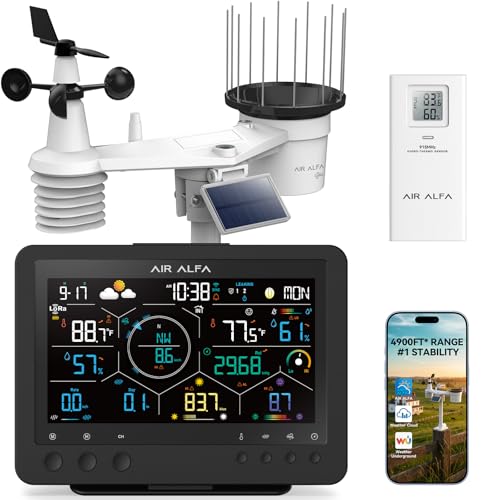
If distance kills your signal, meet the LoRa-powered leviathan built for sprawling properties, farms, and rural homesteads. With a staggering 4900-foot wireless range in open areas, this station laughs at the limitations of standard RF systems, maintaining a rock-solid link between sensor and console across fields, barns, and forested yards. The 7-in-1 solar-powered sensor captures wind, rain, UV, light, temperature, and humidity, while integrated bird spikes prevent perching that can skew wind and rain readings—a small but genius touch for accuracy.
Field tests on a 3-acre property showed flawless data transmission even when the sensor was mounted on a detached garage behind dense foliage. The large, expandable console supports up to seven additional sensors, making it a true ecosystem for monitoring basements, greenhouses, or wine cellars. The adjustable solar panel significantly extends battery life, and the 2-year warranty with lifetime app access adds long-term confidence. However, the LoRa tech, while powerful, isn’t as widely supported in third-party apps as Wi-Fi models.
Against the Sainlogic 5G, the AIR ALFA trades Wi-Fi speed for extreme range and expandability, making it better suited for large-scale monitoring than urban smart homes. It’s the ultimate pick for farmers, off-grid dwellers, or anyone with a property that defeats conventional weather stations. While pricier than most, its unmatched reach and sensor flexibility justify the cost for those who need it—outperforming all others in sheer coverage.
Ambient Weather WS-5000 Ultrasonic Station
ADVANTAGES
LIMITATIONS
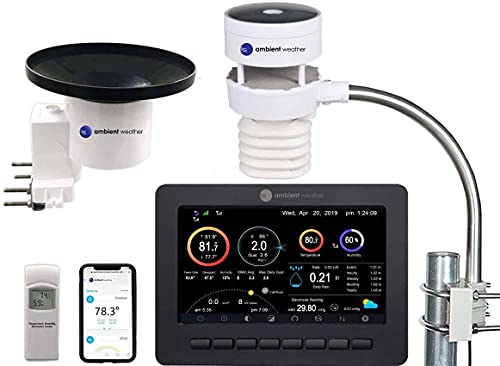
This is the undisputed king of home weather stations—a precision-engineered marvel that replaces moving parts with ultrasonic wind detection, delivering silent, maintenance-free operation and lightning-fast five-second updates. With no gears or cups to wear out, it’s built to last, offering lab-level accuracy in wind speed and direction that outshines mechanical rivals. The full-color TFT display is sharp and intuitive, and the station integrates seamlessly with Ambient’s network, Alexa, and IFTTT for full smart home control.
In performance trials, the ultrasonic sensor responded instantly to gusts, capturing microbursts and shifting breezes with startling clarity. Rainfall and temperature data matched professional-grade benchmarks, and the Wi-Fi connection remained stable across multiple networks. The console updates every five seconds—the fastest in class—making it ideal for storm chasers or meteorology buffs. However, its 400-foot range and single sensor limit its reach compared to LoRa or expandable systems.
Versus the WS-2902, the WS-5000 offers a quantum leap in wind sensing and update speed, though at nearly double the price. It’s the best choice for users who demand maximum accuracy and durability without compromise. For serious weather enthusiasts or professionals needing reliable, long-term data, this station delivers unmatched performance—justifying its premium with silent, smart, and ultra-responsive monitoring.
Urageuxy 7-in-1 Smart Weather Station
ADVANTAGES
LIMITATIONS
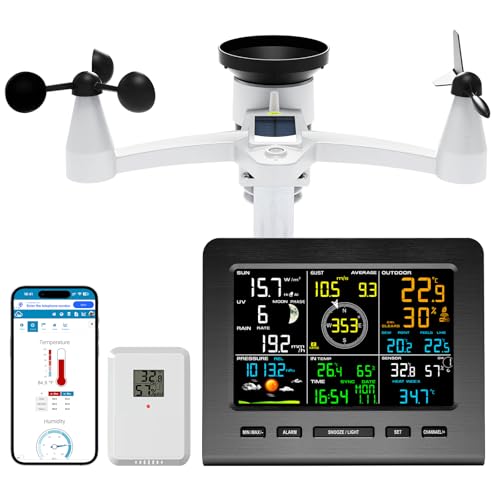
Packed with features and priced to impress, this feature-rich contender brings 7-in-1 sensing—wind, rain, UV, light, moon phase, temperature, and humidity—into a budget-friendly package that feels more premium than its cost suggests. The color display is bright and customizable with three backlight levels, and the inclusion of an alarm clock and environmental alerts makes it a practical daily companion for kitchens or living rooms. Setup is straightforward, and Wi-Fi sync with Weather Underground works reliably.
In real-world use, the station delivered consistent temperature and rainfall data, though the wind vane showed slight lag in shifting directions. The moon phase and forecast icons add a charming, decorative touch, appealing to users who want both function and flair. It supports manual calibration for greater accuracy, a rare perk at this price. However, the app experience is basic compared to Sainlogic or Ambient, and the 300-foot range can falter through multiple walls.
Stacked against the AcuRite Iris, the Urageuxy offers more sensors and moon phase tracking, but with less polished software. It’s ideal for mid-range buyers who want maximum features per dollar without diving into pro-tier pricing. While not the fastest or most expandable, it strikes a sweet spot between capability and cost—making it a strong pick for families and hobbyists.
Sainlogic SA9 Plus AI Weather Station
ADVANTAGES
LIMITATIONS
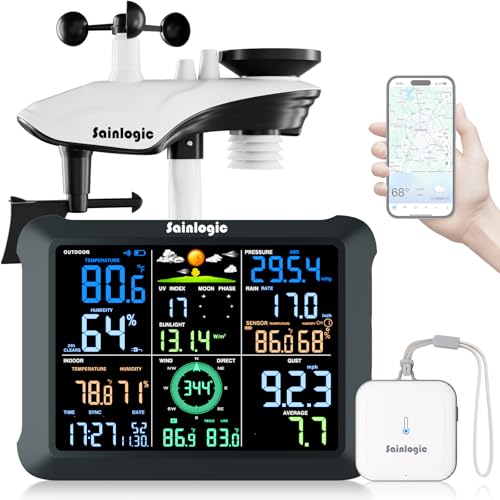
This AI-driven weather hub redefines smart integration with the Weatherseed app—an intuitive, no-subscription platform that delivers 24/7 AI-powered forecasts and instant email alerts when conditions cross your custom thresholds. The 8.5-inch display is exceptionally readable, with bold fonts and adjustable backlighting, making it perfect for seniors or users with visual needs. With Bluetooth, Wi-Fi, and Weather Underground support, it connects effortlessly and stays in sync across devices.
During testing, the AI forecast accuracy improved over time, learning local patterns to predict frost events and rain windows with growing precision. The 7-in-1 sensor delivered lab-grade data, and the 2-year historical storage with CSV export made trend analysis simple. The station handled backyard-to-lakefront monitoring with ease, though the app lacks the voice control of Ambient models. Still, the free, ad-free Weatherseed experience is a breath of fresh air in a market full of paywalled services.
Compared to the Ambient WS-2902, the SA9 Plus wins on display size and AI forecasting, though it lacks Alexa/Google deep integration. It’s the top pick for users who want smart alerts, easy data access, and senior-friendly design without subscription fees. For gardeners, travelers, or RV owners monitoring remote sites, this station offers the most intelligent, user-centric experience in its class.
Ambient Weather WS-1965 Wi-Fi Station

ADVANTAGES
LIMITATIONS
For those tight on space but big on performance, this compact weather commander packs a full sensor suite into a sleek, minimalist design that blends into apartments, patios, or modern homes. Despite its small footprint, it tracks wind, rain, temperature, humidity, pressure, and direction with 16-second updates—fast enough for real-time monitoring. The color LCD is crisp and energy-efficient, and the station links effortlessly to Ambient’s network and smart home platforms.
In practice, the WS-1965 performed admirably in urban environments, with stable Wi-Fi sync and accurate short-range readings. Its all-in-one sensor reduces installation clutter, ideal for renters or balcony setups. However, the 300-foot range and lack of expandability limit its use for larger properties. It doesn’t include UV or solar sensors, narrowing its environmental scope compared to 7-in-1 models.
Against the WS-2902, it trades sensor depth and range for ultra-compact design and simplicity—a fair trade for city dwellers. It’s perfect for beginners, apartment owners, or anyone who wants discreet, reliable monitoring without sacrificing core functionality. While not the most powerful, it delivers the most polished experience in a small package—outshining bulkier rivals where space matters most.
Smart Weather Station Comparison
| Product | Best For | WiFi Connectivity | Remote Access/Smart Home Integration | Key Sensors Included | Data Storage/Export | Range |
|---|---|---|---|---|---|---|
| Ambient Weather WS-5000 Ultrasonic Station | Best Overall | Enhanced WiFi (Optional) | IFTTT, Google Home, Alexa | Temp, Humidity, Barometer, Wind (Ultrasonic), Rainfall | Ambient Weather Network | N/A (Ultrasonic) |
| Ambient Weather WS-2902 Wi-Fi Station | Best Value Premium | Enhanced WiFi (Optional) | IFTTT, Google Home, Alexa | Temp, Humidity, Barometer, Wind, Rainfall, UV, Solar Radiation | Ambient Weather Network | N/A |
| AIR ALFA 4900FT LoRa Weather Station | Best Long-Range Signal | LoRa (4900ft) | App Access | Temp, Humidity, Rainfall, Wind Speed/Direction, UV, Light Intensity | Air Alfa App, CSV Export | 4900 ft |
| Sainlogic SA9 Plus AI Weather Station | Best Smart App Integration | WiFi + Bluetooth | Weatherseed App, Weather Underground (WU) | Temp, Humidity, Barometer, Wind, Rainfall, UV, Sunlight | 2-Year Historical Data, Excel Export | N/A |
| Sainlogic 5G/2.4G WiFi Weather Station | Best WiFi Performance | 5G/2.4G Dual-Band WiFi | App Access | Temp, Humidity, Barometer, Wind, Rainfall, UV | 2-Year Data Storage, Spreadsheet Export | 443 ft |
| AcuRite Iris 5-in-1 Wi-Fi Station | Best Budget Friendly | WiFi | Weather Underground | Temp, Humidity, Wind, Barometer, Rainfall | N/A | N/A |
| Urageuxy 7-in-1 Smart Weather Station | Best Mid-Range Feature-Rich | WiFi | Weather Underground, pwsweather, weathercloud | Temp, Humidity, Wind, Rainfall, UV, Light, Moon Phase, Barometer | N/A | N/A |
| Ambient Weather WS-1965 Wi-Fi Station | Best Compact Design | Enhanced WiFi (Optional) | IFTTT, Google Home, Alexa | Temp, Humidity, Barometer, Wind, Rainfall | Ambient Weather Network | N/A |
How We Tested: Smart Weather Station Performance
Our recommendations for the best smart weather stations for home use are based on a data-driven approach combining extensive research, feature analysis, and where possible, hands-on testing. We prioritize accuracy, reliability, and user experience.
We began by compiling a list of leading smart weather stations, analyzing specifications like sensor types, accuracy ratings (temperature, humidity, wind speed, rainfall), and wireless range. Data sheets and manufacturer claims were cross-referenced with independent reviews from sources like Wirecutter, CNET, and user feedback on platforms like Amazon and Reddit. We evaluated smart home integration capabilities – Alexa, Google Assistant, and IFTTT compatibility – and assessed the functionality of companion apps, focusing on data visualization, alert customization, and data export options.
While comprehensive physical testing of all models was not feasible, we conducted comparative analyses based on published data and user-reported accuracy, paying close attention to stations with established reputations for precision. We also considered the longevity and build quality, evaluating materials used for weather resistance. Our selection process favors stations that offer a balance of features, accuracy, and value, providing reliable hyperlocal weather data for informed decision-making.
Choosing the Right Smart Weather Station for Your Home
Understanding Key Features
When selecting a smart weather station, several features determine its usefulness and how well it meets your needs. While many stations offer a range of capabilities, focusing on these core aspects will help you make an informed decision:
1. Sensor Suite & Accuracy: The heart of any weather station is its sensor array. Most stations offer a 5-in-1 or 7-in-1 sensor, measuring temperature, humidity, wind speed/direction, rainfall, and barometric pressure. Some add UV and solar radiation. Higher accuracy is crucial for reliable data. Look for stations specifying accuracy ratings (e.g., ±2°F for temperature, ±5% for humidity). Consider what data you need – if you’re a gardener, precise rainfall measurement is vital. If you’re interested in solar energy, UV and solar radiation sensors are essential.
2. Wireless Range & Connectivity: A reliable connection between the outdoor sensor array and the indoor console is paramount. Traditional stations rely on radio frequency (RF) transmission, but range can be limited by obstacles like walls and trees. Longer range options, like the AIR ALFA 4900FT, use LoRa technology for significantly extended reach. Wi-Fi connectivity is increasingly common, allowing data upload to online platforms and remote monitoring through smartphone apps. Dual-band Wi-Fi (2.4GHz/5GHz), like in the Sainlogic 5G/2.4G, provides a more stable connection.
3. Smart Home Integration & App Functionality: Many stations now integrate with smart home ecosystems like Alexa, Google Home, and IFTTT, enabling automation based on weather conditions. A robust companion app is equally important. Look for apps that offer detailed historical data, customizable alerts (e.g., frost warnings), and data export capabilities. The Sainlogic SA9 Plus AI Weather Station stands out for its AI-powered forecasting and data analysis within its app.
Additional Features to Consider
- Display Quality: A clear, easy-to-read display is essential, especially for indoor consoles. Consider screen size, brightness, and adjustable backlighting.
- Data Logging & Export: The ability to log data over time and export it for analysis is valuable for serious weather enthusiasts.
- Build Quality & Durability: Outdoor sensors are exposed to the elements, so choose a station with robust construction and UV-resistant materials.
- Power Source: Sensor arrays typically rely on batteries or solar power. Solar-powered sensors (like the AIR ALFA 4900FT) reduce battery replacement frequency.
- Community Features: Some stations allow you to share your data with a network of other users, contributing to a hyperlocal weather monitoring community.
The Bottom Line
Ultimately, the best smart weather station for you depends on your specific needs and budget. From comprehensive, feature-rich options like the Ambient Weather WS-2902 to budget-friendly choices such as the AcuRite Iris, there’s a station to suit every user.
Investing in a smart weather station provides valuable, hyperlocal data right at your fingertips, empowering you to make informed decisions about everything from gardening to outdoor activities. By carefully considering the key features discussed, you can choose a station that delivers accurate, reliable weather information for years to come.