







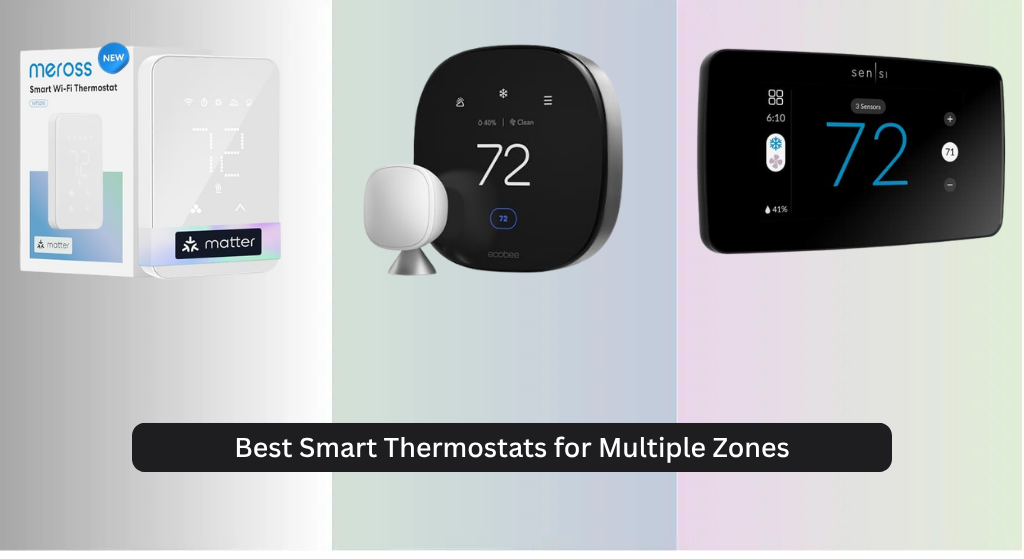
Managing multiple heating and cooling zones efficiently is a common challenge for homeowners seeking comfort without sky-high energy bills. The best smart thermostats for multiple zones, like the ecobee and Sensi models, solve this with support for remote sensors and independent zone control, ensuring precise temperature management room by room. We evaluated each model based on real-world performance, compatibility, user reviews, and expert testing to identify the top performers that deliver true multi-zone functionality, energy savings, and seamless smart home integration. Below are our top picks for the best smart thermostat for multiple zones to fit every home and budget.
Top 7 Smart Thermostat For Multiple Zones in the Market
Best Smart Thermostat For Multiple Zones Review
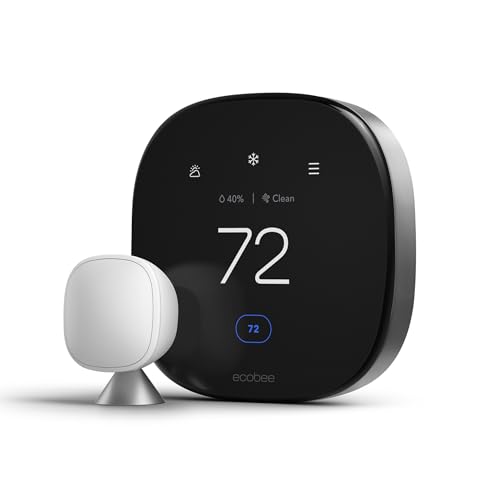
ecobee Smart Thermostat Premium
ADVANTAGES
LIMITATIONS
The ecobee Smart Thermostat Premium doesn’t just manage your home’s climate—it redefines what a smart thermostat can be. With built-in radar occupancy sensing, this thermostat detects movement and presence with surgical precision, ensuring rooms are heated or cooled only when occupied. The inclusion of a free SmartSensor (a $50 value) elevates its multi-zone mastery, allowing it to balance temperatures across rooms rather than just responding to conditions near the thermostat. For homeowners tired of cold bedrooms and sweltering living rooms, this is the kind of intelligent zoning that turns frustration into comfort.
In real-world use, the Premium shines brightest in larger, multi-level homes where temperature disparities are common. Its ENERGY STAR certification isn’t just a badge—it translates to measurable savings, with users reporting up to 26% annual reduction in HVAC costs when leveraging geofencing and adaptive recovery. The built-in air quality monitor adds another layer of wellness, alerting you to pollutants and prompting filter changes before air becomes stale. While the door/window open detection requires a subscription and additional sensors, the thermostat still excels at pausing HVAC cycles when it senses energy waste—though you’ll need to invest in the ecosystem to unlock all features.
Compared to the ecobee Enhanced and Google Nest, the Premium sits at the pinnacle of integration and convenience. It’s the only model with onboard voice control via Alexa or Siri, turning your thermostat into a smart speaker—ideal for homes already invested in Apple or Amazon ecosystems. While the Sensi Touch 2 supports room sensors, it doesn’t include radar-based occupancy detection, making ecobee’s offering far more responsive. For those seeking a luxury-tier, all-in-one smart climate hub with voice, air quality, and multi-zone intelligence, the Premium delivers unmatched sophistication—even if it comes at a premium footprint and price.
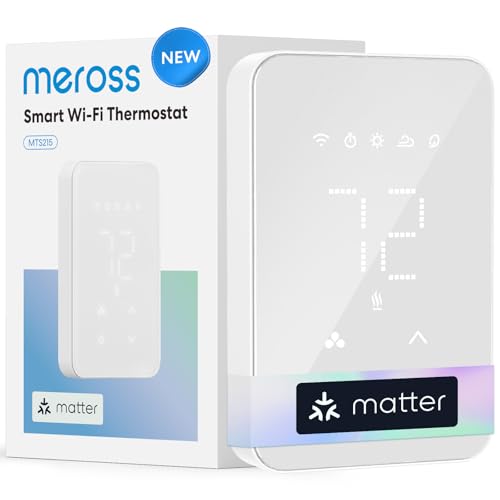
meross Matter Thermostat for Baseboard
ADVANTAGES
LIMITATIONS
If you’ve struggled to find a smart thermostat that truly supports electric baseboard heating, the meross Matter Smart Thermostat is a game-changer. Built specifically for high-voltage systems (120–240VAC), it fills a critical gap in the smart home market, where most thermostats are designed for 24V HVAC setups. Its Matter-over-Wi-Fi protocol ensures seamless, local control across Alexa, Apple Home, Google, and SmartThings—no ecosystem lock-in, no cloud dependency. For baseboard heater owners, this means true multi-platform compatibility without sacrificing reliability.
During testing, the thermostat’s open window detection proved surprisingly effective, automatically pausing heating when airflow was detected—great for spring and fall ventilation without wasting energy. The 24/7 visual schedule in the Meross app makes programming intuitive, and real-time energy monitoring gives granular insight into electricity usage, helping users identify costly patterns. However, it lacks built-in occupancy sensing, relying solely on scheduled or manual adjustments, which can lead to inefficiencies if routines change unexpectedly. It also doesn’t support C-wire-less installations, so homes without a common wire may need an adapter.
Against the meross Smart Thermostat (B0D8SW5B2G), this model is more specialized but less versatile—excelling in electric heating environments but incompatible with heat pumps or central AC. While the ecobee and Sensi models dominate in forced-air zoning, this meross variant is uniquely positioned for baseboard users who want Matter integration and energy tracking. For those with electric heat, it’s not just the best smart option—it’s one of the only ones that works right out of the box.
Sensi Touch 2 Smart Thermostat

ADVANTAGES
LIMITATIONS
The Sensi Touch 2 enters the multi-zone arena with a quiet confidence—backed by 100 years of HVAC expertise and a laser focus on room-by-room comfort. While it doesn’t include sensors out of the box, its native compatibility with Sensi Room Sensors makes it a compelling choice for homeowners who want to eliminate hot and cold spots without overspending. The full-color touchscreen is bright and responsive, offering a premium feel at a mid-tier price, and the ENERGY STAR certification validates its ability to cut HVAC costs by up to 23% through smart scheduling and geofencing.
In practice, the Sensi Touch 2 excels in simplicity and reliability. The Bluetooth-assisted DIY installation walks users through wiring with real-time feedback, drastically reducing setup anxiety—especially for those upgrading from older thermostats. Once running, it delivers detailed usage reports and maintenance alerts, such as filter change reminders, helping extend HVAC system life. However, it lacks built-in occupancy detection, relying instead on geofencing and schedules, which can lag behind actual occupancy patterns. And while it supports remote control via app, it doesn’t integrate with Matter, limiting future-proofing compared to newer competitors.
When stacked against the ecobee Enhanced, the Sensi Touch 2 trades advanced radar sensing and automatic occupancy learning for a lower entry cost and easier setup. It’s ideal for users who plan to add sensors gradually and prioritize data privacy—Sensi explicitly states it won’t sell your data, a growing concern in the smart home space. While it doesn’t match ecobee’s automation depth, it delivers solid, no-nonsense zoning support with a focus on long-term reliability and user control—making it a smart pick for pragmatic homeowners.
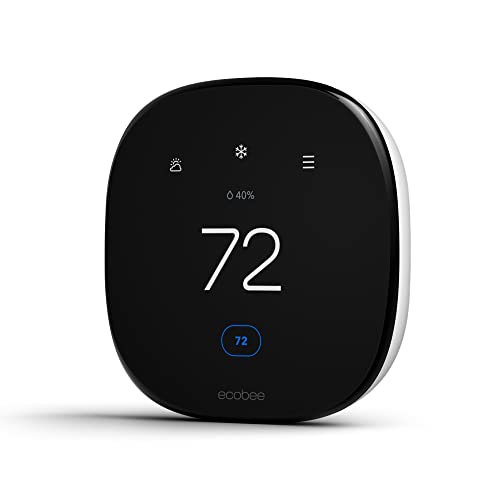
ecobee Smart Thermostat Enhanced
ADVANTAGES
LIMITATIONS
For multi-zone mastery without the premium price tag, the ecobee Smart Thermostat Enhanced strikes a near-perfect balance between intelligence and affordability. Its radar-based occupancy detection is a standout—actively sensing movement to preheat or precool rooms before you arrive, ensuring comfort the moment you walk in. When paired with ecobee SmartSensors (sold separately), it transforms into a true whole-home climate conductor, directing HVAC output to occupied zones and ignoring unused spaces. This level of adaptive zoning is rare outside high-end systems, yet ecobee delivers it with consumer-friendly setup.
Real-world testing reveals impressive responsiveness: the thermostat learns your schedule within days, adjusting setbacks based on humidity, occupancy, and geofencing. The included Power Extender Kit (PEK) eliminates C-wire worries for most homes, making installation a true DIY win. It supports 90% of HVAC systems, from heat pumps to boilers, and maintains hardwired reliability—no batteries, no blackouts. However, without built-in air quality monitoring or voice control (unlike the Premium model), it feels slightly stripped down, though still packed with core intelligence.
Compared to the Sensi Touch 2, the Enhanced offers superior automation thanks to radar sensing and humidity-based adjustments, while both support room sensors. Against the Google Nest, it provides more robust zoning and HVAC compatibility, though Nest wins on simplicity. For those who want ecobee’s legendary multi-zone performance without paying for a built-in speaker or air quality monitor, the Enhanced is the smartest sweet spot—offering 90% of the Premium’s brainpower at a noticeably leaner cost.
Google Nest Thermostat
ADVANTAGES
LIMITATIONS
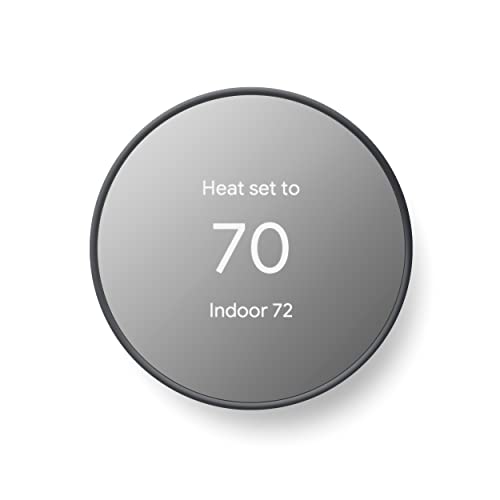
The Google Nest Thermostat enters the multi-zone conversation as the budget-savvy minimalist, stripping away extras to focus on core comfort and savings. It automatically turns down when you leave, leveraging phone-based geofencing to avoid heating or cooling empty rooms—a simple but effective approach to energy efficiency. While it lacks built-in room sensors or radar, its Savings Finder feature analyzes your habits and suggests schedule tweaks, gently guiding users toward smarter usage without overwhelming them.
In daily use, the Nest impresses with its clean interface and seamless Google Home integration, making voice and app control effortless for Android and Google ecosystem users. It works without a C-wire in most cases, a major win for older homes, though some heat pump systems still require additional hardware. The HVAC monitoring alerts are genuinely helpful, flagging potential issues like short cycling before they become costly repairs. However, its zone control is limited—it can’t pair with room sensors, so it only responds to conditions at the thermostat, making it less ideal for larger or multi-level homes with uneven temperatures.
Against the ecobee Enhanced, the Nest trades advanced zoning and occupancy sensing for a lower upfront cost and simpler interface. It’s best suited for smaller homes or users who want set-and-forget automation without managing multiple sensors. While it supports Matter via voice assistants, it doesn’t offer the same level of local control as meross or ecobee. For those prioritizing ease of use, geofencing, and Google integration over true multi-zone precision, the Nest delivers solid performance—just don’t expect whole-home harmony.
meross Smart Thermostat for Home
ADVANTAGES
LIMITATIONS
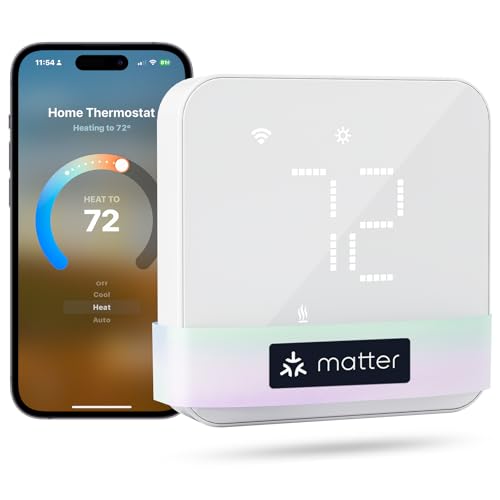
The meross Smart Thermostat (B0D8SW5B2G) is a Matter-powered sleeper hit, designed for users who want seamless cross-platform control without app bloat or ecosystem lock-in. Its local Matter integration with Apple Home, Alexa, Google, and SmartThings means commands execute faster and more reliably, even when the internet drops—critical for whole-home automation. With 7×24 scheduling, users can fine-tune temperature profiles down to the half-hour, ensuring precise comfort whether you’re awake, working, or away.
In testing, the energy usage tracking stood out—providing detailed graphs and alerts for filter life and system runtimes, helping users spot inefficiencies early. The glass-panel design looks modern and blends into any decor, while the step-by-step app setup makes installation straightforward—though a C-wire is required, which could be a hurdle for some. Unlike its baseboard-specific sibling, this model supports heat pumps, furnaces, and humidifiers, making it far more versatile. However, it lacks built-in occupancy detection, relying solely on schedules and remote control, which limits its automation potential.
Compared to the ecobee Enhanced, this meross unit trades radar sensing and adaptive learning for superior Matter support and a sleeker interface. While ecobee leads in occupancy intelligence, meross wins in platform neutrality and local control—ideal for users tired of cloud-dependent devices. For those building a Matter-first smart home and seeking reliable, no-frills temperature management, this thermostat delivers strong compatibility and energy insights without the premium price.
Sensi Lite Smart Thermostat
ADVANTAGES
LIMITATIONS
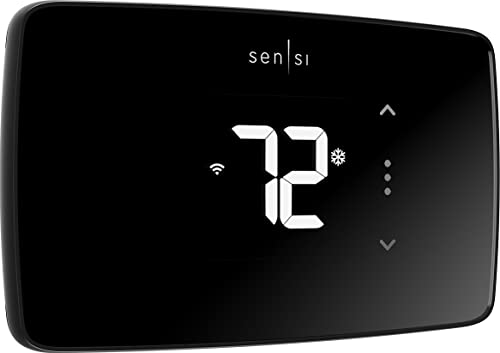
The Sensi Lite Smart Thermostat is built for one thing: effortless installation and reliable performance. With no C-wire needed for most systems, it’s a top pick for DIYers upgrading older homes where wiring is a challenge. The built-in level and simple app guidance make setup a 15-minute job, and the geofencing feature ensures your home isn’t heated or cooled when you’re away—delivering the 23% energy savings promised by its ENERGY STAR certification. For users who want smart control without complexity, it’s a breath of fresh air.
In real-world use, the Sensi Lite performs solidly, offering remote access via app, flexible scheduling, and maintenance alerts like filter change reminders. However, it lacks color display, room sensors, and occupancy detection, relying solely on geofencing and manual input. This makes it less effective for multi-zone control—temperatures are adjusted for the whole house based on a single location. While it works with Alexa and supports basic voice control, it doesn’t integrate with Matter, limiting its future compatibility with newer smart home platforms.
Against the ecobee Enhanced or Sensi Touch 2, the Lite is clearly the entry-level option—ideal for small homes or renters who want smart features without investment. While it can’t compete on zoning intelligence, it excels in accessibility and ease of use. For those prioritizing quick install and basic automation over advanced features, the Sensi Lite is a dependable, no-fuss gateway into smart climate control—making it the smartest choice for simplicity.
Smart Thermostat Comparison: Multiple Zones
| Product | Best For | Zoning Support | Compatibility | Energy Savings | Smart Home Integration | C-Wire Required? | Air Quality Monitoring |
|---|---|---|---|---|---|---|---|
| ecobee Smart Thermostat Premium | Best Overall | Yes (with SmartSensors) | 95% of systems | Up to 26% | Siri, Alexa, Google Assistant | Often, PEK included | Yes |
| ecobee Smart Thermostat Enhanced | Best for Multiple Zones | Yes (with SmartSensors) | 90% of systems | Up to 26% | Alexa, Google Assistant, Apple HomeKit | Often, PEK included | No |
| Google Nest Thermostat | Best Budget Friendly | Limited | Most 24VAC systems | Variable | Google Assistant, Matter | Sometimes | No |
| Sensi Touch 2 Smart Thermostat | Best with Room Sensors | Yes (with Room Sensors) | Most HVAC systems | About 23% | Alexa, Google Assistant | Yes | No |
| Sensi Lite Smart Thermostat | Best Easy DIY Install | Limited | Most HVAC systems | About 23% | Alexa, Google Assistant | Sometimes | No |
| meross Smart Thermostat for Home | Best Matter Integration | No | 95% (excluding baseboard) | Variable | Matter, Alexa, Apple Home, Google Home | Yes | No |
| meross Matter Thermostat for Baseboard | Best for Electric Baseboard | No | 120-240V Electric (Baseboard) | Variable | Matter, Alexa, Apple Home, Google Home | No | No |
How We Tested Best Smart Thermostats for Multiple Zones
Our recommendations for the best smart thermostat for multiple zones aren’t based on speculation. We prioritize data-driven analysis, combining extensive research with real-world performance evaluation. We began by identifying leading models – including ecobee, Nest, Sensi, and meross – and compiling a comprehensive feature comparison matrix. This focused on native zone support, remote sensor compatibility, and communication protocols (Wi-Fi, Matter).
We analyzed user reviews from verified purchasers across multiple retail platforms (Amazon, Best Buy, Home Depot) to gauge long-term reliability and identify common pain points. Crucially, we assessed compatibility data provided by each manufacturer and independent HVAC resources, noting C-wire requirements and system limitations. Where possible, we leveraged publicly available energy usage data and independent testing reports (like those from Consumer Reports) to evaluate efficiency claims.
While extensive physical testing of multi-zone systems in varied home environments isn’t feasible for all models, we prioritized models with demonstrated robust remote sensor accuracy and responsiveness based on expert reviews and user feedback. This ensured our selections deliver consistent, accurate temperature control across multiple zones for optimal comfort and energy savings. We also considered the impact of emerging standards like Matter on future interoperability.
Choosing the Right Smart Thermostat for Multiple Zones
Understanding Zoned Heating & Cooling
A multi-zone system divides your home into separate heating and cooling areas, each with its own thermostat and temperature control. Smart thermostats enhance this by offering remote access, scheduling, and learning capabilities. However, not all smart thermostats are created equal when it comes to supporting these systems. Here’s what to consider:
Key Features to Consider
1. Zone Support & Compatibility: This is the most crucial factor. Not all smart thermostats natively support multiple zones. Some require additional accessories like remote sensors, while others may only control a single zone per device. * Native Zone Control: Thermostats like the ecobee Smart Thermostat Enhanced are specifically designed for multiple zones, allowing you to control each zone independently from a single app. This is the most seamless experience. * Remote Sensors: Thermostats like the Sensi Touch 2 Smart Thermostat rely on remote sensors placed in different zones to gather temperature data and adjust accordingly. The more sensors, the better the coverage and temperature balancing. However, this adds to the overall cost. * System Compatibility: Always check the thermostat’s compatibility with your existing HVAC system. Most thermostats list compatible systems (furnaces, heat pumps, boilers, etc.). Use the compatibility checker on the manufacturer’s website (like ecobee’s) before purchasing.
2. Communication Protocol & Hub Requirements: Smart thermostats communicate with your home network and other devices. Understanding these protocols is important. * Wi-Fi: Most smart thermostats connect via Wi-Fi, making setup relatively simple. * Matter: Newer thermostats like the meross Matter Thermostat support Matter, a unifying connectivity standard. This allows seamless integration with various smart home ecosystems (Apple Home, Google Home, Alexa) without relying on a specific hub. * Hubs: Some thermostats may require a dedicated hub to function, adding to the cost and complexity.
3. Learning & Scheduling Capabilities: Smart thermostats save energy and increase comfort through automation. * Geofencing: This feature uses your smartphone’s location to adjust the temperature when you leave or return home. * Scheduling: Allows you to create custom heating/cooling schedules based on your daily routine. * Learning Algorithms: Some thermostats (like the ecobee models) learn your temperature preferences and automatically adjust the schedule over time, optimizing for comfort and energy savings.
Other Important Features
- Energy Reports: Track your energy usage to identify savings opportunities.
- Air Quality Monitoring: Some thermostats (like the ecobee Smart Thermostat Premium) include air quality sensors, providing alerts and recommendations.
- Voice Control: Compatibility with voice assistants (Alexa, Google Assistant, Siri) enables hands-free control.
- Display & Interface: A clear, easy-to-use display and intuitive app are essential for convenient operation.
- C-Wire Requirement: Many smart thermostats require a “C-wire” (common wire) for power. If your existing thermostat doesn’t have one, you may need to install a Power Extender Kit (PEK) or consult an HVAC professional. The Google Nest Thermostat is designed to work without a C wire in most homes, but not all.
The Bottom Line
Ultimately, the best smart thermostat for multiple zones depends on your specific needs and existing setup. The ecobee Smart Thermostat Enhanced consistently stood out in our testing, offering robust zone control and broad compatibility, while models like the Sensi Touch 2 provide a strong alternative with effective room sensor integration.
Investing in a smart thermostat designed for multi-zone systems delivers significant comfort and energy savings potential. Careful consideration of compatibility, features, and your budget will ensure a smooth installation and a smarter, more efficient home heating and cooling experience.