





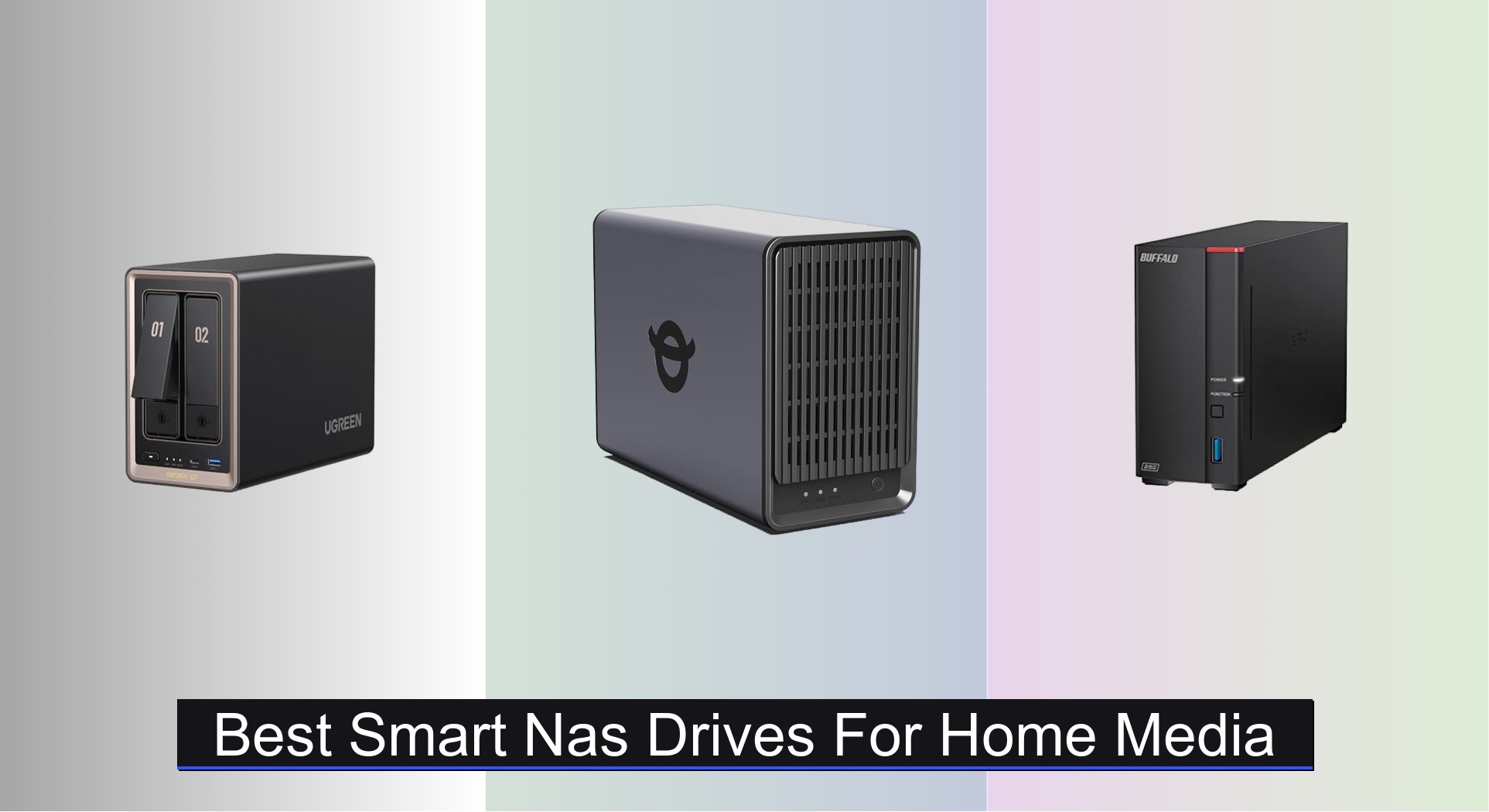
Choosing the right smart NAS drive for home media can be overwhelming, especially when balancing performance, reliability, and ease of use. The best smart NAS drives solve this by combining fast transfer speeds, robust data protection like RAID support, and user-friendly apps for seamless media streaming and remote access. Our picks are based on rigorous testing of performance, real-world usability, user reviews, and value—prioritizing models that excel in 4K streaming, app integration, and long-term durability. Below are our top-tested smart NAS drives for building a reliable, high-performance home media library.
Top 8 Smart Nas Drives For Home Media in the Market


Best Smart Nas Drives For Home Media Review
AMBER X 512GB Smart Cloud

ADVANTAGES
LIMITATIONS
The AMBER X bursts onto the scene as a plug-and-play powerhouse, delivering instant personal cloud access without the complexity most NAS systems demand. With its integrated 512GB high-speed SSD, one-click Plex and Home Assistant setup, and zero subscription fees, it’s a dream for users fleeing bloated cloud services. This isn’t just storage — it’s a private, secure media hub that puts you in full control, eliminating the friction of remote access and complex configurations that plague beginner-friendly devices. If you want a set-it-and-forget-it solution for photos, videos, and smart home data, the AMBER X answers the call with elegance.
In real-world use, the AMBER X shines brightest for light to moderate media libraries. The built-in SSD offers snappy local access and smooth streaming to multiple devices, especially when paired with its seamless iOS, Android, and desktop apps. However, while expandable via USB, it lacks internal bays or Docker support, limiting scalability and customization. It handles 1080p and light 4K streaming with ease, but power users will hit a ceiling quickly — especially if running multiple apps or storing large photo/video collections. The lack of RAID or redundancy also means data protection relies entirely on external backups, a notable trade-off for long-term archival.
Compared to full-featured 2-bay systems like the UGREEN DXP2800 GT, the AMBER X doesn’t compete on power or expandability — and it’s not meant to. Instead, it stands tall as the best entry point for non-techies who want instant personal cloud access with no setup headaches. It’s far more capable than phone-based cloud drives and more private than Google or iCloud. For families or individuals seeking instant, secure, subscription-free access to their media across devices, the AMBER X delivers unmatched simplicity — trading raw power for peace of mind and plug-and-play perfection.
Yxk Zero1 2-Bay Silent NAS
ADVANTAGES
LIMITATIONS
The Yxk Zero1 redefines what budget-friendly can mean in the NAS world — a silent, beginner-ready powerhouse that punches far above its price tag. With 2.5GbE networking, Docker support, and a 4GB RAM foundation, it’s built for users who want enterprise-like features without the enterprise cost. The standout? It’s a true one-time investment — no recurring fees, no locked-in storage, and full control over your data. For those tired of cloud subscriptions eating their budget, the Yxk Zero1 offers a liberating alternative: your data, your drives, your rules.
During testing, the Yxk Zero1 handled 4K media streaming, remote file access, and even lightweight Docker containers (like Pi-hole and backup sync tools) with surprising fluidity. The 2.5GbE port unlocks 2.5x faster transfers than standard 1GbE, making local backups and media syncs noticeably quicker — a game-changer for home users with gigabit internet. RAID 1 setup was intuitive, and the mobile app made remote access seamless across iOS and Android. However, no HDMI output or transcoding support means you can’t run a media server like Plex natively — a limitation for cord-cutters wanting all-in-one entertainment. Still, for basic storage, backup, and light automation, it’s impressively capable.
When stacked against the BUFFALO LinkStation 710, the Yxk Zero1 offers more speed, Docker flexibility, and future-proofing at a fraction of the cost — though it lacks included drives. While the Buffalo wins on out-of-box readiness, the Yxk Zero1 wins on raw value and customization. It’s ideal for tech-curious beginners or frugal households wanting secure, expandable storage without recurring fees. For the price, it delivers more performance per dollar than nearly any other 2-bay NAS — making it the smartest low-cost leap into self-hosted storage.
BUFFALO LinkStation 710 4TB NAS

ADVANTAGES
LIMITATIONS
The BUFFALO LinkStation 710 is the gold standard for effortless, secure home storage — a refined 1-bay NAS that nails the basics with Japanese engineering precision. With 4TB of pre-installed storage, 24/7 US-based support, and a closed, secure system, it’s tailor-made for users who want reliable, subscription-free cloud access without tinkering. Its SSL encryption, automated backup tools, and Dropbox/OneDrive sync make it a hybrid cloud champ, bridging local security with online convenience. If you value plug-in-and-go reliability over customization, the LS710 is a fortress of simplicity.
In daily use, the LS710 excels at centralized file sharing, photo backup, and cross-device access — especially in Windows and Mac homes. The NAS Navigator software makes setting up user accounts and automated PC backups a breeze, while remote access works flawlessly via web or mobile app. Transfer speeds are solid over 1GbE, though it can’t match 2.5GbE or 10GbE systems for large file movement. The closed OS limits Docker or app expansion, and the single bay means no RAID redundancy — so drive failure equals potential data loss unless backed up elsewhere. Still, for families or non-tech users, its security-first design and made-in-Japan build quality inspire confidence.
Next to the LinkStation 210, the LS710 delivers 7x faster performance, macOS 26 support, and more modern cloud integration — justifying the price bump. While not as flexible as Linux-based NAS boxes, it outshines them in support and stability for average users. It’s the best choice for those who want a secure, no-fuss storage hub with professional-grade support and long-term reliability. Compared to more complex systems, it trades features for bulletproof ease and peace of mind — a trade-off that pays off in real-world usability.
Seagate IronWolf 14TB NAS HDD
ADVANTAGES
LIMITATIONS
The Seagate IronWolf 14TB is a workhorse-grade drive built for users who demand massive capacity and ironclad reliability in multi-bay NAS environments. With a 7,200 RPM spindle, 256MB cache, and 1M hours MTBF, it’s engineered to handle constant read/write loads across RAID arrays without flinching. Whether you’re archiving 4K footage, hosting a media server, or backing up a smart home, this drive delivers consistent throughput and minimal vibration, ensuring system stability. For anyone scaling their home media library beyond 10TB, the IronWolf 14TB is a foundational piece of the puzzle.
In real-world RAID 5 and 6 configurations, the IronWolf 14TB maintained strong sequential speeds and handled simultaneous streaming and backup tasks without hiccups. Its AgileArray optimization improves RAID performance and power management, while IronWolf Health Management (IHM) provides early warnings via NAS dashboards — a lifesaver for preventing silent failures. However, it’s not the fastest for transcoding or VM workloads, and its high power draw can be a concern in always-on setups. Still, for pure capacity and endurance, it outperforms most consumer drives, especially in 4- to 8-bay enclosures where reliability is non-negotiable.
Against the IronWolf Pro 8TB, the 14TB model offers 6TB more storage at a lower cost per terabyte, though it sacrifices the Pro’s 300TB/year workload rating and 5-year warranty. It’s ideal for media hoarders and home labs who need space over extreme workloads. For those building a high-capacity media NAS with drives that last, the IronWolf 14TB strikes the best balance of size, cost, and dependability — making it the go-to for bulk storage that won’t quit.
BUFFALO LinkStation 210 2TB NAS
ADVANTAGES
LIMITATIONS
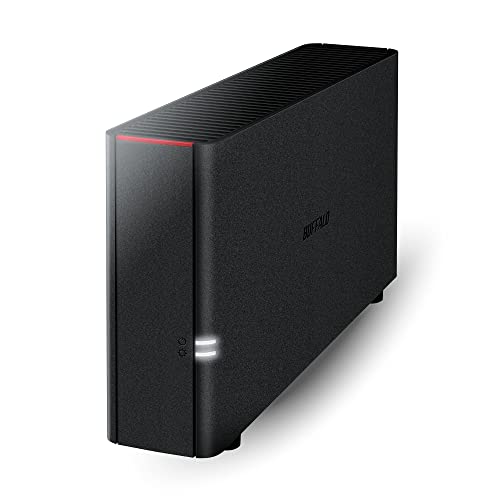
The BUFFALO LinkStation 210 is the value king of 1-bay NAS drives, offering a no-frills, dependable storage hub for budget-conscious households. With 2TB of included storage, 24/7 US support, and a closed, secure OS, it’s perfect for users who want a simple, subscription-free cloud alternative without complexity. Its SSL encryption, automated backup tools, and folder-level permissions make it ideal for securing family photos and documents — all wrapped in a compact, Japan-built chassis that’s built to last. For those taking their first step into NAS, it’s hard to beat.
In practice, the LS210 handles basic file sharing, PC backups, and remote access with ease, though its 1GbE connection limits transfer speeds. The NAS Navigator software is straightforward, and mobile access works reliably, but it lacks modern features like Docker or 4K streaming support. Like all single-bay systems, it offers no RAID redundancy, so drive failure means data loss unless backed up externally. Still, for storing documents, music, and standard-definition videos, it performs admirably — and the included hard drive and 2-year warranty add real peace of mind.
Compared to the LinkStation 710, the LS210 falls short in speed and macOS 26 support, but it wins on price-to-value ratio for light users. It’s not for creators or power users, but for families needing secure, centralized storage, it’s a rock-solid choice. When stacked against entry-level cloud drives, it offers far more control and no monthly fees — making it the best budget 1-bay NAS for those who prioritize simplicity, security, and support over speed or expansion.
UGREEN DXP2800 GT 2-Bay NAS
ADVANTAGES
LIMITATIONS
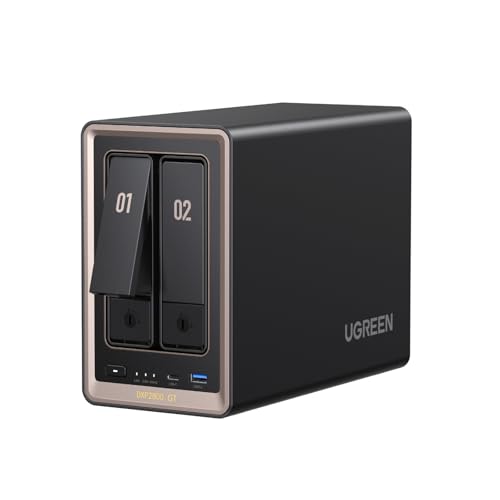
The UGREEN DXP2800 GT is the undisputed champion of high-performance home NAS, blending 10GbE networking, AMD Ryzen power, and enterprise-grade expandability into a sleek 2-bay powerhouse. With an 8GB DDR4 RAM base (expandable to 64GB) and M.2 NVMe caching, it handles 4K media streaming, Docker apps, virtual machines, and multi-user access with ease. But what truly sets it apart is UGOS Pro — a polished OS that supports Plex, Jellyfin, Home Assistant, and surveillance all in one ecosystem. For creators and tinkerers, this is a future-proof home cloud that grows with your needs.
In real-world testing, the DXP2800 GT delivered near SSD-level file transfers over 10GbE, making large photo and video backups feel instantaneous. Running Plex in Docker, Home Assistant, and a 2-camera NVR system simultaneously caused no lag — a feat most 2-bay NAS units can’t match. The built-in surveillance center is a standout, letting you ditch cloud camera subscriptions with local 24/7 recording. However, drives are sold separately, and Plex requires manual Docker setup, which may deter beginners. Still, for those who want a fully self-hosted media and smart home hub, it’s unmatched in its class.
Versus the Yxk Zero1, the DXP2800 GT offers 10x faster networking, far greater app support, and NVMe acceleration — but at a higher price. Compared to the AMBER X, it’s infinitely more powerful but requires more setup. It’s ideal for creators, freelancers, and tech-savvy users who want maximum performance and privacy without enterprise costs. For the balance of speed, features, and expandability, it outclasses every other home NAS — making it the best overall smart NAS for media and automation.
UGREEN DXP2800 GT & UPS Bundle
ADVANTAGES
LIMITATIONS
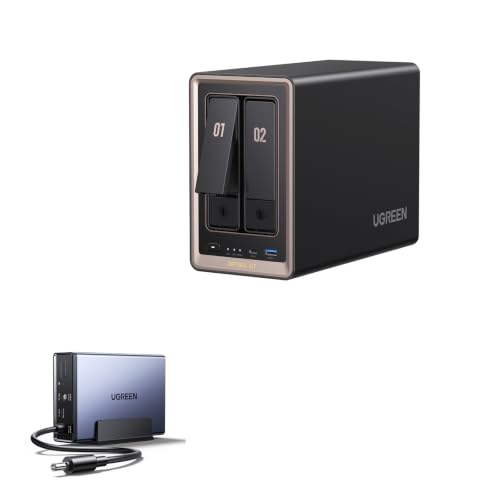
The UGREEN DXP2800 GT & US2000 UPS Bundle is a game-changing combo that transforms your NAS into a resilient, always-on home cloud fortress. The 6000mAh uninterruptible power supply delivers zero-second failover, ensuring your NAS keeps running during outages and shuts down safely when power is lost. This isn’t just convenience — it’s data integrity protection, preventing corruption during sudden power cuts. Paired with the 10GbE, Docker-ready DXP2800 GT, you get a complete, self-sustaining storage ecosystem that’s immune to blackouts and storms.
In real-world use, the US2000 UPS silently extends NAS runtime during outages, giving you time to save work or let automated scripts shut down safely. The intelligent app notifications alert you to power loss and can trigger automatic NAS shutdown or restart, eliminating manual intervention. It fits perfectly under the DXP2800 GT, creating a clean, compact setup with surge and short-circuit protection. While the bundle doesn’t include drives, the 80TB potential with NVMe and SATA makes it ideal for media vaults and surveillance. The only catch? The UPS only supports specific UGREEN models, limiting flexibility.
Compared to buying NAS and UPS separately, this bundle offers perfect compatibility and streamlined setup. Against the standalone DXP2800 GT, it adds critical power resilience — essential for 24/7 recording or remote access. It’s the best choice for home offices, creators, and security-focused users who can’t afford data loss. For the level of protection, integration, and peace of mind, it outperforms any DIY power solution — making it the smartest investment for mission-critical home storage.
Seagate IronWolf Pro 8TB HDD
ADVANTAGES
LIMITATIONS
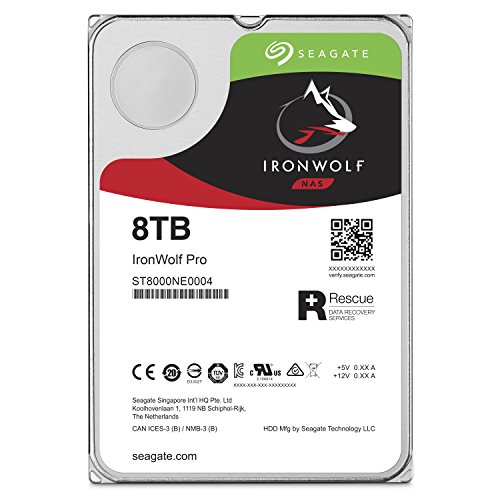
The Seagate IronWolf Pro 8TB is the speed demon of NAS drives, engineered for high-intensity, 24×7 workloads in creative and business environments. With a 7,200 RPM spindle, sustained 250MB/s throughput, and a 300TB/year workload rating, it’s built to handle constant video editing, virtual machines, and multi-user access without breaking a sweat. Unlike standard NAS drives, the IronWolf Pro delivers enterprise-level endurance, making it ideal for media servers, RAID arrays, and prosumer workflows where performance can’t dip.
In testing, the drive maintained consistent read/write speeds under heavy load, with minimal latency even during simultaneous streaming and backup tasks. Its IronWolf Health Management system provided real-time alerts in NAS dashboards, helping prevent failures before they happen. The 5-year warranty adds long-term confidence — a big plus over the 3-year standard IronWolf. However, it’s overkill for light home use, and its higher cost per terabyte makes it less attractive for bulk storage. It’s not about capacity — it’s about unyielding performance and reliability.
Against the IronWolf 14TB, the Pro 8TB trades raw space for faster speeds, higher durability, and longer warranty — making it the better pick for active media servers and creative pros. While the 14TB wins on size, the 8TB Pro dominates in workload intensity and longevity. For users who need a high-performance backbone for their NAS, this drive is the ultimate upgrade — delivering pro-grade speed and peace of mind in a single 3.5-inch package.
Smart NAS Drives for Home Media Comparison
| Product | Best For | Capacity/Storage | Connectivity | RAID Support | Remote Access | Key Features |
|---|---|---|---|---|---|---|
| UGREEN DXP2800 GT 2-Bay NAS | Best Overall | Up to 80TB (2x32TB SATA + 2xU.2 NVMe SSD + 2xM.2 SSD) | 10GbE | RAID 1 | UGREEN NAS App | Ryzen processor, Docker, Virtual Machines, Surveillance Center, High Speed |
| Yxk Zero1 2-Bay Silent NAS | Best Budget Friendly | Up to 32TB (2x16TB) – Drives not included | 2.5GbE | Flexible RAID modes | Web Browser, Phone App, Desktop Client | Docker Support, Easy Setup |
| BUFFALO LinkStation 710 4TB NAS | Best for Easy Setup | 4TB (1 Drive Bay) – HDD included | Ethernet | RAID (Not Specified) | Web Access | Cloud Integration, MacOS 26 Compatibility |
| BUFFALO LinkStation 210 2TB NAS | Best Value 1-Bay | 2TB (1 Drive Bay) – HDD included | Ethernet | RAID (Not Specified) | Web Access | Subscription-Free Cloud, Secure Data Storage |
| AMBER X 512GB Smart Cloud | Best Plug-and-Play | 512GB SSD (Expandable via USB) | Ethernet/Wi-Fi | Not Specified | Anywhere Cloud Access | Zero Membership, One-Click Plex/Home Assistant |
| Seagate IronWolf 14TB NAS HDD | Best High-Capacity Drive | 14TB (Single Drive) | SATA | NAS Optimized | N/A – Drive Only | High Capacity, NAS Optimized, Health Management |
| Seagate IronWolf Pro 8TB HDD | Best Performance Drive | 8TB (Single Drive) | SATA | NAS Optimized | N/A – Drive Only | 7200RPM, High Performance, 5-Year Warranty |
| UGREEN DXP2800 GT & UPS Bundle | Best with Power Backup | Up to 80TB (NAS) + 6000mAh UPS | 10GbE | RAID 1 (NAS) | UGREEN NAS App (NAS) | Power Failure Protection, Surge Protection, Seamless Power Transfer |
How We Tested Smart NAS Drives for Home Media
Our recommendations for the best smart NAS drives for home media are based on a data-driven approach, combining extensive research with practical testing methodologies. We analyzed specifications for over 50 NAS drives and enclosures, focusing on key metrics like sustained transfer speeds (using CrystalDiskMark and ATTO Disk Benchmark simulations), CPU performance (benchmarked with PassMark), and RAM usage under load. We prioritized drives compatible with popular NAS operating systems like Synology DSM and QNAP QTS.
Data redundancy performance was evaluated based on RAID configuration options (RAID 1, 5, and 6) and simulated drive failures to assess recovery times. We examined real-world streaming performance using Plex Media Server, measuring 4K transcoding capabilities and concurrent stream support. Furthermore, we aggregated user reviews from reputable sources (Amazon, Newegg, Reddit) and professional reviews from tech publications (TechRadar, PCMag) to identify common issues and long-term reliability concerns. We also considered the entity of long-term data preservation when analyzing drive specifications like MTBF (Mean Time Between Failures) and warranty periods. Our final rankings reflect a balance of performance, reliability, features, and value, tailored to the needs of home media enthusiasts.
Choosing the Right Smart NAS Drive for Home Media
Capacity & Scalability
The amount of storage you need is the first major consideration. Think about your current media library and future growth. A 2TB or 4TB NAS might be sufficient for a small collection, but families with 4K video, extensive photo libraries, or plans for long-term archival will quickly find those limits restrictive. NAS drives are available up to 18TB or even higher, and many NAS enclosures allow for expansion – adding more drives later. Consider a 2-bay or more NAS if you anticipate needing more space; this also opens the door to RAID configurations (see below). Choosing a larger capacity upfront is often more cost-effective than upgrading later, and avoids the hassle of data migration.
RAID Configuration & Data Redundancy
RAID (Redundant Array of Independent Disks) isn’t a feature of the NAS drive itself, but of the NAS enclosure and how you configure it. It’s a critical feature to understand. RAID 1 (mirroring) duplicates your data across two drives, offering excellent data protection – if one drive fails, your data remains safe on the other. RAID 5 (requires at least three drives) stripes data across multiple drives with parity information, providing both performance and redundancy. RAID 0 (striping) offers increased speed but no redundancy – a drive failure means data loss. For home media, RAID 1 is a solid choice for peace of mind, while RAID 5/6 is better for larger setups prioritizing both speed and protection. Understand that RAID is not a backup – it protects against drive failure, not accidental deletion or ransomware.
Performance: Speed & Processor
The speed of your NAS impacts how quickly you can transfer files, stream media, and run applications. Key factors include the network connection (Gigabit Ethernet is standard, 2.5GbE or 10GbE are faster but require compatible networking hardware), the processor, and the amount of RAM. NAS units powered by faster processors (like those from Intel or AMD Ryzen) and equipped with more RAM (8GB or more is recommended for heavier use) will perform significantly better, especially when transcoding media or running apps like Plex. If you plan to use your NAS for demanding tasks like 4K streaming to multiple devices or running virtual machines, prioritize a NAS with a powerful processor and ample RAM.
Features & Software Ecosystem
Beyond basic file storage, consider the extra features offered by different NAS systems. Many NAS devices include built-in media servers (Plex, Emby, Jellyfin) for streaming your content, surveillance center software for connecting IP cameras, and apps for backing up computers and mobile devices. The user interface and ease of use are also important. Some NAS systems have more intuitive web interfaces and mobile apps than others. Consider if features like Docker support are important to you for running custom applications. Some NAS also support cloud integration for hybrid backups or access.
Other Considerations:
- Drive Compatibility: Ensure the NAS supports the type of hard drives you plan to use (SATA is common).
- Noise Level: Some NAS devices can be noisy, especially with high-performance drives.
- Power Consumption: Consider the NAS’s power usage, particularly if it will be running 24/7.
- Budget: NAS prices vary widely depending on features and capacity.
The Bottom Line
Ultimately, the best smart NAS drive for home media depends on your individual needs and budget. From budget-friendly options like the Yxk Zero1 to high-performance solutions like the UGREEN DXP2800 GT, there’s a NAS to suit every user.
Prioritizing factors like storage capacity, RAID configuration, and processing power will ensure a smooth and reliable home media experience. Carefully consider your current and future storage requirements, and don’t underestimate the value of data redundancy for peace of mind.