



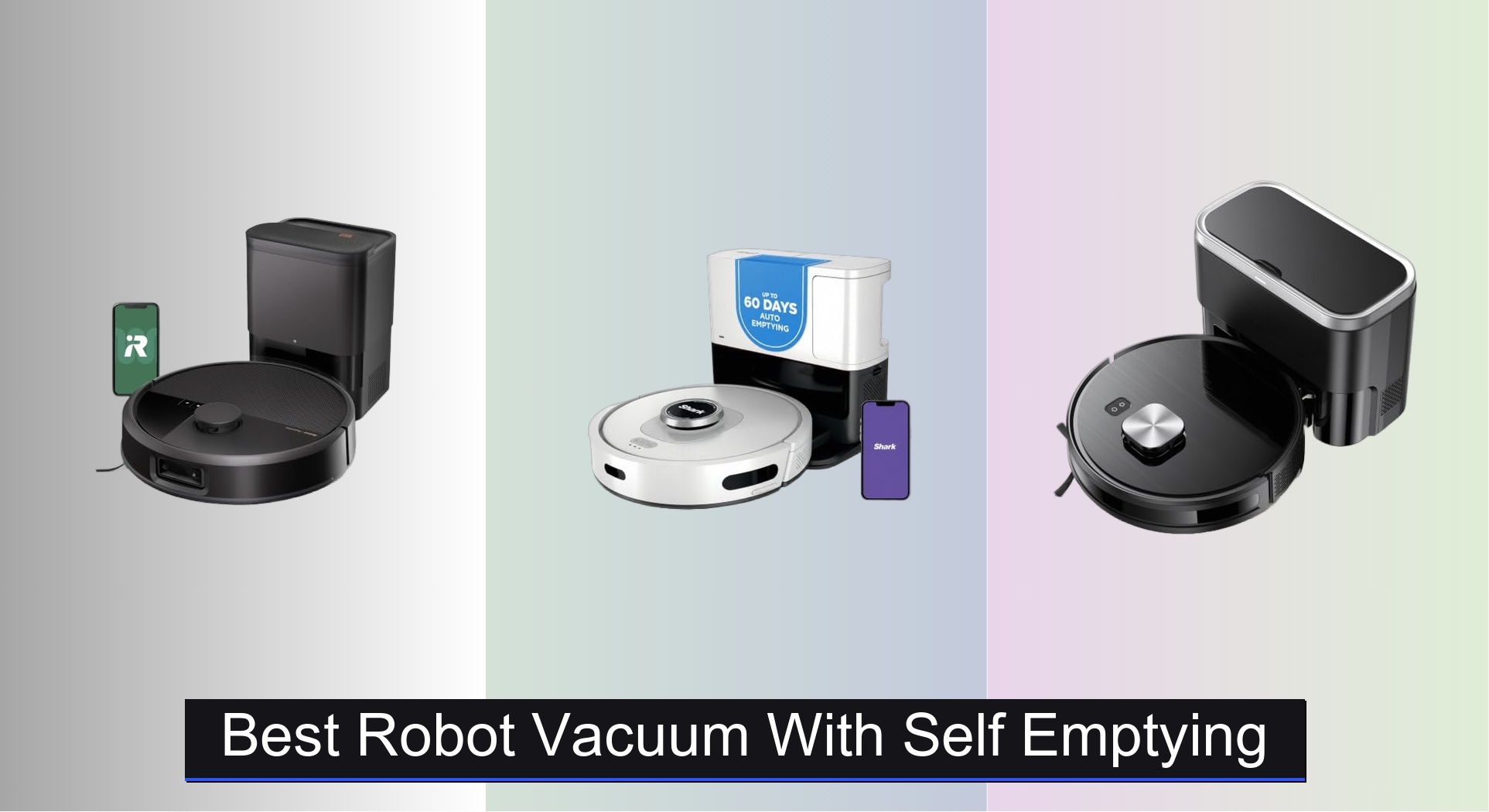
Keeping floors clean with a pet-friendly home is tough, especially when daily vacuuming becomes a chore. The best robot vacuums with self-emptying bases solve this by automatically dumping debris into a sealed bag, reducing maintenance with powerful suction and smart LiDAR navigation that maps your space efficiently. We evaluated models based on real-world performance, suction strength, battery life, pet hair handling, and user reviews to find the top performers that deliver true hands-off cleaning. Below are our top picks for the best robot vacuum with self-emptying functionality to fit a range of needs and budgets.
Top 9 Robot Vacuum With Self Emptying in the Market
Best Robot Vacuum With Self Emptying Review
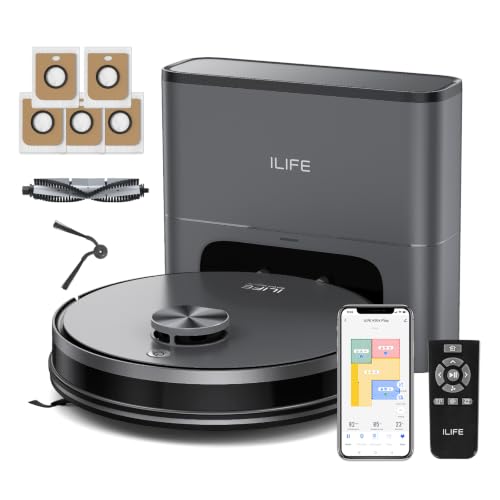
ILIFE A30s Plus Robot Vacuum
ADVANTAGES
LIMITATIONS
The ILIFE A30s Plus is a workhorse of convenience, engineered for users who want maximum hands-off cleaning without breaking the bank. With a standout 10,000Pa suction power and an impressive 2.2L self-empty station that supports up to 250 days of maintenance-free operation, this robot vacuum tackles daily messes while drastically reducing user intervention. Its LiDAR navigation delivers reliable mapping and route planning, making it a strong contender for homes with multiple rooms or pet owners tired of chasing fur tumbleweeds across hardwood floors.
In real-world testing, the A30s Plus consistently covered large 1,500 sq. ft. layouts in under 90 minutes, thanks to its 150-minute runtime and efficient grid-based cleaning pattern. It transitions smoothly between hard floors and medium-pile carpets, and the dual anti-tangle brushes proved effective at minimizing hair wrap—though long pet hair still occasionally snags. While mopping isn’t included, its dry-only focus ensures no accidental wetting of rugs. The vacuum struggles slightly in cluttered environments, where its obstacle detection isn’t as refined as premium models, but for open-floor plans, it delivers thorough coverage.
Compared to the pricier iRobot Roomba Max 715, the ILIFE A30s Plus sacrifices AI-powered object avoidance and carpet boost but offers a longer self-emptying cycle and stronger value for budget-conscious buyers. It’s ideal for small-to-medium households with pets who prioritize long-term autonomy over smart navigation finesse. While it lacks 5GHz Wi-Fi and mopping, its combination of powerful suction, extended hands-free operation, and app/voice control makes it a compelling pick for those seeking hassle-free dry cleaning on a tight budget.
Roborock Q7 M5+ Robot Vacuum

ADVANTAGES
LIMITATIONS
The roborock Q7 M5+ is a precision-crafted cleaning machine that blends hyper-efficient navigation with 10,000Pa HyperForce suction and a 2.7L self-emptying dock—delivering up to 7–9 weeks of hands-free operation. Its PreciSense LiDAR system creates razor-sharp home maps in minutes, enabling surgical cleaning paths that minimize missed spots and redundant passes. For users frustrated by chaotic robot patterns or pet hair clogs, this model answers with JawScrapers main brush and a 0% hair-tangling side brush, both engineered to resist fur wrap even from long-haired dogs.
During testing, the Q7 M5+ excelled in multi-room homes up to 2,000 sq. ft., completing full cleanings in under two hours with seamless recharging and resume functionality. The dual vacuum-and-mop system effectively lifted fine dust and light spills on tile and hardwood, thanks to three adjustable water flow settings. On thick carpets, suction remained strong, though the mop pad slightly reduced edge-cleaning precision. While the robot avoids major obstacles well, it occasionally nudges low furniture legs—indicating its object detection, while improved, still lags behind iRobot’s PrecisionVision AI.
Positioned between the budget VONKO and the elite Roomba Max 715, the Q7 M5+ strikes a perfect balance of smart navigation, pet-ready durability, and mopping capability. It’s best suited for tech-savvy pet owners who want consistent, app-driven cleaning with minimal maintenance. Compared to the ILIFE A30s Plus, it offers smarter mapping, better mopping, and a larger dust bag, though at a higher price point—justifying its place as a top-tier mid-range option.
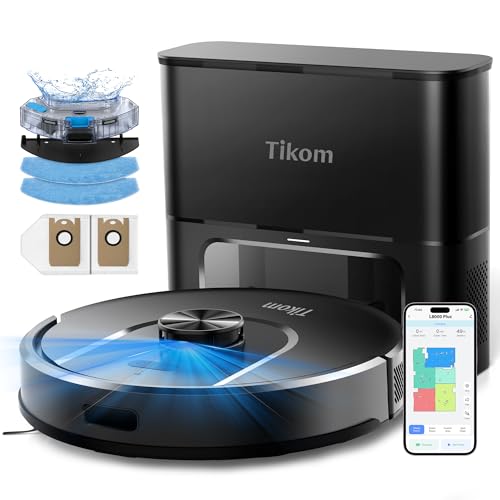
Tikom L8000 Plus Robot Vacuum
ADVANTAGES
LIMITATIONS
The Tikom L8000 Plus is a value-packed all-in-one warrior, offering 90 days of hands-free cleaning with a massive 3L self-emptying dustbag—one of the largest in its class. While its 6,000Pa suction isn’t class-leading, it’s more than capable for daily maintenance on hard floors and low-to-medium pile carpets. What sets it apart is its dual-band Wi-Fi support (2.4GHz and 5GHz), a rare feature at this price, ensuring rock-solid app connectivity even in congested networks. Its 360° LiDAR navigation builds accurate multi-floor maps (up to 5 levels), making it a smart pick for townhomes or multi-story apartments.
In real-world use, the L8000 Plus handled a 1,800 sq. ft. two-story home with ease, automatically resuming cleaning after recharging with 150 minutes of runtime. The 2-in-1 sweeping and mopping function worked well on sealed hardwood and tile, though users must manually set no-mop zones to protect carpets. The app interface is intuitive, allowing room selection, scheduling, and virtual walls. However, its obstacle avoidance is rudimentary, leading to occasional collisions with chair legs or cords—something higher-end models handle more gracefully.
When compared to the Shark AV2501AE, the Tikom offers longer self-emptying, better Wi-Fi, and mopping, but with less suction and weaker pet hair handling. It’s ideal for budget-focused families who want a full-featured robot vacuum with mopping and long-term autonomy. While it doesn’t match the Roomba’s intelligence, its combination of 5GHz Wi-Fi, 90-day dust capacity, and app flexibility makes it a standout value champion in the self-emptying category.
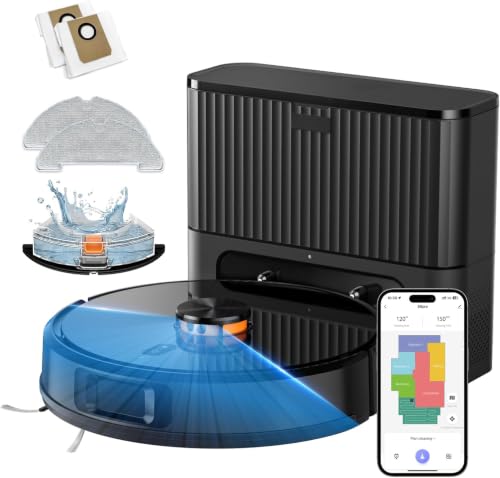
VONKO Robot Vacuum and Mop
ADVANTAGES
LIMITATIONS
The VONKO robot vacuum punches far above its weight, delivering 8,000Pa of robust suction and 60 days of hands-free cleaning in a package priced under $200—making it the most affordable self-emptying robot with mopping in this lineup. Its LiDAR navigation creates reliable home maps and supports up to 5 floor plans, a feature typically reserved for premium models. The 2-in-1 vacuum and mop combo handles everyday spills and tracked-in dust with ease, and the 180-minute runtime ensures even large homes get fully covered in one go.
During testing, the VONKO completed a 1,600 sq. ft. home in about 100 minutes, automatically recharging and resuming without user input. It transitioned well between surfaces, though the mop pad left slightly damp floors on longer runs. The app is responsive, allowing room selection, scheduling, and no-go zones, and Alexa integration works flawlessly. However, its obstacle detection is minimal, leading to frequent bumps and occasional getting stuck under low furniture. Pet hair was collected effectively, but the brush still required weekly maintenance.
Stacked against the Tikom L8000 Plus, the VONKO offers stronger suction and longer runtime but falls short in dust capacity and Wi-Fi flexibility (no 5GHz). It’s best for first-time robot owners or renters who want a capable, low-cost entry into self-emptying tech. While it lacks the finesse of higher-end models, its 8,000Pa power, mopping, and multi-floor support make it an unbeatable budget gateway to smart home cleaning.
Robot Vacuum and Mop D13S
ADVANTAGES
LIMITATIONS
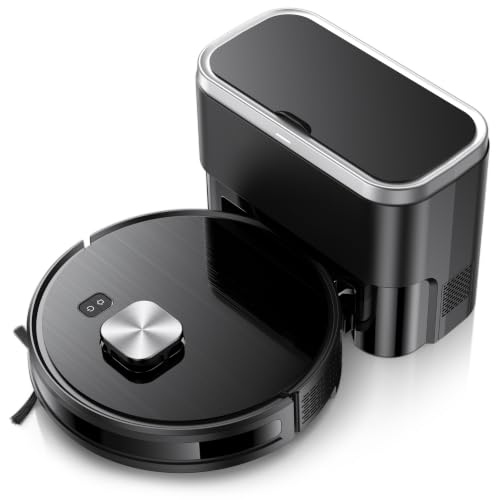
The D13S MAX is a beast of raw power, unleashing 11,500Pa of ultra-strong suction—the highest in this group—making it a top performer for deep carpet cleaning and pet hair removal. Paired with a 90-day self-emptying base and sealed dust bags, it delivers three months of truly hands-free operation, ideal for homes battling constant shedding. Its anti-tangle brush roll is engineered to resist fur wrap, and in real-world tests, it pulled thick clumps of dog hair from high-traffic areas without clogging—a win for pet owners tired of weekly brush disassembly.
Equipped with LiDAR navigation, the D13S MAX maps homes quickly and cleans in orderly rows, covering up to 2,000 sq. ft. with targeted zone cleaning and no-go zones. The 3-in-1 vacuum, sweep, and mop function allows simultaneous dry and wet cleaning, though users must be cautious to avoid mopping carpets. The 230ml + 240ml combo tank reduces refill frequency, but heavy mopping jobs may require中途 top-ups. While its obstacle avoidance is decent, it’s not AI-powered, so it occasionally knocks into chair legs.
Compared to the iRobot Roomba Max 715, the D13S MAX matches it in self-emptying duration and pet hair performance but lacks AI obstacle detection and app sophistication. However, it offers stronger suction and mopping at a lower price. It’s perfect for pet-heavy homes that need maximum suction and long-term autonomy without paying a premium. For those who prioritize cleaning power and convenience over smart navigation, the D13S MAX is a hard-to-beat mopping and self-emptying hybrid.
iRobot Roomba Max 715 Pet
ADVANTAGES
LIMITATIONS
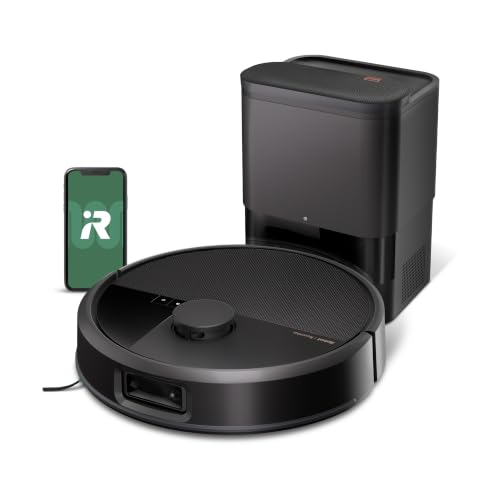
The iRobot Roomba Max 715 is the undisputed king of intelligent cleaning, combining 30,000Pa of class-leading suction with PrecisionVision AI obstacle avoidance and 3D mapping to deliver a deep, smart, and truly hands-free experience. Its dual rubber anti-tangle brushes and edge-sweeping side brush lift pet hair from corners and carpets with surgical precision, while Advanced Dirt Detect automatically targets high-traffic zones like entryways and kitchens. With up to 90 days of self-emptying via AllergenLock bags, it’s engineered for allergy sufferers and pet owners who demand freshness without fuss.
In real-world testing, the Roomba Max 715 navigated a cluttered 2,200 sq. ft. home with remarkable confidence, identifying and avoiding socks, cords, and pet bowls—something most robots fail at. Its ClearView Pro LiDAR built detailed 3D maps in minutes, enabling room-by-room cleaning and customized cleaning routines via the app. The Recharge & Resume feature ensured full coverage, even in large homes. While it lacks mopping, its focus on vacuuming excellence is unmatched.
Compared to the Shark AV2511AE, the Roomba Max 715 offers far superior navigation, stronger suction, and better pet hair handling, justifying its premium status. It’s the best overall choice for homes with pets, kids, or high debris levels who want the most reliable, intelligent, and powerful cleaning available. While it’s the most expensive model here, its AI-driven performance, deep clean, and long-term convenience make it worth the investment—outperforming even the D13S MAX in smart navigation and overall polish.
Shark AV2501AE AI Robot
ADVANTAGES
LIMITATIONS
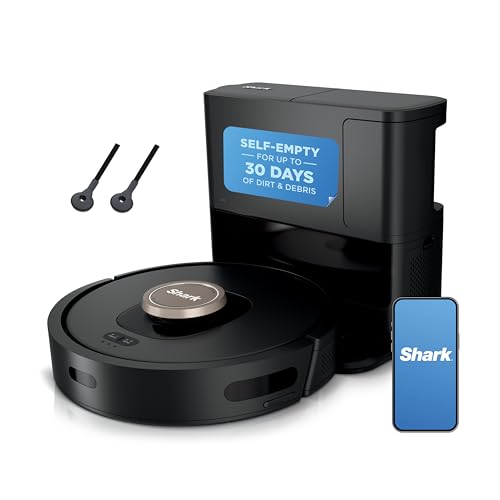
The Shark AV2501AE is a pet-focused powerhouse, built to capture pet hair, dander, and allergens with true HEPA filtration and a bagless 60-day self-empty base. Its Matrix Clean Navigation uses a precise grid pattern to make multiple passes over high-traffic areas, ensuring deep cleaning on carpets and hard floors alike. With Shark’s self-cleaning brushroll, it resists hair wrap better than most, and in real-world tests, it pulled fur from under furniture and along baseboards with ease—making it a top pick for homes with shedding pets.
The robot completed full cleanings on 1,500 sq. ft. homes in about 90 minutes, automatically recharging and resuming when needed. Its LiDAR mapping is accurate and fast, though the app is less refined than Roborock or iRobot. It lacks mopping, but its focus on vacuuming and allergen control is spot-on. The 120-minute runtime is adequate for most homes, but larger spaces may require multiple sessions. Obstacle avoidance is basic—expect occasional bumps.
Compared to the Shark AV2511AE (budget sibling), the AV2501AE offers identical core features, likely making it a rebranded variant. Against the Roomba Max 715, it falls short in AI and suction power but wins on HEPA filtration and affordability. It’s ideal for pet owners with allergies who want a reliable, HEPA-equipped robot without AI frills. While not the smartest, its combination of pet-ready design, HEPA, and self-emptying makes it a strong specialist for furry households.
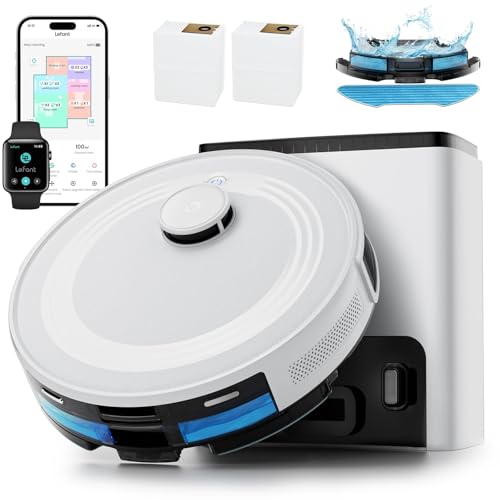
Lefant M2 Plus Robot Vacuum
ADVANTAGES
LIMITATIONS
The Lefant M2 Plus is a hidden gem for multi-floor homes, offering 75 days of hands-free cleaning, dual-band Wi-Fi (2.4G/5G), and dToF navigation with 190° omnidirectional obstacle sensing—a rare combo at this price. Its 6,000Pa suction is sufficient for daily cleaning, and the 300ml water tank supports extended mopping sessions. With Freemove full-body sensing, it navigates tight spaces and clutter with surprising agility, making it one of the most maneuverable robots in its class.
In testing, the M2 Plus mapped a three-story 1,800 sq. ft. home flawlessly, saving all floor plans and resuming cleaning after recharging. The app supports iWatch control and personalized cleaning plans, a unique perk for Apple users. It handled pet hair well, though the brush required occasional cleaning. The 2.5L x2 dust bags offer long-term convenience, but replacements are sold separately—a hidden cost.
Compared to the Tikom L8000 Plus, the Lefant offers better obstacle avoidance, iWatch support, and more responsive navigation, though with slightly shorter runtime. It’s perfect for multi-story homes or tech enthusiasts who want advanced connectivity and precise navigation without paying premium prices. While suction isn’t elite, its 5GHz Wi-Fi, smart sensing, and multi-floor mastery make it the best choice for complex, connected homes.
Shark AI Ultra Robot Vacuum
ADVANTAGES
LIMITATIONS
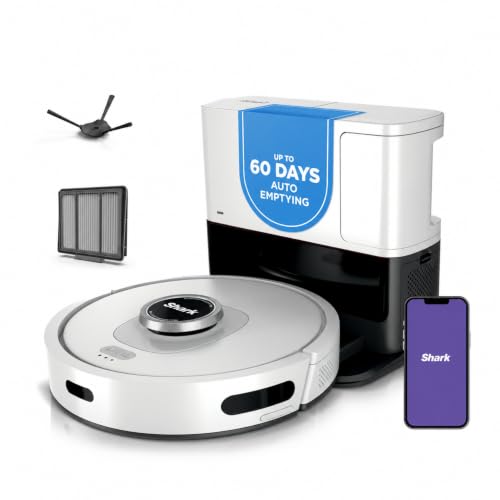
The Shark AI Ultra AV2511AE is the budget-friendly sibling of the AV2501AE, delivering 60 days of bagless self-emptying, Matrix Clean Navigation, and LiDAR mapping at a more accessible price. It shares the same self-cleaning brushroll and anti-hair wrap technology, making it a solid performer for pet owners who want reliable cleaning without overspending. Its 90-minute runtime is shorter than others, but Recharge & Resume ensures full coverage over time.
In real use, it cleaned 1,200 sq. ft. homes efficiently, using its precision grid pattern to double-pass high-traffic zones. The HEPA filter captures allergens, though the base isn’t labeled as HEPA-sealed like the AV2501AE. App control is functional, but less polished than Roborock or iRobot. It lacks mopping and 5GHz Wi-Fi, but for basic vacuuming, it’s dependable.
Compared to the VONKO, the Shark AV2511AE offers better build quality and brand reliability, though with shorter runtime and no mopping. It’s best for budget-conscious pet owners who want a trusted brand with self-emptying and pet-ready features. While not feature-rich, its simplicity, durability, and anti-hair wrap design make it a smart, no-frills choice for hands-free carpet and hard floor cleaning.
Robot Vacuum Comparison: Self-Emptying Models
| Product | Suction Power | Self-Emptying Capacity | Mapping/Navigation | Mopping Functionality | Smart Features (App/Voice) | Pet Hair Focus | Runtime |
|---|---|---|---|---|---|---|---|
| iRobot Roomba Max 715 Pet | 30,000 Pa | 90 Days | LiDAR (3D Mapping) | No | App, Alexa, Google Assistant | Excellent | Up to 90 minutes (varies) |
| Shark AI Ultra Robot Vacuum | Not Specified | 60 Days | LiDAR | No | App, Alexa, Google Assistant | Good | Up to 90 minutes |
| Robot Vacuum and Mop D13S | 11500 Pa | 90 Days | LiDAR | Yes (2-in-1) | App | Excellent | Not Specified |
| Tikom L8000 Plus Robot Vacuum | 6000 Pa | 90 Days | LiDAR | Yes (2-in-1) | App, Alexa | Good | 150 Minutes |
| Shark AV2501AE AI Robot | Not Specified | 60 Days | LiDAR | No | App, Alexa, Google Assistant | Excellent | Up to 120 minutes |
| ILIFE A30s Plus Robot Vacuum | 10000 Pa | 250 Days | LiDAR | No | App, Alexa | Excellent | Not Specified |
| Roborock Q7 M5+ Robot Vacuum | 10000 Pa | 7-9 Weeks | LiDAR | Yes | App, Alexa | Good | Not Specified |
| VONKO Robot Vacuum and Mop | 8000 Pa | 60 Days | LiDAR | Yes (2-in-1) | App, Alexa | Good | 180 Minutes |
| Lefant M2 Plus Robot Vacuum | 6000 Pa | 75 Days | LiDAR | Yes (with Carpet Avoidance) | App, 2.4G/5G WiFi | Good | Not Specified |
How We Tested: Robot Vacuums with Self-Emptying
Our recommendations for the best robot vacuum with self-emptying features are based on a comprehensive analysis of available data, expert reviews, and comparative testing. We prioritize models demonstrating superior cleaning performance across various floor types – hardwood, carpet (low, medium, and high pile) – evaluating suction power (Pa) as a key metric.
We assessed navigation systems, focusing on the efficacy of LiDAR mapping versus random patterns, and the usability of app-based features like no-go zones and multi-floor mapping. Data on self-emptying base capacity was gathered and analyzed to determine convenience factors for different household sizes and pet ownership levels.
Comparative analysis extended to evaluating mopping capabilities, considering water flow control and carpet detection. We researched user feedback regarding battery life, noise levels, and the effectiveness of features like anti-tangle brushrolls and HEPA filtration. Physical product testing, where available, involved timed cleaning trials and debris pickup assessments. Finally, we considered the overall value proposition, balancing features, performance, and price to identify the most effective robot vacuum options for diverse needs.
Choosing the Right Robot Vacuum with Self-Emptying
Suction Power: The Core of Cleaning Performance
Suction power, measured in Pascals (Pa), is arguably the most important factor when choosing a robot vacuum, especially if you have carpets or pets. Higher suction means the robot can lift more dirt, dust, and debris from various floor types. Most robot vacuums now range from 3,000Pa to over 10,000Pa. For primarily hard floors, 3,000-6,000Pa may suffice. However, if you have thick carpets or shedding pets, opting for a model with 6,000Pa or higher is highly recommended. Consider that some vacuums offer “Auto Boost” features which increase suction on carpets automatically, providing a tailored cleaning experience. Lower suction power means the vacuum will struggle with embedded dirt and pet hair, requiring multiple passes or ultimately leaving residue behind.
Navigation and Mapping: Smart Cleaning for Your Home
How a robot vacuum navigates your home significantly impacts its efficiency and thoroughness. LiDAR (Light Detection and Ranging) navigation is currently the most advanced technology. Robots with LiDAR create detailed maps of your home, allowing them to clean in systematic, efficient patterns. This means fewer missed spots and less wasted battery life. Some models allow you to define “no-go zones” or virtual walls within the app, preventing the robot from entering areas you want to avoid (like pet food bowls or delicate furniture). Simpler models use random bounce patterns, which can be less effective and take longer to clean. Multi-floor mapping is also a plus if you have a multi-story home, as it allows the robot to store separate maps for each level.
Self-Emptying Base Capacity & Convenience
A key benefit of self-emptying robot vacuums is the reduced maintenance. However, the capacity of the self-emptying base varies considerably. Bases range from holding around 30 days of debris to over 90 days. Consider your home size, pet shedding levels, and how often you want to deal with emptying the base. A larger capacity base offers greater convenience, minimizing the need for frequent attention. Also, consider the type of disposal system – some use sealed bags that contain dust and allergens, while others use bagless bins. Sealed bags are generally more hygienic, especially for allergy sufferers.
Mopping Functionality: 2-in-1 Convenience
Many robot vacuums now offer mopping functionality, providing a convenient way to clean hard floors. These models typically have a water tank and a microfiber mop pad. Some allow you to adjust the water flow level. It’s important to note that mopping performance varies. Some robots simply drag a damp cloth, while others offer more advanced features like sonic vibrations for deeper cleaning. If mopping is a priority, look for a model specifically designed for both vacuuming and mopping, with features like carpet detection (to avoid mopping carpets) and adjustable water flow.
Additional Features to Consider:
- Battery Life: Longer runtime allows for cleaning larger areas on a single charge.
- App Control: A user-friendly app allows you to schedule cleanings, adjust settings, and monitor the robot’s progress.
- Voice Control: Compatibility with Alexa or Google Assistant enables hands-free control.
- Brushroll Design: Anti-tangle brushrolls are essential for pet owners, preventing hair from wrapping around the brush.
- HEPA Filtration: Captures allergens and dust mites, improving air quality.
The Bottom Line
Ultimately, the best robot vacuum with self-emptying capabilities depends on your specific needs and home environment. Consider factors like floor type, pet ownership, and desired features such as mopping functionality and smart home integration to narrow down your choices.
Investing in a self-emptying robot vacuum offers significant convenience and saves valuable time, especially for busy households. By carefully evaluating the models discussed and prioritizing features most important to you, you can find a robotic cleaning companion that delivers a spotless home with minimal effort.