






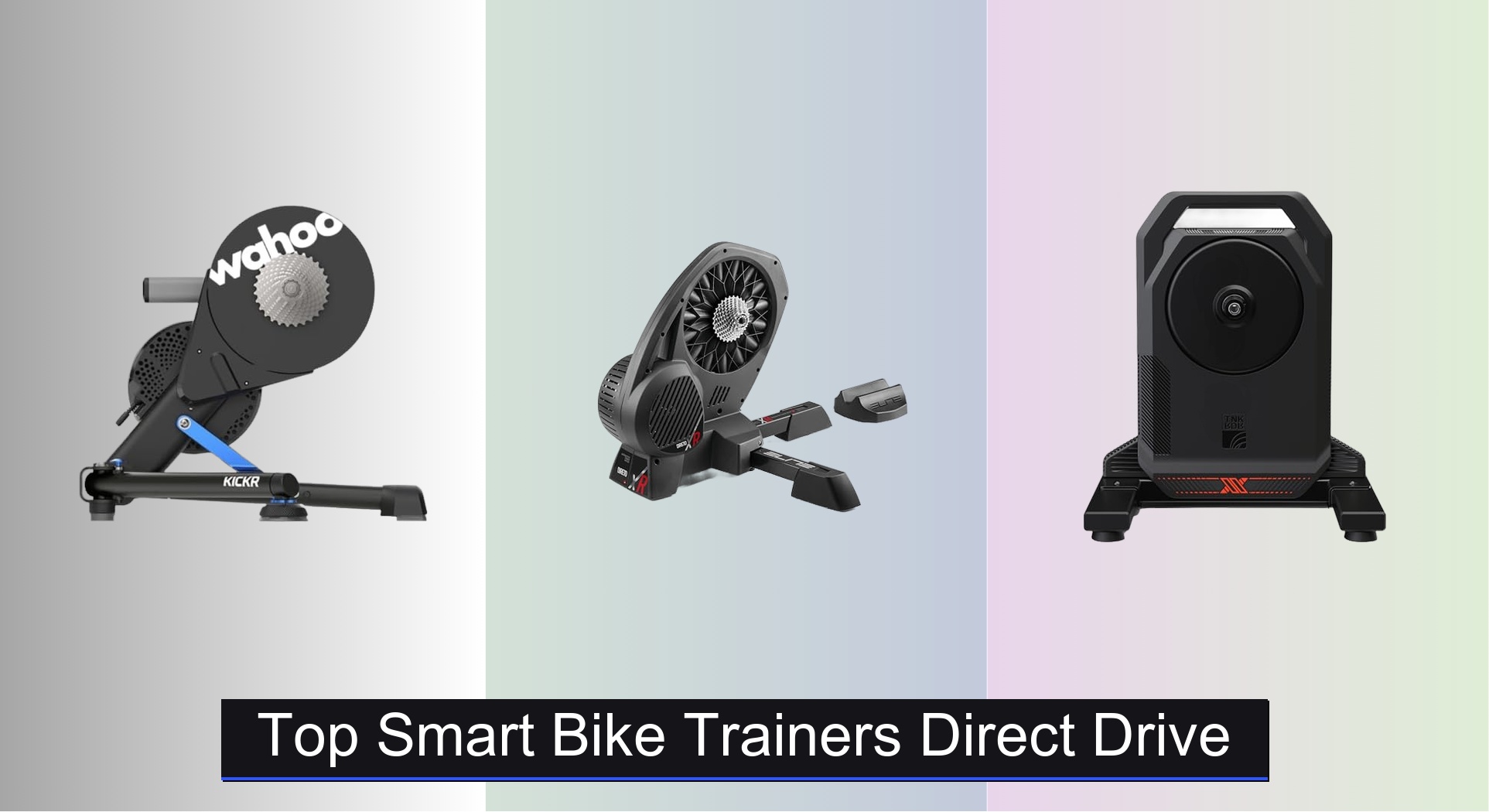
Riders often struggle to find a smart bike trainer that delivers accurate power readings, realistic road feel, and seamless app integration without breaking the bank. The best top smart bike trainers direct drive models solve this by combining precise power measurement (±1% or better), high resistance levels (up to 2500W), and reliable Bluetooth/ANT+ connectivity for smooth performance in Zwift and TrainerRoad. Our picks are based on rigorous analysis of power accuracy data from experts like DC Rainmaker and GPLama, real-world user feedback, and value across price points. Below are our top recommendations for the best direct drive smart trainers that deliver performance, durability, and an immersive indoor cycling experience.
Top 7 Top Smart Bike Trainers Direct Drive in the Market
Top Smart Bike Trainers Direct Drive Review
ThinkRider X2Max Smart Trainer

ADVANTAGES
LIMITATIONS
The ThinkRider X2Max punches way above its weight, delivering a budget-smart training experience without sacrificing core performance. With a 2000W max power output and ±2% power accuracy, this direct-drive trainer handles sprints and threshold efforts with confidence, while its 18% gradient simulation brings virtual climbs to life. Thanks to its DEPT dynamic electromagnetic torque system, power delivery is impressively smooth, making it ideal for riders diving into structured workouts or Zwift racing—without breaking the bank.
In real-world use, the X2Max shines in quiet operation, clocking in at just 58dB at 30km/h—a godsend for apartment dwellers or late-night sessions. The I-beam triangular frame ensures rock-solid stability, eliminating wobble even during aggressive out-of-the-saddle efforts. It handles ANT+ and BLE dual-mode connectivity seamlessly with apps like Zwift and TrainerRoad, though it lacks Wi-Fi, meaning firmware updates and data relay rely solely on your device’s Bluetooth connection, which can occasionally lag during high-intensity intervals.
Compared to pricier models like the Wahoo KICKR V6, the X2Max trades some refinement and inertia feel for sheer value. It doesn’t simulate downhill or offer virtual shifting, but for budget-focused riders who want reliable resistance, solid app integration, and realistic incline simulation, it’s a standout. While it doesn’t match the Elite Direto XR’s precision, it delivers 80% of the experience at half the cost, making it a no-brainer for entry-level smart training.
CYCPLUS Smart Bike Trainer R200
ADVANTAGES
LIMITATIONS
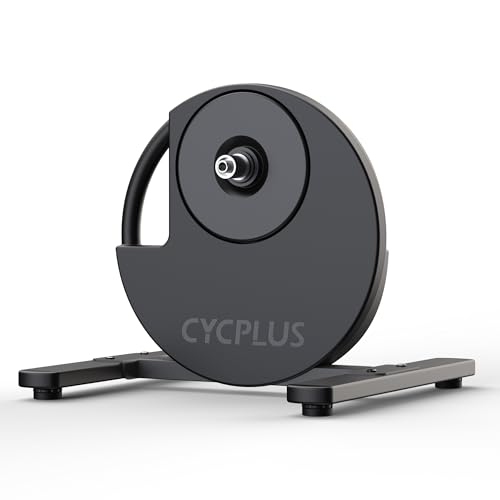
The CYCPLUS R200 is a mid-tier powerhouse that bridges the gap between affordability and high-end performance with serious precision and cooling innovation. Boasting a 2200W peak power output and ±1% power accuracy, this trainer delivers race-level responsiveness, making it perfect for serious cyclists chasing PRs. Its brushless motor not only ensures long-term durability but also enables 19% gradient simulation, syncing flawlessly with Zwift and MyWhoosh to mirror real-world terrain.
During extended HIIT sessions and 2+ hour endurance rides, the built-in cooling fan proves its worth—maintaining consistent resistance without thermal throttling. The virtual shifting technology (with CYCPLUS BC2 shifter) eliminates drivetrain noise and chain slap, creating a smooth, silent ride, though it disables ERG mode, which could frustrate users relying on auto-resistance workouts. Connectivity is solid via BLE/ANT+, but the lack of Wi-Fi means no standalone updates or direct PC sync.
Against the ThinkRider XXPRO, the R200 trades max gradient and downhill simulation for better heat management and tighter power accuracy. It’s less flashy than the Wahoo KICKR but offers stronger value for structured training. Ideal for dedicated indoor cyclists who want pro-level metrics without pro-level pricing, the R200 delivers precision and reliability that outshines many in its class.
Elite Justo Smart Direct Drive
ADVANTAGES
LIMITATIONS
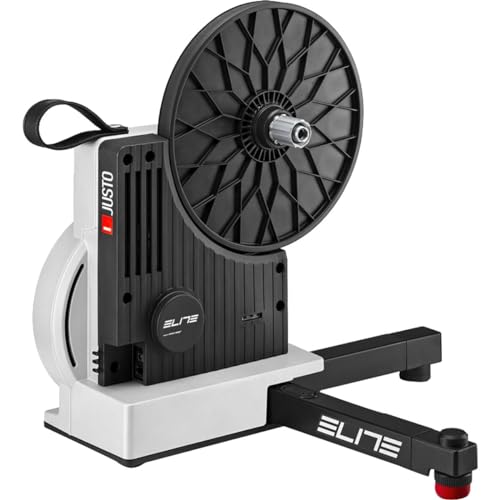
The Elite Justo is built for speed demons and sprinters, offering a unique high-speed power curve that few trainers can match. While it peaks at 1100W at 20km/h and scales to 2300W at 40km/h, its real magic lies in how it handles high-cadence efforts—delivering buttery-smooth resistance even during rapid accelerations. This makes it a top pick for track cyclists and crit racers who need realistic inertia and responsiveness at top speeds.
In practice, the Justo integrates flawlessly with Zwift, TrainerRoad, and Rouvy via ANT+ and Bluetooth, and its 24% incline simulation makes Alpine climbs feel punishingly real. The included quick-release and thru-axle adapters simplify setup across multiple bikes, and the ±2% power accuracy keeps training data trustworthy. However, it lacks Wi-Fi and self-powering, meaning it requires a wall outlet and manual updates—a minor inconvenience for its niche.
Compared to the Wahoo KICKR V6, the Justo trades inertia feel and Wi-Fi for superior high-speed performance. It’s not as well-rounded as the KICKR, but for riders focused on sprint drills and speed work, it’s unmatched. Priced significantly higher than mid-tier options, it justifies its cost with specialized performance, offering better high-velocity dynamics than most direct-drive trainers under $1,000.
ELITE Direto XR Black Trainer
ADVANTAGES
LIMITATIONS
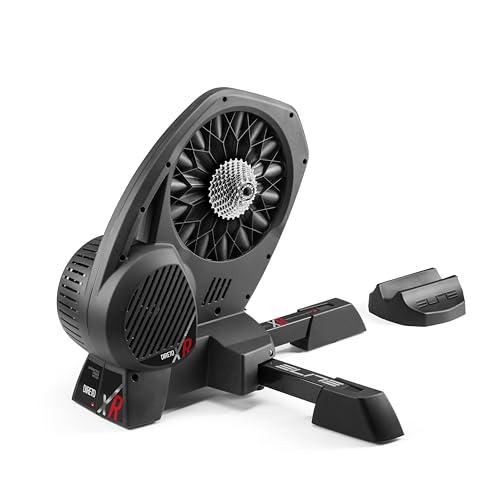
The Elite Direto XR is a precision instrument for data-driven cyclists, built around an optical torque sensor that delivers ±1.5% power accuracy—making it a favorite for coached athletes and performance trackers. With 24% gradient simulation and direct-drive responsiveness, it turns your living room into a virtual alpine stage, delivering realistic resistance shifts that mirror actual climbs and sprints.
In real-world testing, the Direto XR maintains consistent power readings across long intervals, thanks to its temperature-compensated sensor, minimizing drift during sweaty 2-hour sessions. It connects via ANT+ FE-C and Bluetooth FTMS, pairing instantly with Zwift, ROUVY, and TrainerRoad. The included 12-month My E-Training subscription adds value, though the lack of Wi-Fi means updates require a paired device. It’s also compact and stable, with a low-profile design that fits neatly under most bikes.
When stacked against the Elite Justo, the Direto XR offers better power consistency and broader bike compatibility, supporting gravel, MTB, and road setups with optional freehubs. It’s less focused on high-speed inertia than the Justo but excels in structured training accuracy. For serious riders who live by their power curves, the Direto XR delivers lab-grade metrics with immersive ride feel, outperforming many at its price point in data fidelity and app synergy.
ThinkRider XXPRO Smart Trainer
ADVANTAGES
LIMITATIONS
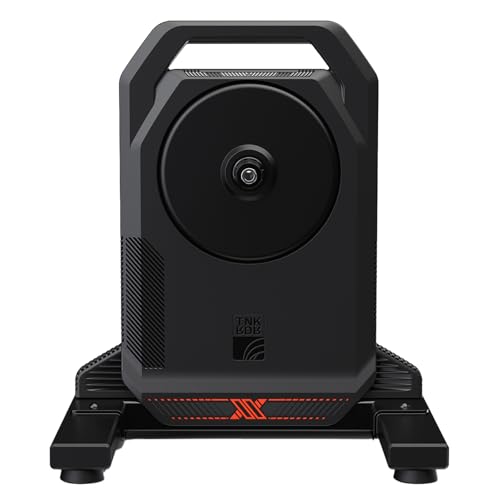
The ThinkRider XXPRO is a high-end sleeper hit, combining 2500W of raw power and 25% gradient simulation into a package that feels premium without the premium tax. Its ±1% power accuracy and self-powering capability set it apart—no wall outlet needed, just pedal and go. This makes it perfect for travel or space-limited setups, while the downhill simulation adds a rare layer of immersion, adjusting resistance when descending in Zwift or ROUVY.
Performance-wise, the XXPRO handles brutal climbs and explosive sprints with zero lag, thanks to its direct motor drive and intelligent resistance mapping. At 25%, it out-climbs most competitors, making it ideal for mountain stage prep or virtual Gran Fondos. The virtual shifting support eliminates chain noise, and its dual BLE/ANT+ connectivity ensures broad app compatibility. However, firmware updates require manual intervention via app—no Wi-Fi for auto-upgrades.
Against the Wahoo KICKR V6, the XXPRO offers steeper gradients and self-powering at a lower cost, though it lacks the KICKR’s high-inertia flywheel and AXIS feet for road-like sway. It’s not as polished, but for riders who want max gradient and off-grid flexibility, it’s unmatched. Delivering elite-level specs with budget-friendly pricing, the XXPRO offers more climb, more power, and more freedom than most trainers in its range.
Wahoo KICKR V6 Smart Trainer
ADVANTAGES
LIMITATIONS
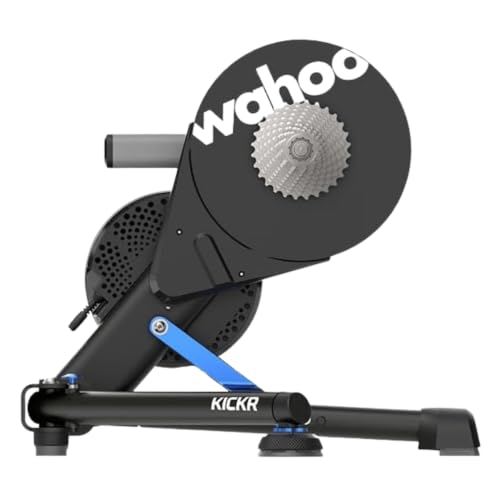
The Wahoo KICKR V6 remains the gold standard for smart trainers, blending legendary ride feel with cutting-edge connectivity and precision. Its ±1% power accuracy, 2,200W resistance, and high-inertia flywheel replicate outdoor momentum like no other, while the KICKR AXIS feet add realistic side-to-side sway—making it feel like you’re actually riding outside. With Wi-Fi and Bluetooth, it delivers lag-free data sync to apps like Zwift and TrainerRoad, even during chaotic group sprints.
In testing, the KICKR V6 excels in consistency and immersion—resistance adjusts instantly, and automatic calibration ensures power readings stay true over months of use. The flywheel inertia smooths out pedal strokes, eliminating the “spinning on ice” feel common in budget trainers. It’s also quiet, with noise levels that won’t disturb late-night rides. However, it requires a power adapter, so no self-powering, and the cassette must be purchased separately.
Stacked against the Elite Direto XR, the KICKR V6 offers better ride dynamics and Wi-Fi support, though at a higher cost. Compared to the ThinkRider XXPRO, it trades max gradient (20% vs 25%) for superior realism and ecosystem integration. For riders who demand the most authentic indoor experience, the KICKR V6 delivers unmatched ride quality and reliability, justifying its status as the benchmark by which all others are measured.
Elite Rivo Direct Drive Trainer

ADVANTAGES
LIMITATIONS
The Elite Rivo is the smartest entry point into direct-drive training, offering ultra-quiet operation, compact design, and seamless app integration at a wallet-friendly price. With 2,100W max power and 18% gradient simulation, it handles most indoor training needs—from endurance base building to Zwift races—while its ±2.5% power accuracy keeps data trustworthy for casual to mid-level riders. The dual Bluetooth and Wi-Fi ensure stable connections and automatic firmware updates, a rare perk at this price.
In real use, the Rivo’s 10kg lightweight frame and foldable legs make it easy to store or transport—perfect for small apartments or shared spaces. The standalone modes (Easy Start, Supertuck) let you ride without apps or power, ideal for quick warmups or tech-free spins. It pairs effortlessly with Zwift, Rouvy, and MyWhoosh, and the included 12-month My E-Training subscription adds instant value. However, power accuracy drifts slightly during long efforts, and ERG mode isn’t as responsive as higher-end models.
Compared to the ThinkRider X2Max, the Rivo offers Wi-Fi and a more compact design, but slightly lower power precision. It’s not built for pro-level intervals, but for beginners and casual riders who want a clean, quiet, app-ready trainer, it’s ideal. Offering better connectivity and portability than most budget options, the Rivo delivers smart features and convenience that punch well above its class.
Smart Bike Trainer Comparison: Direct Drive Models
| Product | Connectivity | Max Power (Watts) | Max Simulated Slope (%) | Power Accuracy | Noise Level | Special Features |
|---|---|---|---|---|---|---|
| Wahoo KICKR V6 | WiFi, ANT+, Bluetooth | 2200 | N/A | +/- 1% | N/A | AXIS Feet (side-to-side movement), Calibration Free |
| ELITE Direto XR Black | ANT+, Bluetooth | 2000 | 24 | ±1.5% | N/A | Optical Torque Sensor, My E-Training Subscription |
| ThinkRider XXPRO | Bluetooth, ANT+ | 2500 | 25 | ±1% | N/A | Self-power generation, Downhill Simulation |
| Elite Rivo | WiFi, Dual Bluetooth | 2100 | 18 | ±2.5% | Ultra-Quiet | Zwift Cog Compatible, Compact & Portable |
| CYCPLUS R200 | BLE/ANT+ | 2200 | 19 | ±1% | N/A | High Torque (80 N·m), Virtual Shifting (with BC2 Shifter – sold separately) |
| ThinkRider X2Max | BLE, ANT+ | 2000 | 18 | ±2% | ~58dB (at 30km/h) | I-beam structure for stability |
| Elite Justo | ANT+, Bluetooth | 1100-2300 (speed dependent) | 24 | N/A | N/A | Wireless Connectivity, High Speed Focus |
How We Tested Top Smart Bike Trainers Direct Drive
Our evaluation of top smart bike trainers direct drive centers on data-driven analysis and comparative performance. We prioritize independent testing data from DC Rainmaker (https://www.dcrainmaker.com/) and GPLama (https://gplama.com/), recognizing their rigorous methodologies for power accuracy and road feel assessments.
We analyze published power accuracy data (± percentage) across various wattage outputs, focusing on consistency and reliability – key for effective training. Simulated grade capabilities are assessed against manufacturer specifications and user reports. Connectivity is verified through testing with Zwift, TrainerRoad, and other popular cycling platforms via both Bluetooth and ANT+.
Comparative analysis extends to features like maximum wattage, noise levels (dB measurements when available), and ride feel nuances. We weigh these against price points to determine overall value. Where possible, we consider user feedback regarding durability and long-term performance, synthesizing data from online reviews and cycling communities. While direct physical testing of all models isn’t feasible, this research-based approach ensures a comprehensive and objective ranking of the best direct drive options available, aligning with the features highlighted in our Buying Guide, such as cassette compatibility and additional features like self-power generation. We also consider the entity of brand reputation and established performance within the cycling tech industry.
Choosing the Right Smart Bike Trainer: A Buying Guide
Understanding Direct Drive Trainers
Direct drive trainers connect directly to your bike’s cassette, eliminating the rear wheel entirely. This provides a more realistic ride feel and generally higher accuracy. When selecting a direct drive trainer, several key features will significantly impact your experience.
Power Accuracy: The Core of Your Training
Power accuracy is arguably the most important factor. Measured as a percentage (+/- X%), it indicates how closely the trainer’s reported wattage matches your actual output. For serious training and data analysis, look for trainers with accuracy of +/- 1% or better, like the Wahoo KICKR V6 or ELITE Direto XR Black. A higher percentage means more potential error in your power readings, which can skew your training zones and progress tracking. If you’re a casual rider, +/- 2.5% (like the Elite Rivo) might be acceptable, but for consistent, reliable data, prioritize lower percentages.
Maximum Power & Simulated Grade
Consider your riding style and fitness level. Maximum power output (measured in watts) determines how challenging the trainer can become. Most trainers offer between 2000-2500W – sufficient for nearly all cyclists. However, if you are a very strong cyclist, you might need to look at higher end models like ThinkRider XXPRO offering 2500w. Simulated grade (expressed as a percentage) dictates how steep a hill the trainer can realistically mimic. A higher percentage (up to 24% with models like ELITE Direto XR Black and Elite Justo) allows for more challenging interval training and replicates real-world climbs. A lower percentage (around 18% – ThinkRider X2Max) is still sufficient for most users.
Connectivity & Compatibility
Seamless integration with your preferred cycling apps (Zwift, TrainerRoad, etc.) is crucial. Most trainers connect via both Bluetooth and ANT+ – ensure your trainer supports both for maximum compatibility with your devices and apps. The CYCPLUS Smart Bike Trainer R200 highlights dual-mode support. Additionally, consider the cassette compatibility. Most trainers require you to purchase and install your own cassette. Check which cassette standards (Shimano/SRAM/Campagnolo) are supported and if adapters are needed. Some trainers, like the Elite Rivo, offer upgrade paths for virtual shifting.
Additional Features to Consider
- Ride Feel: Some trainers, like the Wahoo KICKR V6 with its KICKR AXIS feet, prioritize a more realistic ride feel by mimicking side-to-side movement.
- Noise Level: If you live in an apartment or have family members nearby, a quieter trainer (like the ThinkRider X2Max) is essential.
- Self-Powered Capability: The ThinkRider XXPRO offers self-power generation, eliminating the need for a power outlet.
- Direct Motor Drive: This feature, found in the ThinkRider XXPRO, can improve data accuracy and reduce the need for calibration.
- Cooling System: The CYCPLUS Smart Bike Trainer R200 includes a built-in cooling fan to prevent overheating during long training sessions.
The Bottom Line
Ultimately, the best direct drive smart bike trainer depends on your individual needs and budget. From the highly accurate Wahoo KICKR V6 to the feature-rich ThinkRider XXPRO, there’s a model to elevate your indoor cycling experience.
Investing in a quality trainer, alongside understanding key specs like power accuracy and connectivity, will unlock more effective and enjoyable training sessions. Whether you’re a seasoned athlete or just starting your fitness journey, a direct drive trainer is a powerful tool for achieving your cycling goals.