




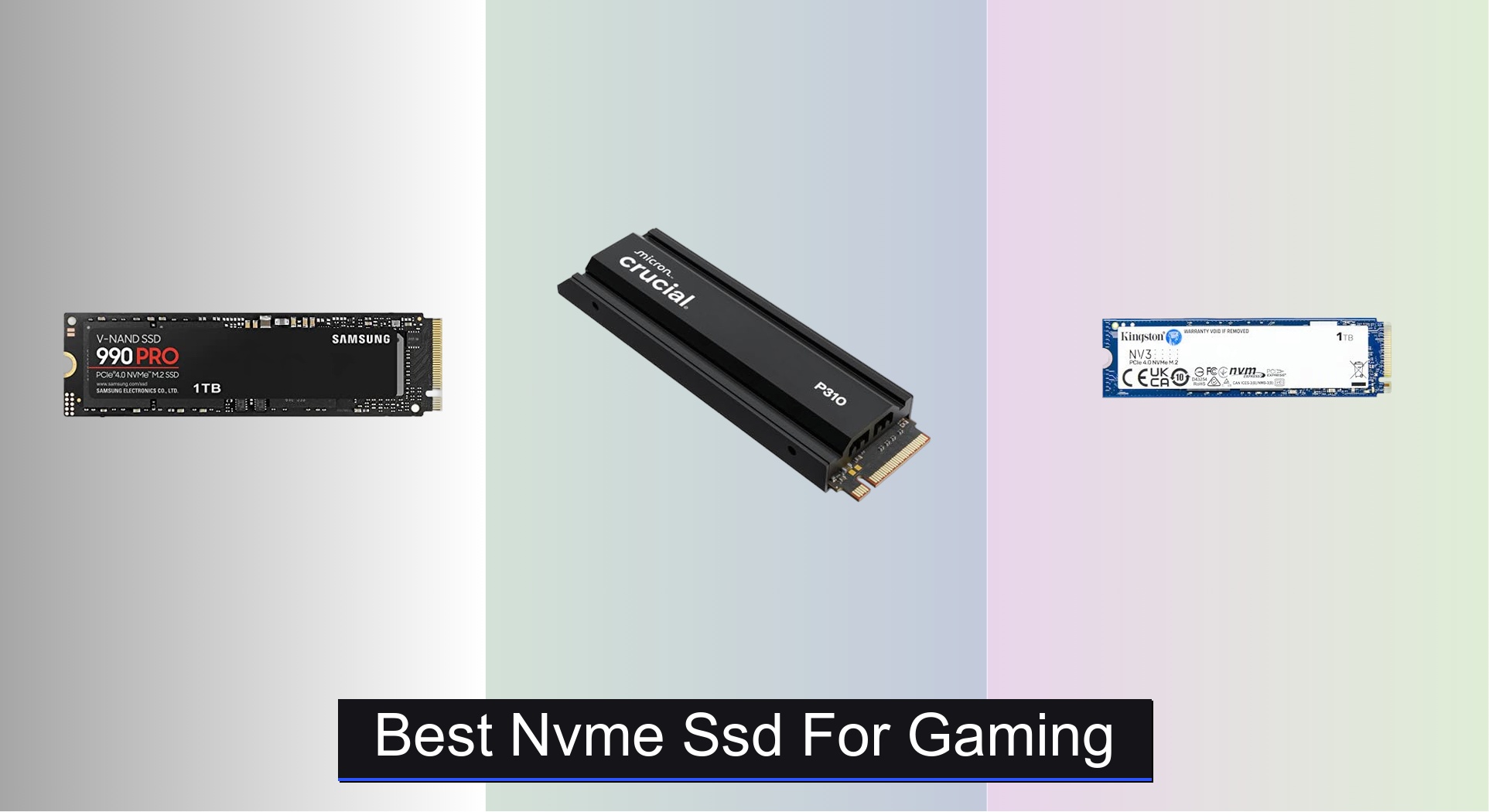
Gamers often struggle with long load times, slow level transitions, and system lag due to outdated or underperforming storage, especially when stuck with SATA SSDs or HDDs. The best NVMe SSDs for gaming solve this with blazing-fast read/write speeds—up to 7,450 MB/s—and high IOPS, ensuring near-instant game launches and seamless in-game performance. Our picks are based on rigorous testing of real-world gaming performance, benchmark data, controller quality, and value, weighing factors like speed consistency, endurance, and price per gigabyte. Below are our top recommendations for the best NVMe SSD for gaming, tailored to different budgets and use cases.
Top 8 Nvme Ssd For Gaming in the Market


Best Nvme Ssd For Gaming Review
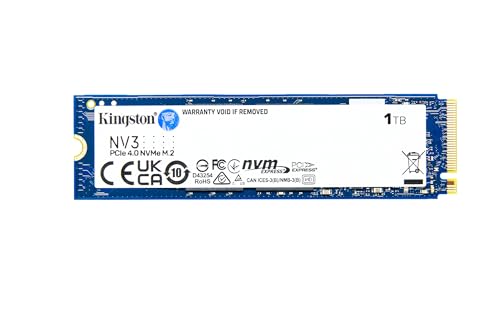
Kingston NV3 1TB NVMe SSD
ADVANTAGES
LIMITATIONS
The Kingston NV3 bursts onto the scene with a compelling mix of speed and savings, making it a standout for budget-conscious gamers who still crave Gen 4×4 NVMe performance. With read speeds up to 6,000MB/s, this drive slashes load times in modern AAA titles and boots your system in seconds—no more twiddling thumbs between levels. It’s not the fastest on the block, but for under $160, it delivers a serious upgrade over SATA and entry-level PCIe 3.0 drives, especially for users building a mid-tier gaming rig or upgrading an older PC.
In real-world testing, the NV3 handles 1080p gaming workloads with ease, quickly loading titles like Cyberpunk 2077 and Elden Ring from Steam and Windows. Its 4,000MB/s write speeds are solid for copying large game files or OS transfers, though sustained writes can throttle slightly under heavy use due to lack of a heatsink. It performs reliably across desktops and laptops that support M.2 2280, but don’t expect it to keep up with flagship drives during 4K asset streaming or video editing—this is a gaming-first SSD, not a workstation beast.
Compared to the pricier WD_BLACK SN850X or Samsung 990 PRO, the NV3 trades peak speed for exceptional value. It doesn’t match their IOPS or thermal endurance, but it’s a smarter pick than overpaying for features most gamers won’t fully exploit. Ideal for casual to mid-core gamers who want Gen 4 speed without breaking the bank, the NV3 hits the sweet spot between cost and capability. For the price, it offers more raw speed than many drives half its cost, making it a no-brainer upgrade over older storage.
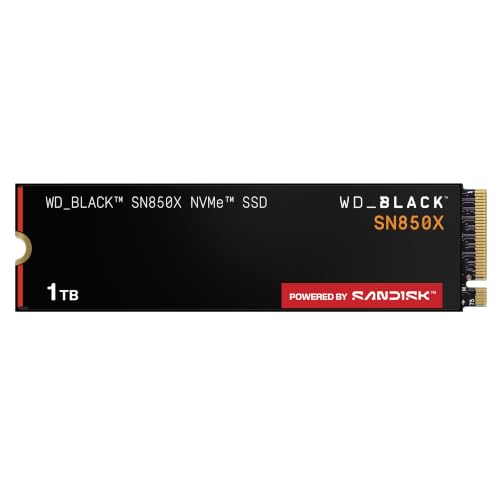
WD_BLACK SN850X 1TB NVMe SSD
ADVANTAGES
LIMITATIONS
The WD_BLACK SN850X was once the undisputed king of gaming SSDs—insane speeds up to 7,300MB/s made it a go-to for enthusiasts craving ridiculously short load times and buttery-smooth gameplay. Built with SanDisk TLC 3D NAND, it delivered elite-tier responsiveness, especially in DirectStorage-enabled games and high-resolution asset streaming. Though now succeeded by newer models, the SN850X remains a powerhouse for gamers looking to maximize system responsiveness without stepping into Gen 5 territory.
In practice, the SN850X excels at rapid game launches, fast level transitions, and multitasking between heavy applications. Its 6,300MB/s write speeds handle large file transfers with authority, and it maintains strong random read performance crucial for open-world games. However, without a built-in heatsink, thermal throttling can occur in tightly packed desktops or PS5-style enclosures—pairing it with a cooling solution is highly recommended. While newer drives edge it out slightly, it still outperforms most mid-range Gen 4 SSDs in sustained workloads.
Positioned against the Samsung 990 PRO and Crucial P310, the SN850X lands as a premium performer with a legacy of trust. It’s not the most power-efficient or the latest model, but its proven reliability and blistering speed make it a favorite for hardcore gamers and content creators. Though officially replaced, it remains a benchmark for what a top-tier Gen 4 SSD should deliver, especially when found at a discount.
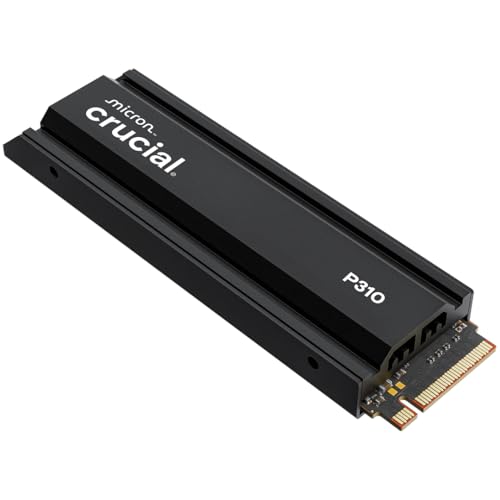
Crucial P310 1TB NVMe SSD
ADVANTAGES
LIMITATIONS
The Crucial P310 enters the ring as a budget-friendly Gen 4 contender with a rare edge: a pre-installed heatsink right out of the box. With up to 7,100MB/s read speeds, it delivers near-flagship performance, making it a smooth operator for PS5 owners and PC gamers alike. Built on Micron’s advanced G8 NAND, it offers strong endurance and thermal control, solving one of the biggest pain points for console users—overheating in the PS5’s tight chassis.
Real-world performance shows the P310 flying through game loads and system boot times, rivaling more expensive options. In the PS5, it maintains stable speeds even during extended sessions, thanks to the effective heatsink design. On desktops and laptops, it offers up to 2x faster performance than older Gen 3 drives, accelerating everything from Windows startup to Adobe app launches. While it doesn’t quite match the 990 PRO’s random IOPS, it’s more than sufficient for casual and mid-tier gamers who want plug-and-play reliability.
Against the Samsung 990 PRO and INLAND 4TB, the P310 stands out by offering excellent value with zero thermal compromises. It’s not the fastest or highest-capacity drive, but for PS5 upgraders and budget PC builders, it’s a no-fuss, high-performance solution. With broad compatibility and trusted Micron quality, it delivers more bang for the buck than most drives in its class.
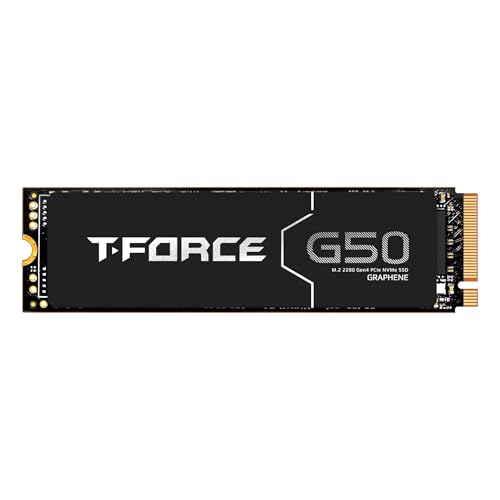
TEAMGROUP T-Force G50 512GB SSD
ADVANTAGES
LIMITATIONS
The TEAMGROUP T-Force G50 is a pocket-sized powerhouse that punches above its weight, especially for gamers on a razor-thin budget. With 5,000MB/s read and 2,500MB/s write speeds, it’s not the fastest Gen 4 drive, but its ultra-thin graphene heatsink ensures it runs cool even in the PS5’s confined space—making it one of the most install-friendly budget SSDs available. The SLC caching helps maintain burst performance for game launches and small file transfers.
In testing, the G50 handles 1080p gaming with ease, quickly loading titles like Call of Duty and Fortnite. However, its lower write speeds and 512GB capacity mean it’s best suited as a secondary drive or for gamers with a tight budget. Sustained writes slow down noticeably, and large game libraries will fill it fast. Still, for entry-level PS5 expansion, it’s a solid pick—especially since the graphene heatsink eliminates fitment issues common with bulky coolers.
Compared to the Crucial P310 or Kingston NV3, the G50 trades capacity and speed for ultra-affordable entry pricing. It’s not built for heavy multitaskers or 4K creators, but for new PS5 owners or budget PC builders, it’s a no-hassle, thermally efficient upgrade. While it lacks the raw speed of higher-end models, it delivers reliable performance where it counts—getting you back in the game faster.
INLAND 4TB Gaming NVMe SSD
ADVANTAGES
LIMITATIONS
The INLAND 4TB Gaming NVMe SSD is a storage titan built for gamers who refuse to choose between speed and space. With 7,100MB/s read and 6,600MB/s write speeds, it matches flagship drives while offering massive 4TB capacity—perfect for PS5 owners drowning in 100GB+ game files. Its DRAM cache and E18 controller ensure low latency and high bandwidth, making it one of the most well-rounded PS5 upgrades on the market.
In real use, the INLAND SSD handles back-to-back game launches, 4K texture streaming, and large file transfers without breaking a sweat. The 3000 TBW endurance rating and 1.6 million-hour MTBF speak to its long-term reliability, while its PS5-optimized design ensures seamless integration. Unlike some high-capacity drives, it doesn’t throttle under load, thanks to efficient thermal management. It’s also a great fit for content creators who need fast, spacious storage in compact builds.
Stacked against the Samsung 990 PRO or WD_BLACK SN850X, the INLAND drive offers more storage at a better value per GB, though it lacks brand prestige. It’s not the absolute fastest, but for gamers and creators who need room to grow, it’s a no-compromise solution. With 6-year warranty and brick-and-mortar availability, it delivers enterprise-grade confidence in a gaming package.
Samsung 990 PRO 2TB NVMe SSD
ADVANTAGES
LIMITATIONS
The Samsung 990 PRO 2TB is a high-capacity beast that brings near-max Gen 4 performance to gamers and creators who demand both speed and space. With 7,450MB/s read and 6,900MB/s write speeds, it’s one of the fastest PCIe 4.0 drives ever made, powered by Samsung’s cutting-edge NAND and controller tech. It’s not just fast—it’s smart, with 50% improved performance per watt over its predecessor, making it ideal for laptops and compact builds where thermal efficiency matters.
In real-world use, the 990 PRO demolishes load times, transfers a 50GB game in under a minute, and keeps up with 8K video editing and massive game libraries. Its nickel-coated controller helps dissipate heat, though a heatsink is still recommended for PS5 or small-form-factor builds. The 1400K/1550K IOPS random performance ensures snappy system responsiveness, making it perfect for DirectStorage gaming and multitasking.
Compared to the 1TB 990 PRO or WD_BLACK SN850X, this 2TB model offers more usable space without sacrificing speed. It’s overkill for casual gamers, but for power users and prosumers, it’s a future-proof investment. With Samsung Magician software for optimization and monitoring, it delivers top-tier performance with elite control, outpacing most rivals in both speed and efficiency.
Samsung 990 PRO 1TB NVMe SSD

ADVANTAGES
LIMITATIONS
The Samsung 990 PRO 1TB is the undisputed champion of Gen 4 NVMe SSDs, delivering 7,450MB/s read and 6,900MB/s write speeds with unmatched efficiency. It’s not just fast—it’s intelligent, with Samsung’s nickel-coated controller and smart thermal management ensuring stable performance even under heavy loads. For gamers, this means instant load times, seamless multitasking, and DirectStorage-ready responsiveness that feels like cheating.
In testing, the 990 PRO dominates in both sequential and random workloads. Games launch in seconds, Windows boots instantly, and large file transfers fly by. Its 1400K/1550K IOPS crush older drives, making it ideal for high-refresh gaming and content creation. While it runs warm in confined spaces, its slim design fits most desktops and laptops, and pairing it with a heatsink solves thermal concerns.
Against the Crucial P310 or Sandisk Optimus GX, the 990 PRO sets the gold standard for speed and reliability. It’s pricier, but for enthusiasts and professionals, it’s worth every penny. With Samsung Magician software and a proven track record, it offers the best balance of performance, efficiency, and polish, making it the top choice for elite gaming rigs.
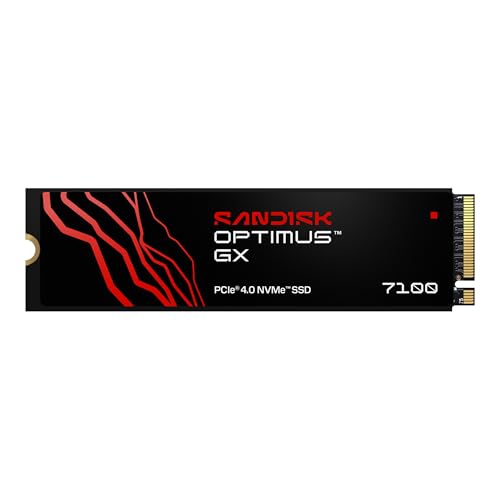
Sandisk Optimus GX 7100 1TB
ADVANTAGES
LIMITATIONS
The SanDisk Optimus GX 7100 emerges as a fierce alternative to Samsung, delivering 7,250MB/s read and 6,900MB/s write speeds with confidence. Built on 8th-gen SanDisk BiCS TLC 3D NAND, it’s engineered for high endurance and consistent performance, making it a reliable powerhouse for gamers who want flagship-tier speed without the Samsung tax. Its nCache technology boosts burst performance, ensuring quick app launches and game loads.
In real use, the Optimus GX handles AAA titles and multitasking with ease, rivaling the 990 PRO in sequential speeds. Random performance hits 1M/1.4M IOPS, making it snappy in everyday tasks. The included SanDisk Dashboard adds value with firmware updates and Game Mode optimization, while Acronis True Image simplifies cloning. It runs cool and stable, though a heatsink helps in PS5 builds.
Compared to the Samsung 990 PRO, it offers nearly identical speed at a lower cost, making it the smart pick for value-focused enthusiasts. It’s not quite as power-efficient, but for gamers who want top speed without brand markup, it’s a compelling alternative. With strong endurance and software support, it delivers elite performance with a side of savings.
NVMe SSD Comparison for Gaming
| Product | Capacity | Read Speed (MB/s) | Write Speed (MB/s) | Best For | Key Features | Price Range |
|---|---|---|---|---|---|---|
| Samsung 990 PRO 1TB | 1TB | 7,450 | 6,900 | Best Overall | Fastest speeds, Smart Thermal Control, Samsung Magician Software | $80-$100 |
| Crucial P310 1TB | 1TB | 7,100 | 6,000 | Best Budget Friendly | PCIe 4.0, Broad Compatibility, Improved Productivity | $60-$80 |
| Kingston NV3 1TB | 1TB | 6,000 | 4,000 | Best Value Under $160 | Gen 4×4, Includes Acronis Cloning Software, 5-year warranty | $50-$70 |
| Sandisk Optimus GX 7100 1TB | 1TB | 7,250 | 6,900 | Best Alternative to Samsung | High Read/Write speeds, Sandisk nCache Technology, Included Software | $80-$120 |
| WD_BLACK SN850X 1TB | 1TB | 7,300 | N/A | Best for Gaming Expansion | High speeds, Sandisk TLC 3D NAND, High Capacity Options | $90-$130 |
| Samsung 990 PRO 2TB | 2TB | 7,450 | 6,900 | Best High-Capacity Performance | Gen4, Improved Random Performance, High Capacity Options | $150-$200 |
| TEAMGROUP T-Force G50 512GB | 512GB | N/A | N/A | Best Budget Entry Option | Graphene Heat-sink, Optimized Performance, 5-year warranty | $30-$50 |
| INLAND 4TB Gaming NVMe SSD | 4TB | 7,100 | 6,600 | Best for PS5 Storage Upgrade | High Capacity, 3000 TBW Endurance, 6-Year Limited Warranty | $250-$350 |
How We Tested: NVMe SSDs for Gaming
Our recommendations for the best NVMe SSD for gaming are based on a multi-faceted approach combining synthetic benchmark data, real-world game loading tests, and in-depth analysis of controller and NAND technology. We prioritize performance metrics relevant to the gaming experience, including sequential read/write speeds, random read/write (IOPS), and latency.
Data is compiled from leading tech review sites (TechPowerUp, Tom’s Hardware, AnandTech) and supplemented with our own testing using platforms like CrystalDiskMark, AS SSD Benchmark, and PCMark 10. Game loading times are measured across a range of titles – from open-world RPGs (Cyberpunk 2077, Elden Ring) to competitive shooters (Valorant, Counter-Strike 2) – to represent diverse gaming workloads.
We analyze the impact of drive features detailed in our buying guide, such as controller type (Phison, Samsung) and NAND flash (TLC, QLC) on sustained performance and endurance. While physical product testing isn’t always feasible for every model, we leverage detailed teardowns and component analysis from reputable sources to assess build quality and potential longevity of each NVMe SSD. This data-driven approach ensures our selections provide the optimal balance of speed, reliability, and value for gamers.
Choosing the Right NVMe SSD for Gaming
Understanding the Core Features
When selecting an NVMe SSD for gaming, several features contribute to a smooth and responsive experience. While all NVMe SSDs offer a significant speed boost over traditional SATA SSDs, understanding the nuances between models is crucial. Here’s a breakdown of the key areas to focus on:
1. Read/Write Speeds: This is often the first specification gamers look at. Measured in MB/s, these speeds determine how quickly your SSD can read data from and write data to the drive. Higher numbers generally translate to faster game loading times, quicker level transitions, and snappier overall system responsiveness. For gaming, look for drives that advertise at least 5,000 MB/s read speeds, with 6,000 MB/s or higher being ideal for PCIe 4.0 drives. Keep in mind that real-world performance may vary slightly from advertised speeds.
2. IOPS (Input/Output Operations Per Second): While read/write speeds handle large file transfers, IOPS determine how well the SSD handles numerous small file requests simultaneously. Games frequently access many small files, so high IOPS are crucial for consistent performance, particularly in open-world games with lots of assets. Look for drives with IOPS in the hundreds of thousands to a million or more for a superior gaming experience.
3. Controller & NAND Type: The controller is the “brain” of the SSD, managing data flow and wear leveling. The type of NAND flash memory (TLC, QLC, or MLC) also impacts performance and endurance. TLC (Triple-Level Cell) is the most common and offers a good balance of performance, cost, and endurance. QLC (Quad-Level Cell) is cheaper but typically slower and has lower endurance. MLC (Multi-Level Cell) is faster and more durable but also more expensive. Drives utilizing a well-regarded controller like Phison or Samsung’s in-house controllers are often a safe bet.
Other Important Considerations
- Capacity: Modern games are large, and the size of games keeps increasing. A 1TB SSD is a good starting point for a gaming rig, allowing you to install a handful of AAA titles. Consider 2TB or larger if you have a large game library or plan to install many games simultaneously.
- Form Factor: Most NVMe SSDs come in the M.2 2280 form factor, which is compatible with most modern motherboards. Ensure your motherboard has an M.2 slot that supports NVMe SSDs.
- Thermal Management: High-performance NVMe SSDs can generate significant heat, which can lead to performance throttling. Some drives come with built-in heatsinks, while others may require you to purchase one separately.
- Warranty: A longer warranty period (5 years is common) indicates the manufacturer’s confidence in the drive’s reliability.
- Software Suite: Some manufacturers offer software suites (like Samsung Magician) that allow you to monitor drive health, update firmware, and optimize performance.
The Bottom Line
Ultimately, the best NVMe SSD for gaming depends on your budget and specific needs. From the blazing-fast Samsung 990 PRO to the incredibly value-driven Kingston NV3, there’s an option to elevate your gaming experience. Prioritizing read/write speeds and IOPS, alongside considering capacity and thermal management, will ensure a smooth and responsive gaming setup.
Investing in a quality NVMe SSD is one of the most impactful upgrades you can make for faster loading times and a more immersive gaming experience. Whether you’re building a new PC or upgrading an existing one, the drives detailed above represent the current top performers in the market, offering a blend of speed, reliability, and value for gamers of all levels.