






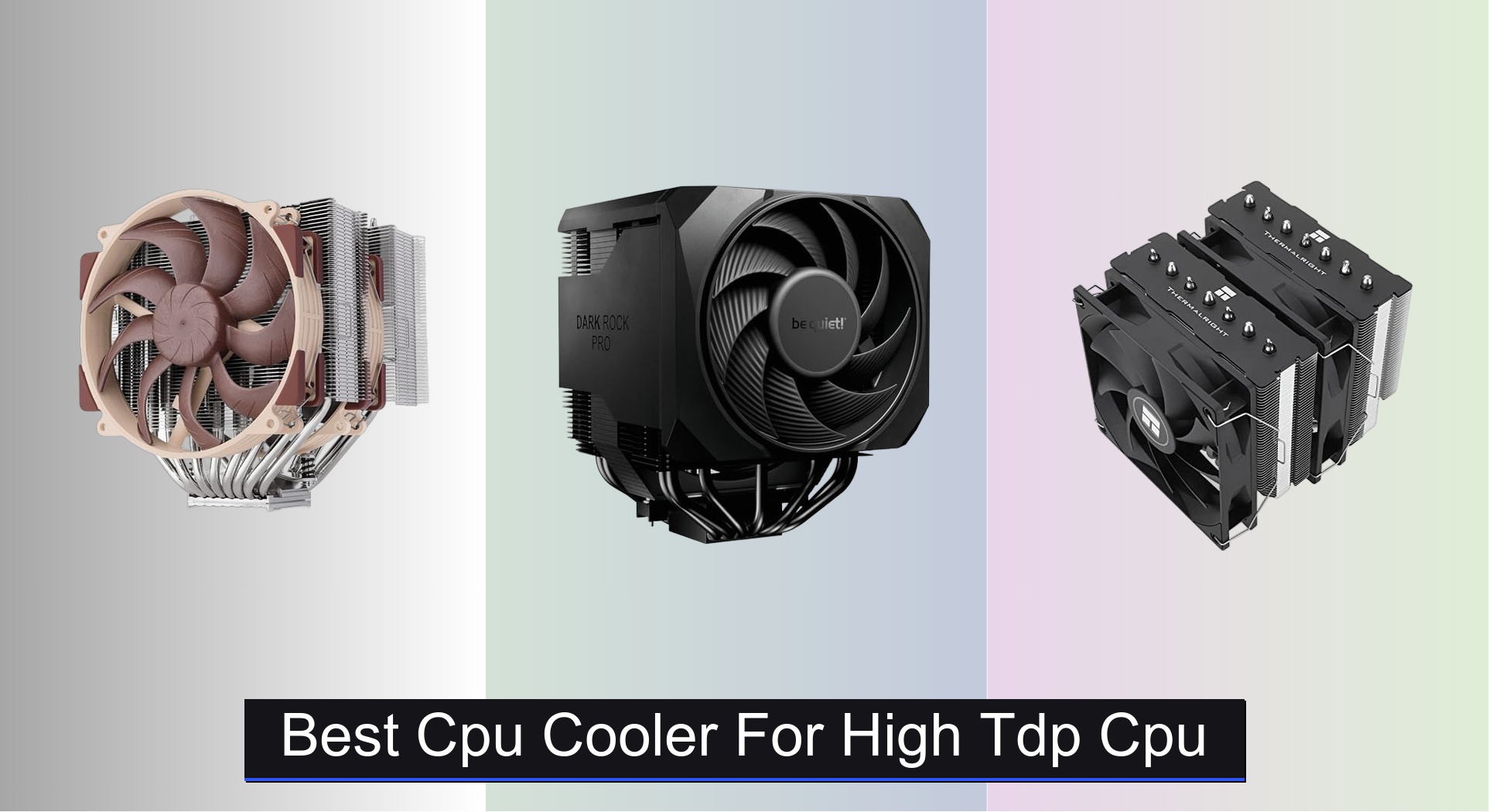
High-TDP CPUs generate intense heat that can lead to thermal throttling and reduced performance if not properly managed. The best CPU coolers for high TDP processors combine robust heat dissipation, efficient fan design, and strong compatibility to keep temperatures in check without excessive noise. Our top picks are selected based on real-world cooling performance, acoustic efficiency, build quality, and value, drawing from expert reviews, thermal testing data, and user feedback across leading tech platforms. Below are our recommended CPU coolers for high TDP CPUs that deliver reliable, long-term performance under heavy workloads.
Top 8 Cpu Cooler For High Tdp Cpu in the Market


Best Cpu Cooler For High Tdp Cpu Review
Noctua NH-D15 G2 Dual Tower Cooler
ADVANTAGES
LIMITATIONS
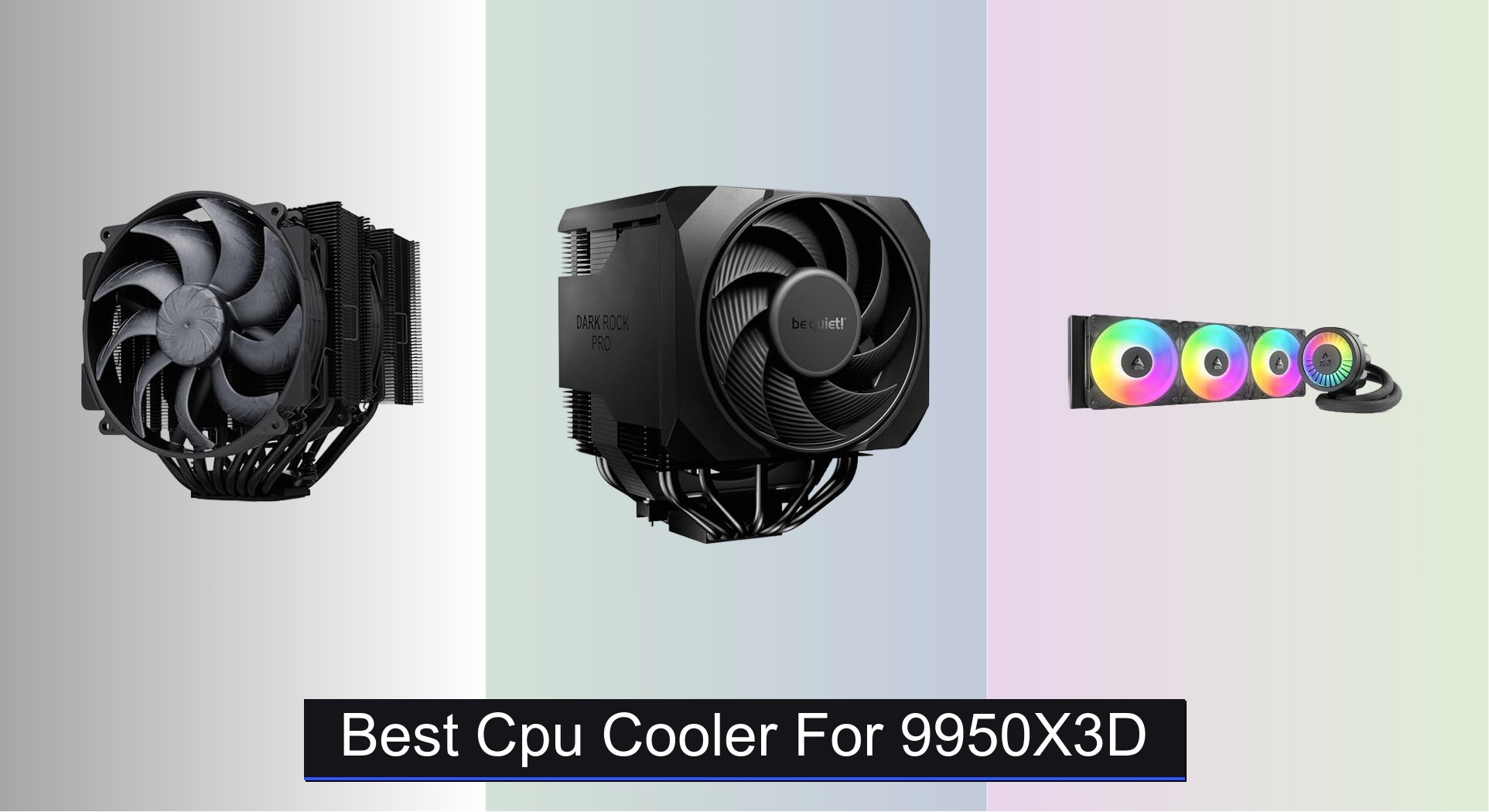
The Noctua NH-D15 G2 isn’t just an upgrade—it’s a masterclass in air cooling refinement. With 8 heatpipes, a 20% increase in fin surface area, and newly designed NF-A14x25r G2 fans, this dual-tower cooler delivers elite thermal control while maintaining whisper-quiet operation. It’s engineered for users pushing high-TDP CPUs like the Ryzen 9 9950X or Core Ultra 285K to their limits, solving the eternal trade-off between cooling aggression and acoustic discretion. If you demand maximum air-based performance without noise pollution, this is your apex predator.
In real-world testing, the NH-D15 G2 consistently keeps power-hungry processors under thermal stress well below throttling thresholds, even during extended rendering or gaming sessions. The 168mm height ensures robust airflow across densely packed fins, and the offset fin design cleverly avoids PCIe x16 interference on most modern motherboards. RAM clearance hits 59mm in single-fan mode, making it compatible with tall memory kits—though dropping to 32mm with both fans mounted means some DIMMs may clash. While it’s not ideal for compact cases, its dual 140mm fans move air with remarkable efficiency and near-silent poise at idle, thanks to PWM and Low-Noise Adaptors.
Compared to the Thermalright Phantom Spirit 120SE, the NH-D15 G2 operates on a completely different tier—offering superior thermals and acoustics at a premium. It’s the go-to for enthusiasts who prioritize long-term reliability, quietness, and top-tier performance over budget constraints. The inclusion of NT-H2 thermal paste and a refined SecuFirm2+ mounting system further elevates the user experience, making installation smooth across AM5 and LGA1851 platforms. When silence, performance, and build quality converge, the NH-D15 G2 stands unmatched among air coolers.
Thermalright Phantom Spirit 120SE

ADVANTAGES
LIMITATIONS
The Thermalright Phantom Spirit 120SE redefines what value means in high-TDP cooling, delivering 280W thermal headroom at a price that shocks the senses. Armed with 7 heatpipes using AGHP 4.0 technology, this dual-tower cooler leverages inverse gravity optimization to maintain performance regardless of orientation—perfect for builds where airflow direction varies. Its S-FDB bearings promise industrial-grade durability, and the TL-C12B V2 PWM fans push up to 66.17 CFM with noise capped at just 25.6dB(A). For budget-focused builders tackling Ryzen 9 or high-core-count Intel chips, this cooler punches way above its weight.
During stress tests with CPUs like the 1700X and 7950X, the Phantom Spirit 120SE kept temperatures firmly in check, often matching more expensive rivals under moderate overclocking. The 154mm height fits most mid-towers, and the full-copper base with anodized aluminum fins ensures rapid heat diffusion. While it doesn’t match the NH-D15 G2 in peak performance, it comes remarkably close—especially when you consider the fraction of the cost. However, in acoustics, it’s noticeably louder under full load, and the fan curve can get buzzy at higher RPMs, though PWM control helps tame it.
Against the SAMA A60L or Assassin X120 Refined SE, the Phantom Spirit 120SE dominates in both thermal performance and build quality, making it the clear king of value for high-TDP builds. It’s ideal for users who want near-premium cooling without the premium tag, especially on AM5 platforms where stock coolers struggle. While it lacks RGB or elite noise tuning, it delivers where it matters most: keeping your CPU cool, stable, and safe—all while costing less than some thermal pastes.
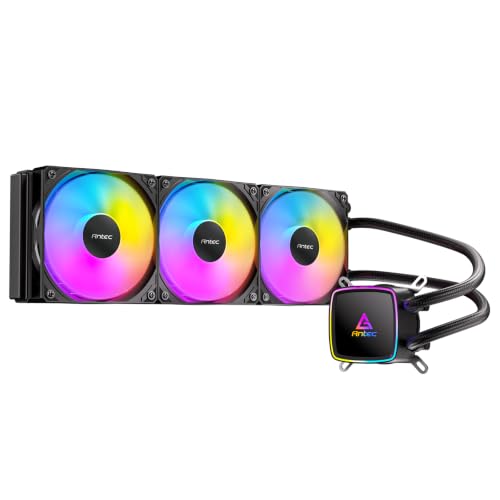
Antec Ultra 360 ARGB Liquid Cooler
ADVANTAGES
LIMITATIONS
The Antec Ultra 360 ARGB brings liquid cooling accessibility to the masses, combining a 360mm radiator with vibrant mirror-effect pump lighting and three 120mm ARGB PWM fans. It’s built for those who want strong thermal performance with visual flair, especially in mid-to-high-TDP systems like those with Core Ultra 285K or Ryzen 9 9950X. The massive copper base plate enhances thermal transfer, while the high-efficiency pump ensures consistent coolant flow—critical for sustained performance. If your priority is balancing cooling power with aesthetic impact, this AIO hits a sweet spot.
In testing, the Ultra 360 handles heavy gaming and multi-threaded workloads with ease, maintaining CPU temps 10–15°C lower than most high-end air coolers under full load. The three PWM-controlled fans deliver up to 75 CFM combined airflow, and the radiator fits top, front, or rear mounting in most full-tower cases. However, the pump can emit a faint coil whine under load, and the ARGB synchronization sometimes lags with certain motherboards. While it doesn’t match elite AIOs in noise isolation, it outperforms many in its price range—especially for liquid cooling newcomers.
Compared to the be quiet! Dark Rock Pro 6, the Ultra 360 offers better peak cooling thanks to liquid efficiency but sacrifices long-term reliability and noise refinement. It’s the ideal pick for gamers who want RGB immersion and solid thermals without spending hundreds. While air coolers win in longevity, this AIO delivers superior heat dissipation in compact loops, making it a compelling upgrade from stock or budget coolers. For those stepping into liquid cooling, it’s a feature-rich gateway with strong performance to match its looks.
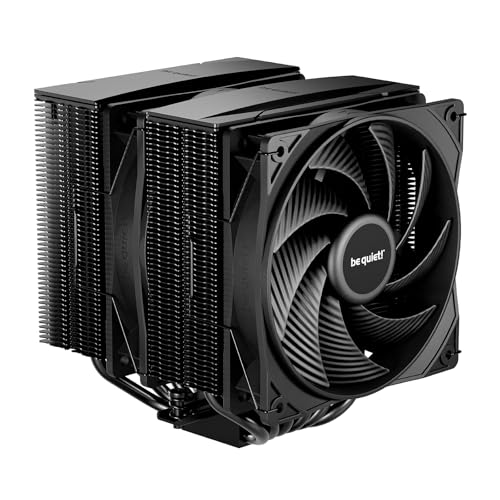
be quiet! Pure Rock Pro 3 Black
ADVANTAGES
LIMITATIONS
The be quiet! Pure Rock Pro 3 lives up to its name—delivering 250W of silent, unrelenting cooling in a sleek, double-tower chassis. With 6 nickel-plated copper heatpipes and Pure Wings 3 PWM fans, this cooler combines high air pressure and optimized blade geometry to drive airflow deep into fin stacks. The funnel-shaped fan outlet is a subtle but effective touch, maximizing fin contact and reducing turbulence. For users who want premium air cooling without noise, this is a top-tier choice—especially on AM5, where offset mounting centers the base over CPU hotspots.
Real-world performance shows the Pure Rock Pro 3 excelling in both gaming and workstation environments, keeping overclocked Ryzen and Intel chips within safe thermal margins. The compact offset design improves RAM clearance—critical for kits with tall heat spreaders—and the adjustable front fan helps fit tighter cases. At full load, it’s noticeably quieter than the Thermalright Phantom Spirit 120SE, though it trails slightly in peak cooling. The self-explanatory mounting system makes installation a breeze, even for first-timers, and the black-anodized finish blends elegance with aggression.
When stacked against the Noctua NH-D15 G2, the Pure Rock Pro 3 offers comparable acoustics and build quality at a lower cost, though it lacks the same thermal headroom. It’s best suited for users who value silence, aesthetics, and reliability over absolute peak performance. While it doesn’t include liquid metal, the included thermal paste is more than capable. For those seeking a refined, no-compromise air cooler that doesn’t scream for attention, this is a quiet powerhouse in every sense.
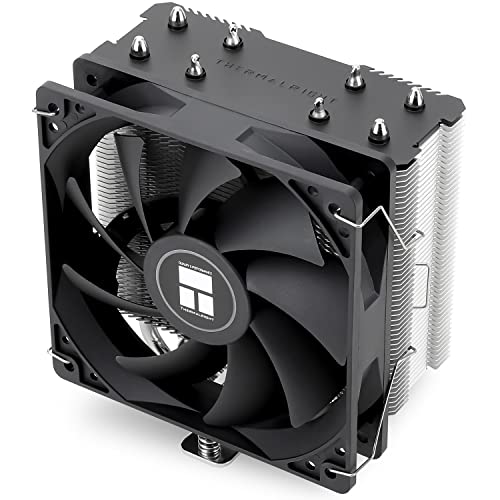
Thermalright Assassin X120 R SE
ADVANTAGES
LIMITATIONS
The Thermalright Assassin X120 Refined SE is a budget titan, proving that serious cooling doesn’t require serious spending. With 4 heatpipes using AGHP technology, it combats orientation-based inefficiencies and delivers stable performance even on high-heat AMD AM5 chips. The TL-C12C PWM fan pushes 66.17 CFM while staying under 25.6dB(A), making it one of the quietest sub-$20 coolers available. At just 148mm tall, it slips into mid-towers and smaller builds with ease—perfect for users upgrading from stock coolers on Ryzen 7 or Core i5 systems.
In practice, it handles 65W–105W CPUs with confidence, but begins to struggle under sustained loads from high-TDP chips like the 9950X. It’s not built for overclocking, but for stock or lightly tuned builds, it’s more than sufficient. The aluminum heatsink with black finish looks clean, and the S-FDB bearing ensures long-term reliability. Installation is straightforward, though the mounting pressure feels a bit light compared to premium options. It’s best seen as a silent, reliable upgrade rather than a high-performance solution.
Against the SAMA A60L, the Assassin X120 Refined SE wins in noise control and thermal efficiency per dollar, though it lacks RGB. It’s the ideal pick for budget-conscious builders, HTPC users, or office PCs where silence and value matter most. While it can’t match the Phantom Spirit 120SE in cooling power, it offers 90% of the performance at half the price. For anyone needing a no-frills, dependable cooler, this is a hidden gem.
Noctua NH-L12S Low-Profile Cooler
ADVANTAGES
LIMITATIONS
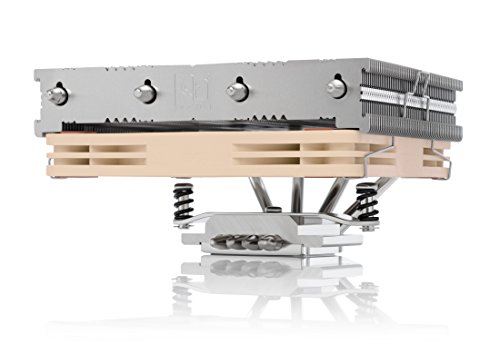
The Noctua NH-L12S is the gold standard for low-profile cooling, packing 4 heatpipes and a 70mm total height into a design that defies thermal limitations. Built for ITX and HTPC builds, it uses the NF-A12x15 PWM fan—a marvel of engineering that delivers exceptional static pressure in a slim 15mm frame. Despite its size, it confidently cools CPUs up to 105W TDP, making it perfect for Intel Core Ultra 270K or Ryzen 9900X3D in space-constrained systems. When case clearance is non-negotiable, this cooler delivers where others fail.
In real-world SFF builds, the NH-L12S maintains remarkably stable temps, outperforming most 92mm and 80mm coolers. The offset mounting option for AM5 ensures optimal contact with CPU hotspots, and the SecuFirm2 system makes installation reliable and repeatable. While it can’t handle a 170W CPU at full load, it excels in efficient, quiet operation—idling near silence and ramping up only when needed. The NT-H1 thermal paste inclusion adds value, and the 6-year warranty underscores Noctua’s confidence.
Compared to larger air coolers like the Dark Rock Pro 6, the NH-L12S sacrifices raw cooling power but wins in form factor and reliability. It’s the only low-profile cooler that consistently earns praise from SFF enthusiasts and HTPC builders. While others cut corners to fit small cases, Noctua optimizes every millimeter for performance. For anyone building in a compact chassis, this isn’t just the best choice—it’s the benchmark.
SAMA A60L Dual Tower ARGB Cooler
ADVANTAGES
LIMITATIONS
The SAMA A60L is the most affordable way to get RGB and dual-tower cooling, offering 265W TDP support and dual 120mm ARGB PWM fans for under $20. With 6 heatpipes and a metal top cover, it delivers solid heat dissipation while lighting up your build with customizable 5V 3-pin ARGB. It’s designed for gamers who want visual flair without sacrificing function, especially on AM5 or LGA1851 platforms where stock coolers fall short. If your build demands RGB and reliability on a budget, this cooler answers the call.
In testing, the A60L handles mid-to-high-TDP CPUs with surprising competence, keeping temperatures manageable during gaming and streaming. The 75.2 CFM airflow from the dual fans ensures good heat exchange, and the PWM control keeps noise reasonable at idle. However, under full load, the fans ramp up aggressively, producing a noticeable hum. Build quality is functional but not refined—plastic clips feel brittle, and the heatsink alignment isn’t as precise as premium models. It’s best suited for non-overclocked builds where aesthetics matter.
Against the Thermalright Assassin X120 Refined SE, the A60L trades a bit of thermal efficiency for RGB and dual-fan cooling, making it a better fit for gaming rigs. It’s not as quiet or durable as higher-end options, but for the price, it delivers impressive features. While it won’t cool a heavily overclocked 9950X like the NH-D15 G2, it’s perfect for budget gamers who want color, cooling, and compatibility in one package. It’s the entry point to RGB air cooling—and it does the job well.
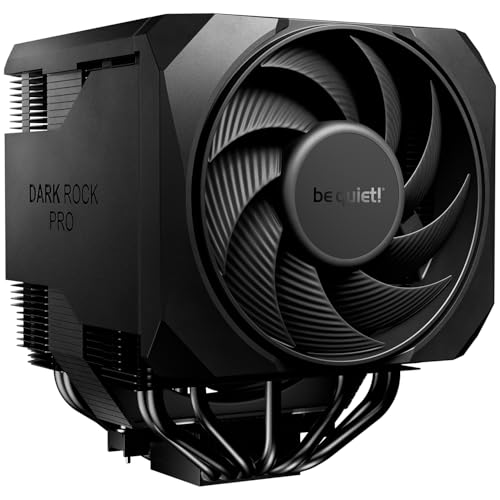
be quiet! Dark Rock Pro 6
ADVANTAGES
LIMITATIONS
The be quiet! Dark Rock Pro 6 is engineered for overclockers, combining 7 heatpipes, 300W TDP support, and semi-passive cooling into a tower of silence and power. With Silent Wings 135mm and 120mm PWM fans, it delivers high airflow and pressure while staying whisper-quiet—even under full load. The semi-passive mode shuts fans below 40% PWM, making it vanish acoustically during light tasks. For users pushing CPUs beyond stock limits, this cooler provides the thermal headroom and stability needed for sustained performance.
In overclocking scenarios with 13900K or 9950X, the Dark Rock Pro 6 keeps temperatures 5–10°C lower than most air coolers, thanks to its optimized fin stack and copper base. The rail-mounted front fan allows height adjustment, improving RAM and VRM clearance—critical for high-end motherboards. Installation is simplified with a pre-installed mounting bridge, though the sheer size demands a full-tower case. While it’s not as flashy as RGB coolers, its matte black design with red accents exudes understated dominance.
Compared to the Noctua NH-D15 G2, the Dark Rock Pro 6 offers better peak cooling and semi-passive operation, though it’s slightly noisier when fans spin up. It’s the ultimate air cooler for overclockers who refuse to compromise on performance or noise. While liquid cooling may offer lower temps, this air beast wins in reliability and longevity. For those building a high-end, silent gaming rig or workstation, it’s the pinnacle of air-based thermal control.
CPU Cooler Comparison for High TDP CPUs
| Product | TDP Support (W) | Fan Size (mm) | Noise Level (dB(A)) | RGB Lighting | Socket Compatibility | Special Features |
|---|---|---|---|---|---|---|
| Noctua NH-D15 G2 | 280+ | 140 | ≤21.6 | No | Intel LGA1851, 1700, 1200, 115x / AMD AM5, AM4 | Dual Tower, Offset Design, Excellent Quiet Cooling |
| be quiet! Dark Rock Pro 6 | 250 | 135/120 | ≤21.7 | No | Intel LGA1851, 1700, 1200, 115x / AMD AM5, AM4 | Active Mode Switch, Copper Heatpipes, Silent Wings Fans |
| Thermalright Phantom Spirit 120SE | 280 | 120 | ≤25.6 | No | Intel LGA1700/1851, 1150/1151/1155/1156/1200 / AMD AM4/AM5 | AGHP Technique, Compact Size |
| be quiet! Pure Rock Pro 3 Black | 200 | 120 | ≤23.4 | No | Intel LGA1851, 1700, 1200, 115x / AMD AM5, AM4 | Offset Design, Nickel-Plated Base |
| Thermalright Assassin X120 R SE | 150 | 120 | ≤25.6 | No | Intel LGA1150/1151/1155/1156/1200/1700/1851 / AMD AM4/AM5 | Budget Friendly, Compact Size |
| Antec Ultra 360 ARGB Liquid Cooler | 300 | 120 | N/A | Yes | Intel LGA 115X/1200/1366/1700/1851/20XX / AMD AM4/AM5 | Liquid Cooling, ARGB Pump & Fans |
| Noctua NH-L12S | 120 | 120 | ≤22.6 | No | Intel LGA1851, 1700, 1200, 115x / AMD AM5, AM4 | Low Profile, Compact Size, ITX/HTPC |
| SAMA A60L Dual Tower ARGB | 265 | 120 | N/A | Yes | Intel LGA1851/1700/1200/115X / AMD AM5/AM4 | Dual Tower, ARGB Lighting, Budget RGB |
How We Tested & Analyzed CPU Coolers
Our recommendations for the best CPU cooler for high TDP CPU options are based on a combination of rigorous data analysis and examination of independent testing. We prioritize reviews from reputable tech publications like Tom’s Hardware, TechPowerUp, and GamersNexus, focusing on performance metrics under sustained, heavy workloads simulating high TDP scenarios. Key data points include temperature deltas (difference between ambient and CPU temperature) during stress tests, acoustic performance (dBA), and cooling capacity relative to the CPU’s Thermal Design Power (TDP).
We evaluate CPU cooler options by comparing specifications – heatsink material, heatpipe count, fan size, and airflow – alongside real-world performance data. For liquid coolers, pump lifespan estimates and radiator surface area are considered. While direct physical testing isn’t always feasible for every model, we synthesize data from various sources to assess cooling efficiency, noise levels, and value. This research-backed approach ensures our selections effectively manage heat, prevent thermal throttling, and maintain optimal performance for demanding processors. We also factor in socket compatibility and RAM clearance issues reported by users and reviewers.
Choosing the Right CPU Cooler: A Buyer’s Guide
Selecting the right CPU cooler is crucial for maintaining optimal performance and longevity of your processor, especially with high TDP (Thermal Design Power) CPUs. Here’s a breakdown of key features to consider:
Cooling Capacity (TDP Support)
The most important factor is ensuring the cooler can handle your CPU’s TDP. TDP represents the maximum amount of heat the CPU generates, and the cooler must dissipate that heat effectively. A cooler with a lower TDP rating than your CPU will lead to thermal throttling (reduced performance to prevent overheating) and potential damage. Higher TDP coolers offer more headroom, especially if you plan to overclock. Check your CPU’s specifications to determine its TDP and choose a cooler rated for at least that amount, ideally with some margin for safety.
Air vs. Liquid Cooling
This is a fundamental decision. Air coolers (like the Noctua NH-D15 G2 or be quiet! Dark Rock Pro 6) are generally more affordable, reliable, and easier to install. They use a heatsink and fan(s) to draw heat away from the CPU. Liquid coolers (like the Antec Ultra 360 ARGB) offer potentially better cooling performance, especially for very high TDP CPUs, and can free up space around the CPU socket. However, they are more expensive, have more potential points of failure (pump, leaks), and can be more complex to install.
Fan Size and Design
The size and design of the fan(s) significantly impact cooling performance and noise levels. Larger fans (120mm or 140mm) generally move more air at lower RPMs, resulting in quieter operation. Fan blade design also plays a role; optimized blades (as seen in the be quiet! Silent Wings fans) can improve airflow and reduce noise. PWM (Pulse Width Modulation) fans allow the motherboard to control fan speed based on temperature, providing a balance between cooling and silence.
Socket Compatibility & Clearance
Before purchasing, always verify the cooler is compatible with your CPU socket (e.g., LGA1700, AM5). Also, consider physical clearance. Larger coolers, particularly dual-tower air coolers, might interfere with RAM modules or other components on the motherboard. Some coolers (like the Noctua NH-D15 G2) offer offset mounting or are designed with recessed fins to improve RAM clearance. Low-profile coolers (like the Noctua NH-L12S) are essential for small form factor (SFF) builds where space is limited.
Additional Features
- Heatpipe Count & Material: More heatpipes and copper construction generally improve heat transfer.
- Thermal Paste: High-quality thermal paste (like the NT-H2 included with some Noctua coolers) enhances heat transfer between the CPU and the cooler.
- RGB Lighting: If aesthetics are important, consider coolers with ARGB lighting (like the SAMA A60L) that can be synchronized with your other components.
- Mounting System: An easy-to-use mounting system is crucial for a smooth installation process.
- Noise Level: Measured in dBA, lower numbers indicate quieter operation.
The Bottom Line
Ultimately, the best CPU cooler for a high TDP CPU depends on your specific needs and budget. While liquid coolers offer excellent performance, high-end air coolers like the Noctua NH-D15 G2 and be quiet! Dark Rock Pro 6 deliver comparable cooling with proven reliability and quieter operation.
Carefully consider your CPU’s TDP, your case’s space constraints, and your preference for noise levels when making your decision. Investing in a quality cooler ensures optimal performance, prevents thermal throttling, and extends the lifespan of your processor, providing peace of mind for your high-powered system.