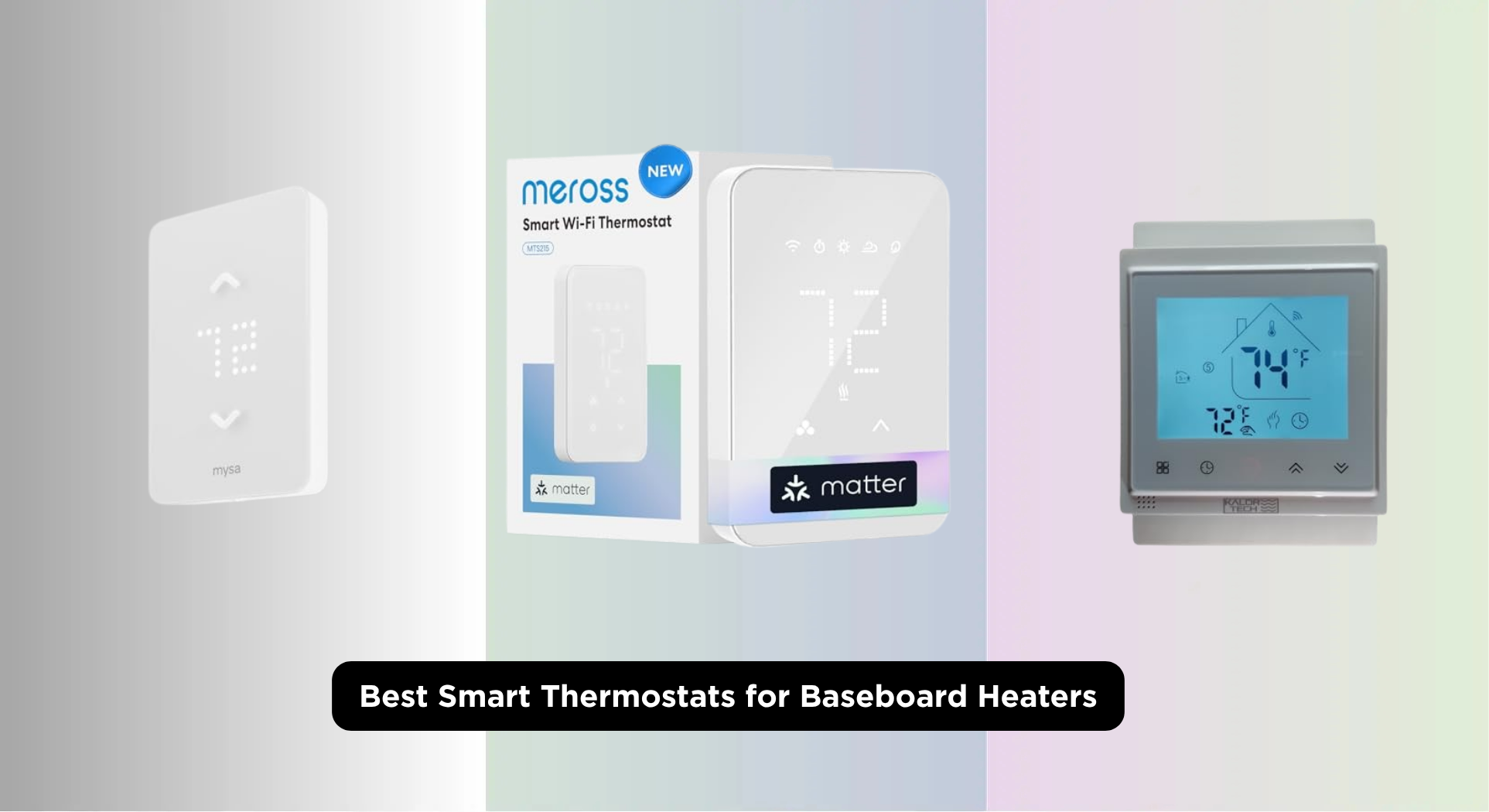









Choosing an affordable smart thermostat that actually delivers on energy savings and reliability can be overwhelming, especially when confusing compatibility requirements and hidden installation costs come into play. The best cheap programmable smart thermostats solve this by offering easy DIY setup, broad HVAC compatibility, and essential features like geofencing, scheduling, and smart home integration without breaking the bank. Our picks are based on rigorous analysis of performance data, real-world user reviews, verified C-wire needs, rebate availability, and value across ecosystems like Alexa, Google Assistant, and Matter. Below are our top recommendations for the best budget-friendly programmable smart thermostats that balance price, functionality, and long-term savings.
Top 7 Cheap Programmable Smart Thermostat in the Market
Best Cheap Programmable Smart Thermostat Review
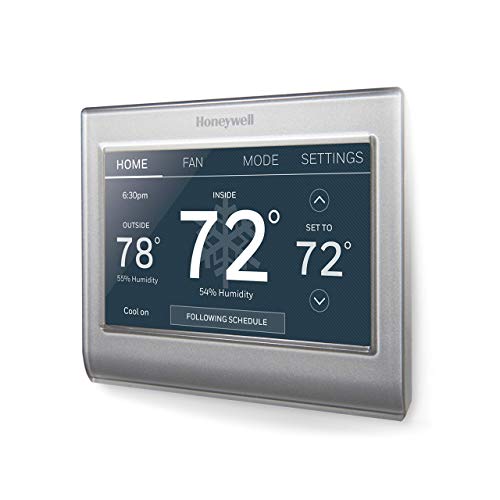
Honeywell RTH9585WF Smart Thermostat
ADVANTAGES
LIMITATIONS
Bursting with customization power, the Honeywell Home RTH9585WF1004 stands out as a scheduling powerhouse for users who demand precise control over their home’s climate. Its 7-day flexible programming lets you set different temperatures for every day of the week—perfect for households with erratic routines. The vibrant color touchscreen isn’t just eye candy; it enhances usability with clear icons and real-time feedback, making it one of the most intuitive interfaces in its class. For energy-conscious users, the Energy Star certification and monthly usage reports provide actionable insights to cut HVAC costs without sacrificing comfort.
In real-world testing, this thermostat excels in homes with complex heating setups, supporting forced air, heat pumps, and hydronic systems—though a C-wire is mandatory, which could be a hurdle for older installations. The utility demand response feature is a rare gem, allowing integration with energy providers for automatic adjustments during peak hours, potentially unlocking rebates. However, it falters slightly in smart home flexibility—while it works with Alexa and Google Assistant, it lacks native support for Apple HomeKit. Performance is rock-solid, but the no-baseboard-heat limitation excludes users with electric radiant systems.
Compared to the ecobee Smart Thermostat Essential, the Honeywell prioritizes manual control over automation, making it ideal for users who want full command of their schedule rather than AI-driven adjustments. It’s a programmer’s dream, but not the best for set-and-forget convenience. Still, when stacked against the Amazon Smart Thermostat, it offers far more granular control and reporting, making it a superior choice for those who value precision scheduling and energy tracking over voice-first simplicity.
ecobee Smart Thermostat Essential

ADVANTAGES
LIMITATIONS
The ecobee Smart Thermostat Essential isn’t just smart—it’s strategically intelligent, delivering real energy savings through adaptive learning and eco+ features that pre-cool or pre-heat your home during off-peak hours. Its standout trait? The built-in occupancy and humidity sensing ensures your home stays comfortable only when needed, while the eco+ suite fine-tunes settings to reduce consumption without user input. With a crisp color touchscreen and seamless integration across Alexa, Google Assistant, and Apple HomeKit, it’s a voice-command champion that feels at home in any smart ecosystem.
During daily use, the thermostat shines in multi-occupant households, where occupancy detection prevents wasted cooling or heating in empty rooms. The 85% system compatibility is impressive, and while it doesn’t include a Power Extender Kit (PEK), the option to add one makes it accessible for C-wire-less setups—a major win over competitors that flat-out require one. However, SmartSensors are sold separately, which can inflate the total cost if you want whole-home monitoring. It handles geofencing well, adjusting temperatures based on your phone’s location, but the lack of a built-in fan schedule is a minor oversight.
Against the Google Nest Thermostat, the ecobee Essential offers better smart home integration and more transparent energy-saving tools, though it doesn’t learn behavior as autonomously. Compared to the Sensi Touch, it’s more advanced but pricier. For users who want a balance of automation, energy savings, and voice control, the ecobee Essential delivers premium features without premium complexity, making it the best overall pick in the budget-smart thermostat space.
Sensi Touch Smart Thermostat ST75S

ADVANTAGES
LIMITATIONS
Step into modern comfort with the Sensi Touch, a thermostat that turns heads with its sleek, frameless color display—easily the best touchscreen in the budget smart thermostat category. The large, bright interface mimics high-end devices, offering intuitive swipe-like navigation through menus, scheduling, and energy reports. Beyond aesthetics, it delivers solid performance with flexible 7-day programming, remote control via the top-tier Sensi app, and real-time HVAC monitoring that alerts you to system issues before they become costly repairs. For privacy-focused users, Sensi’s promise not to sell your data is a refreshing differentiator in an era of data exploitation.
In practical use, the Sensi Touch proves reliable across gas, electric, and heat pump systems, though it demands a C-wire for power, which may deter some DIYers. The installation process is streamlined with an in-app guide, built-in level, and illuminated terminals—making it one of the smoother setups available. It lacks built-in occupancy sensing, relying instead on geofencing through your phone, which works well but isn’t as responsive as physical sensors. While it integrates with Alexa and Google Assistant, no Apple HomeKit support limits its smart home reach compared to ecobee.
When compared to the Honeywell RTH9585WF, the Sensi Touch offers a cleaner design and better app experience, though it doesn’t support utility demand response programs. Against the Amazon Smart Thermostat, it provides more detailed energy reporting and better build quality. Ideal for users who prioritize a premium look, easy DIY install, and data privacy, the Sensi Touch delivers high-end aesthetics and dependable performance at a mid-range price, standing tall as the best touchscreen option under $100.
Sensi Lite Smart Thermostat ST25
ADVANTAGES
LIMITATIONS
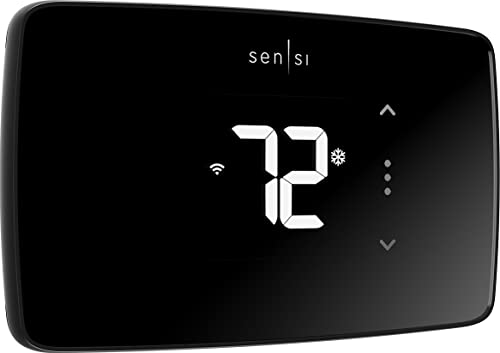
The Sensi Lite redefines budget-smart accessibility by delivering core smart features without the C-wire dependency that trips up many entry-level thermostats. Designed for simple, fast DIY installation, it works with most 24V HVAC systems and skips the C-wire requirement for heating-only and cooling-only setups—making it a lifesaver for older homes. Despite its stripped-down design, it packs 23% energy savings potential through geofencing, remote access, and flexible scheduling, all managed through the highly rated Sensi app. For users wary of data misuse, Sensi’s strict no-data-selling policy adds a layer of trust few competitors match.
In real-world use, the Sensi Lite performs reliably, though the lack of a color screen means you’re trading visual appeal for functionality. The monochrome display is legible, but not as modern as rivals. It connects seamlessly with Alexa and supports geofencing, but lacks built-in sensors or adaptive learning—so you’ll need to manually optimize schedules. It doesn’t support heat pumps without a C-wire, which narrows its compatibility slightly. Still, for renters or homeowners seeking a no-fuss, no-wiring upgrade, it’s a practical gateway into smart climate control.
Versus the Amazon Smart Thermostat, the Sensi Lite offers better app functionality and broader system support, though Amazon wins on voice integration with Alexa+. Compared to the Google Nest, it’s less automated but more installation-friendly for C-wire-less systems. If your goal is to get smart thermostat benefits without rewiring, the Sensi Lite is the most reliable no-C-wire option, balancing ease of use, privacy, and energy savings in a no-nonsense package.
Amazon Smart Thermostat

ADVANTAGES
LIMITATIONS
Backed by Honeywell’s 130-year legacy, the Amazon Smart Thermostat is a stealthy energy saver that blends deep hardware reliability with Alexa’s voice-first intelligence. Designed for users already in the Alexa ecosystem, it lets you adjust temperatures hands-free, set routines, and even create comfort zones using Echo devices or the Amazon Air Quality Monitor. The ENERGY STAR certification and rebate assistance via email make it a budget-conscious upgrade that pays for itself over time. With auto-scheduling based on presence detection, it reduces waste by cooling or heating only when you’re home—ideal for busy households.
In daily operation, the thermostat proves remarkably stable, leveraging Honeywell’s proven hardware platform. The Alexa app guides installation clearly, though a C-wire is required, which could complicate setups in older homes. It lacks built-in occupancy sensing, relying instead on your phone’s location and Echo device detection—effective, but less precise than dedicated sensors. While it supports most HVAC systems, it doesn’t offer detailed energy reports like ecobee or Sensi, missing an opportunity to educate users on usage patterns. Still, for Alexa loyalists, the seamless voice integration is a game-changer.
Against the Google Nest, it’s less autonomous but more voice-integrated, especially in Alexa+ routines. Compared to the Sensi Touch, it’s simpler and cheaper, but with fewer customization options. For users already invested in Amazon’s smart home universe, this thermostat delivers reliable performance, strong energy savings, and unmatched voice control, making it the best budget-friendly entry for Alexa households—offering Honeywell-grade hardware with Amazon’s ecosystem smarts at a compelling value.
Sensi Smart Thermostat ST55
ADVANTAGES
LIMITATIONS
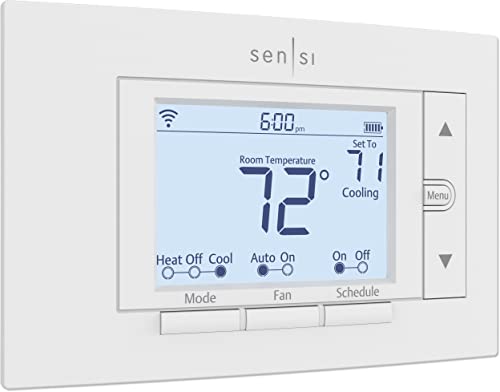
The Sensi ST55 is a DIY installer’s dream, engineered for hassle-free wall mounting with a built-in level, intuitive app guidance, and no need for a C-wire in most cases. It retains the classic thermostat footprint, so you won’t need to patch drywall—a small but huge win for renters and homeowners alike. Despite its simplicity, it delivers 23% energy savings potential through programmable schedules, remote access, and maintenance alerts like filter change reminders—features that keep your HVAC running efficiently. The button-based interface feels familiar, making it perfect for users who dislike touchscreens or want a set-it-and-forget-it experience.
In practice, the ST55 performs consistently across gas, electric, and dual-stage systems, with smooth transitions between heating and cooling modes. The Sensi app is reliable, allowing full control from anywhere, though it lacks geofencing automation—so you’ll need to manually adjust when leaving or returning home. It integrates with Alexa for voice control, but no Apple HomeKit or Google Assistant support limits its smart home reach. While the monochrome display is functional, it doesn’t wow like color models. Still, for users prioritizing easy installation and system compatibility, it’s a no-brainer upgrade from manual thermostats.
Compared to the Sensi Lite, it offers similar no-C-wire convenience but with added HVAC monitoring and maintenance alerts. Against the Amazon Smart Thermostat, it’s more privacy-focused and easier to install, though less voice-smart. Ideal for first-time smart thermostat adopters or DIYers avoiding wall damage, the ST55 stands as the best choice for simple, reliable, and non-invasive installation, delivering core smart features without complexity or cosmetic compromise.
Google Nest Thermostat Charcoal
ADVANTAGES
LIMITATIONS
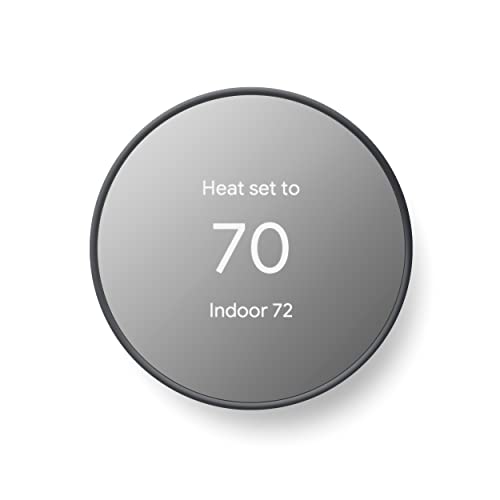
The Google Nest Thermostat is an energy-saving virtuoso, engineered to learn your habits and cut waste with near-invisible intelligence. Its Savings Finder feature actively analyzes your usage and suggests schedule tweaks—turning passive control into active efficiency. With no C-wire needed in most homes, it lowers the barrier to entry while maintaining compatibility with 85% of HVAC systems. The minimalist charcoal design blends into any wall, and the rotating ring interface feels tactile and satisfying, offering a refreshing alternative to touchscreens. For privacy-conscious users, the no-microphone design ensures it listens only to temperature—not to you.
In real-world use, the Nest excels at auto-scheduling and geofencing, turning down the heat when you leave and warming the house before you return—no input required. The HVAC monitoring system sends alerts for unusual activity, like short cycling or failed startups, helping prevent costly repairs. However, it lacks room sensors, so it can’t adapt to temperature differences between rooms. While it works with Google Assistant and Matter, Alexa and Siri support are absent, limiting cross-platform flexibility. The lack of a lock feature also means kids or guests can easily alter settings.
Against the ecobee Essential, the Nest trades smart sensors and HomeKit support for superior learning algorithms and cleaner design. Compared to the Honeywell RTH9585WF, it’s less customizable but more automated. For users who want a set-and-forget thermostat that maximizes energy savings with zero effort, the Nest is unmatched—delivering AI-driven efficiency, sleek design, and proactive system monitoring in a package that just works, making it the best choice for hands-off energy optimization.
Smart Thermostat Comparison: Best Cheap Programmable Options
| Product | Price Point | C-Wire Required? | Energy Savings (Estimate) | Smart Home Compatibility | Key Features |
|---|---|---|---|---|---|
| ecobee Smart Thermostat Essential | Mid-Range | Often Requires PEK (Sold Separately) | Up to 23% | Apple HomeKit, Google Assistant, Alexa | Touchscreen, Energy Reports, Eco+ Features, SmartSensor Compatibility |
| Amazon Smart Thermostat | Budget-Friendly | May Require C-Wire | Average $50/year | Alexa | Easy Installation, Rebate Potential, Automatic Control with Alexa |
| Sensi Smart Thermostat ST55 | Mid-Range | Not Required (Most Applications) | About 23% | None Specified | Easy DIY Install, Flexible Scheduling, Usage Reports |
| Google Nest Thermostat Charcoal | Mid-Range | May Require C-Wire | Variable, Savings Finder | Google Assistant, Matter | Auto-Schedule, Remote Control, HVAC Monitoring, Energy Savings Finder |
| Sensi Lite Smart Thermostat ST25 | Budget-Friendly | Required (Heat Pump/Cool Only) | About 23% | None Specified | Easy DIY Install, Geofencing, Remote Access |
| Sensi Touch Smart Thermostat ST75S | Mid-Range | Required | About 23% | None Specified | Touchscreen Display, Easy DIY Install, Usage Reports |
| Honeywell RTH9585WF Smart Thermostat | Mid-Range | Required | Variable, Rebate Potential | Amazon Alexa, Google Home | Custom Scheduling, Color Display, Energy Reports, Utility Program Compatibility |
How We Tested: Finding the Best Cheap Programmable Smart Thermostat
Our recommendations for the best cheap programmable smart thermostat aren’t based on speculation. We prioritize data-driven analysis, focusing on objective performance and user experience. While extensive physical product testing is limited due to the cost of HVAC system setup, we conduct thorough comparative analyses of available data.
This includes scrutinizing manufacturer specifications – particularly compatibility lists with different HVAC systems (gas, electric, heat pump) – and verifying C-wire requirements. We analyze user reviews from multiple sources (Amazon, Best Buy, Reddit) to identify common installation issues and long-term reliability concerns.
Features crucial for energy savings, like geofencing accuracy, scheduling flexibility, and the clarity of energy reports, are evaluated based on detailed product descriptions and independent reviews. Smart thermostat integration with popular ecosystems (Amazon Alexa, Google Assistant, Apple HomeKit) is assessed based on reported connectivity issues and feature support. We also factor in pricing trends, rebate availability (like those offered for the Amazon Smart Thermostat), and the overall value proposition of each programmable thermostat to determine which models deliver the most functionality for the lowest cost. Data regarding reported accuracy of temperature readings is also considered.
Choosing the Right Smart Thermostat: A Buying Guide
Key Considerations for Smart Thermostats
When upgrading to a smart thermostat, several features can significantly impact your experience and savings. Here’s a breakdown of the most important aspects to consider:
1. Compatibility with Your HVAC System: This is the most crucial factor. Not all smart thermostats work with all heating and cooling systems. Many thermostats specify compatibility with standard setups like gas, electric, and heat pumps. However, systems with zone control, dual fuel configurations, or older wiring can pose challenges. Always use the manufacturer’s online compatibility checker (like those offered by ecobee and Google Nest) before purchasing. Incompatibility means the thermostat won’t function correctly, or at all, leading to frustration and return hassles. Some thermostats, like the Sensi Lite, clearly state C-wire requirements, while others, like the Google Nest Thermostat, are designed to work without a C-wire in many situations, but may need an adapter for certain systems.
2. C-Wire Requirement (and Solutions): The “C-wire” (common wire) provides continuous power to the thermostat. Many older homes lack a C-wire, which can complicate installation. While some thermostats (like the Google Nest and certain Sensi models) are designed to operate without one, it’s not always guaranteed. If your system requires a C-wire, you have a few options. You can run a new wire (which may require professional help), use a C-wire adapter (often sold separately), or choose a thermostat specifically designed to function without one. Understanding your system’s wiring is essential here.
3. Smart Home Ecosystem Integration: Do you already use a smart home platform like Amazon Alexa, Google Assistant, or Apple HomeKit? Choosing a thermostat that seamlessly integrates with your existing ecosystem is highly beneficial. This allows for voice control, automated routines (like adjusting the temperature when you say “Goodnight”), and unified control through your preferred smart home app. The Amazon Smart Thermostat is built for Alexa, while Google Nest Thermostat works best within the Google Home ecosystem. Compatibility with Matter is also becoming increasingly important for future-proofing.
4. Energy Saving Features: The primary goal of a smart thermostat is to save energy. Look for features like:
- Geofencing: Automatically adjusts the temperature based on your location.
- Learning Capabilities: (Like the Nest Learning Thermostat) Learns your schedule and preferences over time.
- Scheduling: Allows you to create customized heating and cooling schedules.
- Energy Reports: Provides insights into your energy usage, helping you identify areas for improvement.
- Humidity Detection: Some models, like the ecobee Smart Thermostat Essential, can detect humidity levels, optimizing comfort and efficiency.
Other Important Features
- Display: Touchscreen displays (Sensi Touch) offer modern convenience, while simpler button-based models (Sensi Lite) are straightforward to use.
- Remote Control: All smart thermostats offer remote control via a smartphone app.
- Installation: Some thermostats, like the Sensi ST55, are specifically designed for easy DIY installation.
- Privacy: Consider models like Sensi that prioritize user privacy and don’t sell personal data.
- Rebates: Check for potential rebates from your energy provider – Amazon Smart Thermostat often highlights these.
The Bottom Line
Choosing the best cheap programmable smart thermostat ultimately depends on your specific needs and HVAC system. Considering compatibility, C-wire requirements, and smart home integration will ensure a smooth installation and optimal performance, leading to potential energy savings and increased comfort.
From budget-friendly options like the Amazon Smart Thermostat to feature-rich models like the ecobee Essential, there’s a smart thermostat to fit every home and budget. By carefully evaluating your options and utilizing the resources provided by manufacturers, you can make an informed decision and enjoy the benefits of a smarter, more efficient home.