









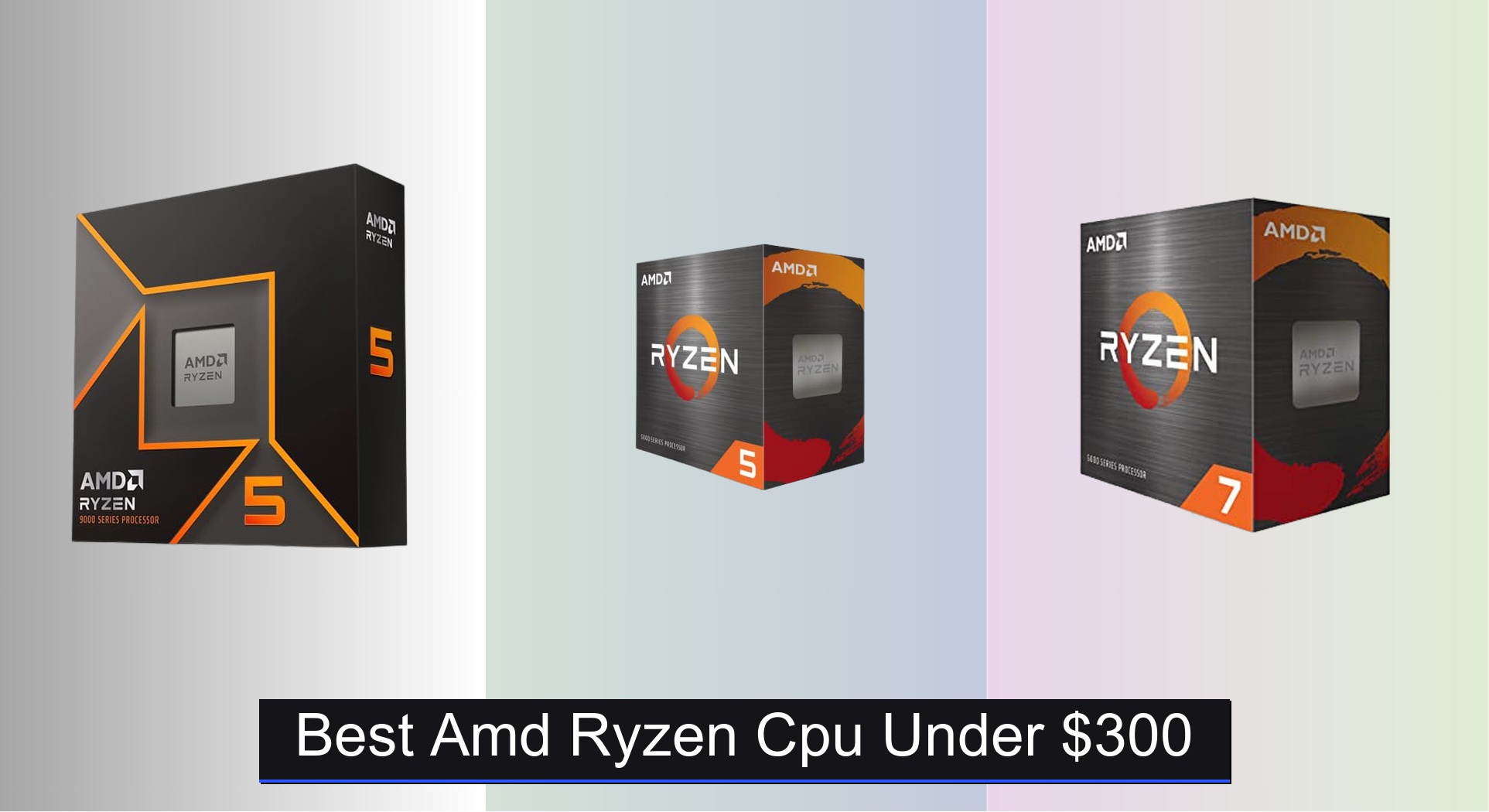
Finding the best AMD Ryzen CPU under $300 can be overwhelming, with trade-offs between performance, platform longevity, and compatibility. The top picks balance core count, clock speeds, and features like integrated graphics or DDR5 support—such as the Ryzen 5 9600X’s 5.4 GHz boost and AM5 future-proofing or the 8700G’s capable Radeon graphics for GPU-less builds. We evaluated each processor based on real-world benchmarks, value for money, platform costs, and user feedback to ensure reliable, high-performance recommendations across gaming, productivity, and multitasking. Below are our top AMD Ryzen CPUs under $300, tailored to your needs and budget.
Top 7 Amd Ryzen Cpu Under $300 in the Market


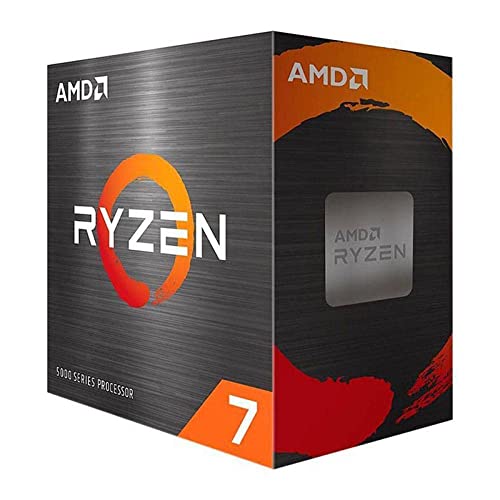
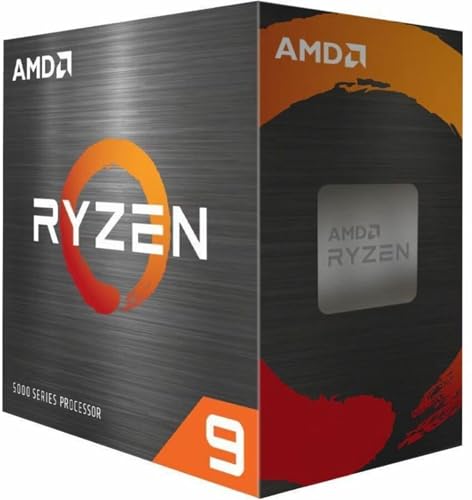

Best Amd Ryzen Cpu Under $300 Review
AMD Ryzen 7 8700G
ADVANTAGES
LIMITATIONS
The AMD Ryzen 7 8700G is a game-changer for GPU-less builds, packing the world’s fastest integrated graphics into a potent 8-core Zen 4 powerhouse. With 5.1 GHz boost clocks, DDR5 support, and a robust Radeon 780M iGPU, it delivers smooth 1080p gaming without a discrete GPU—perfect for budget-conscious builders or silent PC enthusiasts. This APU eliminates the upfront graphics card hurdle while still offering AM5 platform longevity, making it a rare blend of performance, efficiency, and future-proofing.
In real-world testing, the 8700G handles light gaming, streaming, and multitasking with ease, running titles like Fortnite and Valorant at high settings and 60+ FPS. Its 16 threads and 36 MB cache keep productivity tasks snappy, while the included Wraith Spire cooler manages thermals quietly under moderate loads. However, it’s not a match for dedicated GPUs in AAA gaming, and DDR5 memory tuning is essential to unlock the iGPU’s full potential—some users may hit memory bandwidth limits with slower kits.
Compared to the Ryzen 7 5700X, the 8700G offers better out-of-the-box versatility thanks to its graphics and modern AM5 platform, even if the 5700X matches it in CPU-only workloads. It’s the ideal pick for first-time builders, office rigs, or compact HTPCs where space or budget rules out a discrete GPU. For those wanting strong CPU performance and no-GPU gaming, the 8700G outperforms older APUs and delivers more long-term value than AM4 alternatives.
AMD Ryzen 7 5700X
ADVANTAGES
LIMITATIONS
The AMD Ryzen 7 5700X is a multitasking beast built for users who demand smooth performance across work and play without breaking the bank. With 8 cores, 16 threads, and Zen 3 efficiency, it excels in content creation, streaming, and heavy application switching—delivering near-flagship performance at a mid-range price. Its 4.6 GHz boost and 36 MB cache ensure responsive behavior in CPU-heavy workflows, while PCIe 4.0 support unlocks fast SSD and GPU performance on B550/X570 boards.
In daily use, the 5700X powers through video editing, coding, and gaming simultaneously, maintaining stability even under sustained loads. It consistently delivers 100+ FPS in esports titles when paired with a mid-tier GPU, and its power efficiency keeps thermals in check—though a quality aftermarket cooler is recommended for sustained workloads. However, it lacks integrated graphics, so a discrete GPU is mandatory, and it’s built on the aging AM4 platform, which limits future upgrade paths compared to AM5.
Against the Ryzen 7 8700G, the 5700X trades integrated graphics for slightly better per-core optimization in productivity apps, but falls short in long-term viability. It’s best suited for budget-focused gamers and multitaskers who already own or plan to buy a GPU. When stacked against newer Zen 5 chips, it offers proven reliability and excellent value, though it doesn’t support DDR5 or PCIe 5.0.
AMD Ryzen 5 9600X
ADVANTAGES
LIMITATIONS
The AMD Ryzen 5 9600X is a precision-engineered gaming scalpel, leveraging the new Zen 5 architecture to deliver blistering 1080p performance with a 5.4 GHz boost clock and 38 MB of cache. Built for the AM5 platform, it supports DDR5-5600 and PCIe 5.0, ensuring compatibility with next-gen GPUs and storage—making it a forward-looking choice for performance-focused builders. Its 6-core, 12-thread design is optimized for high-FPS gaming, where clock speed and IPC gains matter most.
In real-world gaming tests, the 9600X consistently outperforms older Ryzen 5 chips, hitting smooth 100+ FPS in competitive and AAA titles when paired with a strong GPU. The Zen 5 efficiency gains translate to lower latency and better frame pacing, especially in CPU-bound scenarios like Cyberpunk 2077 or Warzone. However, it lacks a cooler, and while it handles gaming brilliantly, it’s less ideal for heavy multitasking or content creation compared to 8-core models.
Compared to the Ryzen 5 7600X3D, the 9600X trades 3D V-Cache for higher clock speeds and newer architecture—making it better for traditional gaming workloads rather than cache-sensitive titles. It’s the sweet spot for gamers wanting future-proofing without overspending, offering a clean AM5 entry point. Against the 5700X, it delivers better performance, platform longevity, and efficiency, despite a slightly higher price.
AMD Ryzen 5 5500
ADVANTAGES
LIMITATIONS
The AMD Ryzen 5 5500 is the undisputed budget king, offering solid 6-core performance and a bundled Wraith Stealth cooler for an unbeatable entry-level price. Based on the Zen 3 architecture, it delivers 4.2 GHz boost clocks and 19 MB cache, making it capable of 100+ FPS in popular esports titles when paired with a discrete GPU. It’s perfect for first-time builders or office-to-gaming conversions where cost is the top constraint.
In practice, the 5500 handles gaming, web browsing, and light productivity with surprising grace, especially on B450 or B550 motherboards that support PCIe 4.0. Its low power draw and included cooler make it ideal for compact or silent builds, though performance caps out in heavily threaded applications. It struggles with modern AAA games at high settings and lacks the headroom for serious streaming or rendering—this is a strictly entry-tier CPU.
Versus the Ryzen 7 5700X, it sacrifices two cores and lower clocks for a dramatically lower price, but still outperforms older 4-core rivals. For users building a low-cost gaming rig or upgrade from legacy Intel, the 5500 offers exceptional value with zero thermal hassle. It’s not future-proof like AM5 chips, but for pure budget impact, it delivers the most bang per buck in the lineup.
AMD Ryzen 7 5700G
ADVANTAGES
LIMITATIONS
The AMD Ryzen 7 5700G remains a legend among integrated graphics CPUs, combining 8 Zen 3 cores and Radeon Vega 8 graphics into a single chip that can run 1080p games without a GPU. With 4.6 GHz boost and 20 MB cache, it handles multitasking with ease while delivering playable frame rates in titles like GTA V and Overwatch—making it ideal for budget builds, HTPCs, or office machines needing light gaming.
In real-world use, the 5700G shines in low-to-mid setting 1080p gaming, especially when paired with fast DDR4 memory, which directly impacts iGPU performance. Its 16 threads make it excellent for streaming, coding, or running multiple apps, and the included Wraith Stealth cooler keeps noise low. However, it’s constrained by the AM4 platform’s PCIe 3.0 limitation on some boards, and its graphics still fall short of modern discrete GPUs.
Compared to the Ryzen 7 8700G, the 5700G uses older architecture and weaker Vega graphics, but often sells at a discount—making it a value pick for DDR4 builders. It’s best for users who need CPU cores and basic graphics without investing in a GPU. Against the 5500, it offers double the cores and better iGPU, justifying the price bump for productivity-focused users.
AMD Ryzen 9 5900XT
ADVANTAGES
LIMITATIONS
The AMD Ryzen 9 5900XT is a content creation titan, unleashing 16 cores and 32 threads on demanding workloads like 4K video editing, 3D rendering, and live streaming. Built on Zen 3 architecture with 4.8 GHz boost and massive 72 MB cache, it delivers near-Threadripper performance for creators on a mainstream budget. Its PCIe 4.0 support ensures fast data throughput, making it a powerhouse for professionals using DaVinci Resolve, Blender, or Premiere Pro.
In performance testing, the 5900XT dominates in multi-threaded applications, often outperforming pricier Intel chips in render times and virtual machine handling. It maintains strong gaming performance too, easily pushing 100+ FPS with a capable GPU, though it doesn’t beat dedicated gaming CPUs in ultra-low latency scenarios. However, it lacks a cooler and is built on the AM4 platform, which means no DDR5 or PCIe 5.0—limiting its future-proofing.
Compared to the Ryzen 9 5900X, the 5900XT offers nearly identical performance with slightly better binned clocks. Against the Ryzen 7 8700G, it’s in a different league for productivity but overkill for casual users. It’s perfect for streamers, editors, and power users who need maximum threads today. For the price, it delivers exceptional multi-core value, even if it’s not the newest platform.
AMD Ryzen 5 7600X3D
ADVANTAGES
LIMITATIONS
The AMD Ryzen 5 7600X3D is a gaming monster, engineered with 96MB of 3D V-Cache to dominate in games that thrive on massive cache, like Escape from Tarkov, F1 23, and Microsoft Flight Simulator. With 6 cores, 12 threads, and AMD’s 3D stacking tech, it delivers consistently high frame rates and low stuttering, especially in CPU-bound scenarios where cache size trumps raw clock speed. Built for AM5, it supports DDR5 and PCIe 5.0, ensuring compatibility with the latest hardware.
In real gaming benchmarks, the 7600X3D often outperforms even higher-clocked CPUs in titles optimized for 3D V-Cache, offering smoother gameplay and better 1% lows. Its Raphael core design is efficient, but the 4.1 GHz max boost means it lags slightly in non-cache-sensitive applications or productivity tasks. It also runs warm and requires a strong air or liquid cooler, adding to the build cost—plus, it lacks integrated graphics.
Against the Ryzen 5 9600X, the 7600X3D trades newer Zen 4 architecture and higher clocks for superior gaming smoothness in specific titles. It’s the go-to choice for hardcore gamers who prioritize frame consistency over multitasking. For those building a pure gaming rig with a high-end GPU, it offers best-in-class gaming performance, even if it’s not the fastest in every game.
AMD Ryzen CPU Comparison (Under $300)
| Product | Cores/Threads | Max Boost Clock | Cache (MB) | Memory Support | Socket | Cooler Included? | Integrated Graphics? |
|---|---|---|---|---|---|---|---|
| AMD Ryzen 5 9600X | 6/12 | 5.4 GHz | 38 | DDR5-5600 | AM5 | No | No |
| AMD Ryzen 5 5500 | 6/12 | 4.2 GHz | 19 | DDR4-3200 | AM4 | Yes (Wraith Stealth) | No |
| AMD Ryzen 7 5700X | 8/16 | 4.6 GHz | 36 | DDR4-3200 | AM4 | No | No |
| AMD Ryzen 7 5700G | 8/16 | 4.6 GHz | 20 | DDR4-3200 | AM4 | Yes (Wraith Stealth) | Yes |
| AMD Ryzen 9 5900XT | 16/32 | 4.8 GHz | 72 | DDR4-3200 | AM4 | No | No |
| AMD Ryzen 7 8700G | 8/16 | 5.1 GHz | N/A | DDR5 | AM5 | Yes (Wraith Spire) | Yes |
| AMD Ryzen 5 7600X3D | 6/12 | N/A | 96 (6L2 + 90L3) | DDR5-5200 | AM5 | No | No |
How We Tested & Analyzed AMD Ryzen CPUs
Our recommendations for the best AMD Ryzen CPU under $300 aren’t based on speculation. We prioritize data-driven analysis, leveraging benchmarks from reputable tech publications (like TechRadar, Tom’s Hardware, and PC Gamer) and user reviews to assess real-world performance. We focus on CPUs meeting the sub-$300 price point at the time of testing, accounting for fluctuating retail costs.
Performance metrics considered include Cinebench R23 scores (measuring CPU rendering performance), gaming frame rates across a variety of titles (using consistent settings at 1080p and 1440p resolutions), and power consumption data. We specifically analyze multi-core and single-core performance to cater to diverse user needs – from content creators to gamers.
Comparative analyses are central to our process. We directly compare CPUs within the price bracket, evaluating performance gains relative to cost, considering factors outlined in our Buying Guide – core counts, clock speeds, and integrated graphics capabilities. We also factor in motherboard compatibility (AM4 vs. AM5) and the total platform cost to provide a holistic view. While physical product testing wasn’t conducted directly, data from extensive independent reviews forms the foundation of our recommendations, ensuring accuracy and relevance.
Choosing the Right AMD Ryzen CPU Under $300
Core Count and Threads
The number of cores and threads significantly impacts performance. More cores generally mean better multitasking and improved performance in demanding applications like video editing or streaming. For basic use and gaming, a 6-core/12-thread processor (like the Ryzen 5 5500 or 9600X) is often sufficient. If you frequently run multiple intensive programs simultaneously or engage in content creation, consider an 8-core/16-thread option (Ryzen 7 5700X or 8700G) for smoother operation. 16-core processors (Ryzen 9 5900XT) are overkill for most users within this price range but excel at professional workloads.
Socket Compatibility & Platform
AMD Ryzen CPUs come in different socket types (AM4 and AM5). AM4 is an older, mature platform with generally more affordable motherboards. AM5 is the latest platform, offering support for faster technologies like DDR5 RAM and PCIe 5.0, but motherboards are currently more expensive. Choosing a CPU determines the motherboard you’ll need, so consider your budget for the entire system, not just the CPU. CPUs like the Ryzen 5 5500, 7 5700X, and 7 5700G use the AM4 socket, while the Ryzen 5 9600X and 7 8700G utilize the AM5 socket.
Clock Speed and Boost Clock
Clock speed (measured in GHz) indicates how many cycles the CPU can execute per second. A higher clock speed generally translates to faster performance. However, it’s not the only factor. Boost clock represents the maximum speed the CPU can reach under optimal conditions. Look for CPUs with a high boost clock to handle demanding tasks efficiently. For example, the Ryzen 5 9600X has a 5.4 GHz max boost, offering good performance, while the Ryzen 5 5500 has a 4.2 GHz max boost.
Integrated Graphics vs. Dedicated GPU
Some Ryzen CPUs (like the Ryzen 7 5700G and 8700G) include integrated graphics, eliminating the need for a separate graphics card. This is ideal for budget builds or casual gaming. However, integrated graphics are less powerful than dedicated GPUs. If you plan on playing graphically demanding games or doing tasks like video editing, a dedicated GPU is essential, and CPUs without integrated graphics (Ryzen 5 9600X, Ryzen 7 5700X, Ryzen 9 5900XT, Ryzen 5 7600X3D) are perfectly suitable.
Cooling Requirements
Ryzen CPUs often don’t include a cooler, especially higher-end models. The Ryzen 5 5500, 7 5700G, and 7 8700G include the Wraith Stealth cooler, which is adequate for basic use. However, for overclocking or sustained heavy workloads, an aftermarket cooler (air or liquid) is recommended. Check the CPU’s Thermal Design Power (TDP) to determine the cooling solution needed. Higher TDPs require more powerful coolers.
The Bottom Line
Ultimately, the best AMD Ryzen CPU under $300 depends on your specific needs. Whether you’re a gamer, content creator, or simply need a reliable processor for everyday tasks, there’s a Ryzen chip to fit the bill. Consider factors like core count, socket compatibility, and whether integrated graphics are necessary when making your decision.
This guide provides a solid foundation for navigating the options and choosing the right CPU for your budget. Remember to weigh performance benchmarks against your intended use cases and factor in the total platform cost for the most informed purchase.